
Introduction
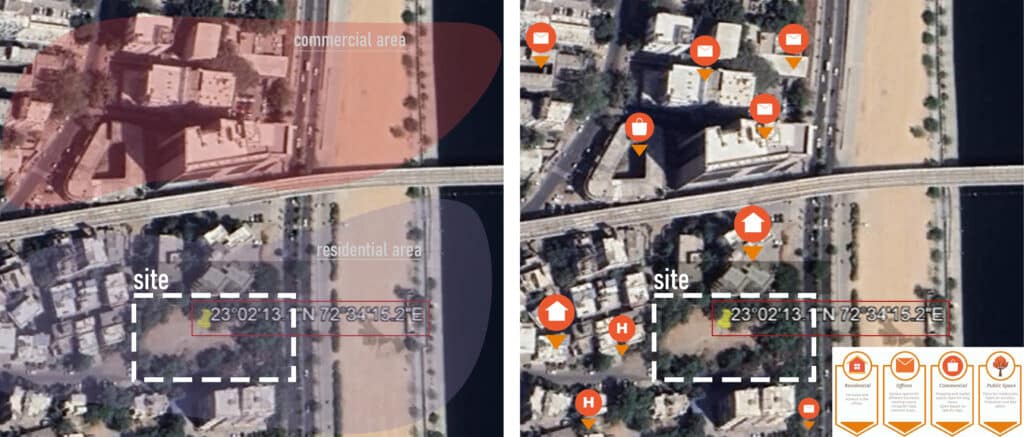
This project, developed by Group D (Giovanni Carlo Volpe, Nihan Malkoç, Sushmitha Ravi, Zeynep Sezen Dursun) as part of the Master in Advanced Computation for Architecture & Design at IAAC, explores a computationally driven strategy for creating environmentally responsive architecture in the challenging climate of Ahmedabad, India. Through a rigorous process utilizing Digital Tools for Environmental Analysis, the team developed a mixed-use program on a 2803 sqm site, aiming to significantly increase thermal comfort through the optimization of form, shading elements, and facade.


Ahmedabad: Context & Vernacular Precedents & Concept
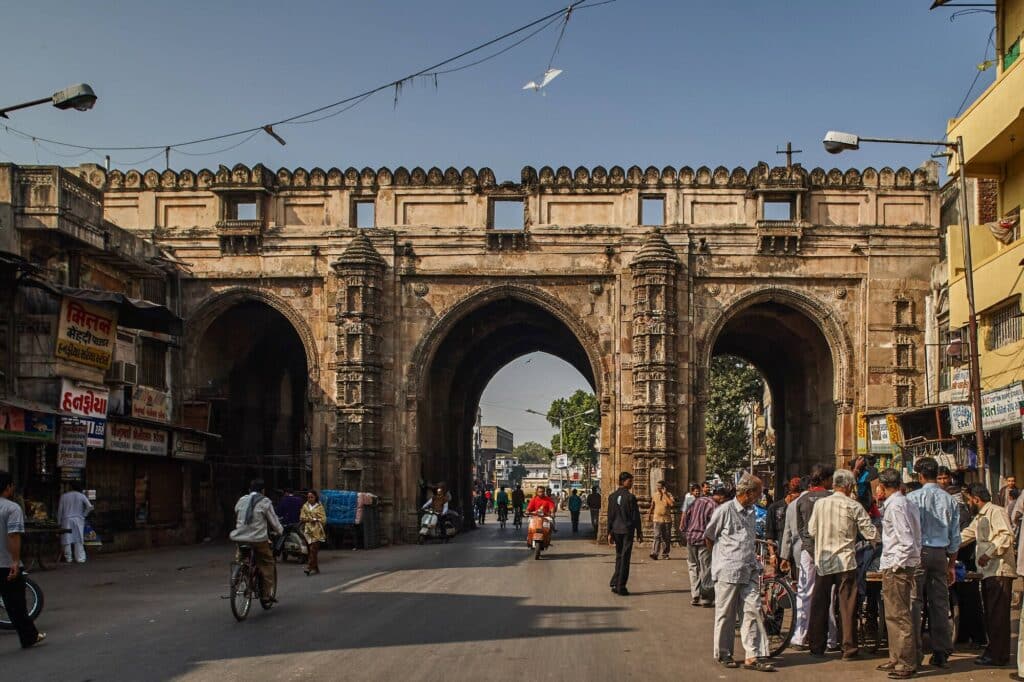
The rapidly urbanizing city of Ahmedabad, with an estimated population of over 8 million by 2025, presents a compelling case study. The design approach is deeply rooted in local vernacular wisdom, which traditionally mitigates severe temperature swings through the use of thermal mass (brick, stone), promoting natural air circulation, and employing deep shading elements like verandahs and chajjas. The proposed program integrates Residential, Office, Commercial, and Public Space functions, reflecting a diverse urban need.



Environmental Analysis and Climatic Imperatives
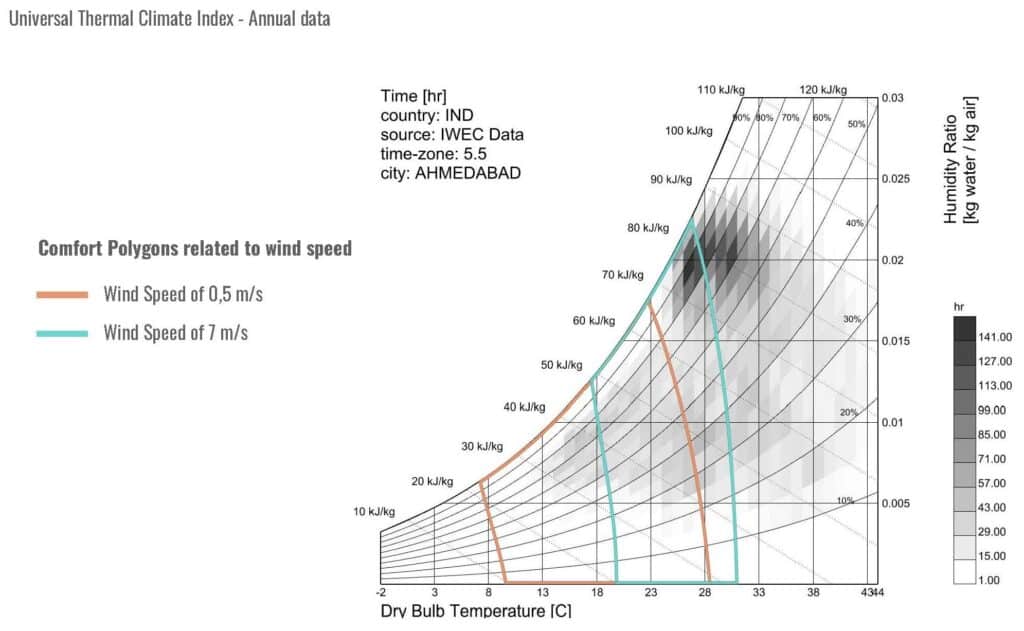
The climatic dashboard revealed significant environmental risks. Annual temperatures range from 10°C to 45°C. The analysis highlighted that extreme heat stress prevails from March to June, exacerbated by very high solar exposure and low wind speeds during peak hours. The dominant wind patterns shift from South-West (hot season, high radiation) to North-East (cold season, low radiation). This data-driven understanding mandated a design strategy focused on mitigating solar gain and harnessing passive cooling techniques.


The Iterative Design Process and Passive Strategy
The project involved an iterative process across four main design explorations. The central passive strategy, consistently refined across the designs and culminating in Design 4, was the utilization of internal courtyards. This strategy channels southern breezes, enabling natural air movement, and leveraging the stack effect to dissipate hot air and generate a soothing cooling microclimate in the public spaces.

Deep Dive: Design 4 – A Climatically Optimized Synthesis
Design 4 represents the synthesis of climatic imperatives and computational optimization, pushing the envelope of environmental performance.

Phase 1: Massing and Orientation Optimization
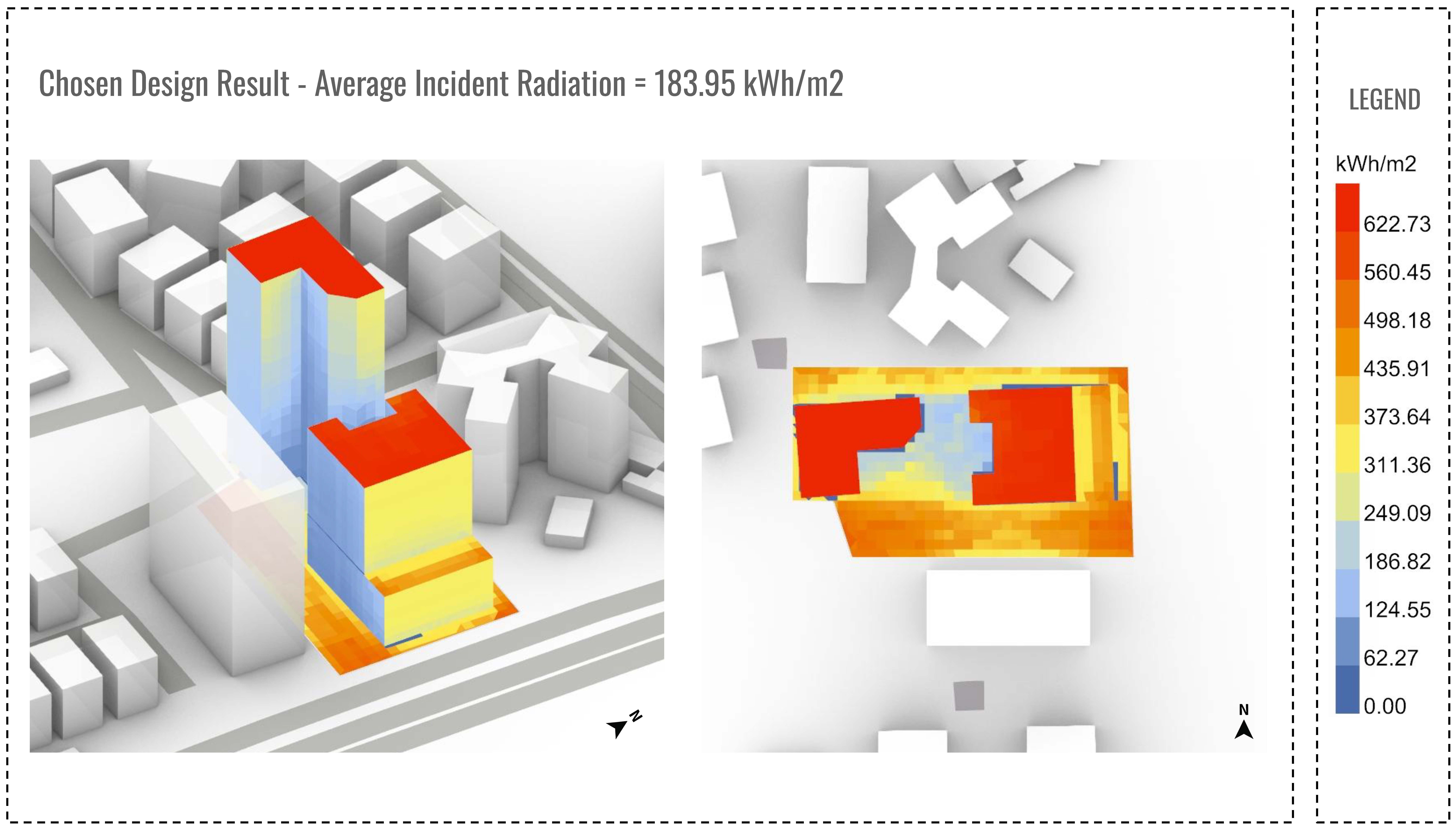
The initial optimization phase focused on minimizing the Average Incident Radiation across the mixed-use volumes by systematically exploring building movement and rotation. This phase resulted in a chosen configuration with an Average Incident Radiation of 183.95 kWh/m². This was the necessary first step to define the most efficient macro-geometry for the site.
Phase 2: Form and Shading Refinement
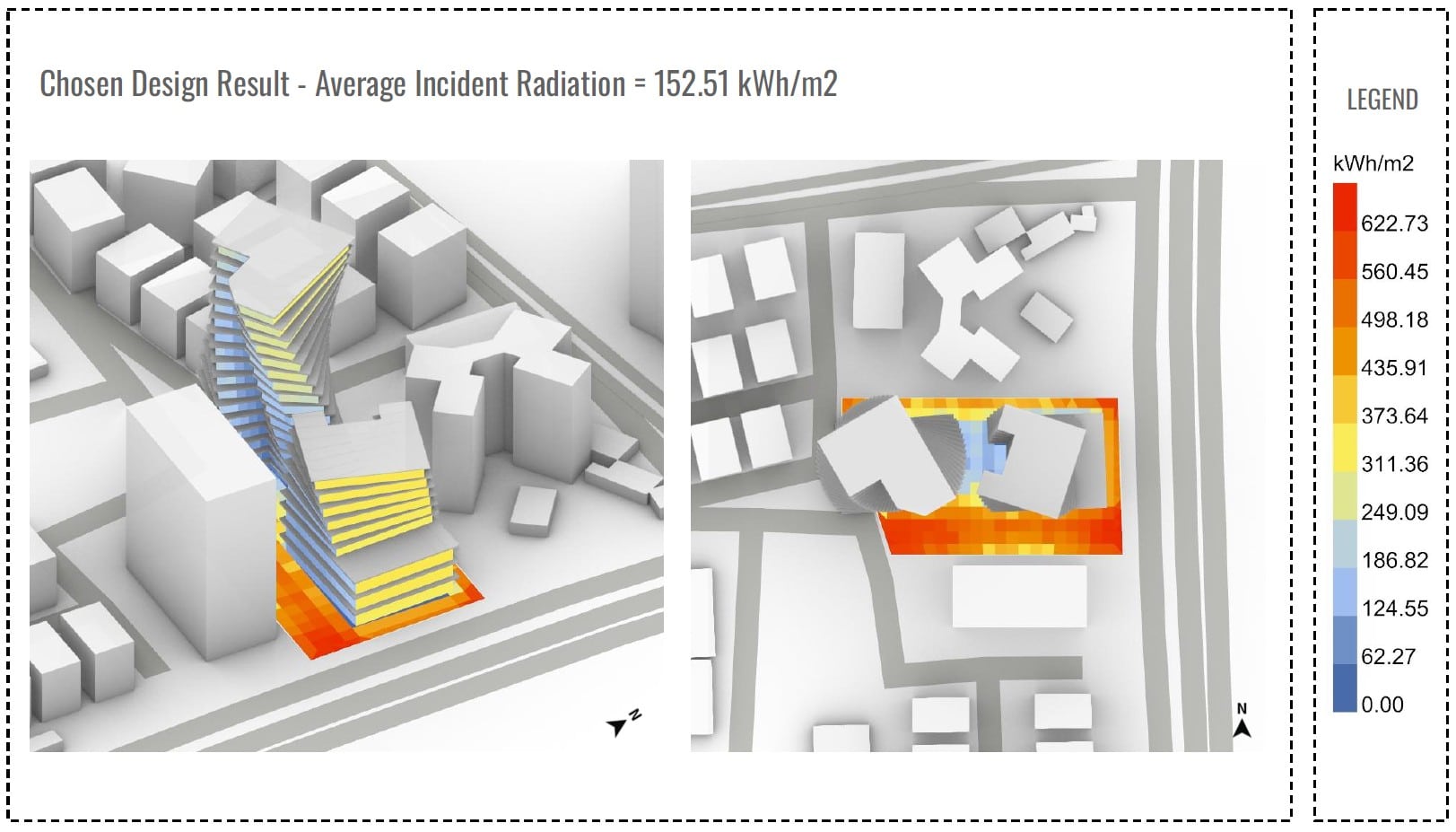
Building on the optimized massing, Phase 2 introduced further geometrical complexity and shading integration. The process involved twisting the building forms and strategically adding vertical shading surfaces to further reduce solar exposure. This rigorous computational refinement dramatically lowered the Average Incident Radiation to 152.51 kWh/m², a substantial 17% improvement that directly translates to enhanced indoor thermal performance and reduced cooling energy demand.
Daylighting and Visual Comfort
Beyond thermal performance, Design 4 ensured high standards of visual comfort. All three blocks—Residential, Commercial, and Office—are designed around internal courtyards to maximize Daylight Factor. The Office block cleverly centralizes services in a dark core, dedicating the perimeter to naturally lit workstations. Furthermore, integrated vertical shading systems are employed to prevent glare and ensure visual comfort throughout the day. The project also utilized the Universal Thermal Climate Index (UTCI) for an advanced assessment of the thermal comfort condition, including the landscape design integration.


Conclusion: Towards a Resilient Architecture
The final proposal of Design 4 demonstrates how advanced computational tools can drive architectural form-finding, moving beyond aesthetic assumptions to deliver measurable environmental resilience. By integrating climatic data, vernacular principles, and multi-stage optimization (from massing to facade geometry and landscape), this project provides a model for sustainable mixed-use development in the high-stress climate of Ahmedabad.

