Introduction
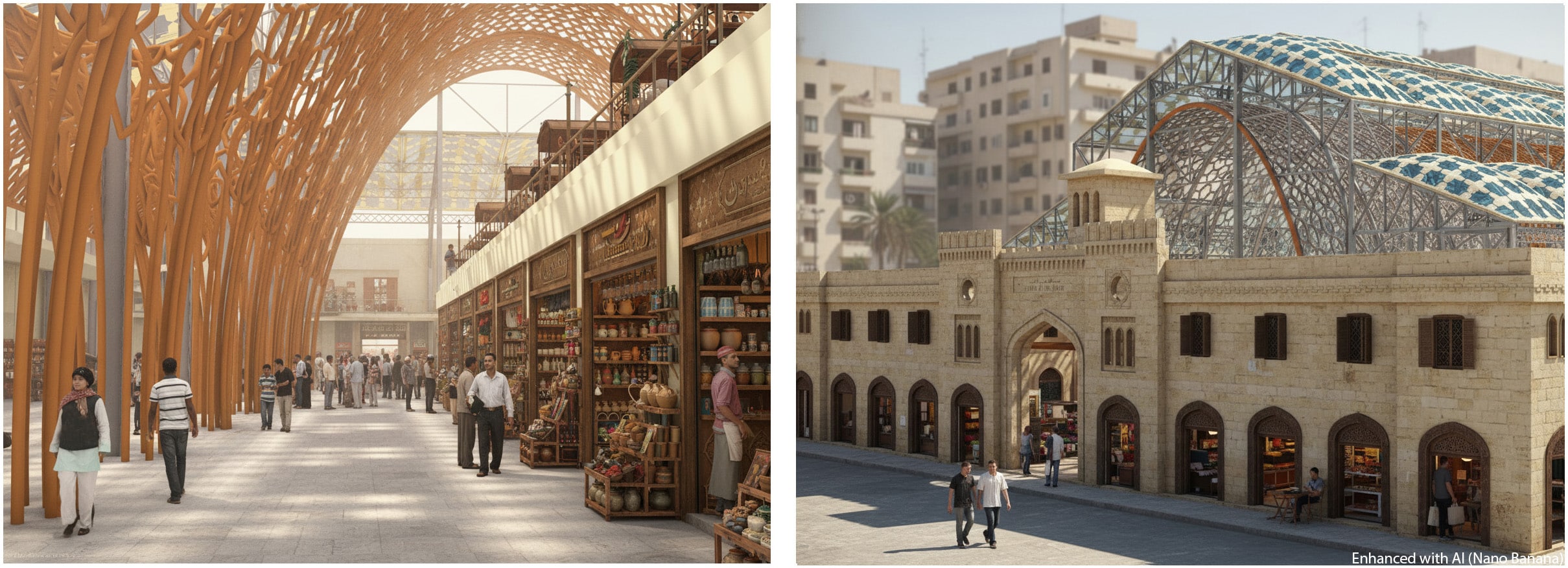
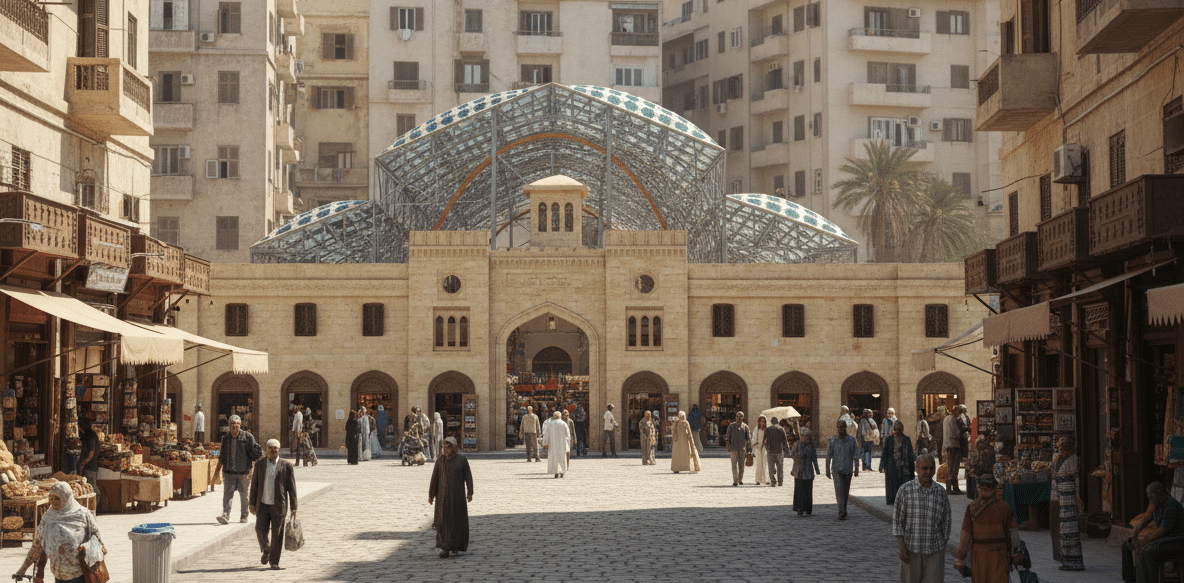
The name Bisat-al-Nur—carpet of light—embodies both poetry and precision: a modern design rooted in tradition, echoing Cairo’s historic markets while reinterpreting them with contemporary materials and climate-responsive strategies.
Ingredients
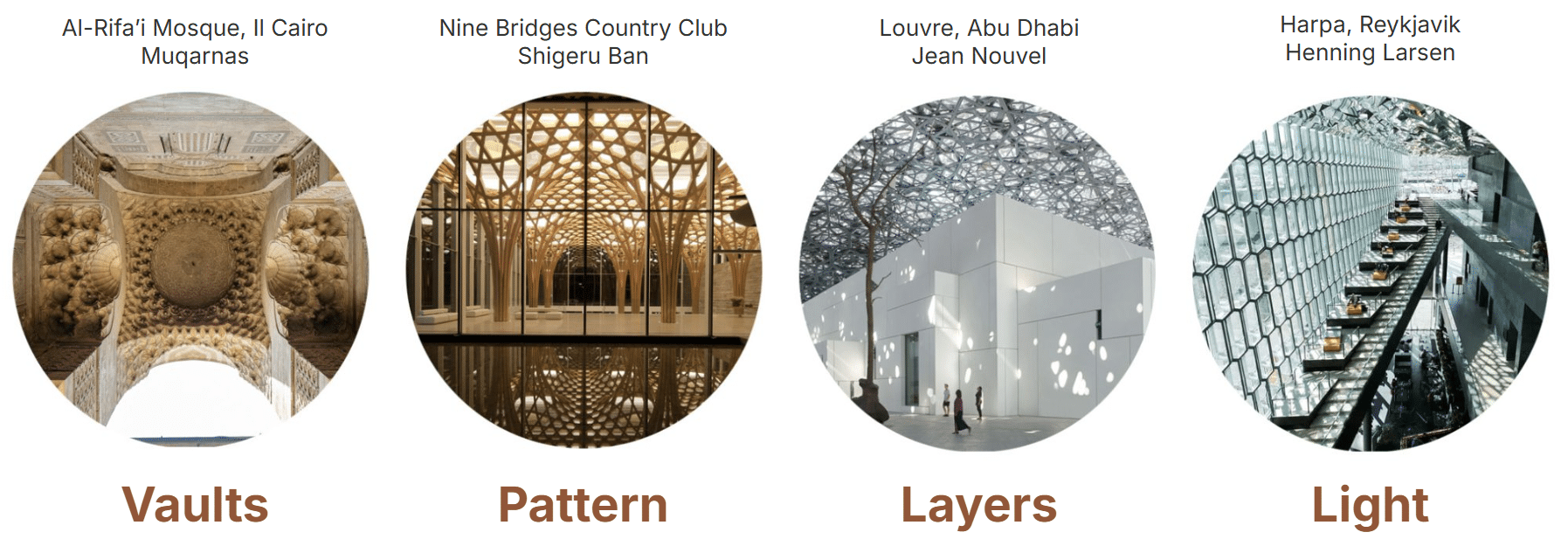
The project is built on four ingredients:
- Vaults, establishing rhythm and volume, anchoring the architecture in tradition while opening it to new possibilities.
- Patterns applied to the vaults, creating a dynamic surface language that shifts with perspective and light.
- Overlapping layers, enriching spatial depth and allowing multiple readings of the structure.
- Light, the true protagonist, animating every surface and guiding the visitor’s experience.
Design Process
Layers
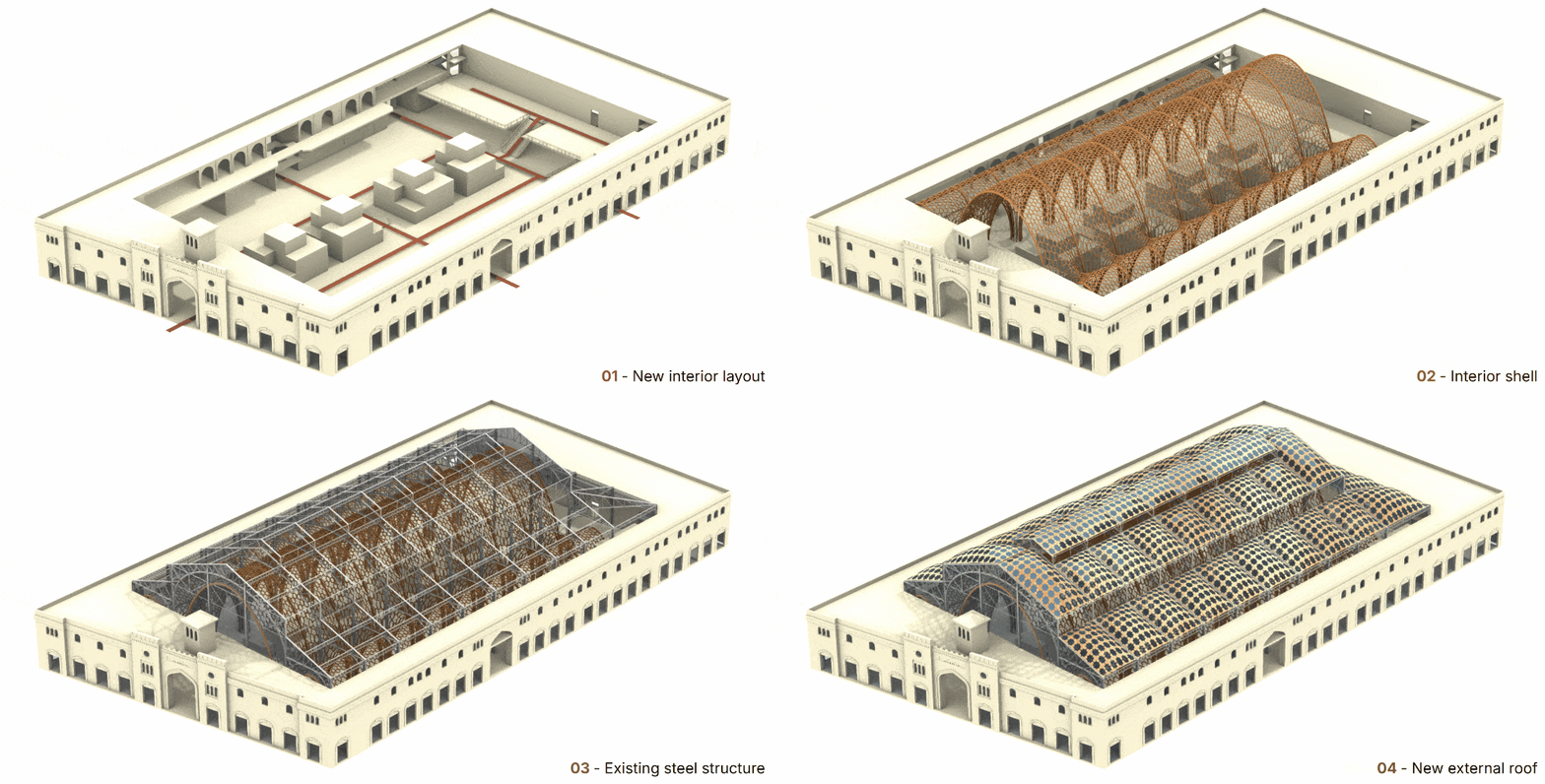
The design unfolds across four layers:
- A new interior layout, reorganising circulation and spatial organization.
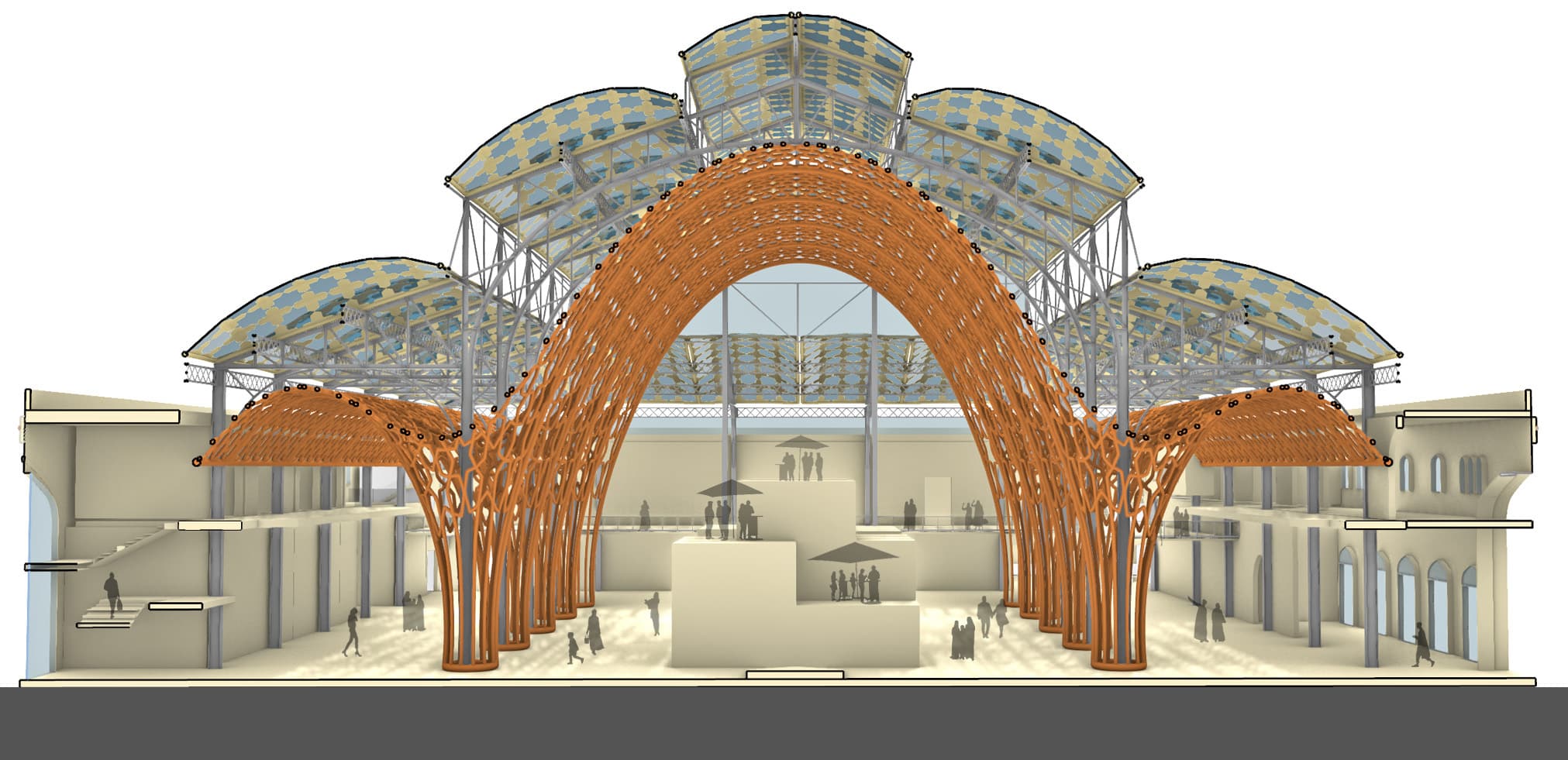
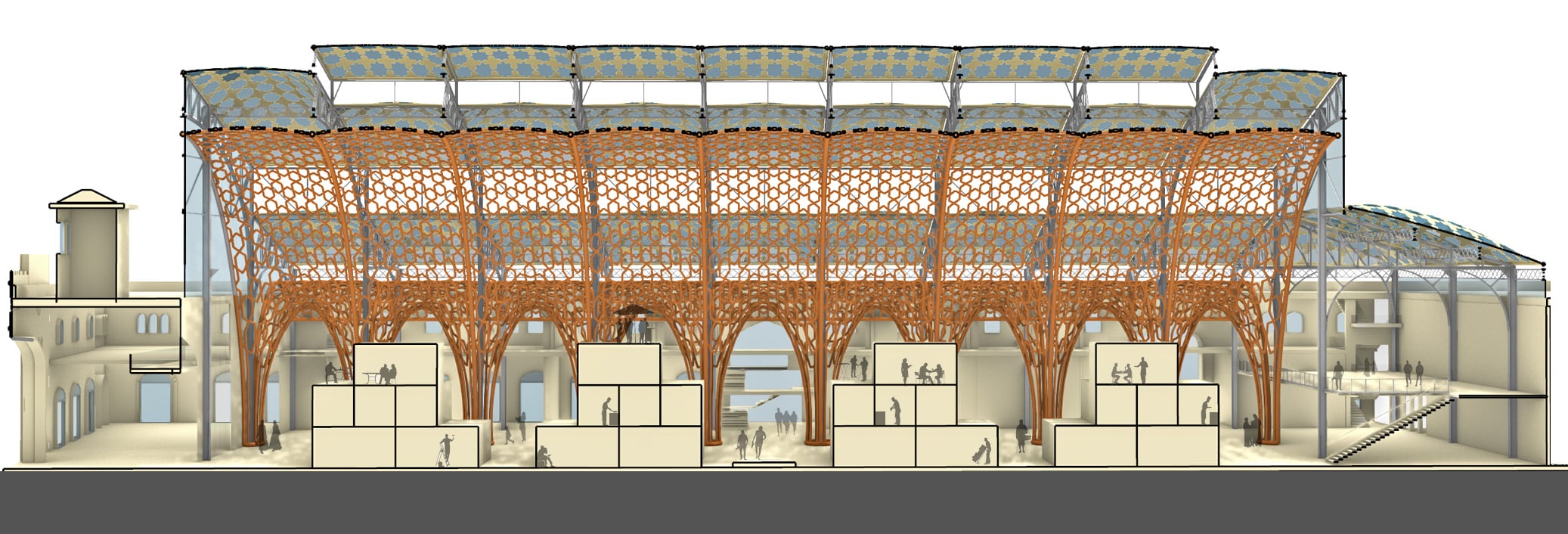
- An interior shell, lightweight yet expressive, derived from mesh-based form-finding.
- The existing steel structure, serving as a constraint and framework for adaptation.
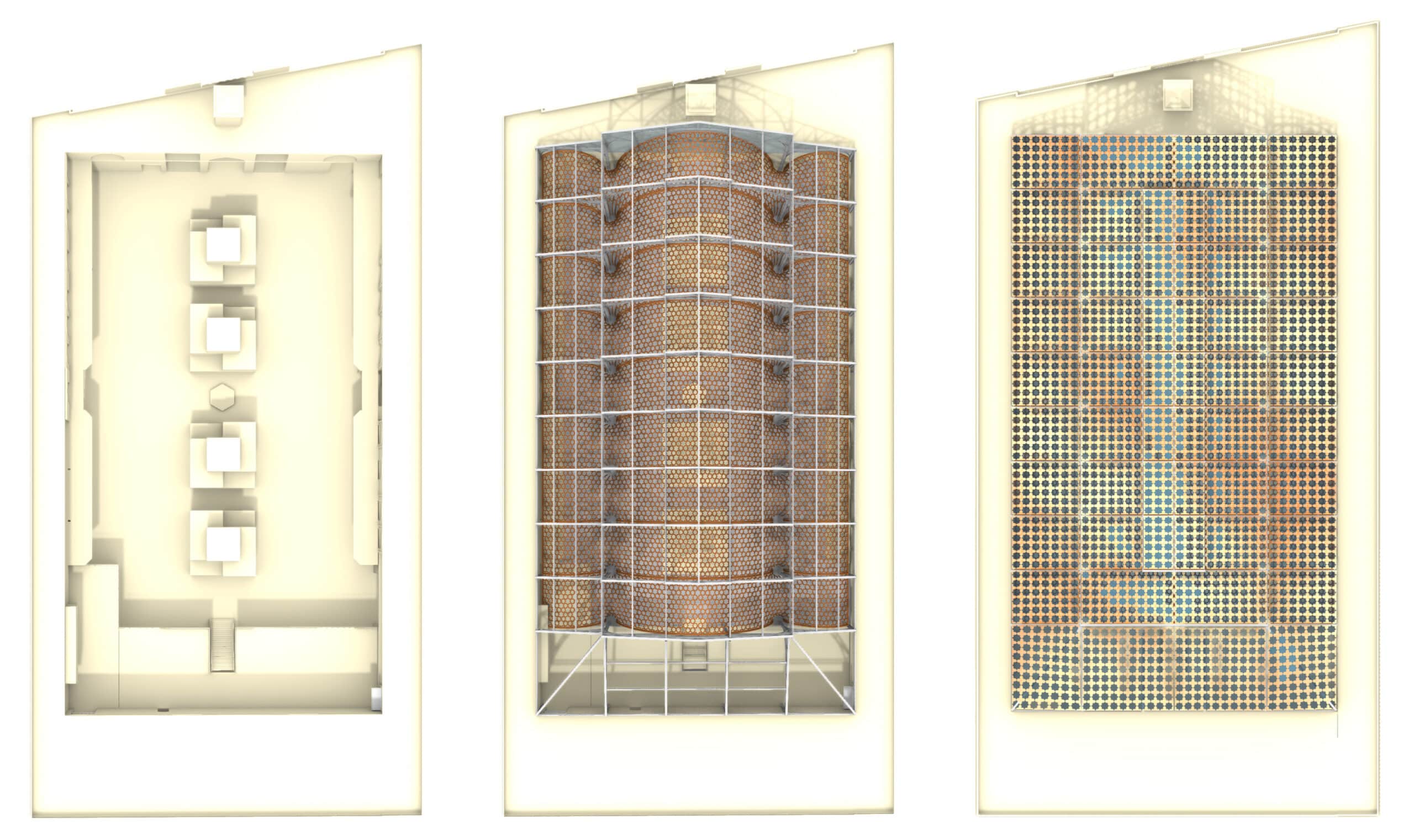
- A new exterior roof, tessellated and responsive to solar exposure.
The strategy was to leave the existing market mostly untouched, except for the roof panels. This approach preserves the integrity of the original steel framework while introducing a new architectural language that overlays, complements, and revitalizes the space.
Workflow
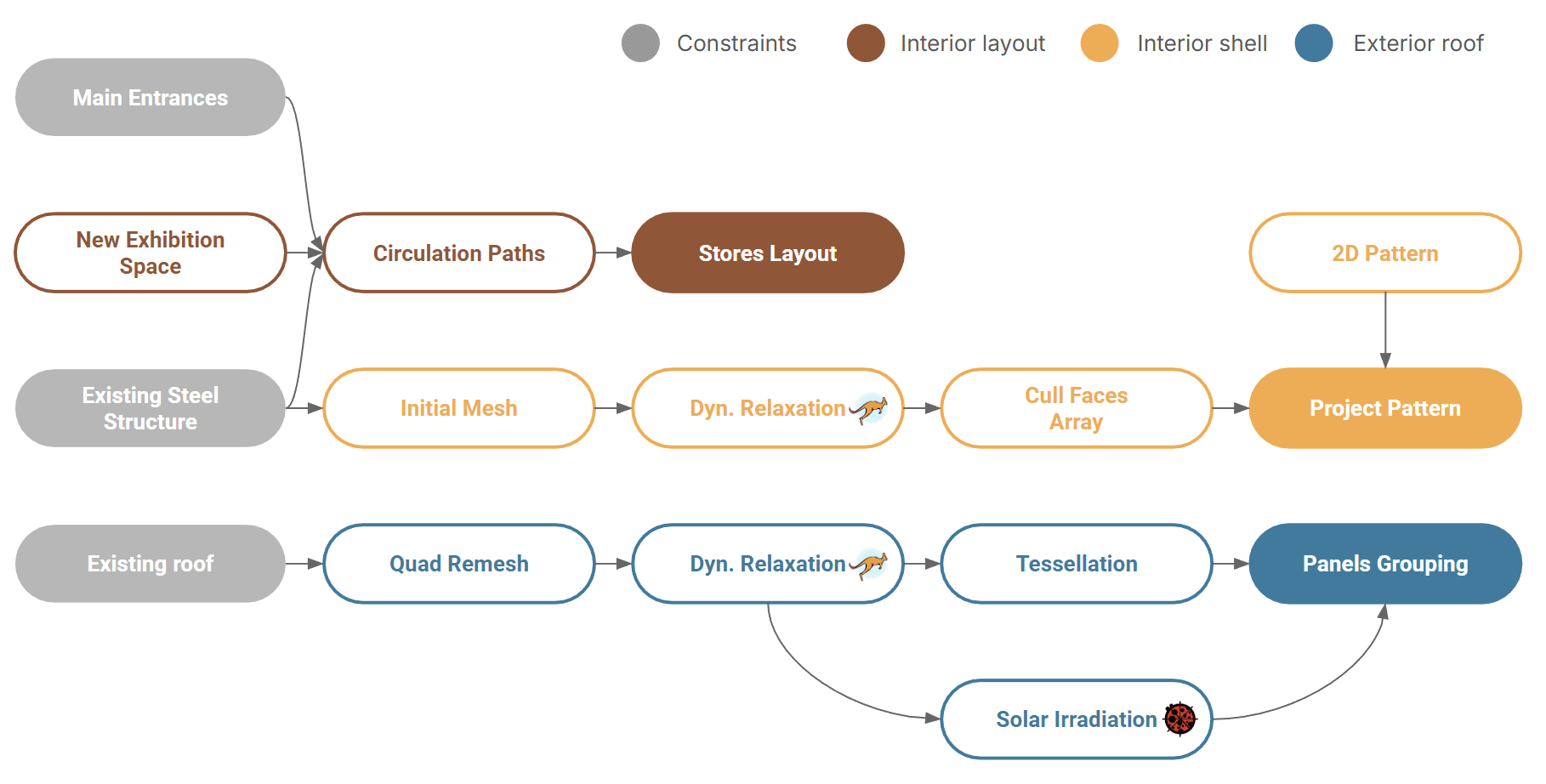
Form Finding
The interior shell starts from an initial mesh, spanning between two or more columns and enveloping them without touching. Through dynamic relaxation, a funicular form is obtained -organic, resilient, and adaptable. By culling faces, the relaxed mesh is cut to the size of a bay. This base module is repeated across the market. Different curvatures emerged by changing the size of the initial mesh and the load factor applied.
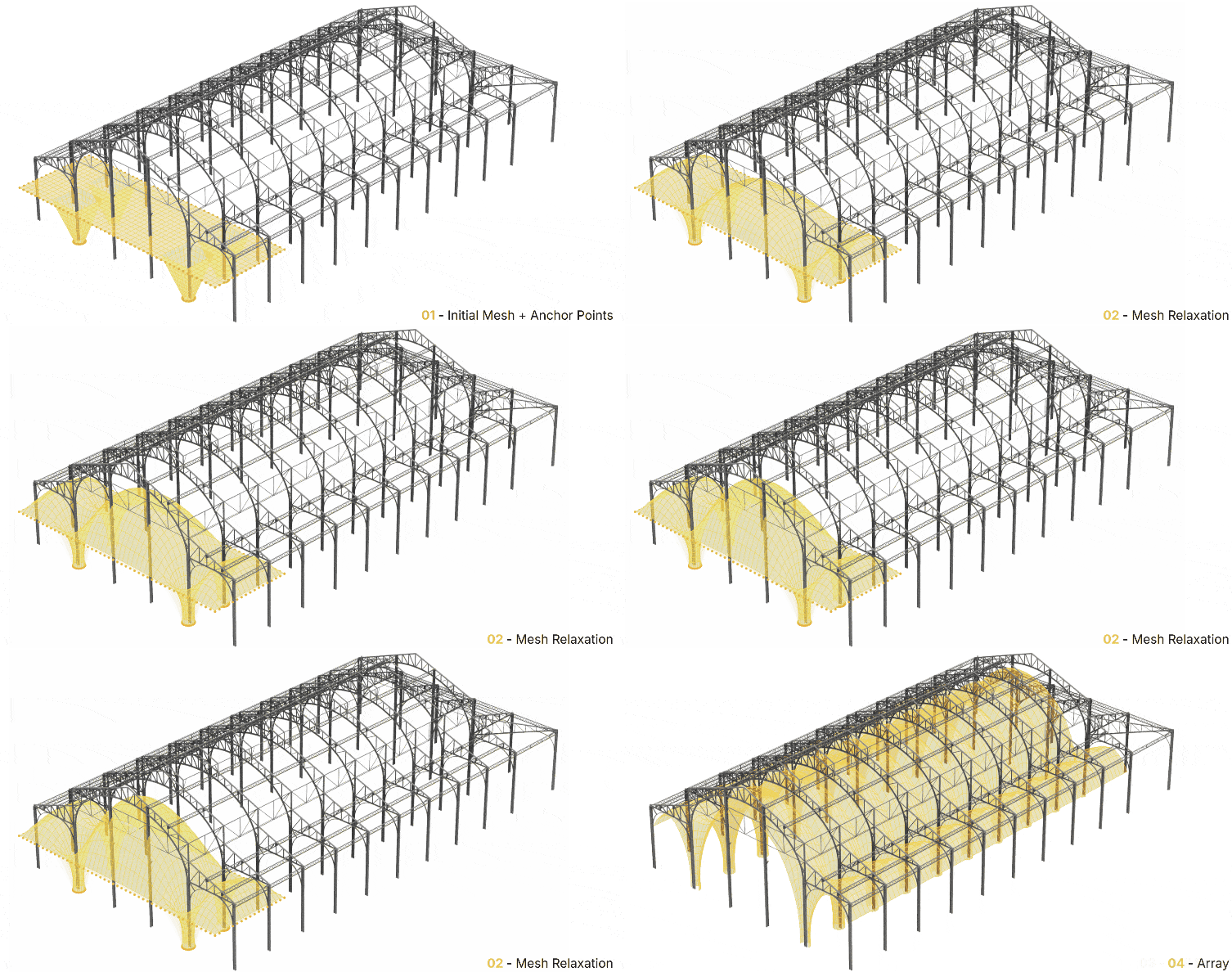
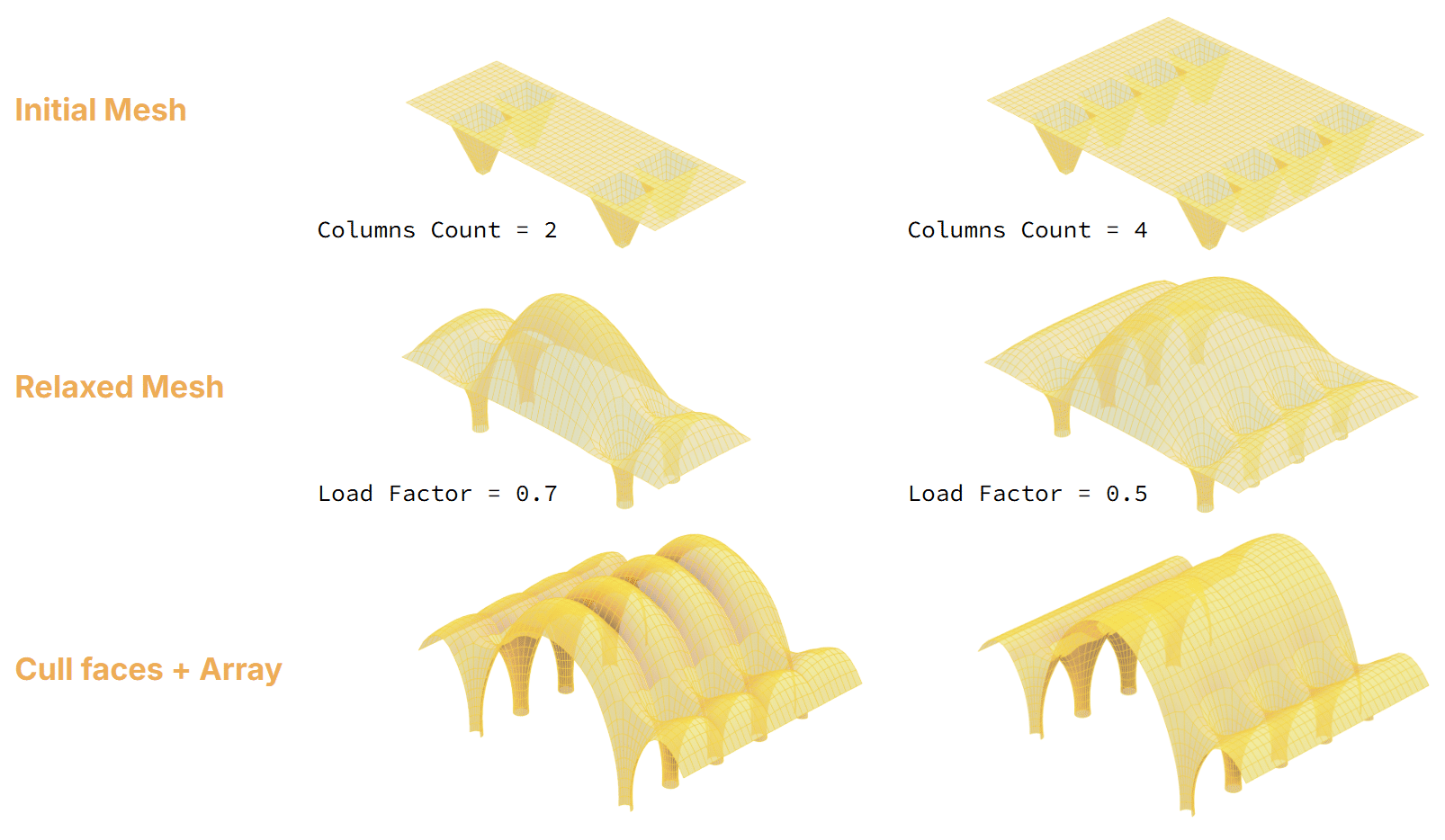
Dynamic relaxation was applied also to the exterior roof mesh, with box morph used to apply a square tiling.
Tessellation System
In the design process, different patterns were explored, but ultimately two were selected. For the interior shell, the geometry was derived from a tri-hex pattern, achieved by pulling the midpoints of the grid lines toward the center of each hexagon.
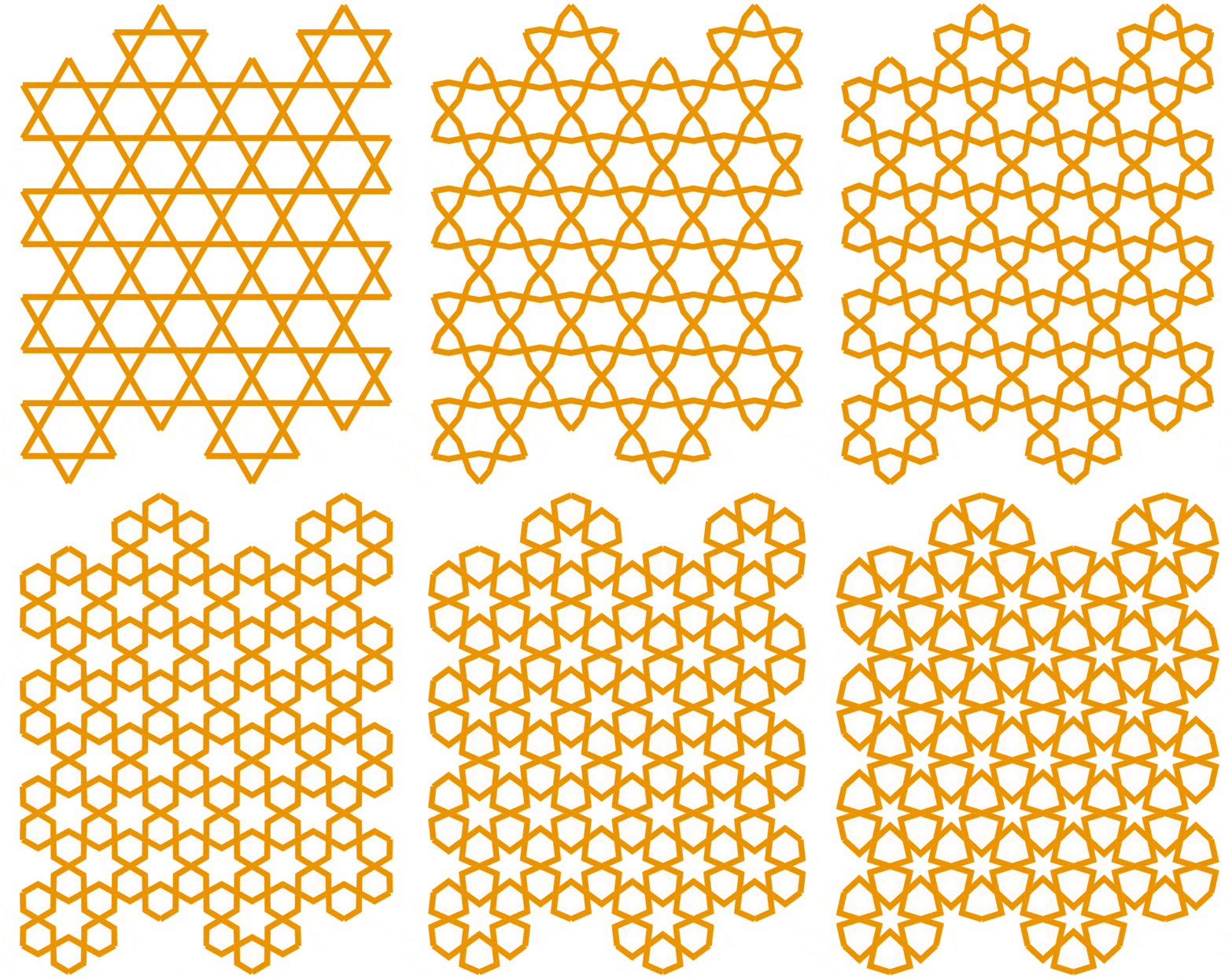
For the exterior roof, the choice settled on a square-based tiling, a more regular system that allowed for controlled tessellation and integration with the solar analysis. Together, these two approaches establish a dialogue between interior complexity and exterior clarity, balancing richness with legibility.
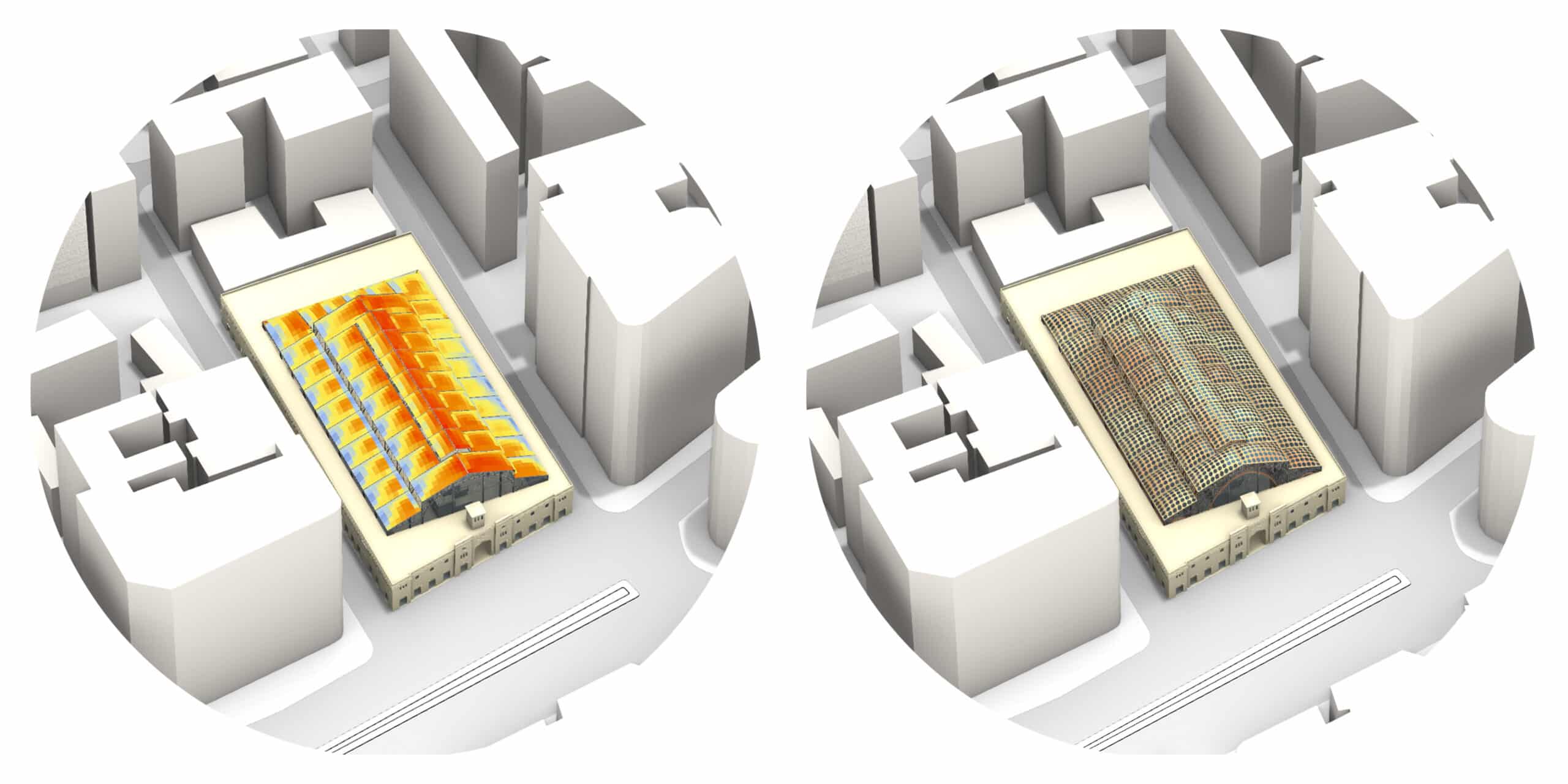
For the exterior roof, he solar irradiance analysis informed the grouping of panels panels into three types:
- High transparency for areas of low exposure, allowing light to penetrate deeply.
- Medium transparency for zones of moderate exposure, balancing shade and illumination.
- Low transparency for areas of high exposure, protecting interiors from overheating while maintaining visual porosity.
This adaptive strategy transforms the roof into a responsive skin, mediating between climate and comfort.
Materials
The material choice for the interior shell and the roof frame was aluminium, valued for its durability, adaptability, and circular potential. To preserve a sense of tradition and warmth, I chose bronze tones for the interior and a bronze–champagne finish for the exterior. Thanks to Perlin noise, the roof changes fluidly between the two tones. This shimmering effect recalls woven textiles, reinforcing the metaphor of the carpet of light.
Interior Layout
The interior layout begins with a new elevated exhibition space, conceived as a cultural anchor within the market. Circulation paths connect the main entrances with the elevated area, weaving together flows of visitors and merchants. Multi-level stores are organised along the central axis, creating a vibrant spine of activity.
Conclusions
Further Work
While the design establishes a strong conceptual and aesthetic foundation, further work is required to refine its structural performance, acoustic behavior, and water management strategies for the roof.
Insights
Bisat-al-Nur is more than a design proposal—it is an invitation to imagine how Cairo’s public markets can evolve. By weaving together tradition and technology, constraints and creativity, the project seeks to revive not only a building but a cultural ritual.
The carpet of light symbolizes community—layered, patterned, and animated by the energy of people and place. Built in aluminium yet glowing with warmth, Bisat-al-Nur bridges past and future, blending heritage with innovation.