FUNNEL WEB 3D PRINTING
Inspiration: THE SPIDER WEB
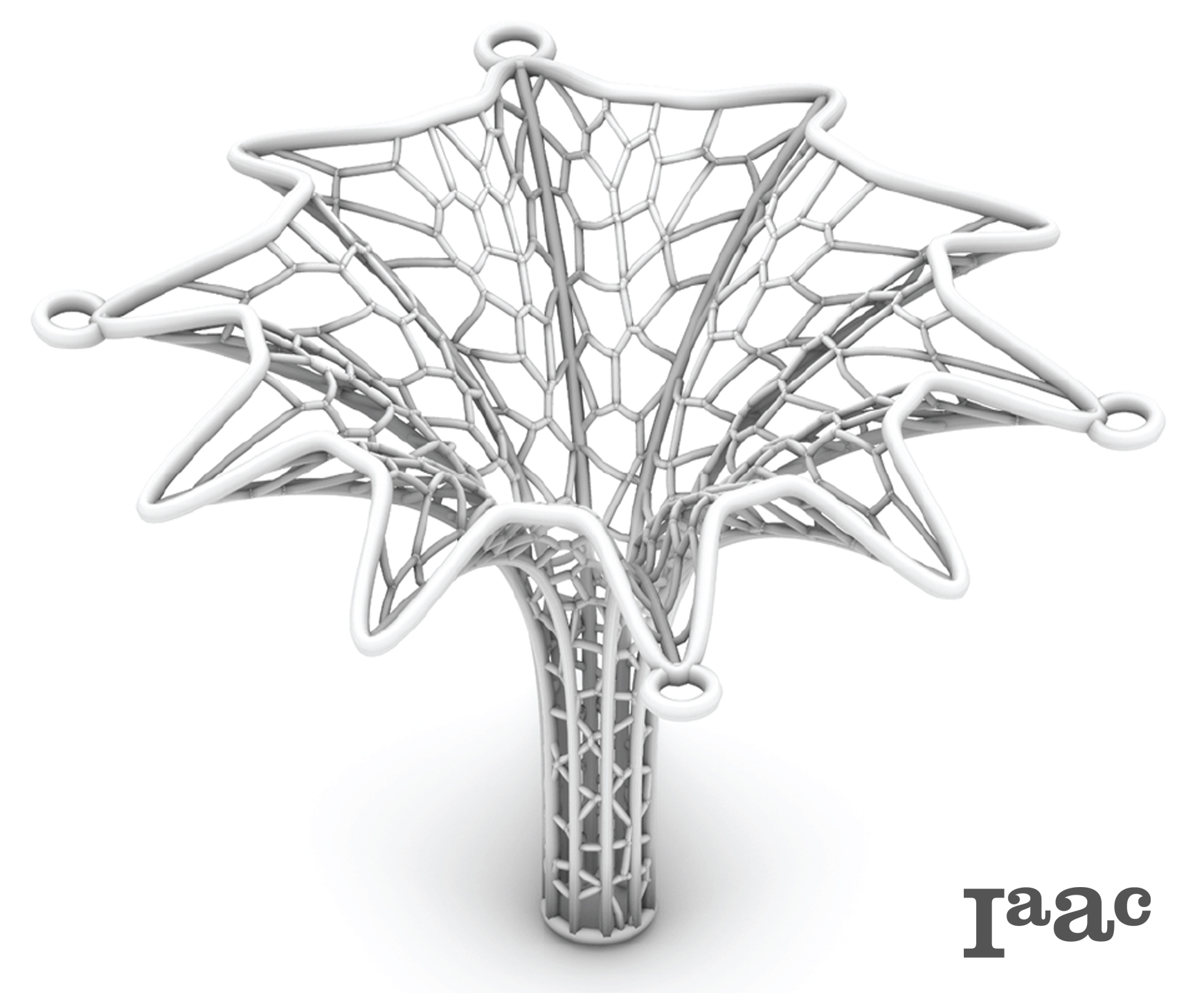
The project is inspired by spider webs, specifically the funnel webs woven by certain spiders. These webs are wide, lightweight sheets of silk, anchored to their surroundings by threads, narrowing into a funnel at the centre where the spider hides.
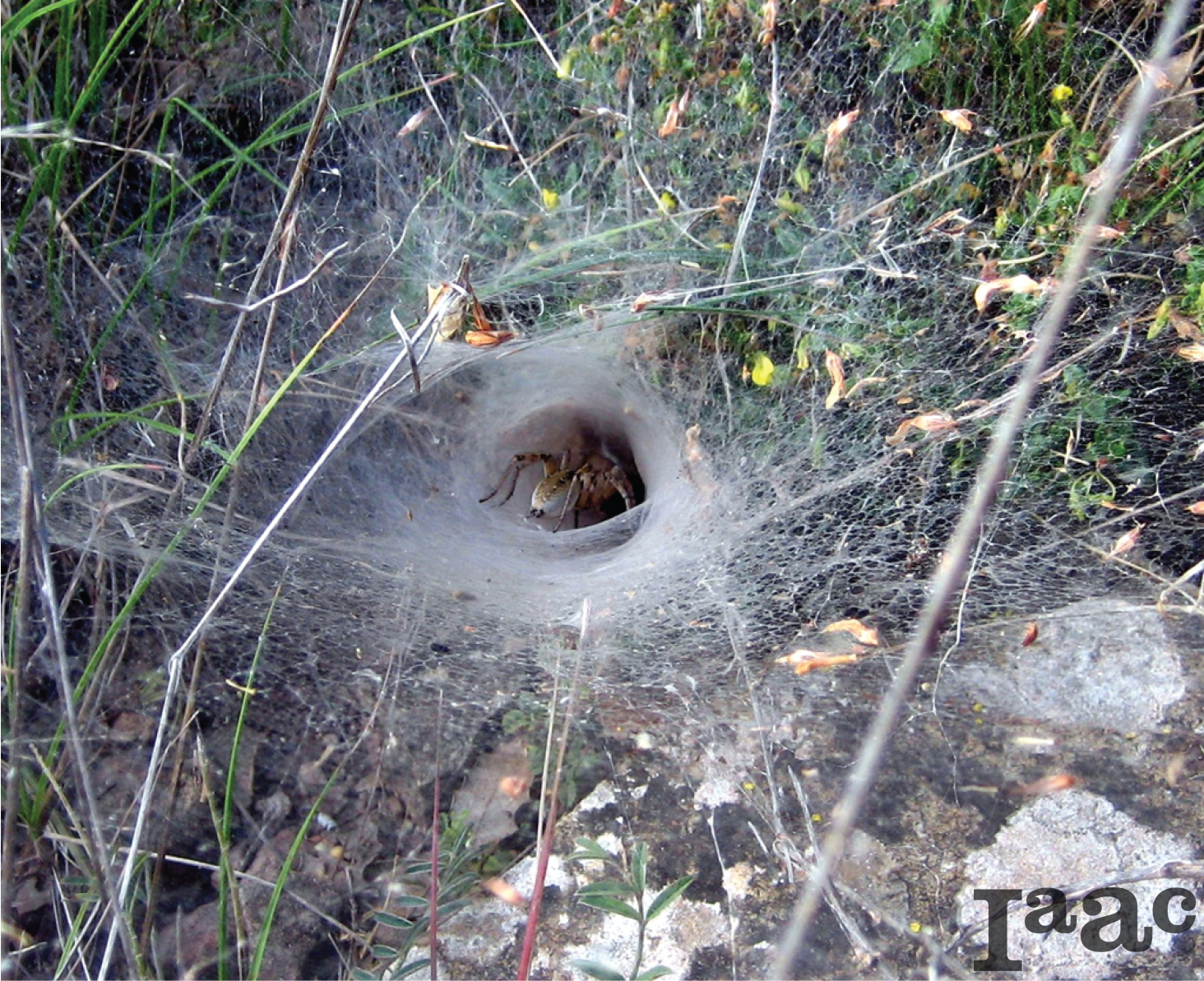
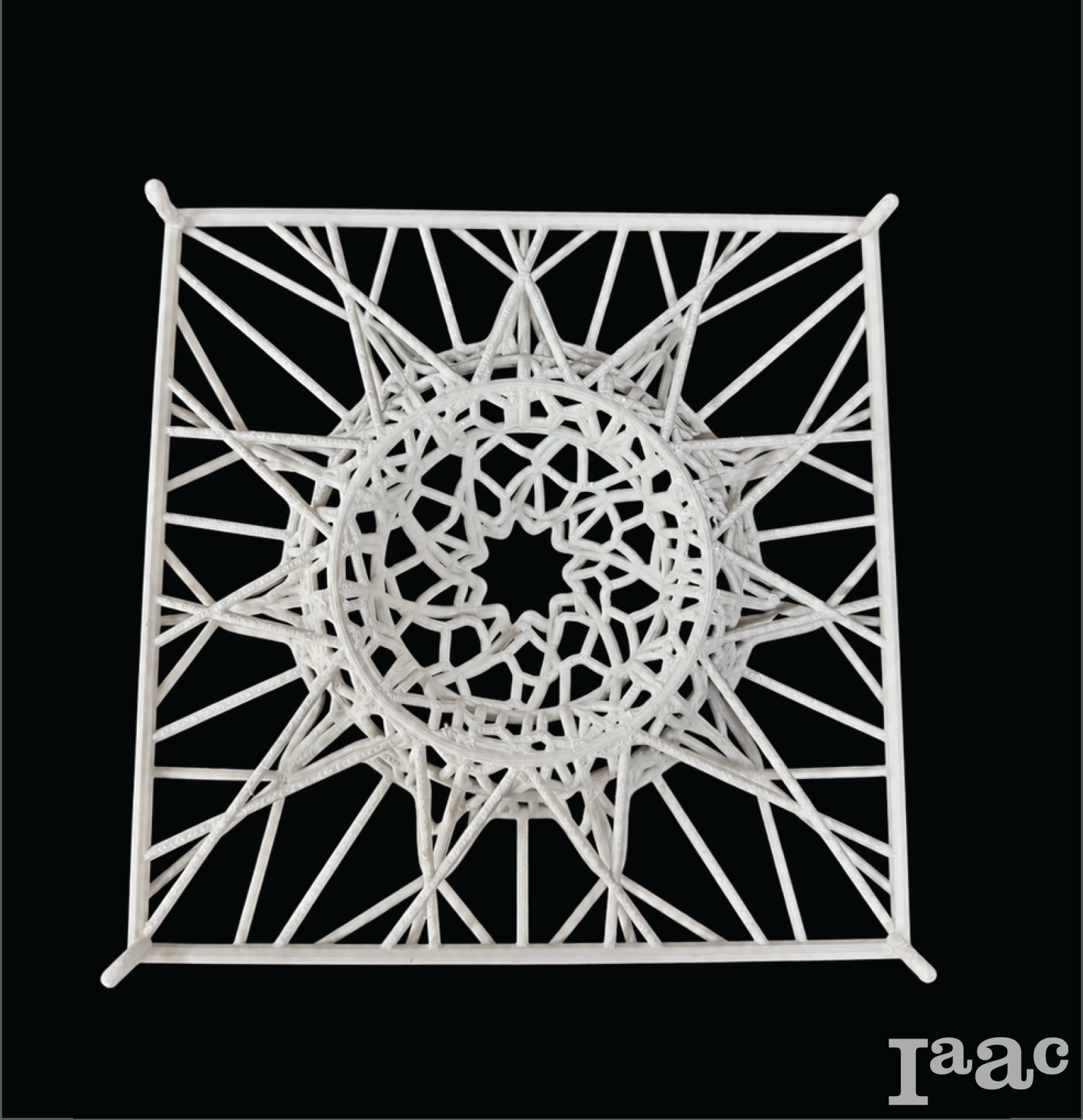
The project translates this logic into computational design, using Grasshopper and Python:
Mesh: a Voronoi network whose cells shift in size from the centre to the edges.
Funnel: a central funnel with spiral pleats.
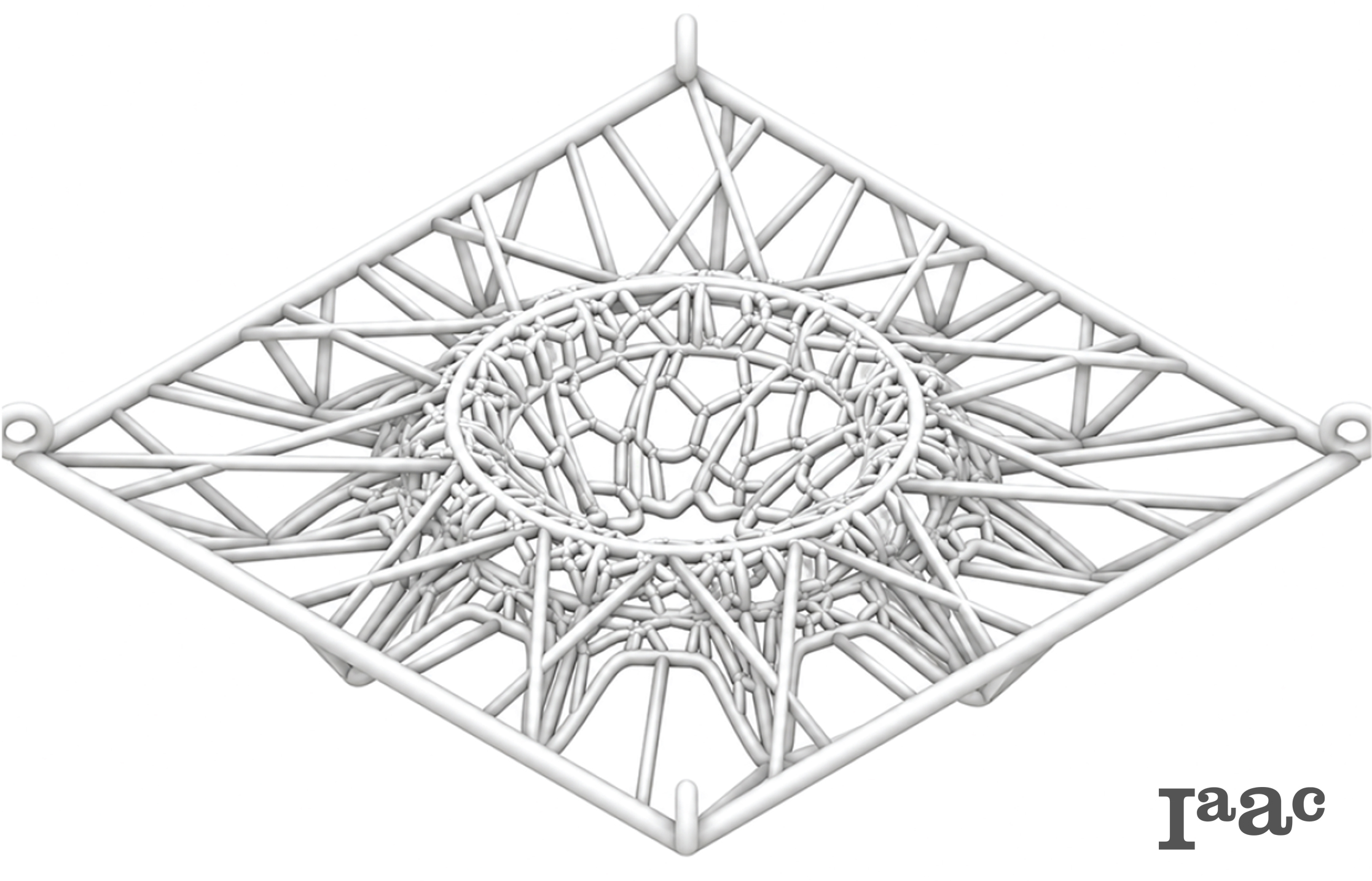
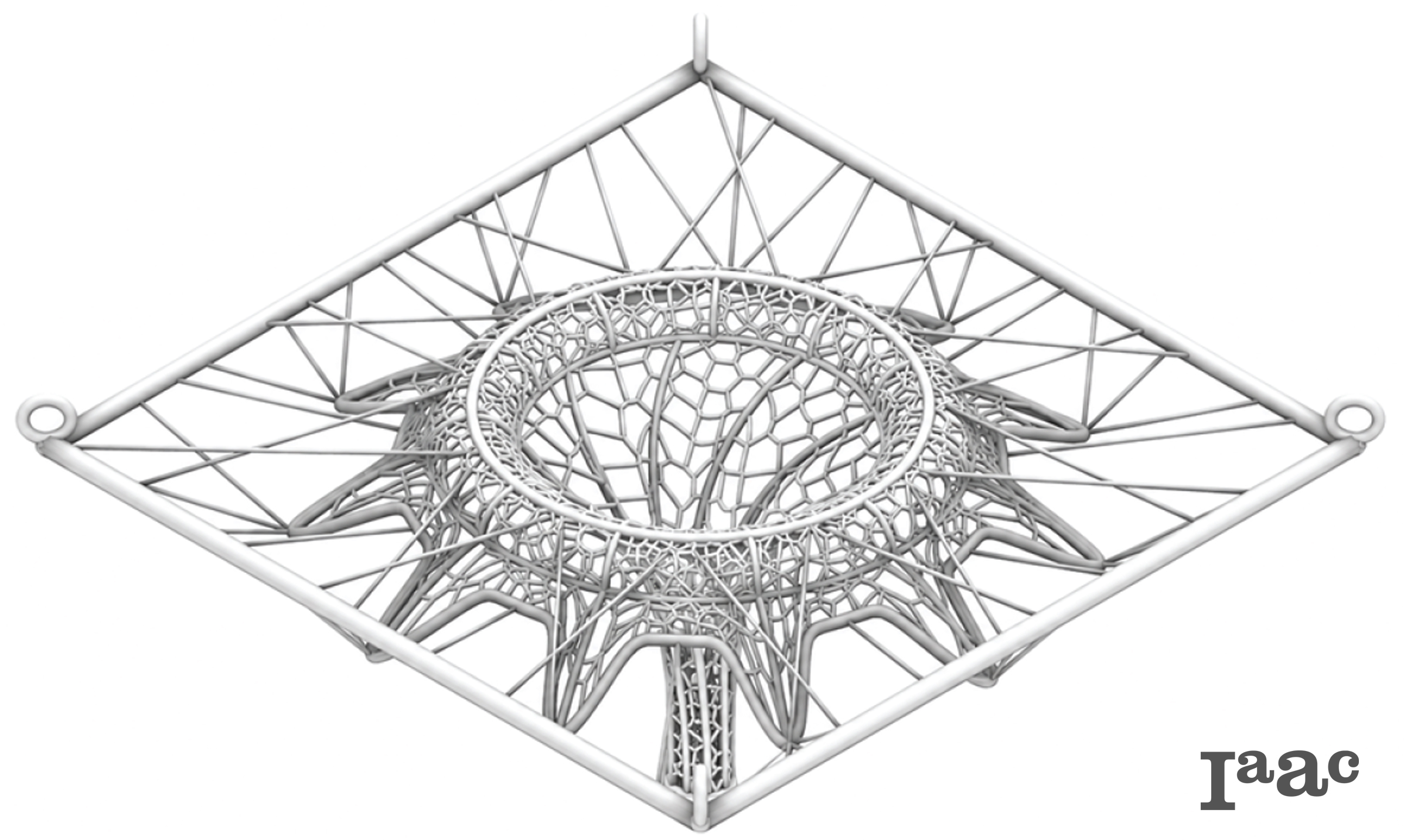
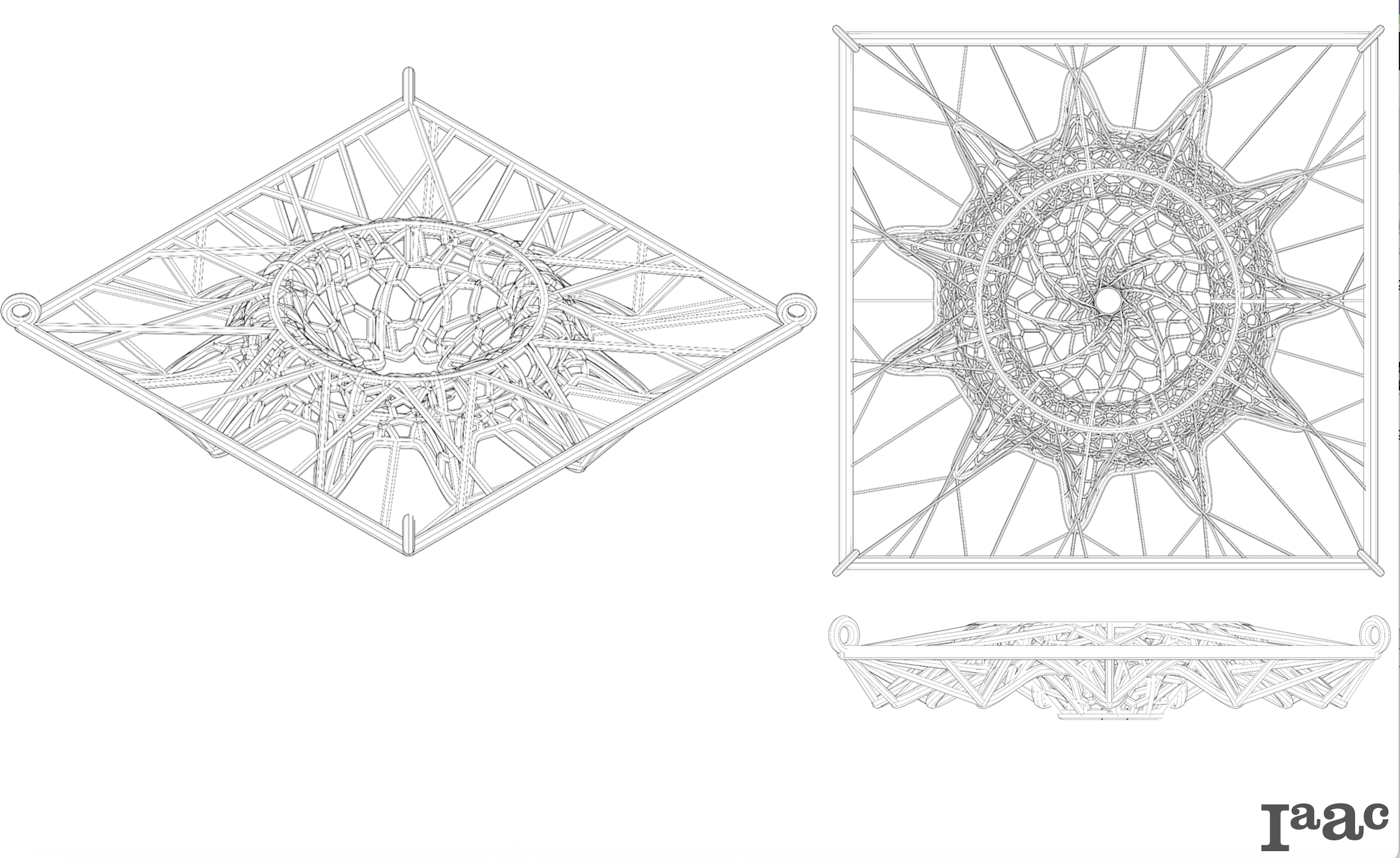
Threads: threads that anchor the tips of the form to a 20×20 cm frame
Initial Sketches
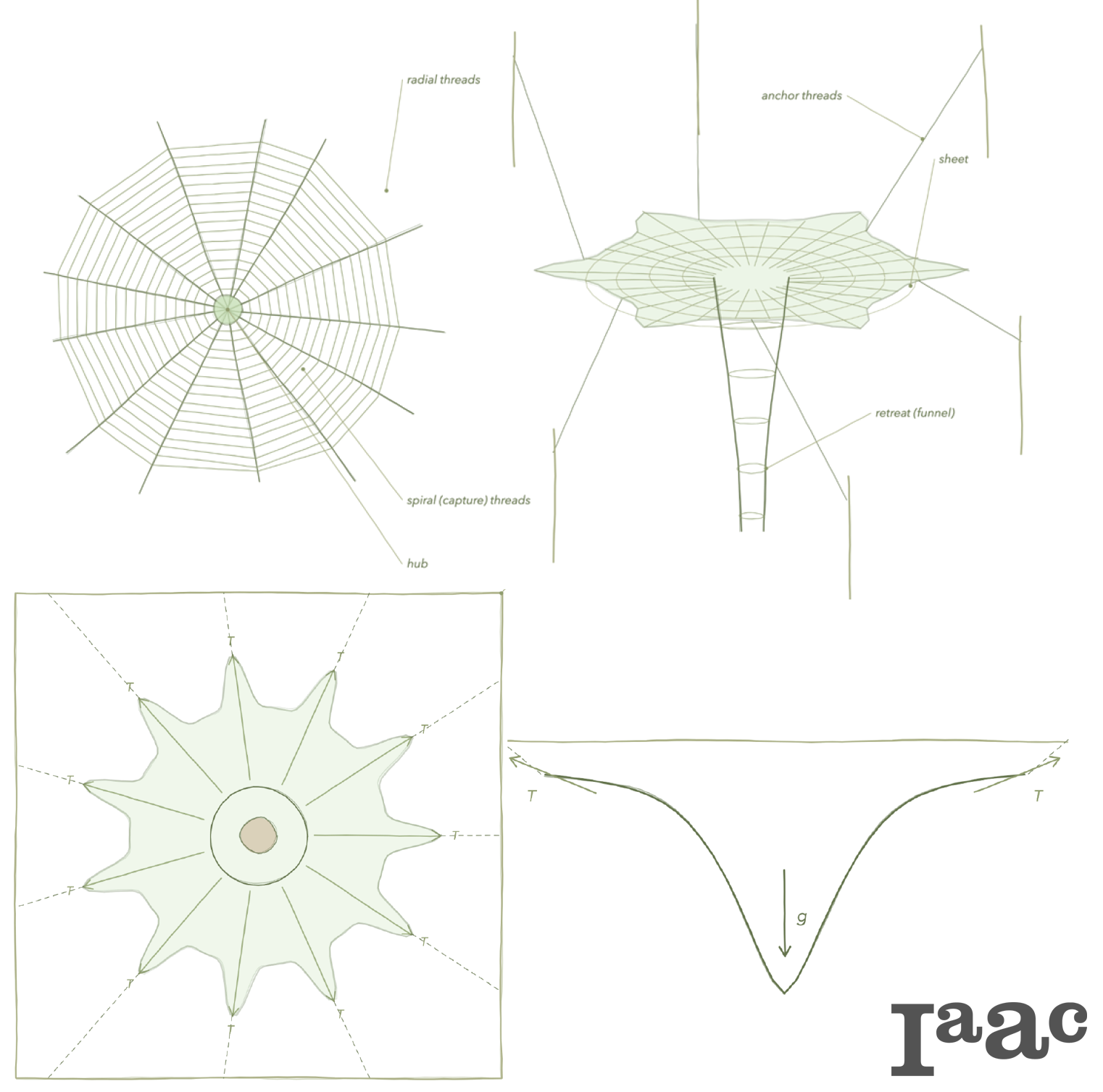
Web : Τhe initial sketches began with observing the spider web and how it is organised. We tried to understand its logic rather than just its form:
- how radial threads support the structure,
- how spiral threads fill the space between them,
- how the whole web is held by only a few anchor points.
The sketches then focused on the forces that shape the web. Through simple tension diagrams we studied:
- how threads pulling outward generate the tips of the form,
- how the centre sinks down into a funnel.
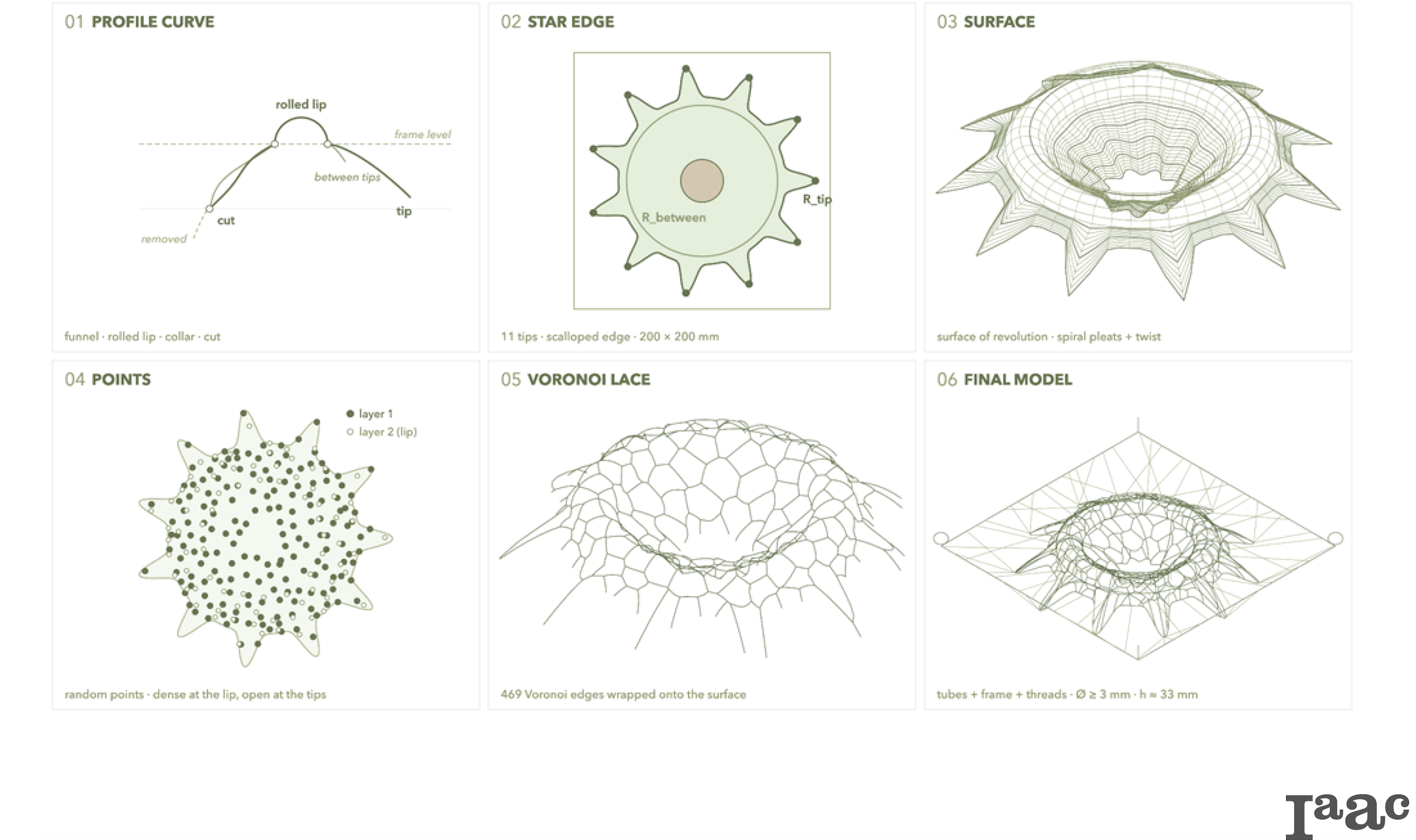
First model explorations
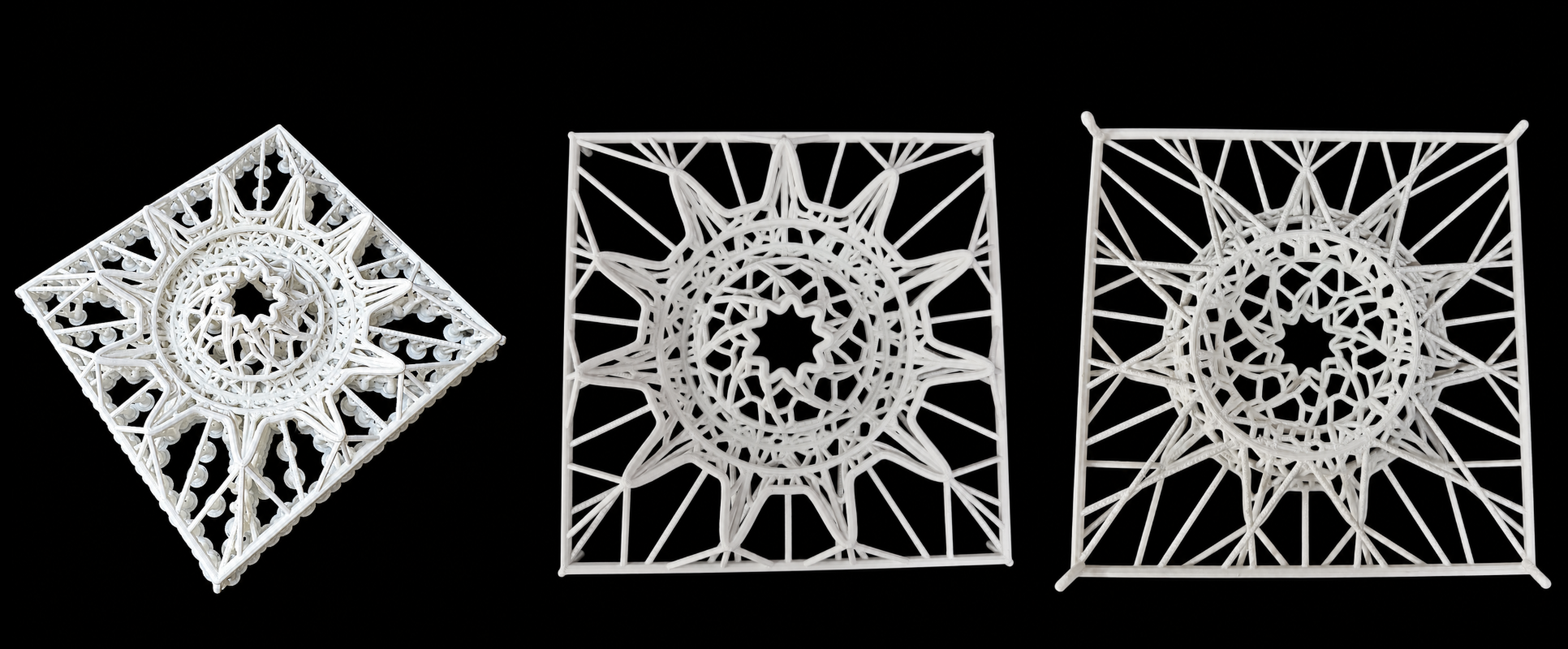
ATTEMPT 1 : Long funnel with a simple Voronoi pattern and a star-shaped collar. Four tabs on the tips for hanging. A first test of the basic web form.
ATTEMPT 2 : A more complex structure: double lace, rolled lip, spiral pleats and threads anchoring the tips to a square frame. The funnel stays long, with thin members. Closer to the web, but too fragile to print.
FINAL MODEL : The funnel is shortened and every member has a minimum diameter of 3 mm. It keeps the complexity of the second version while remaining reliably 3D-printable.
Project diagrams / Technical drawings
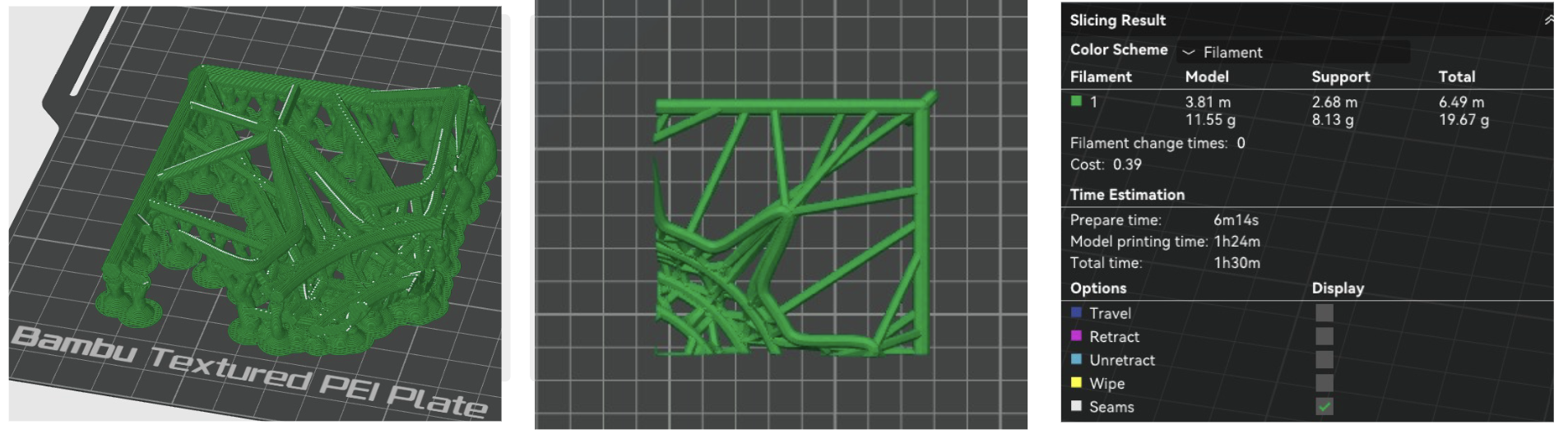
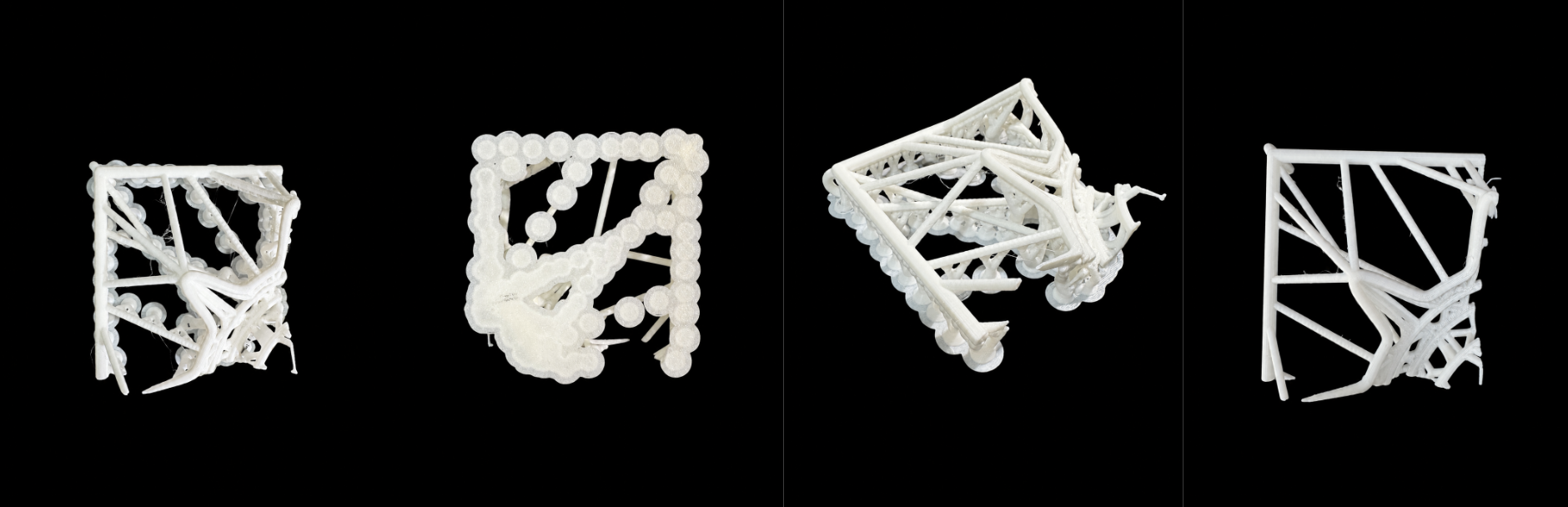
Fabrication Strategy 3d printing TEST
Material: White PLA Machine: Bambu Lab P1S Print: Plantform: Textured PEI Plate Quality : 0.20 mm Standard @BBL X1C
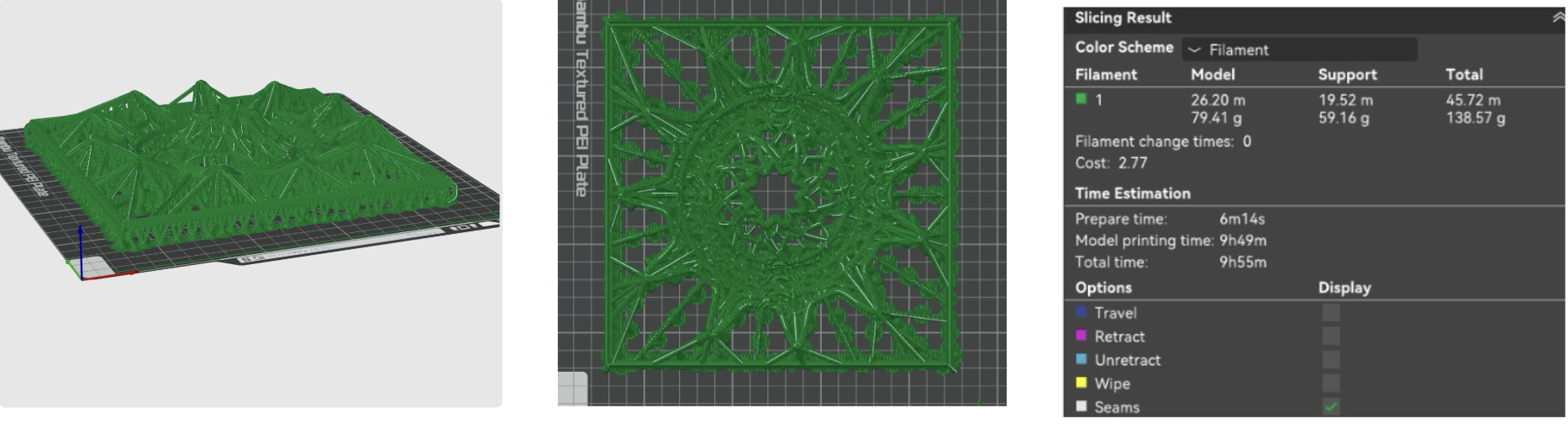
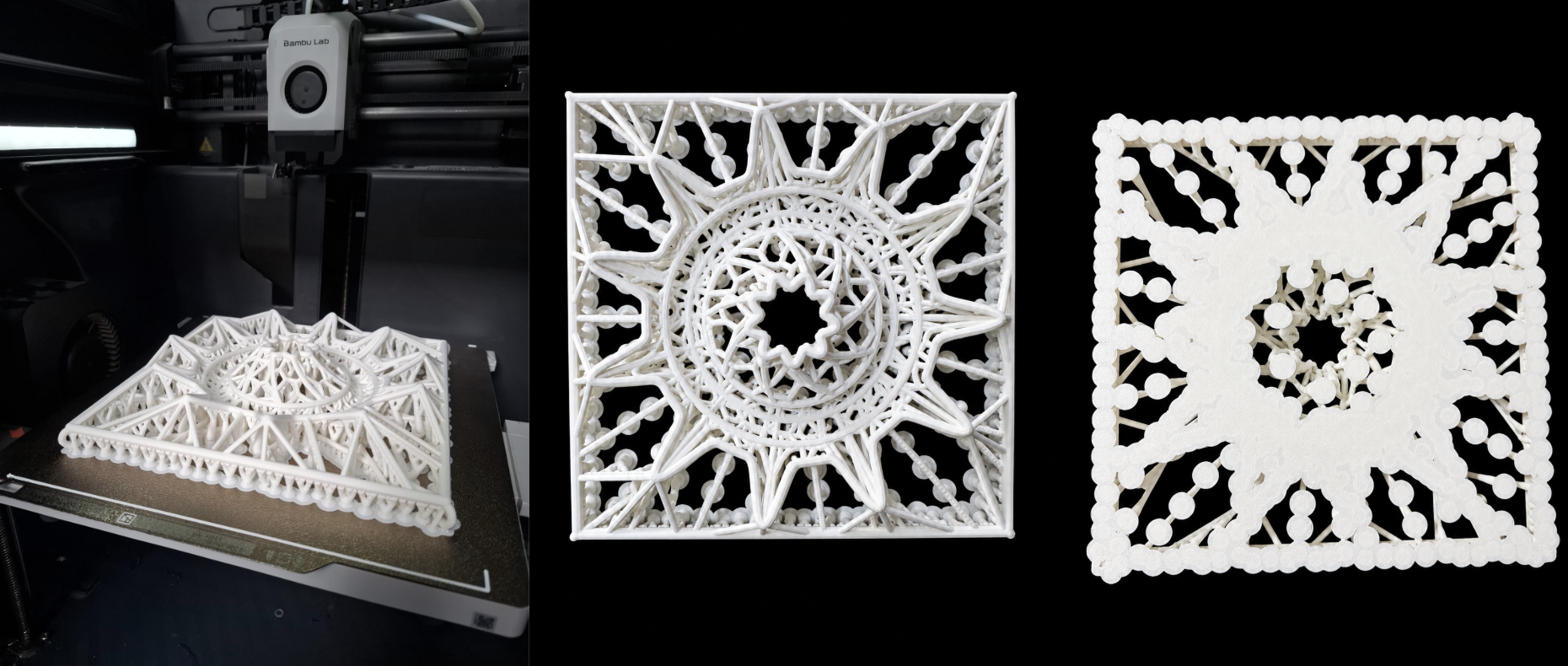
Fabrication Strategy 3d printing FINAL
Material: White PLA Machine: Bambu Lab P1S Print: Plantform: Textured PEI Plate Quality : 0.20 mm Standard @BBL X1C
RIPPLE GRID LASER CUTTING
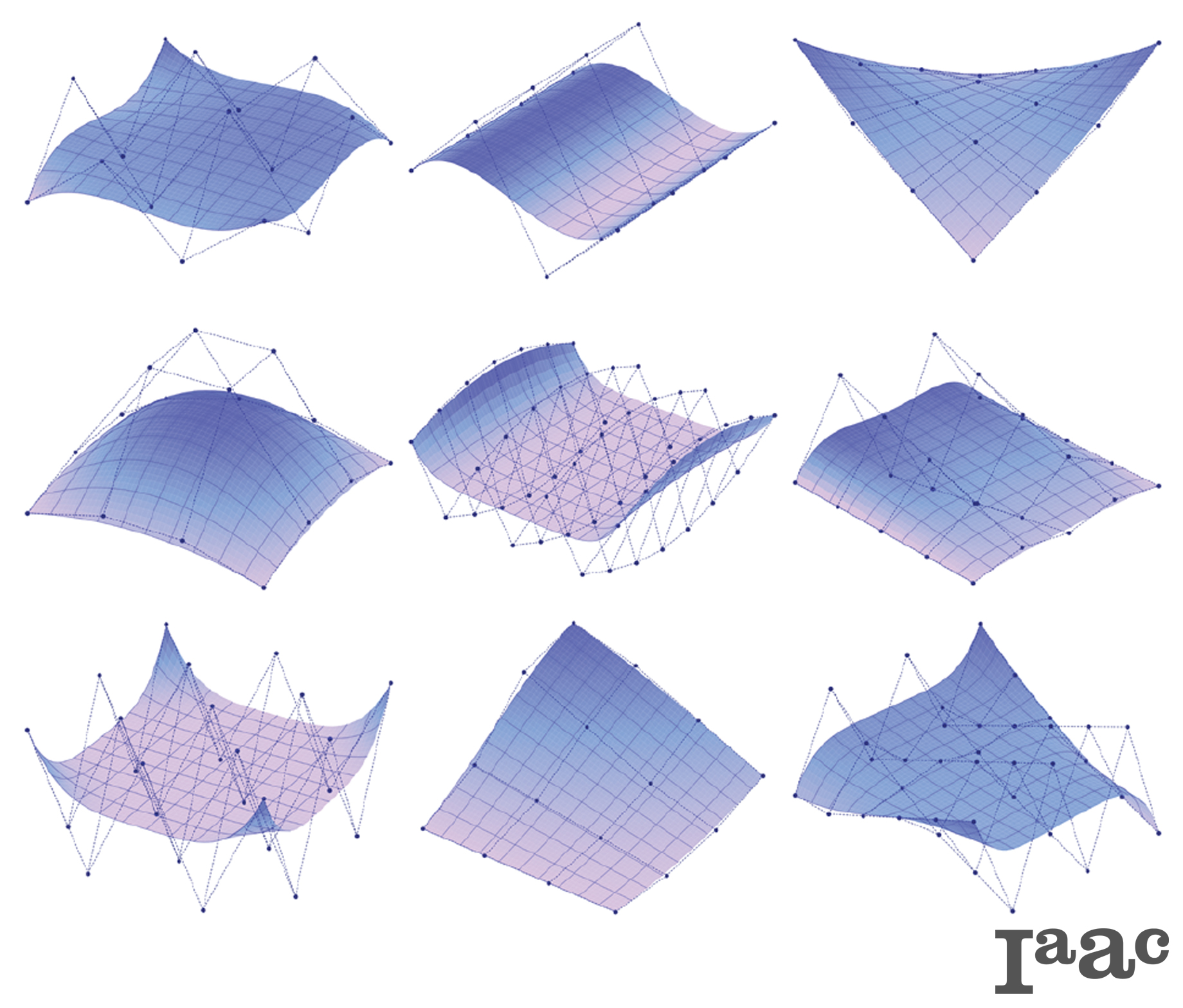
Inspiration: THE WAVE & BÉZIER CURVES
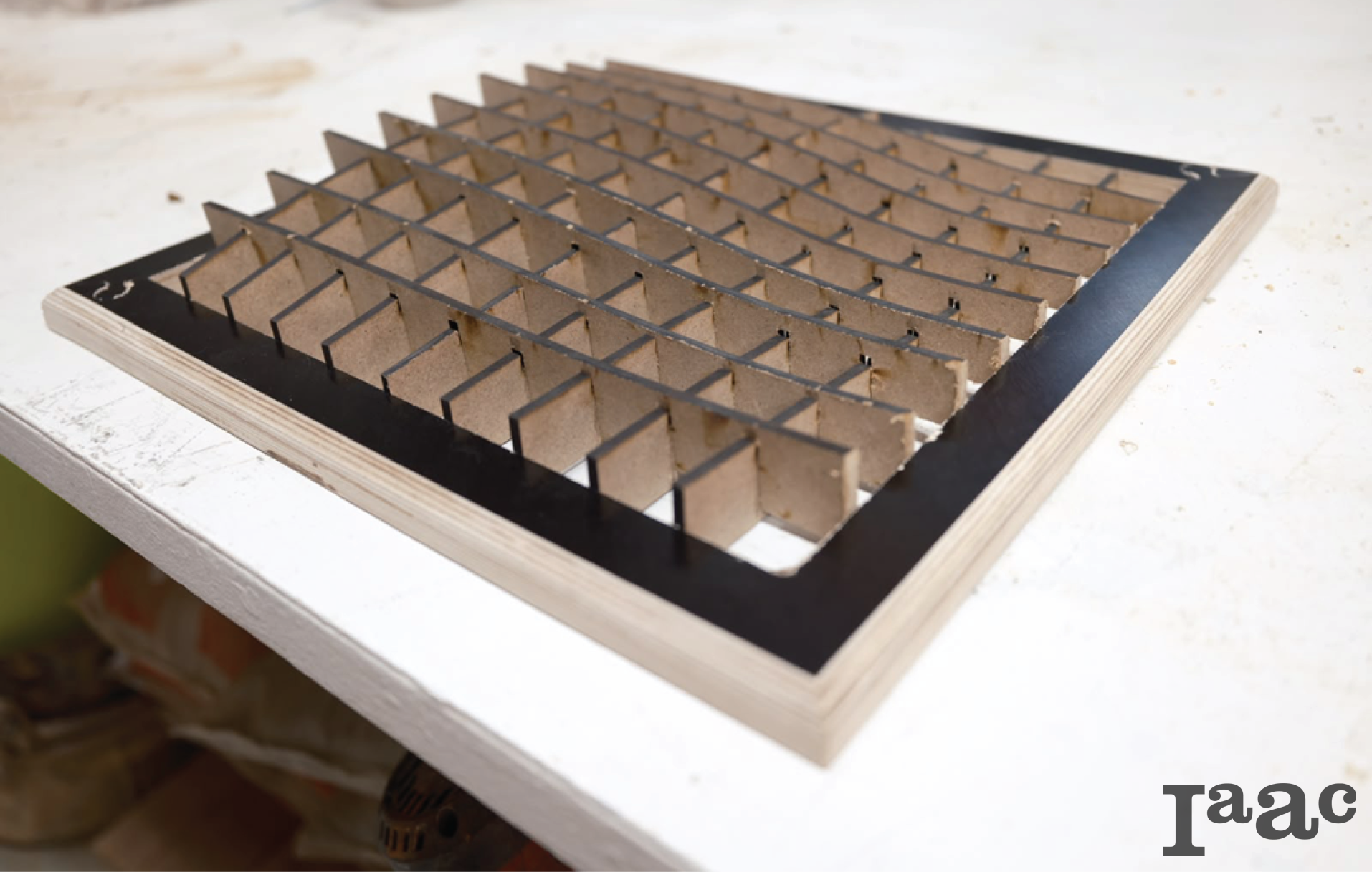
A wave is a continuous movement. The waffle freezes it into sections.
Flow: the wave gives the form its twisting, double-curved surface.
Rhythm: the repeated ribs of the waffle read like waves following one another.
Flat to curved: a fluid form, built only from flat 4 mm MDF profiles.
MDF fits: no grain, so it cuts precisely on the laser; with the 30×30 mm grid, the curves read smoothly.
Initial Sketches
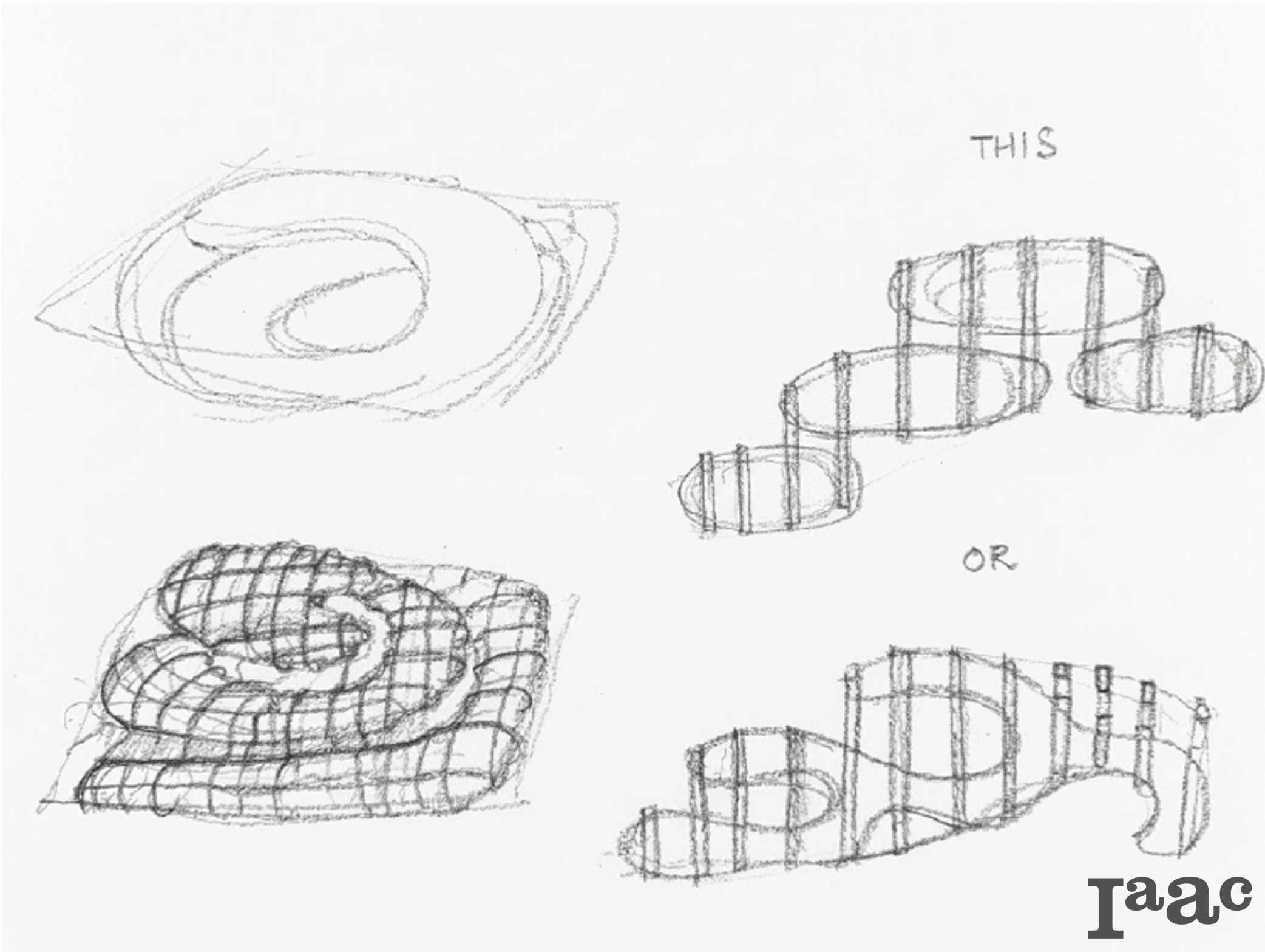
01 · Coral: We started from coral: a porous, organic form built from repeated units.
02 · Vortex: The coral’s growth became a spiral. The form coiled and stacked onto itself.
03 · Wave: We opened the spiral into a wave: one continuous, flowing surface, ideal for the waffle grid.
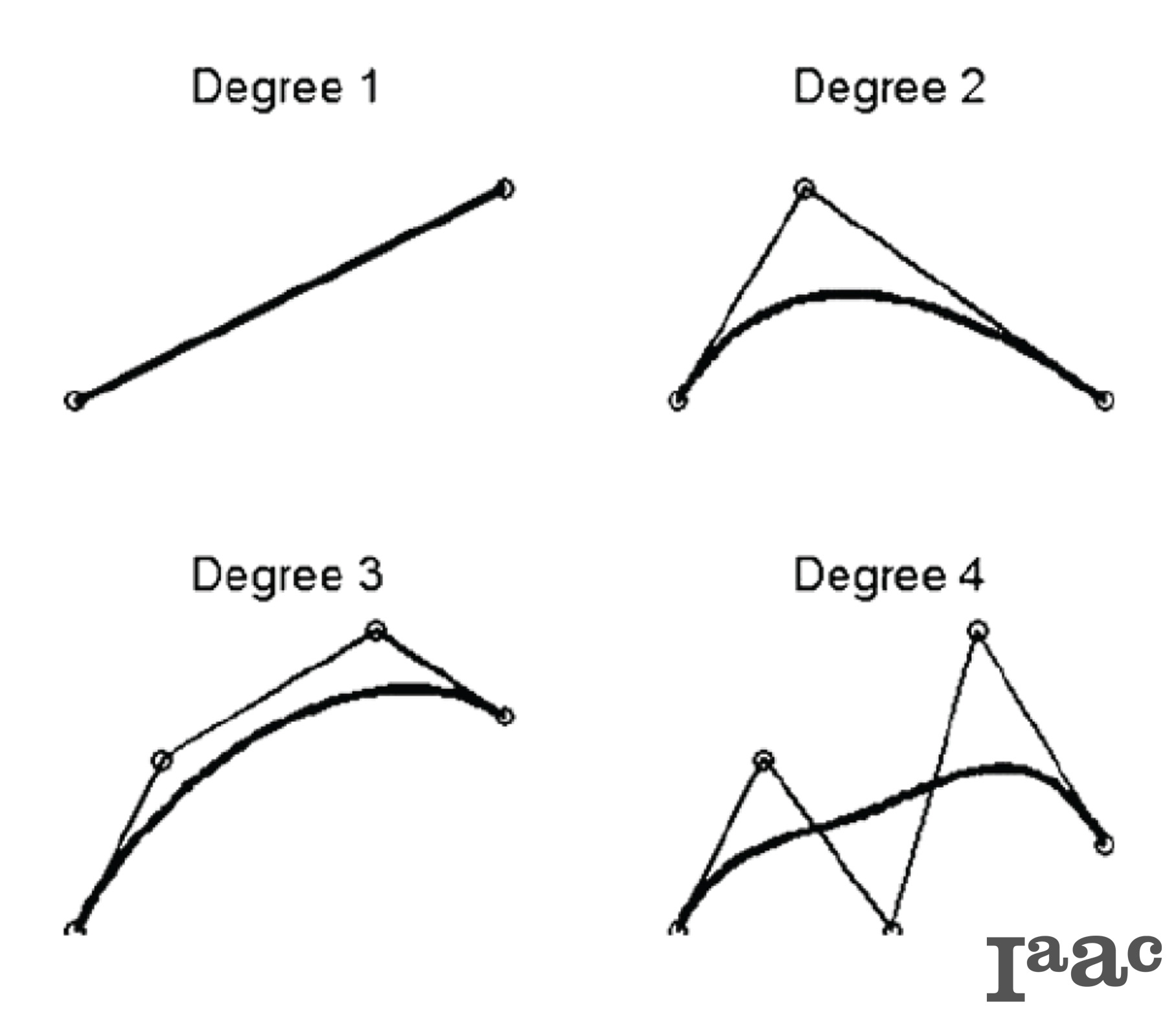
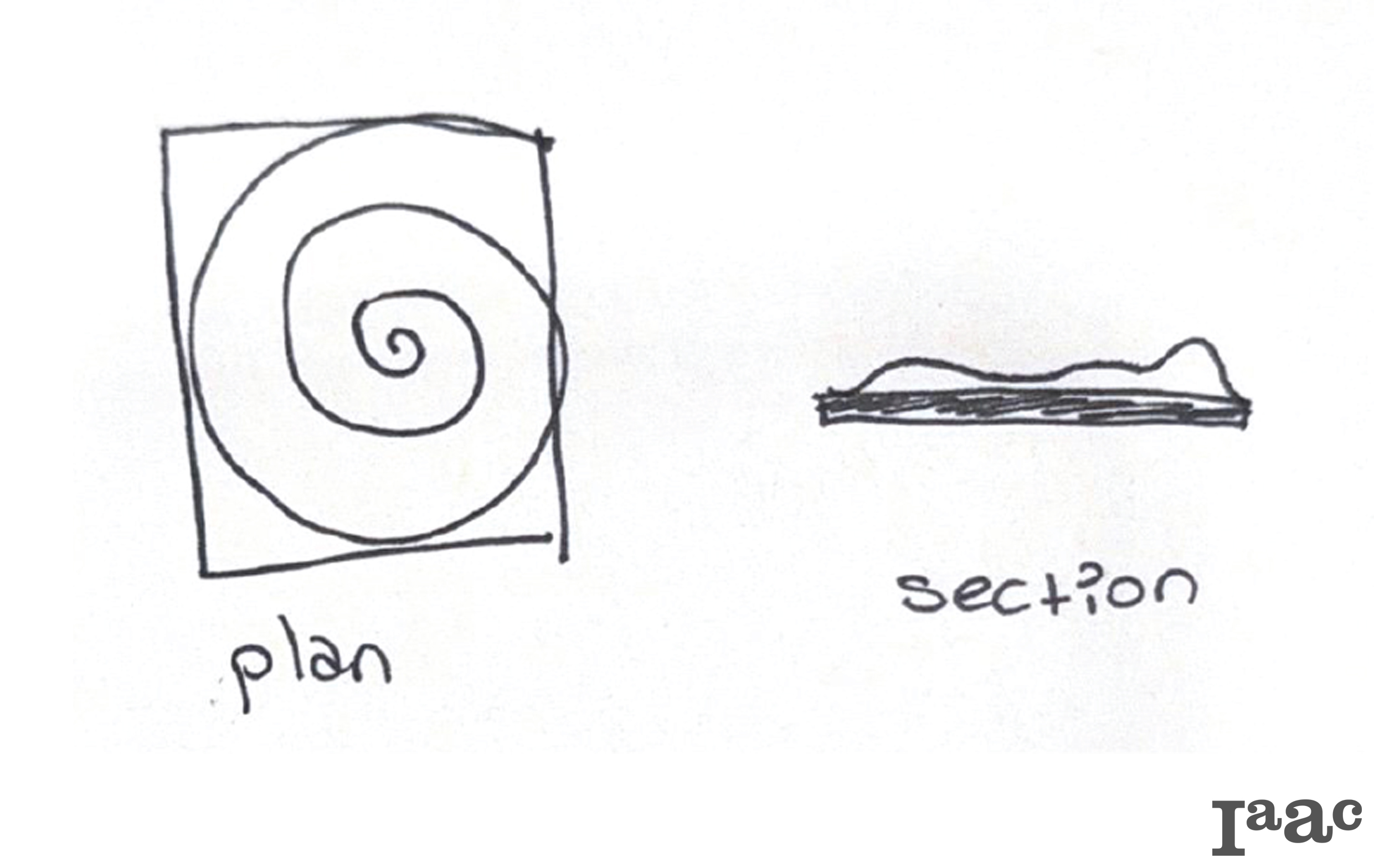
First model explorations
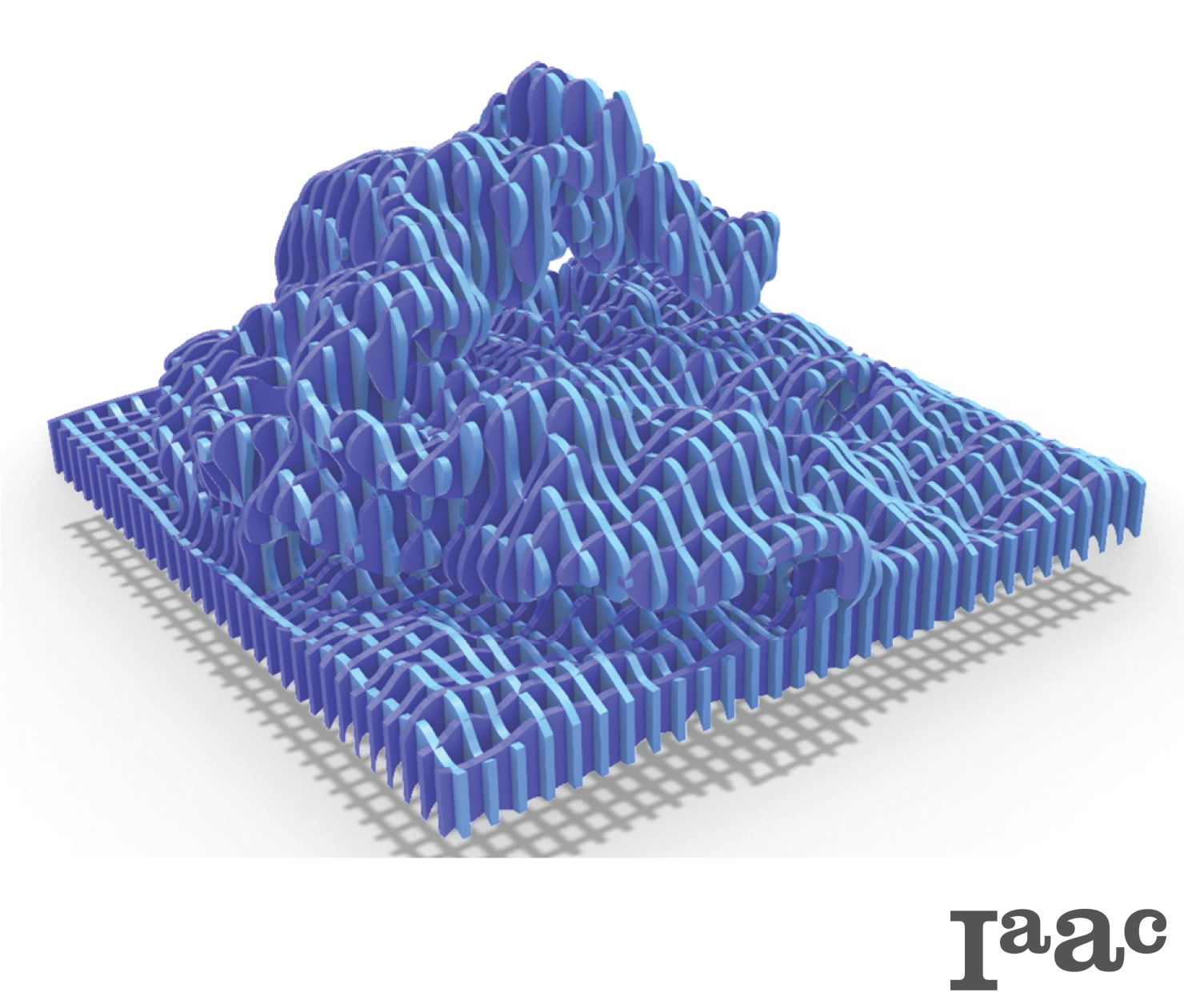
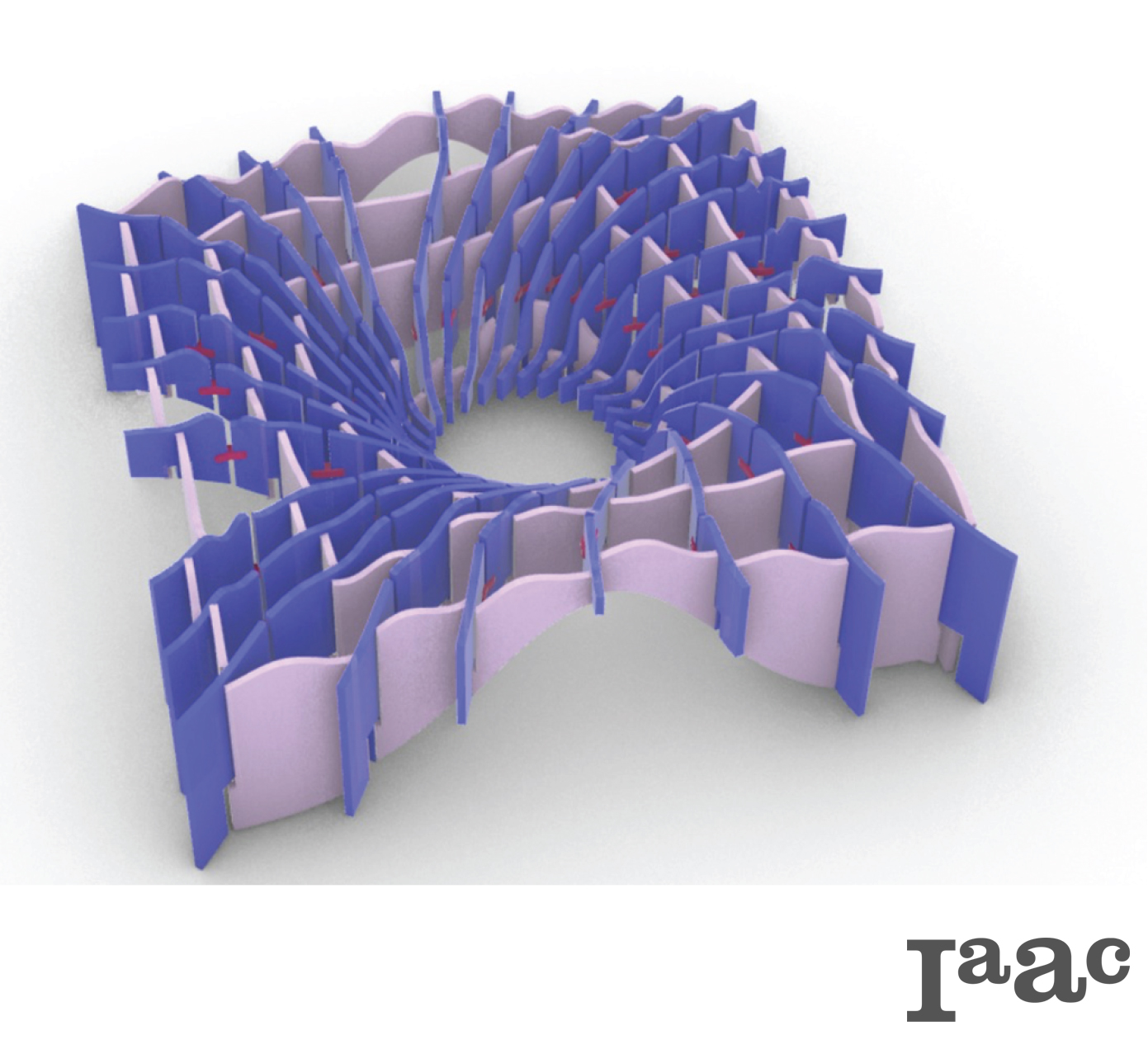
3d model without material restrictions / Final 3d model
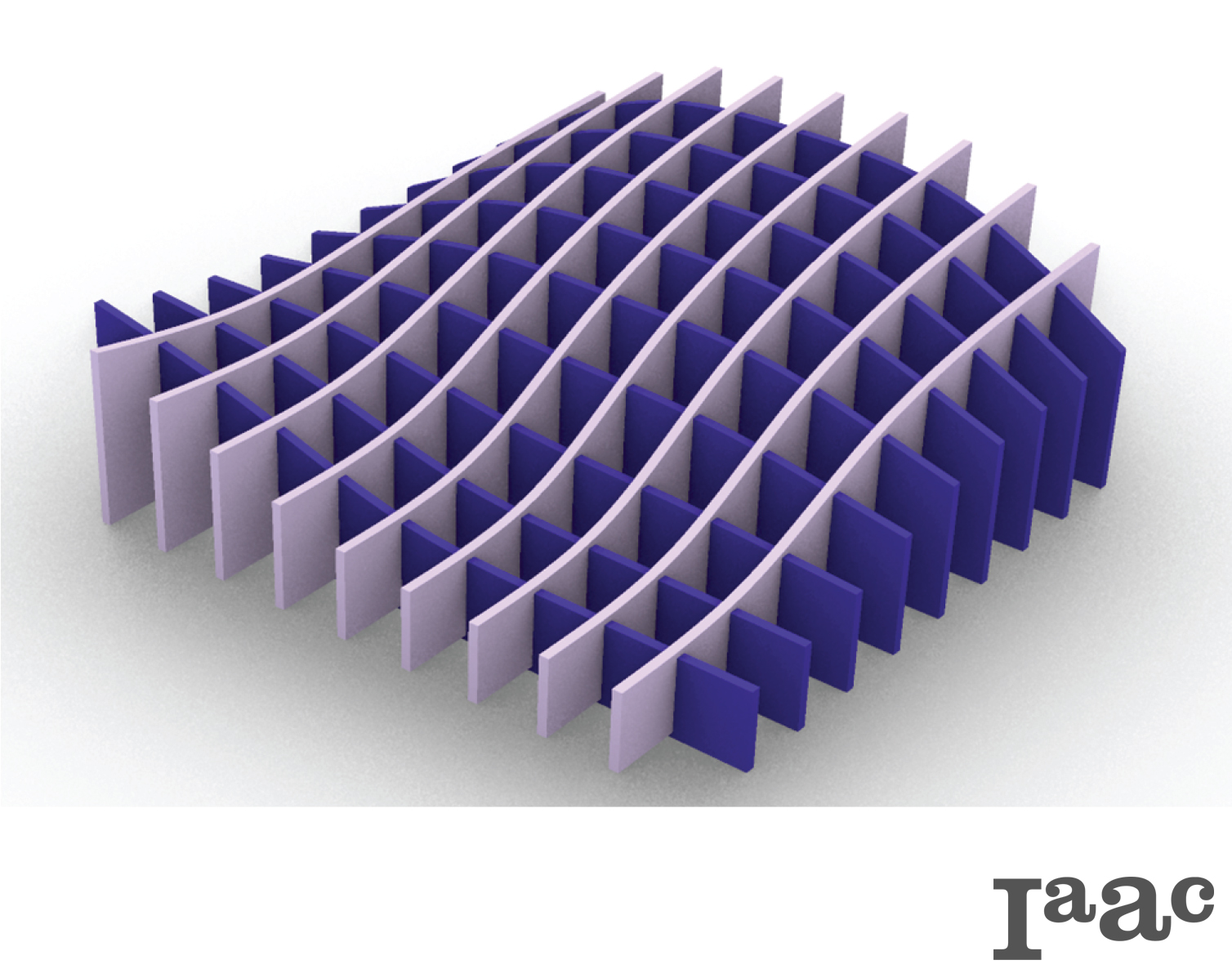
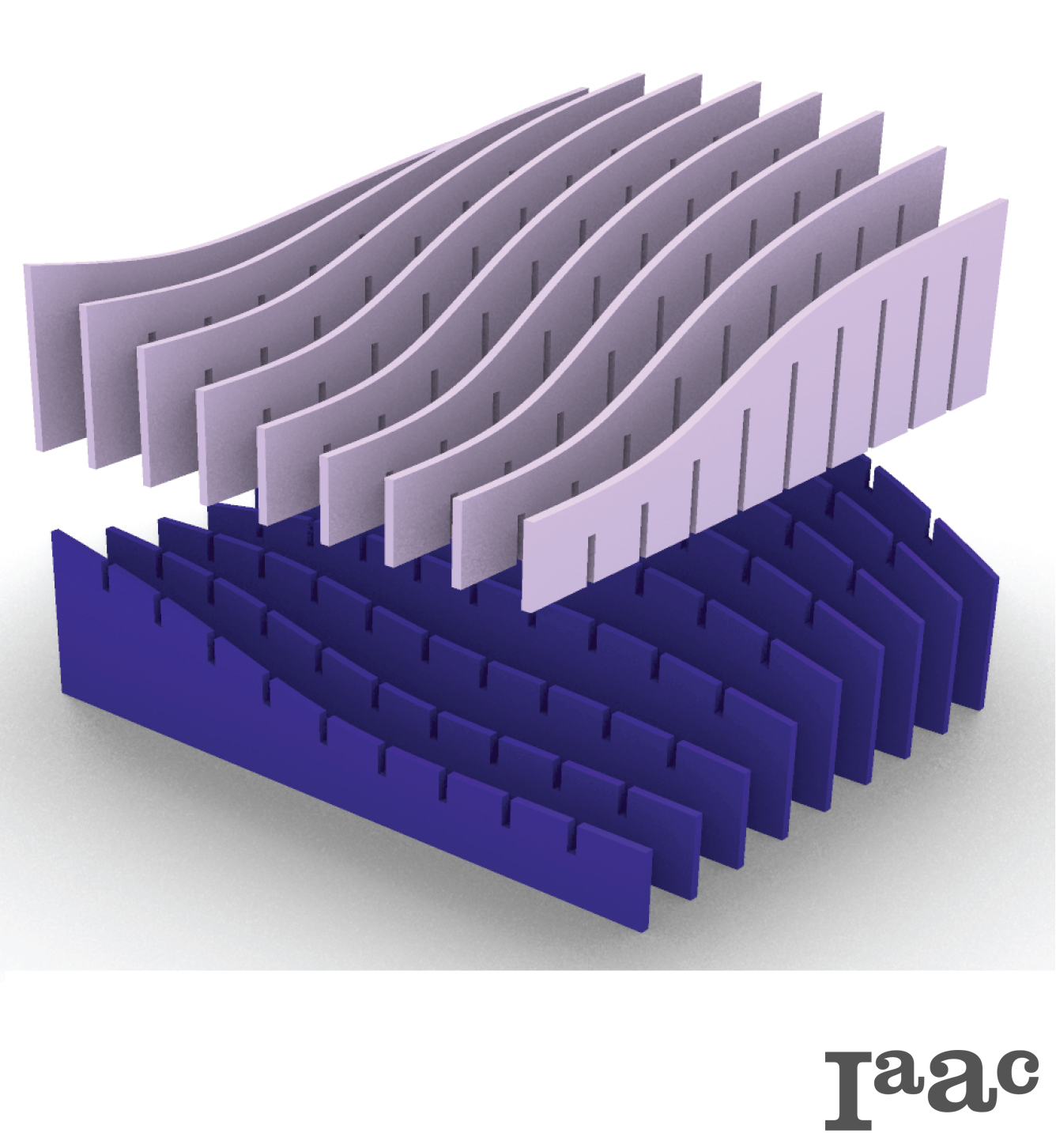
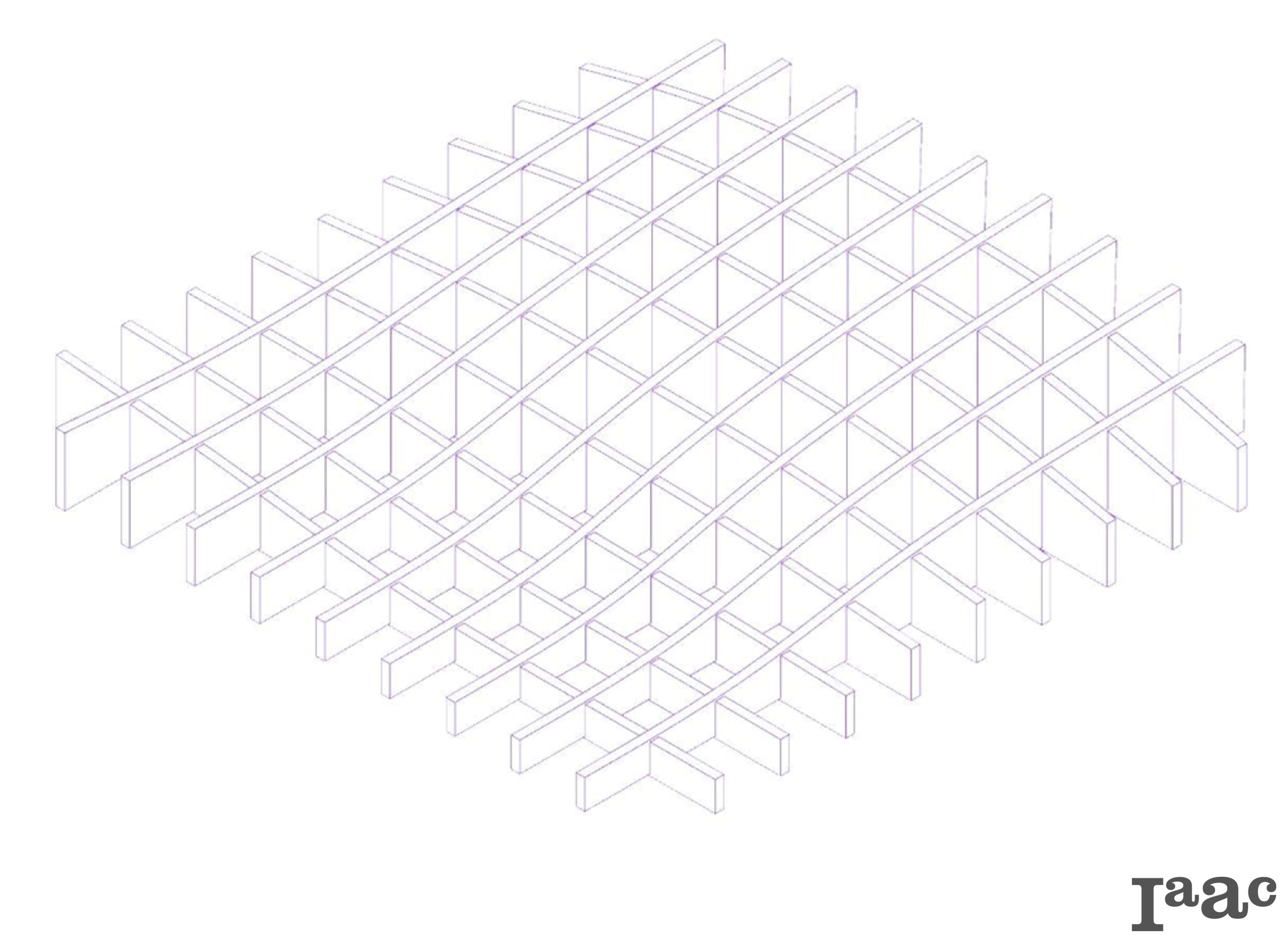
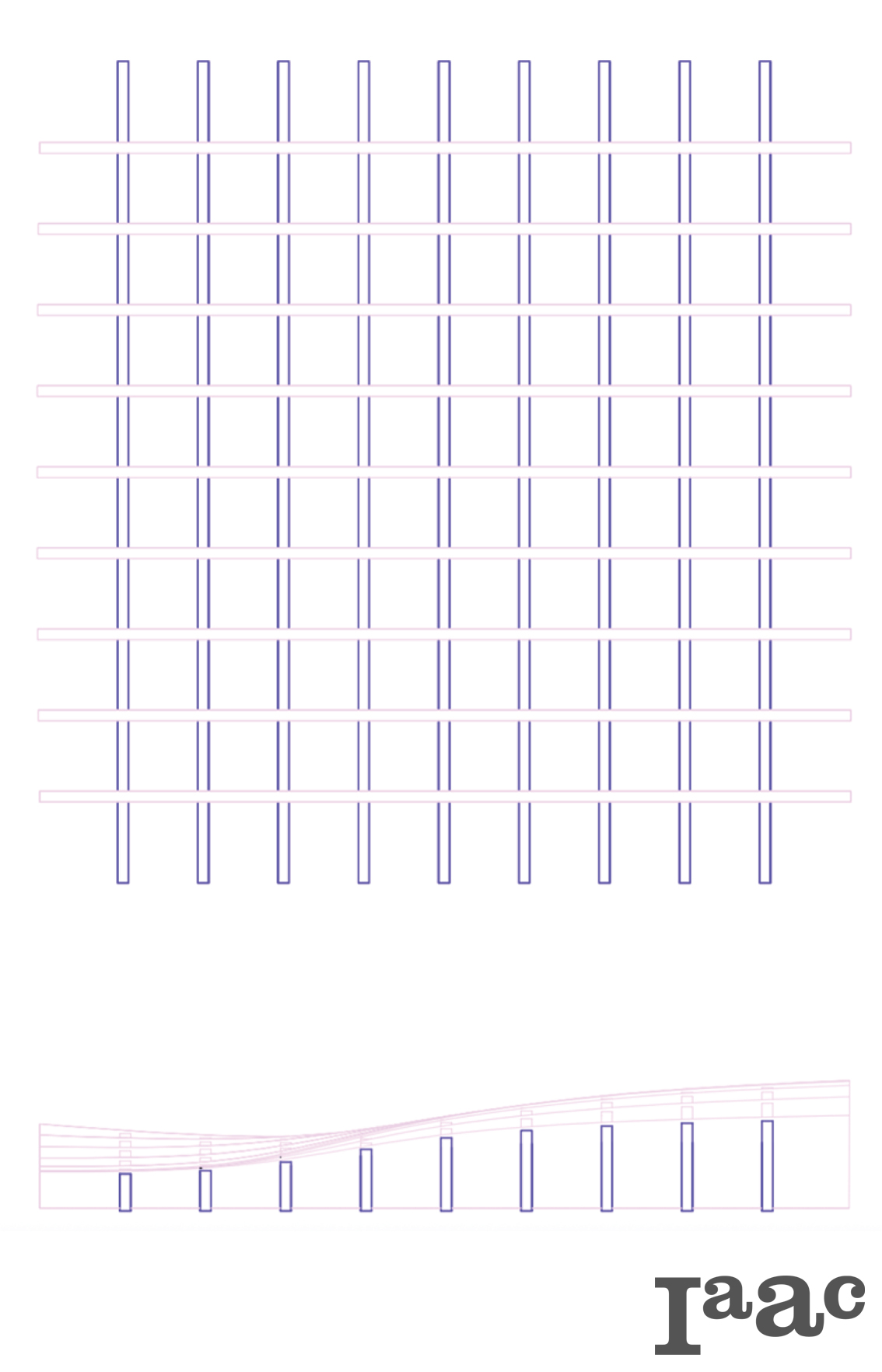
Project diagrams / Technical drawings
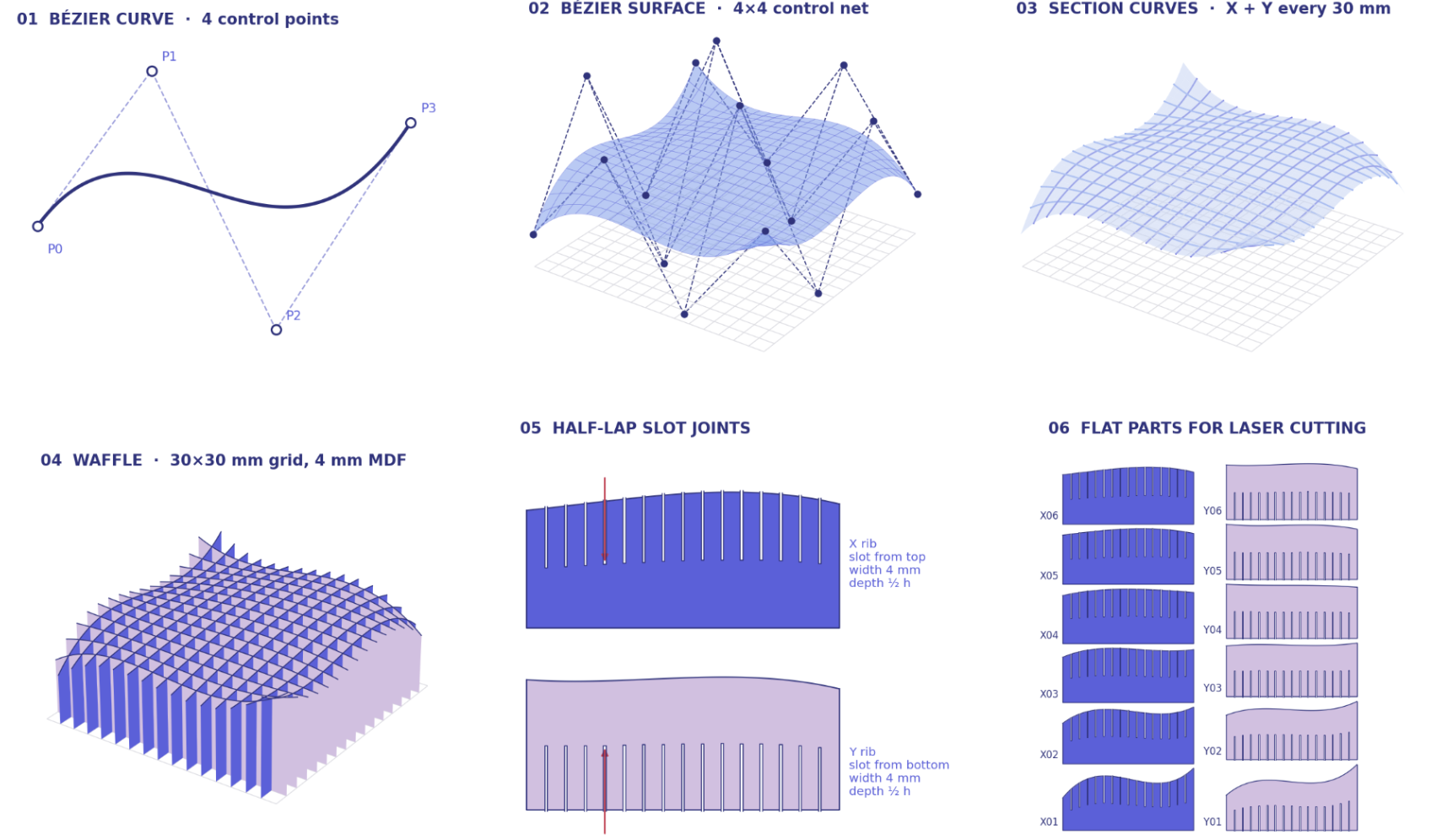
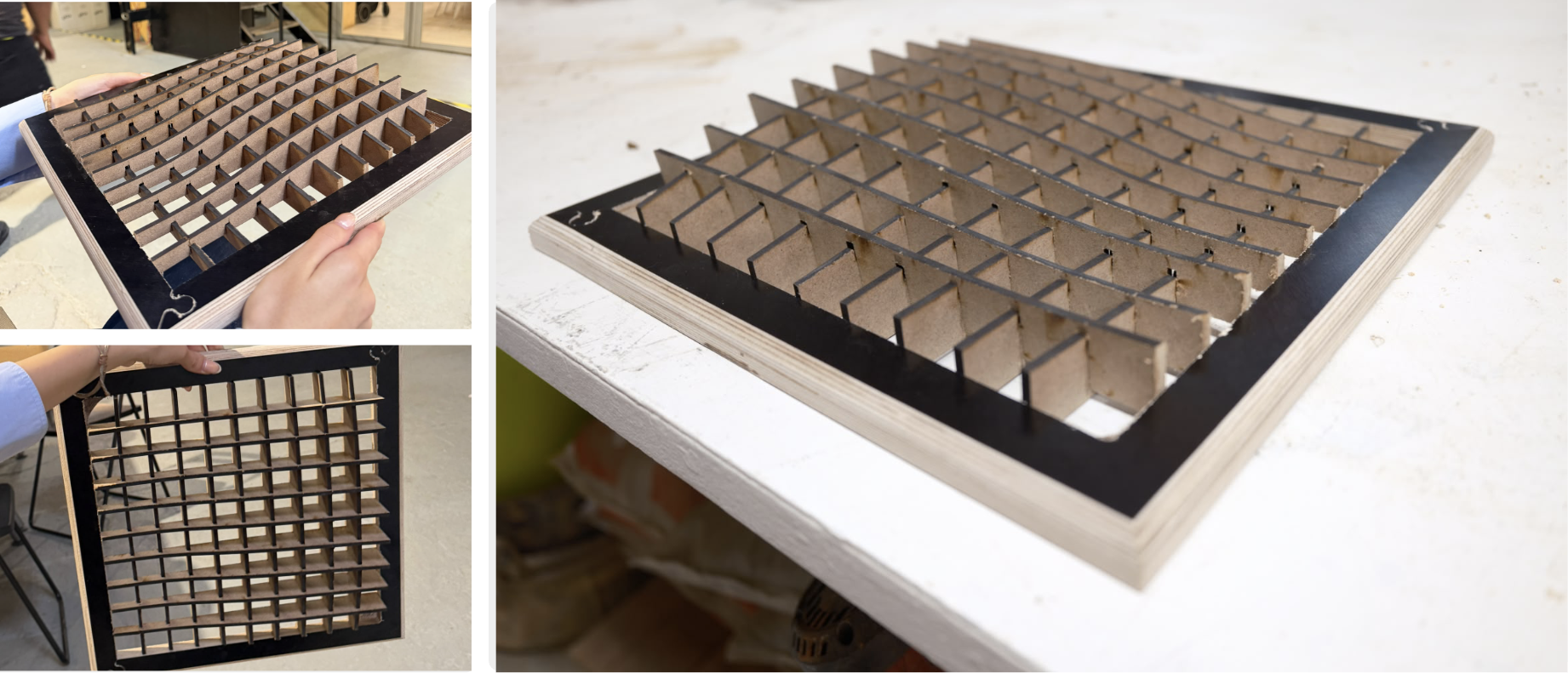
Fabrication Strategy-Sectioning (Waffle)
Material: MDF 4mm Machine: r500-rayjet / r400-rayjet Cut: Speed: 48 Power: 1.1
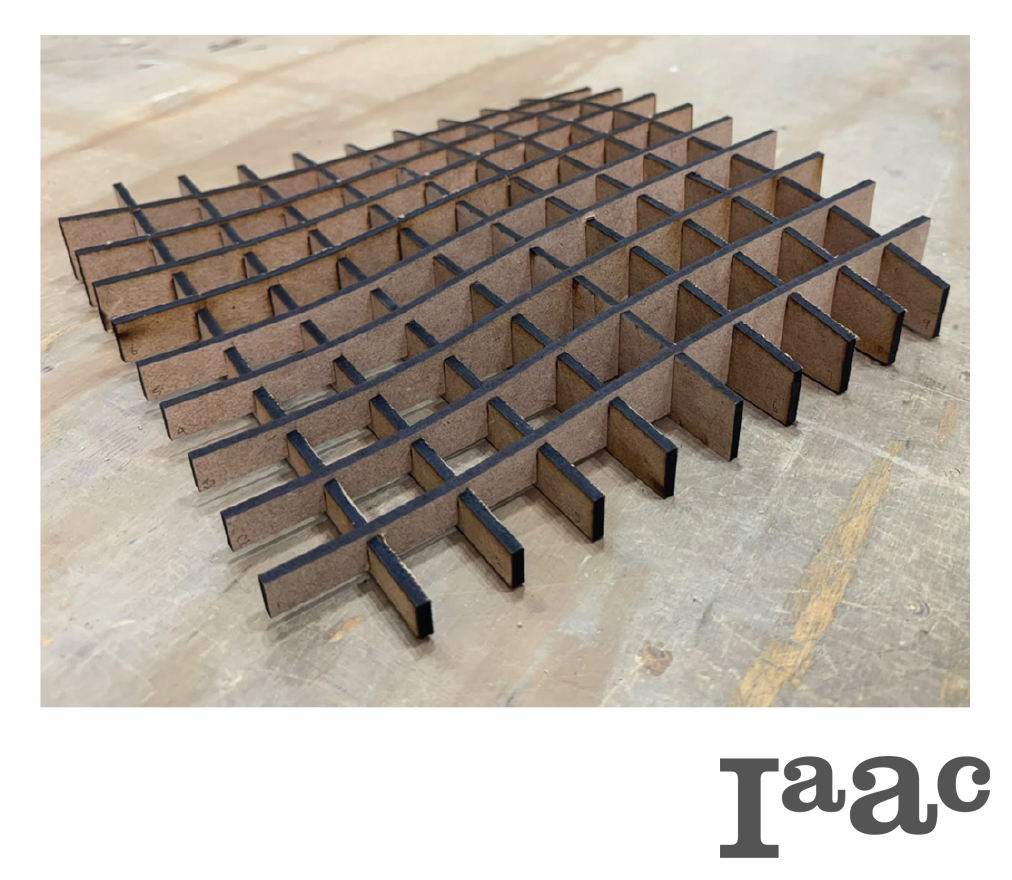
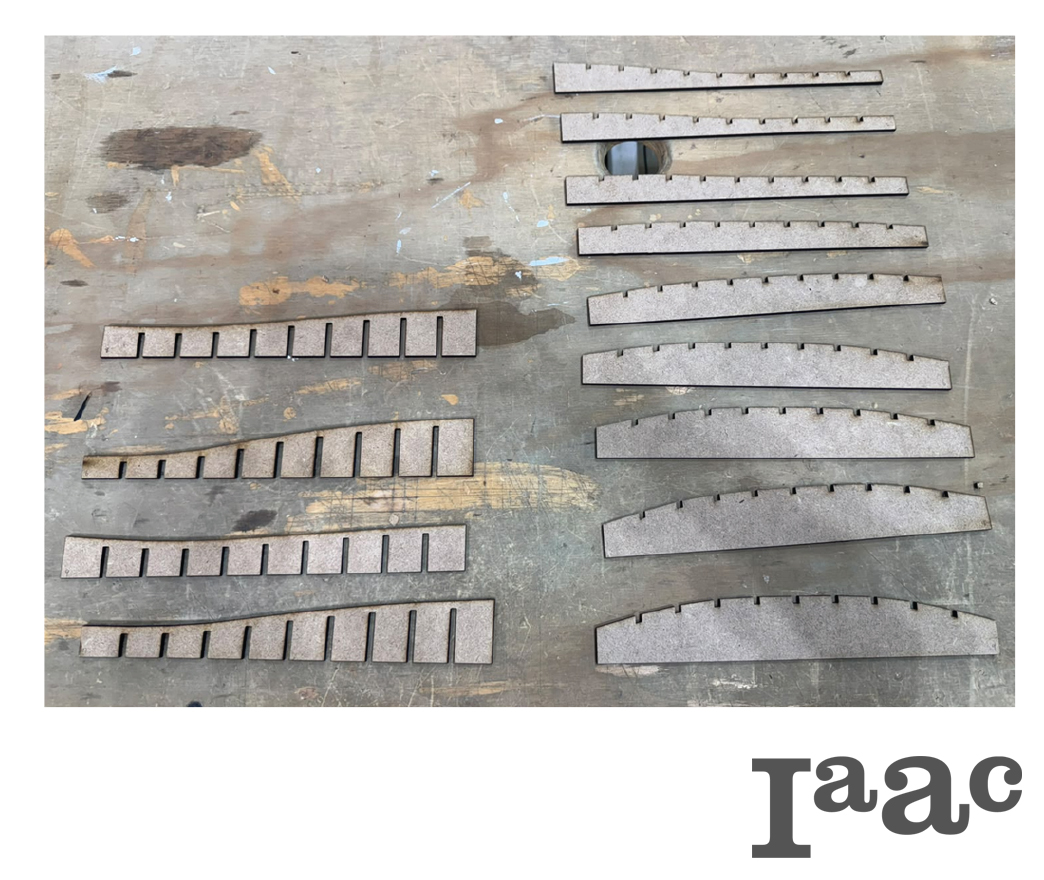
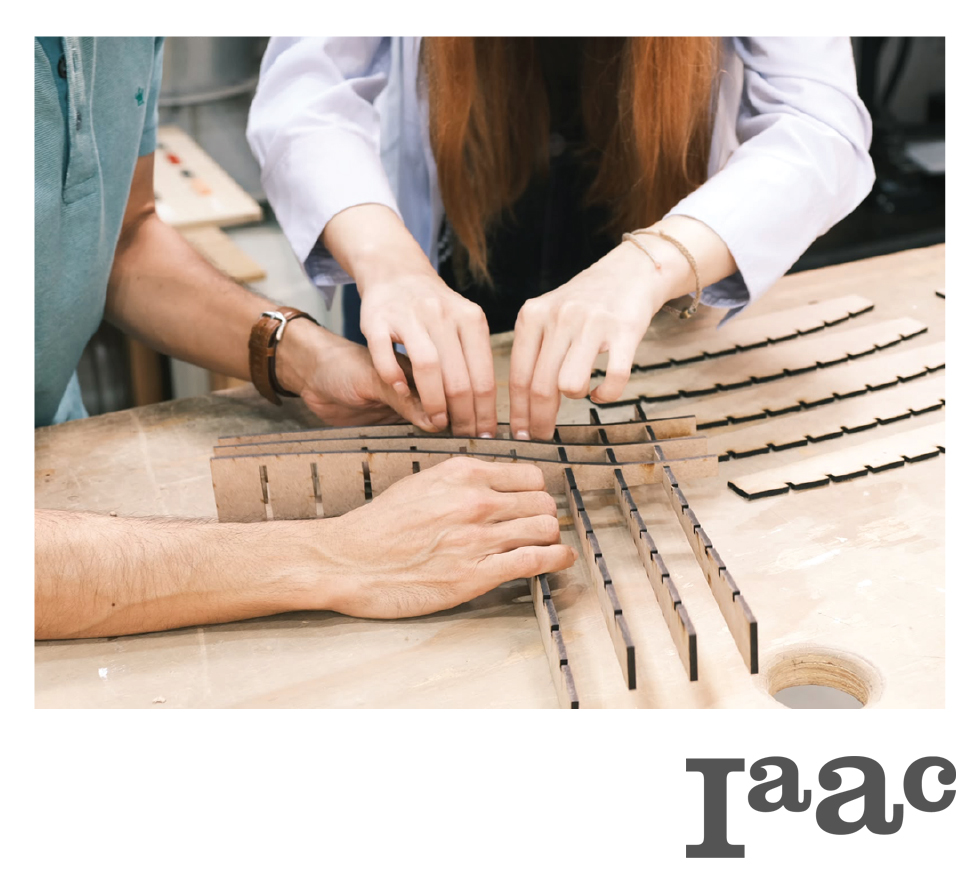
CLAY MATRIX Robotic Fabrication
Inspiration
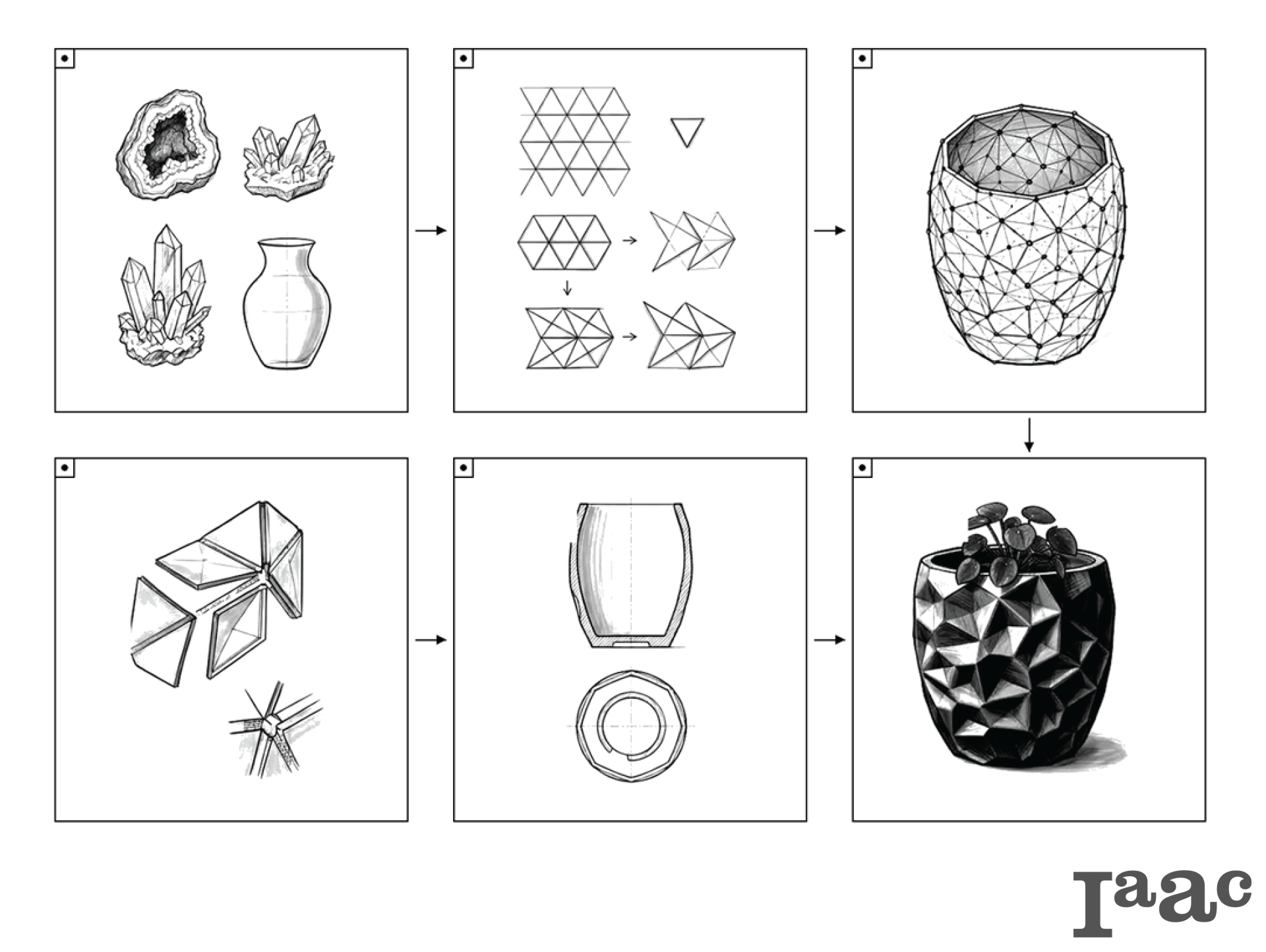
Clay and crystals both come from the earth. We gave clay the geometry of a mineral.
Same origin: clay is earth, crystals and geodes are earth turned into geometry.
Simple unit: the triangle is the simplest flat shape, and repeated it can describe any curved form.
Light & shadow: on the matte surface of clay, every facet catches light differently.
Fits the process: flat facets and sharp edges translate clearly into a robotic toolpath, and clay holds them well.
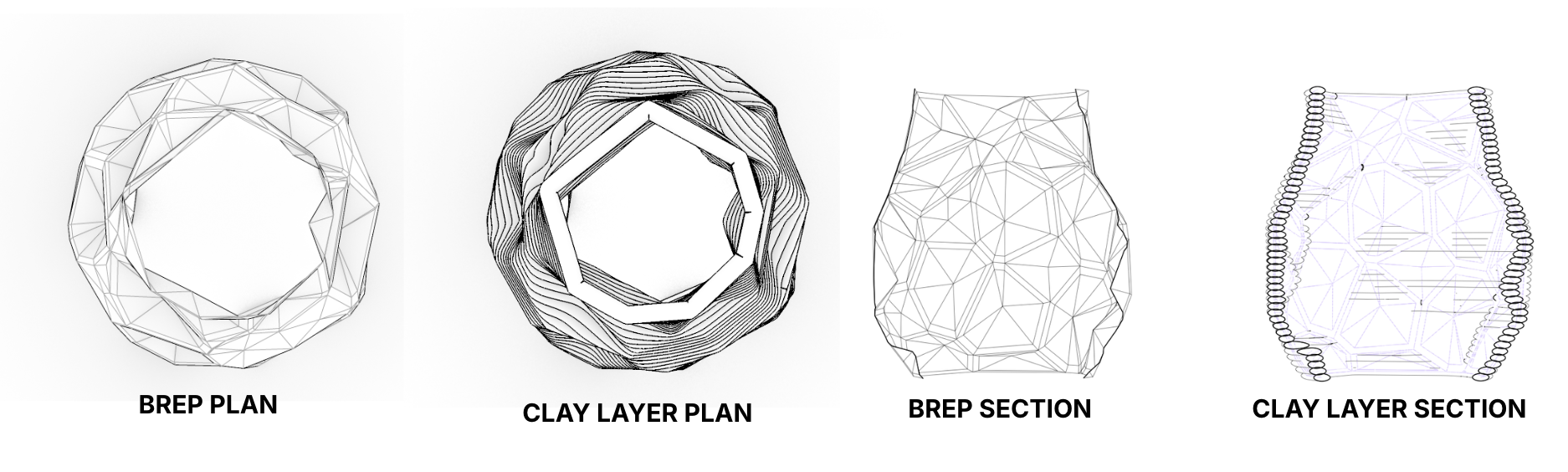
Project diagrams / Technical drawings
Fabrication Strategy Robotics
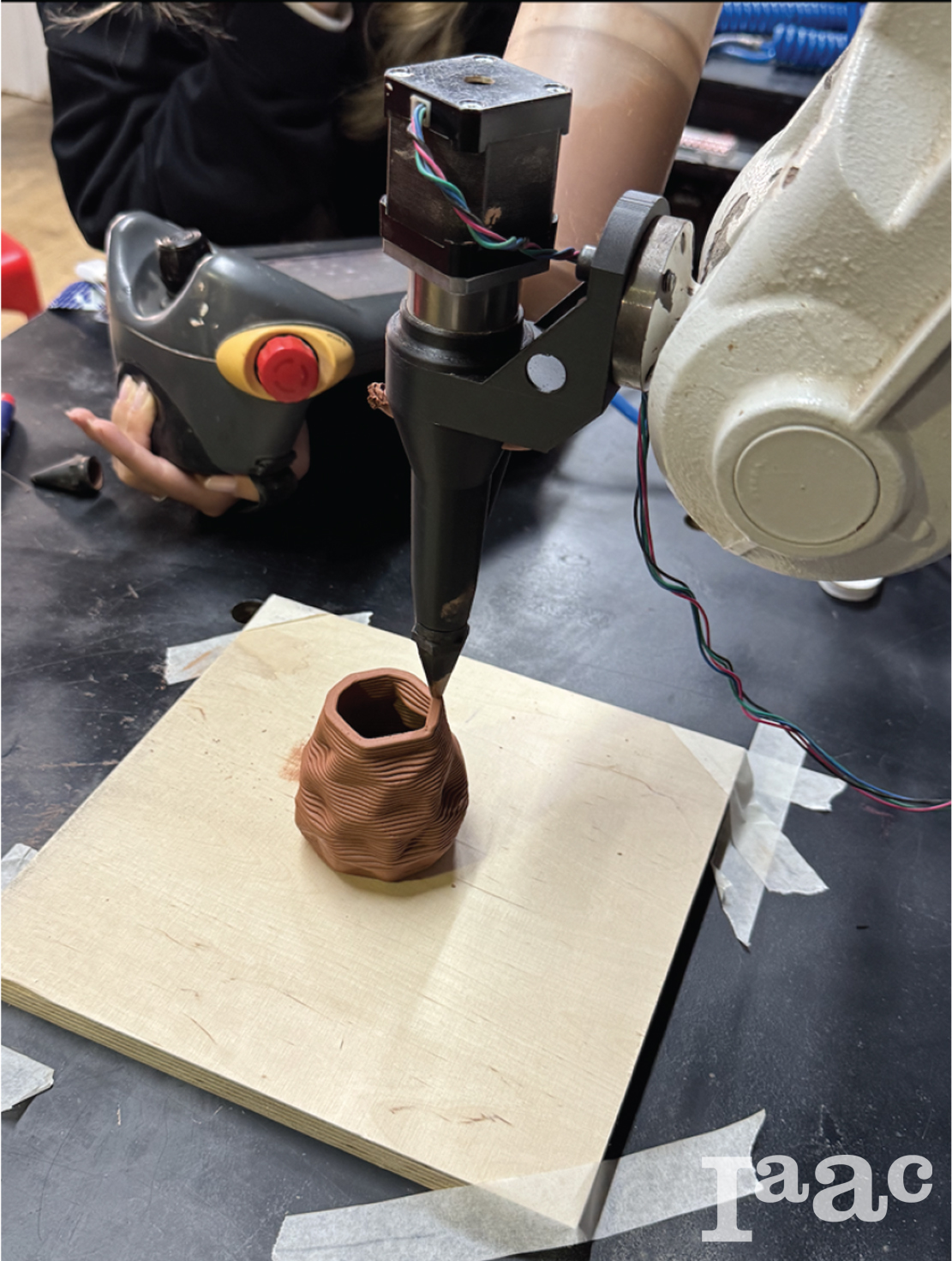
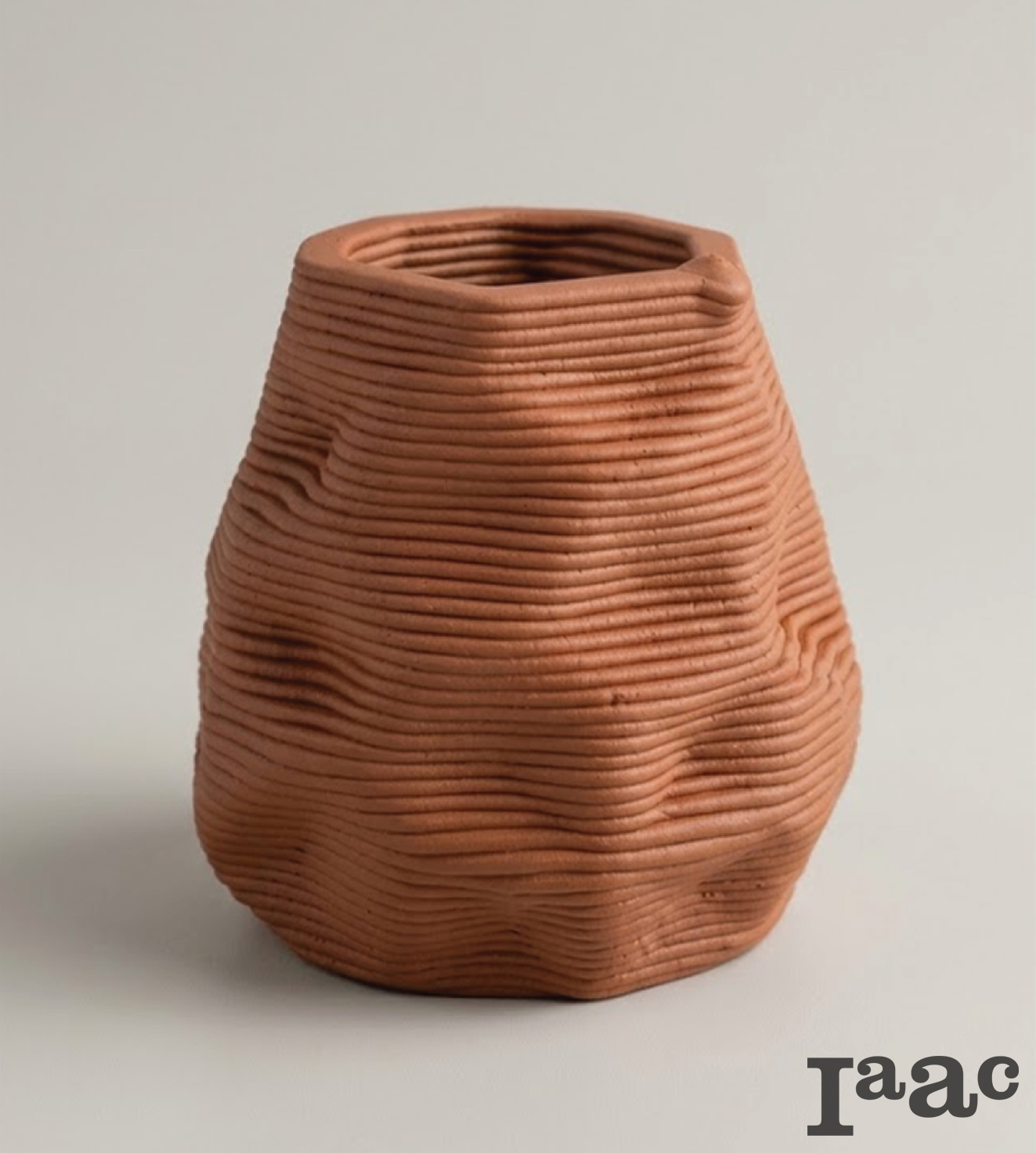
DIGITAL vs PHYSICAL
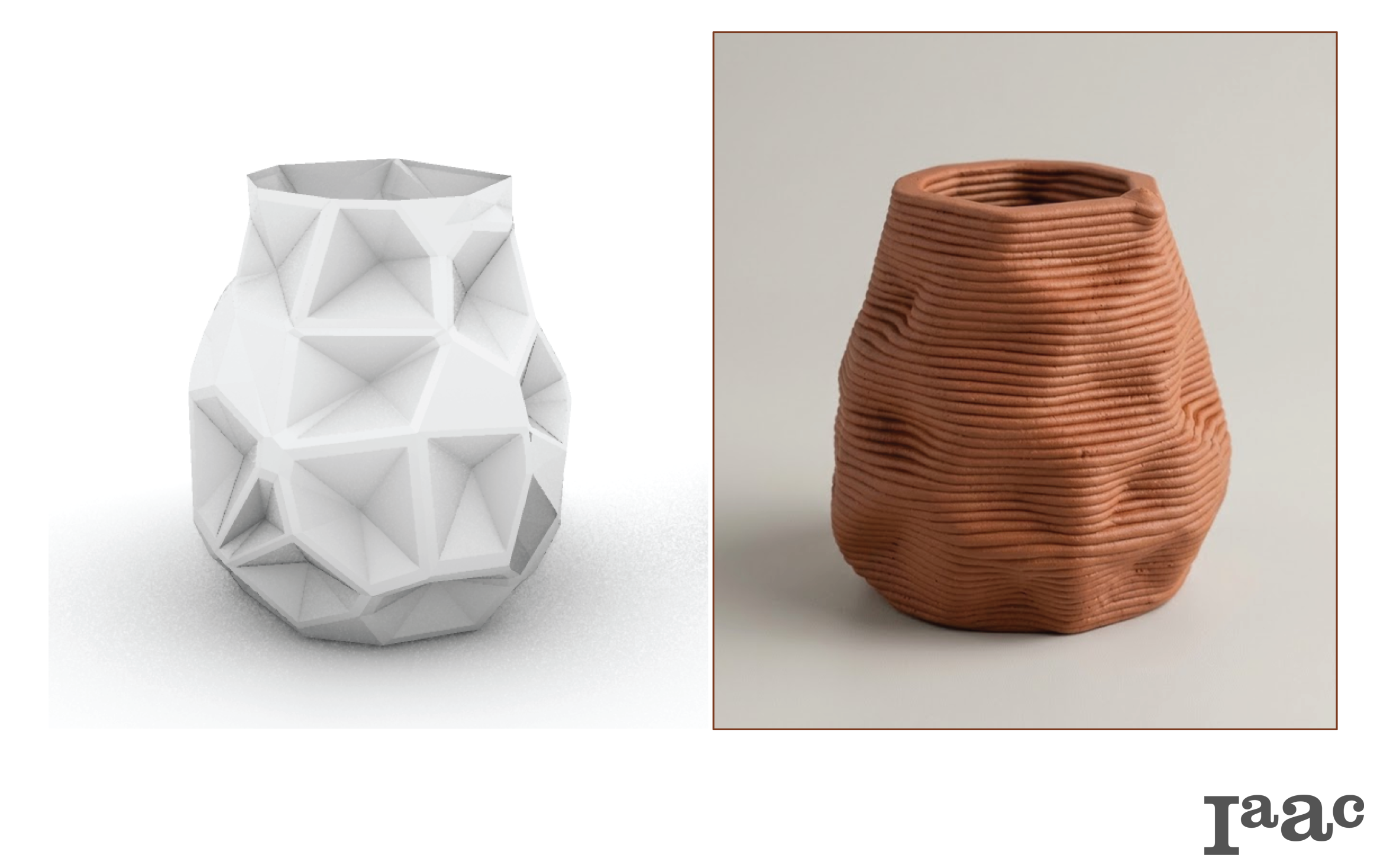
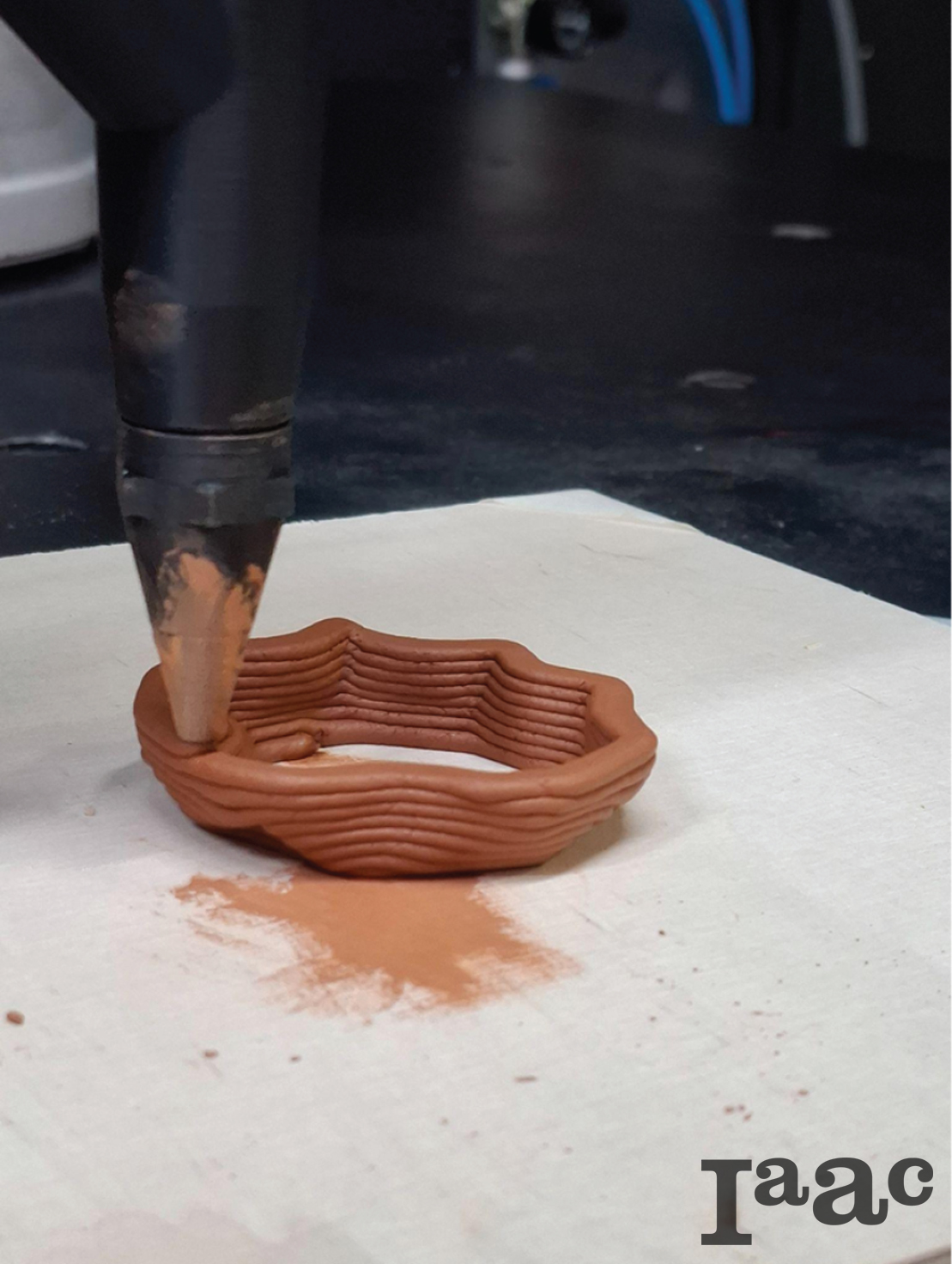
What we lost in fabrication:
Sharp edges → rounded edges Small triangles → smoothed out The digital model had more detail than the clay could hold.
WHY IT HAPPENED
Too many division points: facets smaller than the clay bead, so they disappeared.
Layer height: too high for the facet depth, so the steps blurred the geometry.
Robot motion: joint motion curves the path between points; linear motion keeps edges straight.
Speed: speed and extrusion were not balanced, so the corners got rounded.
Material: soft clay slumps under its own weight.
HOW WE WOULD IMPROVE IT
Reformulating the parameters, from digital to physical:
Fewer division points: bigger, deeper facets that the clay can actually show.
Triangle → hexagon: larger, flatter cells with fewer sharp corners.
Lower layer height, matched to the nozzle, or a material that allows it (e.g. hydrogel).
Adjusted speed at corners.
SPINNING PETALS Cnc
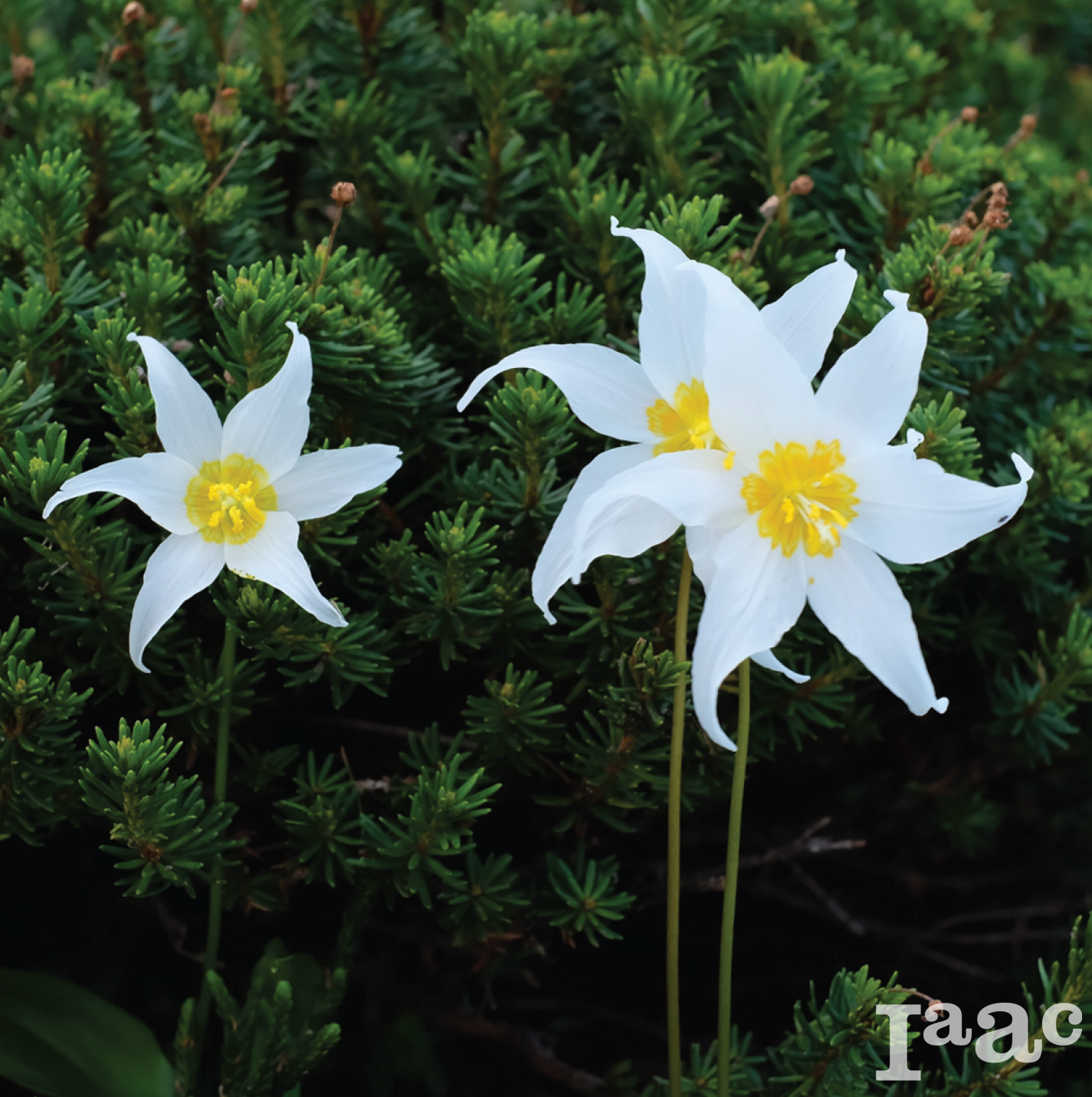
Inspiration : Windmill flower
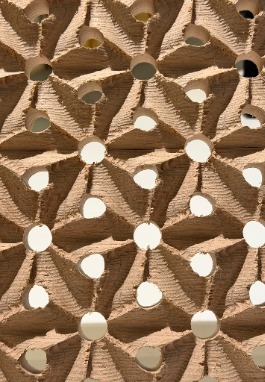
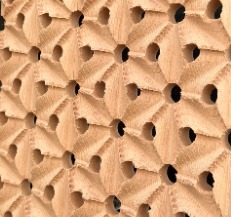
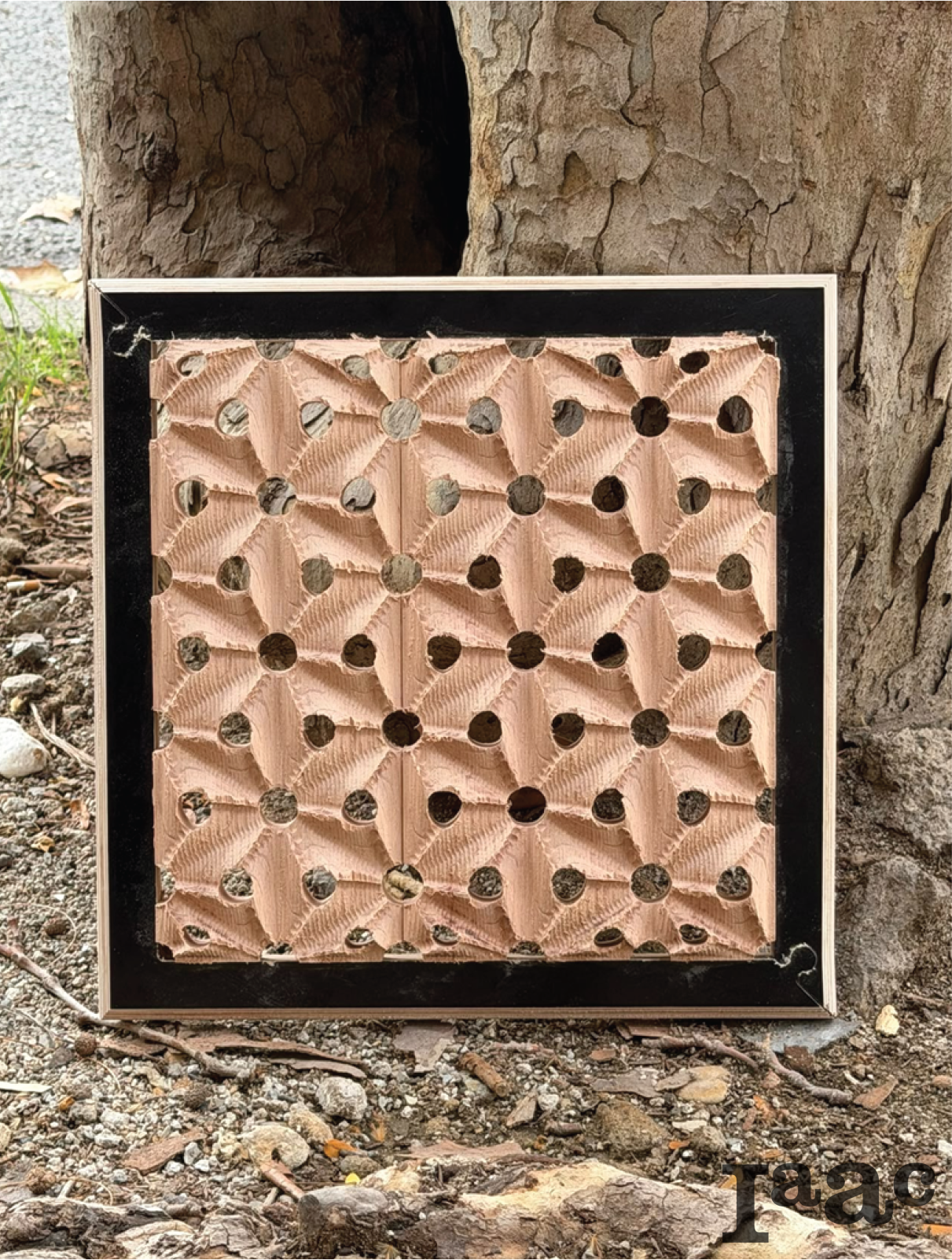
Our inspiration is the windmill flower: the meeting point of a paper pinwheel and a white flower with six twisting petals. Both turn around a centre, with curved blades that suggest movement even when still. We translated this rotation into the panel: each hub becomes a small rosette of curved slots, and the twisted facets around it read like petals caught in motion.
Initial Sketches
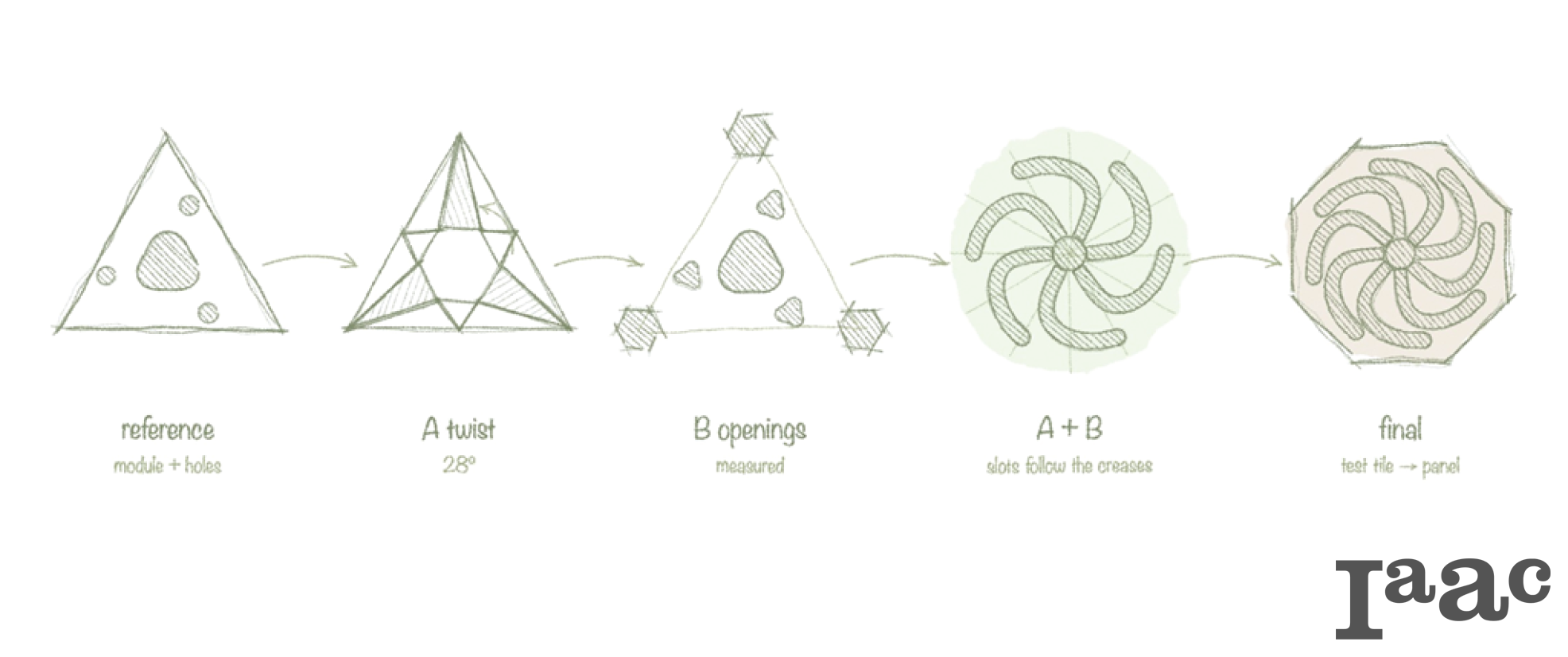
These sketches show how we reached the final model. We broke the reference down into its basic elements, then explored the twist of the facets and the shape of the openings separately. Bringing them together gave the final rosette pattern.
First model explorations
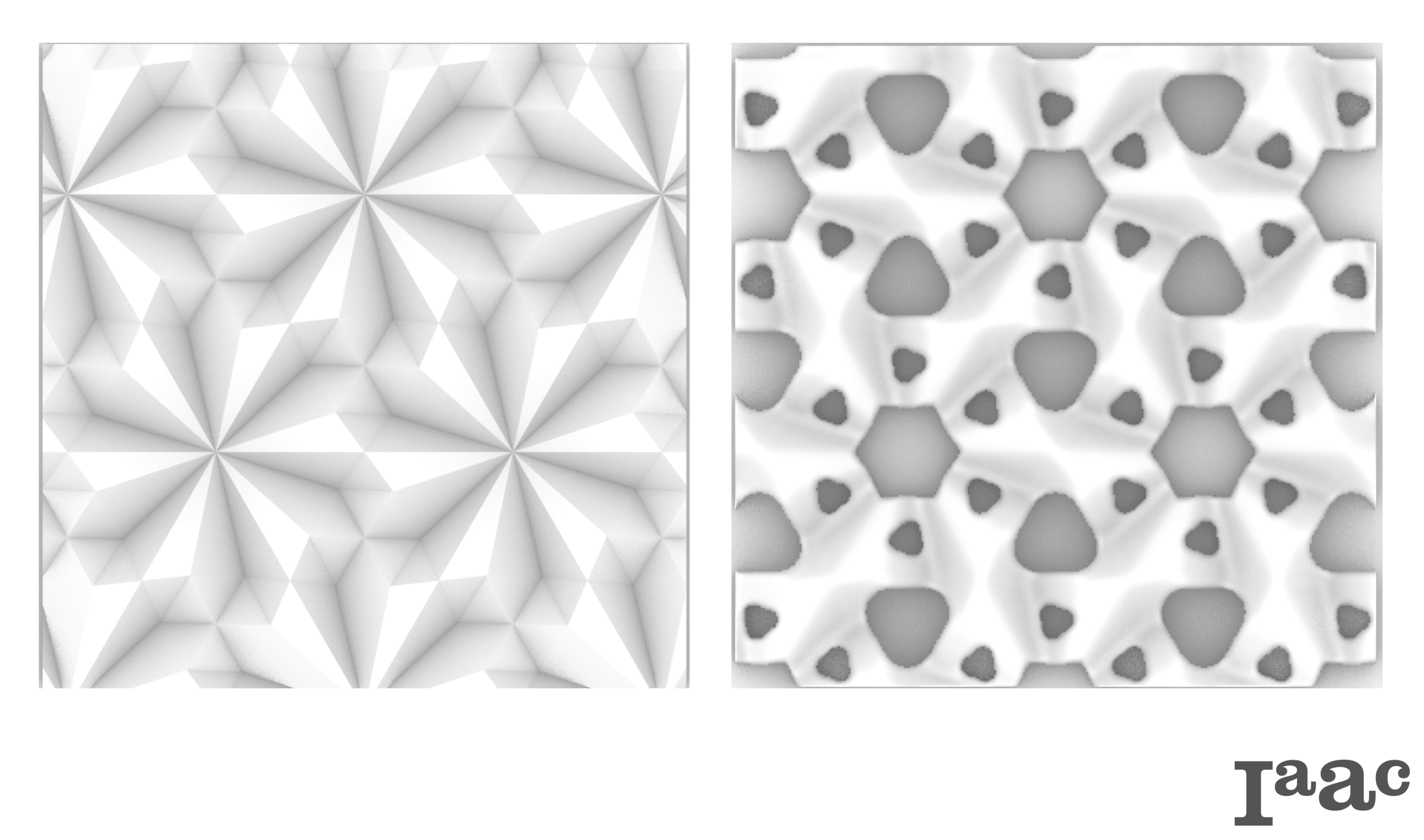
First model (A): The first model explores the movement: a surface of flat facets twisting around each centre, which creates a pinwheel effect across the panel.
Second model (B): The second model explores the openings: big and small holes measured from the reference, placed on the same lattice. It gave the rhythm of the pattern, but the holes did not yet follow the twist.
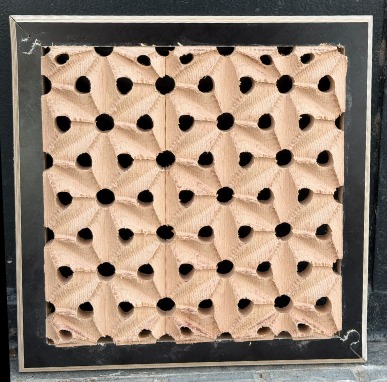
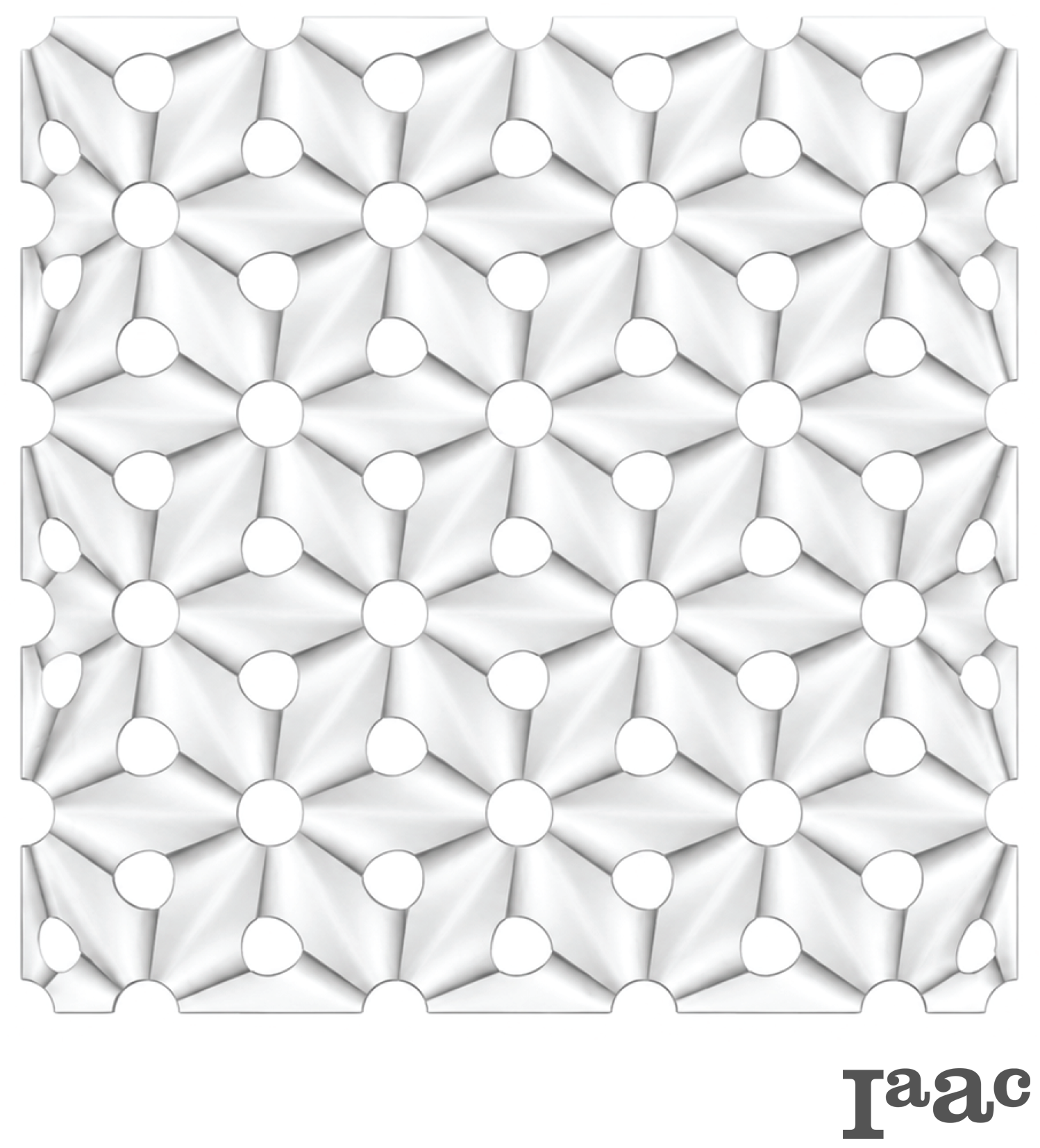
Final Model : The final model is a combination of the two previous iterations
Project diagrams / Technical drawings
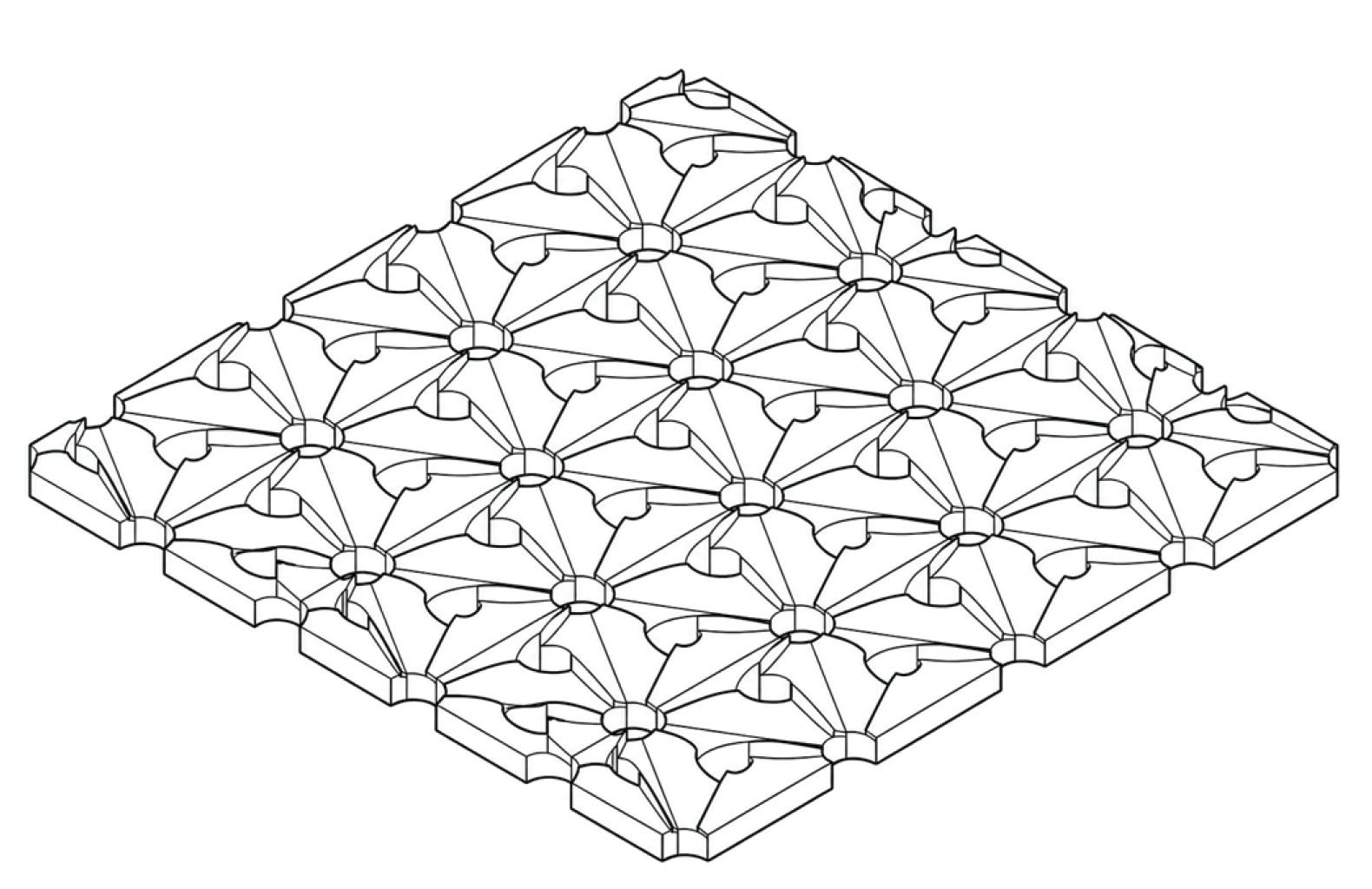
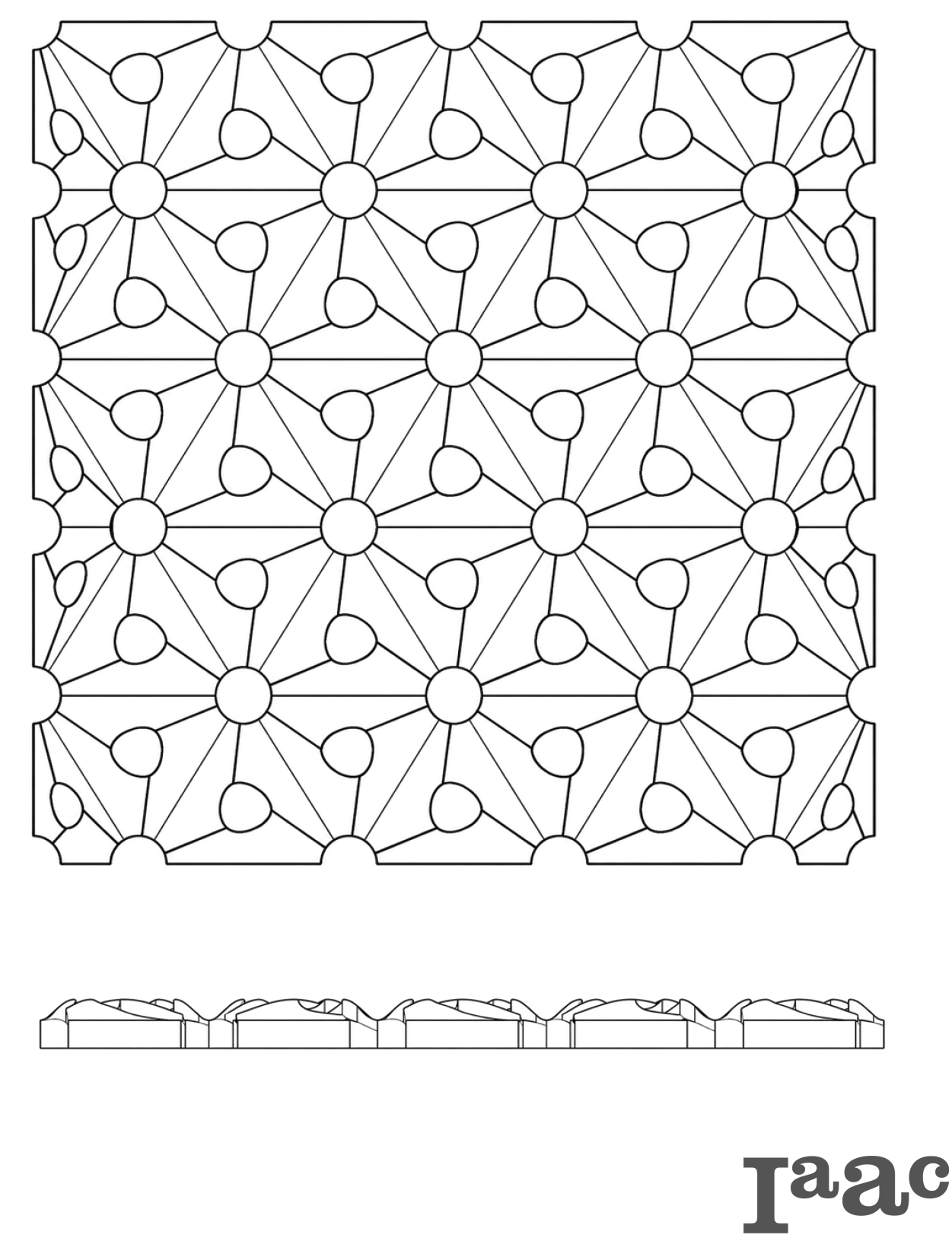
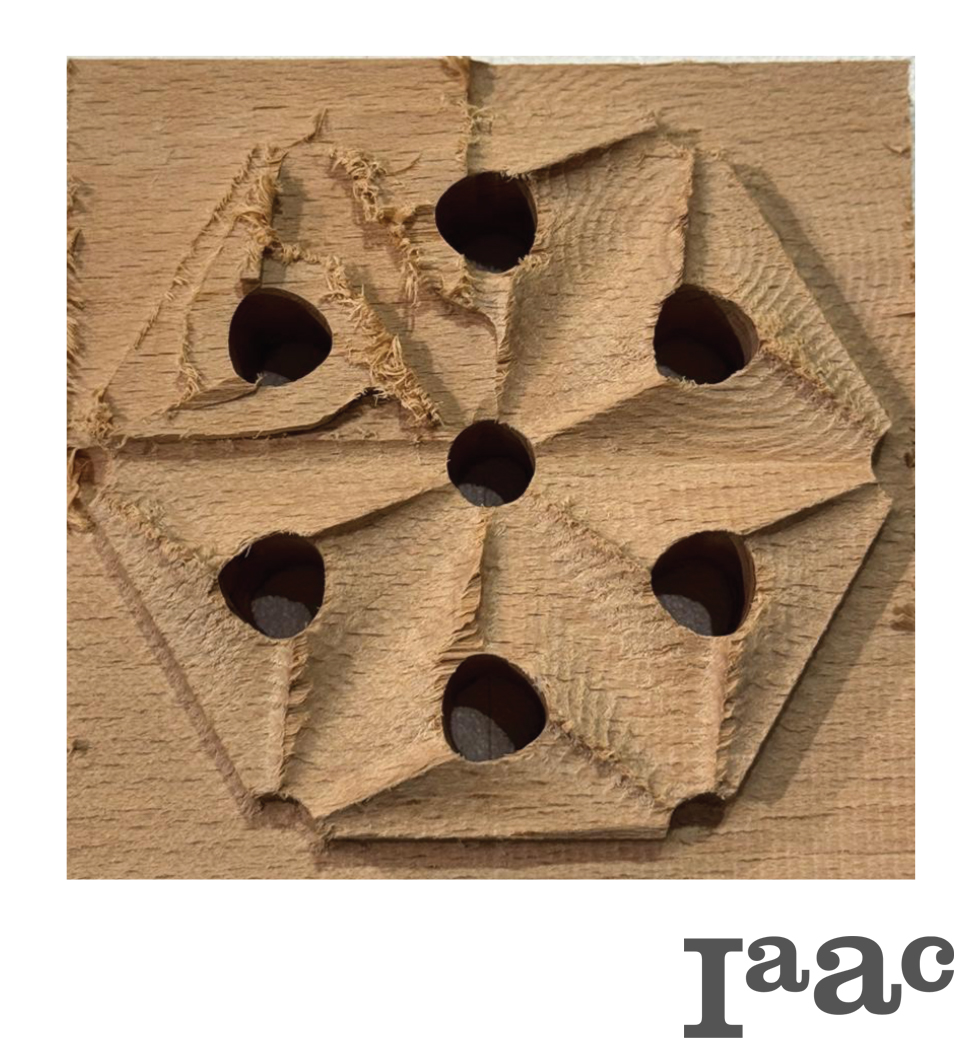
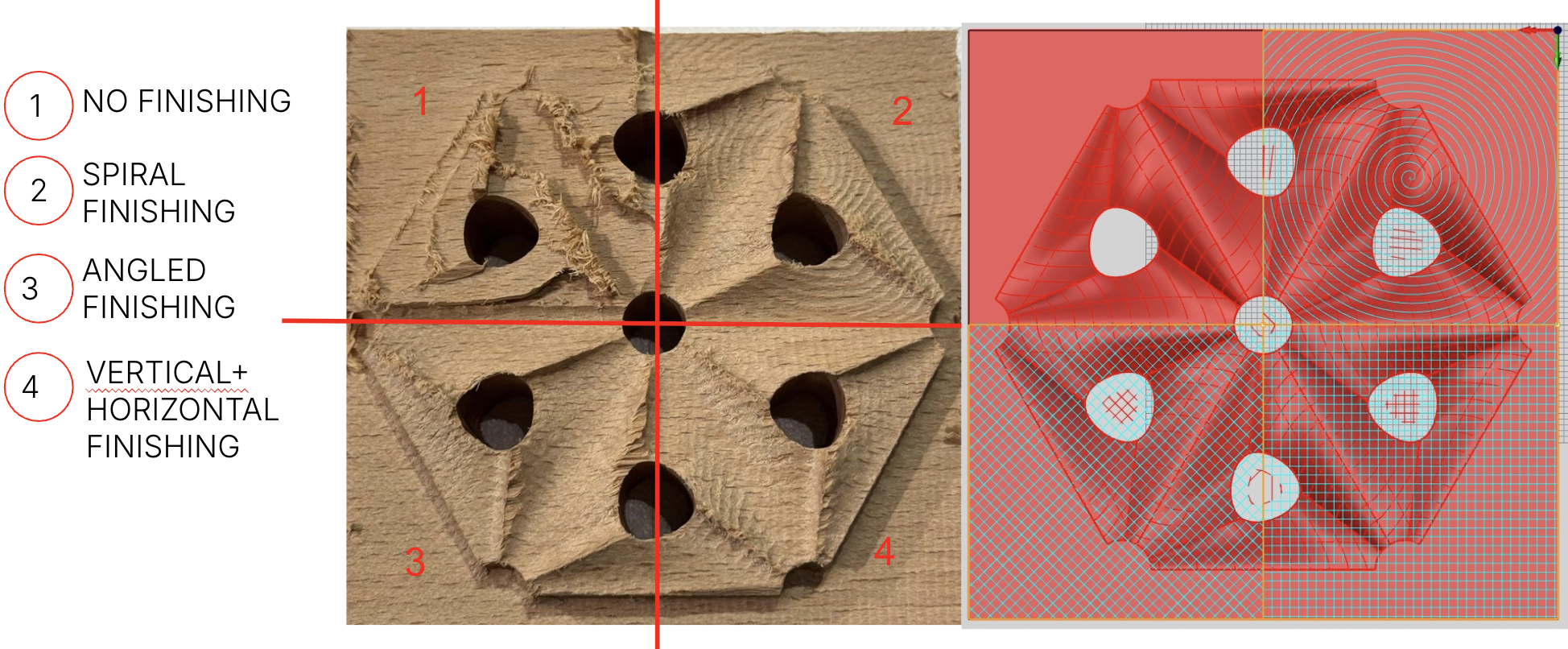
Fabrication Strategy CNC TEST
Material: HAYA WOOD Machine: shopbot Post Processor: Rhino CAM Workpiece volume: 100x100x36mm
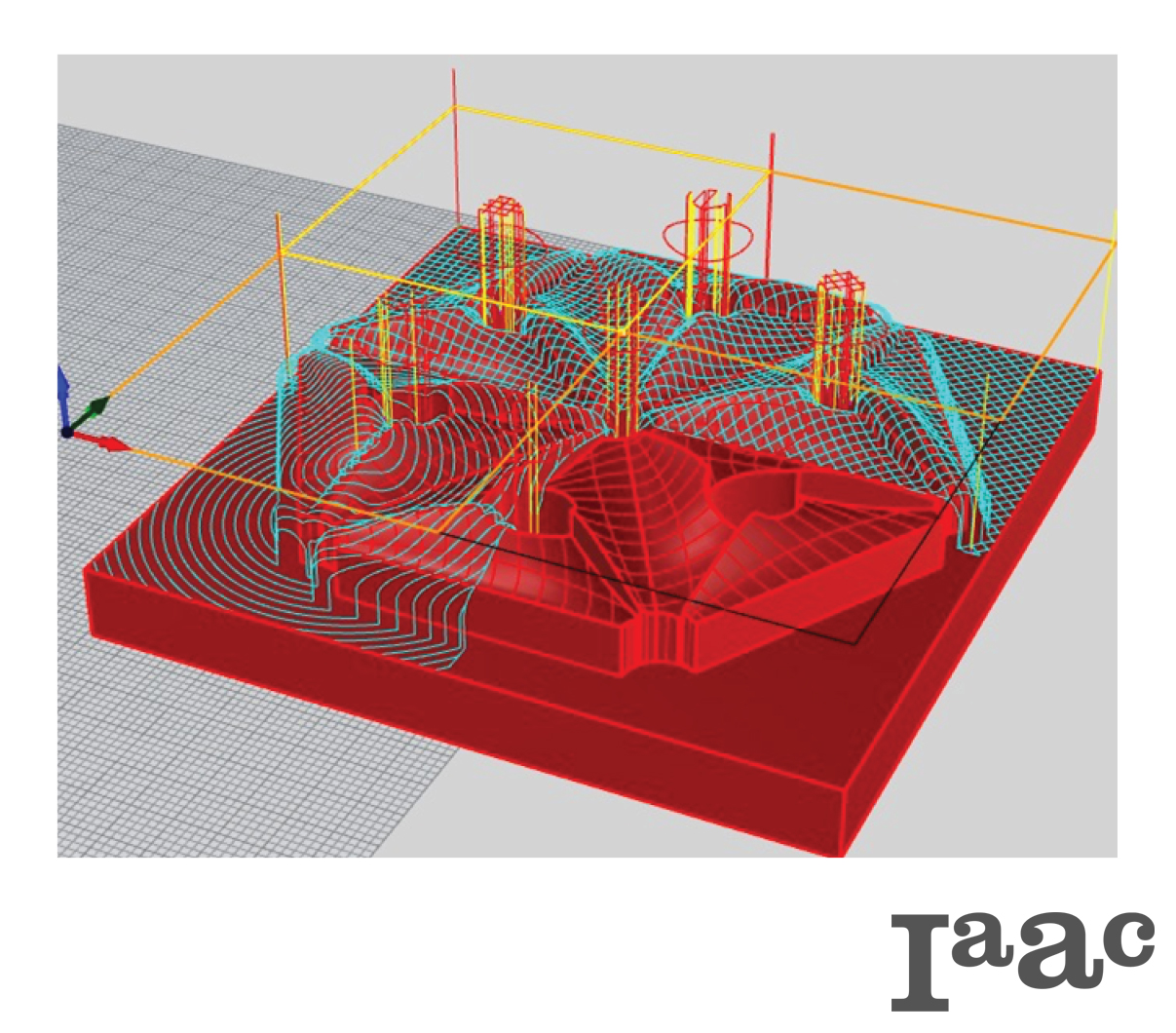
Fabrication Strategy 3d CNC FINAL
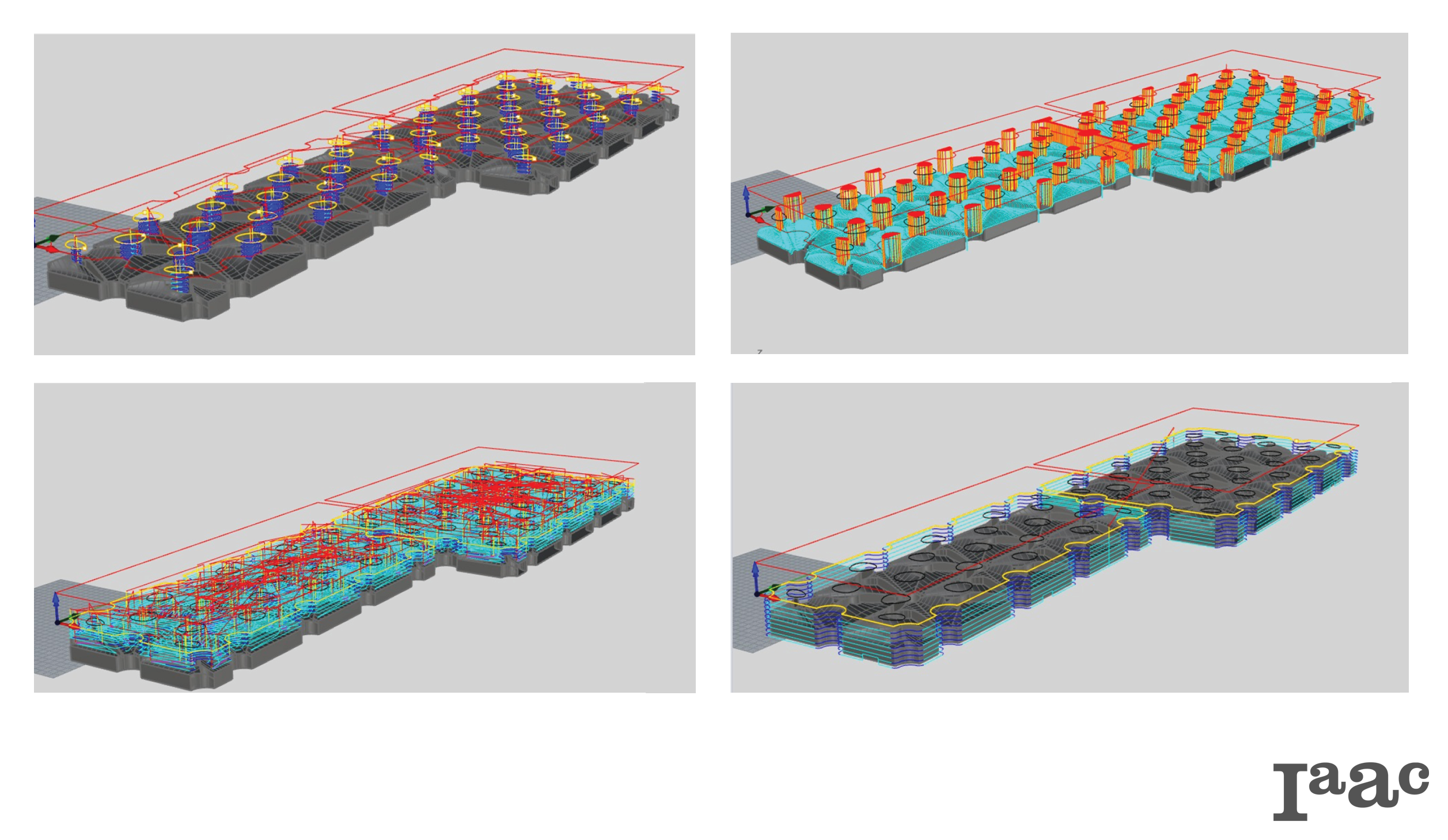
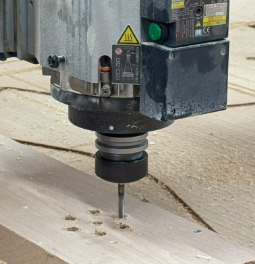
Material: Haya wood Machine: Raptor X-SL Post Processor: Rhino CAM Workpiece volume: 120x300x24mm and 180x300x24mm
Flat Mill φ8mm. Flute: 2 Diameter: 8 Spindle Speed: 12000 Cut Direction: Upcut Stepdown Control (dZ): 50% Stepover Distance:60 %
Ball Mill φ6mm Flute: 2 Diameter: 6 Spindle Speed: 12000 Cut Direction: Up Stepover Distance: 25%