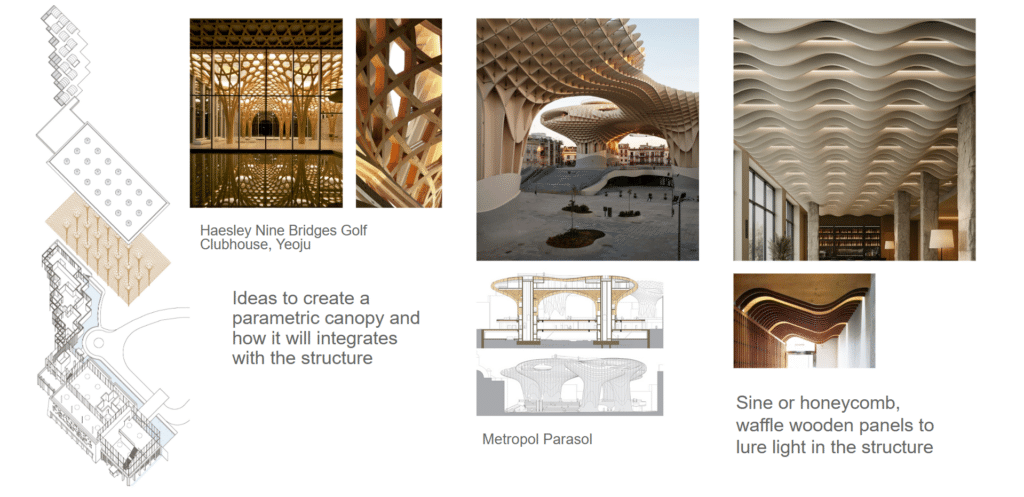
//DESIGN CONCEPT & EARLY EXPLORATIONS
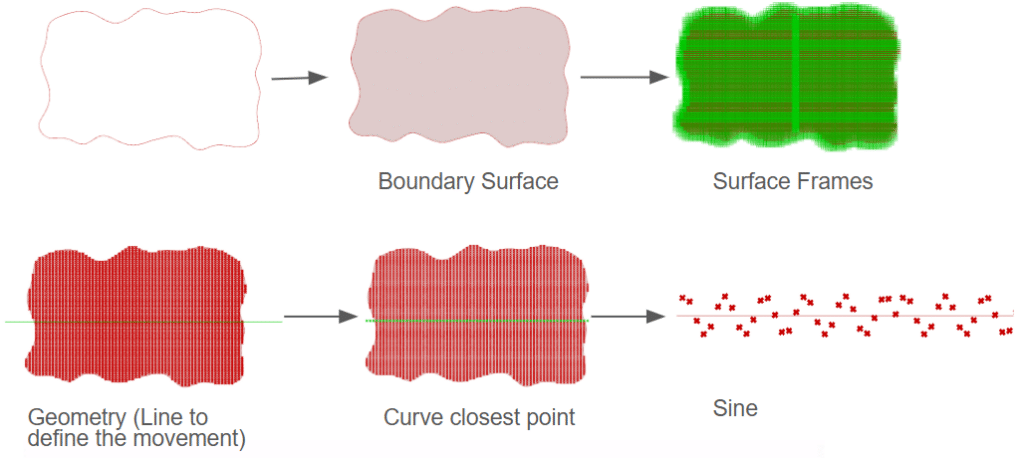
//COMPUTATIONAL DESIGN SYSTEM
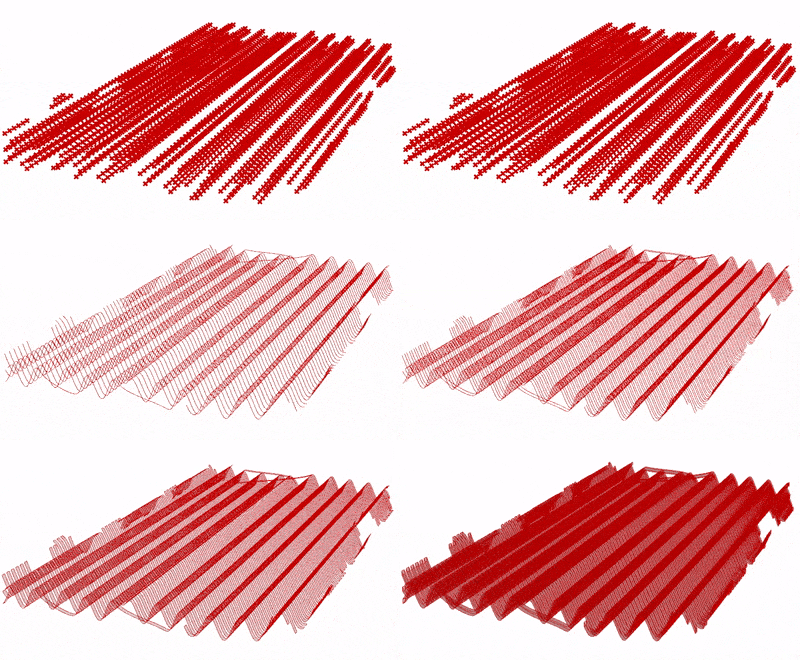
First Sine Roof Iteration
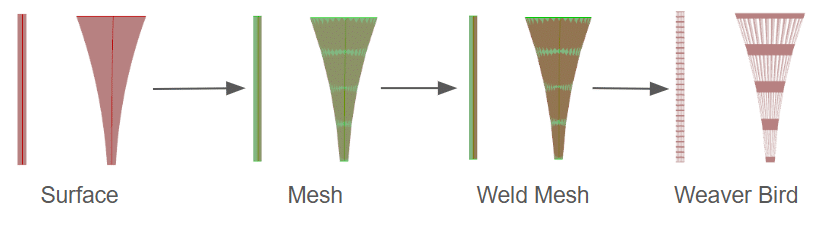
First Column Iteration
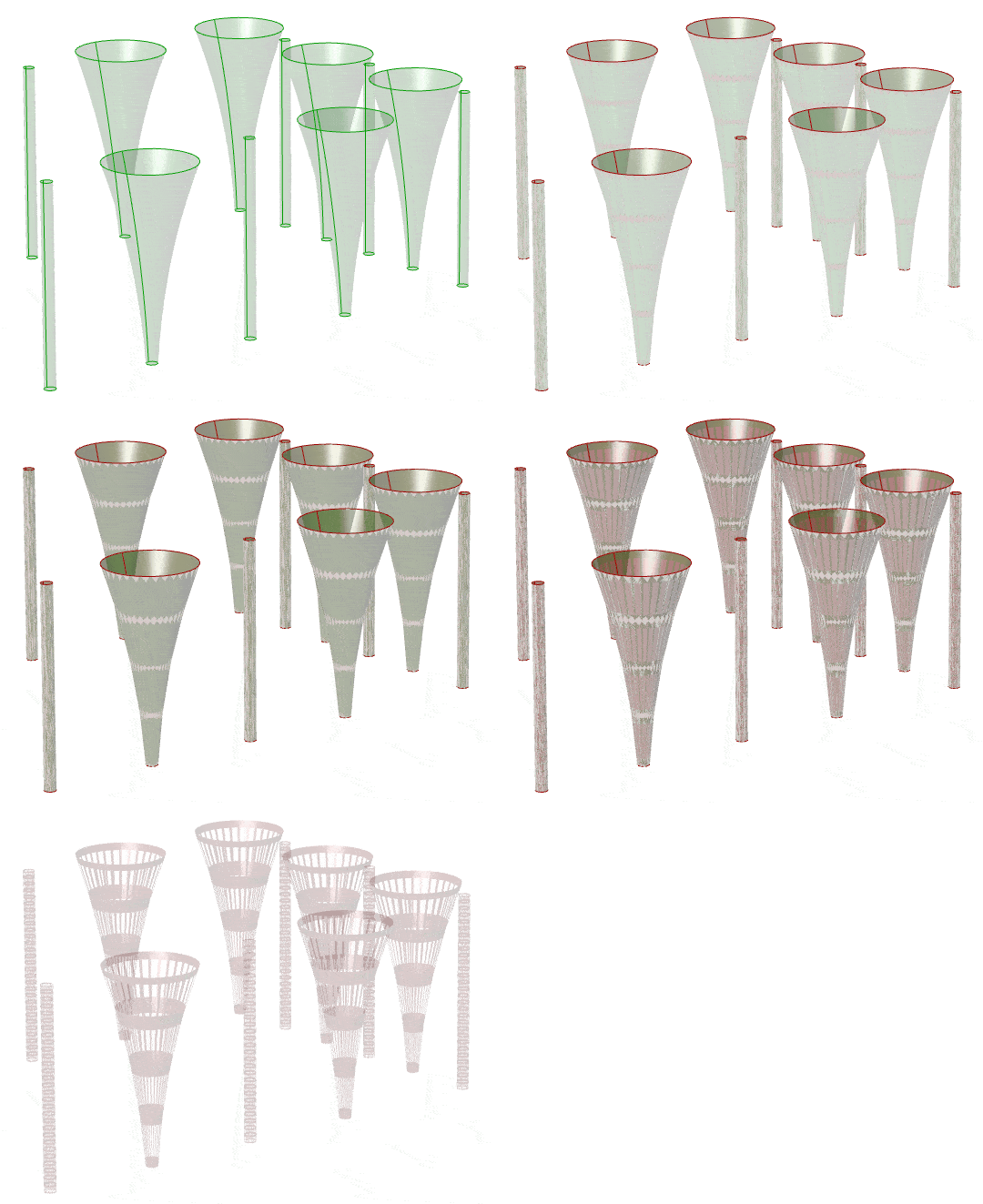
//FORM FINDING PROCESS AND LESSONS LERANED
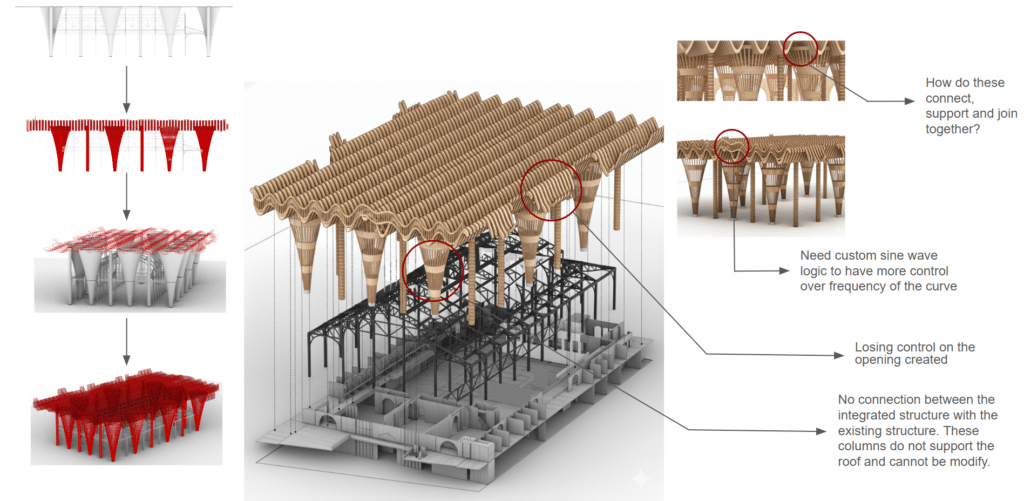
Second Canopy Columns Iteration
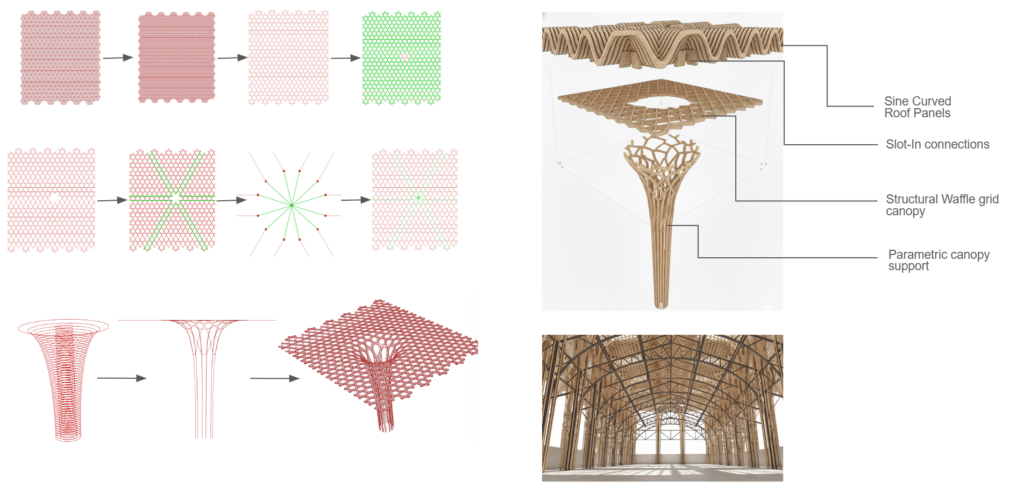
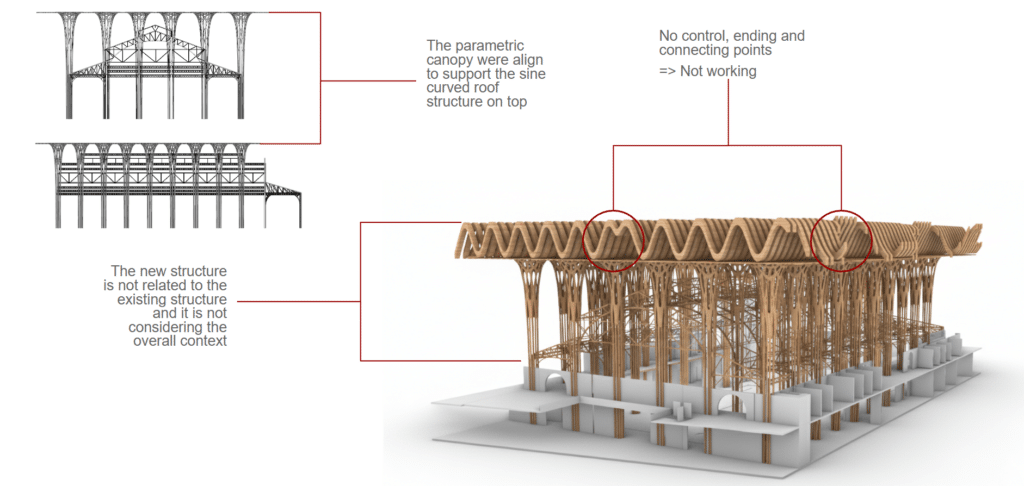
Final Sine Roof Iteration
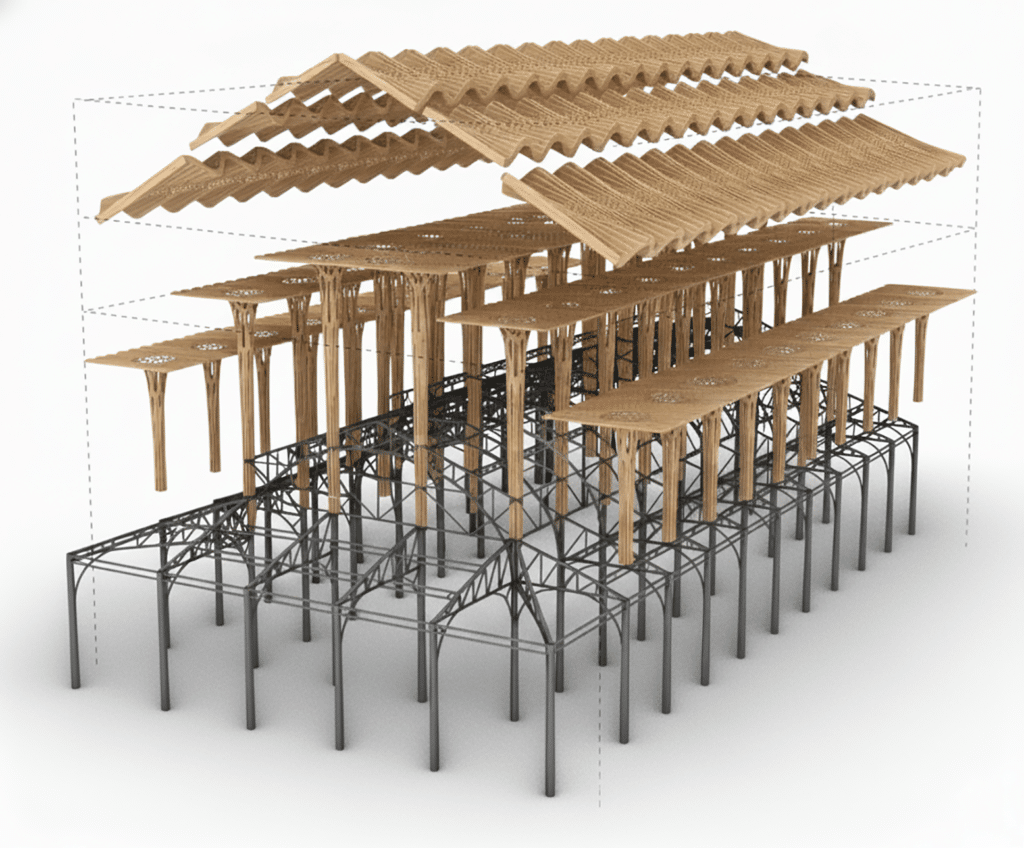
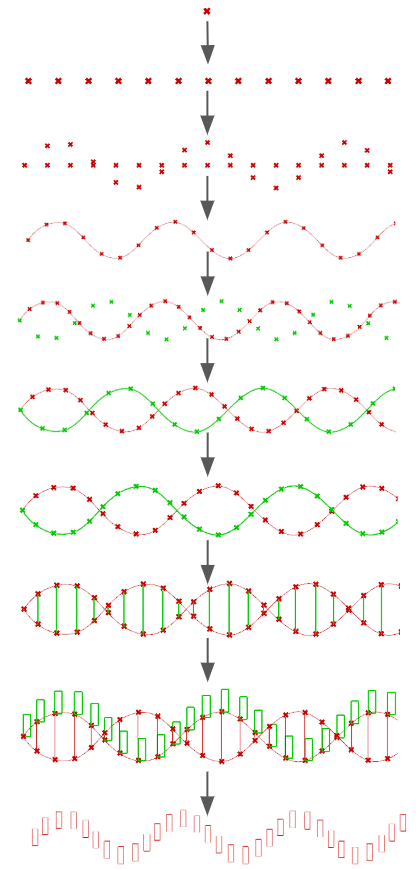
The sine roof form was developed through an iterative form-finding process using both sine and inverted sine curves. By culling index points from each curve and selectively reconnecting them, I generated a new composite sine geometry that allows greater control over how the roof begins, terminates, and connects across the structure. This method moves beyond a continuous wave, enabling precise manipulation of edge conditions and structural continuity. The concept emerged unexpectedly while observing the folded, rhythmic geometry of potato chips, which revealed how alternating curvature can create stiffness, lightness, and spatial continuity. Translating this everyday form into a computational system allowed the roof to become both structurally expressive and highly controllable.

//FINAL FORM
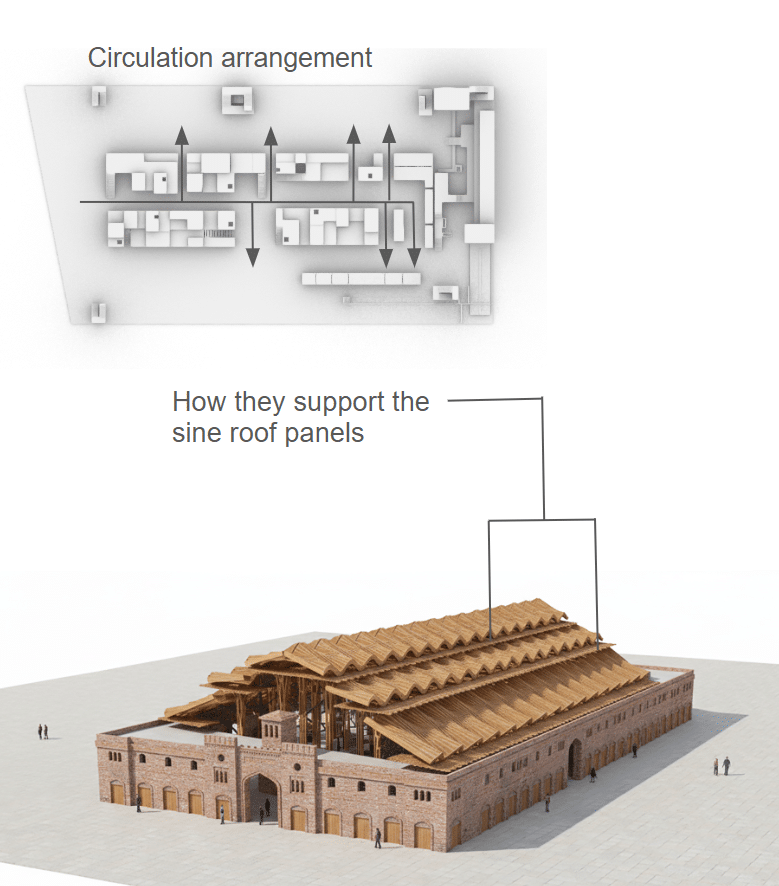
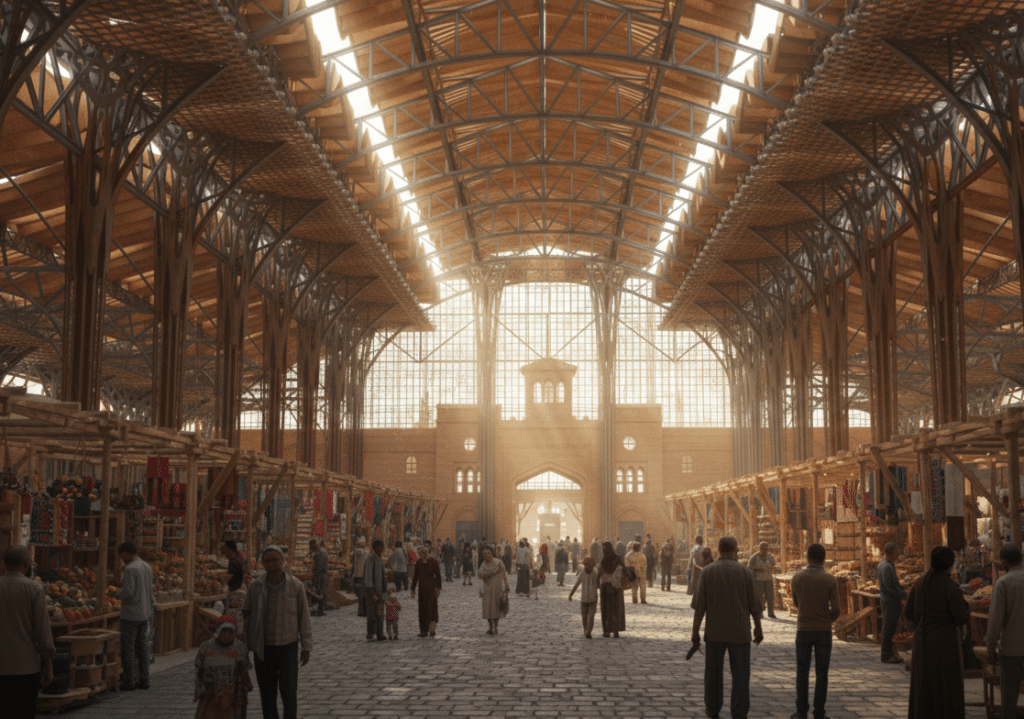
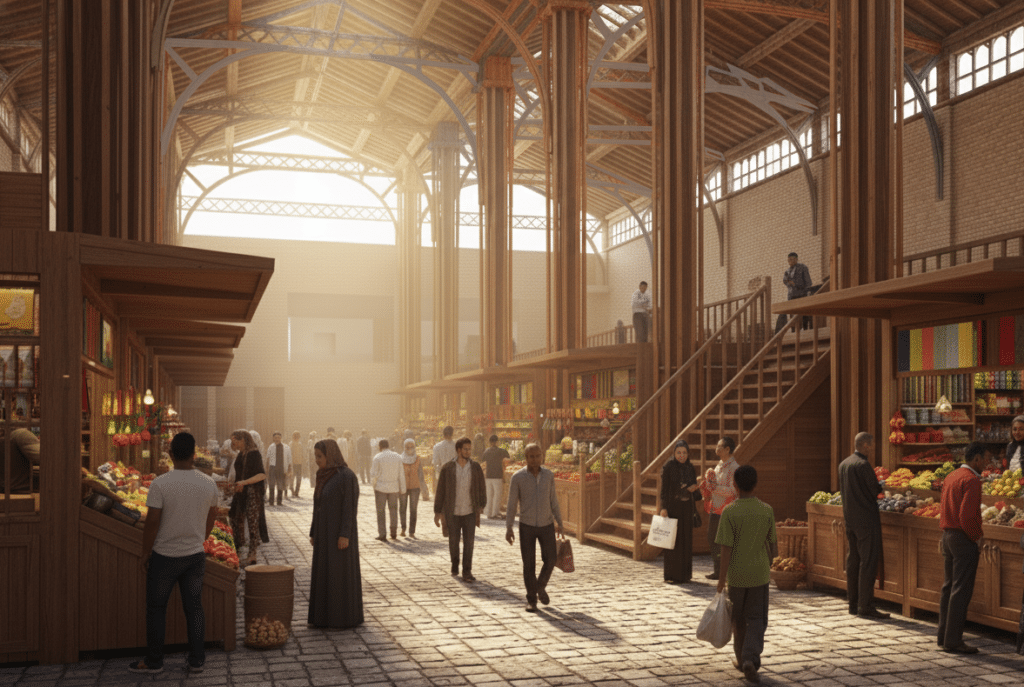
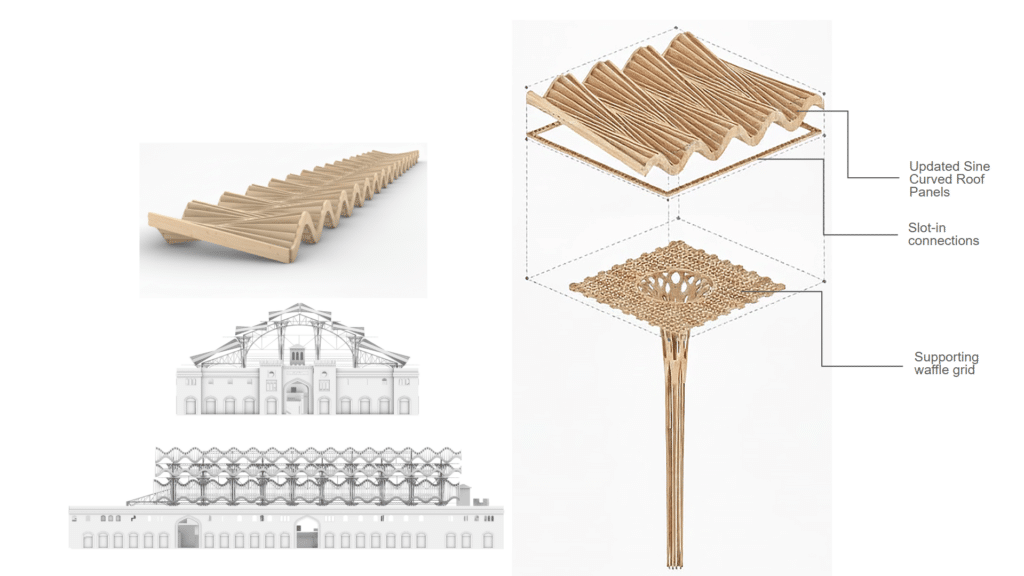
The sine graph roof is designed to lure light deep into the market, using its rhythmic curvature to guide daylight and create a shifting ambience throughout the interior. More than a formal gesture, the roof operates as a system where light, path, and structure are inseparable: the geometry shapes circulation, the structure follows the sine logic, and light is filtered and directed along these paths. This integration transforms the roof into an active architectural device, enhancing spatial experience while reinforcing the market’s role as a coherent, communal environment.