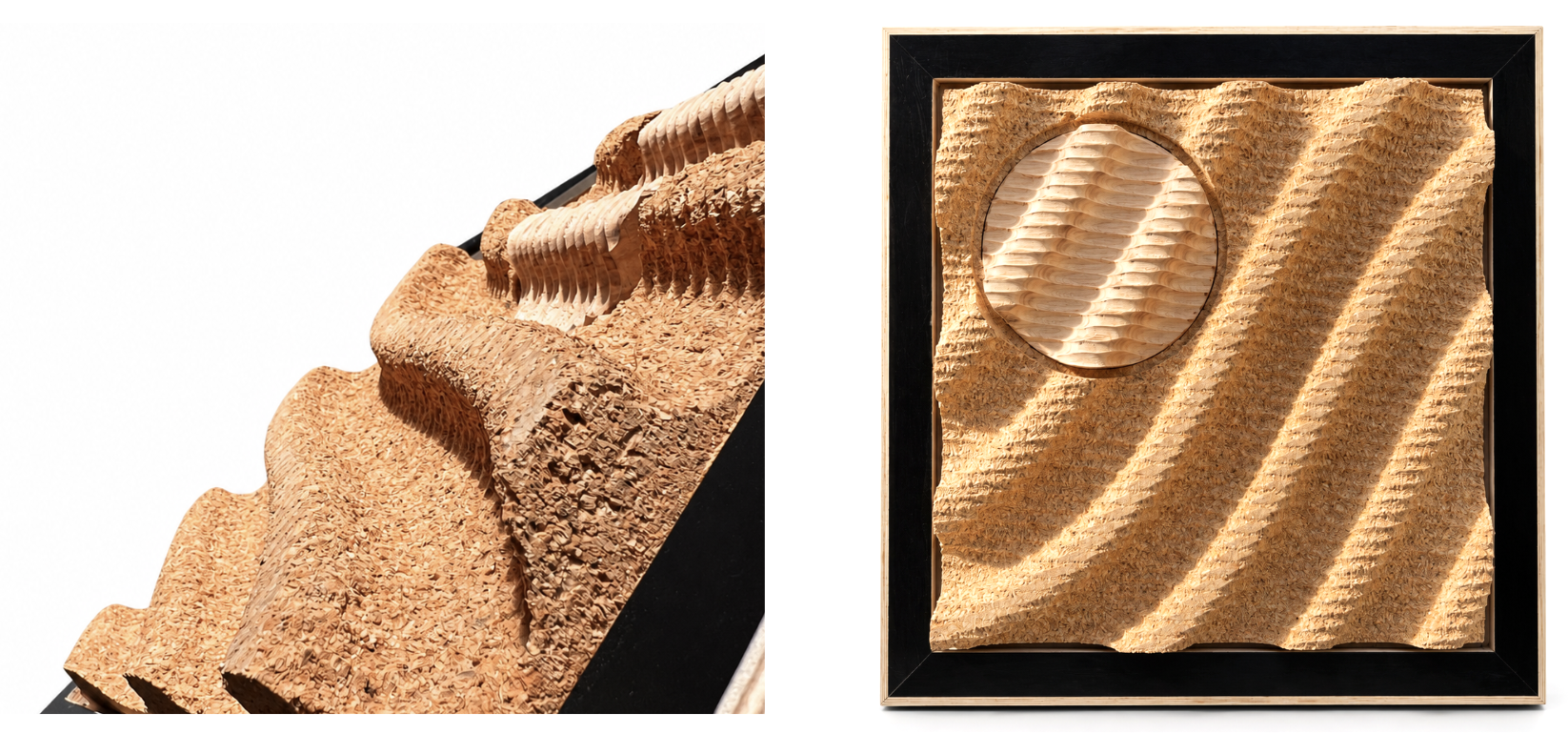
_CNC Continuity in Contrast
The project investigates how a single geometric language can be expressed through two distinct materials. An undulating surface establishes a continuous rhythm, while the introduction of a circular wood insert within a cork base creates a deliberate contrast in texture and materiality. The design explores the balance between continuity and separation, where fabrication and subtle detailing allow two independent elements to come together as one cohesive form.
_Concept Development
Inspired by the natural formations of sand dunes, this exploration investigates the rhythmic patterns and layered textures created by wind erosion. The resulting ribbed formations inform potential CNC profiling strategies, translating natural surface textures into controlled milling toolpaths.
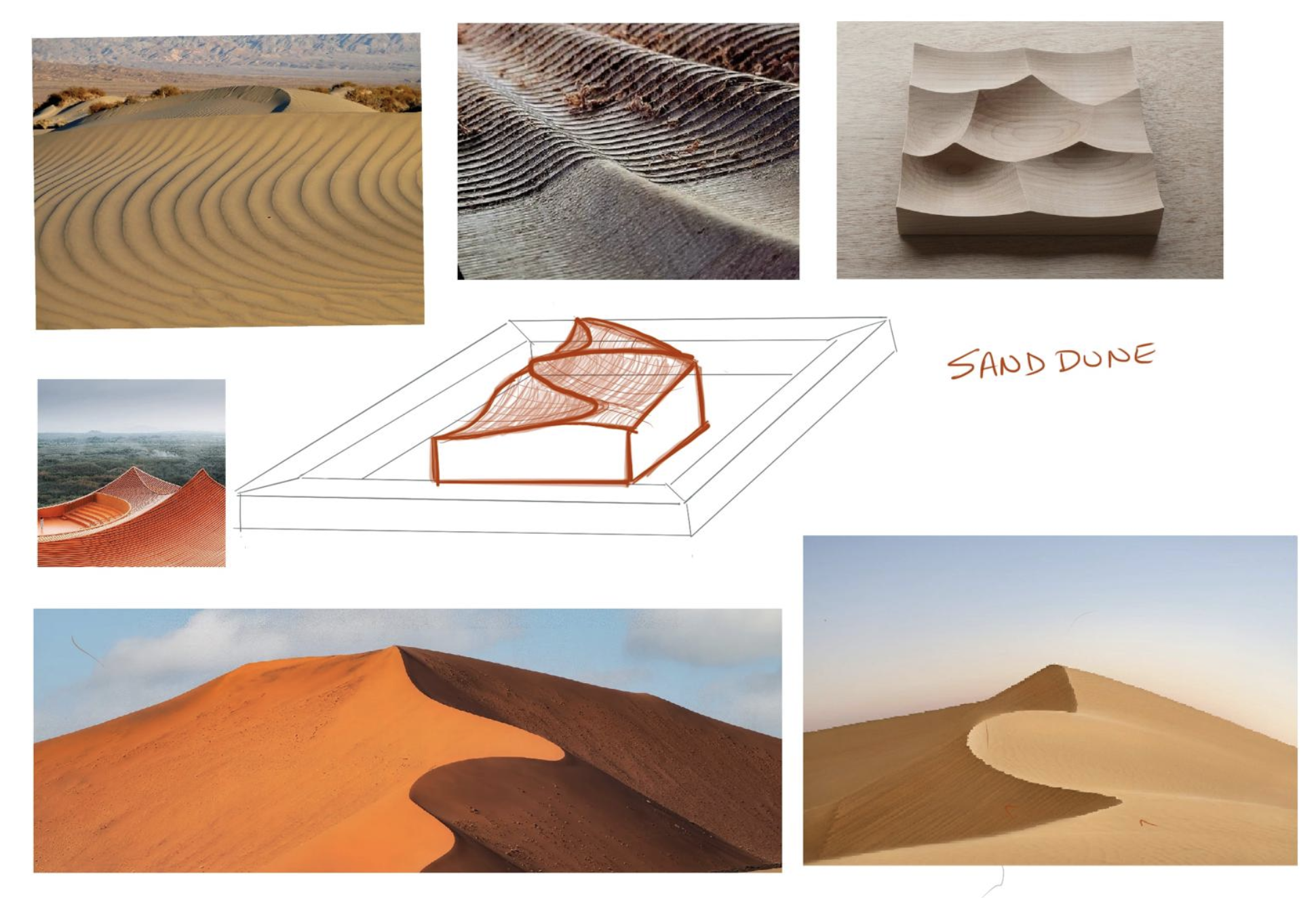
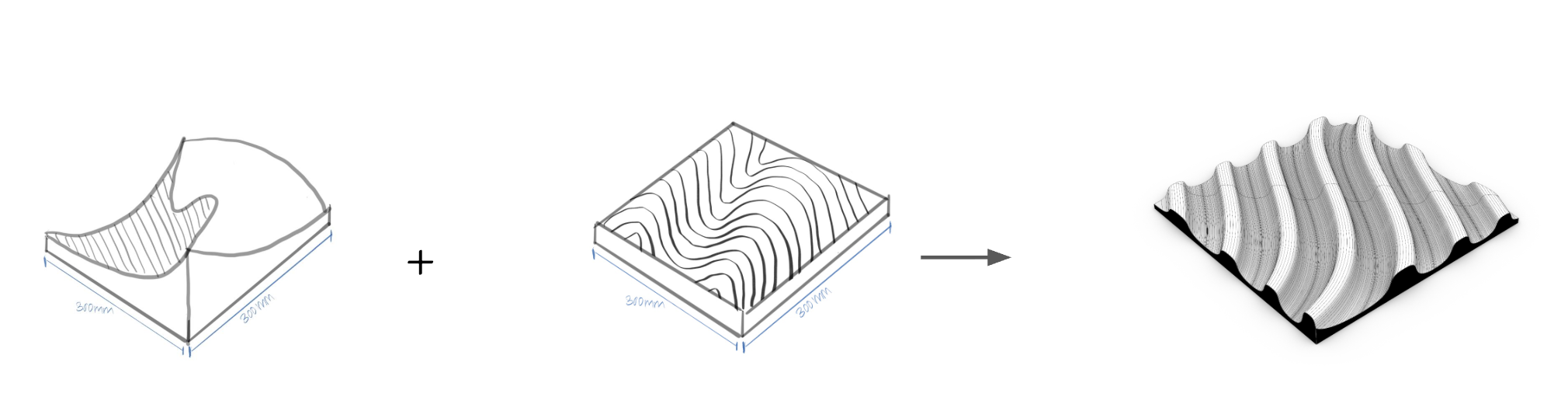
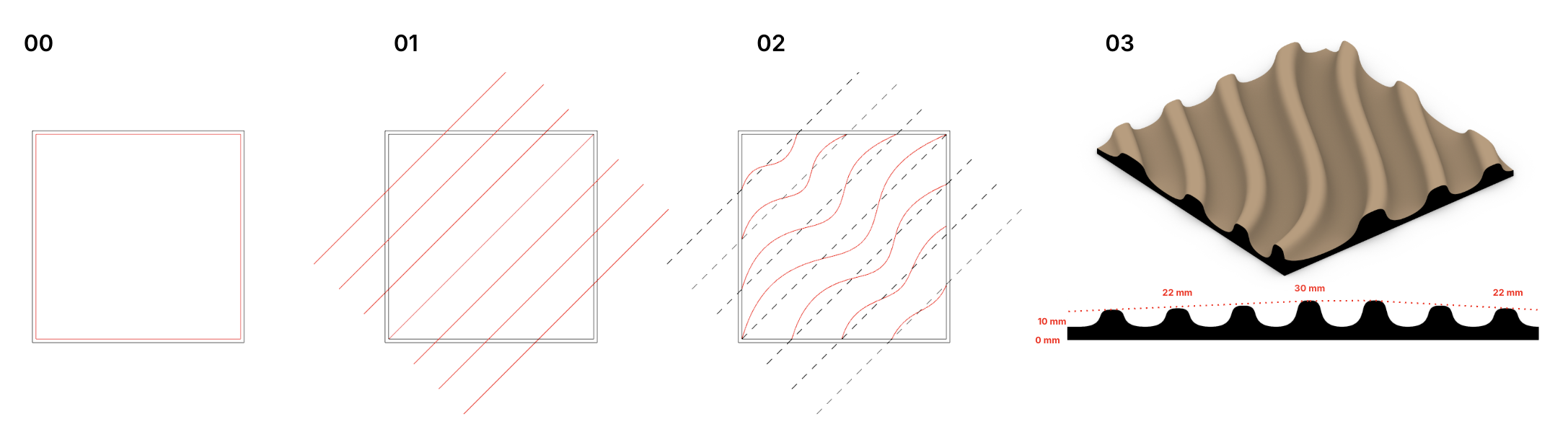
The final concept arrived at natural dune formations with rhythmic patterns. A continuous wave-like geometry established the overall form through variations in curvature and elevation. The final concept merged an undulating geometry with the textural qualities of sand dunes. CNC milling became the link between the two approaches, allowing the surface form and its texture to be explored through a unified fabrication strategy.
_Material Integration
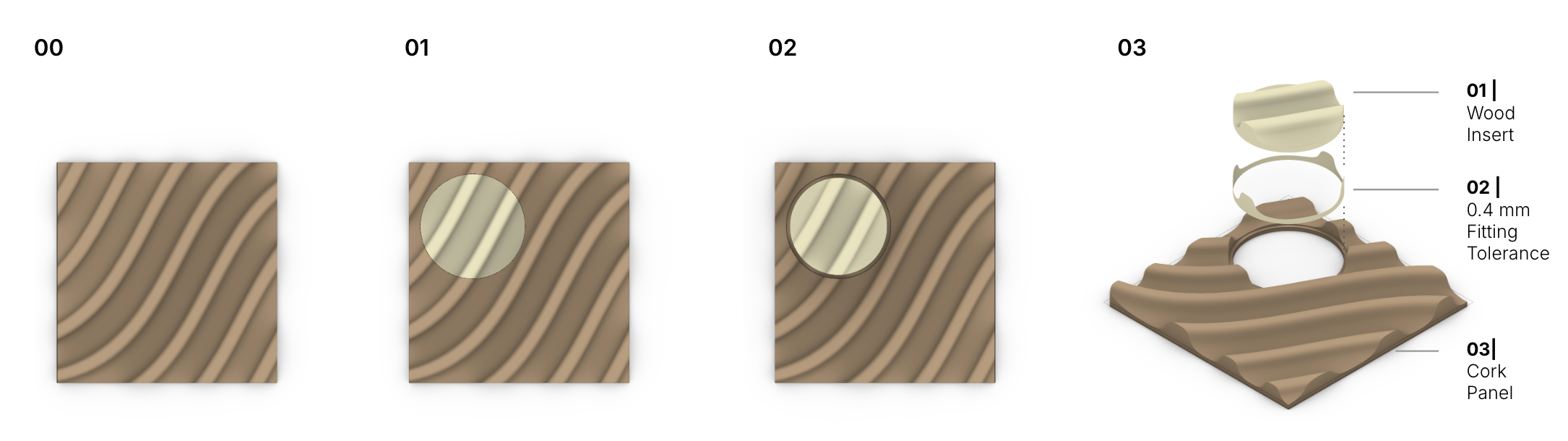
The project further aimed to explore the fabrication of two materials: Cork as the larger outer base and Haya hardwood as the inner insert. Taking the undulating base, a circular region was extracted separating it into two components. A 5mm shadow gap was created between the two materials to emphasizing the boundary without disrupting the continuity of the surface. The circular cork insert fit into the recessed cork panel, with a 0.4 mm allowance ensured ease of assembly.
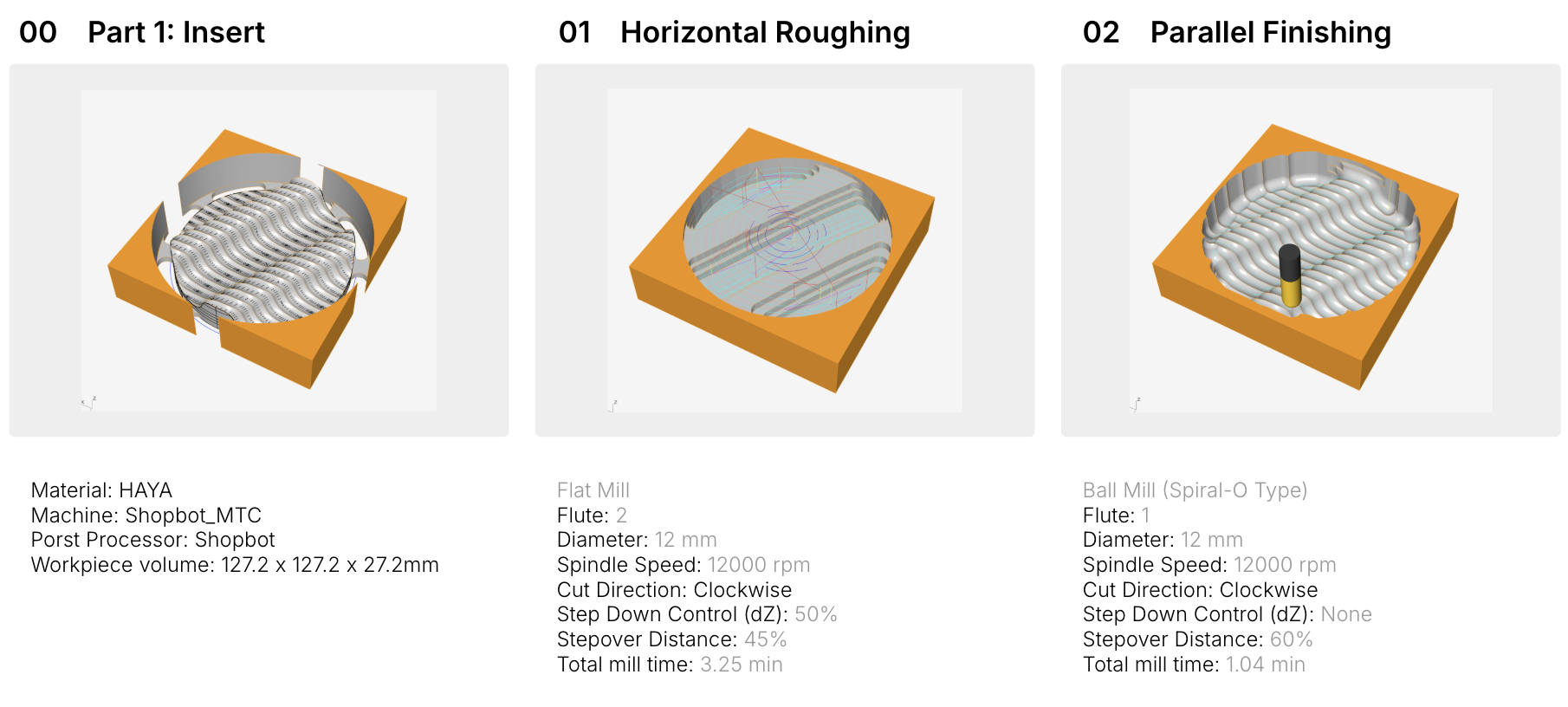
The decision to use the haya hardwood as the smaller of the two parts was an intentional fabrication strategy. Due to the nature of hardwood, shallower step-downs on the CNC are required and this increases machining time. Cork, on the other hand, is softer and thereby easier and faster to machine.
_Testing
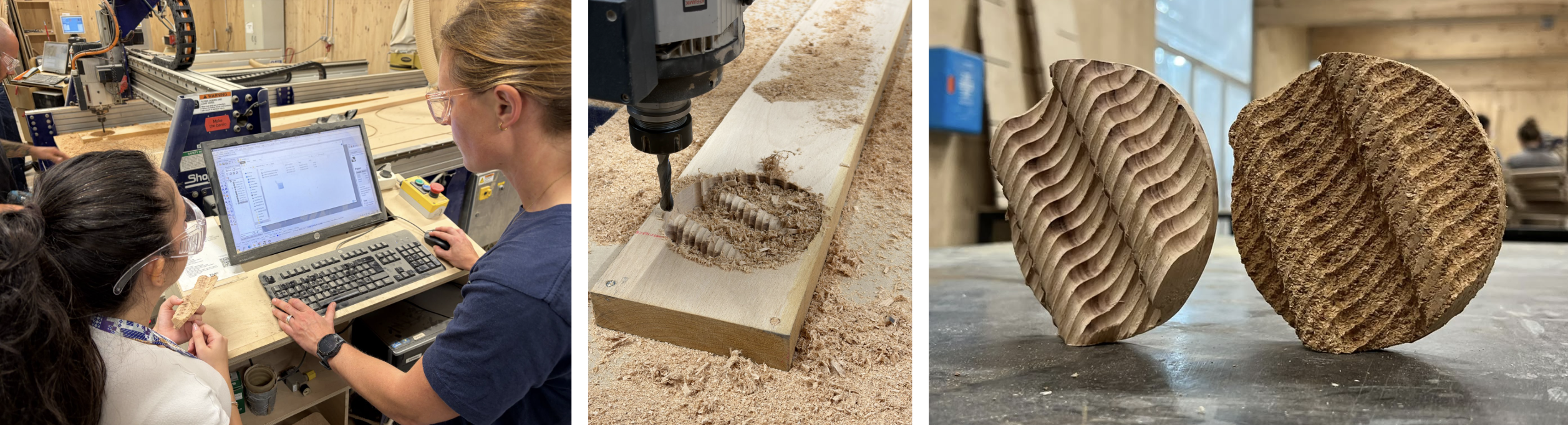
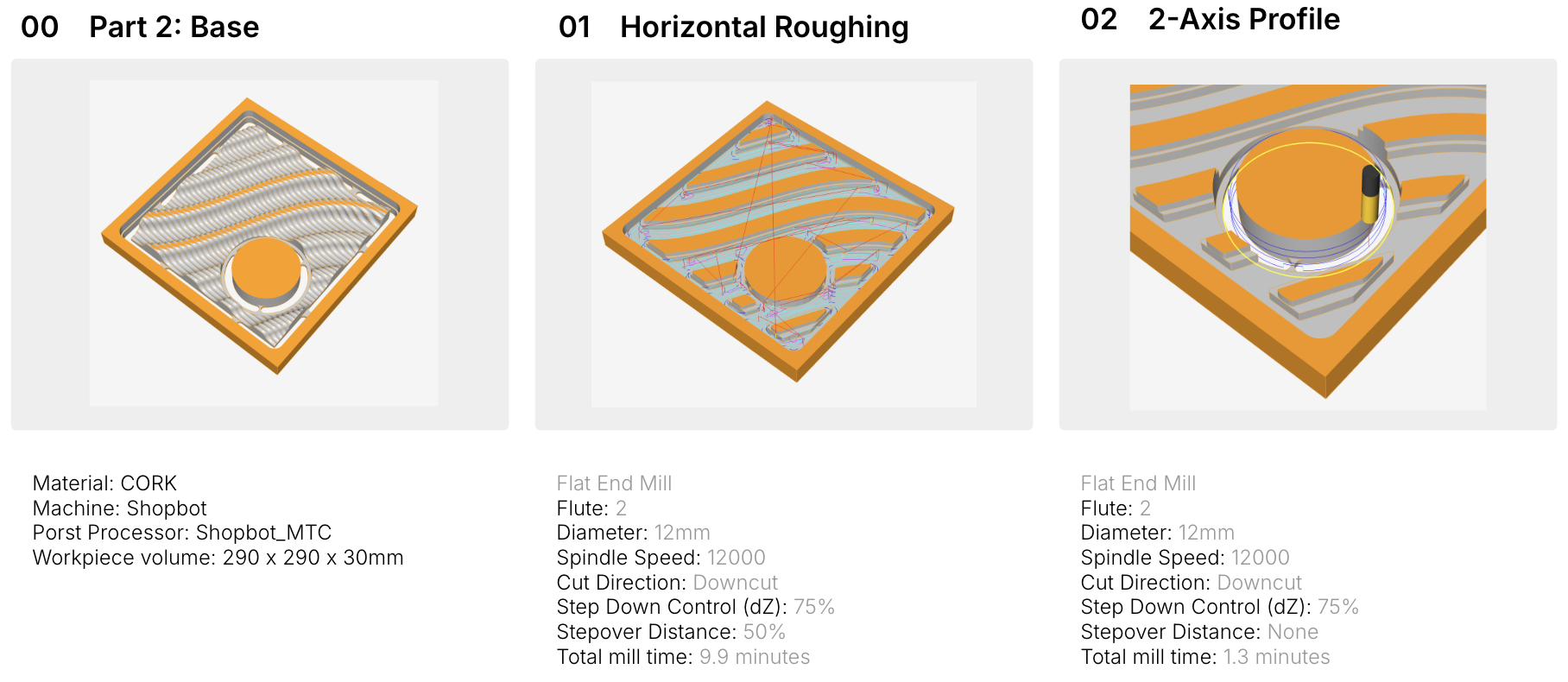
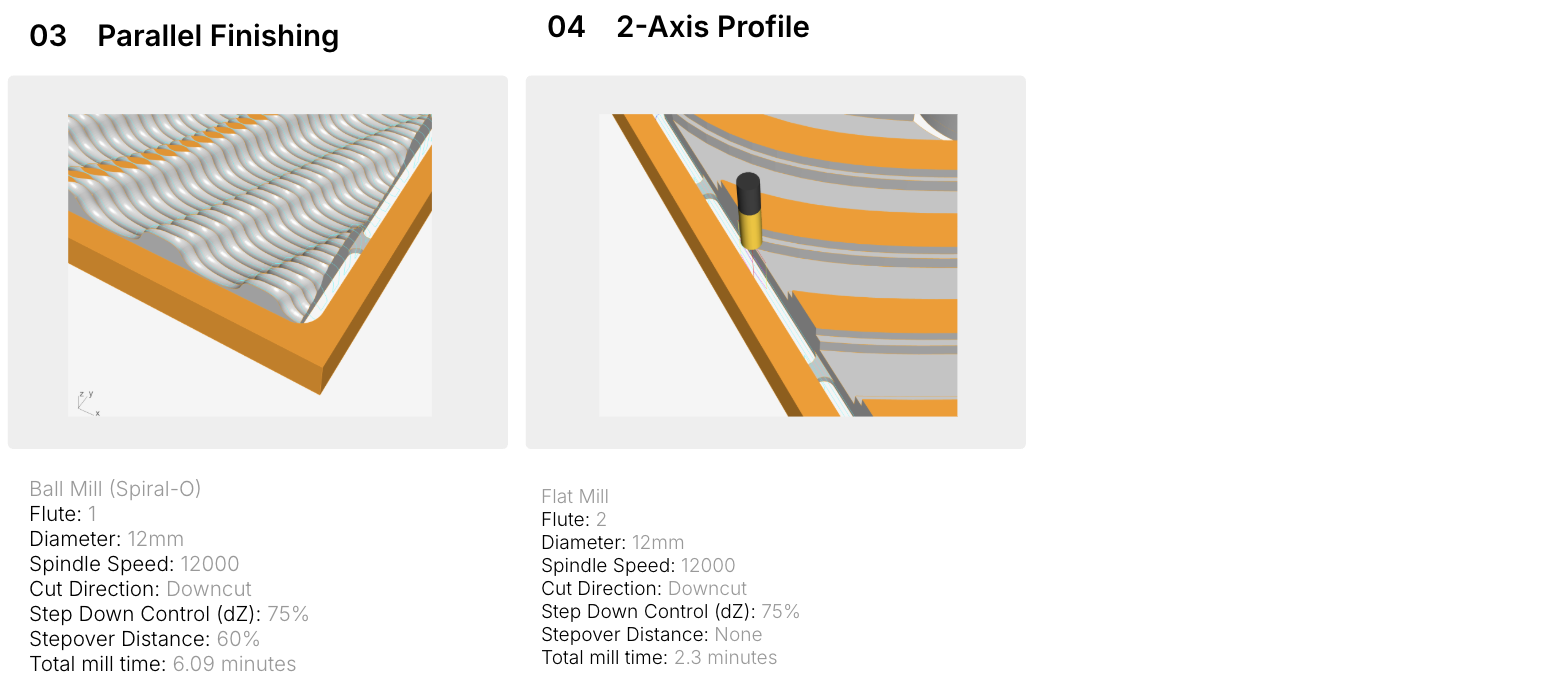
The circular insert was used as the testing ground for both materials to confirm the CNC parameters. A 1/2″ endmill for profiling and pocketing and a 1/2″ ball nose for finishing were used throughout the project. The choice of endmill size was also intentional, as larger diameter endmills (generally) allow for faster cutting. We vallidated the feeds, speeds, step downs, and step overs on both materials. The step-over, in particular, was an important aesthetic parameter. A step-over of 60% using a ball nose endmill created an appealing fluted texture.
_Fabricaiton Strategy – Haya Wood
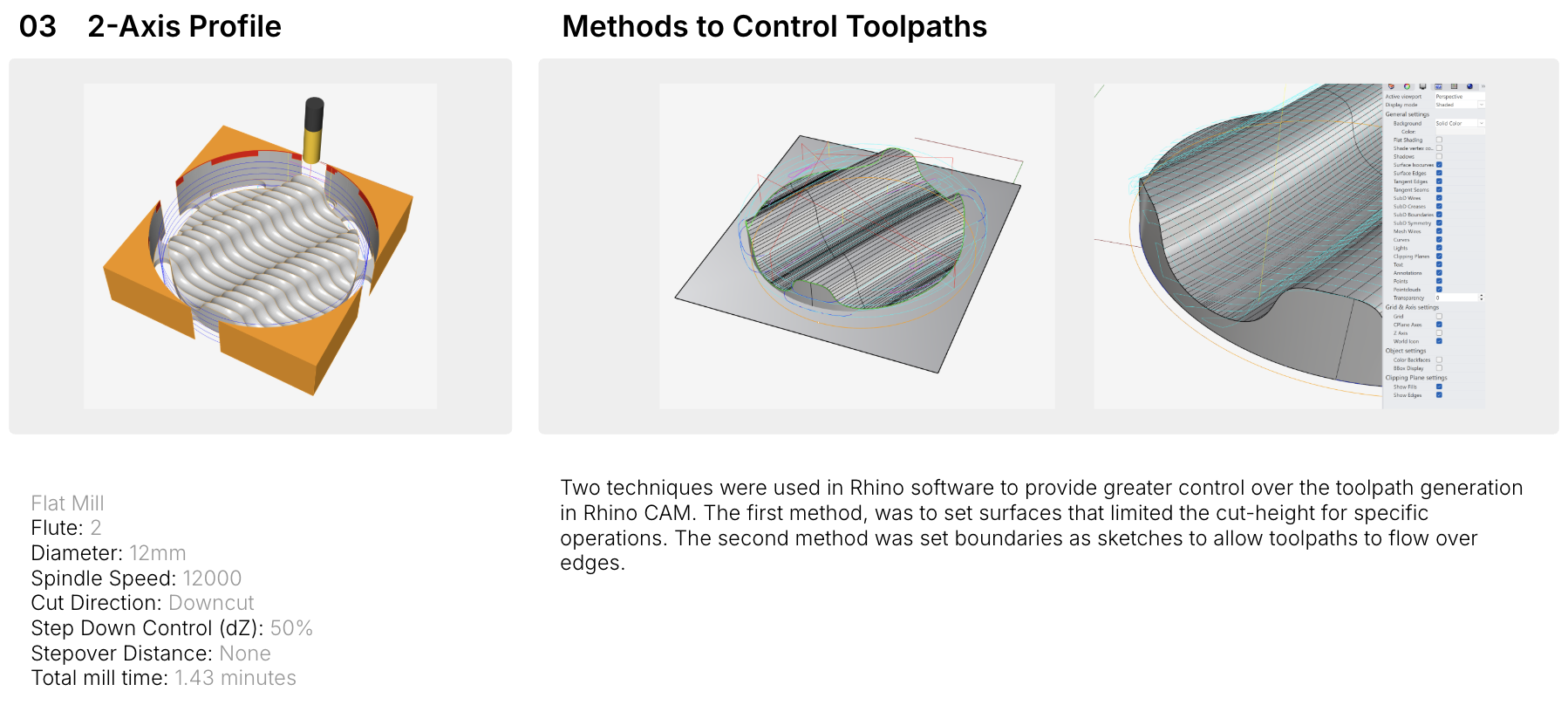
Total Milling Time: 6.1 minutes
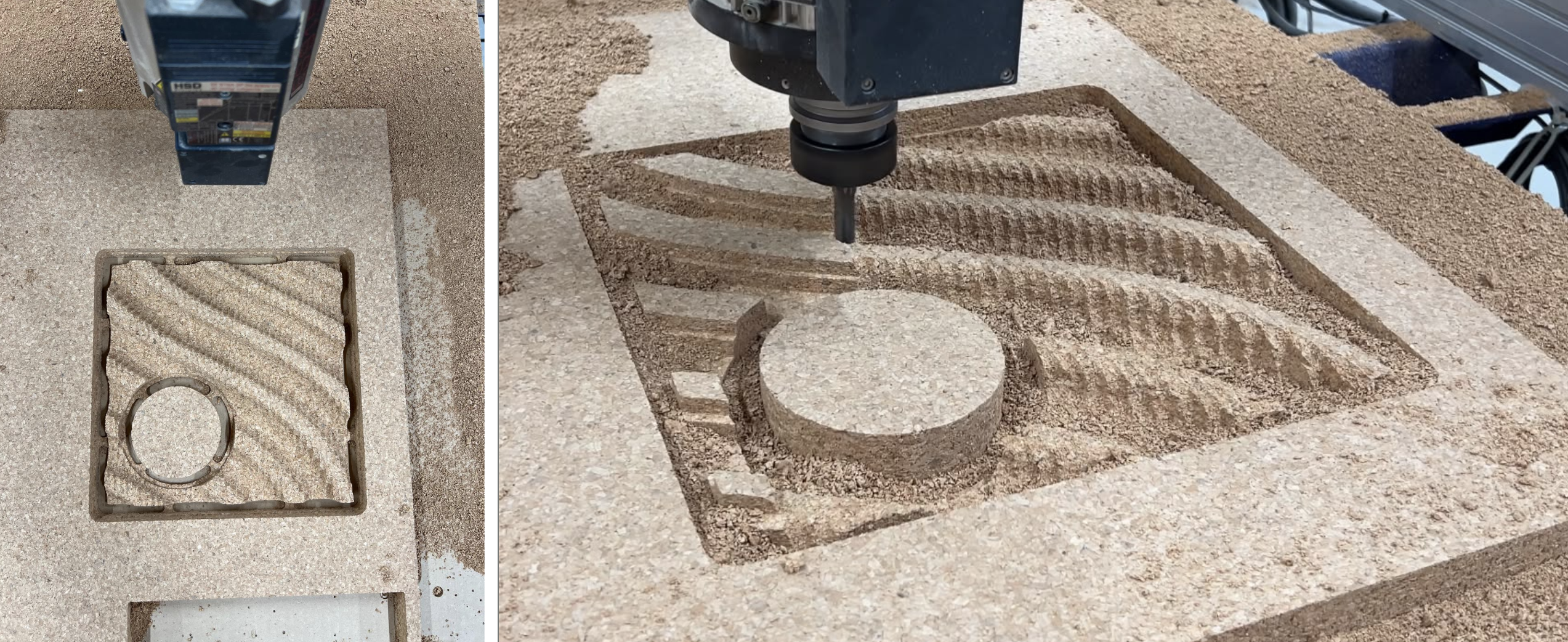
_Fabricaiton Strategy – Cork
Total milling time: 19.6 minutes
_Final Assembly