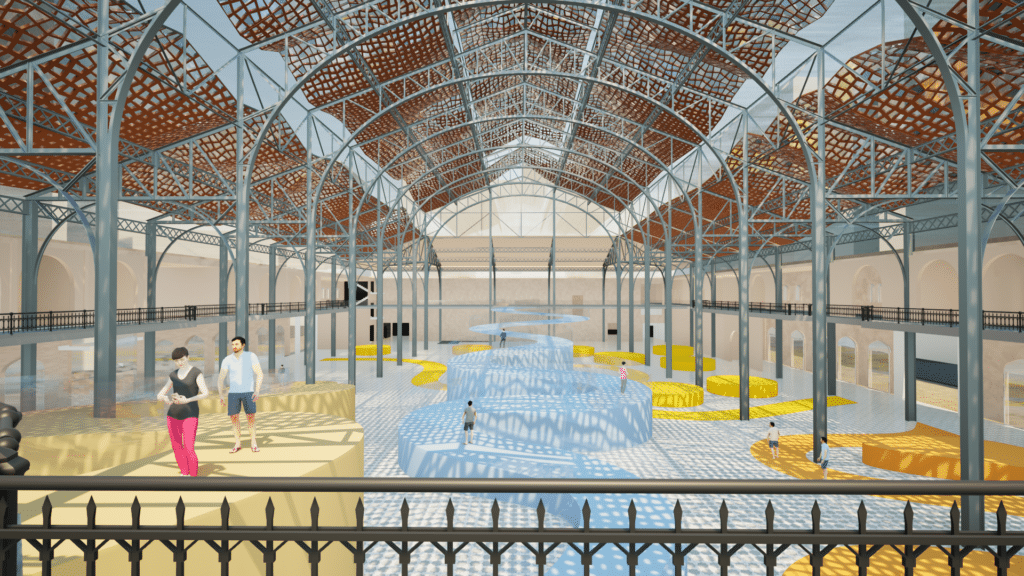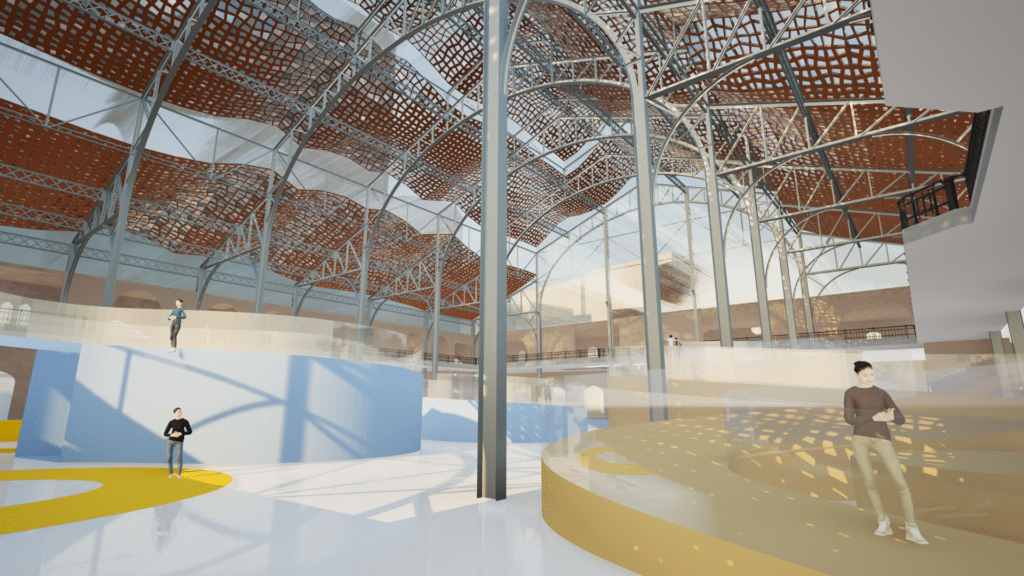
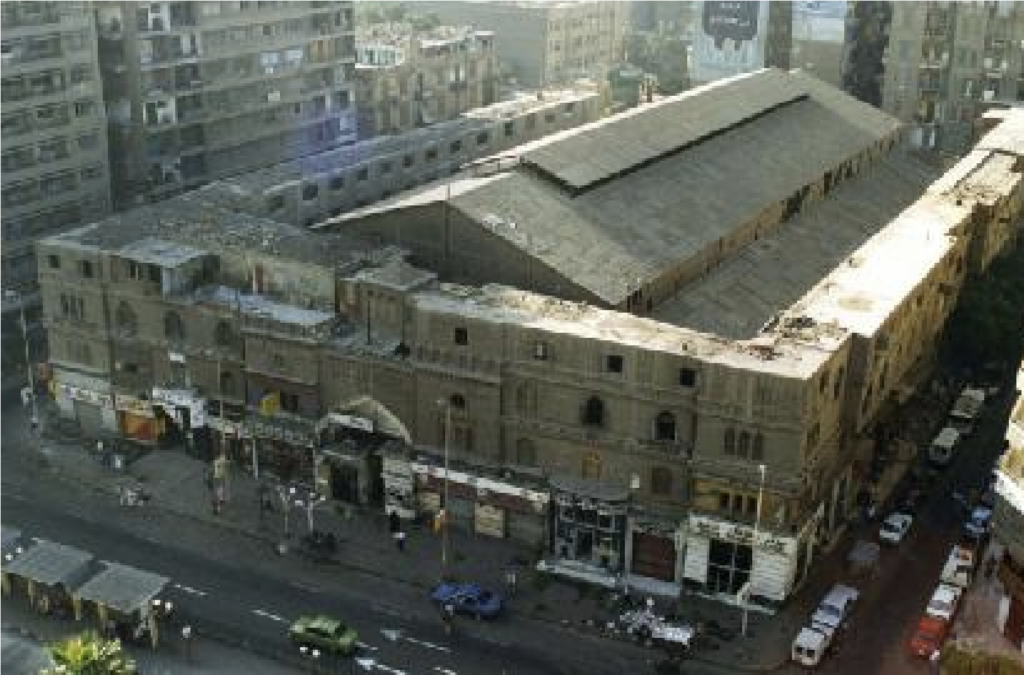
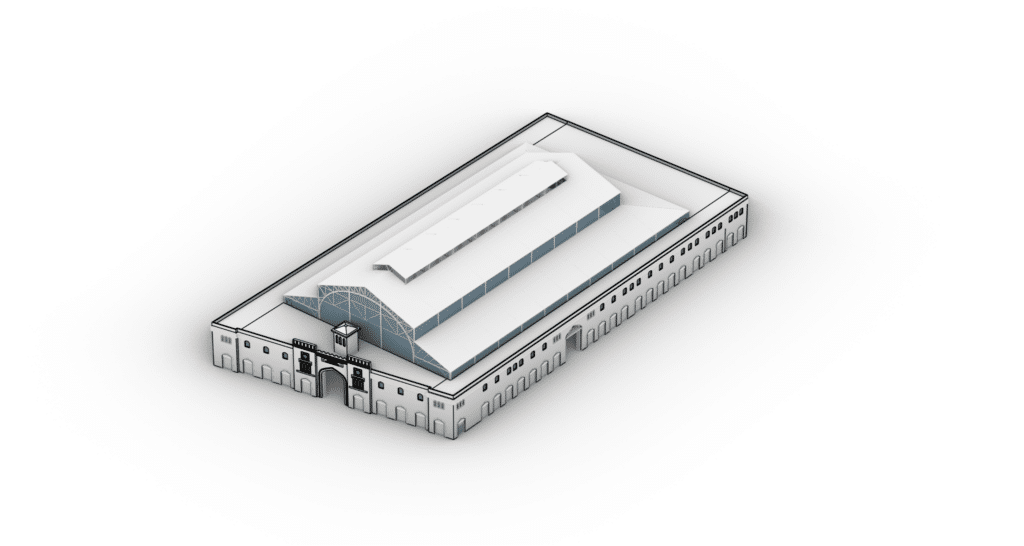
The project focuses on the transformation of the historic Bab al-Luq Market in Cairo, Egypt. Built in 1912 and inspired by Paris’ Les Halles, the market was distinguished by its accessibility, natural light, hygiene, and spatial organization. Despite continuous use, decades of deterioration have reduced its architectural and spatial potential. The project aims to reactivate the market through the design of a multi-level shopping environment driven by optimized circulation strategies and a new parametric roof system, in which openings and tiling are computationally controlled to generate functional and expressive light and shadow patterns.
Design Concept
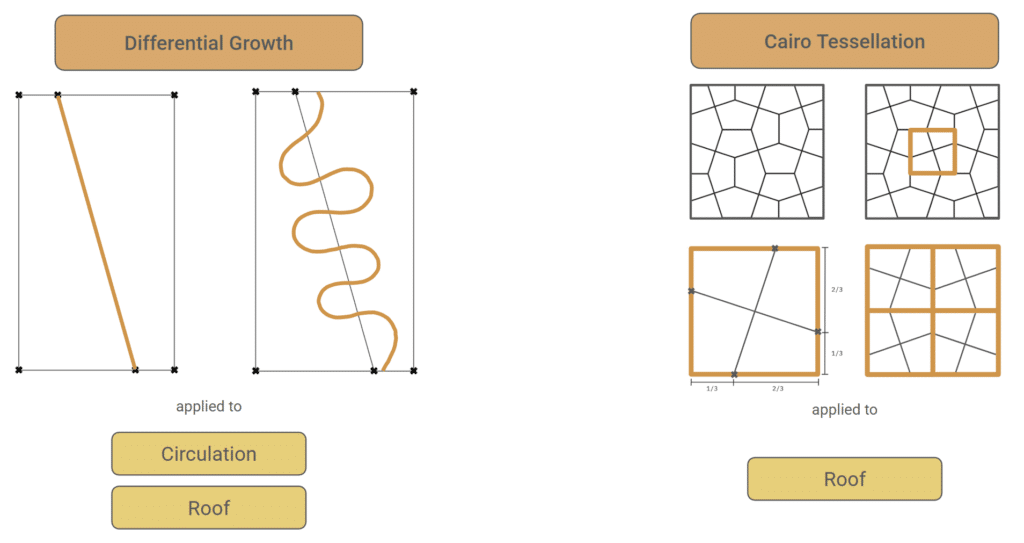
The design is founded on two main concepts. The first is differential growth, a natural process capable of generating smooth and organic geometries. This principle informs both the circulation system and the roof geometry, allowing the spatial configuration to evolve organically. The second concept is the Cairo tessellation, a traditional paving pattern widely used in the city. This pattern was reconstructed parametrically, starting from a square geometry and then mirroring it. The resulting flat module is used to tessellate the roof surface, establishing a strong connection between contemporary computational methods and local architectural heritage.
Computational Design Methodology
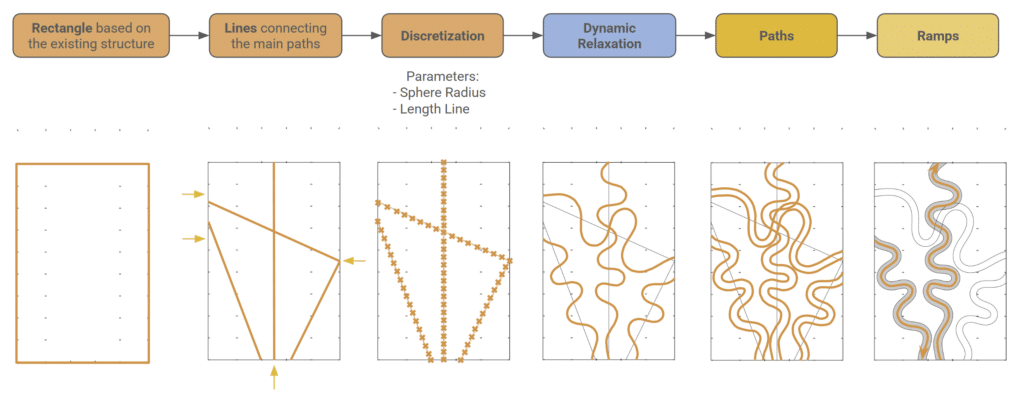
The circulation layout originates from the rectangle based on the existing steel structure. Initial lines connect the four primary entrances of the building and align with the main longitudinal axis. These curves are discretized and processed using dynamic relaxation in Kangaroo, with simulated sphere collisions. Through relaxation, the curves evolve into smooth polylines. Then, offset operations define circulation widths and generate the main market paths. Finally, two of these paths are vertically displaced, creating continuous ramps that connect the ground floor to the first level. The volume generated beneath these inclined paths is utilized for storage and commercial spaces.
Form Iterations
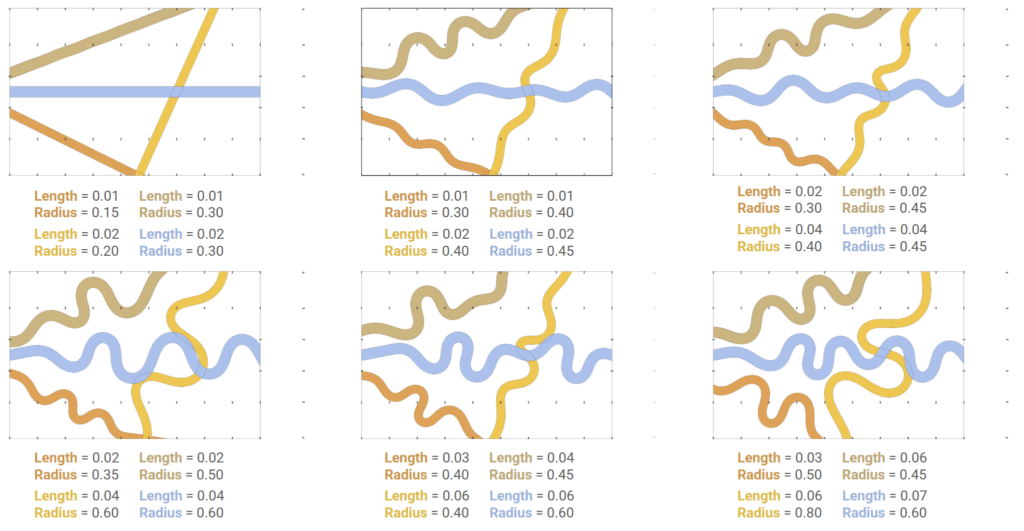
By varying the parameters of the line length and circle radius, it is possible to explore different amplitudes and frequencies of the curves. The final result allows finding paths that elegantly avoid the existing structure with fluid movement.
Form Finding Process
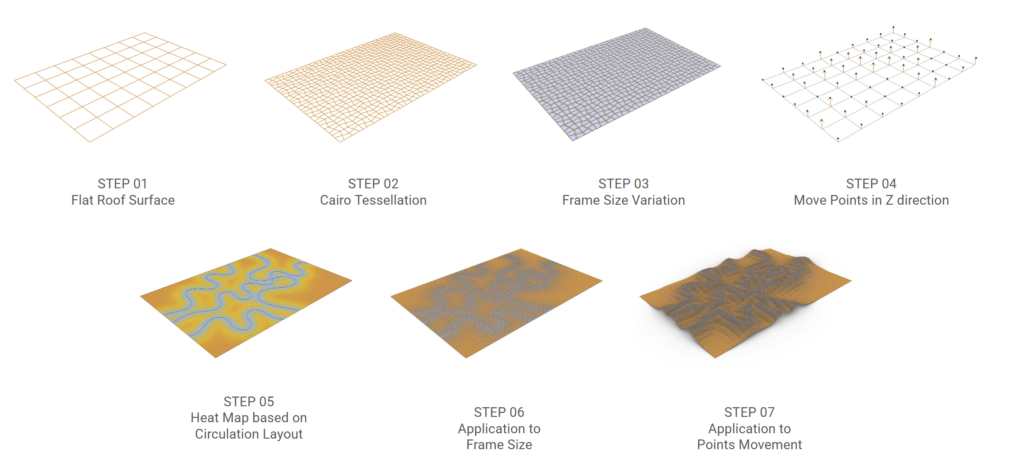
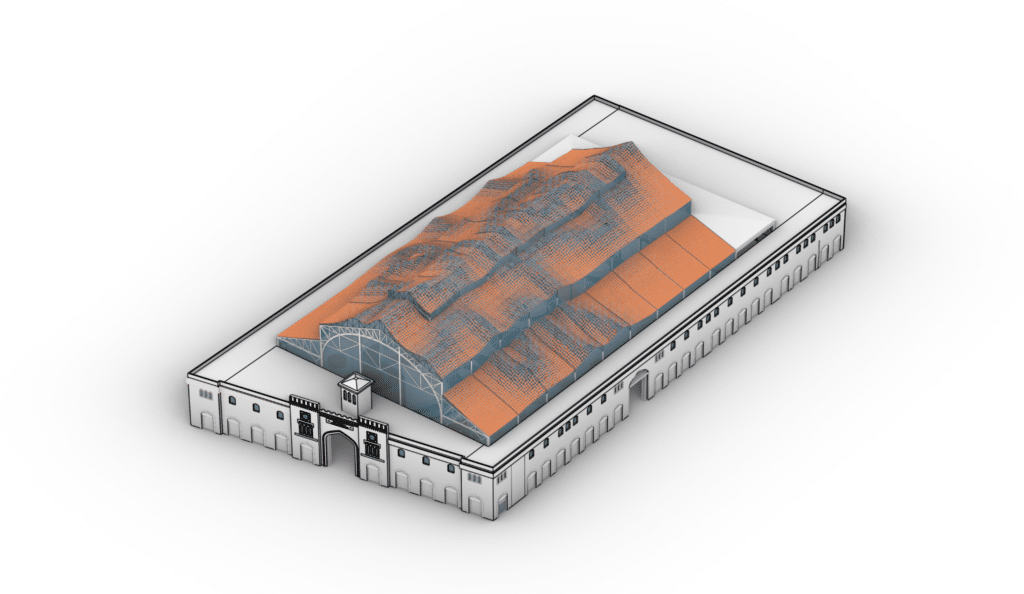
For the roof geometry, the design process begins with a flat mesh onto which the Cairo tessellation is mapped. The frame size of the pattern is variable, and vertical displacement of the mesh vertices introduces additional dynamism to the surface. These variations are driven by a heat map based on proximity to the main circulation paths: roof areas closer to the circulation zones feature smaller frame sizes and greater vertical deformation.
Applied to the market roof, this strategy transforms the initially flat surface into a highly expressive structure, with openings strategically aligned to the flows beneath.
Plan & Section
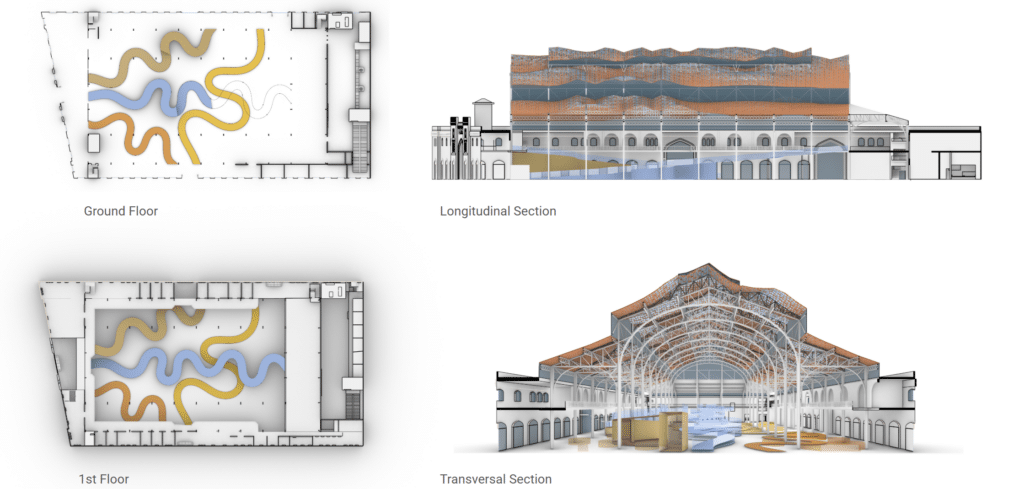
The final plans and sections reveals how the various paths and vertical connections interweave within an organic network of routes and ramps. This continuous and fluid system encourages visitors to explore the spaces and spend more time within them.
Exploded View
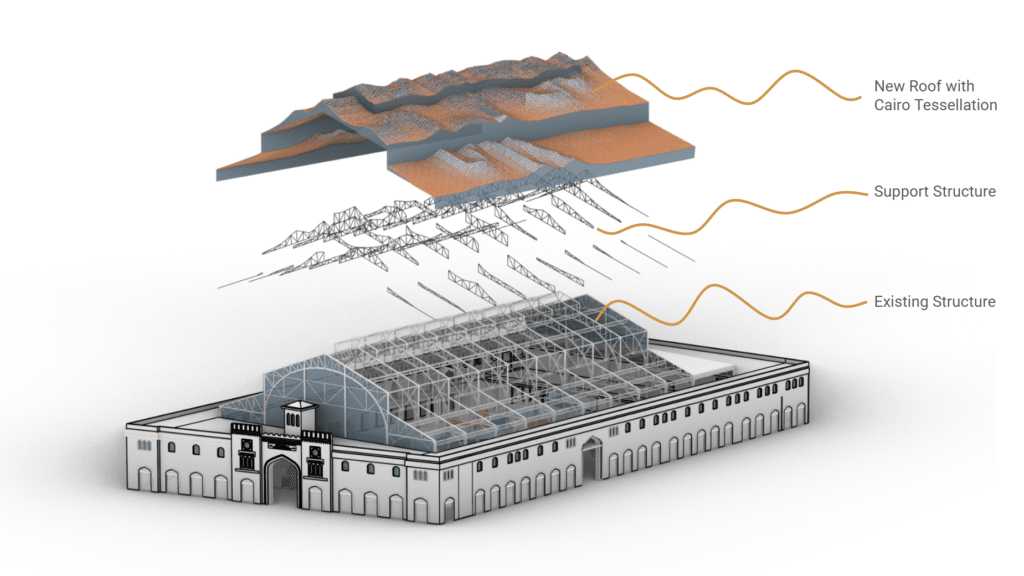
The exploded view shows how the new roof is supported by a structural framework that follows its curvature.
Interior Views
The interior views illustrate the atmosphere of the space: shaped by light, natural curves and with the rhythm of the traditional cairo tessellation.