Structural Hollow Cross Section Systems – Reed
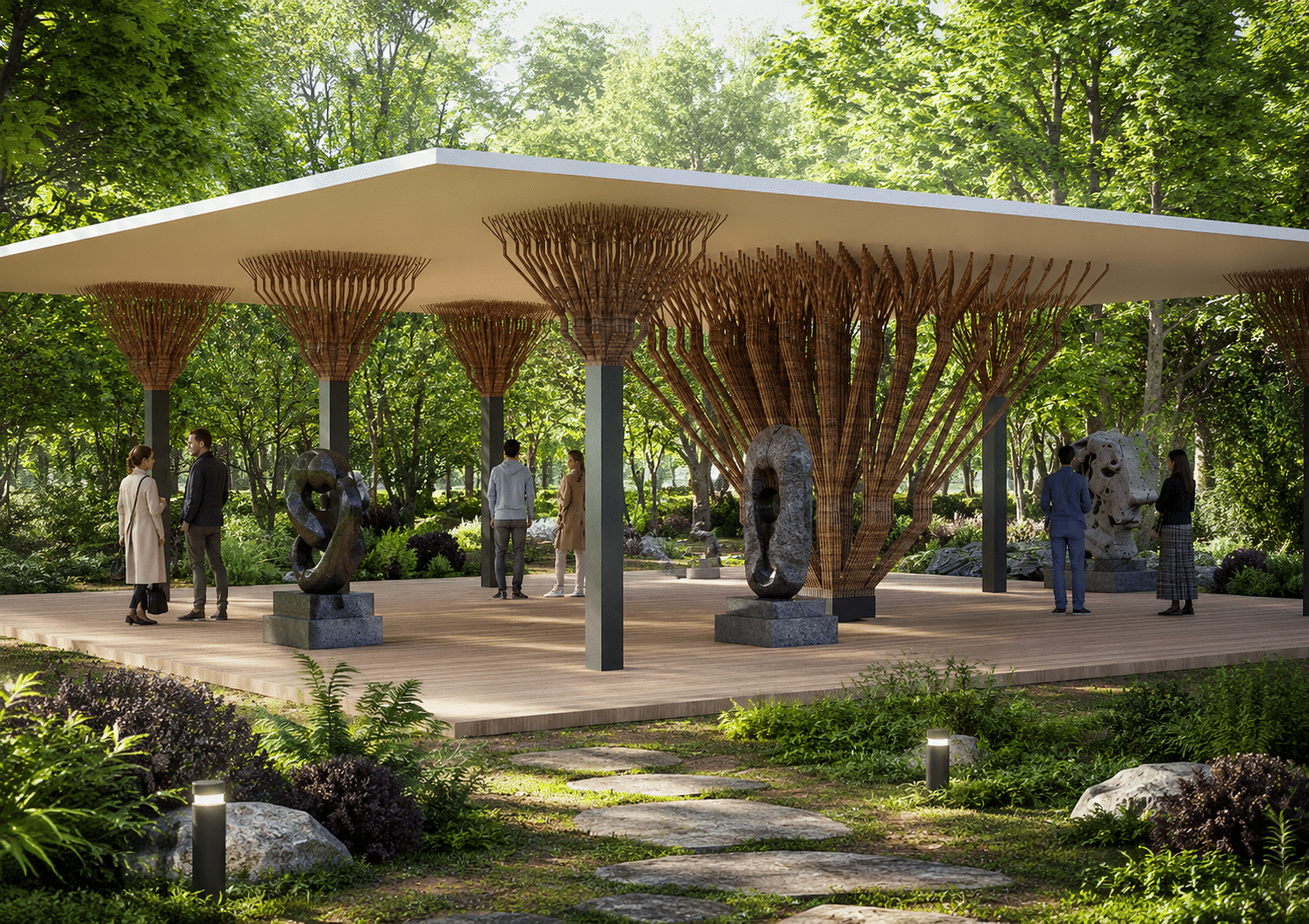
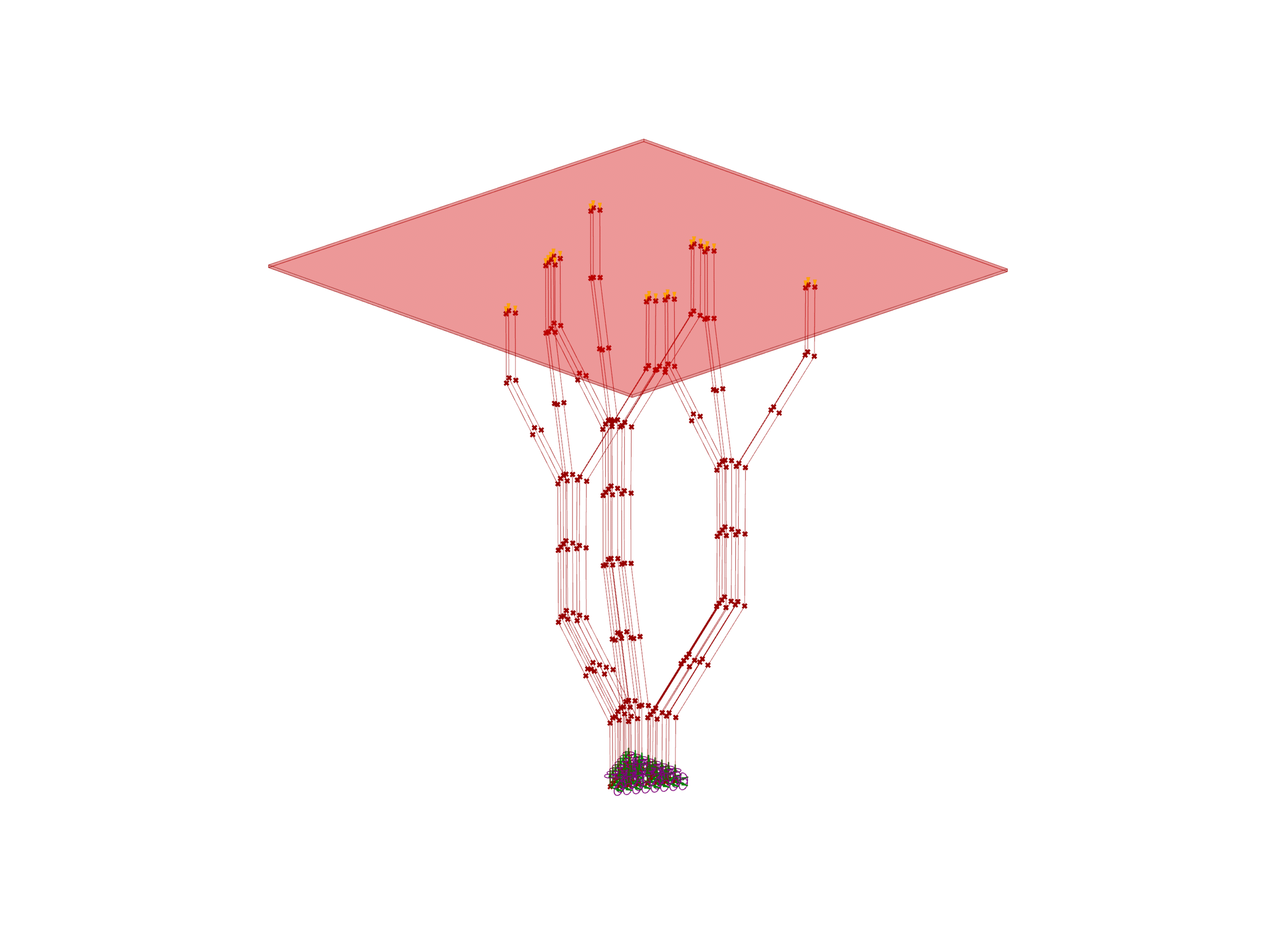
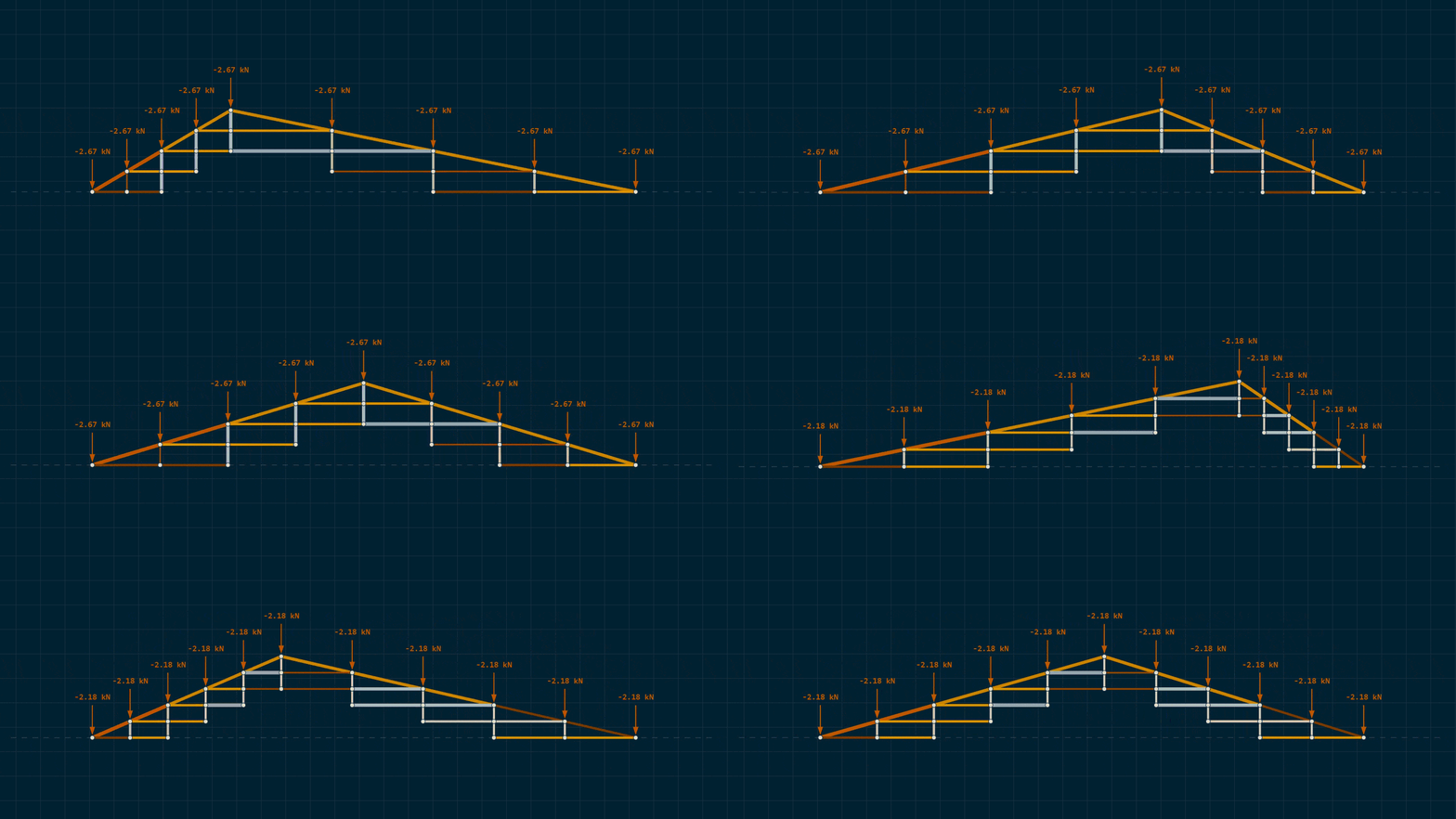
Understanding reed column systems (from robotics for ecological buildings studio) through Karamba structural analysis and drawing methods.
The MAA is a visionary master program with an innovative and open structure, mixing diverse disciplines, shaping professionals capable of producing theoretical & practical solutions towards responsive cities, architecture & technology.
Understanding reed column systems (from robotics for ecological buildings studio) through Karamba structural analysis and drawing methods.
Structurally informed design strategy for reclaimed timber The first iteration explores the performance of an arched shaped beam and its related compression strategy.
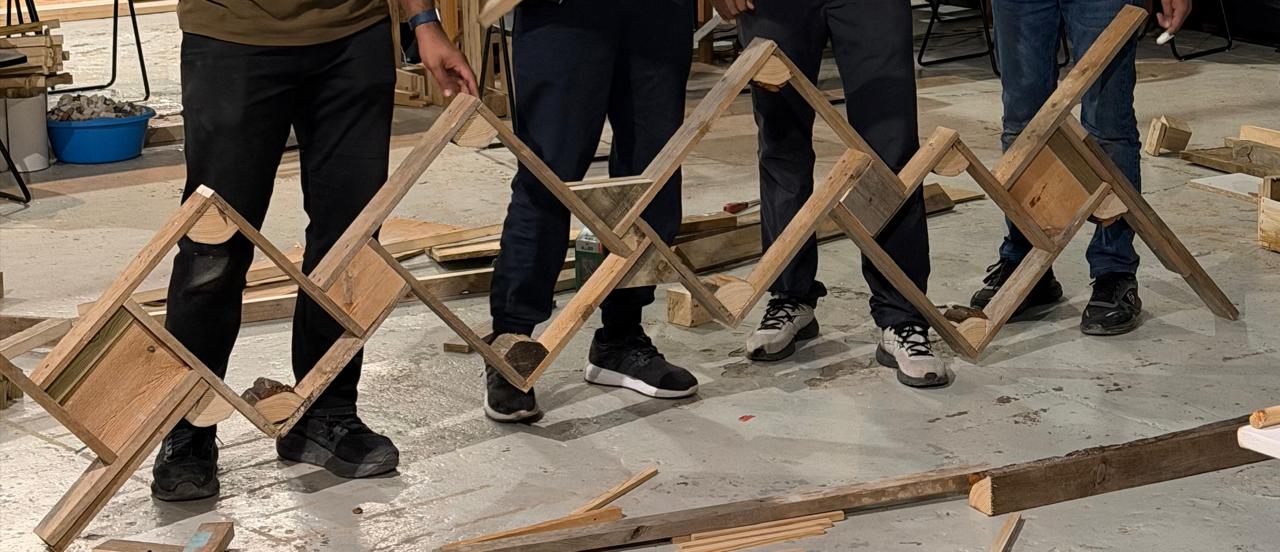
“How can a real-time parametric system effectively optimize architectural truss geometry when constrained by a limited, randomized inventory of salvaged timber? “ Geometry vs. Inventory Standard architectural forms assume infinite material. When constrained by random, reclaimed timber offcuts, the geometry itself must adapt to survive. “Shifting the structural burden from material continuity to joint frequency.” Standard … Read more
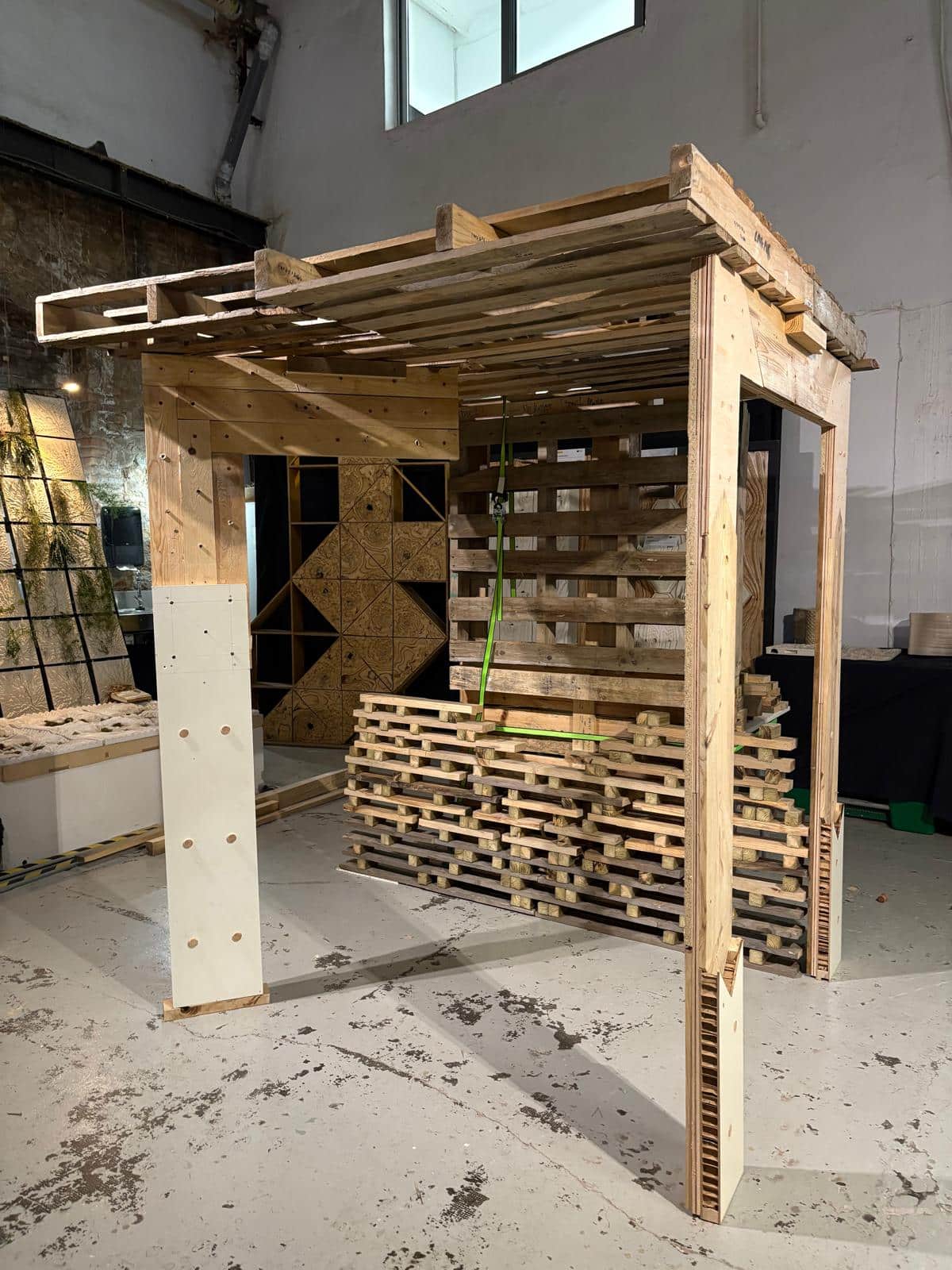
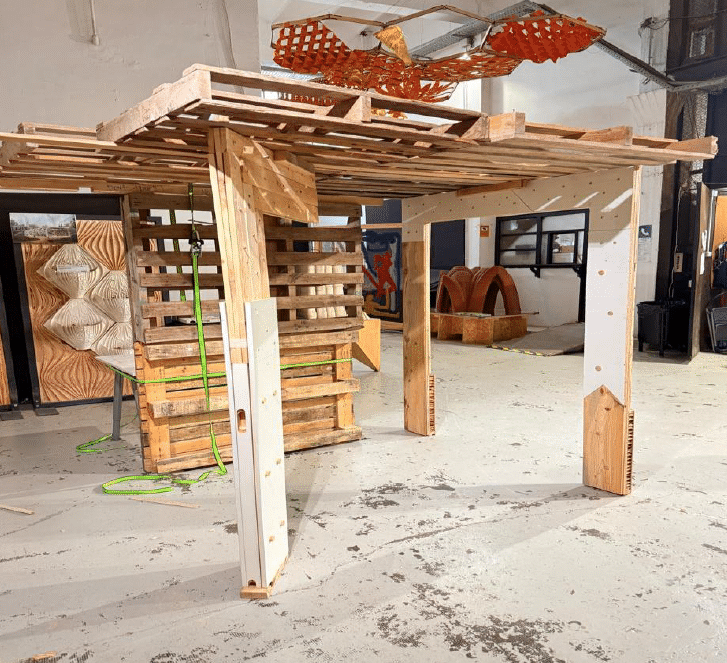
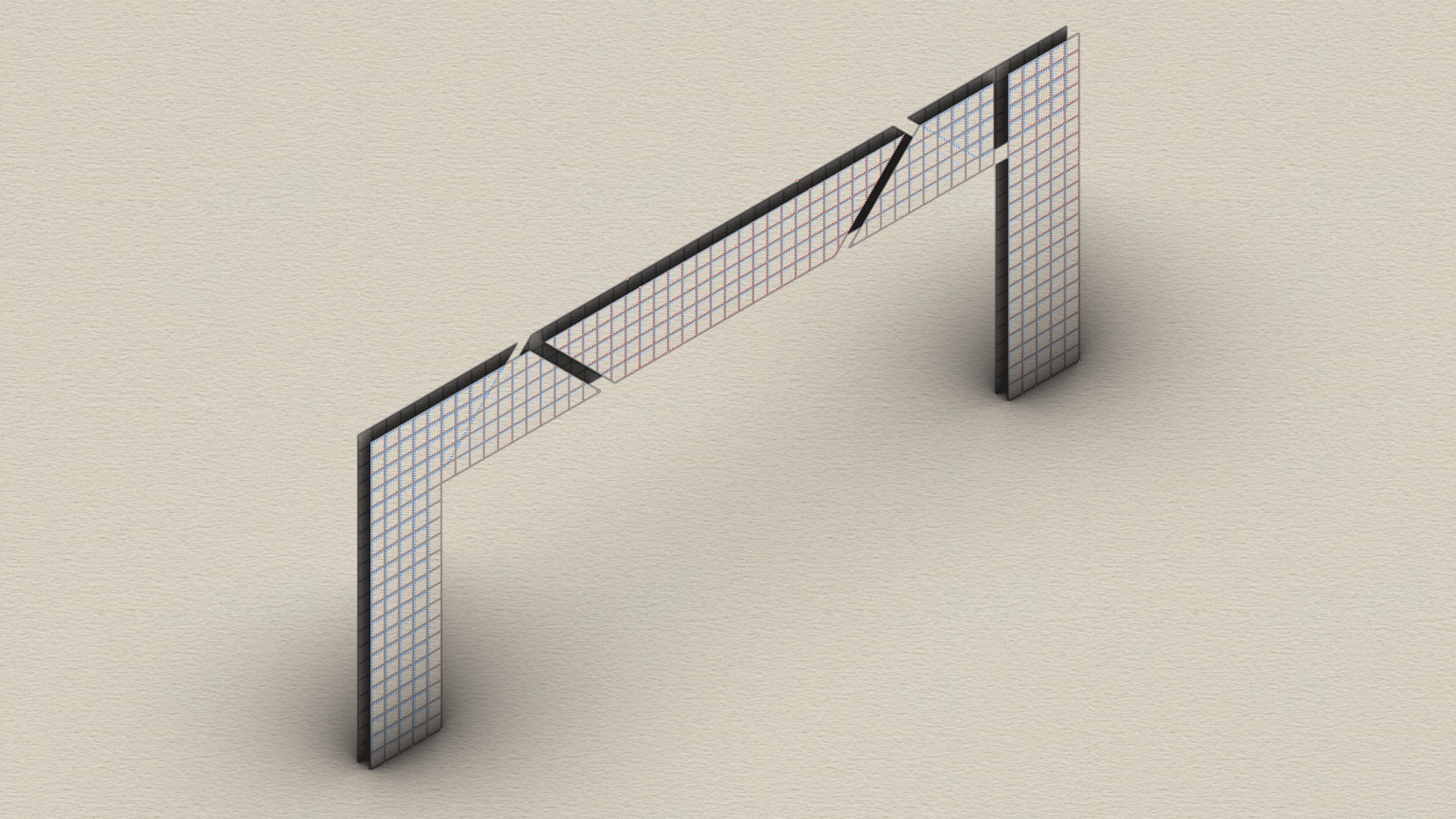
Introduction — Intent Building a portal frame from reclaimed timber, focusing on splicing and shuffling techniques to adapt irregular pieces into a stable, structurally working system. Material Intelligence — Understanding the Stock Structural Logic — Portal Frame System Methodology — Overlay & Splice Strategy FABRICATION — Digital vs Physical The workflow was driven by existing … Read more
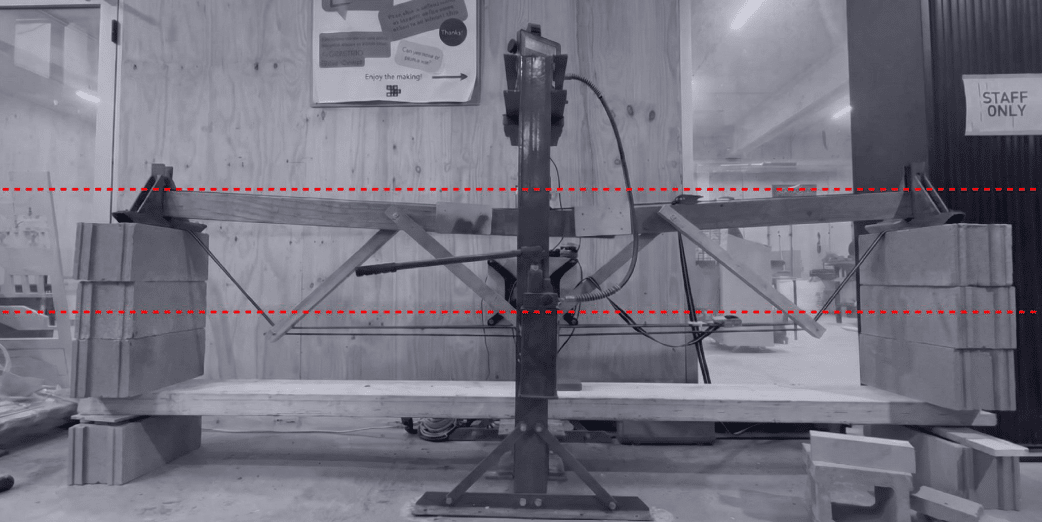
DIMENSIONS MATERIAL USED PROCESS OF MAKING BEAM TEST SETUP BEAM DEFORMATION The images document progressive deflection under incremental loading (0 kg to 76 kg) where it can be observed that the block is taking the load on which the beam is placed and it is under high compression whereas beam is held by strap to … Read more
The project documents the iterative design and manual fabrication of a 3-meter span beam constructed exclusively from limited recycled wooden members. Iterations The beam was developed through a series of structural iterations evaluated using utilization ratio, deflection, bending moment, axial force, and shear force. With a fixed inventory of recycled wooden elements, optimization focused on … Read more
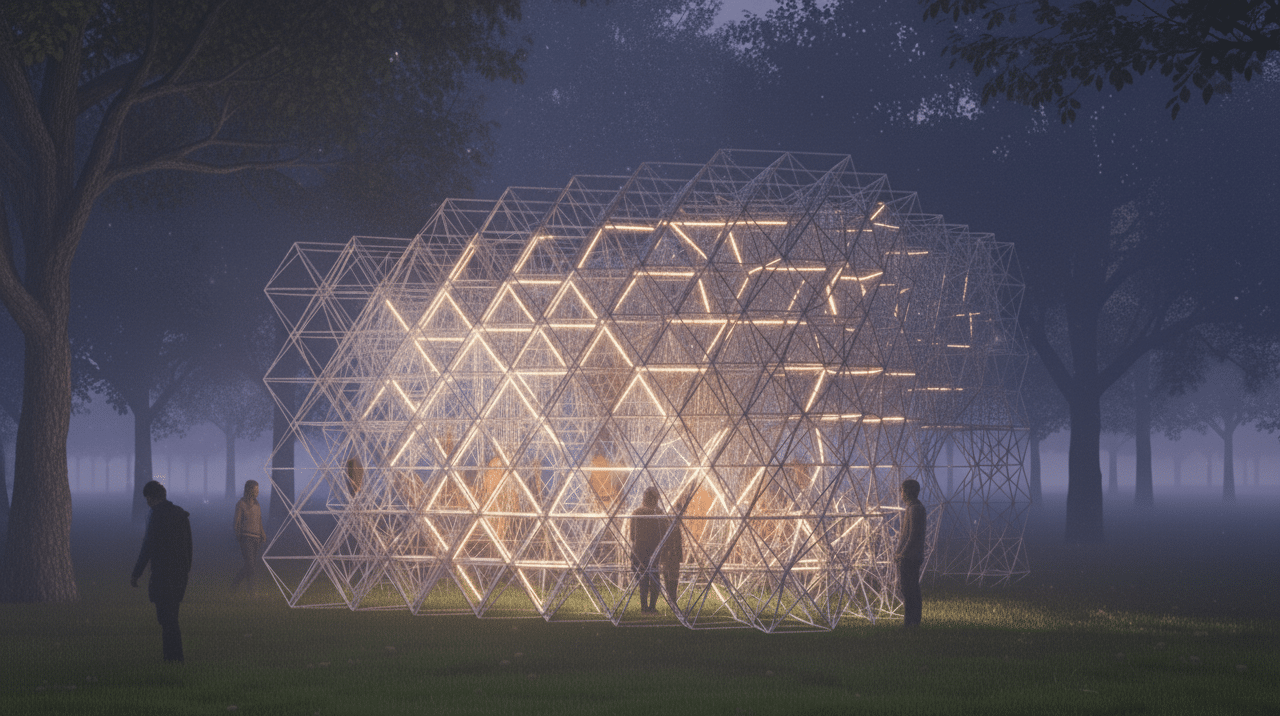
Group includes: Nguyen Vu Tue Minh (Chloe) & Eduardo Martinez Toribio //OVERALL DESIGN OBJECTIVE //PRECEDENT: TEMPORARY PARAMETRIC PAVILION //COMPUTATIONAL DESIGN SYSTEM USING CRYSTALLON //MATERIAL RESEARCH: GLASS-REINFORCED RECYCLED PET (GR-RPET) //ANALYSIS Total Mass: 191.8 (kg) Natural Vibration Analysis Frequency: 9.45 (Hz) Max Displacement: 0.125 (m) //OPTIMISATION: GOALS & TARGET //OPTIMISATION: RESULTS //OPTIMISATION: LIGHTNESS VS STIFFNESS Baseline: … Read more
Our digital fabrication journey unfolds through four experiments that explore how material, geometry, and technology negotiate form. Each project challenges a different fabrication technique: laser cutting, CNC milling, 3D printing, and robotic manufacturing, while asking a deeper question: How does digital logic reshape the language of craft? Laser Cutting Tessellated Lightfield This project explores the … Read more