The MAA is a visionary master program with an innovative and open structure, mixing diverse disciplines, shaping professionals capable of producing theoretical & practical solutions towards responsive cities, architecture & technology.


Filters
Course

Proposal for Enhancement of Semantic Segmentation Model for Architectural Purposes

The current semantic segmentation model for ControlNet provides a list of usable materials, but they are not specific enough for architectural purposes. By generating new tokens (colours) that extend the existing model with new material types, we aim to improve the process by which stable diffusion operates and make it more suitable for architecture applications.

HYBRI-FORM

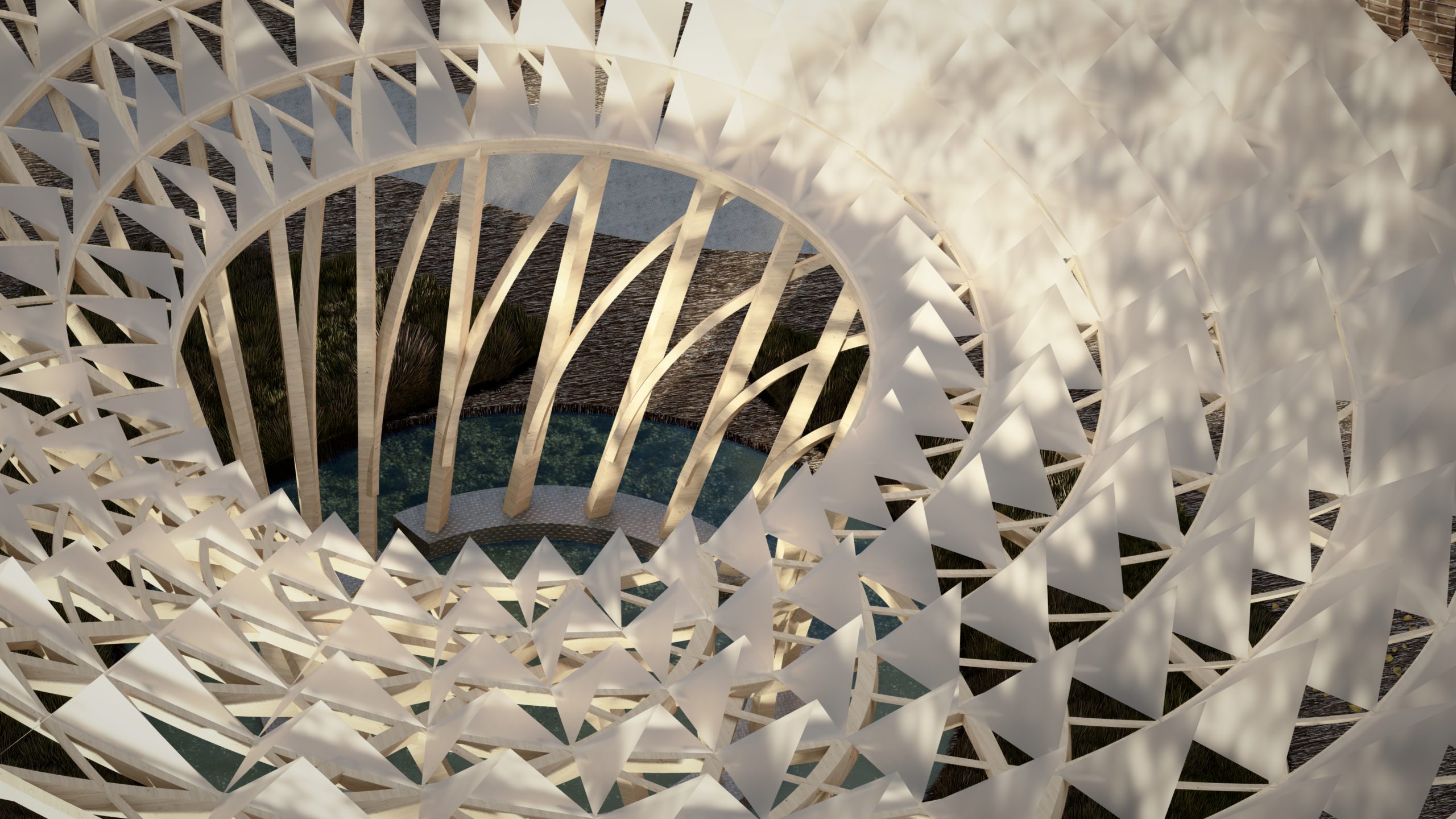
Can the use of active bending in wood in combination with a tensioning system increase the structural stiffness of a multilayered double curved skin while also acting as an alternative assembly system? context_wood construction context_active bending context_behavior based geometry state of art_ analysis state of art_conclusions design_characteristics future steps

Beyond Corals

The recent climate changes are affecting key elements of our ecosystem such as tropical forest, deserts, and coral reefs. Corals are living organisms, closely related to jellyfish that live in colonies. The size of those colonies can vary, the largest coral reef to date, the great barrier is estimated to stretch over 2300 kilometers. There … Read more

| RE.Print (Term 02)

for the previous term work refer : https://blog.iaac.net/re-print/ |Global Scenario The building system was was fragmented to 3 systems, each with a unique purpose.  Module A-the wall ensemble: focused on creating a modular wall system that would reduce dead load and offer versatile functionality. Module B-the column ensemble: was designed to utilize the material’s compressive … Read more

AER – Artificial Empathic Response [DIGISCAPES ver 2.0]

AER – Artificial Empathic Response [DIGISCAPES ver 2.0] is a project of IAAC, Institute for Advanced Architecture of Catalonia developed in the Master in Advanced Architecture 02 – by the student: Preetam Prabhakar and Research Thesis Advisor: David Andres Leon during the course MAA02 22/23 Thesis under the Algorithmic Design research thesis cluster.

Preliminary Materials for a Theory of Post-Metropolitan Verticality

Discourses of Verticality: Vignettes on (post)Metropolitan Urbanisms It all started from the Manhattanism proposed by Rem Koolhaas in Delirious New York. The theory explains the product of the verticalization of the city – skyscrapers, which stand neatly and compete with each other. The only thing in common is the small squares extruded by the grid- … Read more

Forces of Nature: Tensile Structure

CONCEPT The project aims to tensile structures that are architectural designs which use tension to provide structural support and stability, often characterized by their lightweight and flexible nature. These structures are used in a wide range of applications, from large-scale event venues to small-scale residential and commercial buildings. Frei Otto The research begins with a … Read more

The Cultural Canvas

An art and community center designed to foster artistic and cultural activities in a community, through a geometrically evolved design that integrates with the surrounding environment. It serves as a hub for creative expression, social and cultural exchange, providing space for exhibitions, performances, workshops, and community events. The center’s architecture combines functionality with artistic expression, creating a space … Read more

VISITORS IN MONEGROS

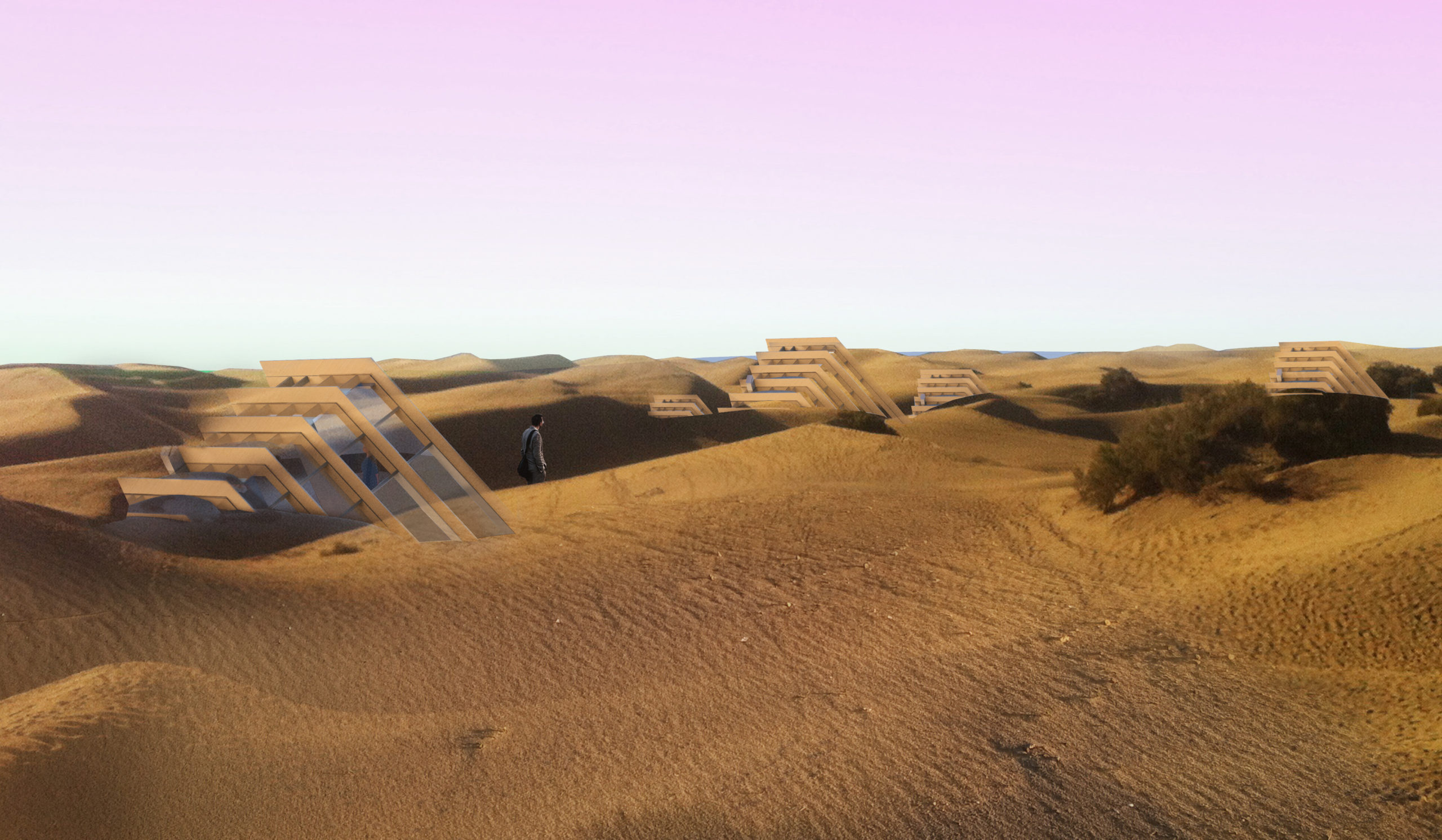
How Artificial Intelligence Is Reformulating The Notion Of Authorship In Architecture? Also published here: https://readymag.com/u3829384181/4130564/ Abstract Cosmic Dust Laboratory (CDL) is an experimental startup where humans and Artificial Intelligence Systems work together to come up with new architectural solutions for Extreme Climates and Conditions in Monegros Desert. An eloquent sponsor named Hannah goes to CDL … Read more

Internet of ME (term2)

The data we engage with everyday is growing rapidly, and our digital footprint is increasing! With the cyber-physical convergence and the fast expansion of the Internet, Volume of information created, copied, captured, and consumed worldwide went form 33 zettabytes in 2018 to an expected 175 zettabytes in 2051! That’s close 500% increase in 5 years. … Read more

Digital Deconstruct

Graph-Based Discretization of Building Meshes for Adaptive Generation of Predefined Modular Architectural Elements This research presents a novel software tool that facilitates the discretization of input building geometries into a predefined catalog of architectural elements, bridging the gap between mass customization and mass production. The proposed approach employs a graph-based representation of both orthogonal and … Read more

Digital Heritage

Additive Manufacturing is the technology that builds 3D objects by adding layers of material on top of each other, whether the is clay, plastic, concrete etc. through various types of robotic technologies. In recent years, there has been a growing interest in the additive manufacturing with concrete as it has shown potential advantages in comparison … Read more

CORTEZA_Term02

Context # Noise Pollution Noise pollution is considered to be any unwanted or disturbing sound that affects the health and well-being of humans and other organisms. And World Health Organization considers decibels over 65 dB noise pollution. Noise pollution is affecting everyone. For some people, its just an annoyance, but for others, it’s a serious … Read more

DUST UP! (Term02)

(Continuation from the first term. To view the Term01 click here : https://blog.iaac.net/dust-up-design-behavior-thesis-cluster-term-01/) Material Research – Strategies To solve the issues from the Term01, approaches from different scales were implemented. From material scale, adding marble dust can give more stability to the mixture and help it move less during printing. Exploring different curve connections such … Read more

Forces of Nature

This project explores the use of various physics simulations using Kangaroo in order to reach a structurally viable design proposal for the IaaC rooftop. The design relies on a combination of specific behaviors (below) that have been calibrated to achieve the desired form.

Forces of Nature

HYPERBOLIC PARABOLOID ROOF This research project in the field of architecture aims to investigate the application of physics simulations in the form-finding process of designing live-interactive installations using Kangaroo, located in IAAC’s rooftop. The design strategy is creating a simple geometry based on forces in compression and tension on different points. The pavilion’s sail-like plane … Read more