
The MAA is a visionary master program with an innovative and open structure, mixing diverse disciplines, shaping professionals capable of producing theoretical & practical solutions towards responsive cities, architecture & technology.
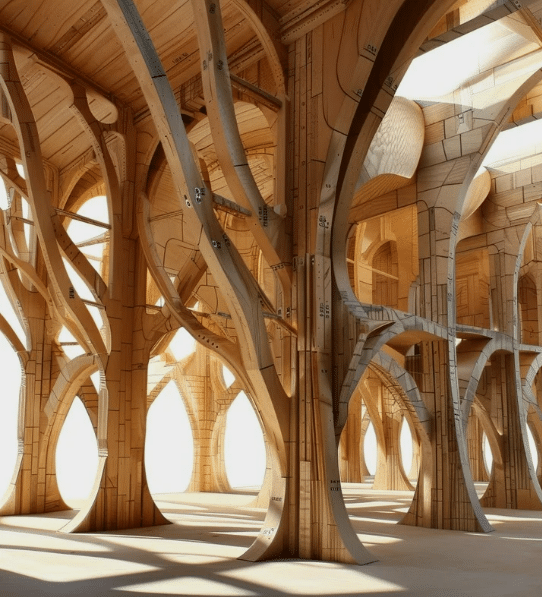
Bio-Receptive | Interfaces

Bio-Receptive Interfaces is a performative multi-material clay-based system for indoor environments, integrating hydrogel vascularity to host an ecosystem of cryptogams and vascular plants. Fusing biological intelligence with embedded sensors and AI, it sustains a prolonged hydration cycle, purifies air, sequesters carbon, and reintroduces ecological presence into synthetic indoor worlds—transforming sealed spaces into living, responsive, multi-species … Read more
Go With The Flow
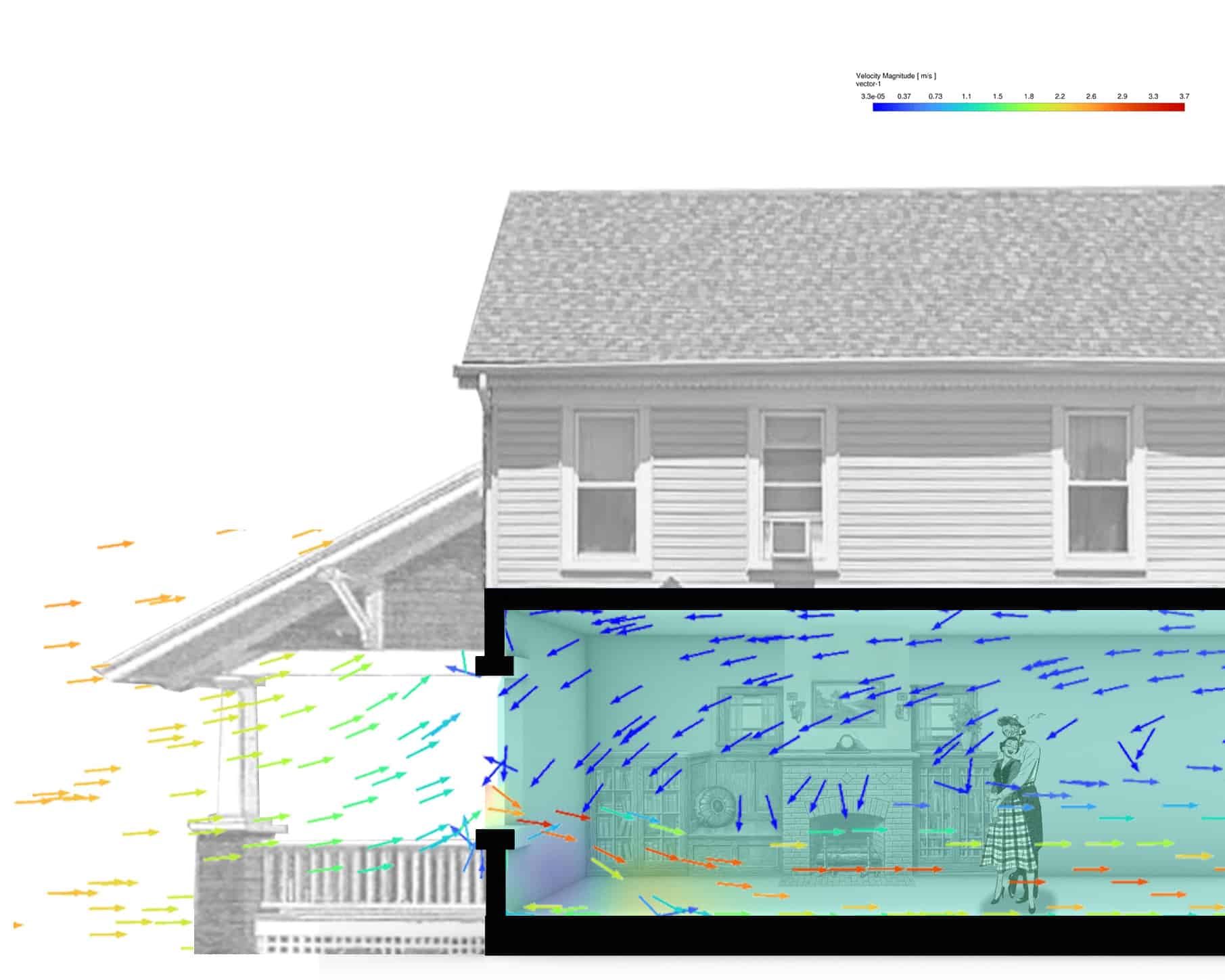
Computational Fluid Dynamics for Natural Ventilated Systems primarily located within the United States The Problem within Context: Sears Catalogue from 1930s to 1950s United States. The American Dream is a phrase that has taken meaning in the ownership of a home with a white picket fence. The phrase was popularized in the 1930s after WWI … Read more
WOLF
“What if you could speak your design ideas and watch them transform into complete parametric scripts in real-time?”
BARA
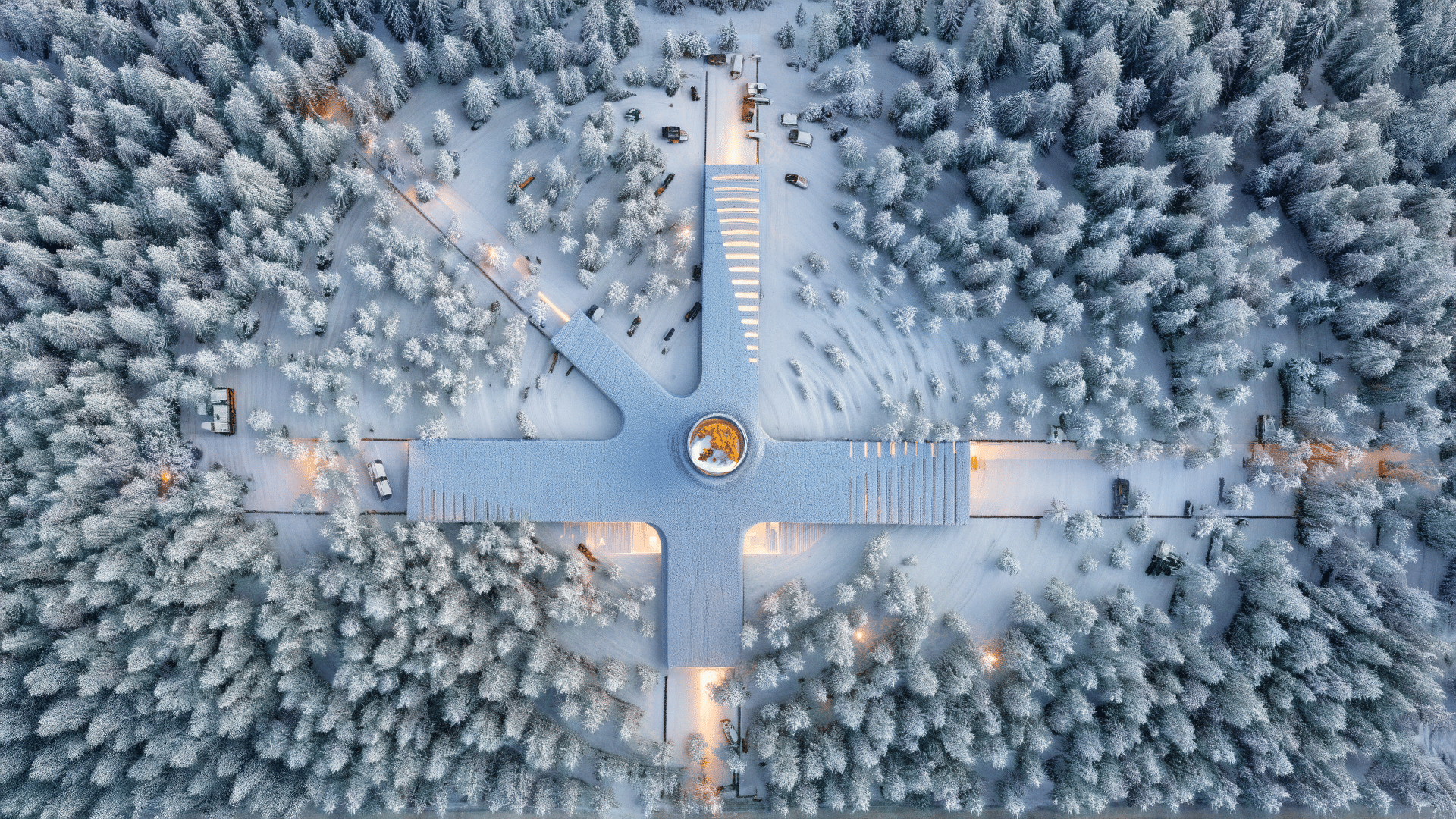
Carbon Envelopes Toward Carbon-Sequestering Architectural Systems through Biochar-Concrete and Hybrid Fabrication The construction industry is one of the biggest contributors to climate change.We’re facing a paradox: The materials we use and how the construction industry works today are destroying our chance of having a future. Besides the emissions, there are other problems that we need to … Read more
The Red String – Improvisational Machines
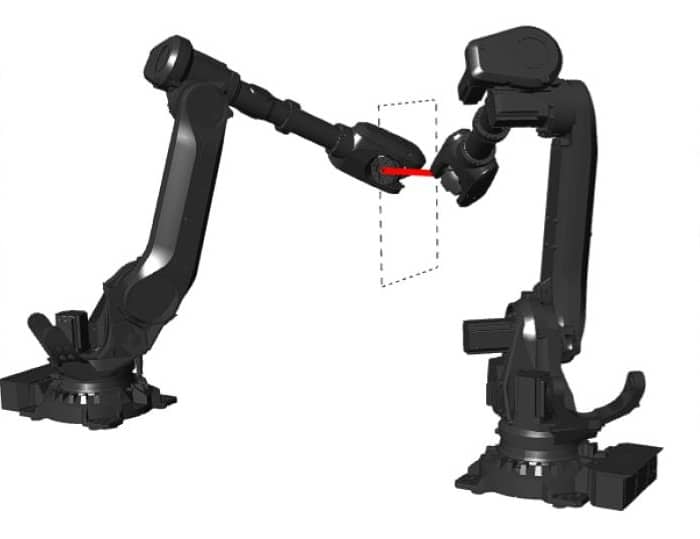
Course Overview: The MRAC01- WORKSHOP 3.2 course focuses on dynamic and improvisational workflows that are used on real-time control of Industrial Robots. Therefore in this course students learned how to use Industrial robots through experimentation of rapid trial and error, hands-on discovery, and real-time problem-solving .uring this workshop, students engaged in a series of exercises … Read more
Carbon Envelopes
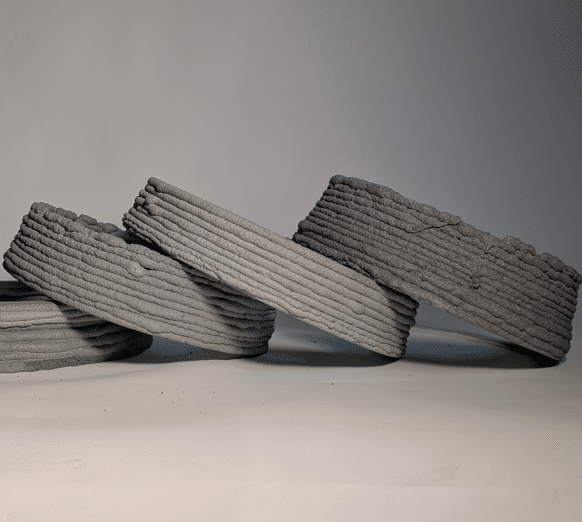
a BIOCHAR BASED concrete WITH A negative carbon footprint BARA is an opportunity to build negative carbon constructionsystems by rethinking concrete and methods used in the buildingindustry. Using on-site 3D printing and casting, entire buildings can beconstructed with reduced cement while storing and capturing carbon. The focus is on optimizing and improvingstructural performance, enhancing carbon … Read more
Contexept
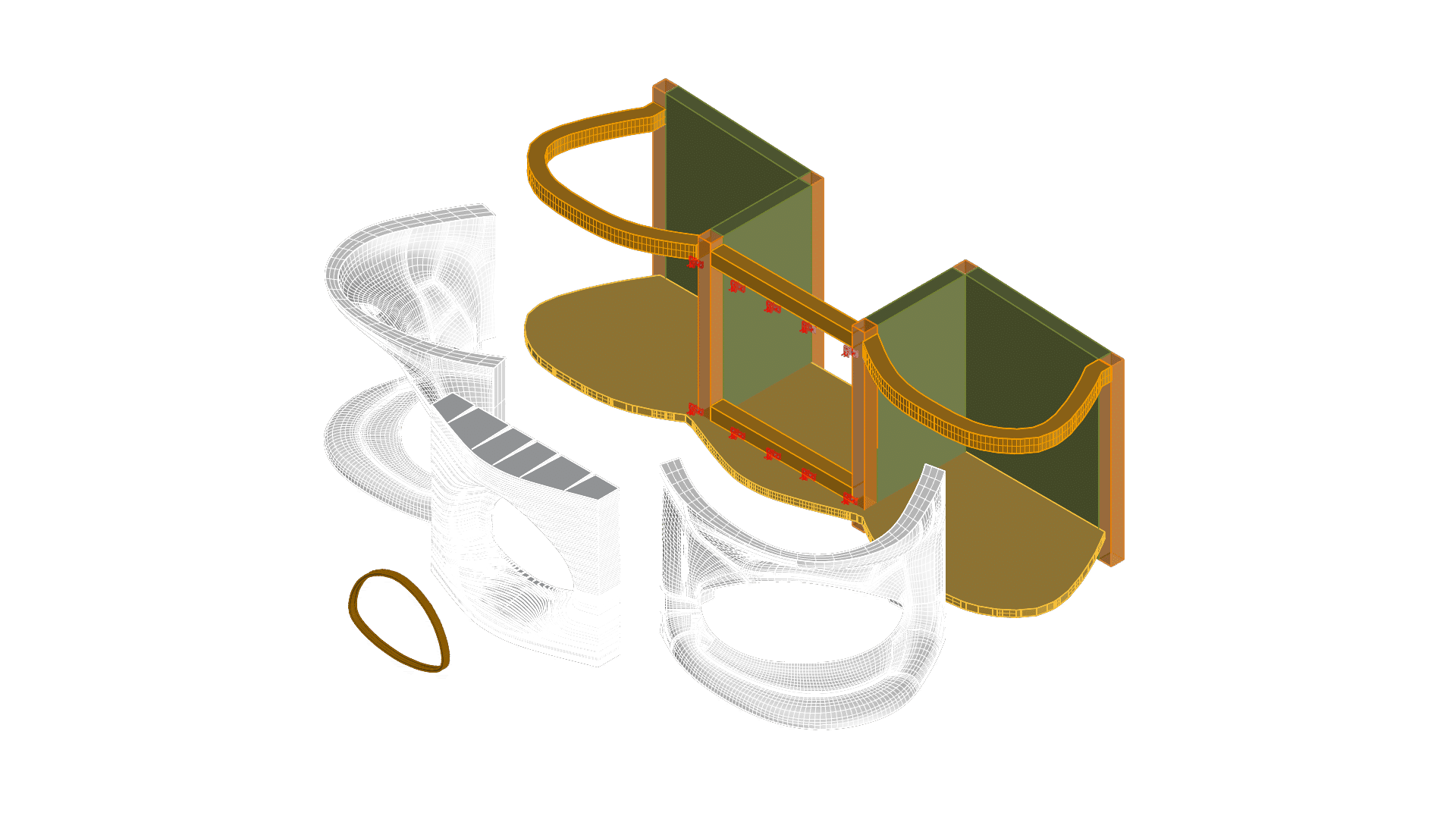
Contexept is a design-to-fabrication workflow that uses AI to generate context-aware façade designs and turn them into 3D-printable architectural modules. By combining semantic keyword clustering, image generation, and robotic clay printing, the system transforms abstract ideas into buildable, site-sensitive forms. It bridges digital creativity with physical construction, making AI a meaningful collaborator in architecture. Architecture … Read more
Transient Plastics 2.0

The plastic crisis has reached staggering proportions. If all the plastic waste on Earth were laid out, it would be enough to cover the entire surface of Argentina ankle-deep. Every year, we produce 300 million tons of plastic globally. Yet only 10% remains in use, while more than 80% is discarded. Of this discarded plastic, … Read more
SecondMatter
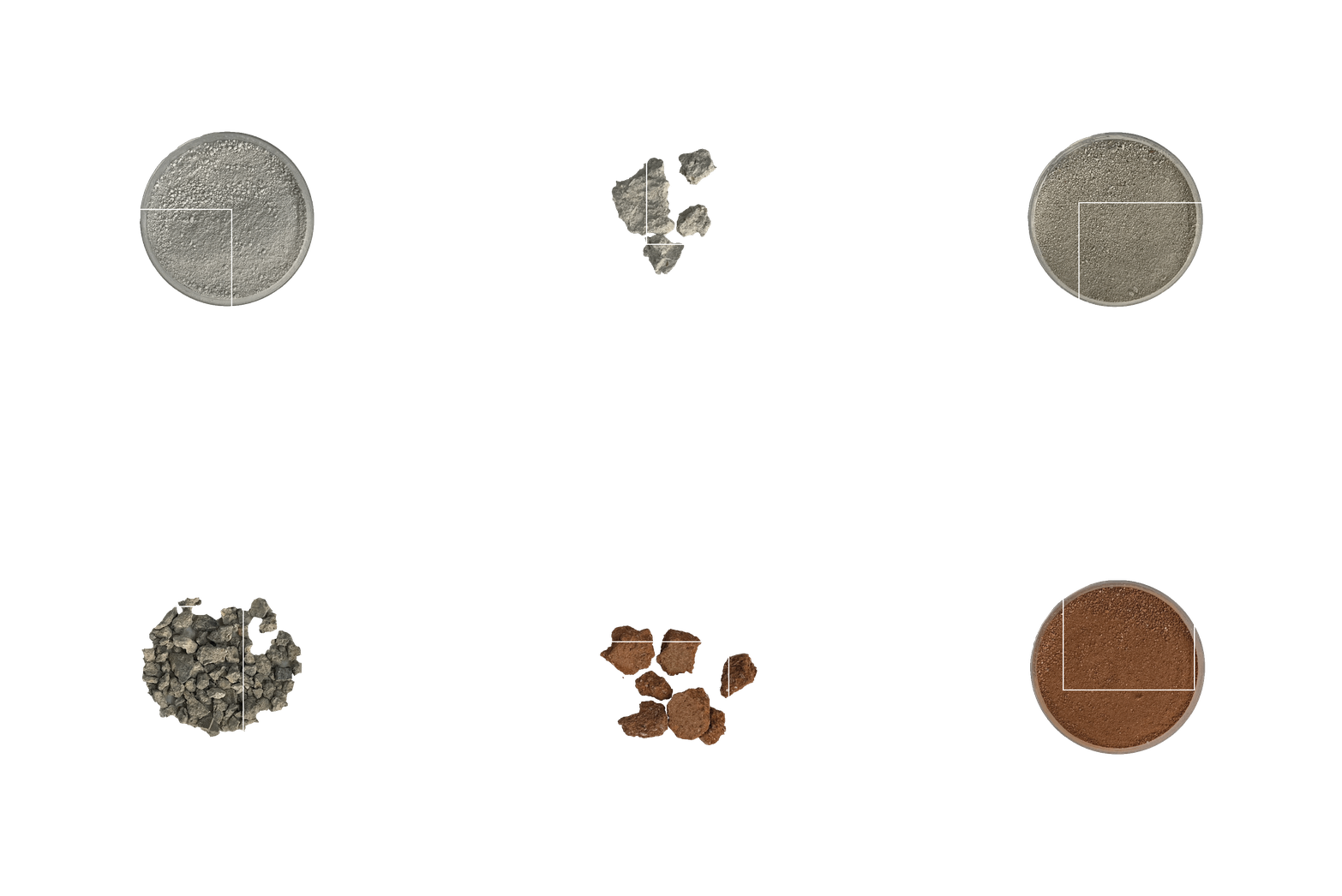
SecondMatter challenges architecture’s extractive processes and wasteful material cycles by upcycling Construction Demolition Renovation Waste (CDRW) into structural and non-structural applications. It blends ramming, which compacts granular materials into high-strength forms, with jamming-inspired interlocking of irregular aggregates. Large concrete waste pieces form a reinforced core, wrapped in a rammed mix of fine brick and concrete … Read more
Advanced Manufacturing Cluster – T02
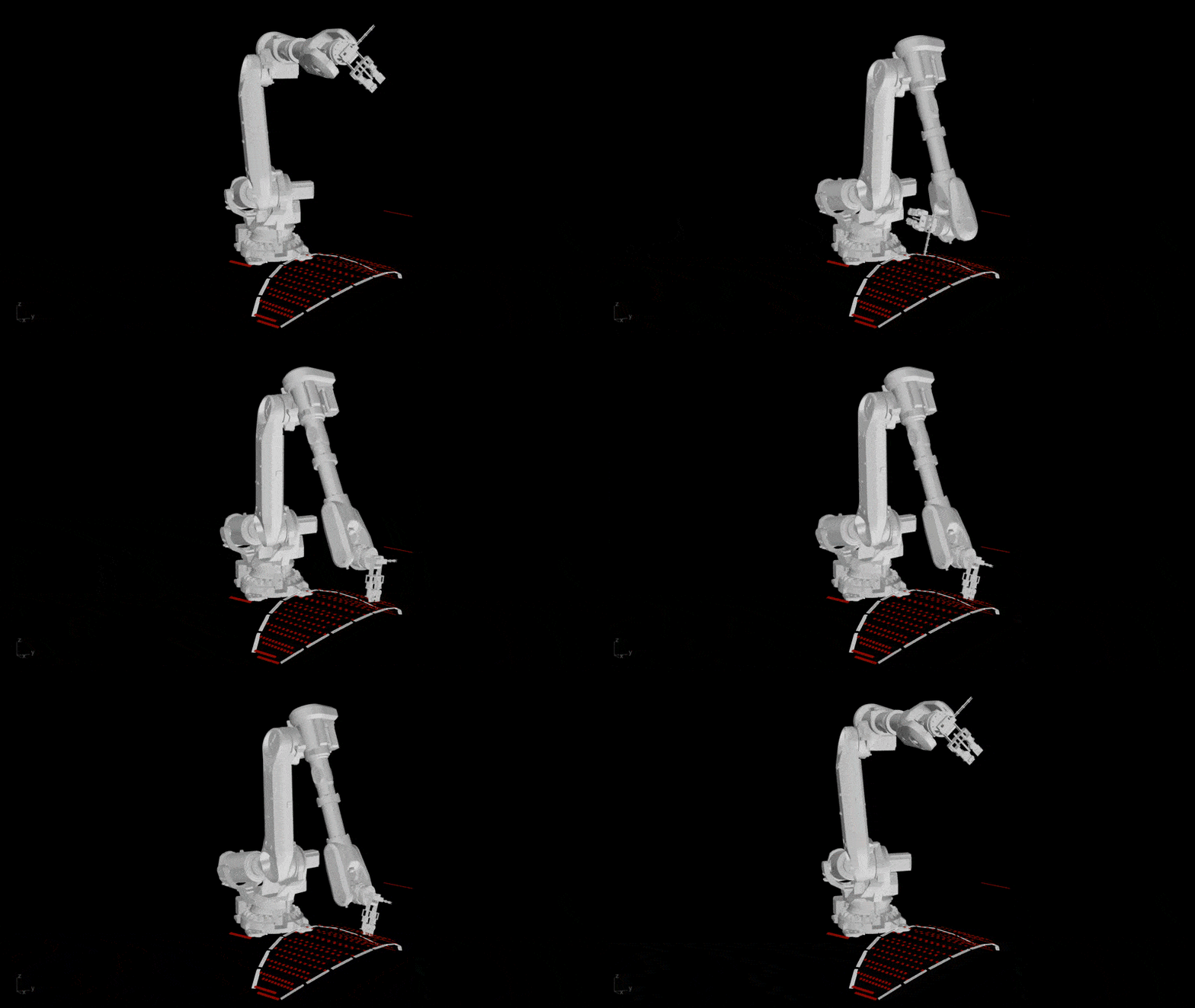
Analog End Effector Explorations Mechanical End Effector Explorations Final Robotic Jig Design | Facade Iterations
Terratwist
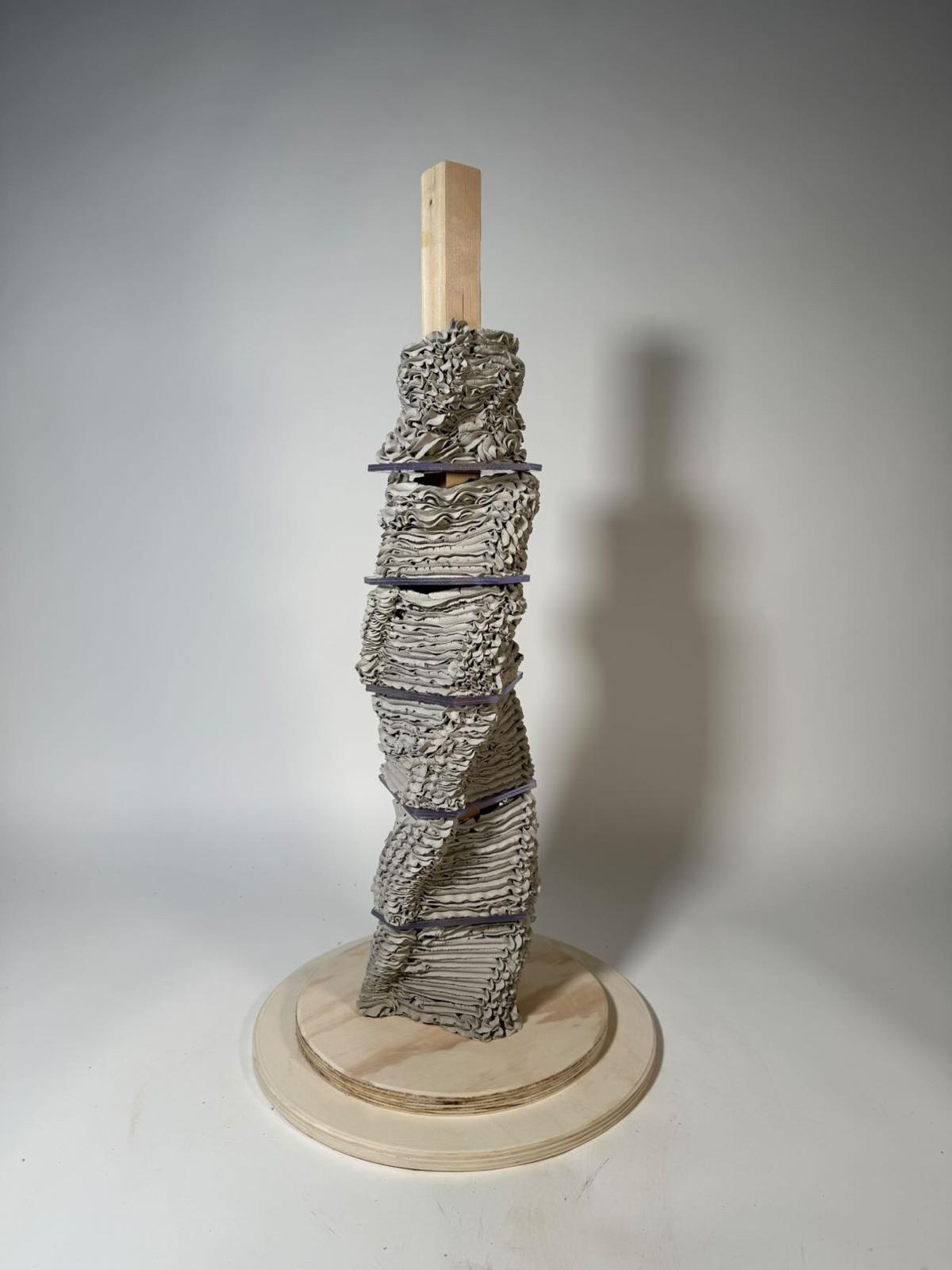
Introduction to Robotic Fabrication Seminar This project explores robotic fabrication techniques for clay-based structures, focusing on non-uniform and non-planar extrusion. Utilizing a six-axis robotic arm, the project investigates material behavior, toolpath optimization, and structural stability through digital simulations and real-world fabrication trials. The column design integrates rotational movements and varying extrusion heights to achieve complex … Read more

Sant Felip Neri Pavilion
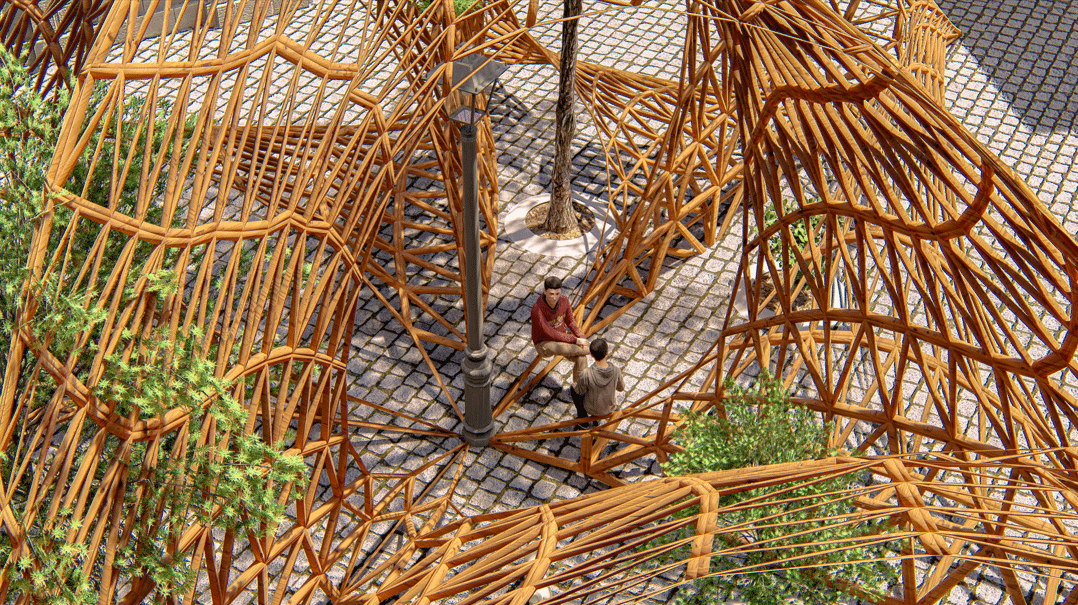
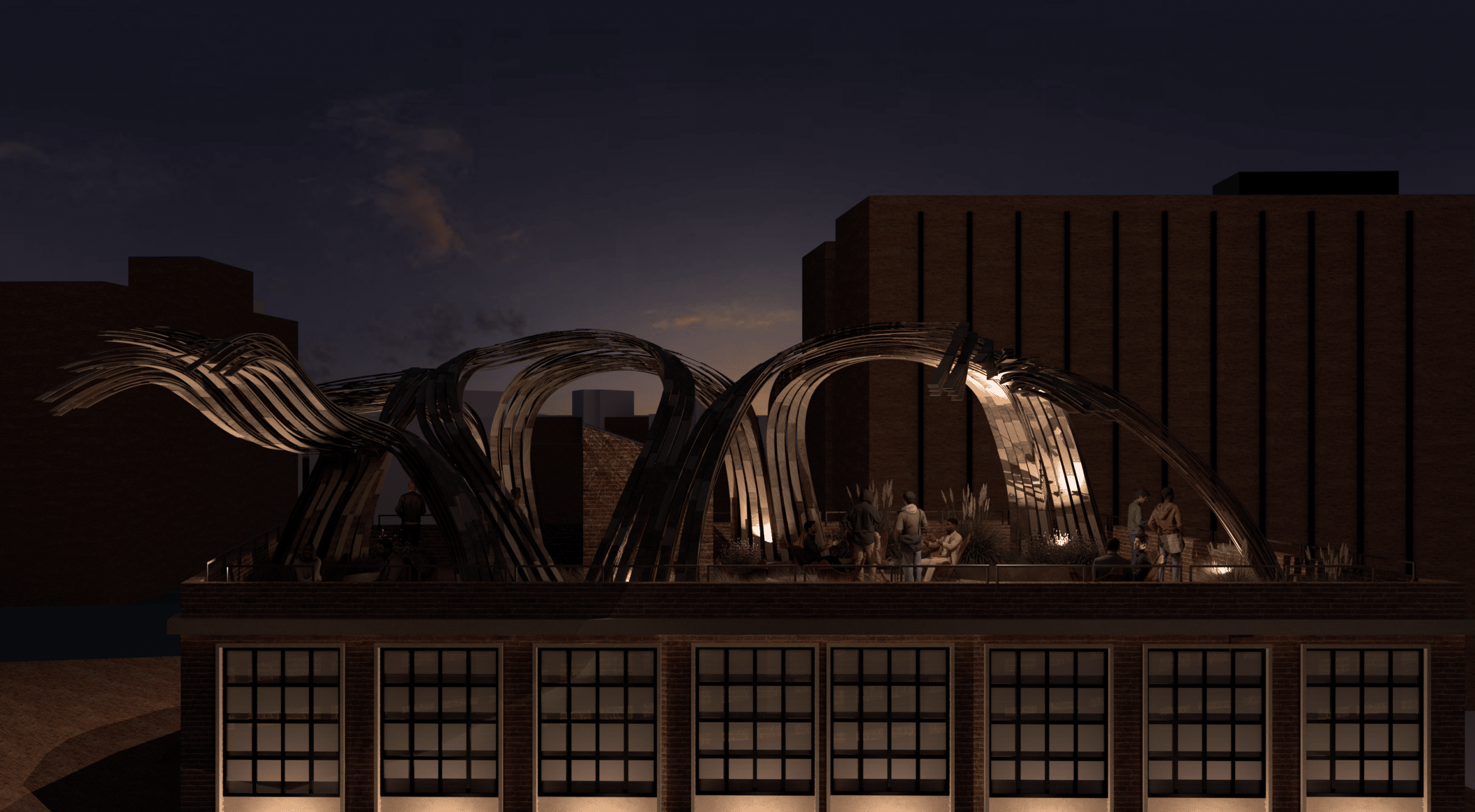
Master in Advanced Architecture Computational Design Seminar Yetkin Demir / Giovanny Gordillo SITE Placa De Sant Felip Neri is a small square located in the Gothic quarter. Bearing scars from the Spanish Civil War in 1938, this plaza holds a tragic past. Surrounded by the church and mixed use buildings, this square serves as a … Read more
