The Master Programme in Robotics and Advanced Construction is an innovative educational format that offers interdisciplinary skills and understanding through a series of class seminars that are put into practice through hands-on workshops. IAAC gives students the opportunity to create individual studio agendas and develop Pilot Thesis Projects based on the knowledge acquired during the seminars and workshops split into 3 Modules. In this way, IAAC puts together an experimental learning environment for the training of professionals with both theoretical and practical responses to the increasing complexity of the construction sector.

Filters
Course

Workshop 3.1 – Robot – Human Collaboration in Metal Fabrication
Faculty: Nacho Monereo & Prottay Roy ChowdhuryGuest Artist: Maria Mallo The project focused on creating a dynamic feedback loop between digital design, robotic positioning, and human craftsmanship. Instead of treating the robot as a fully autonomous machine, the workflow emphasized continuous interaction and mutual dependency between human and machine during fabrication. The installation was fabricated … Read more
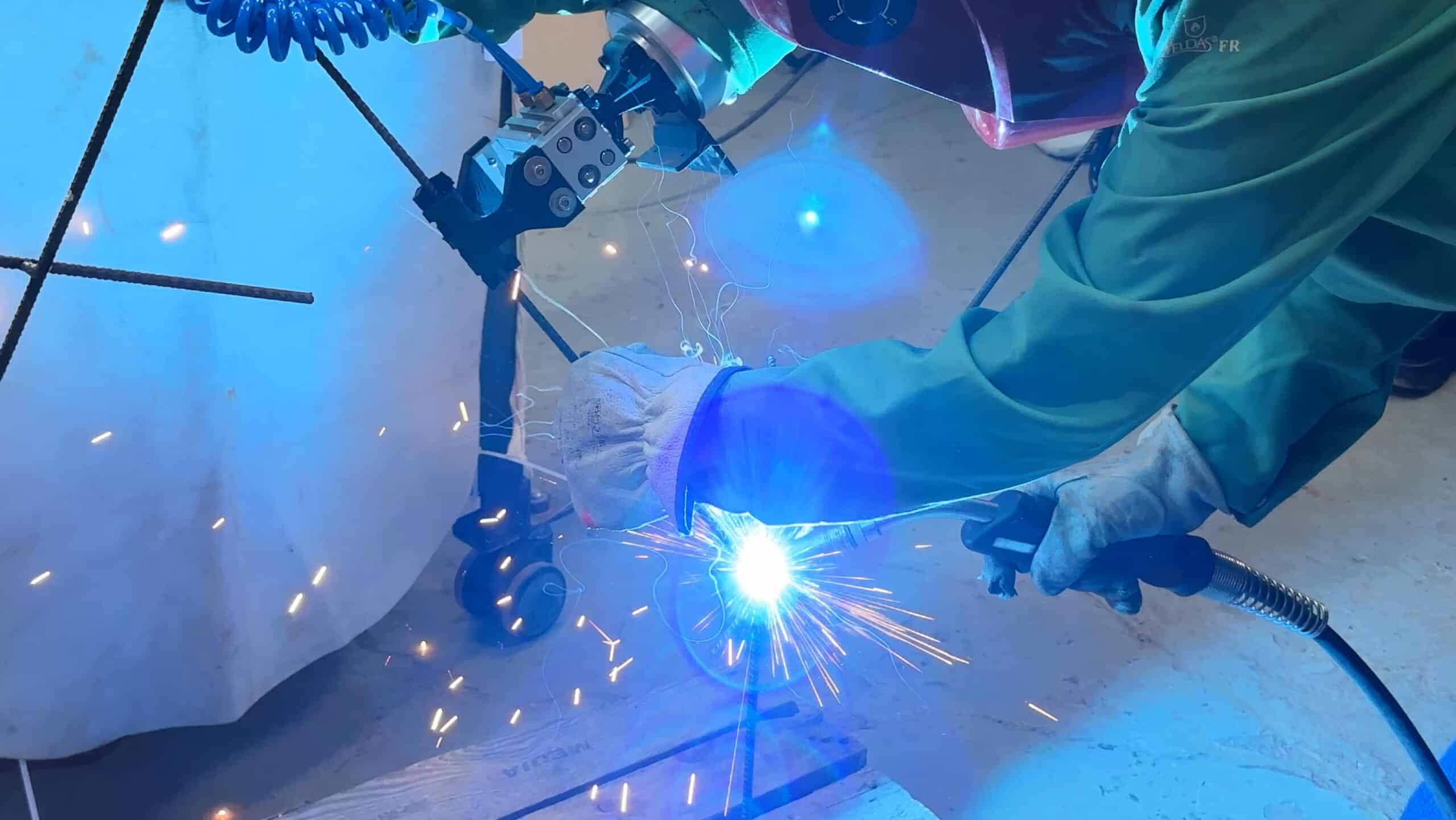
Workshop 3.1_Human-Robot Collaboration (HRC) in metal fabrication

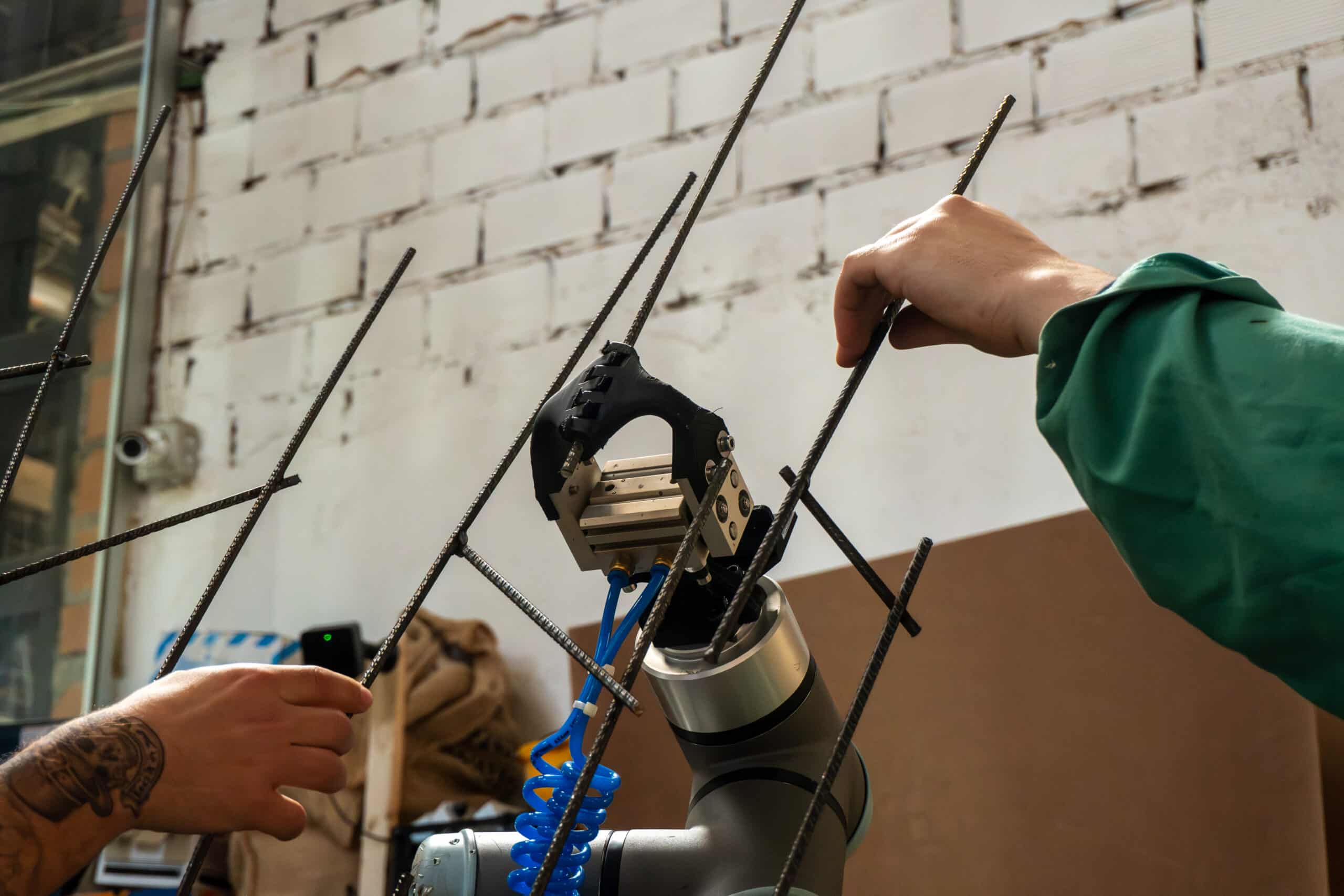
Introduction This workshop explores new modes of architectural production through active collaboration between humans and robots, shifting away from traditional models of automation toward hybrid systems of shared decision-making. Rather than understanding the robot as a fully autonomous tool, it is framed as an agent that cooperates with the human in real time, creating a … Read more

NEURON – Workshop 3.1

HRC

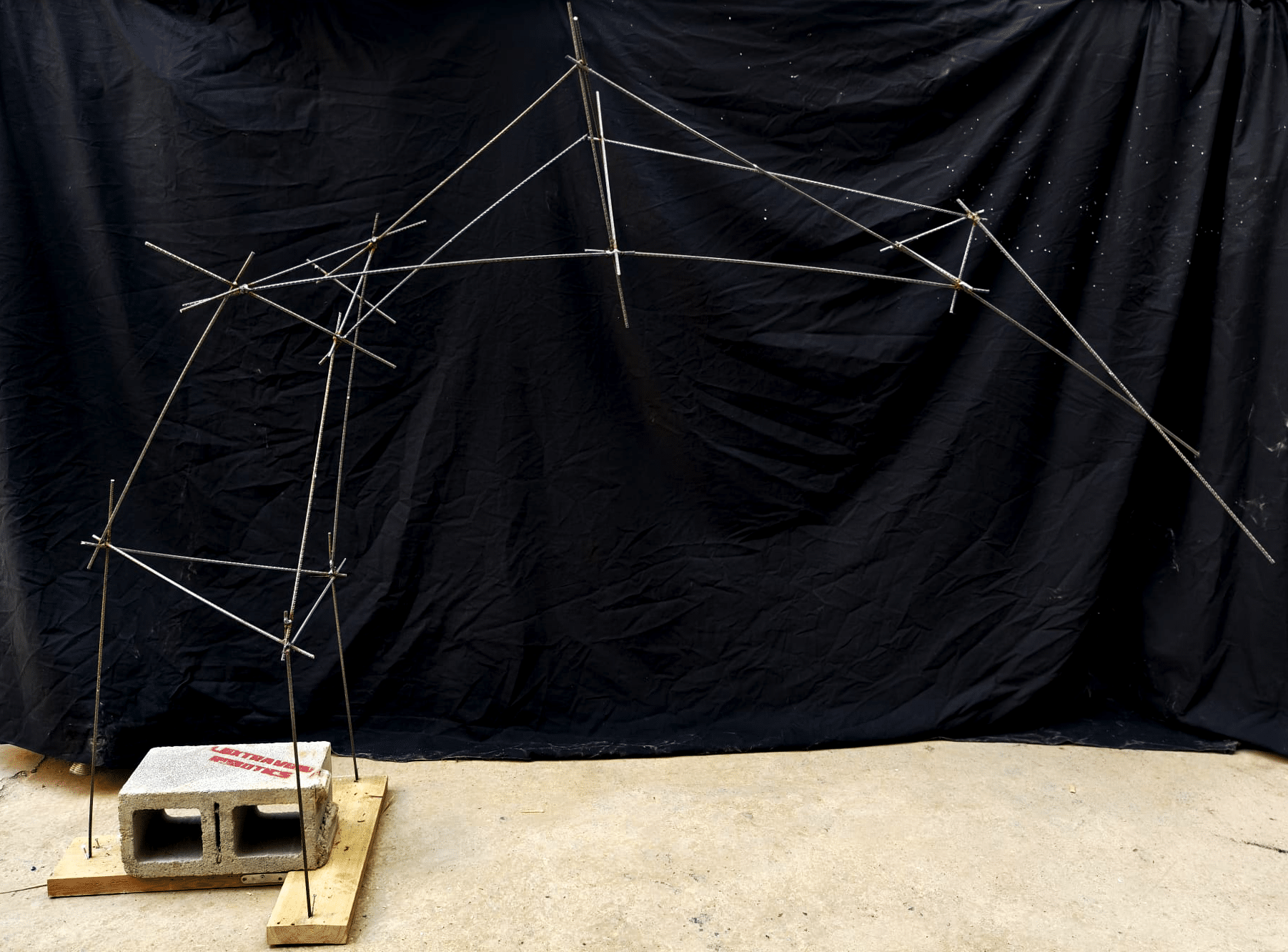
Neuron is a project developed during the IAAC MRAC 3.1 Welding Workshop that explores human–robot collaboration in the assembly of space-frame structures. The project focuses on the interaction between a Universal Robots UR10e robotic arm and a human welder, working together to assemble pre-cut steel bars through a continuous exchange between robotic precision and human … Read more

Robotics for Ecological Buildings: STRAW

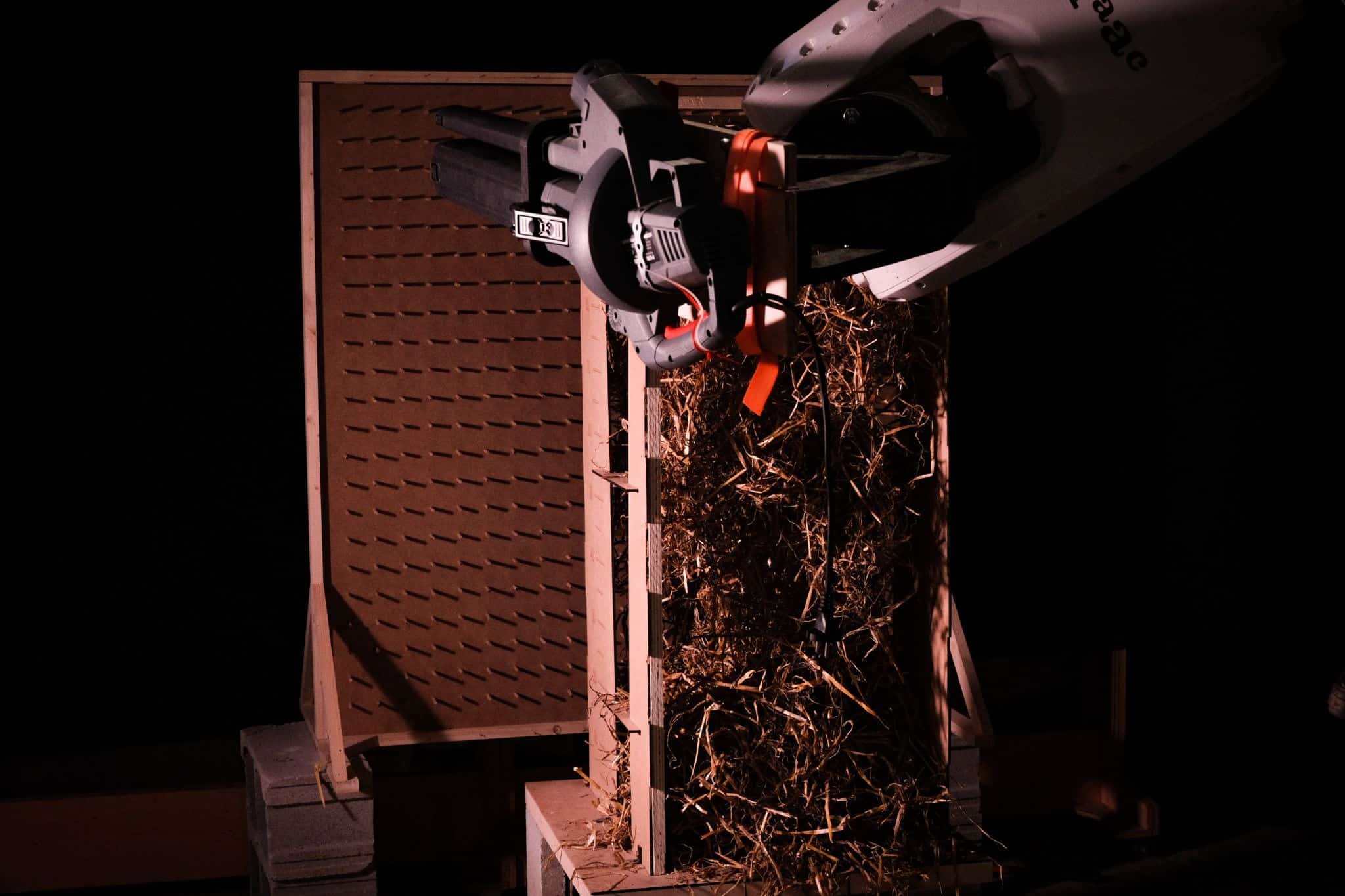
This work investigates the structural potential of straw in its raw, unprocessed state — exploiting its natural wilderness and fibrous friction to build systems from its inherent properties. By coupling these material behaviors with robotic fabrication, the process becomes parameterized, enabling a vernacular material to be deployed within a precise and predictable architectural system. Introduction … Read more

Sticks & Stones: Precision in Robotic Fabrication with Traditional Materials

In an era dominated by concrete and steel, the Sticks & Stones project revisits the architectural potential of stone and timber—materials with a rich historical legacy—through the precision of robotic fabrication. This initiative sought to develop a reversible, precise architectural system that bridges traditional craftsmanship with advanced digital tools. By tackling the challenges of natural … Read more

(re)bar; a theoretical context for recycled reinforcement steel bars

dba Re2bar, LLC. Course Overview While the Robotic in Construction Term II Studio Course focuses on means and methods of robotic processes for sustainable materials, this term’s Applied Theory course, Theory and Contexts, fosters analytical thinking about how these materials may be relevant in the industry, addressing the sector’s resource waste (35% EU total) and … Read more

Follow Me

Aim To explore innovative parametric tiling designs through the utilization of robotic tiling setups. The project aim is to utilize the functions of  COMPAS framework and its extensions for robotic planning. Also, to incorporate computer vision and scanning information into the tiling process to enhance precision and efficiency. Design Logic Inspired by the idea of … Read more

Robotic Gaudi

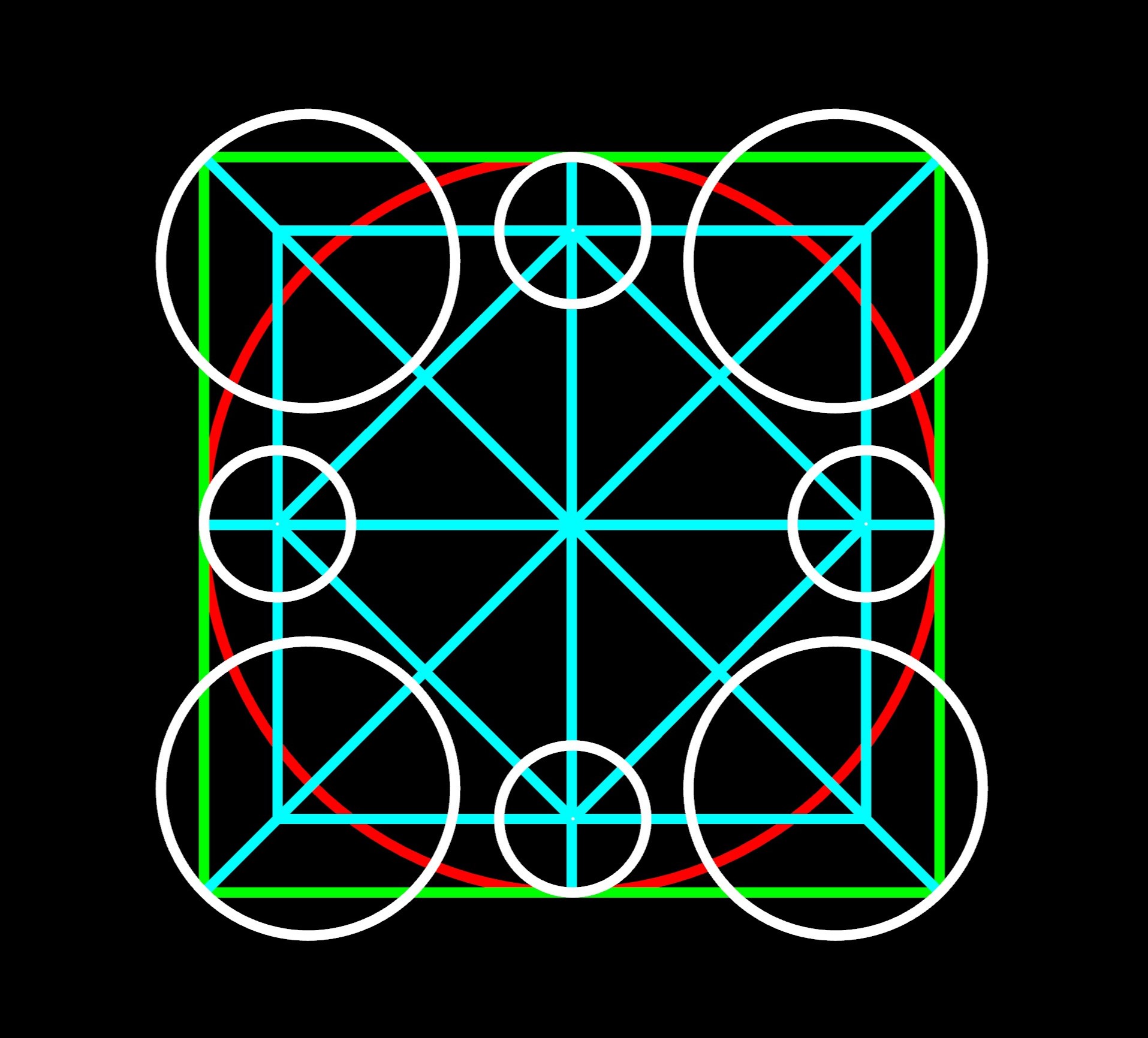
AIM DESIGN The three distinct design methodologies we explored employed grayscale image mapping, where the gray areas functioned as attractors and filters for colored circles. Our second experiment focused on employing curves as generators for the spatial arrangement and packing of a variety of larger circles. The third methodology extended our exploration to the incorporation … Read more