
Re-envisioning Container City
One of Barcelona’s most strategically located waterfront areas, the container port south of Montjuïc, remains largely disconnected from the inner city. As the city explores the possibility of relocating portions of its container operations in this speculative project and transforming this industrial landscape into a mixed-use district, mobility becomes a more pertinent question.
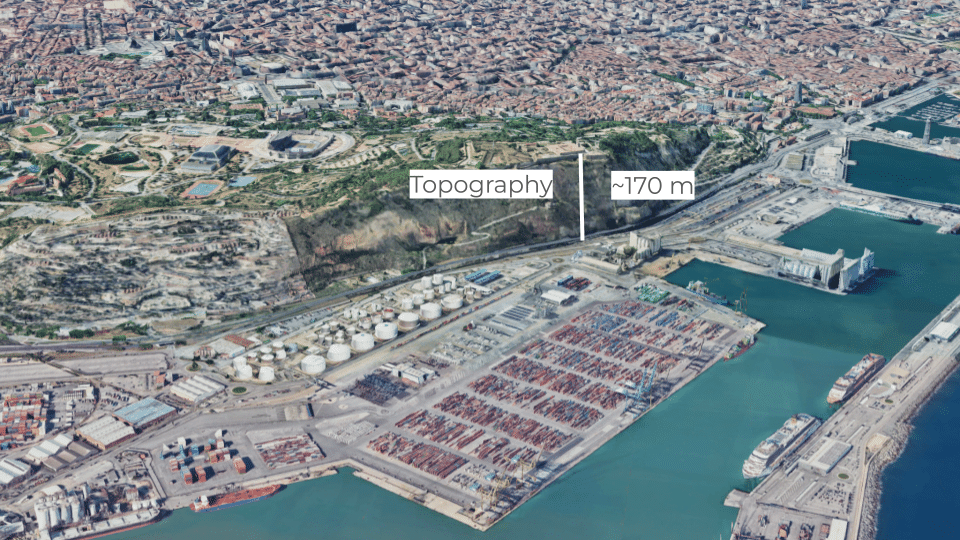
To the west, the steep topography of Montjuïc rises nearly 170 meters above sea level. To the east, the Mediterranean creates a natural edge. Existing highway infrastructure and industrial logistics networks further isolate the area from surrounding neighborhoods. As a result, despite its proximity to central Barcelona, the site is quite secluded.
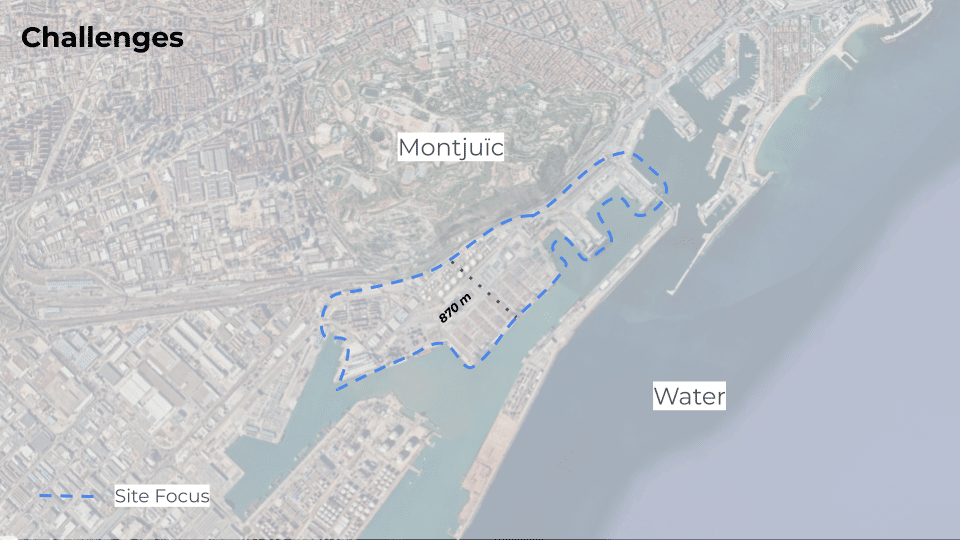
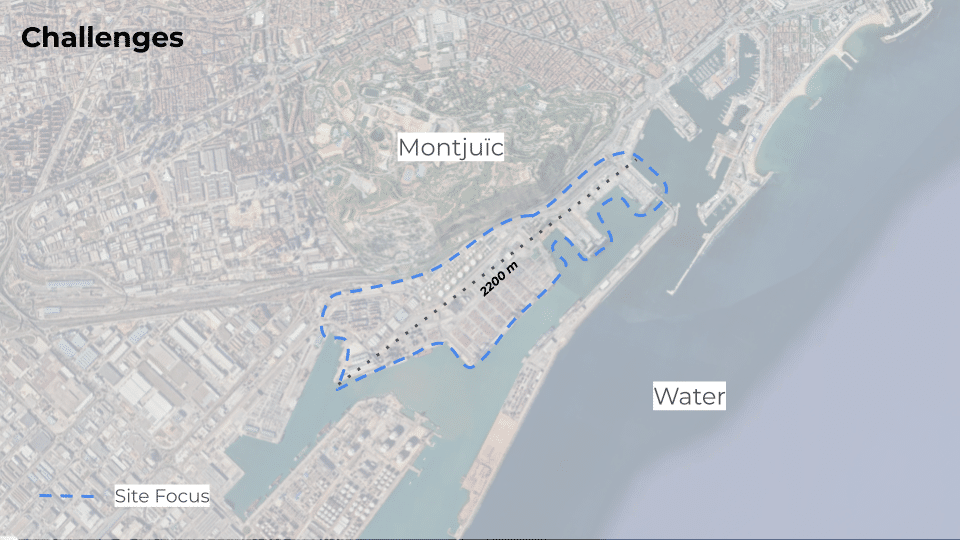
If transformed into a new district, this area could accommodate tens of thousands of residents, jobs, cultural institutions, and public spaces. However, achieving this vision requires more than new buildings requires a new mobility framework.
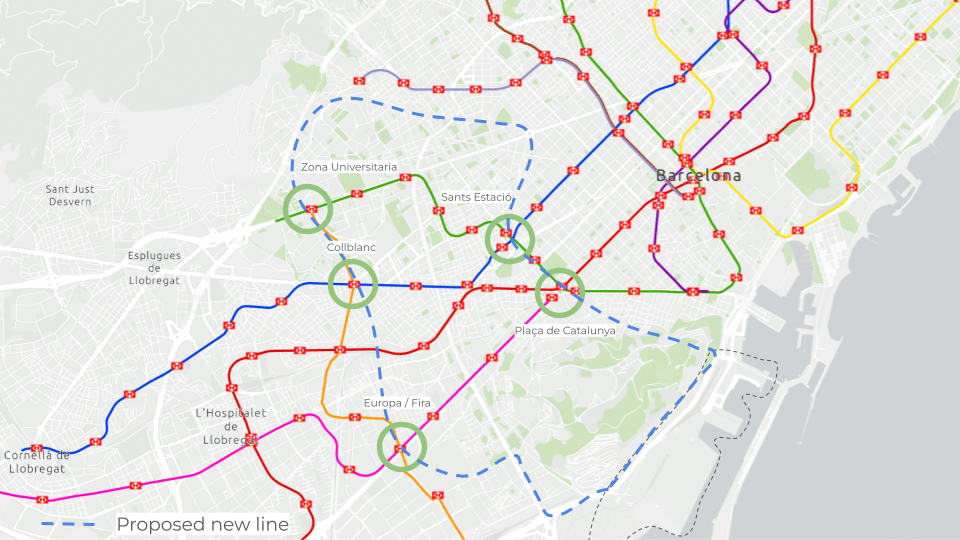
Barcelona’s metro system is highly effective at moving passengers into and through the city center. Most lines radiate outward from central Barcelona, creating strong north-south and east-west connections.
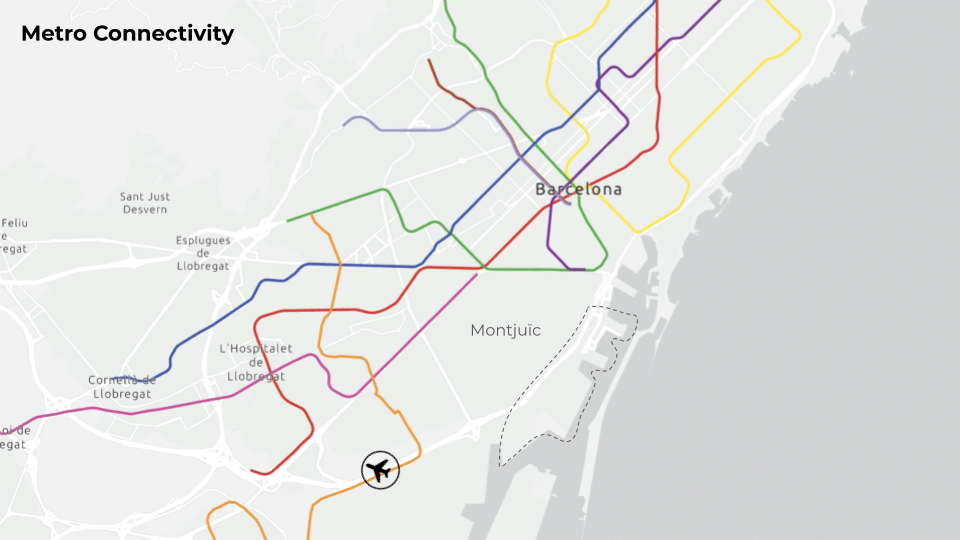

The current bus routes V11 and V3 provide mobility from the east ocean to the west near the Serra de Collserola.
Rather than creating another branch line terminating at the waterfront, the proposal introduces a new orbital metro corridor that connects the future district to several of Barcelona’s most important transport nodes. The challenge is that future residents, workers, and visitors of the redeveloped port district would need direct access not only to the city center but also to major employment and transportation hubs across the metropolitan area. The proposed alignment forms part of a larger circumferential transit strategy for Barcelona.
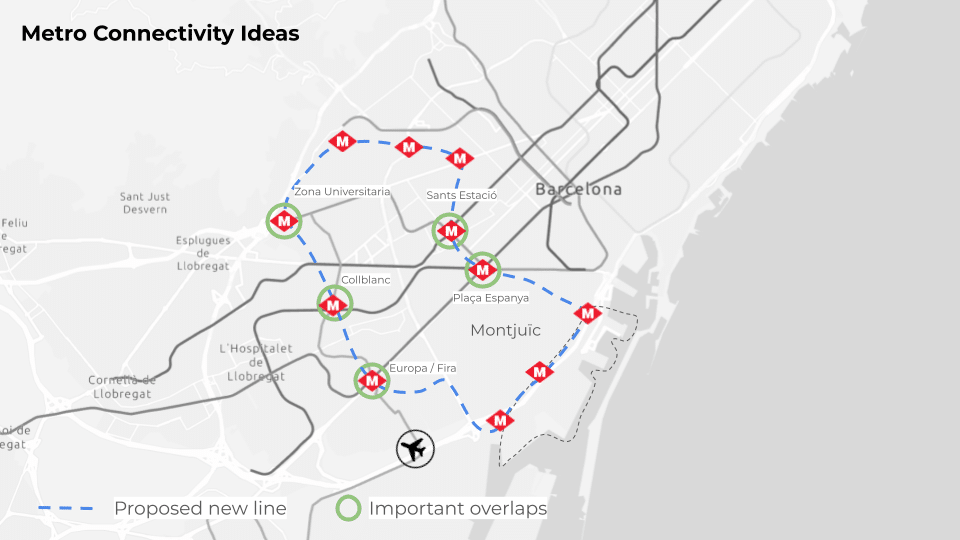
Instead of reinforcing the traditional center-focused network, the new line would establish lateral connections between districts, allowing passengers to move across the city without first traveling through Plaça Catalunya or Passeig de Gràcia.
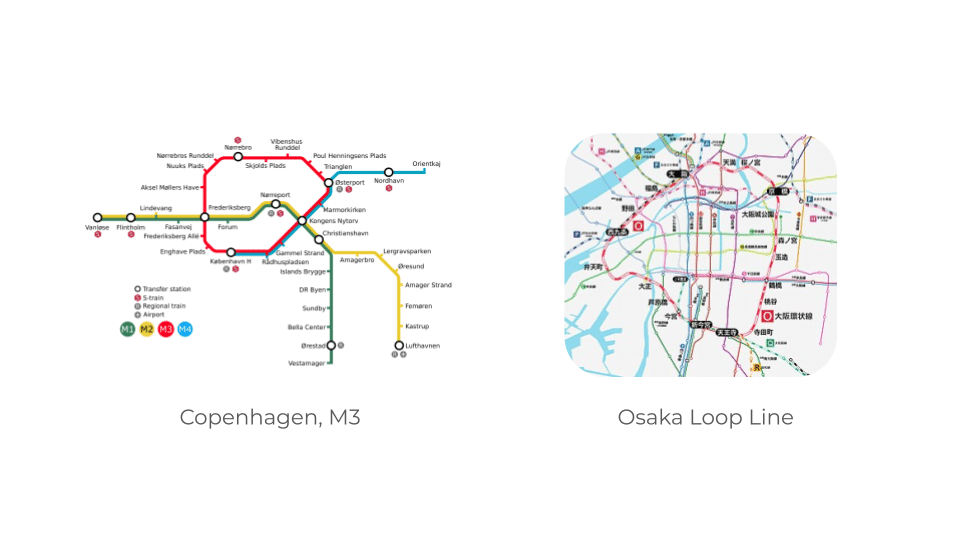
The concept draws inspiration from successful orbital transit systems around the world, including the Copenhagen M3 Cityringen (which dramatically improved connectivity between neighborhoods by creating a circular metro route) and Osaka’s Loop Line.
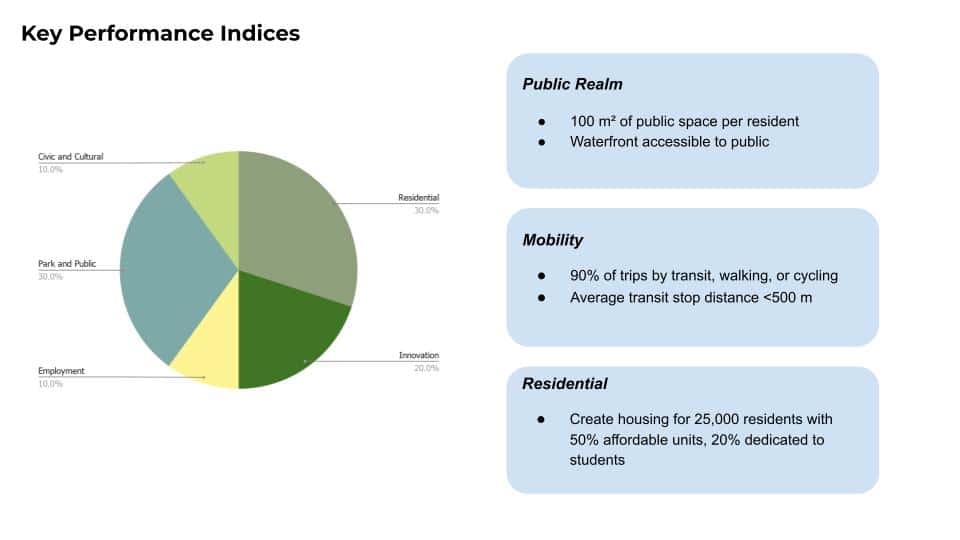
The metro proposal supports a broader vision for transforming the port into a mixed-use neighborhood that prioritizes public life, sustainability, and accessibility.
Key performance targets outlined in the study include:
The challenge is not simply moving people to a new neighborhood. The proposed metro line demonstrates how transportation can act as the backbone of that vision, connecting the future waterfront to the rest of the metropolis while helping Barcelona continue its evolution as a sustainable, accessible, and globally connected city.
