
Hyperbuilding One is a data-driven ecosystem that achieves seamless connectivity between Static and Kinetic spaces through an optimized large-scale integrated environment.
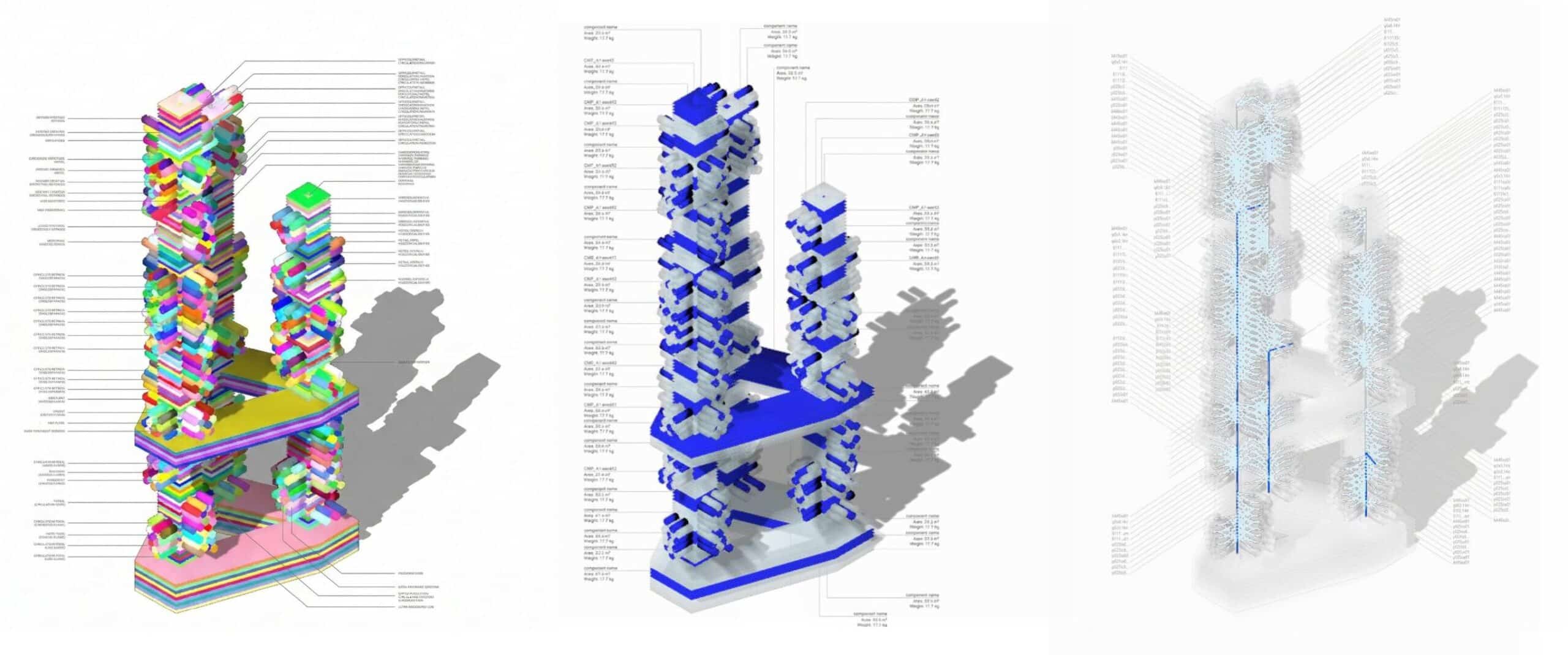
Architecture is No Longer Static: How Hyper Building One Turns Geometry into Code
The traditional architectural blueprint is a corpse. It is a static snapshot of an idea that begins to age the moment the concrete dries. But at Hyper Building One (HB-01), we are pioneering a different path. We don’t just build walls; we program metabolic ecosystems.
In our latest development phase, our team focused on the “Program” of HB-01. We asked ourselves: How can a building of one million square meters remain agile? The answer lies in the radical transformation of raw geometry into live data.
The Metabolic Ecosystem: Static vs. Kinetic
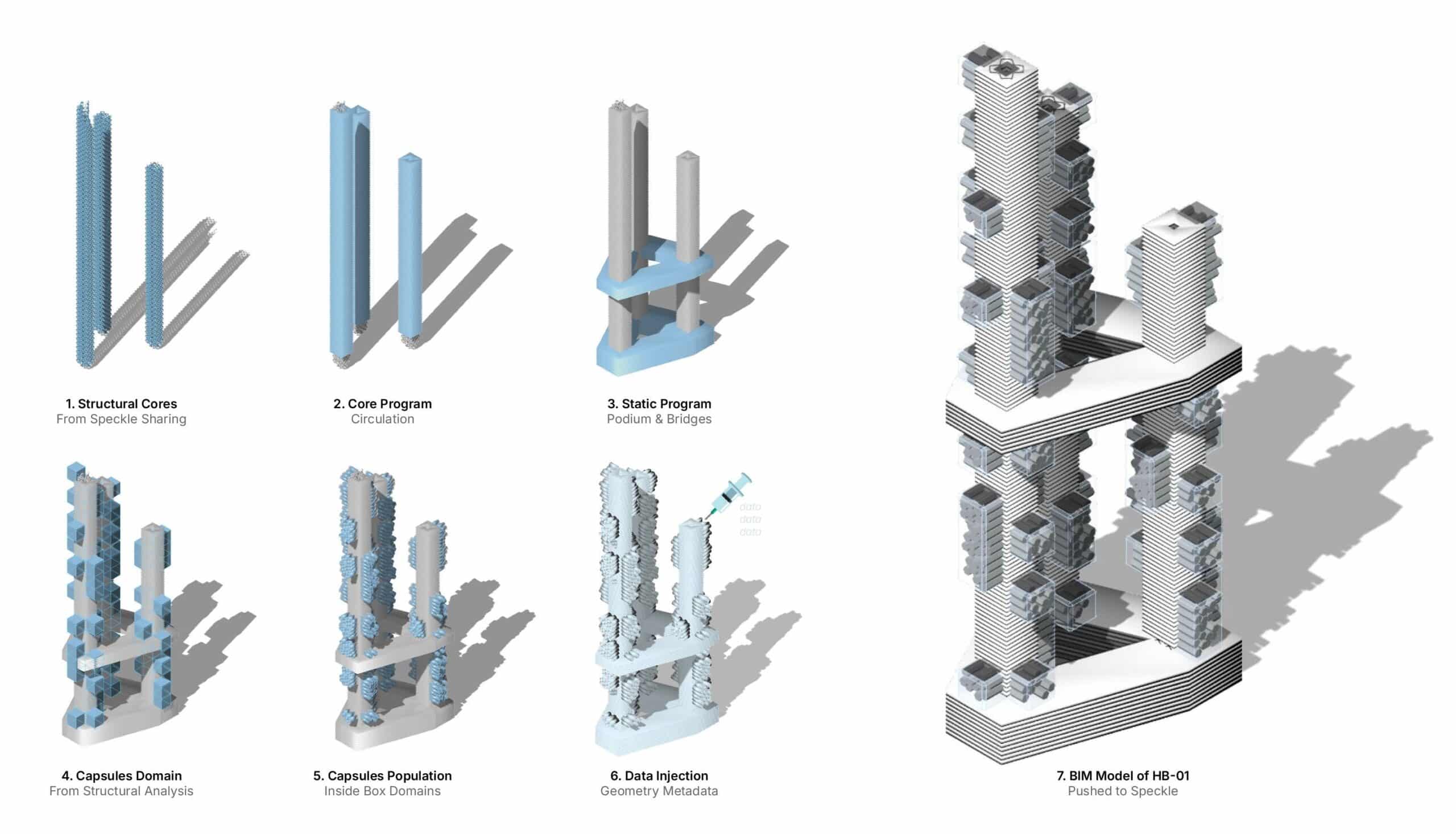
Hyper Building One isn’t a monolithic block; it’s a data-driven ecosystem. We’ve bifurcated the building into two primary systems that work in constant dialogue:
- The Static System: The permanent infrastructural “body.” This is the skeletal and circulatory system that enables and supports life within the tower.
- The Kinetic System: A series of hexagonal “plug-in” capsules. These are the functional cells of the building.
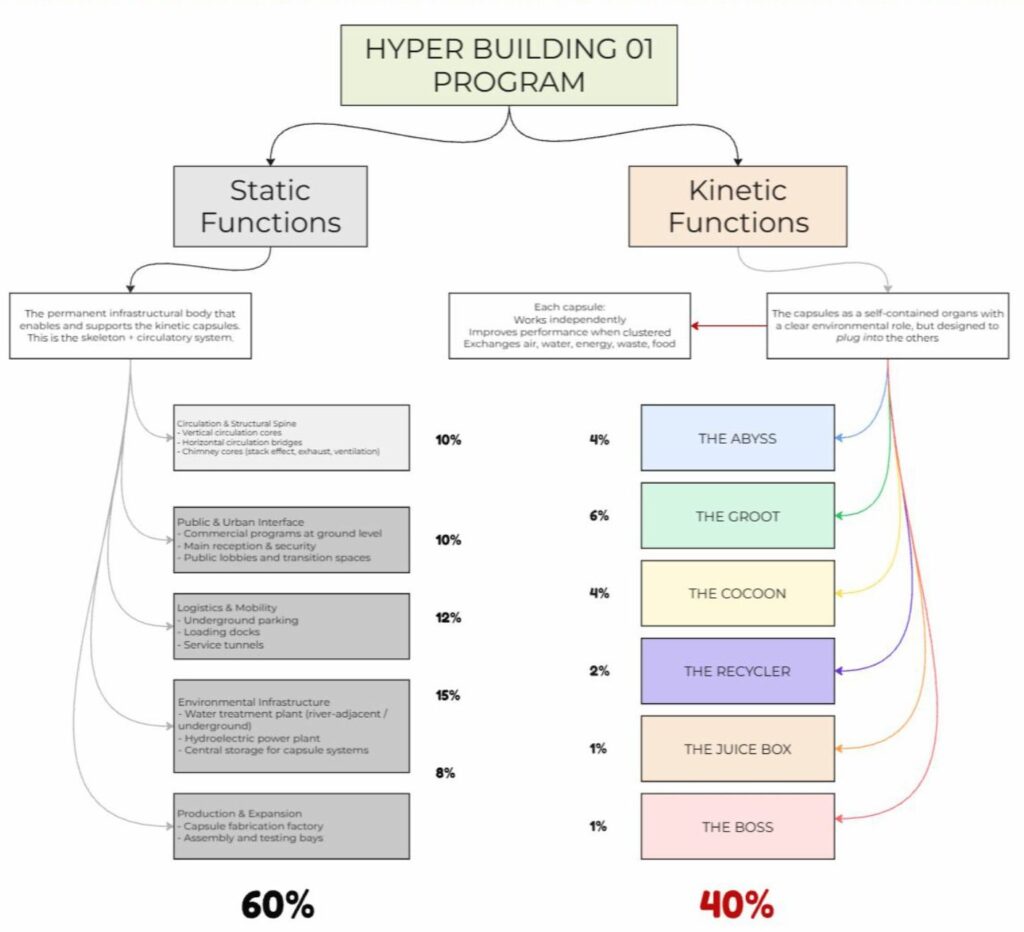
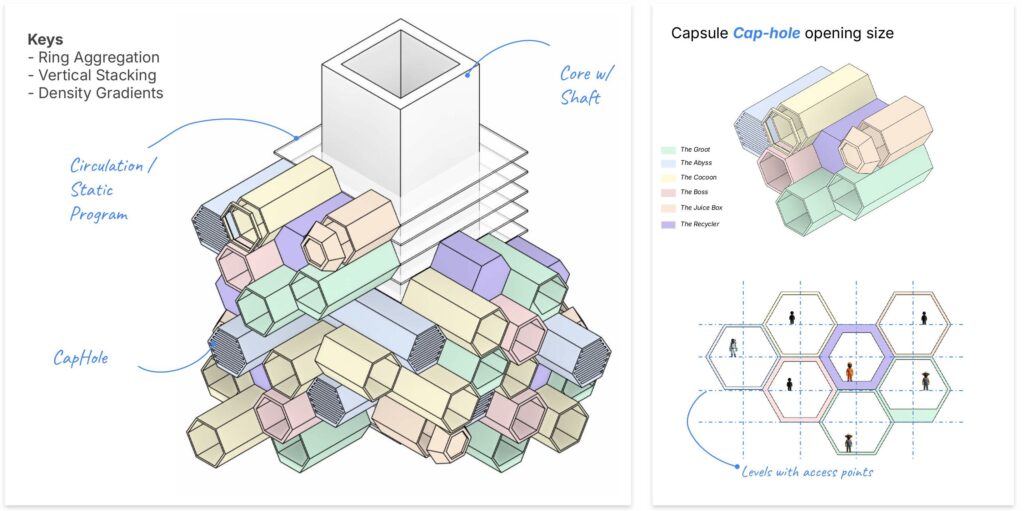
These capsules, which we call The Abyss (air purification), The Groot (food production), The Recycler (waste management), and The Boss (data optimization), exchange air, water, and energy. By using a hexagonal geometry, we ensure gapless packing and maximum sunlight exposure, creating a system that is fully scalable and carbon-intelligent.
From Hexagons to Hard Data
The “Provocation” of HB-01 is that every piece of geometry is a carrier of information. We’ve moved away from “dumb” shapes toward Intelligent Geometry. When we generate a capsule in our Grasshopper and Speckle pipeline, it isn’t just a 3D model. It is a container for over 10 embedded metadata points.
- Programmatic Function: What is the capsule doing?
- Physical Properties: What is its precise weight, volume, and embodied carbon?
- Spatial Relationships: How far is it from the core? How does it affect the sunlight of its neighbor?
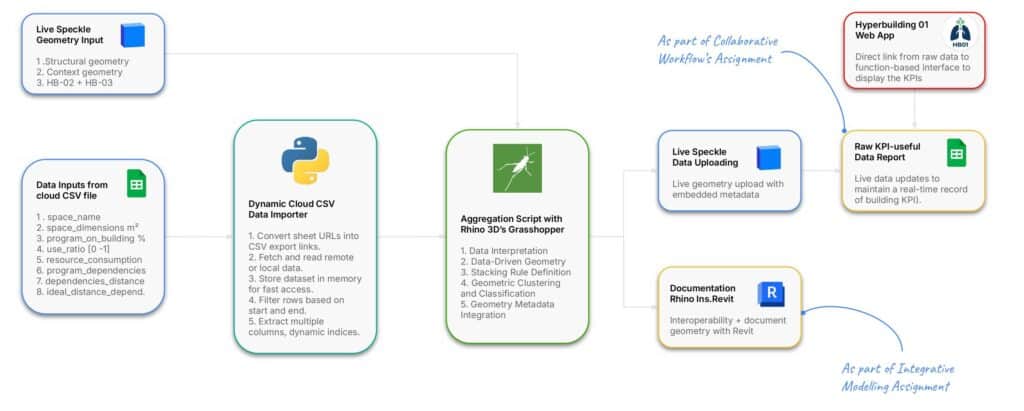
Performance-Based Validation (KPIs)
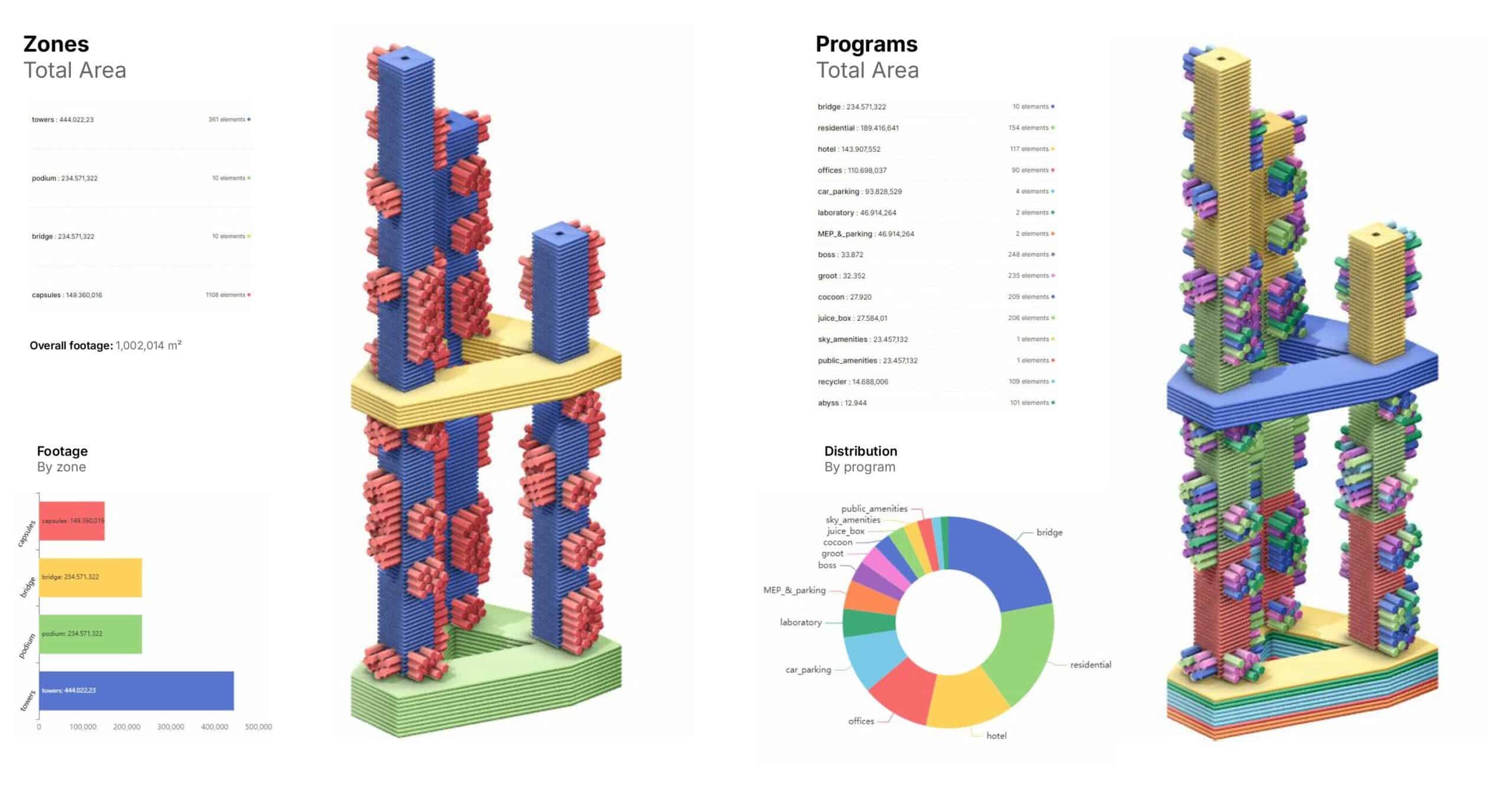
We don’t guess if the design works; we validate it in real-time. By converting our metadata into live Key Performance Indicators (KPIs), we measure:
- Space Utilization: Efficiency of the one million square meter target.
- Spatial Proximity: Optimizing distances between interdependent functions.
- Resource Demand: Quantifying exactly how much energy each cluster requires.
Good Neighbors: The Ethics of Data
Finally, we use data to be “Good Neighbors.” Through shadow optimization and daylight analysis, we pixelate and reposition capsules to ensure that our vertical community doesn’t steal the sun from the context below. We are using algorithms to negotiate the relationship between a massive structure and the human-scale city.
The Future is Programmed
Hyper Building One is a testament to the fact that the future of architecture isn’t found in a sketchbook, but in the seamless connectivity between form and information. We are no longer just architects; we are the systems engineers of the built environment.
