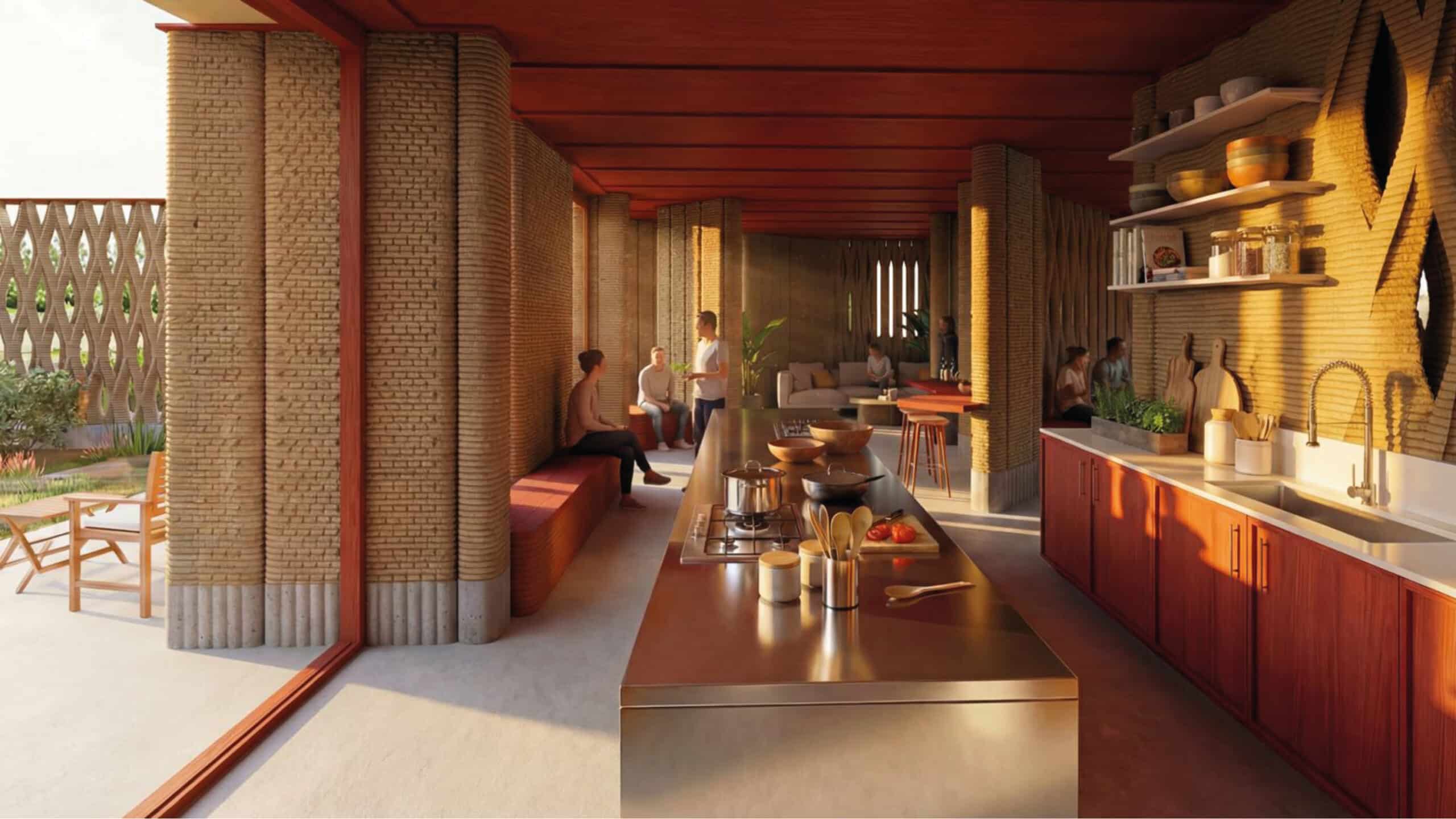
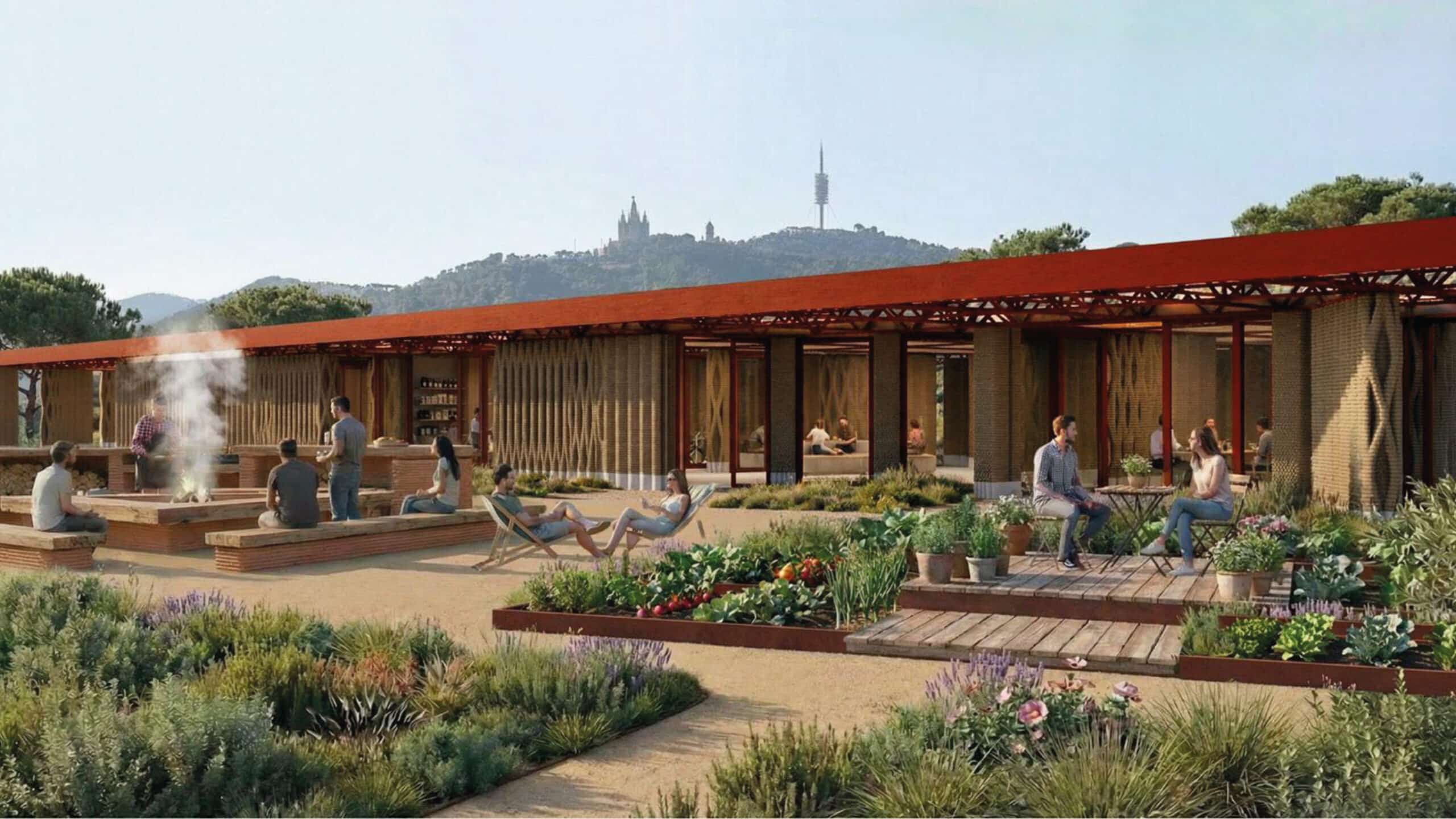
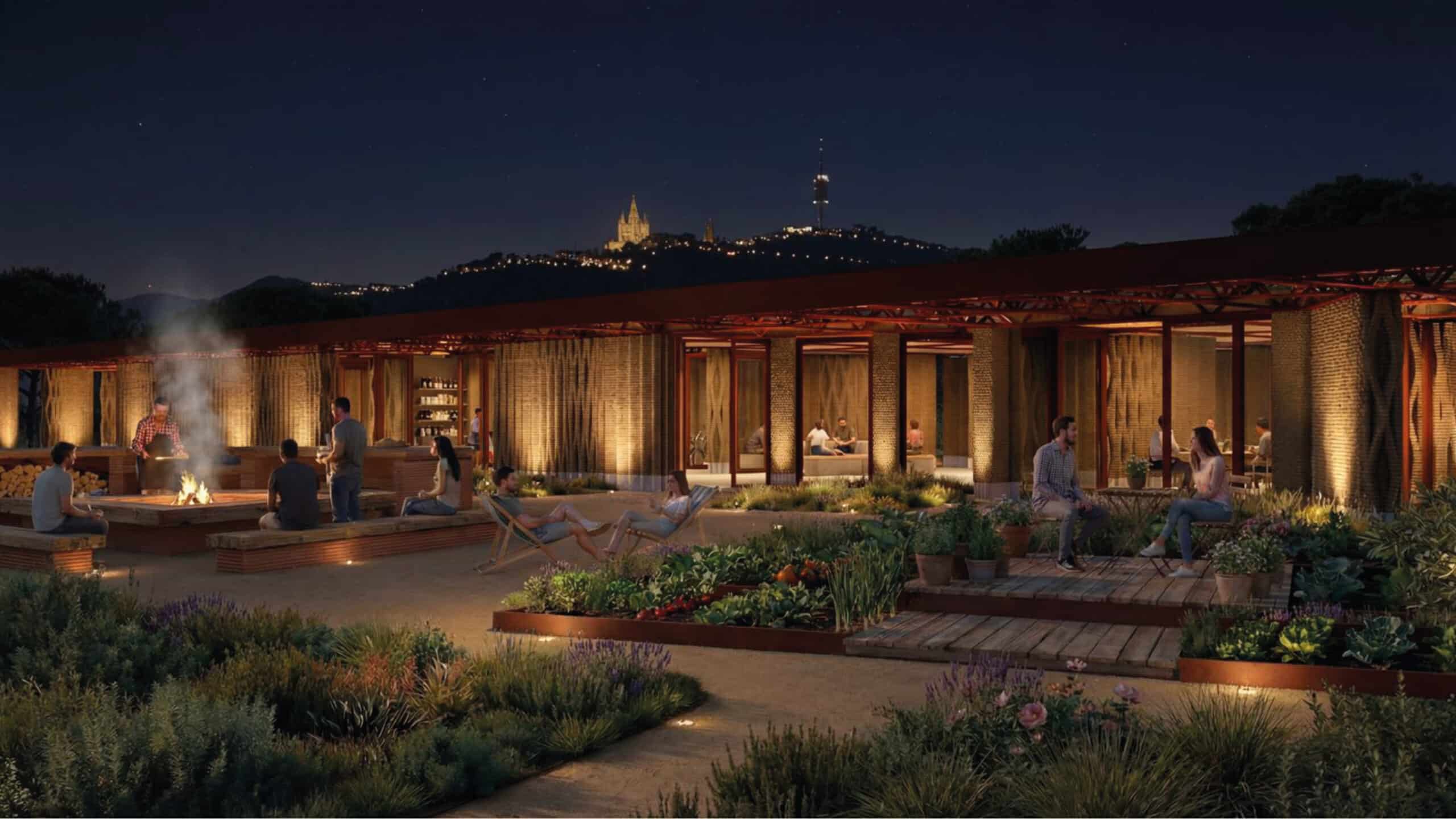
Rooted in earth, bound by flavor
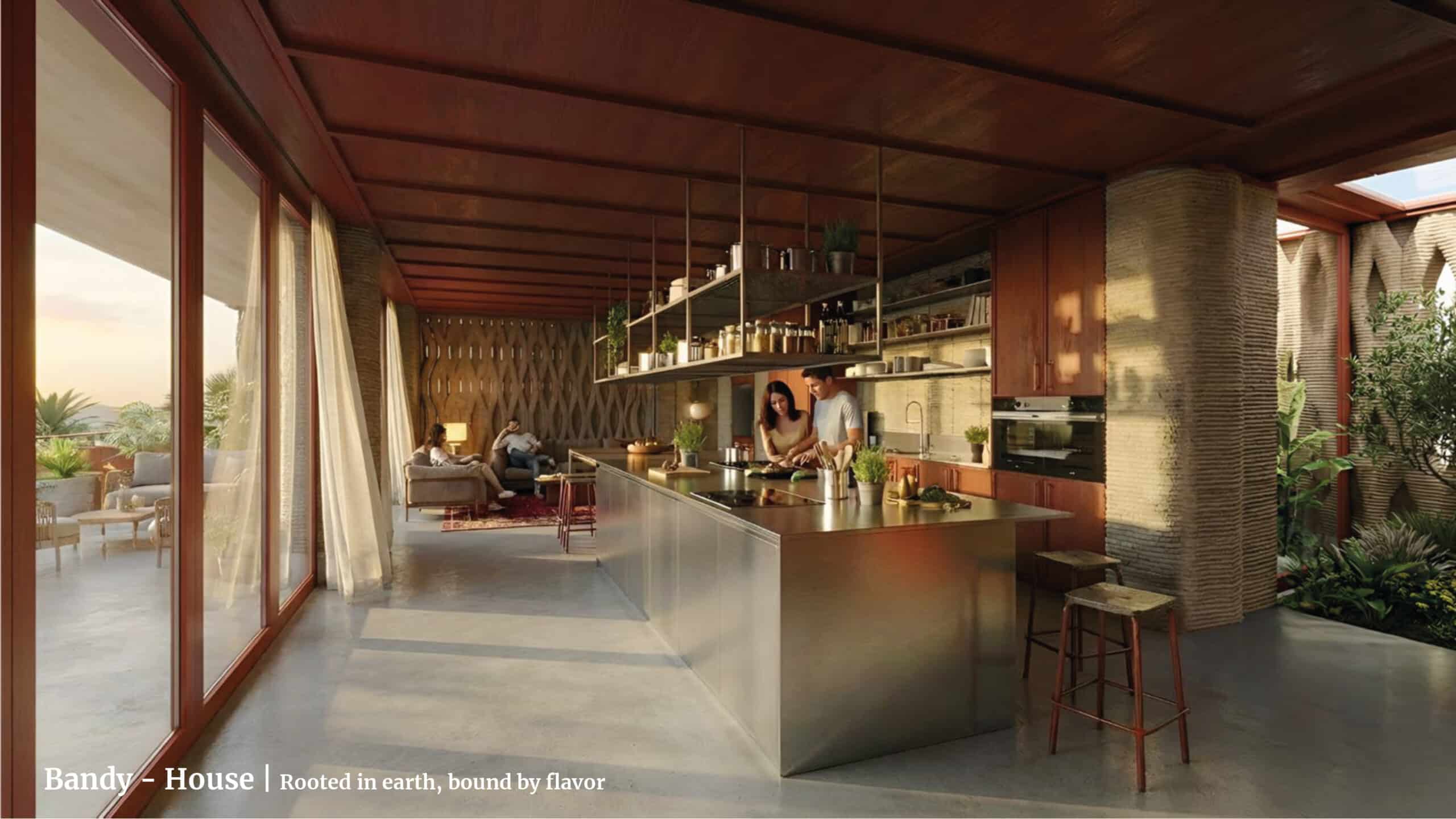
“This co-living brings together four user profiles whose needs and daily rhythms shape the architecture of the project. A married couple with a child requires stability, clear routines, and functional domestic spaces; a young couple with cats needs calm and flexible environments that support living with pets; a divorced resident who receives his child on weekends needs semi-private spaces that can adapt temporarily; and finally, a group of single friends looking for a more dynamic, social lifestyle with strong interaction in the shared areas.
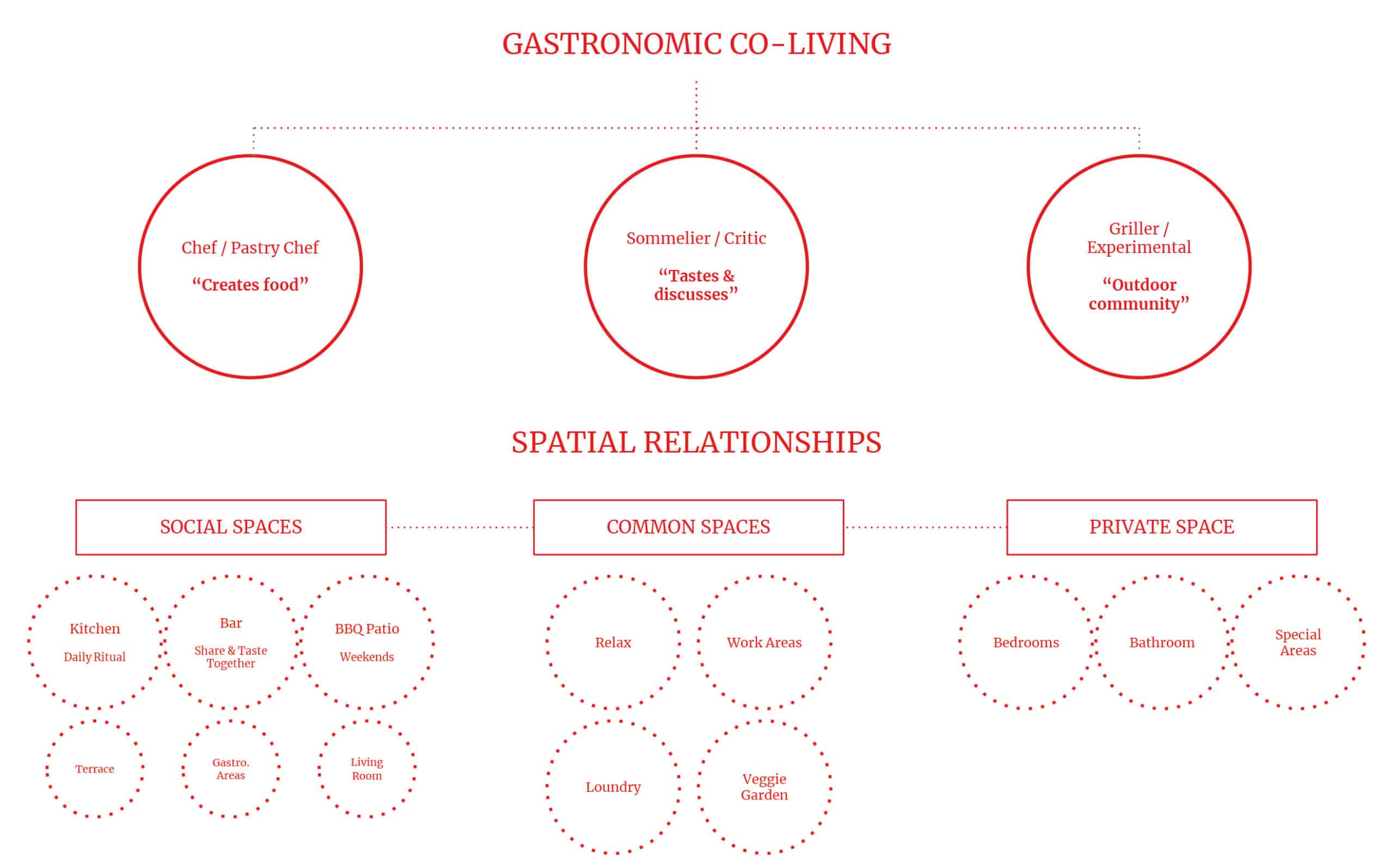
In this co-living, all residents share a common background connected to the world of gastronomy. They include chefs, pastry makers, grill specialists, experimental cooks, critics, and sommeliers. Even though each person has their own routines and creative process, they all value working from home at times and having both comfortable private rooms and shared spaces that support their work. What unites them is their strong relationship with the public areas: cooking together, making outdoor barbecues on weekends, and enjoying a good place to eat, talk, taste, and share ideas. For this reason, the house is organized around a warm and active social core, with private areas branching out to give each resident the right balance between community and personal life.”
STATE OF THE ART
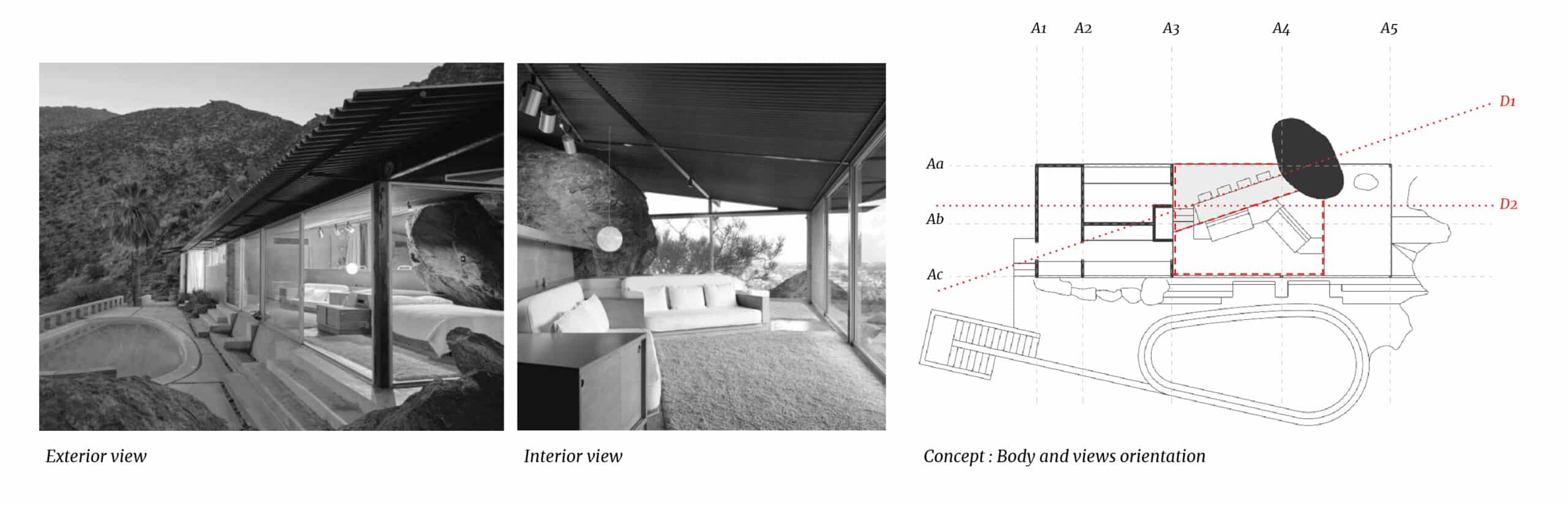
For the state of the art This reference is the Frey House in palm beach and The project is organized around the human body and the views. Here the Furniture, openings, and the roof guide orientation and frame specific views
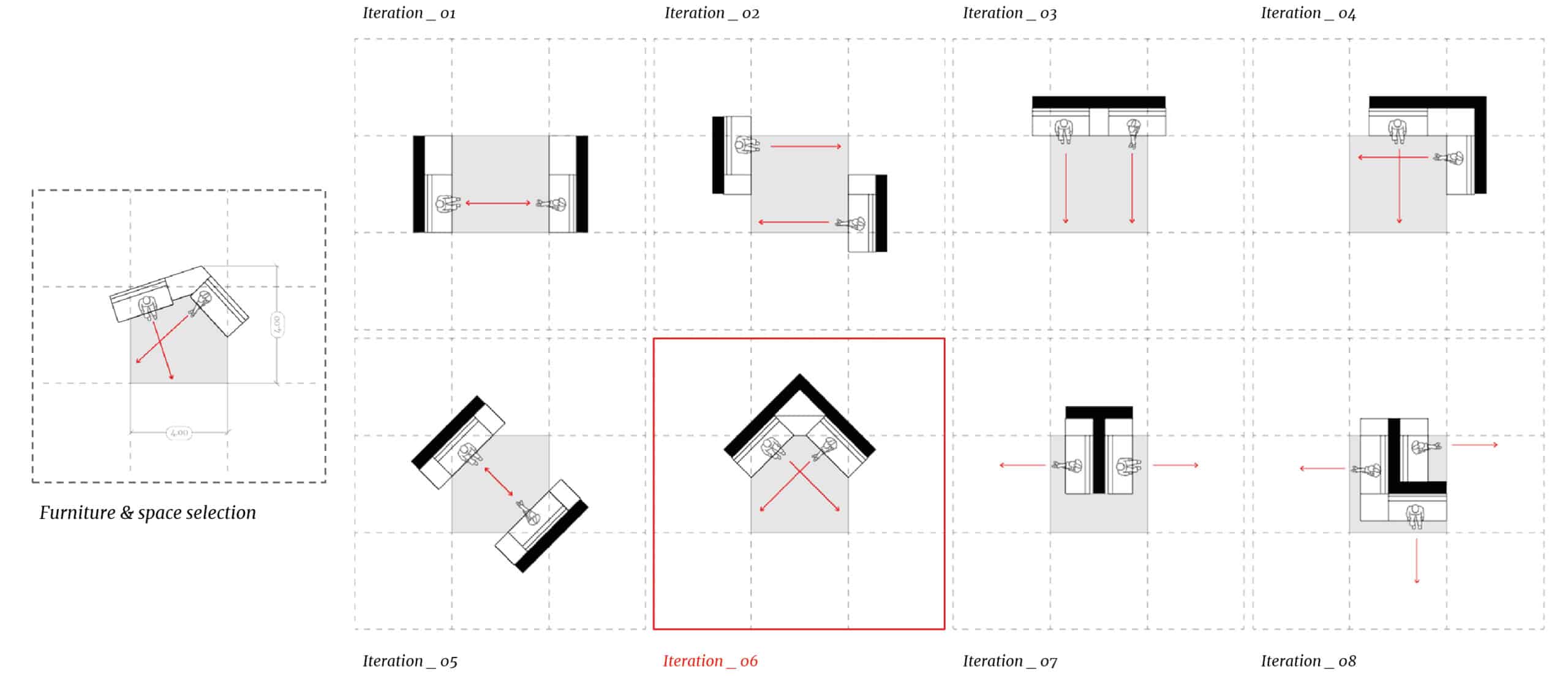
From this we made a catalogue with the idea of body position, view orientation and walls. Each iteration explores how small changes in layout modify the direction of the body and the way space is perceived.
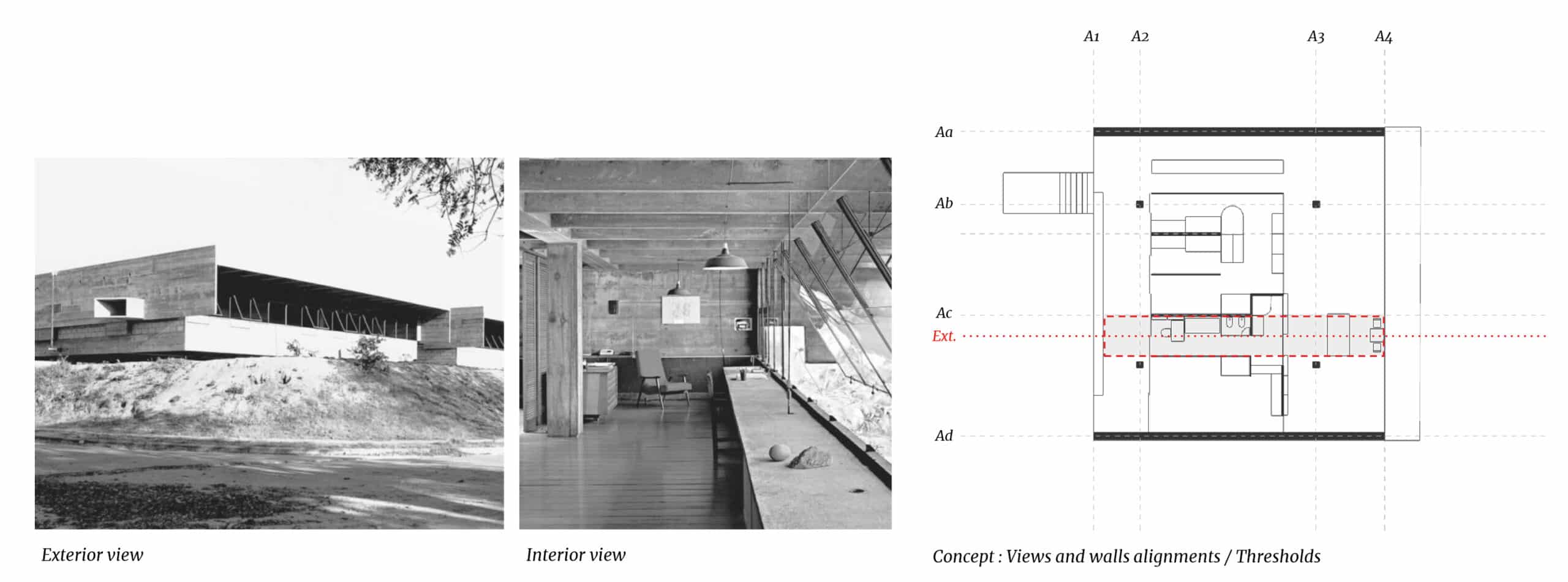
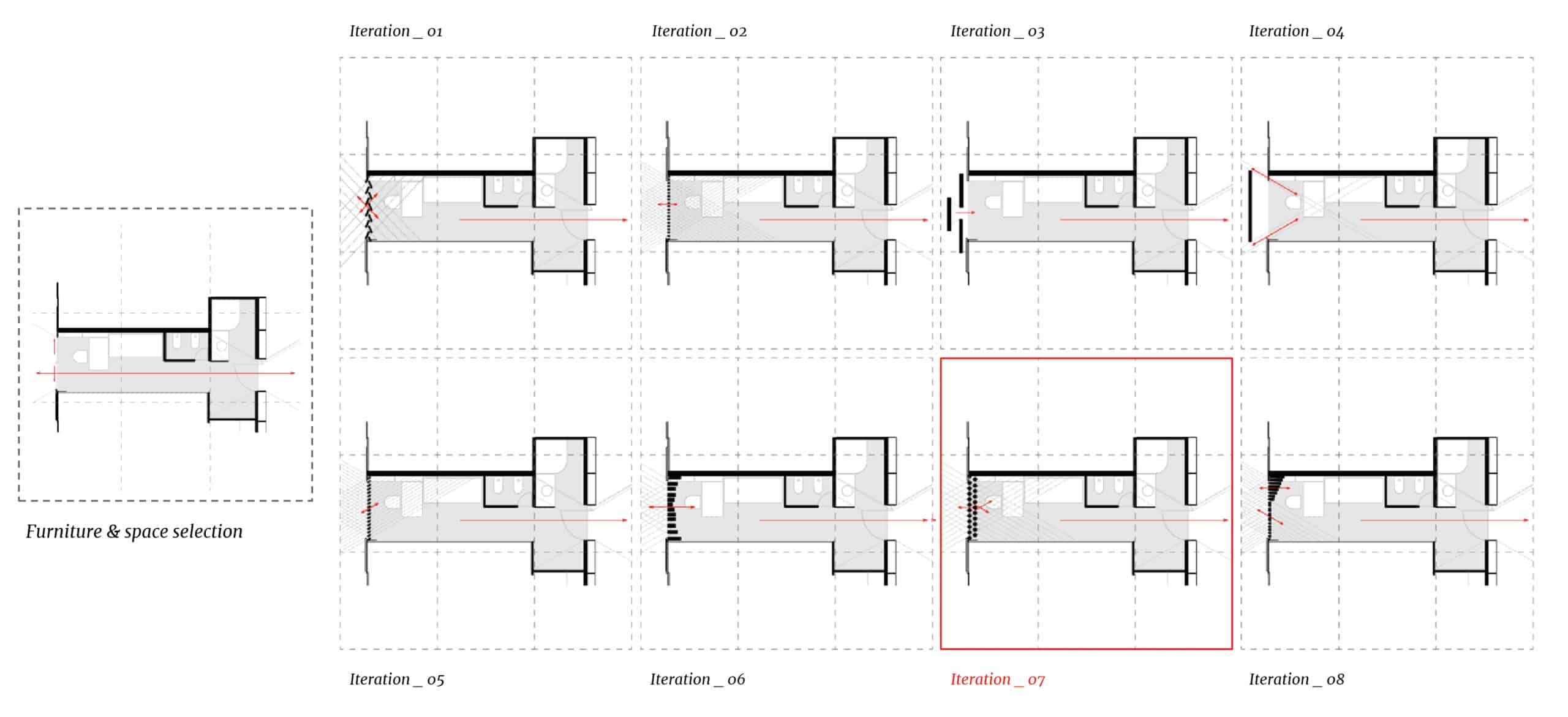
Here in this house of Mendez de Rocha explores how walls define views and thresholds. The space can open or close visually depending on alignment, creating different levels of separation without fully dividing the space
From this idea, in this catalogue we tests how small changes in walls and openings affect visual continuity. Each iteration explores degrees of openness, from framed views to more enclosed conditions
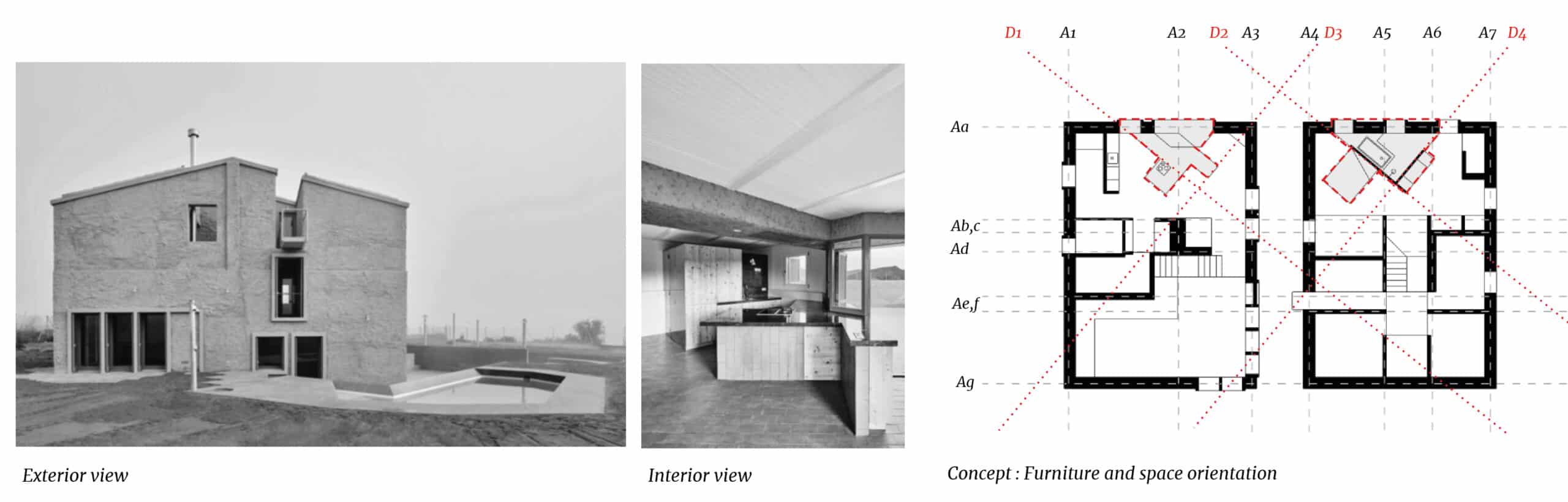
And here in this masia can magris, its shows how furniture orientation can define space. Even within a clear and rigid structure, the position of furniture guides movement, views, and the use of the space, creating different spatial situations
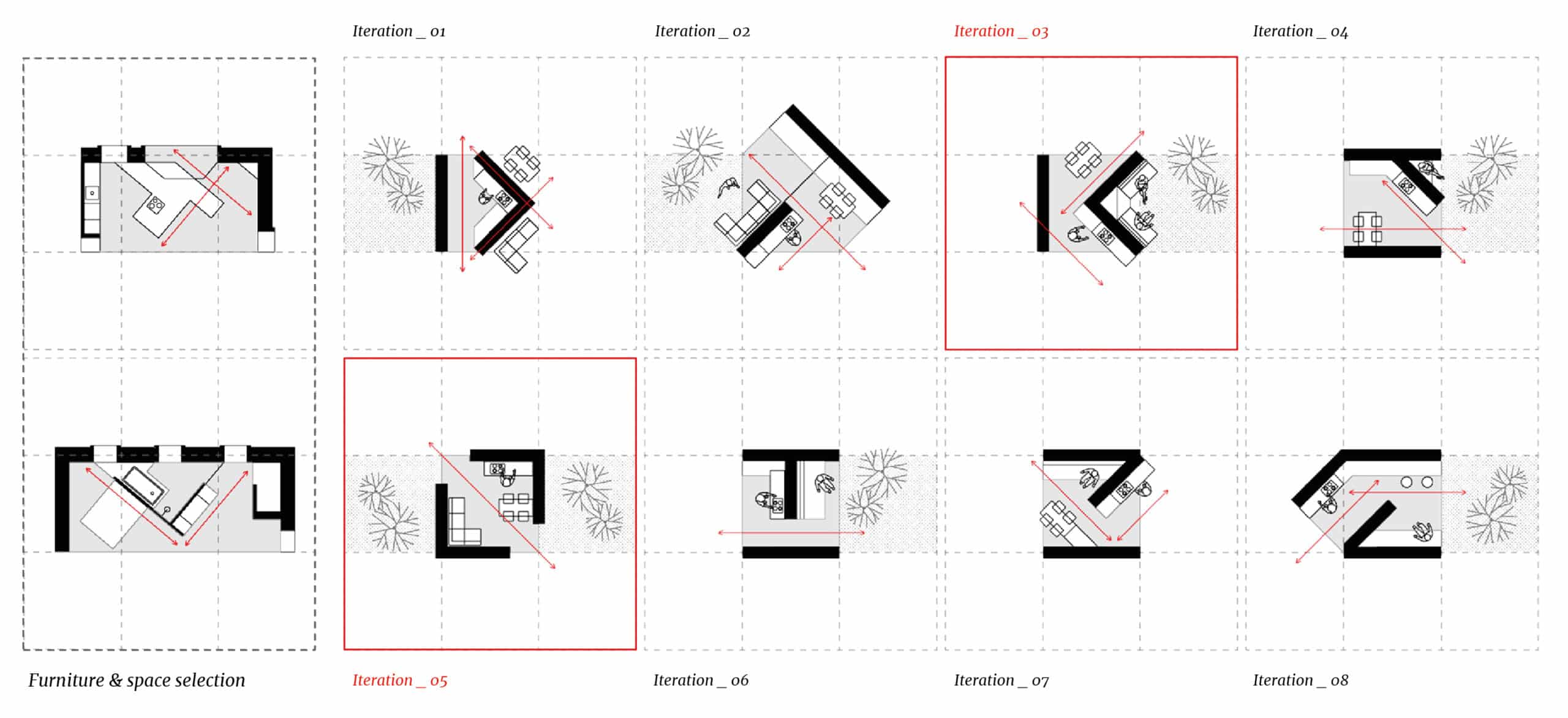
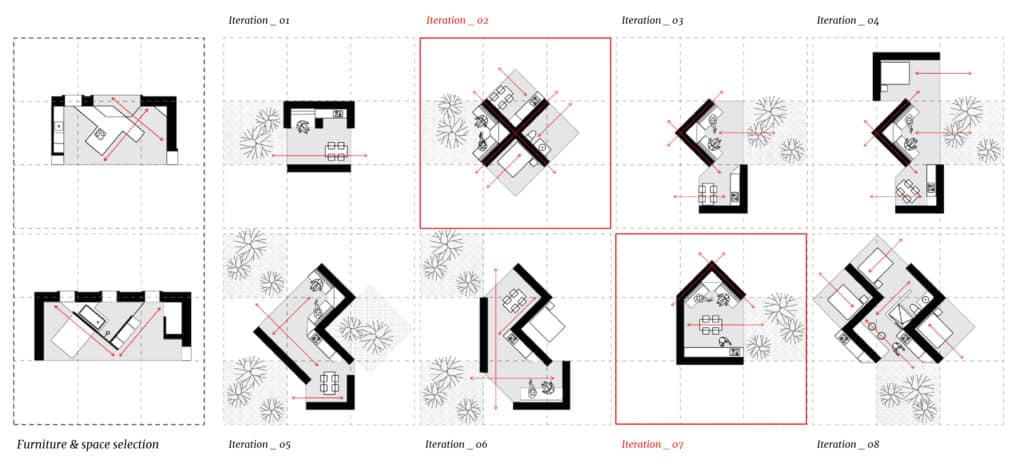
Based on this, we explored how changing the orientation of furniture within a rigid grid can break the regularity of the space. The structural grid always remains the same, but with some rotation or shifting the furniture, new spatial conditions appear and These small changes affect how people move,where they look, and how the space is used, generating different atmospheres and ways of occupying the house. This design approach is the one we prioritized throughout the project.
THE PROJECT
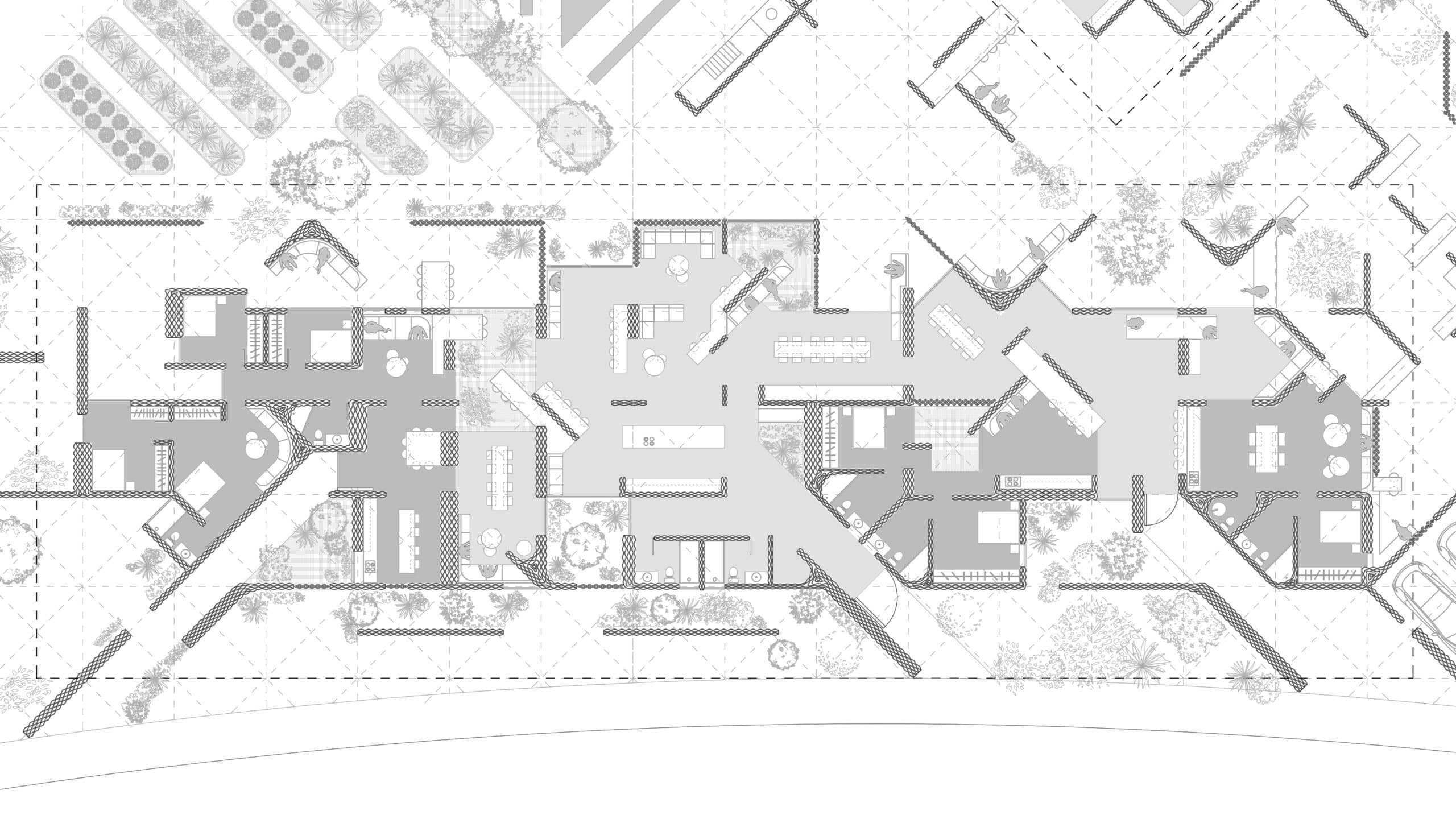
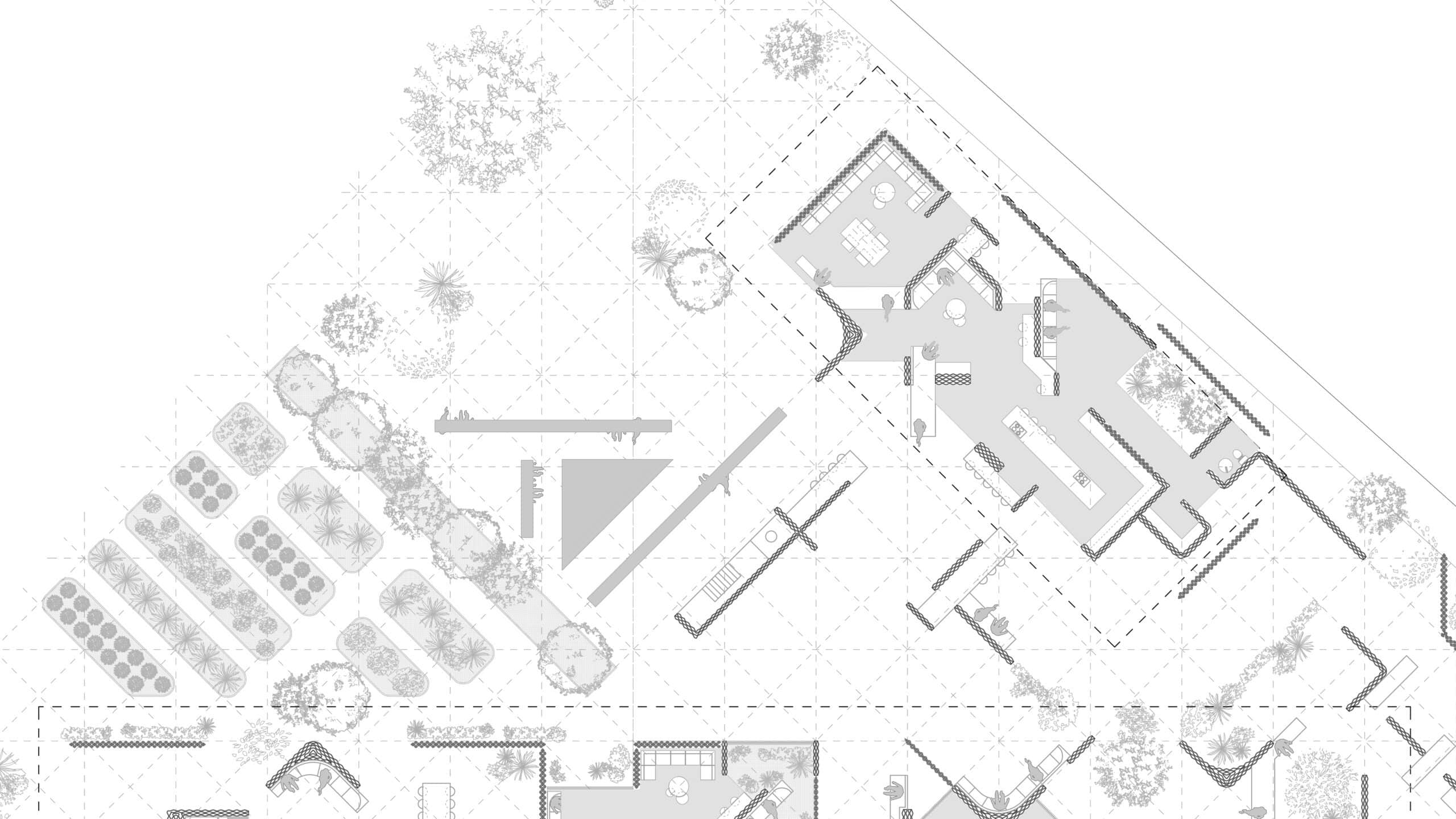
The overall project is organized in private spaces for the residents, social spaces for shared use and open to the public who come to experience the cuisine of the place, and common areas that act as intermediaries between the 2 types of users, serving as extensions of a variety of space experience.
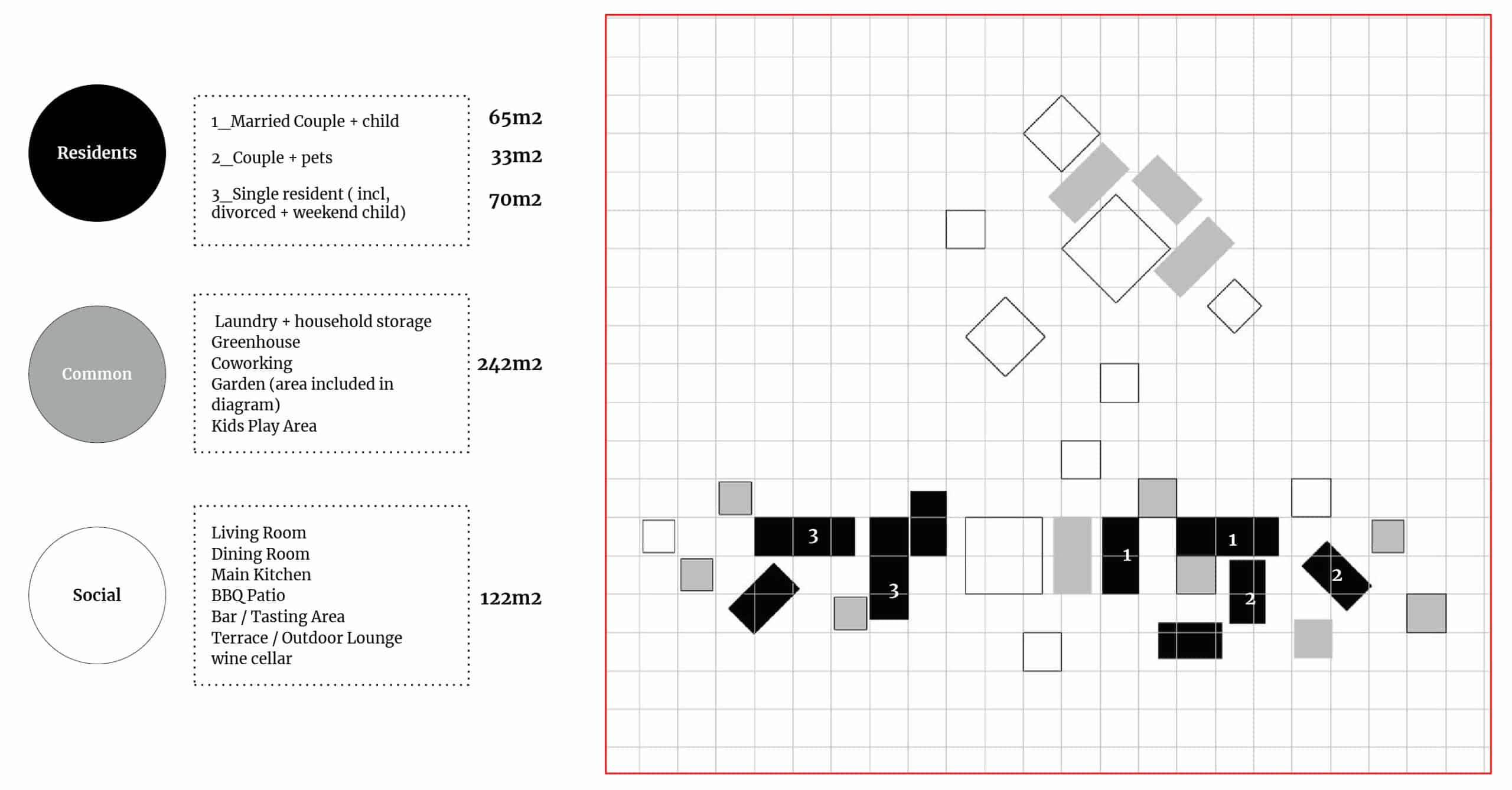
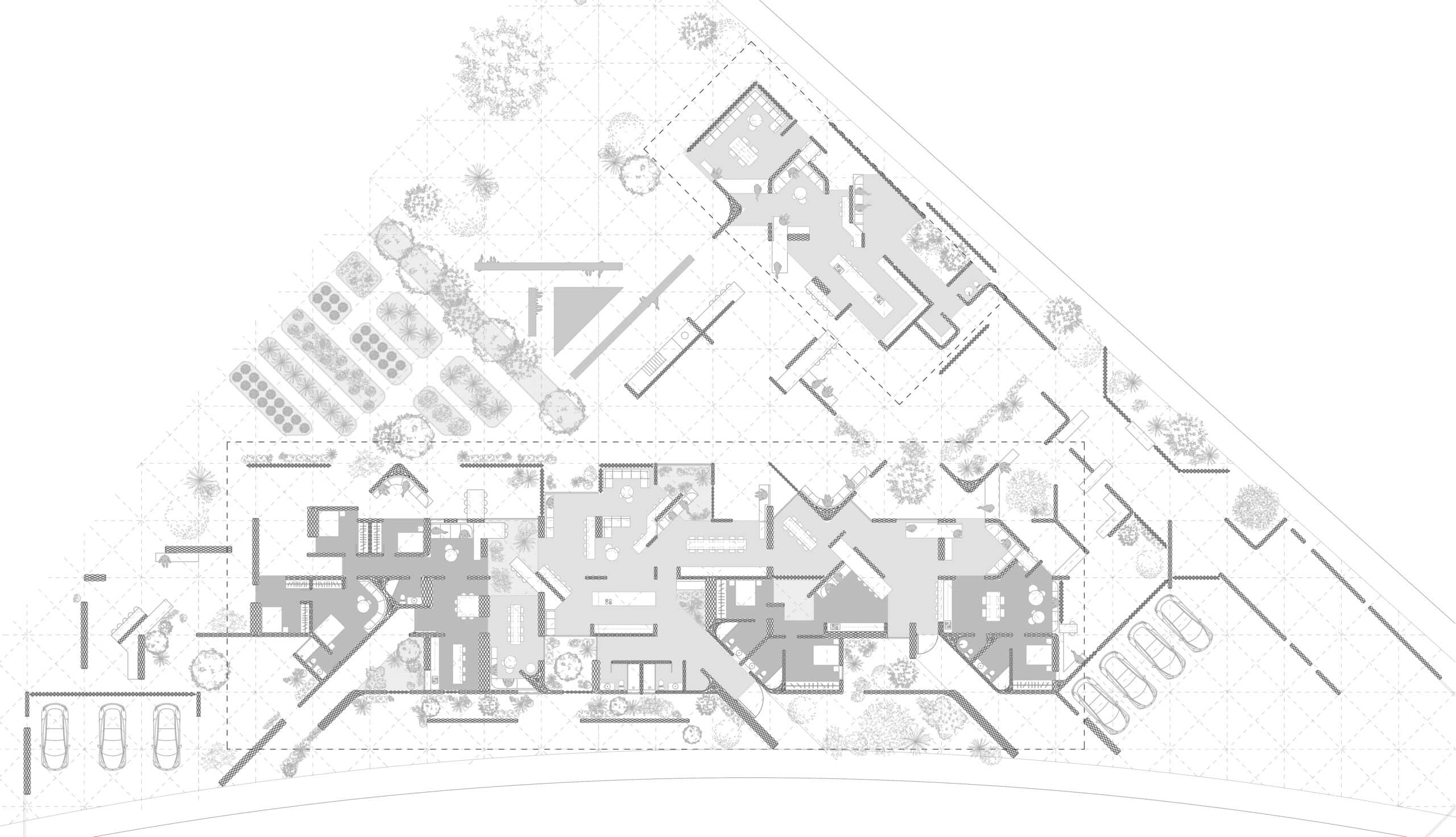
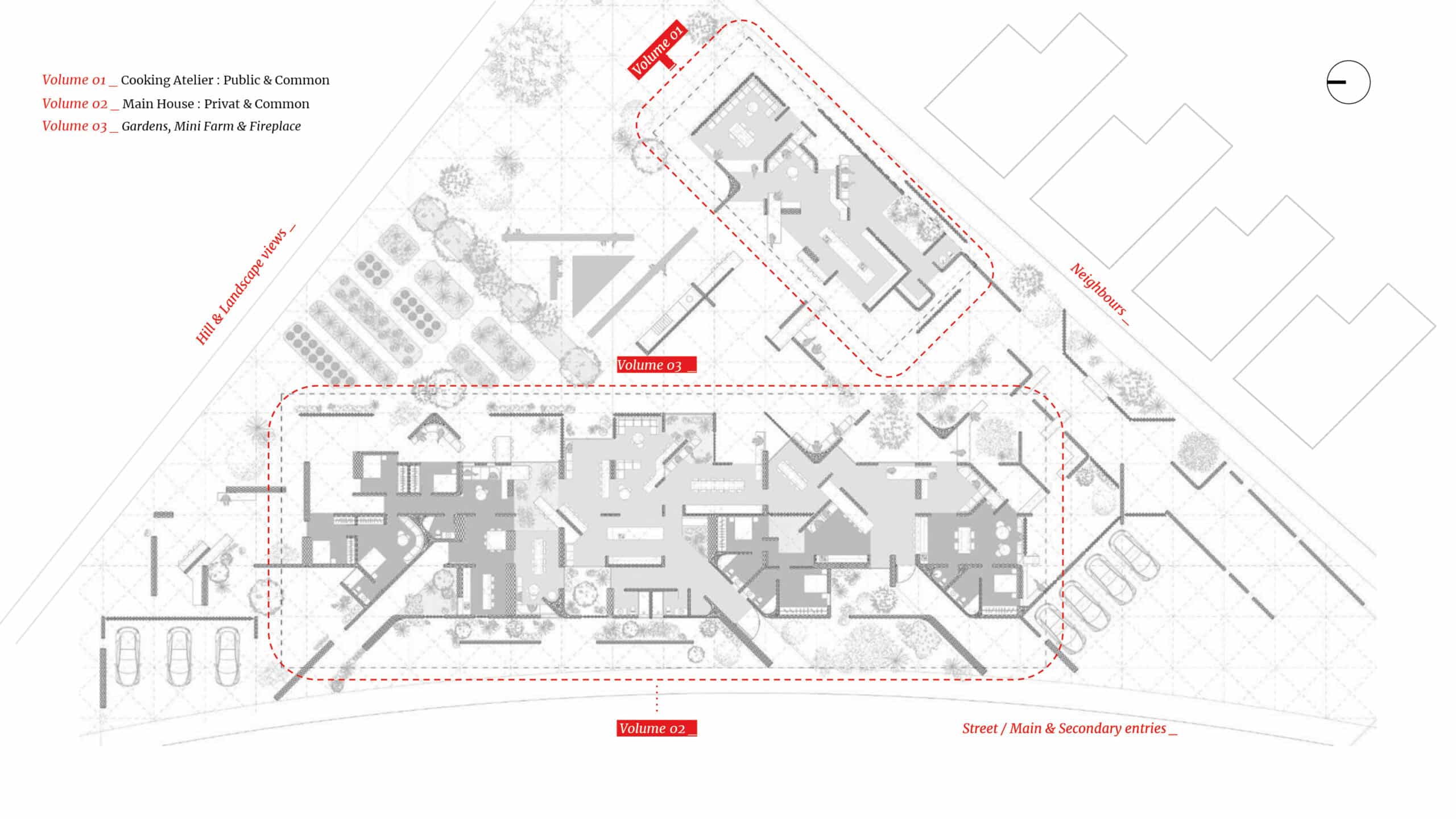
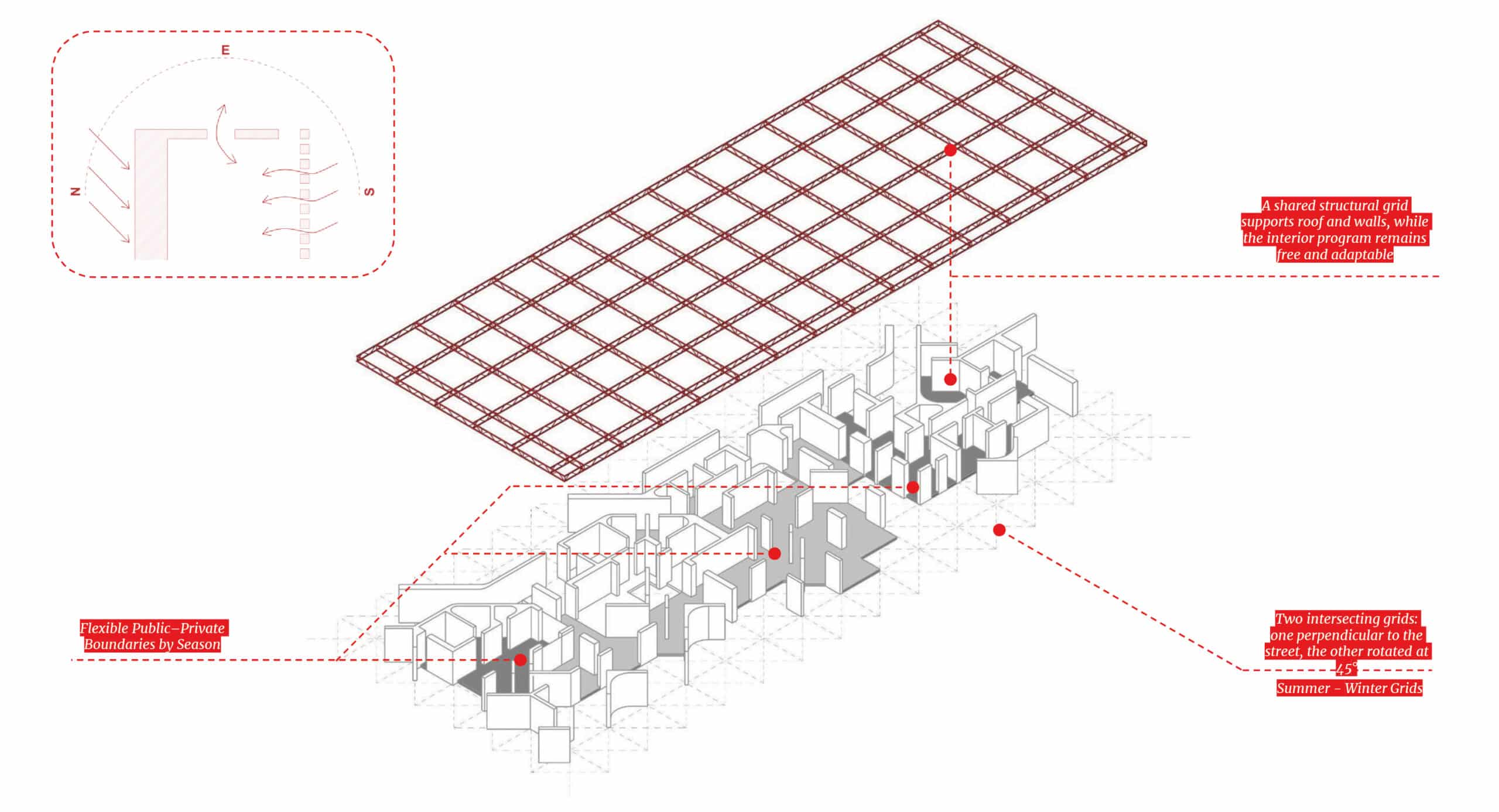
The program is laid out on the site, following an orthogonal grid towards the street, turning its back to it, and then beginning to break and open diagonally towards the hillside and the landscape views. There are mainly 2 volumes: the main residence and the cooking atelier, which then come together in an outdoor area of gardens, mini farms, a fireplace, and an open-air kitchen-BBQ.
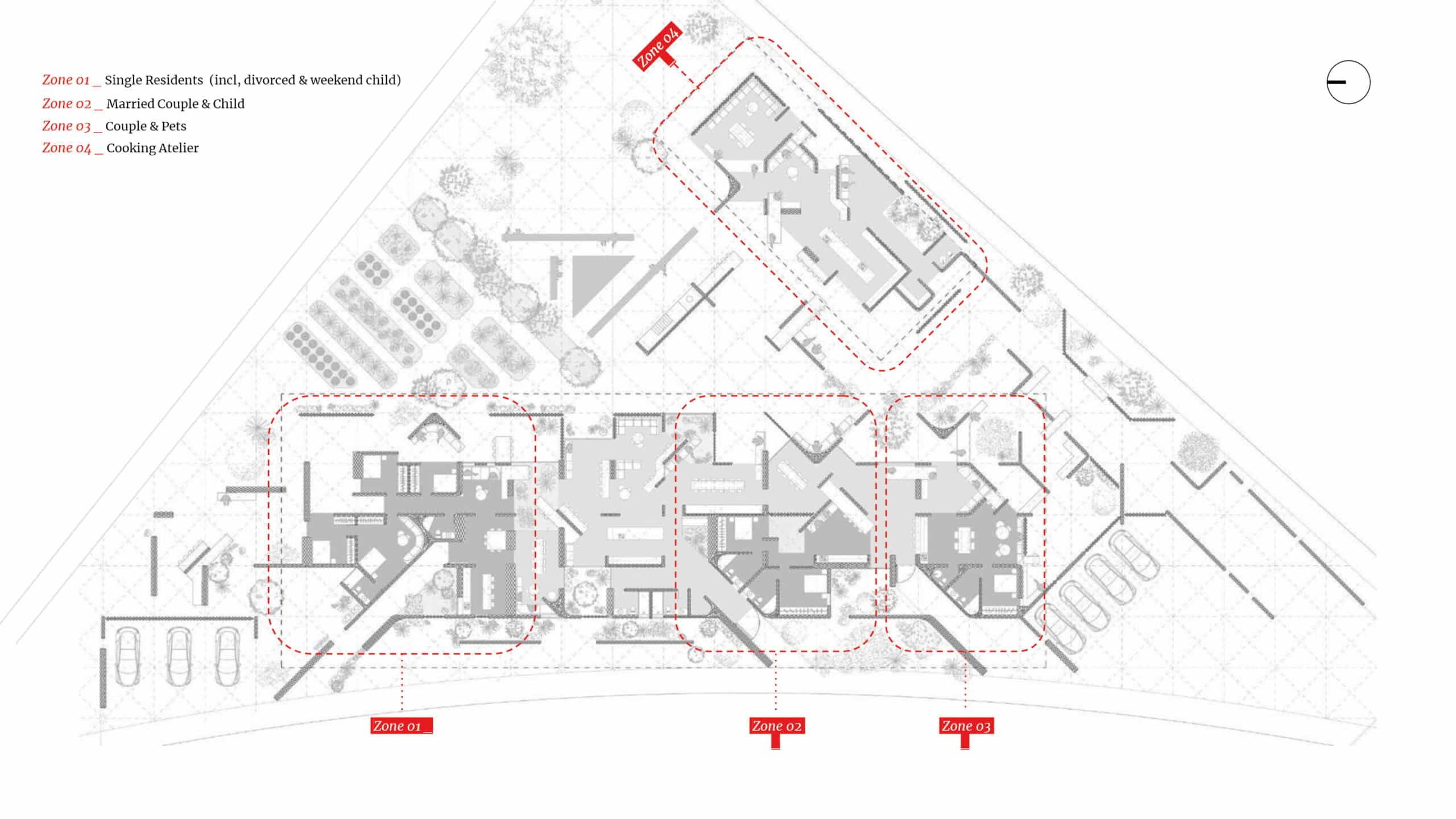
These two volumes are further subdivided into the first three private zones for the different resident groups, and the volume for the common space and cooking workshop experience.
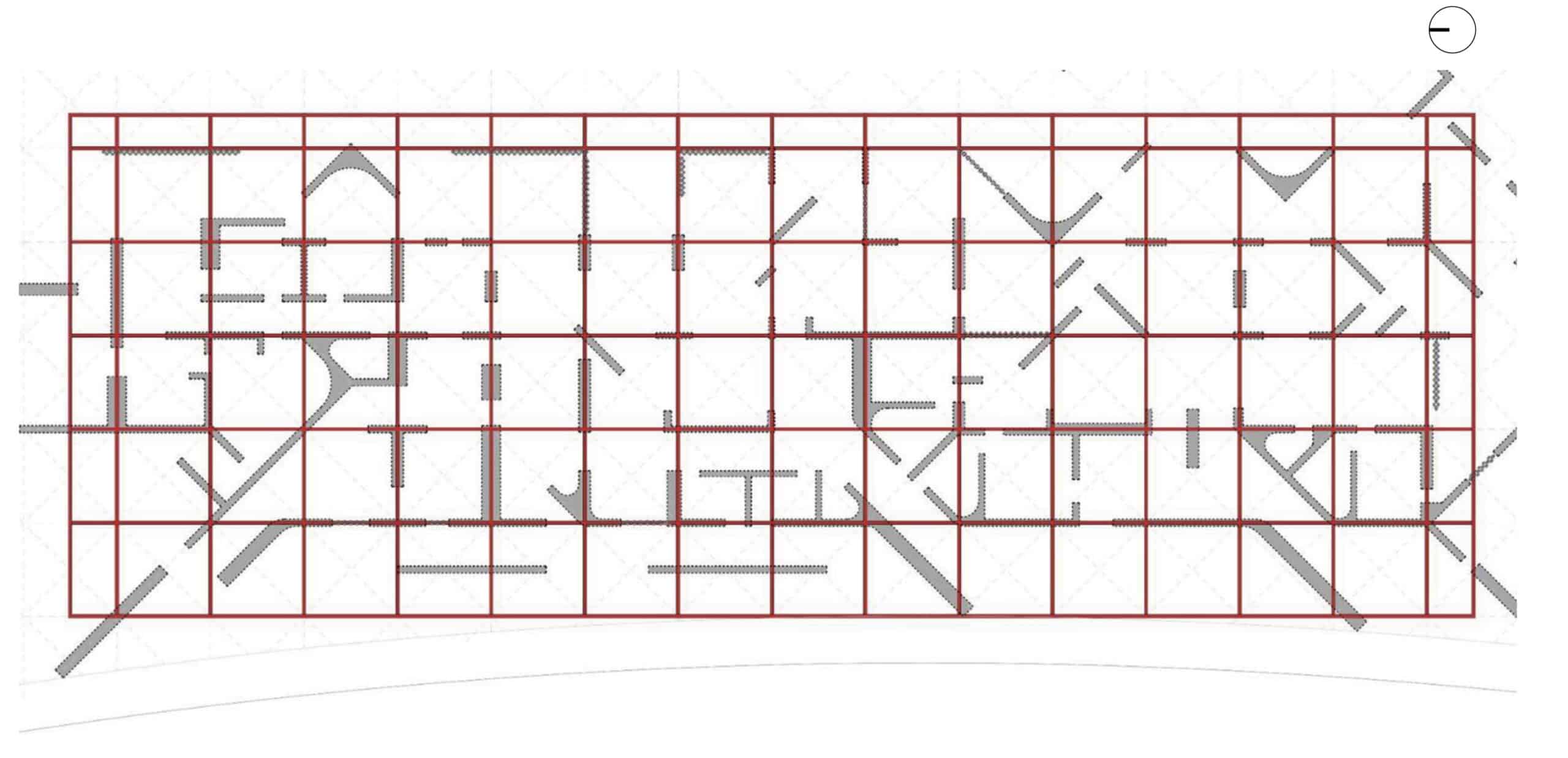
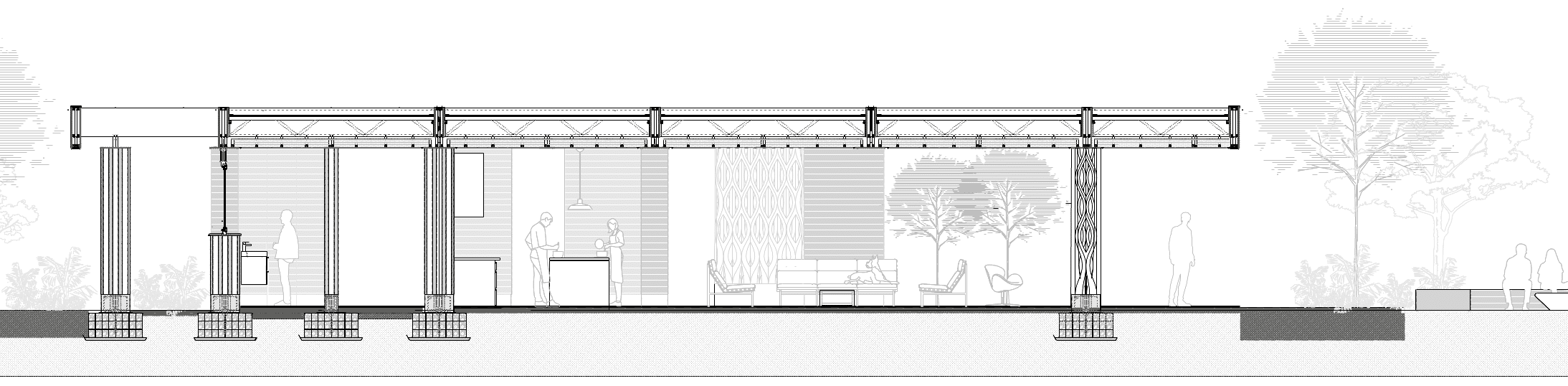
We aimed to create 2 spatial worlds: the roof grid, which acts as an orthogonal and organizing element of the space, and beneath it, the chaos and irregularity of all the spaces that respond to the change in the grid’s direction—allowing for flexible spaces that adapt according to the season. Following climatic strategies and walls positioning, we decided to adopt the principles of traditional masía architecture, where the thicker and more enclosed walls are placed facing the northwest, while the thinner and more permeable ones face the southeast.
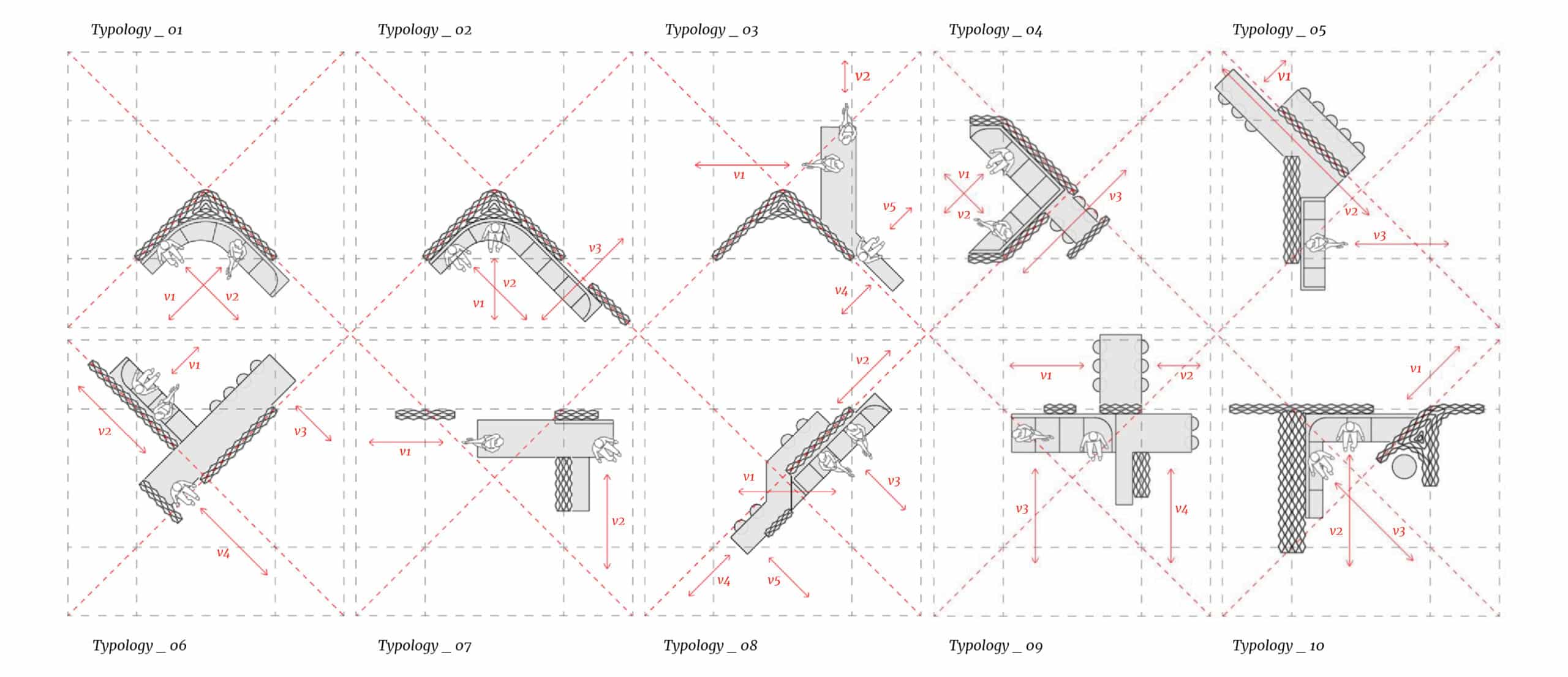
Now Going into more detail, we introduce our final catalogue of 10 typologies of wall, space & furniture.
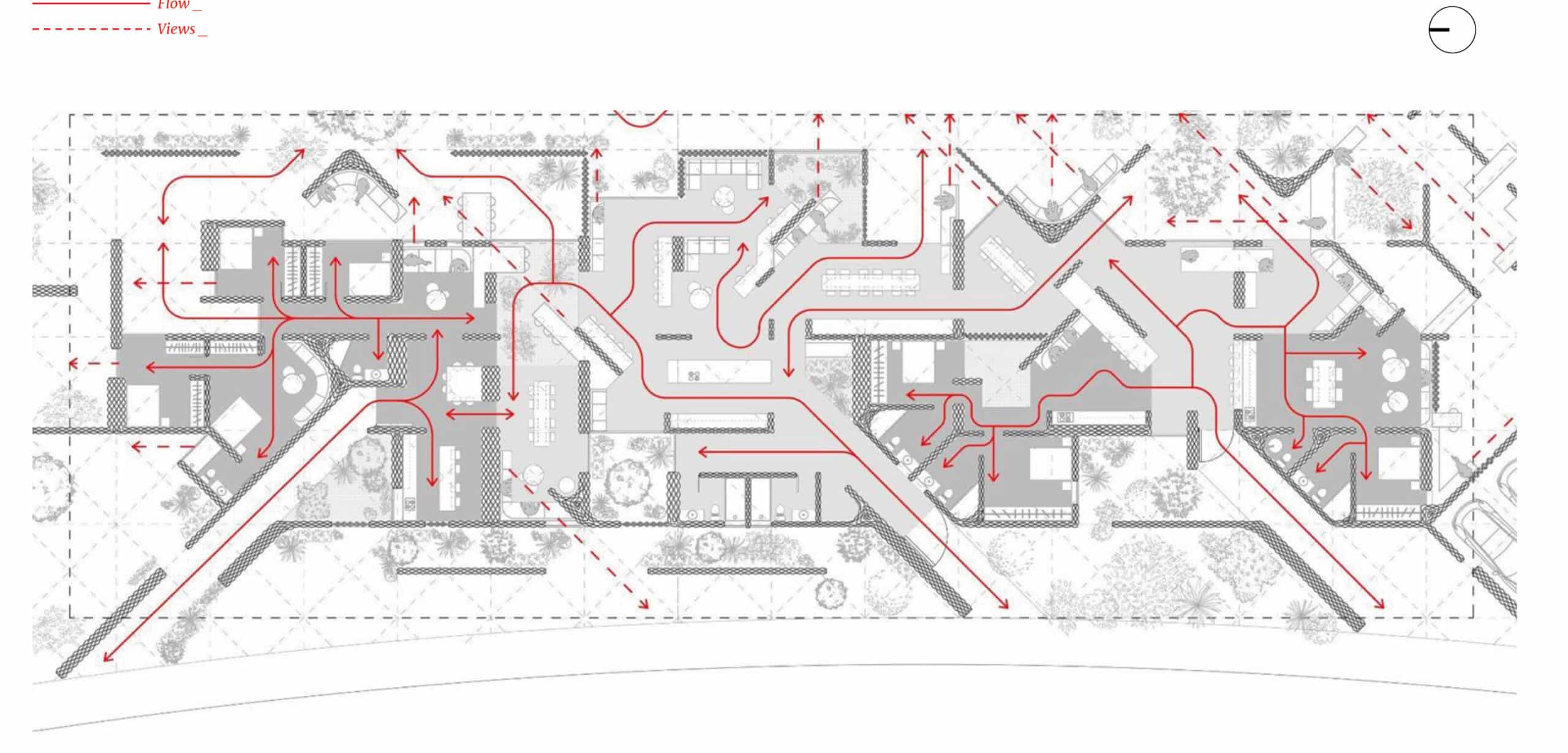
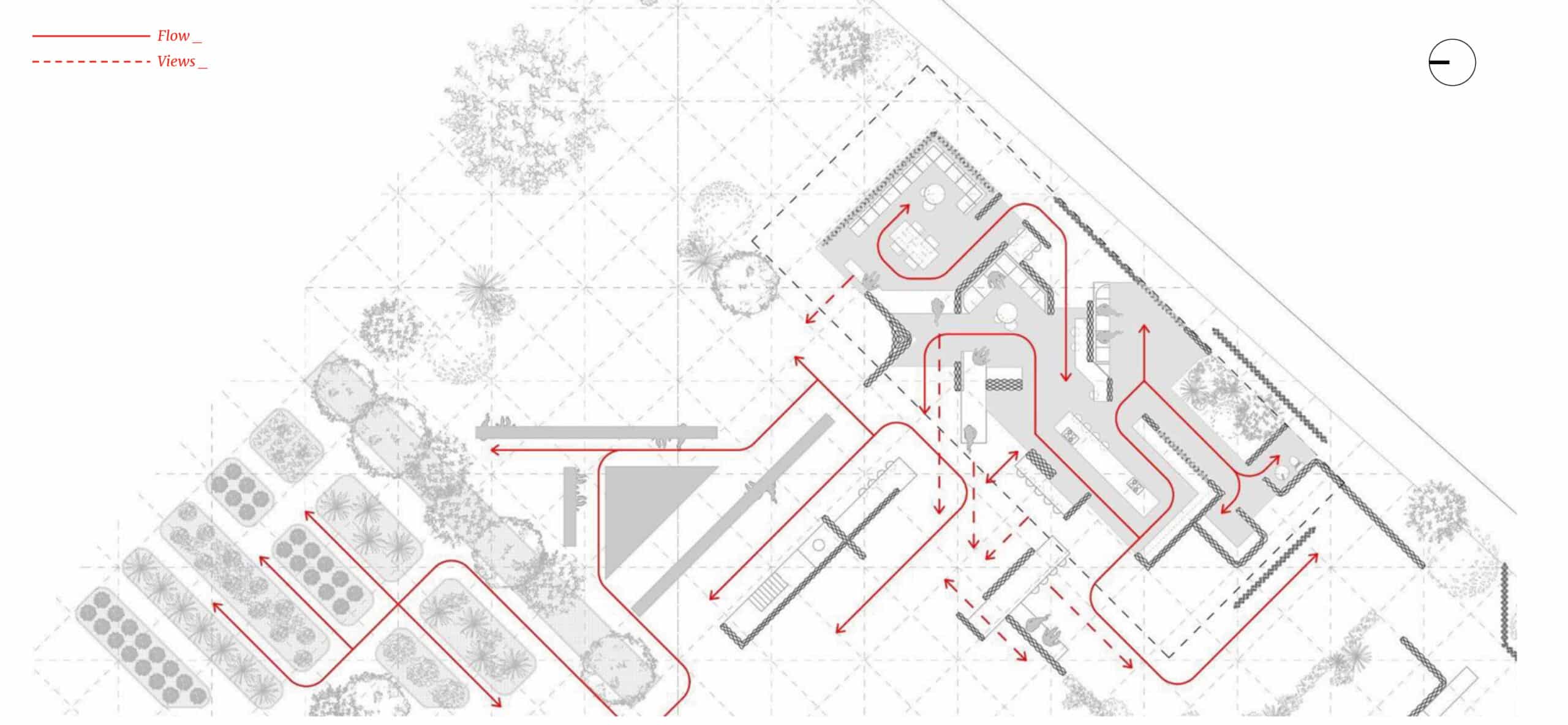
Here we want to show and express the variety of view orientations and the position of the body shift and fragment according to the 2 grid directions giving a rich possibility of space configuration
Zone 01 _ 02 _ 03 _ Single Residents + Married Couple & Child + Couple & Pet
Flow and views diagram
Zone 04 _ Cooking Atelier
Flow and views diagram
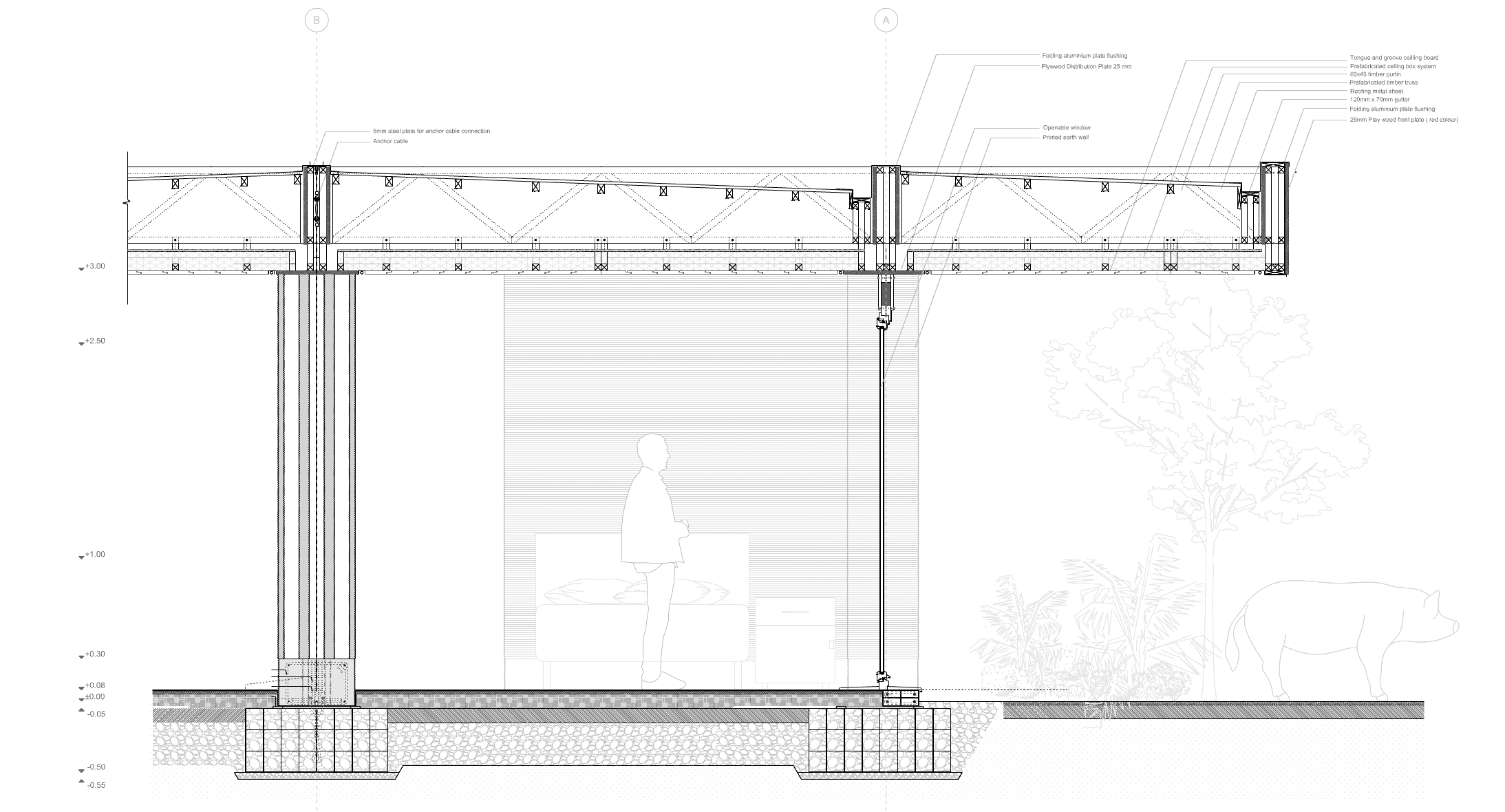
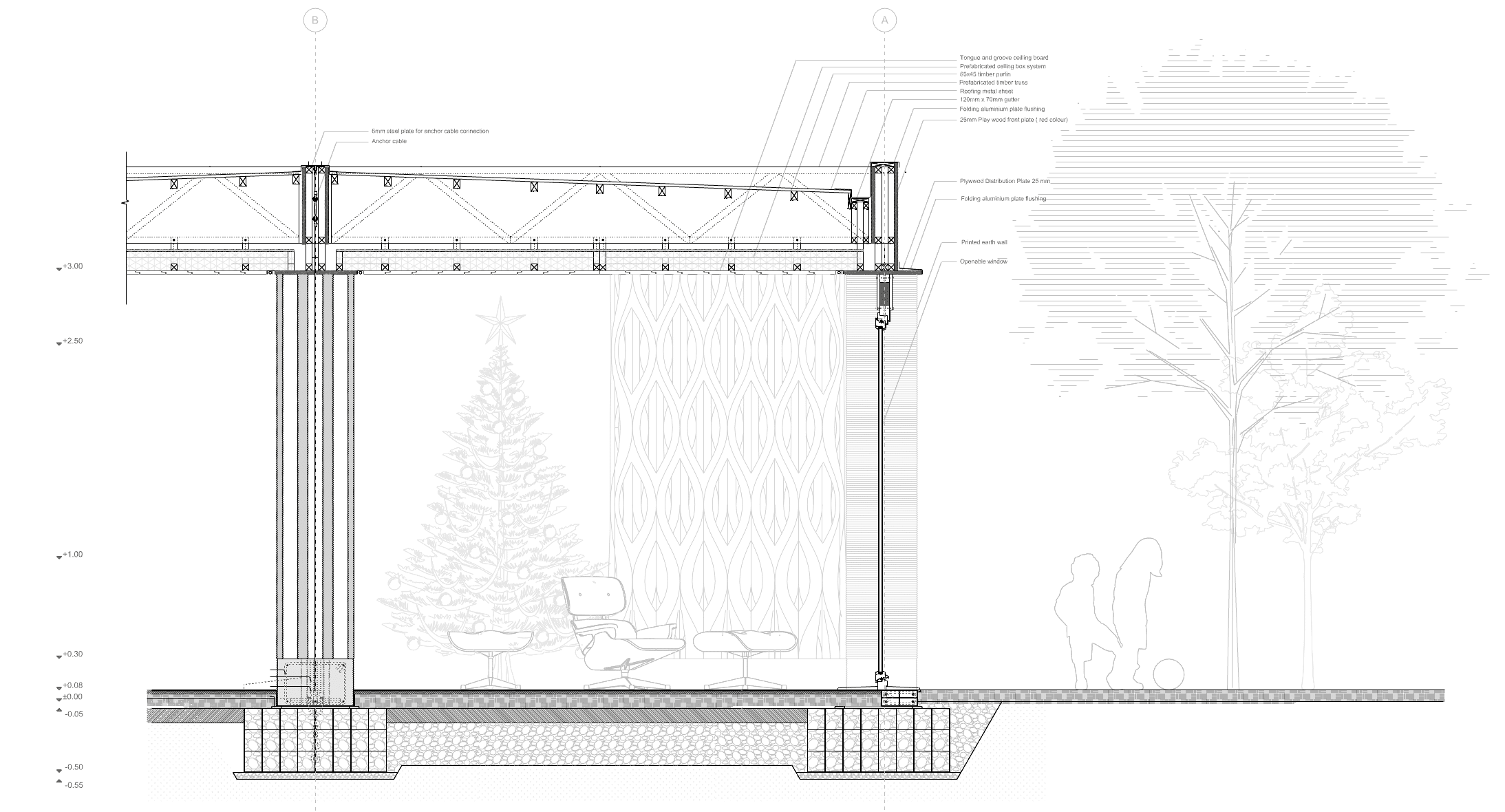
Sections and Details
RENDERS