
As the generations who have grown up around video games reach an age where they are beginning to buy homes, architects should provide advanced and easily navigable interfaces for people to interact with architecture. We should provide basic information on project mission and sustainability etc. and then allow potential customers to explore the designs in 3D in any way they please.
In this intensive weeklong Unity Engine seminar I progressed from not knowing anything about Unity to making a fully functional windows interface that allows users to select between different design options and explore them using standard videogame style world navigation systems.
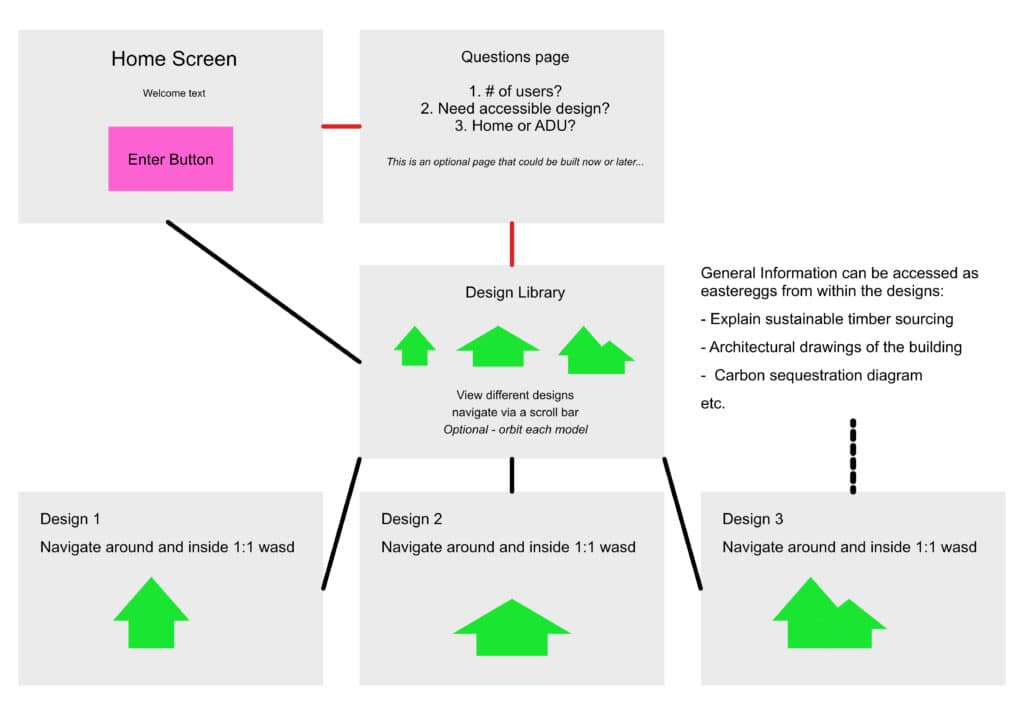
It will be a longer process to refine the visual content and style of the application as well as adding additional components such as informational Easter eggs within each design; in addition, once the content is further refined the program can be altered to allow for exports for android, iOS, and AR/VR headsets.
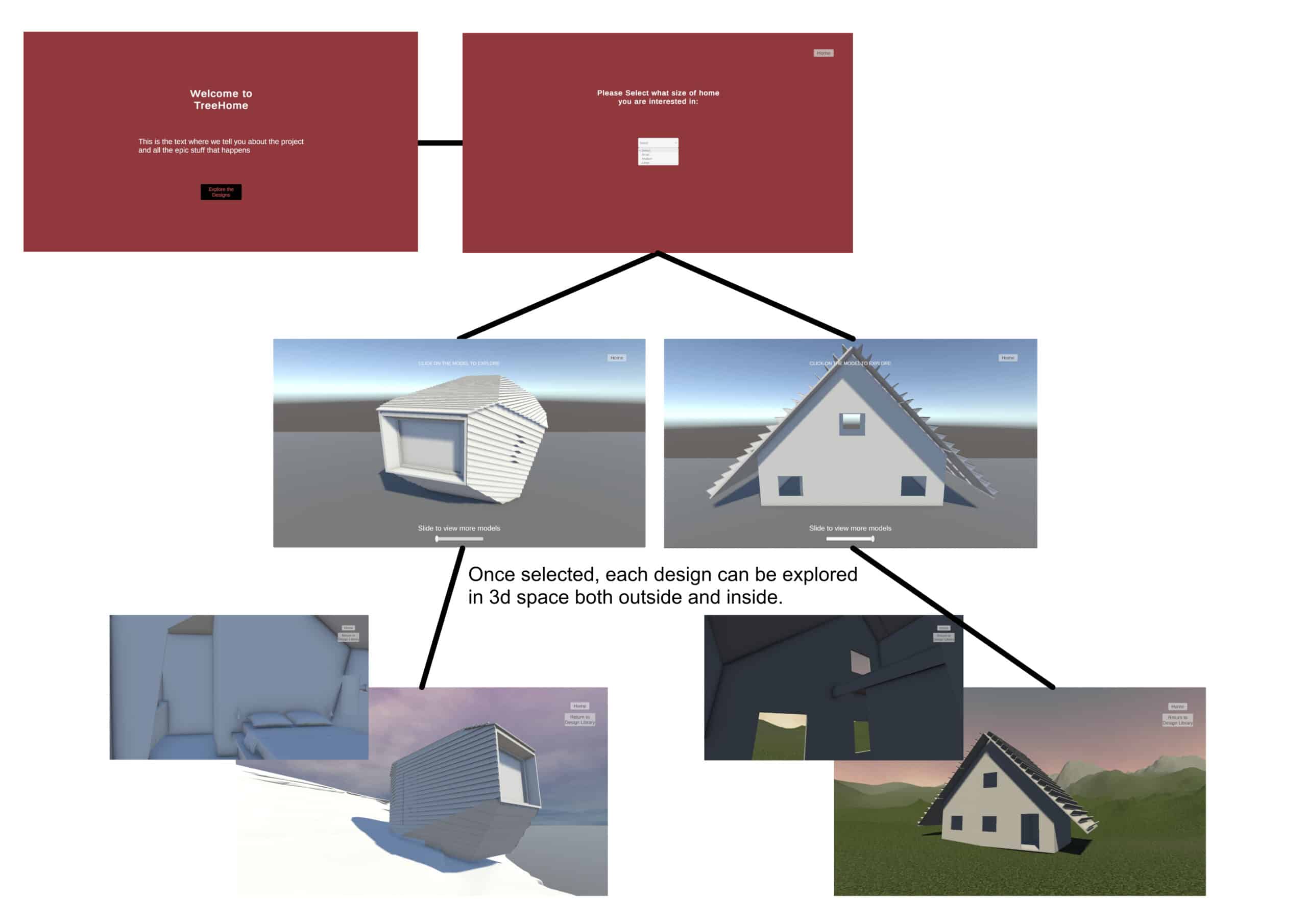
The 3D navigation is based on the normal wasd or arrow keys for moving and using the mouse to point the first person view camera. To allow a mobile app the only thing you would need to change would be the user interface navigational system.
Next Steps include populating the terrain with a consistent and intriguing visual style and bringing in additional rendering materials and textures to give the optimal playthrough experience.
In a more speculative sense, it would be an interesting research project to make the same application but with first person and third person, or even second person, camera rigs and to gauge user enjoyment of each approach.
Many thanks to our IAAC AR/VR 2026 professor Daniil koshelyuk and my excellent classmates for a great week!
