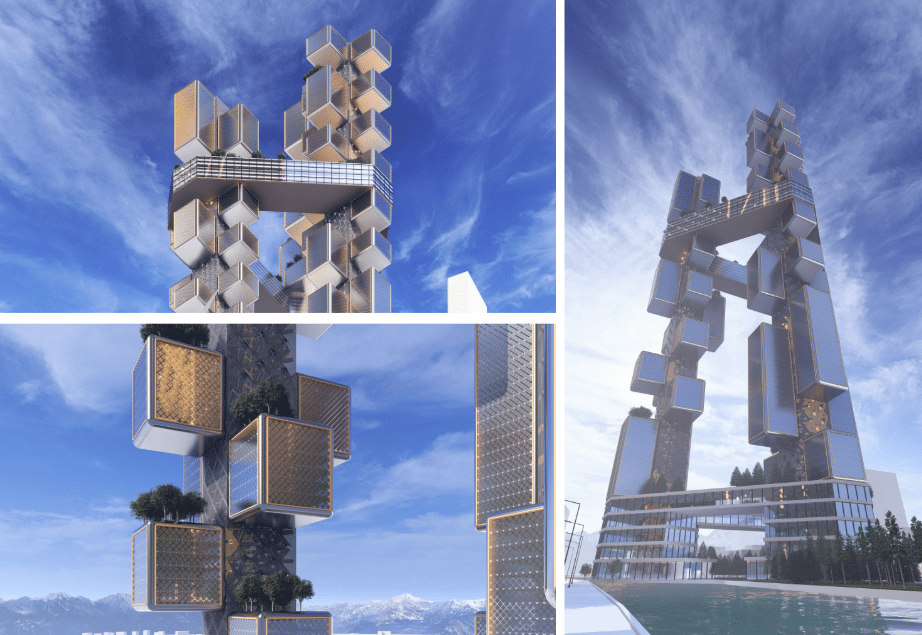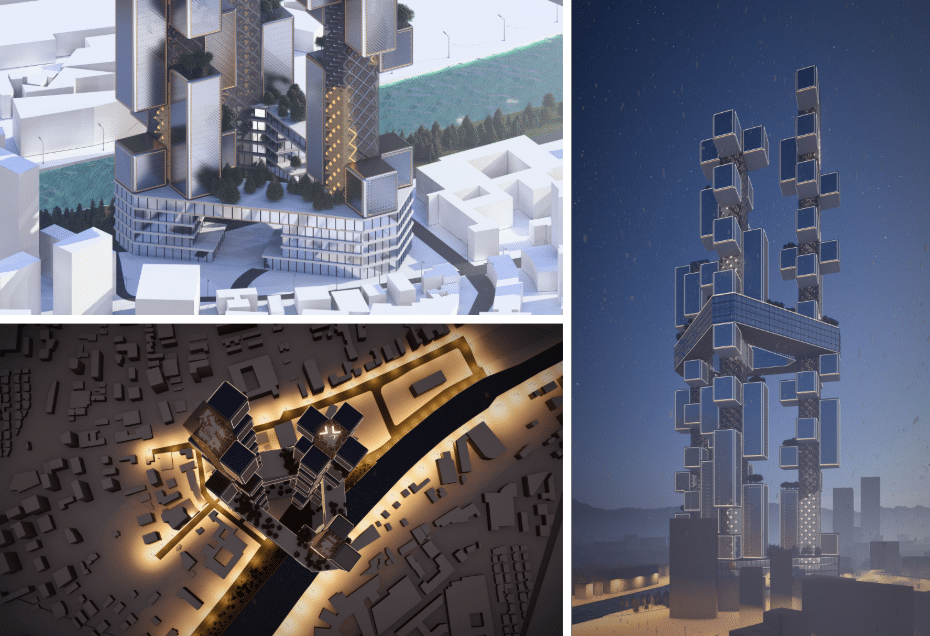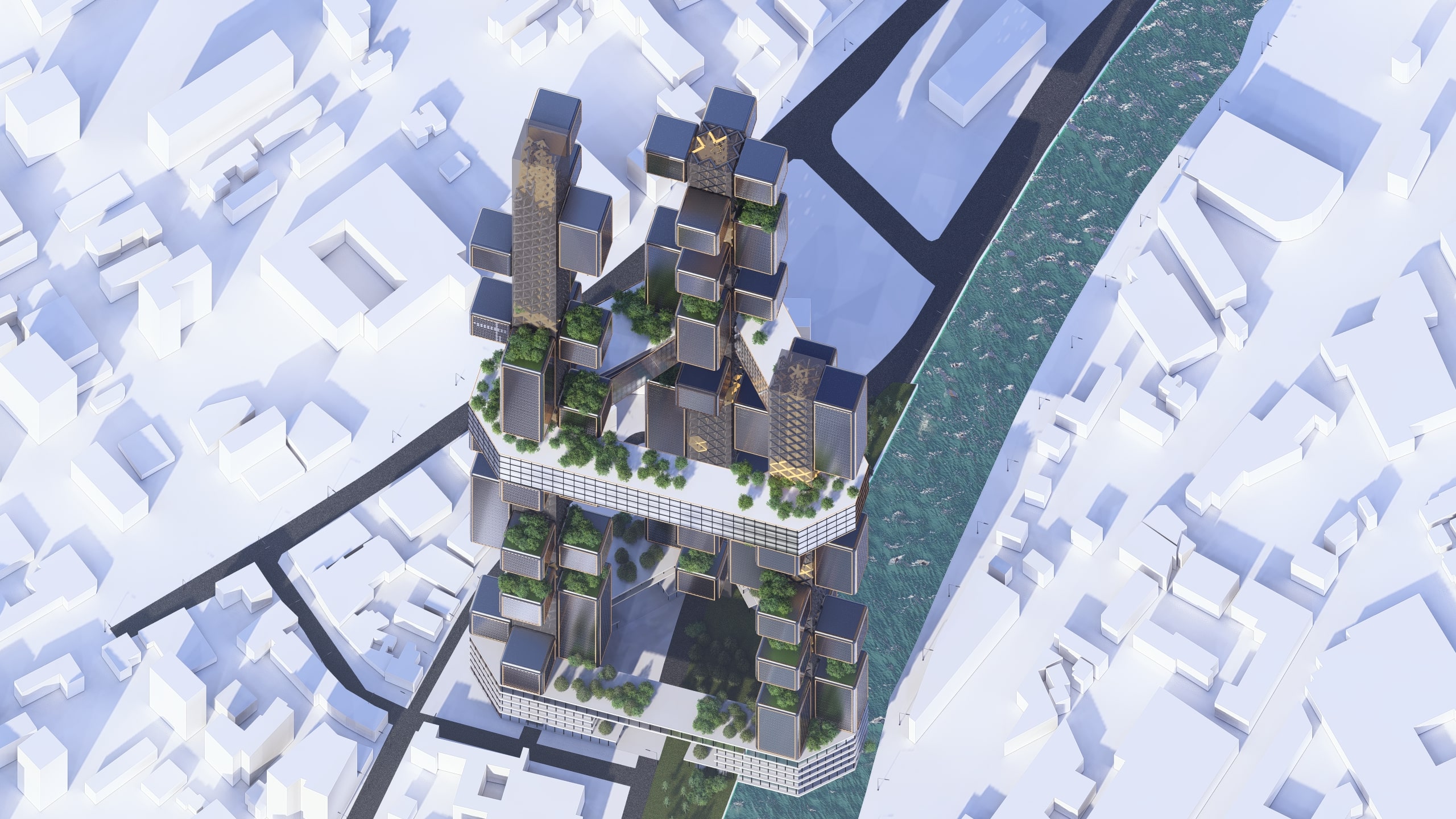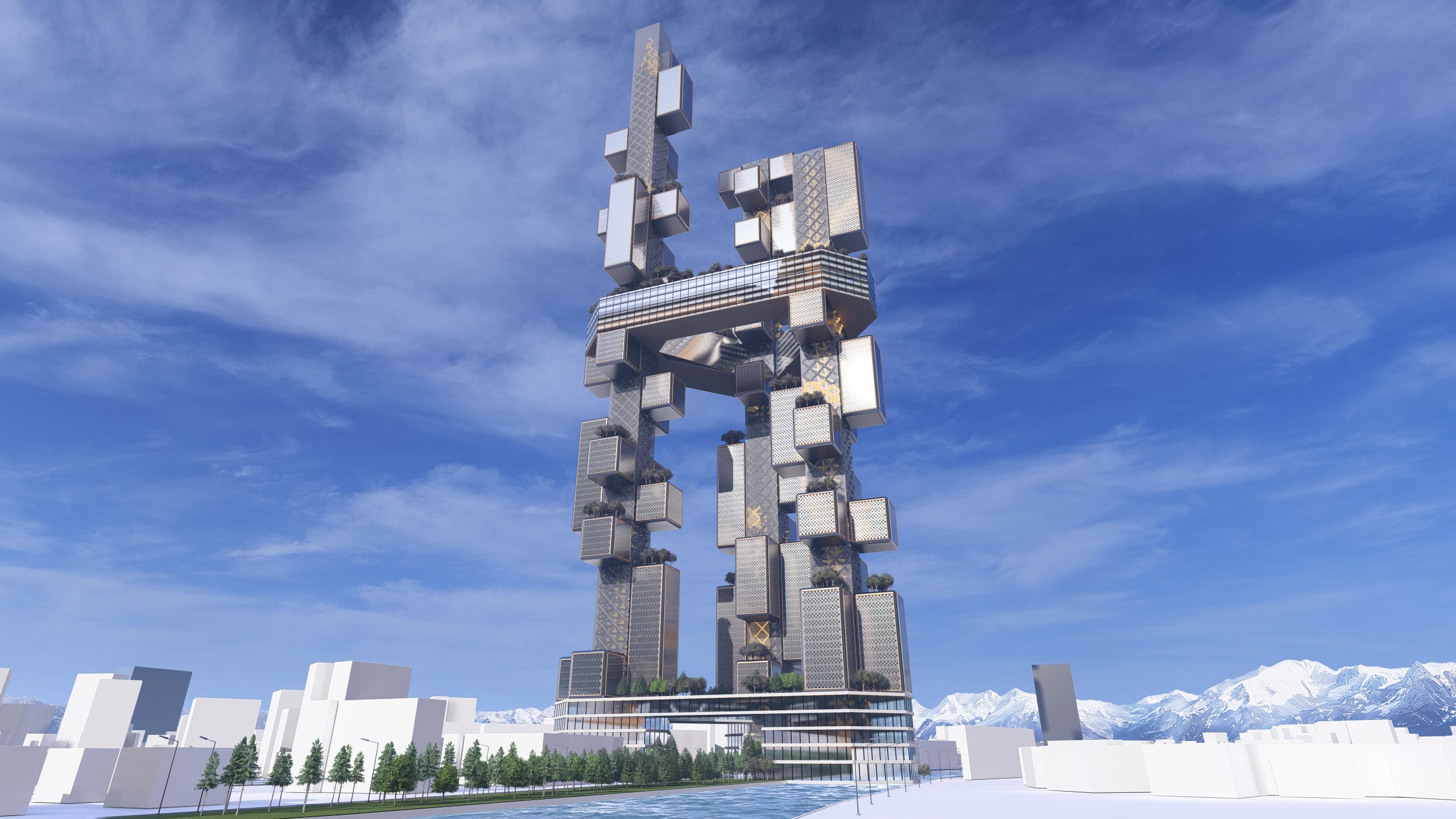
A vertical ecosystem in Santiago where architecture, wind, and energy converge. The hyper Lung captures, cleans, and redistributes polluted air through a breathing core, transforming the tower into living infrastructure that breathes with the city!
THE ALVEOLAR SPINE – THE LUNG ANALOGY
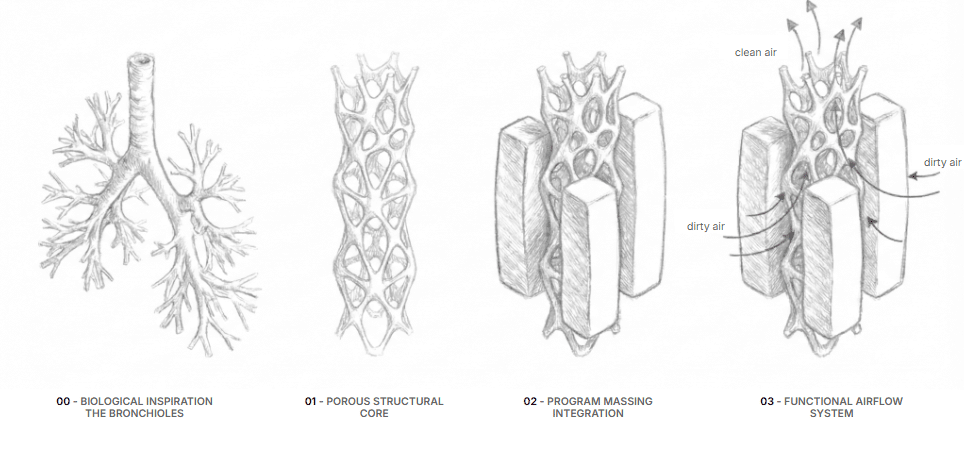
The core of Hyper building 01 is defined by the Alveolar Spine. Taking inspiration from the human lung, we’re developing a porous structural core that mirrors the function of the bronchi.
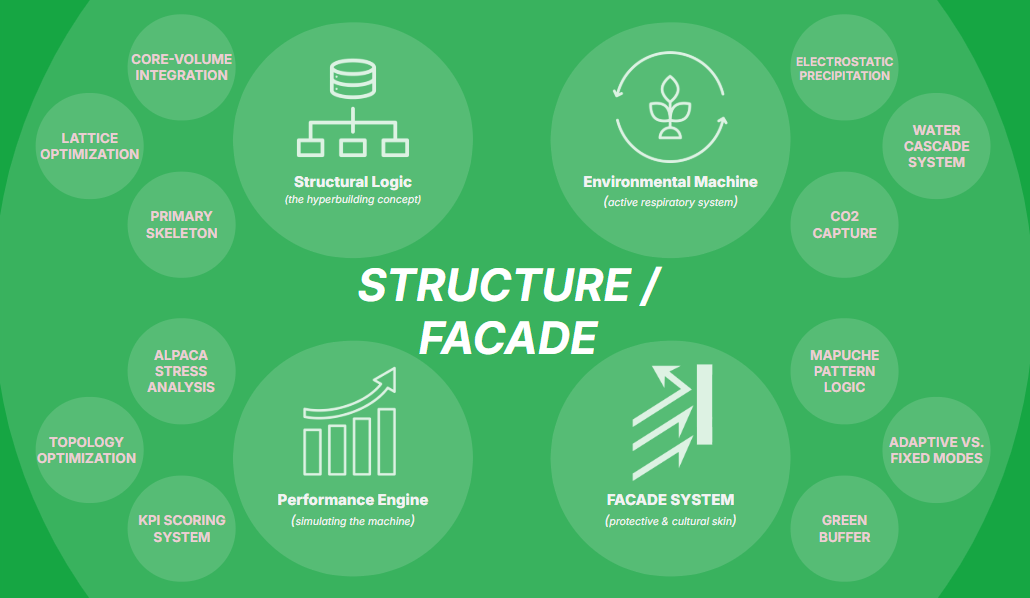
DEFINING THE VOLUME – STRUCTURE/FACADE
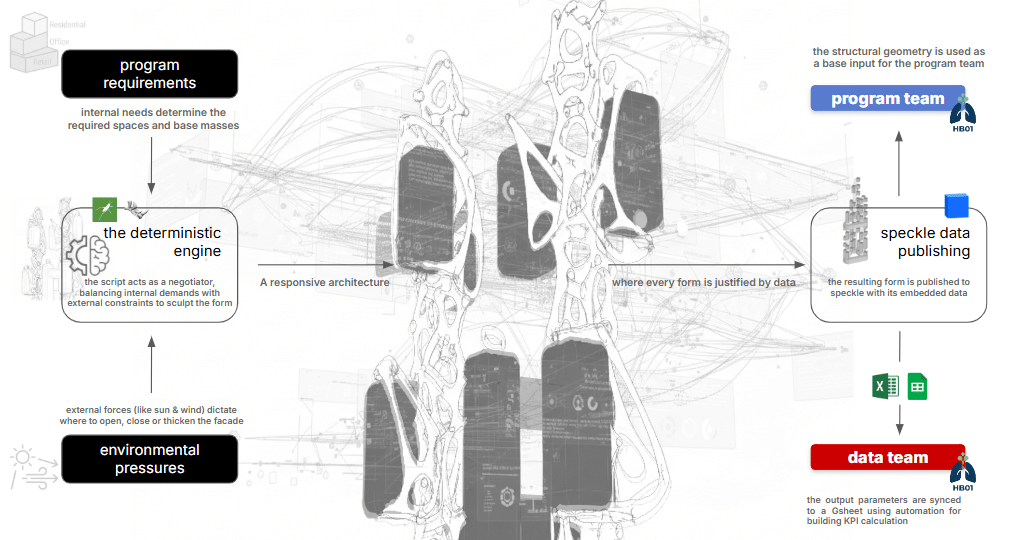
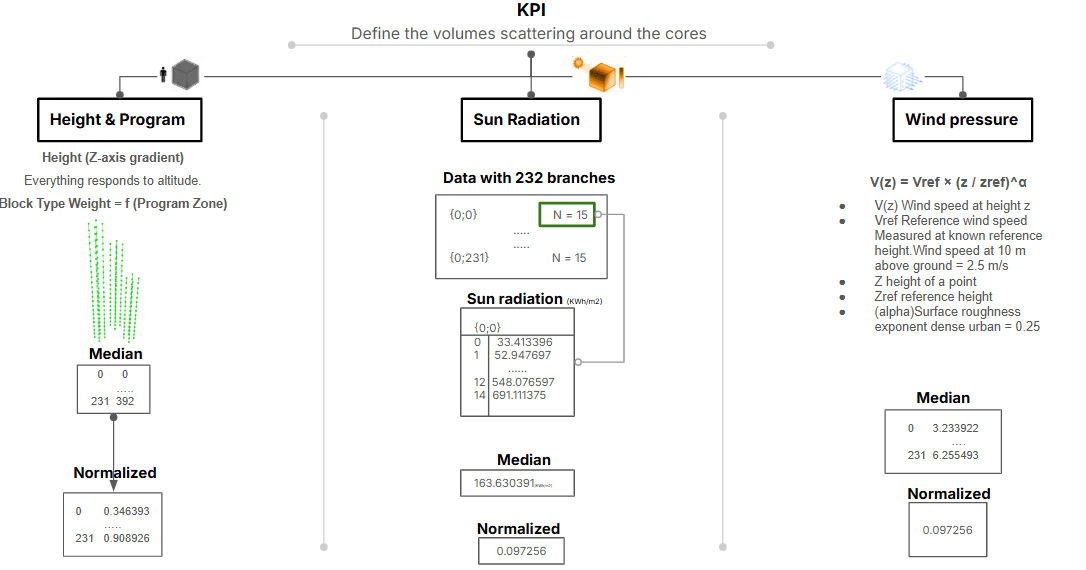
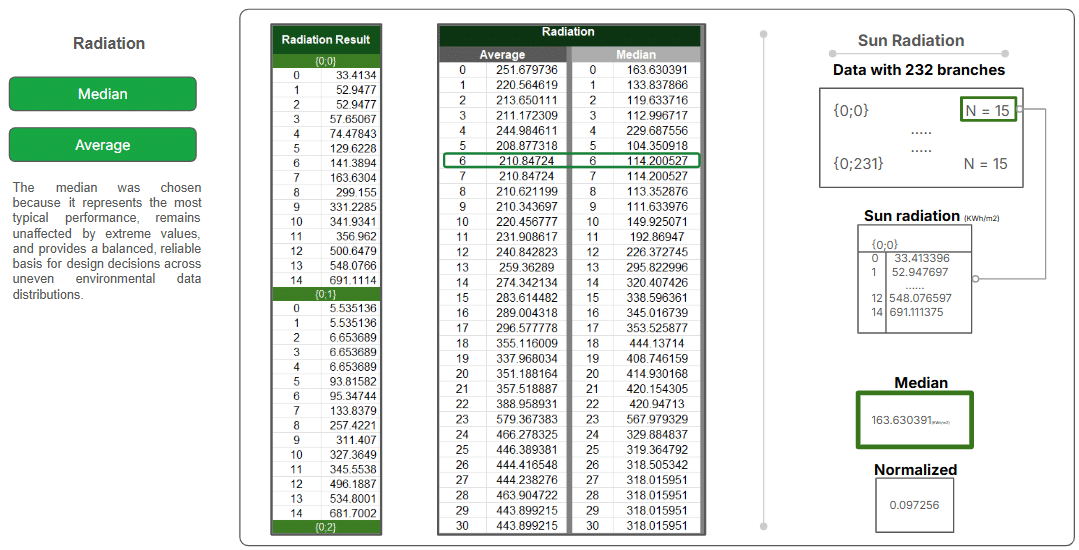
To translate this concept into a working hyper building, we are implementing a data-driven deterministic engine. where every form is justified by data, which is then published to speckle to be used as input geometry for the program team, and as input parameters for the data team.
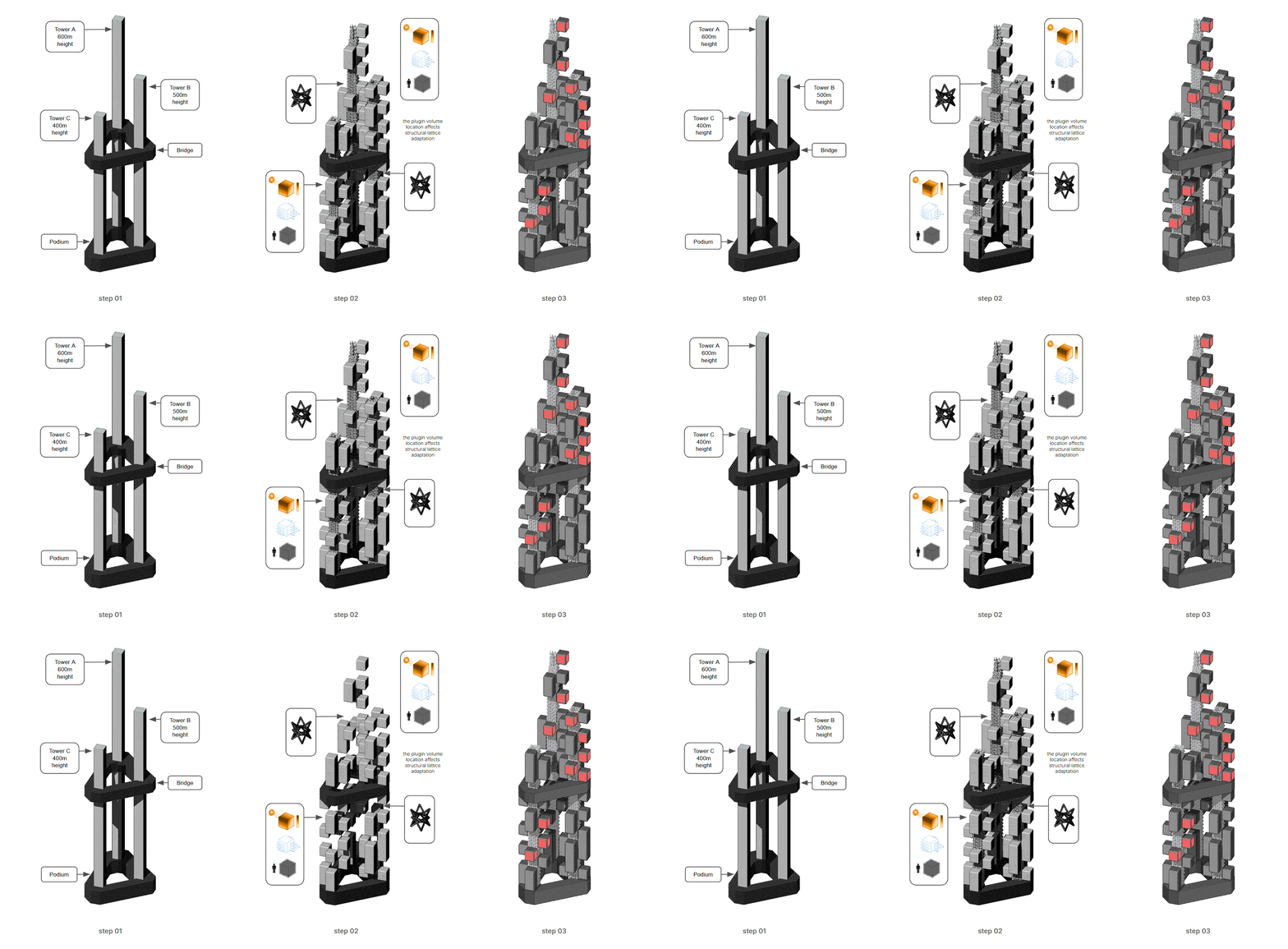
STEP 01 – Defining the Primary Skeleton
the design begins by setting hard constraints for the core dimensions, including total height and radius.
this phase focuses solely on structural integrity and the “maximum envelope” of the building structure.
STEP 02 – Primary Structural Framing & Modular Unit Integration
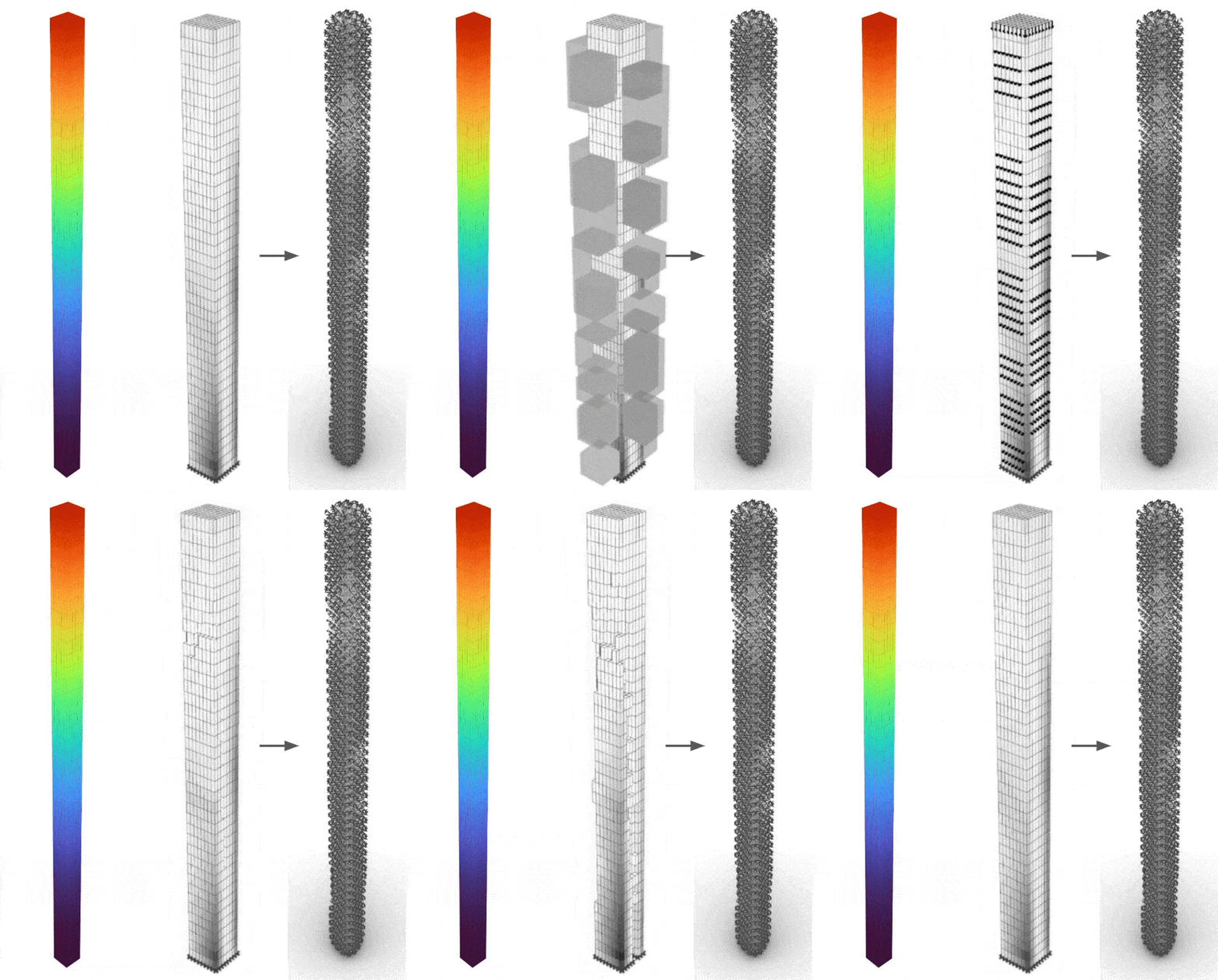
The building’s stability is anchored by a Topology-Optimized Primary Skeleton. Using Alpaca Stress Analysis, the lattice density is strategically increased at high-load junctions and tapered in low-stress zones.
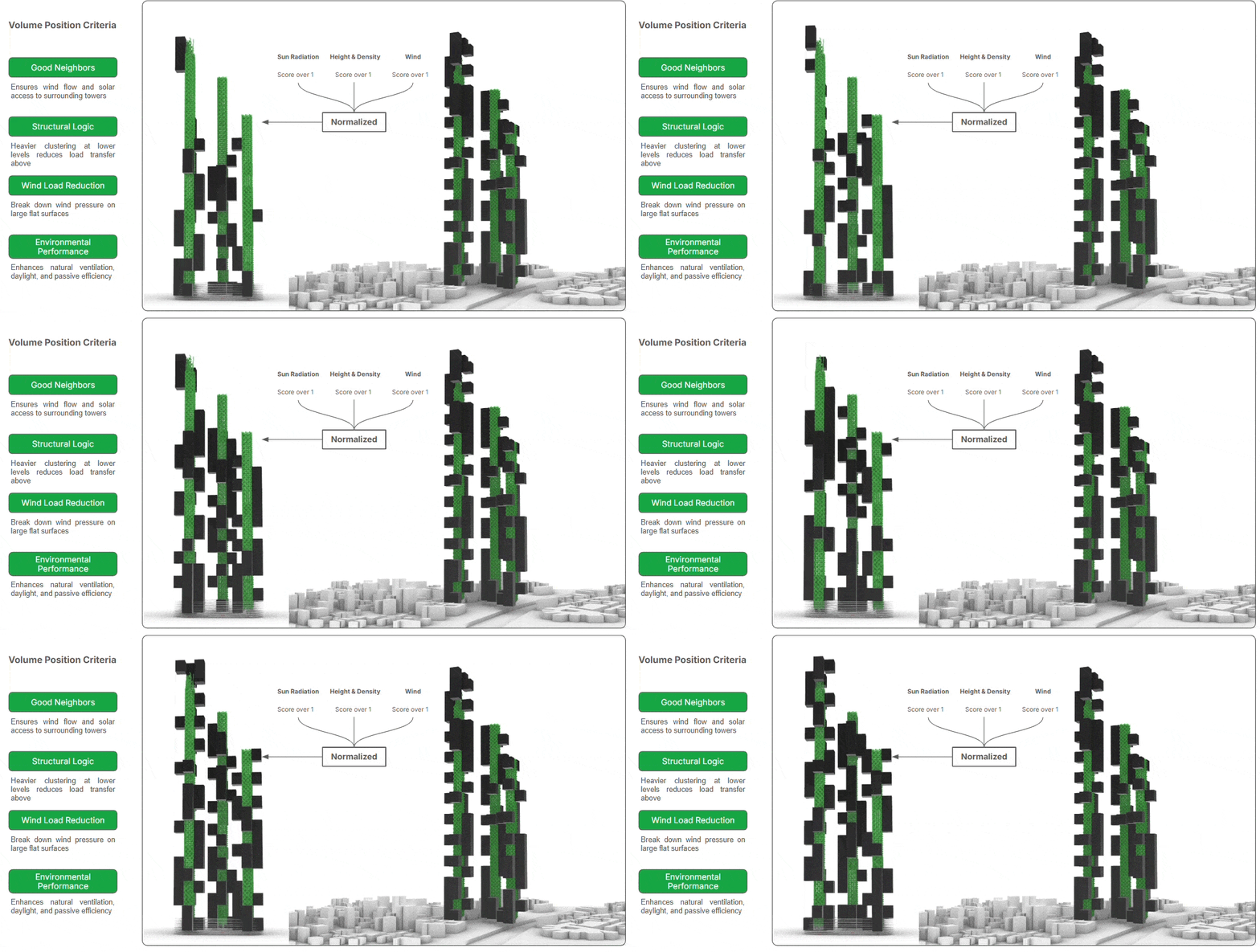
The placement and density of the plugin masses are computationally grown along the lattice, with their distribution optimized by incident radiation for thermal regulation, wind pressure for airflow, and volumetric density.
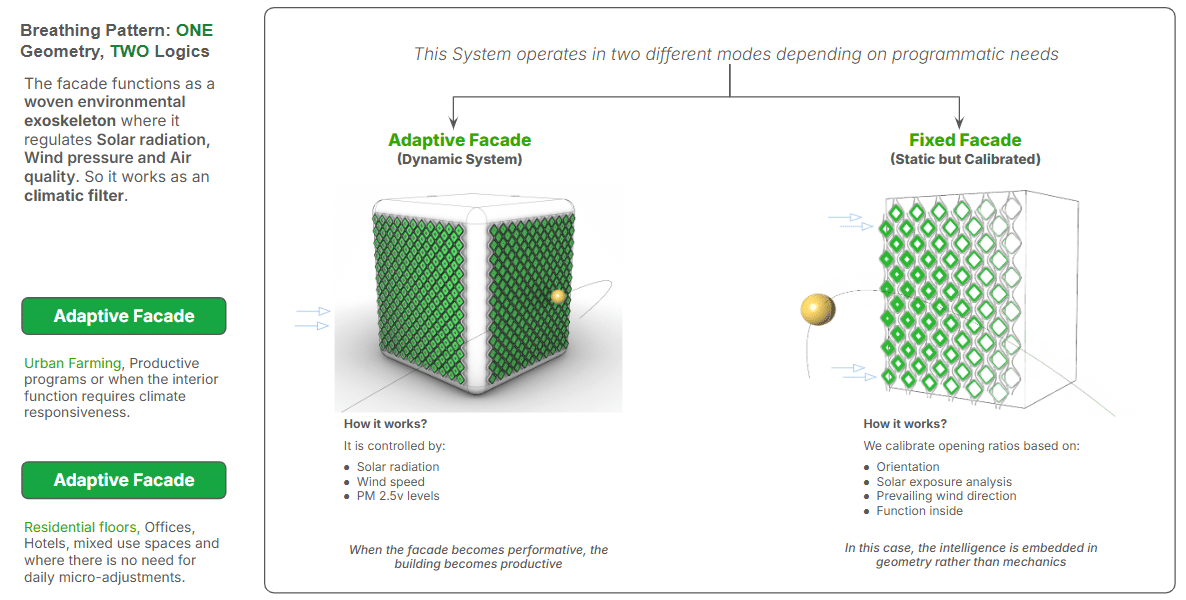
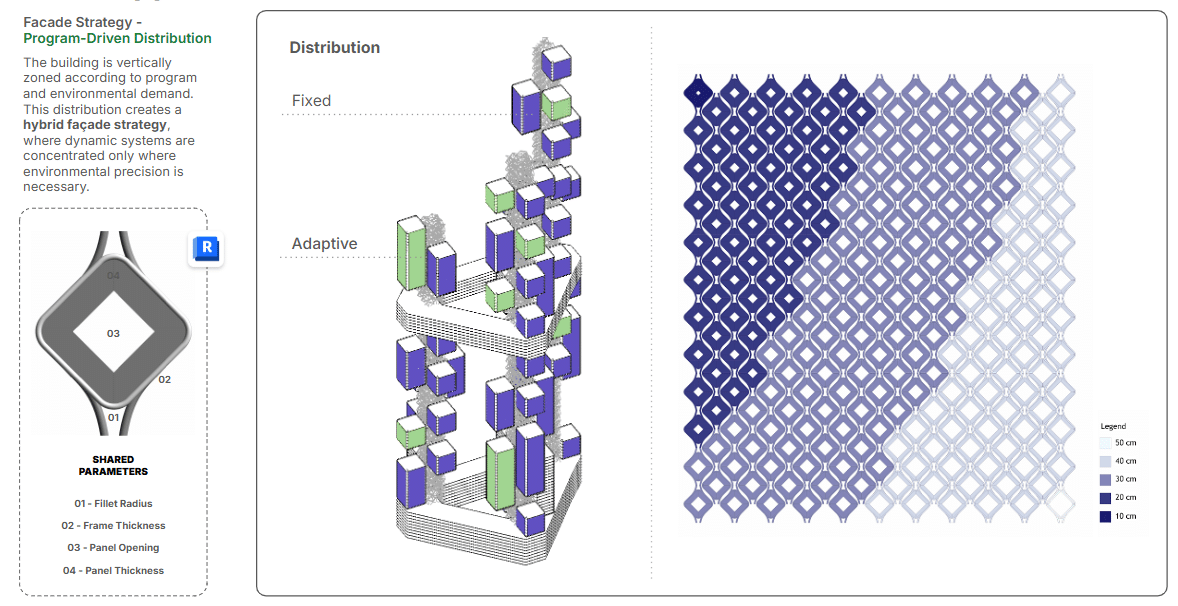
STEP 03 – Fixed vs. Adaptive Facade
The placement and density of the plugin masses are computationally grown along the lattice, with their distribution optimized by incident radiation for thermal regulation, wind pressure for airflow, and volumetric density.
STRUCTURAL CONCEPT
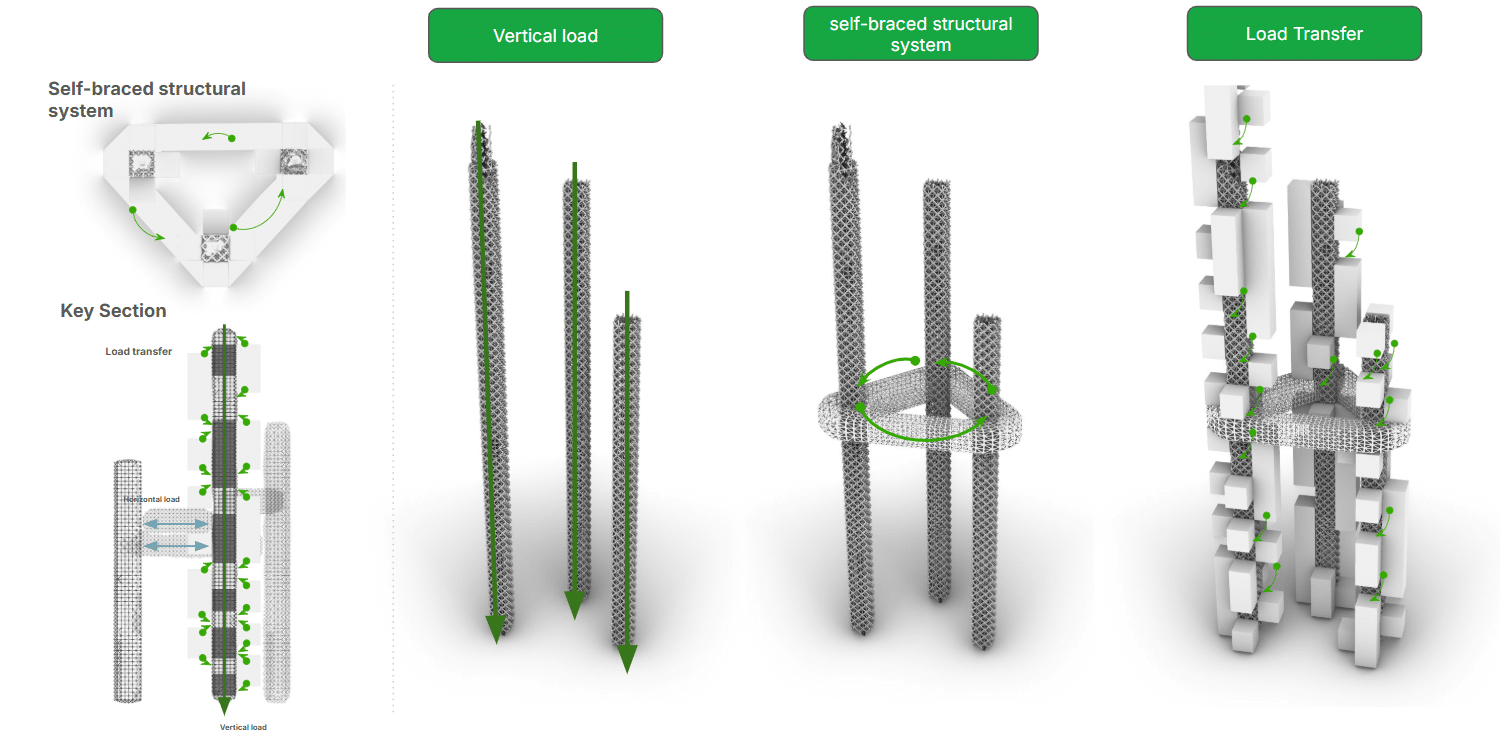
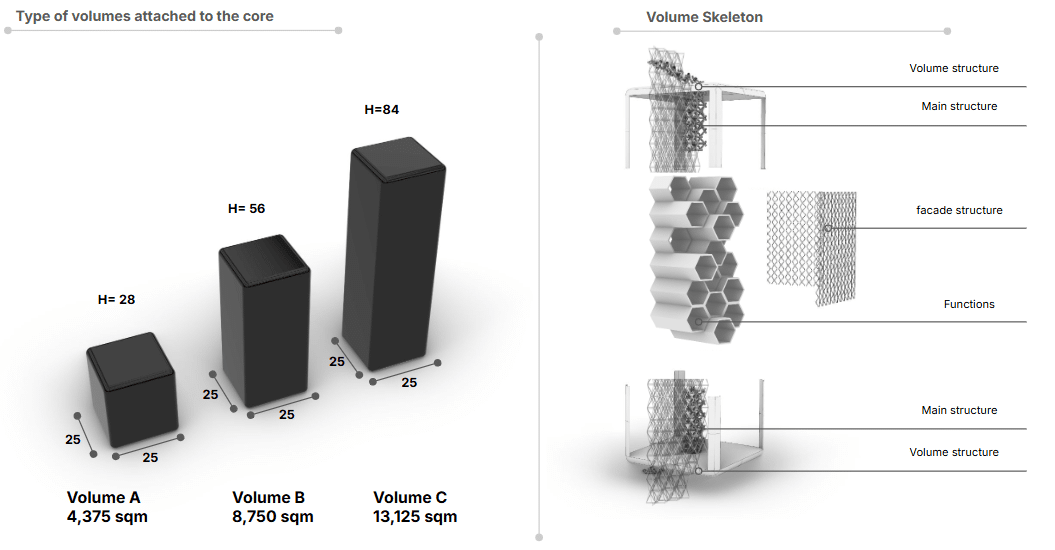
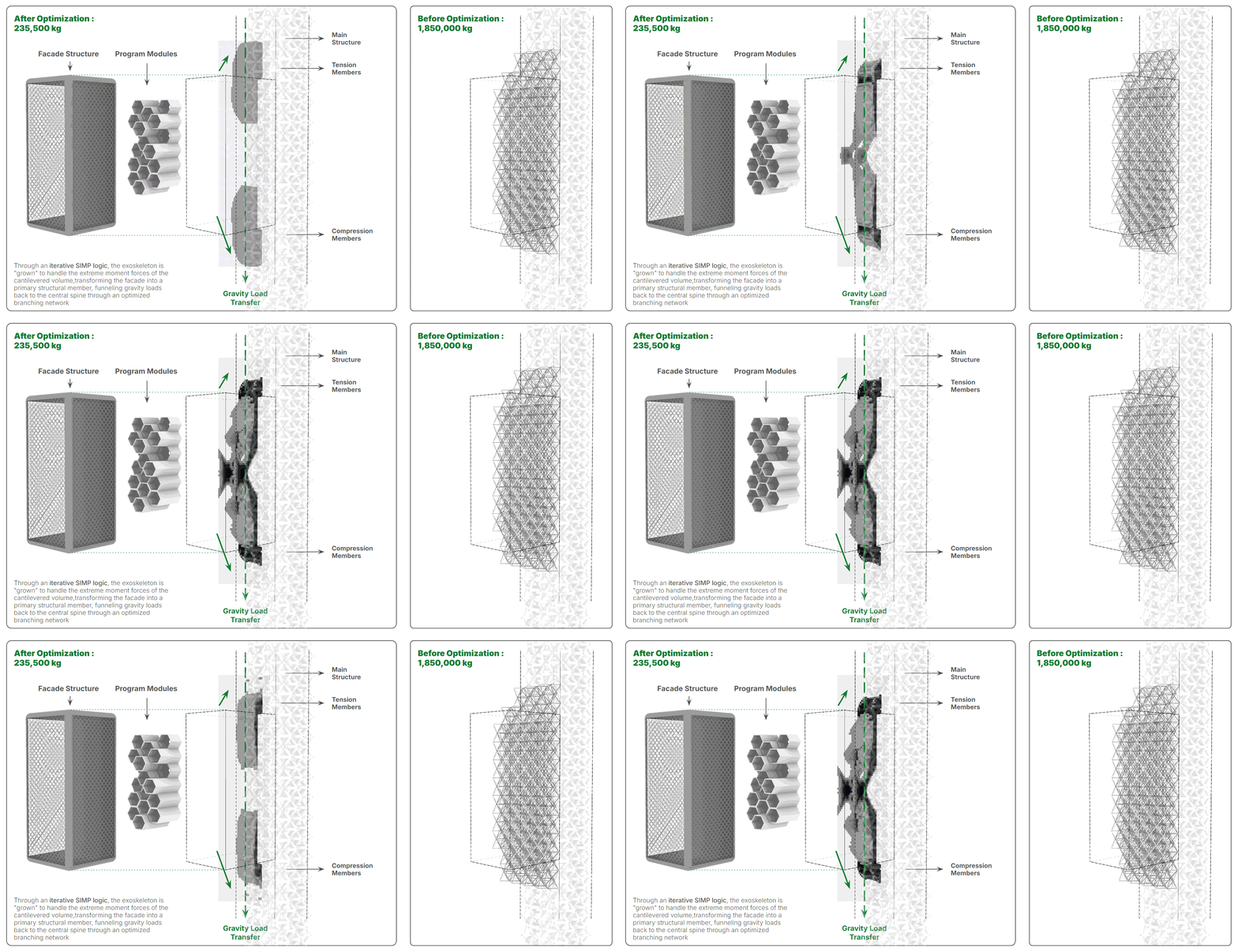
The structural approach of the project simply rely on the core that holds the entire project, where each volume is plugged onto the core. By that the load is transferred from volume to core to foundation. 3 main core forming a triangle that turns vertical mass into a self-braced structural system
The Performance Approach
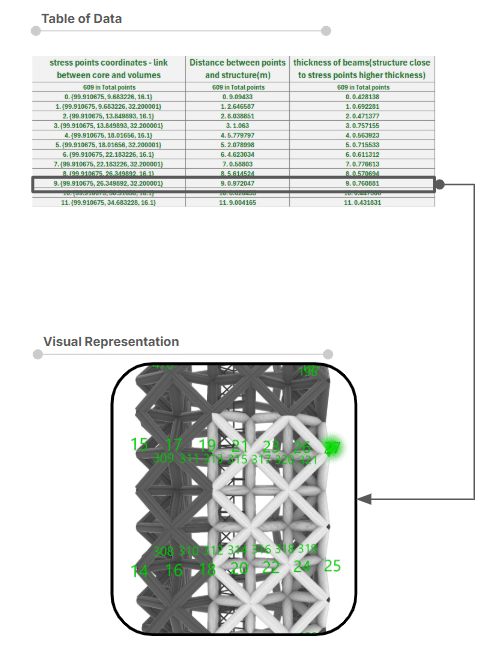
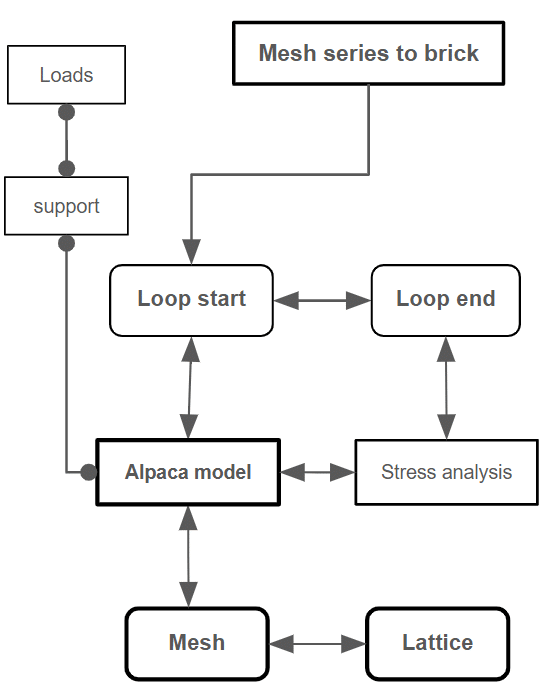
Using Alpaca we’re measuring the stress on the points connecting the core to the volumes and then the script runs a structural optimization and remove unnecessary material from the core. After that the voxels are transformed to a lattice structure
VOLUME SCATTERING
CORE-VOLUME INTEGRATION
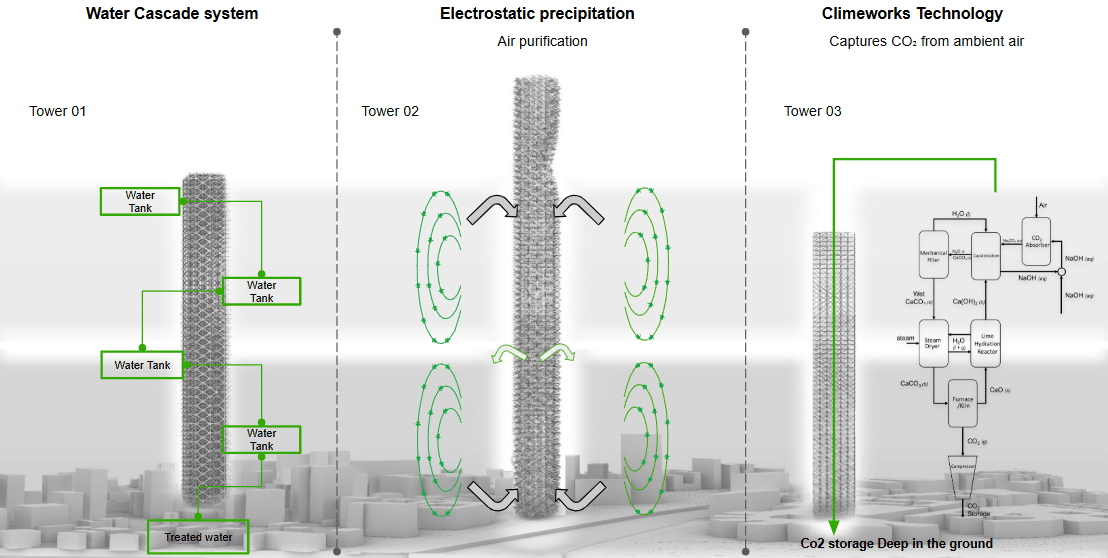
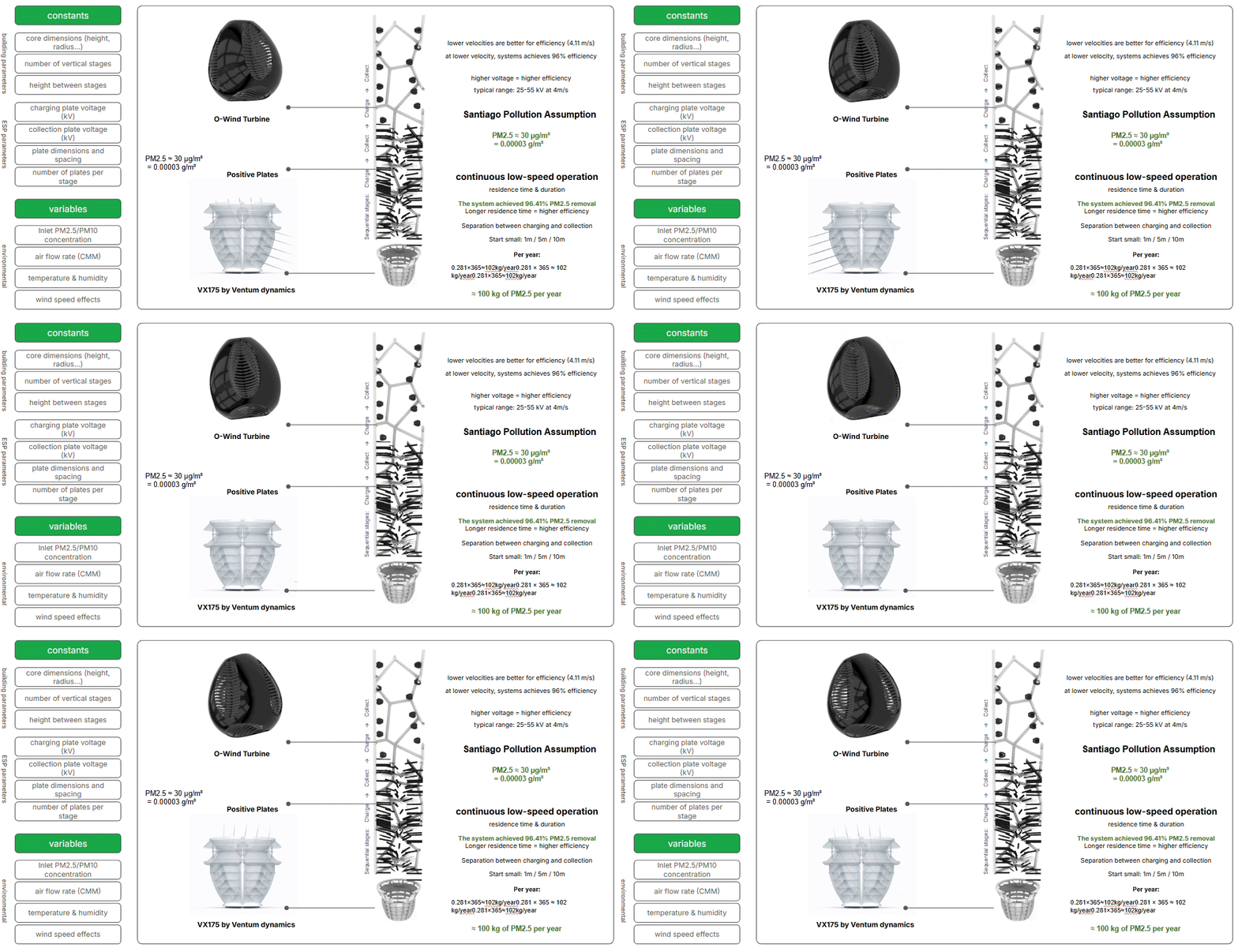
CORE SYSTEM – ENVIRONMENTAL MACHINE
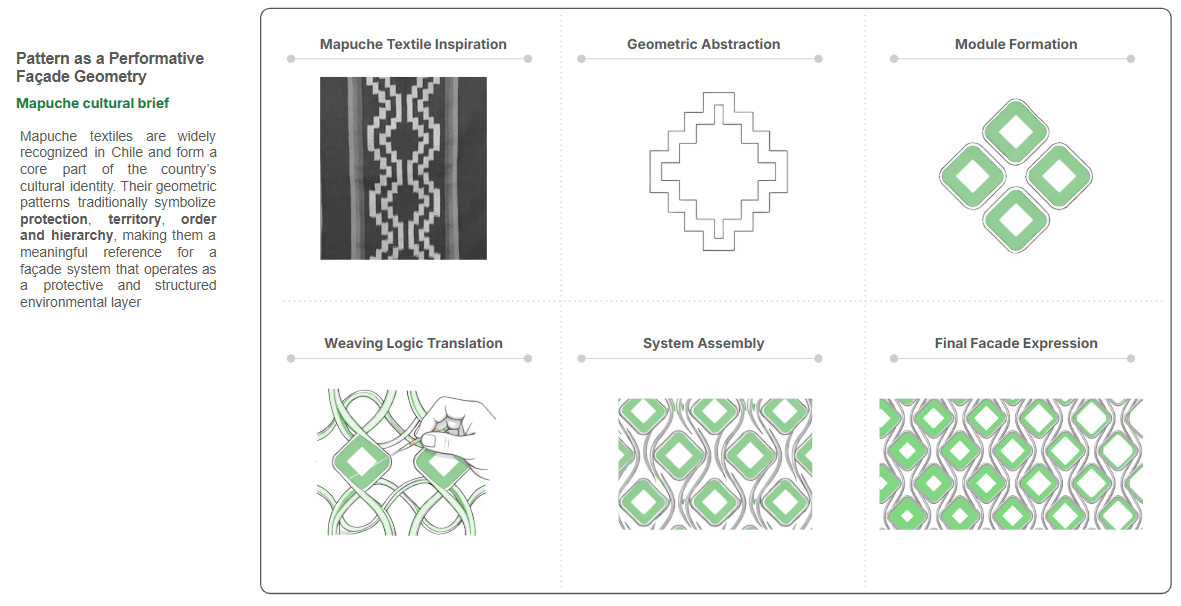
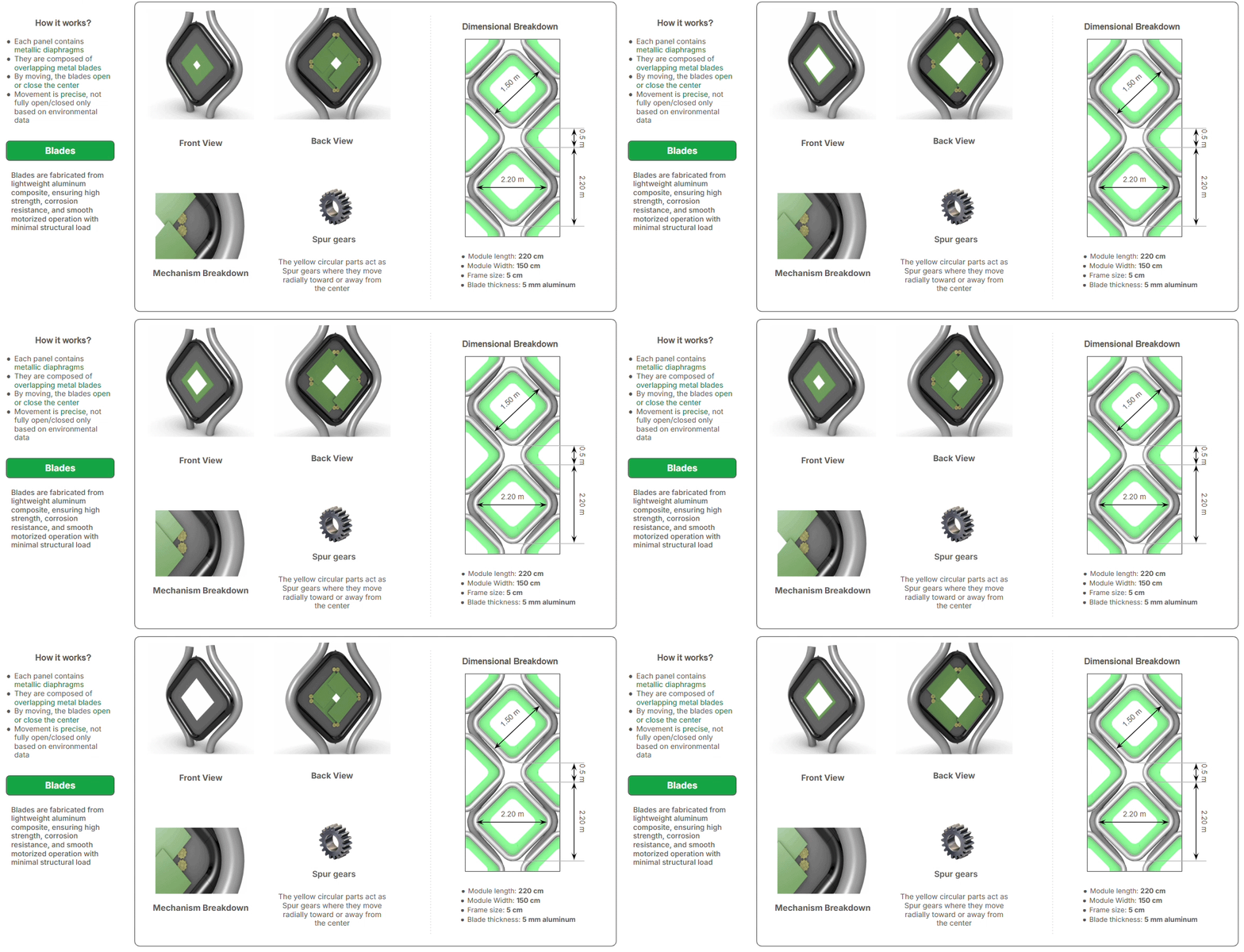
Facade Approach