
Reassembling matter. Rethinking structures.
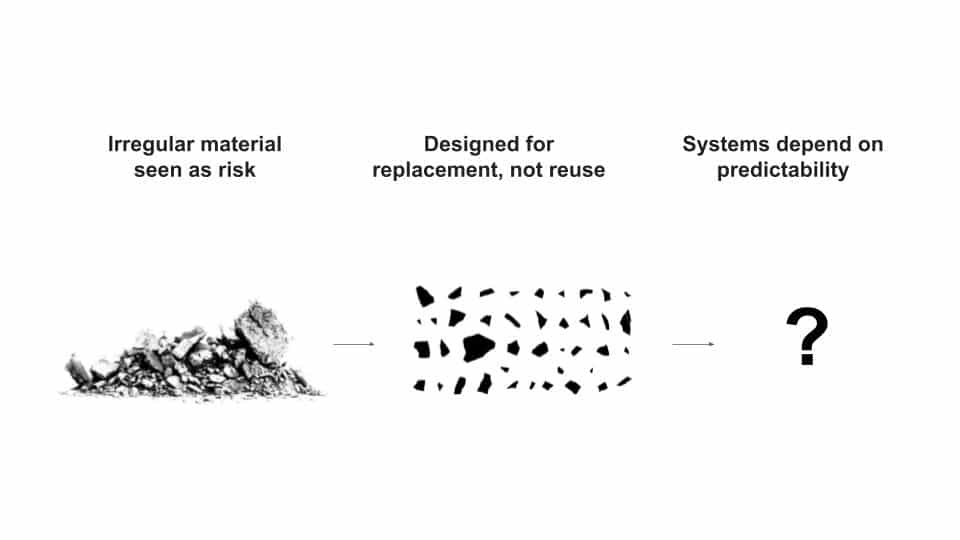
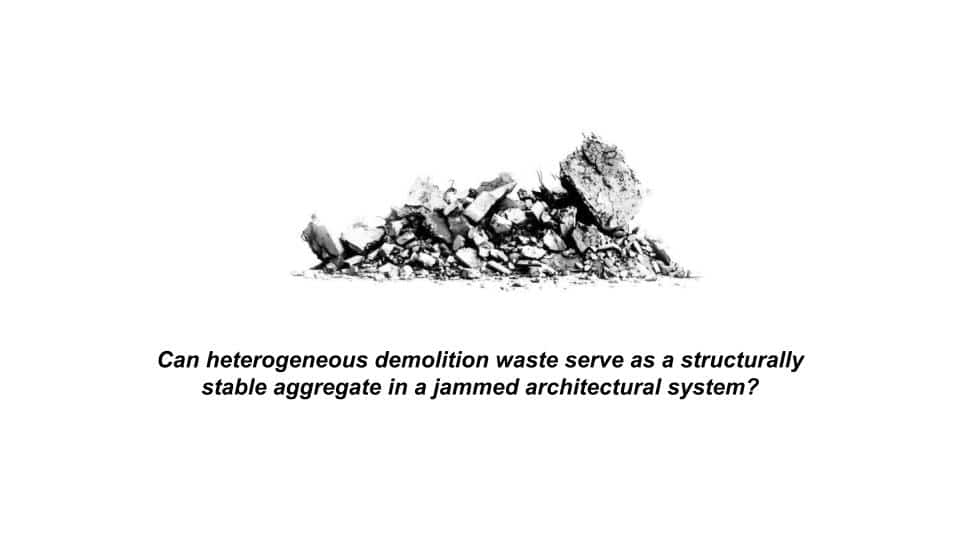
The construction industry generates billions of tones of construction and demolition waste every year, yet most of this material remains excluded from structural applications due to its irregularity, unpredictability, and incompatibility with conventional building systems.
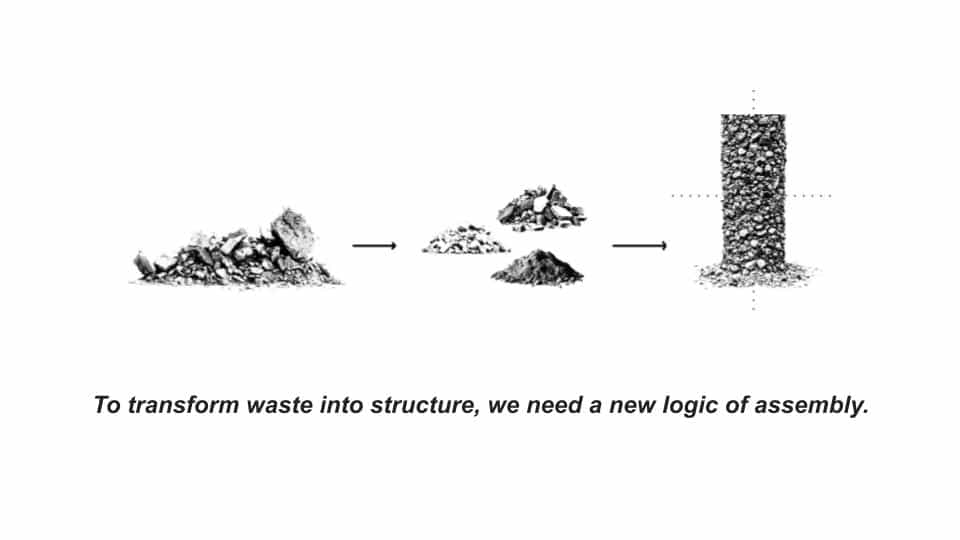
Granulith investigates an alternative approach, asking whether demolition waste can be transformed from a discarded by-product into a structural resource. Drawing from the principles of granular jamming, force-chain behavior, and material intelligence, the research explores how heterogeneous waste aggregates can be stabilized through confinement and selective binding. Rather than imposing order through standardization, the project embraces irregularity as a structural asset, proposing a reversible and low-carbon construction system where stability emerges from the interaction between matter, force, and fabrication.
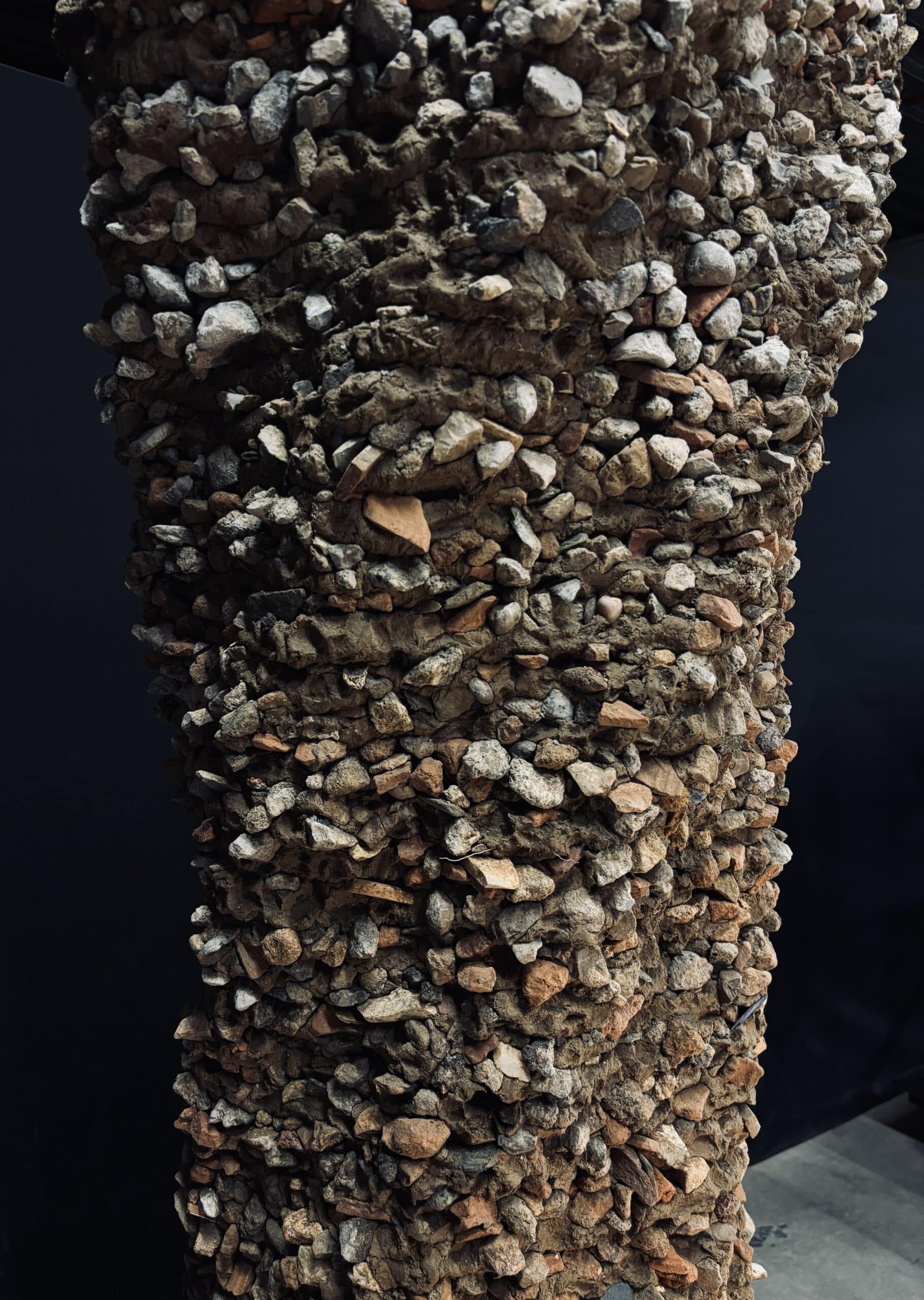
Rethinking Demolition Waste
Every year, millions of tons of construction and demolition waste are generated, while most materials lose their original structural purpose after demolition. Concrete fragments, stones, bricks, and rubble are commonly treated as unusable due to their irregular geometry and unpredictable behavior.
Instead of reducing waste into processed aggregates, the project investigates the inherent qualities of fragmented matter friction, interlocking, compression, and packing behavior.

Part 2
Literature Studies
Granular Jamming
The transformation between a liquid-like state to a solid-like state is called a jamming transition. The change takes place when the particles are put under certain external force conditions.
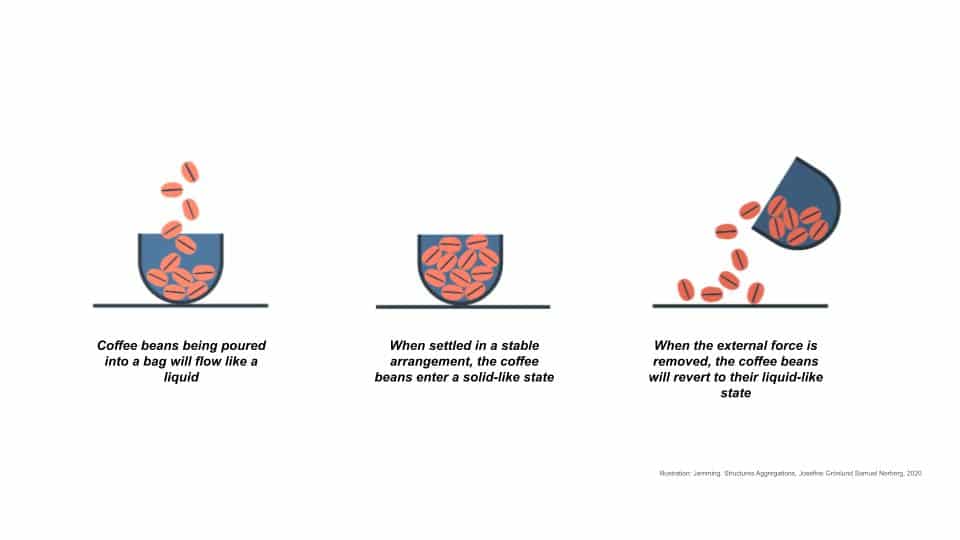
Granular materials are not defined by shape or composition, but by the collective behavior that emerges from interactions between particles.
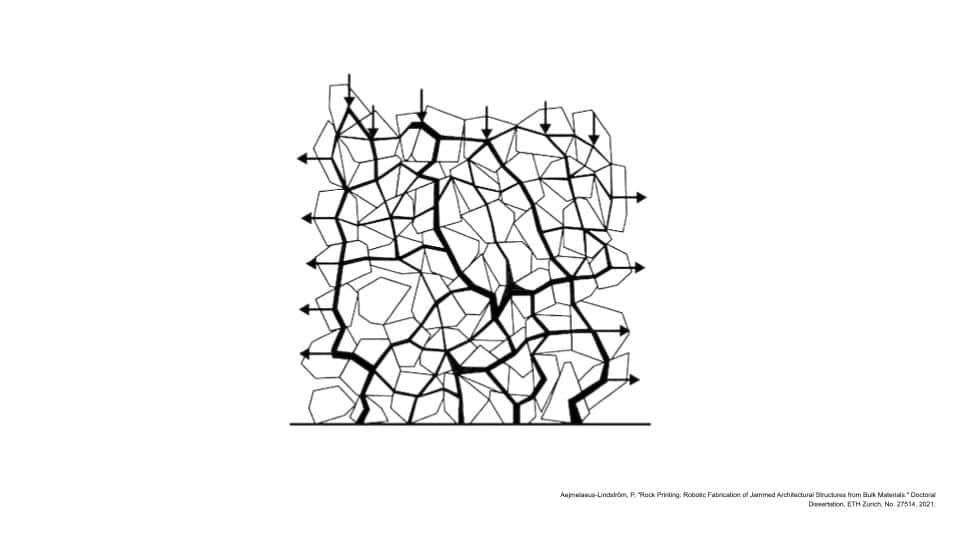
How Loads Travel Through Granular Systems?
Loads are not distributed evenly instead stress travels through localized networks known as force chains. The stability and performance of granular matter depends on their ability to generate stable force-chain networks.
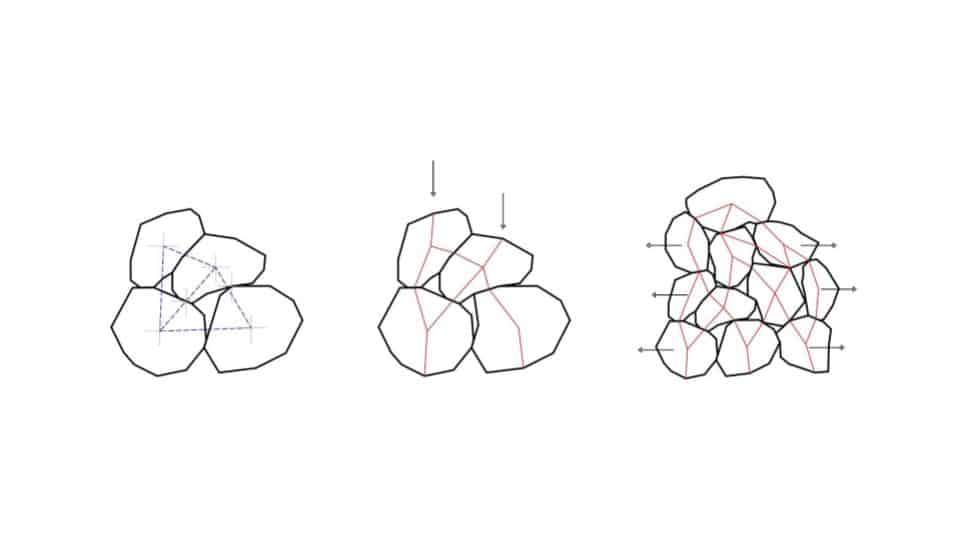
The diagrams show how individual blocks, each stabilized by their center of gravity, come together under increasing load to form a jammed structure, where stability is achieved through interconnected force chains across the entire assembly.
State of the Art
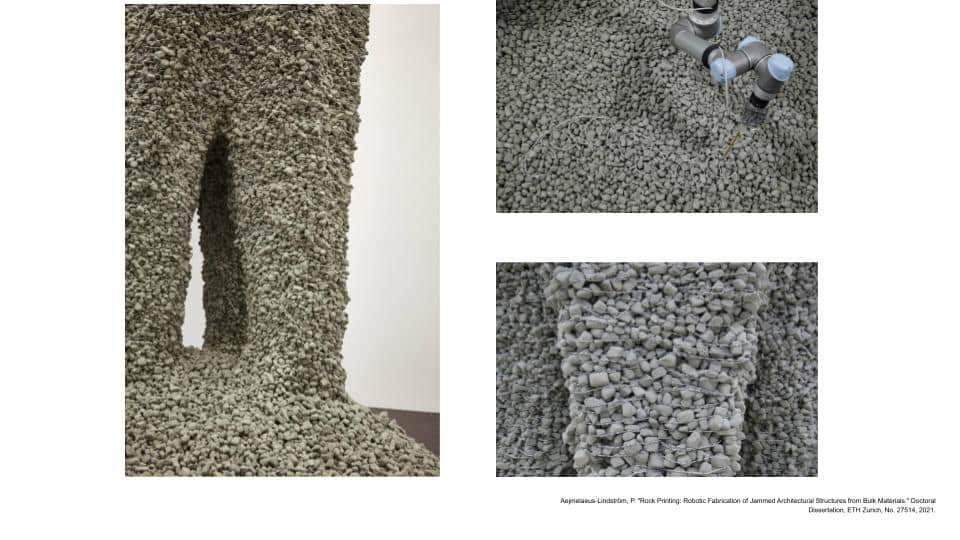
Rock Print, ETH Zurich
Architectural installation at the inaugural Chicago Architecture Biennial
Jamming describes how loose, irregular particles can become stable and load-bearing when confined and tensioned.This enables reversible, reusable structures that hold themselves together purely through matter and force.
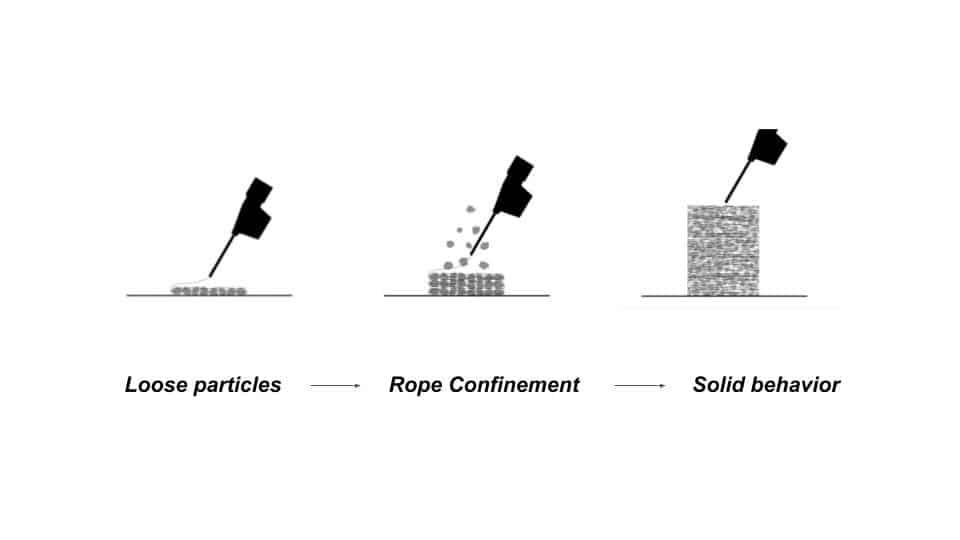
Inspired by Rock Print, this research explores how granular materials can achieve structural stability through friction, compression, and confinement rather than permanent bonding. The project demonstrated that loose particles can transform into load-bearing systems through collective behaviour, providing a foundation for investigating demolition waste as a reversible structural material.
Part 3
Research Gap
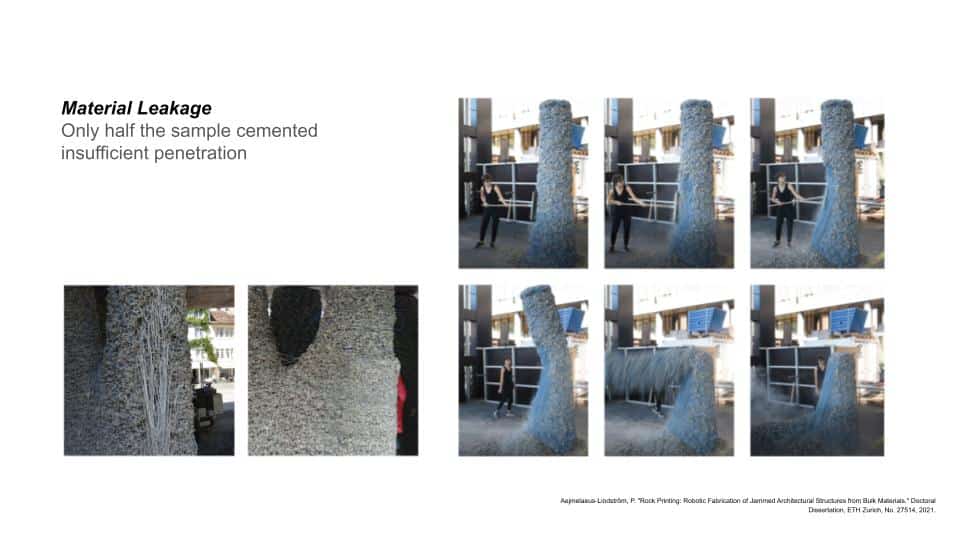
The Post-cementing Jammed Architectural Structures experiments documented in Appendix C of the Rock Print dissertation explicitly demonstrate the failure of a vacuum-membrane cement infusion approach, insufficient penetration due to high matrix viscosity, and complete loss of reversibility.
Part 4
Research Question
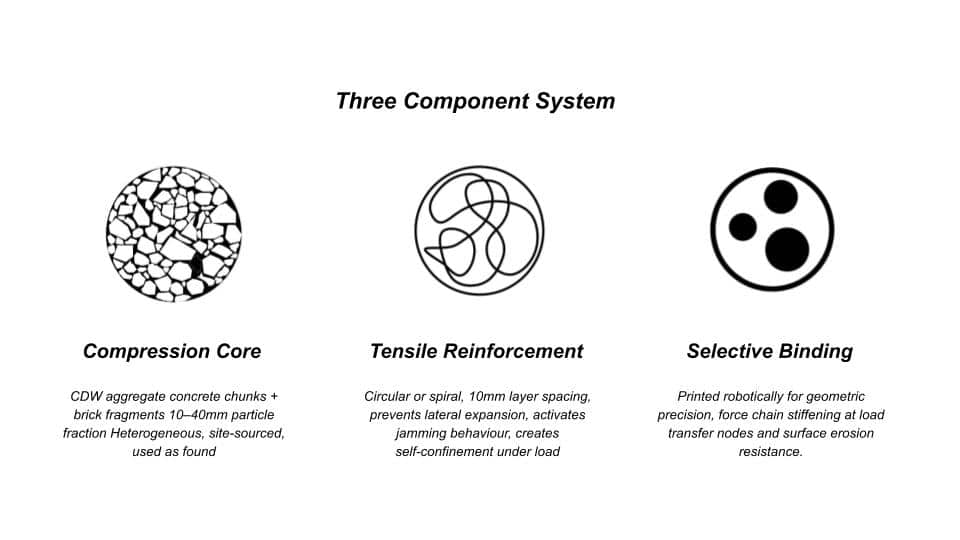
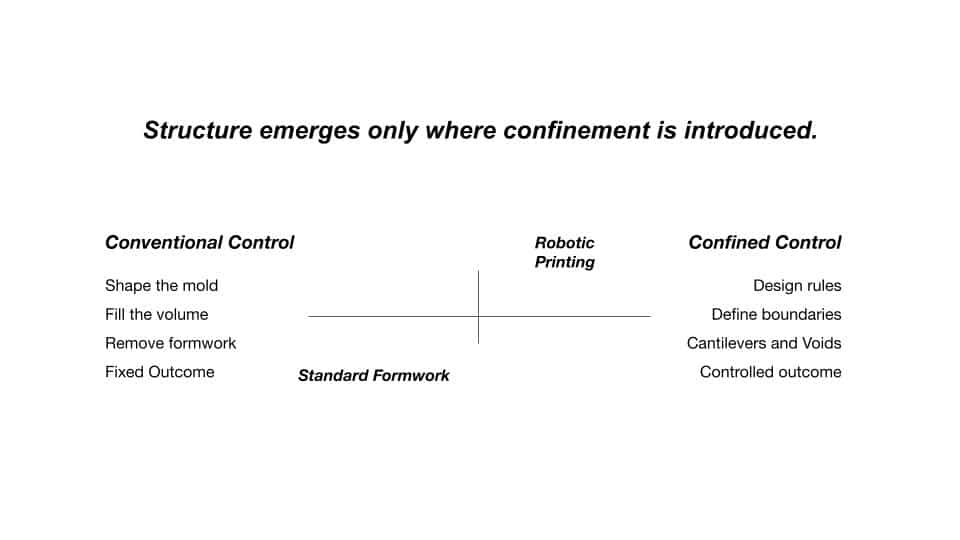
How can tension confinement and selective binding be used as design strategies to control force distribution and stabilize jammed construction and demolition waste assemblies for architectural applications?
Part 5
Evaluation Experiments.
The experiments progress from understanding material behavior to understanding structural performance.
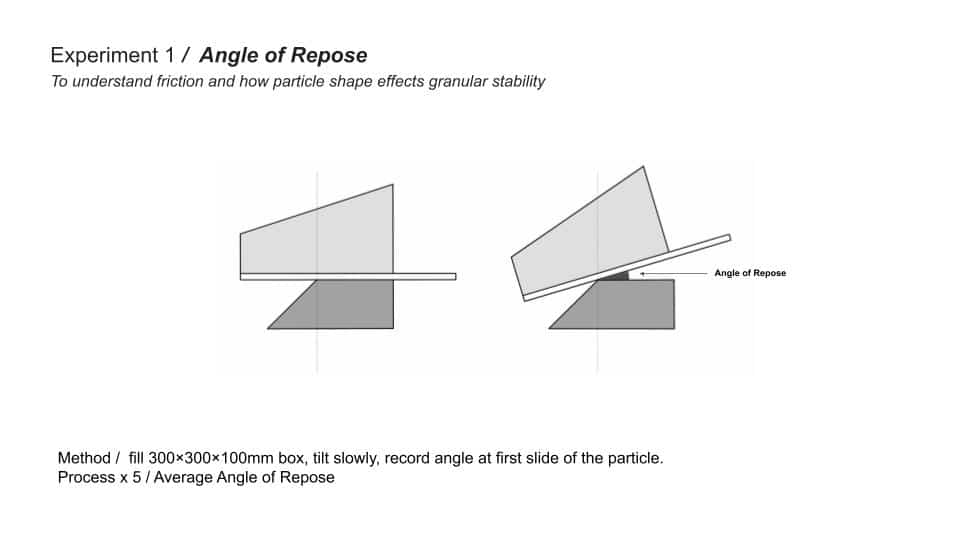
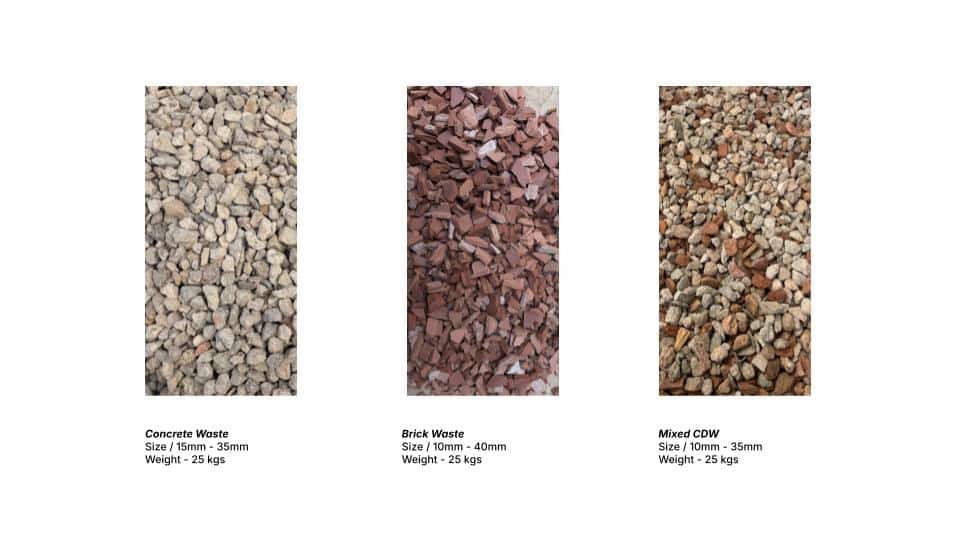
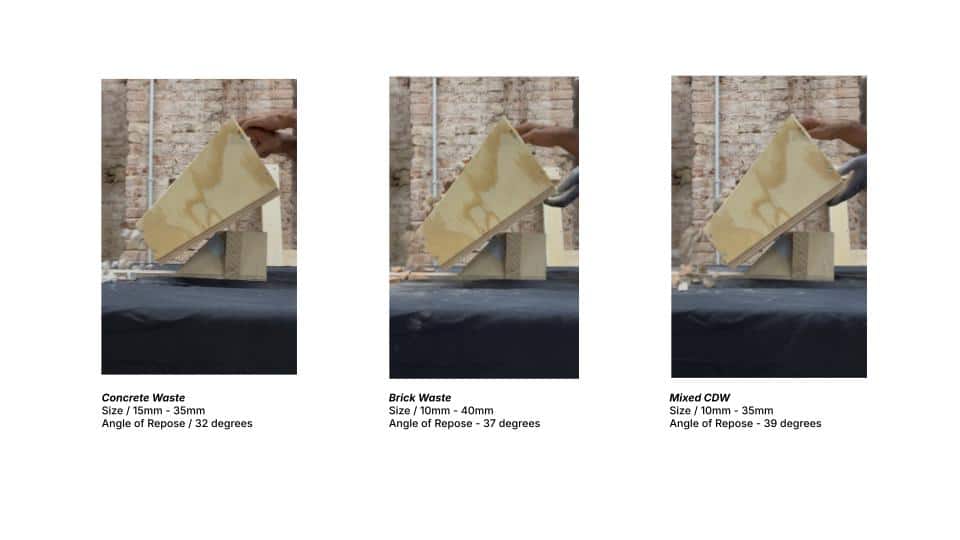
CDW have a higher angle of repose than porphyry due to surface roughness and angularity.
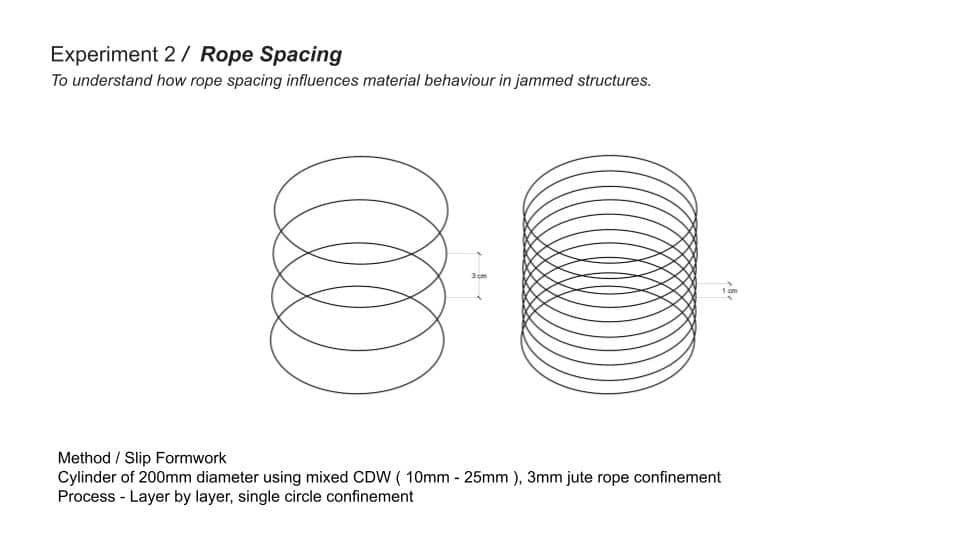
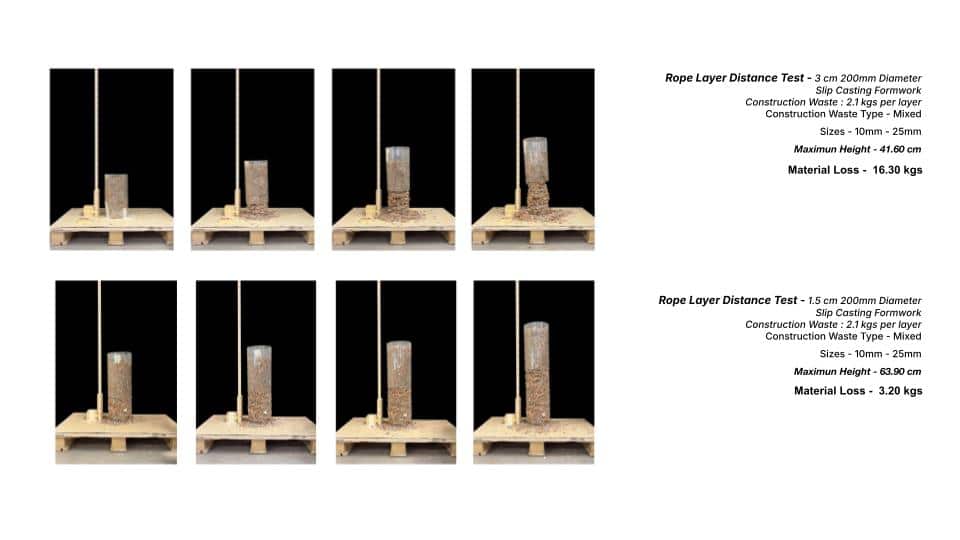
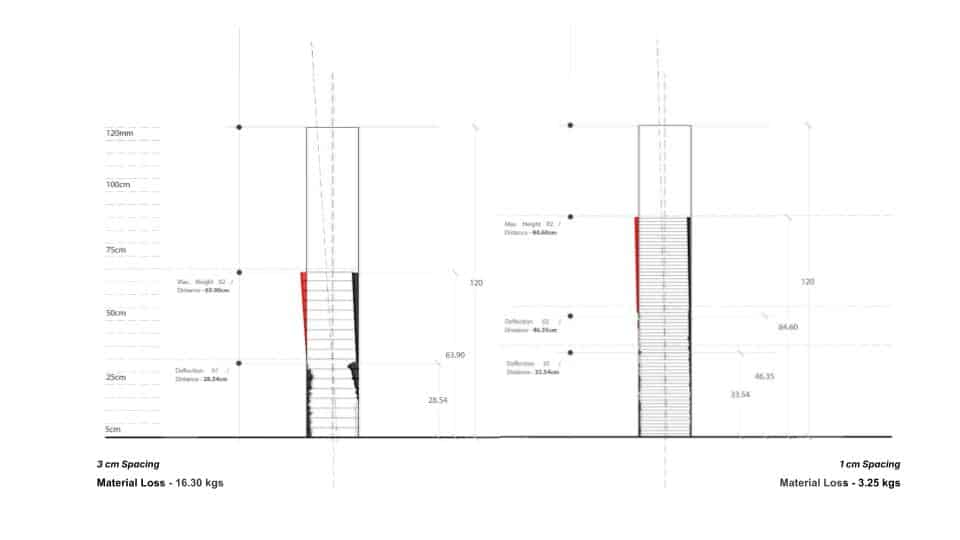
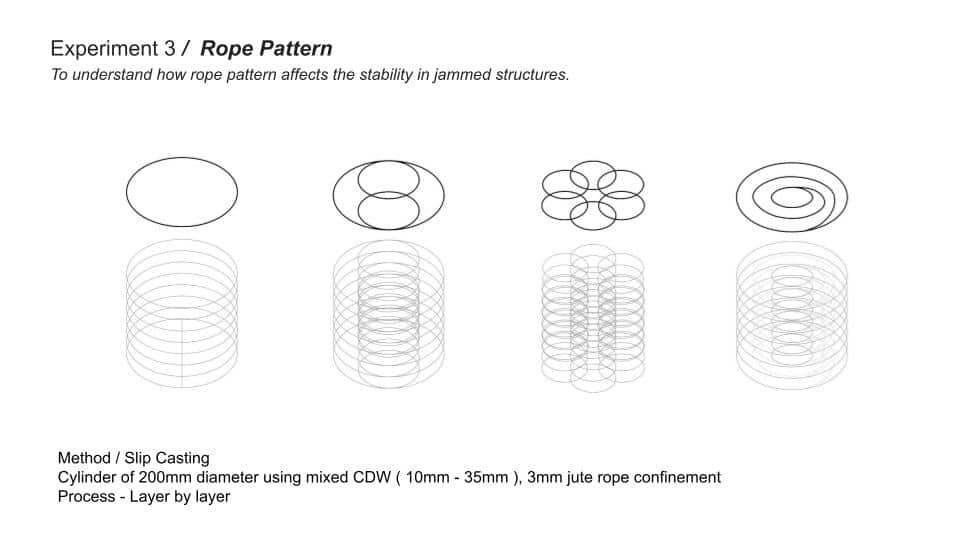
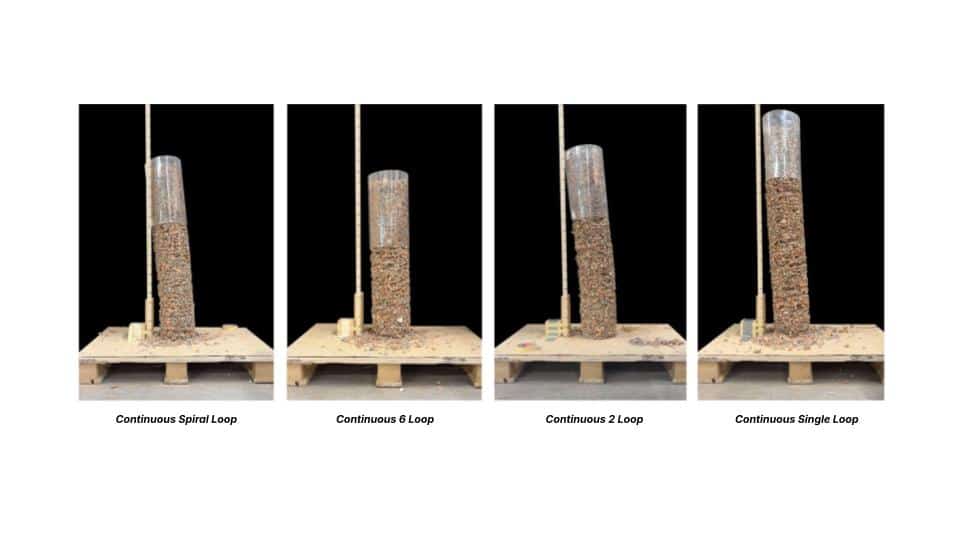
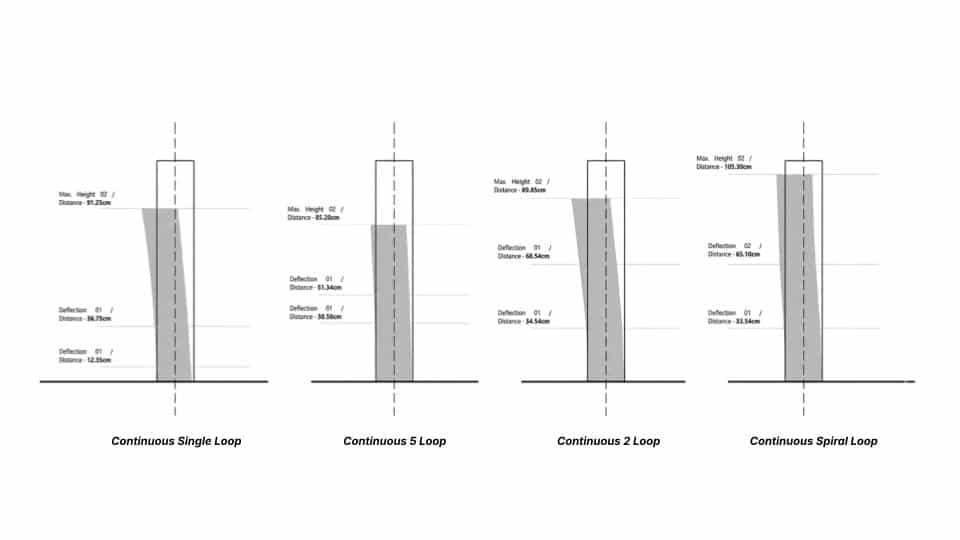
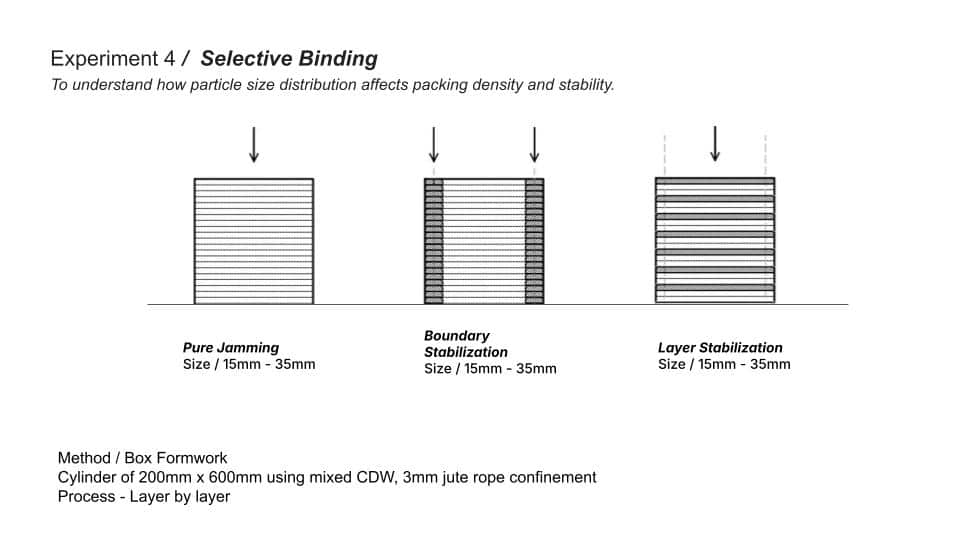
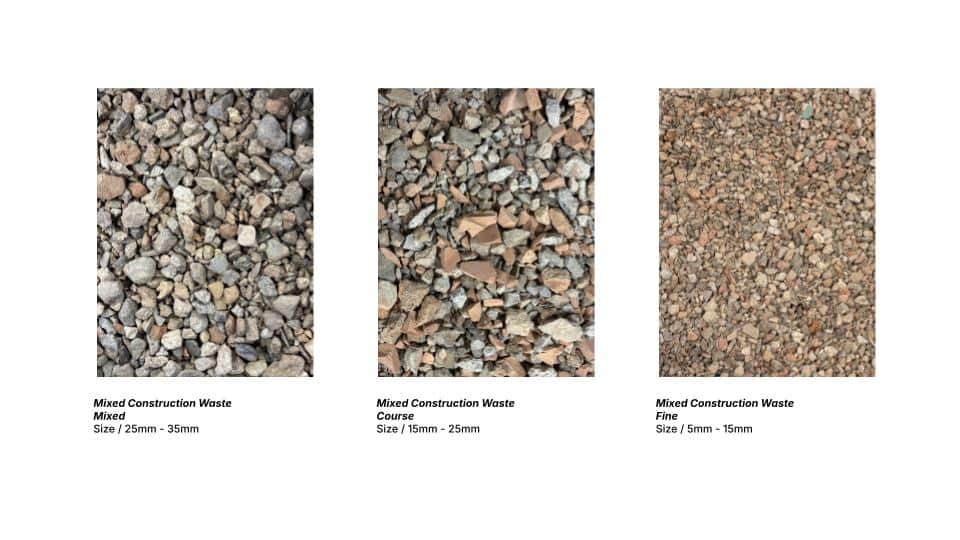
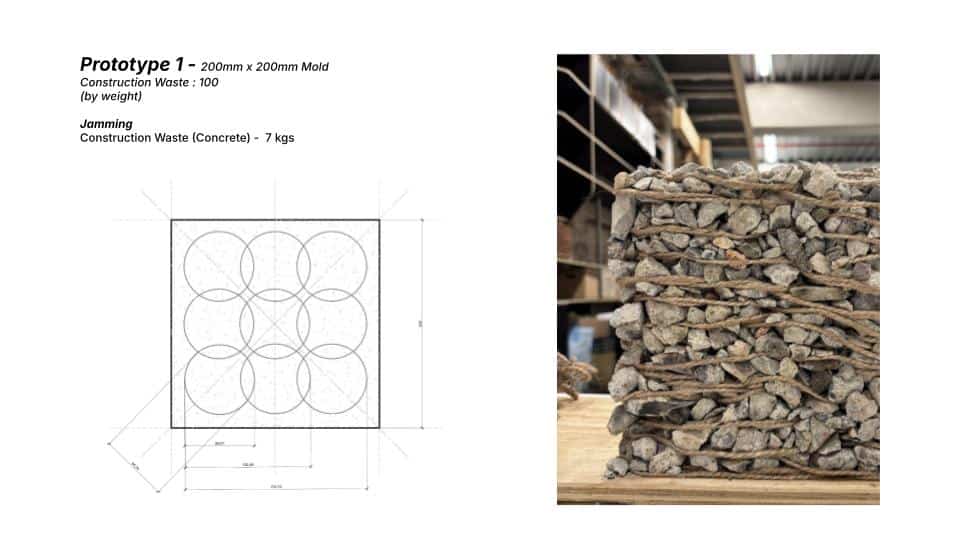
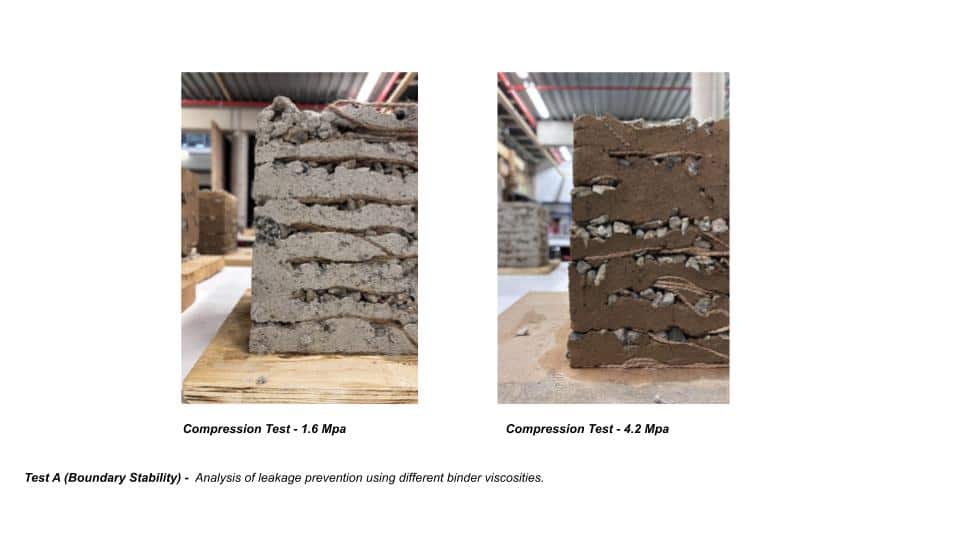
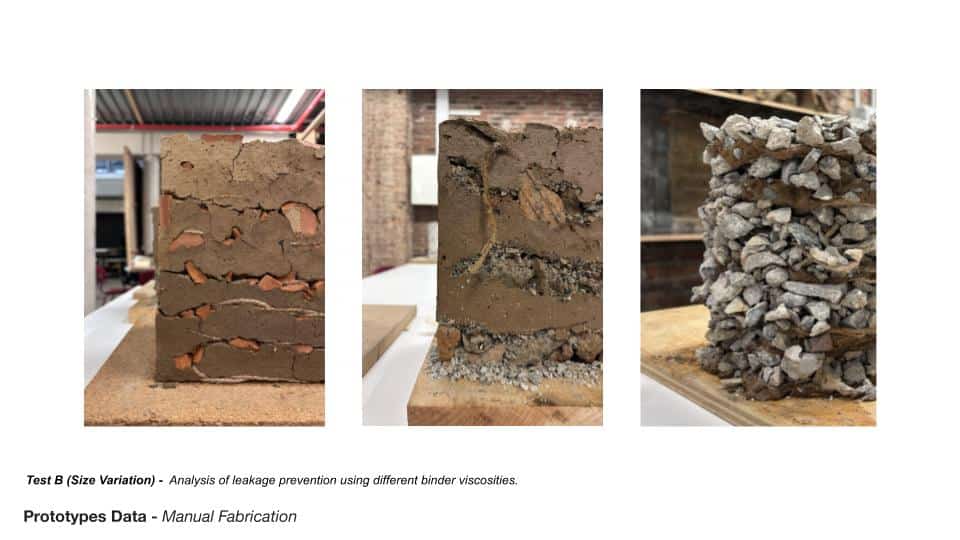
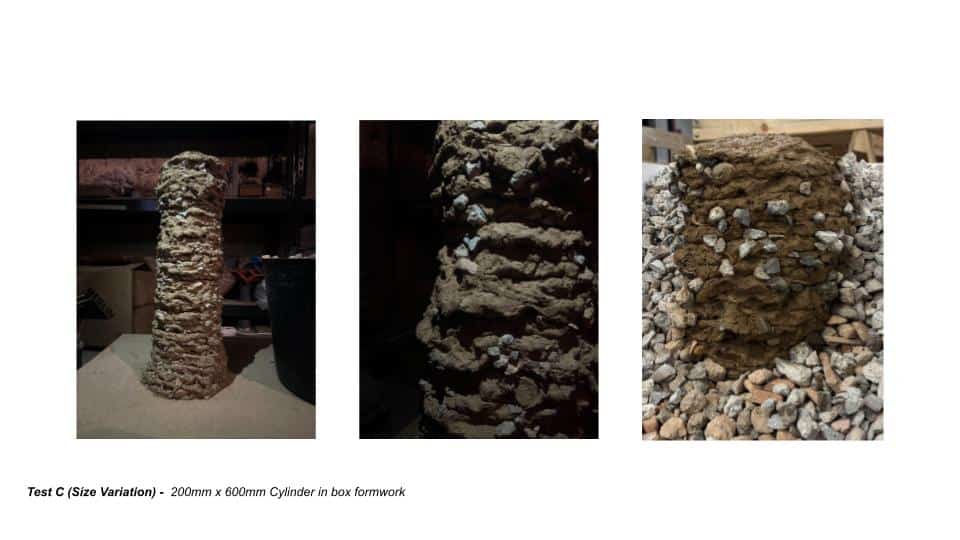
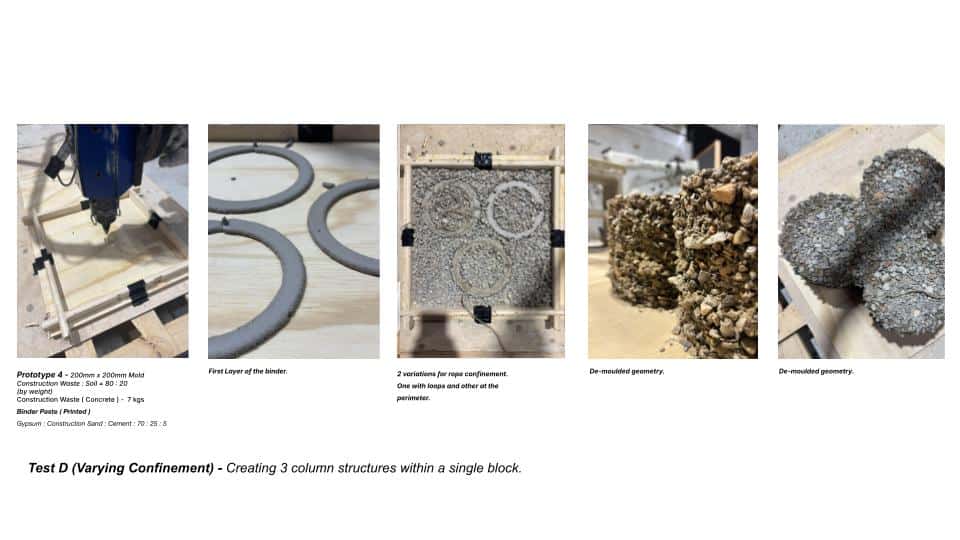
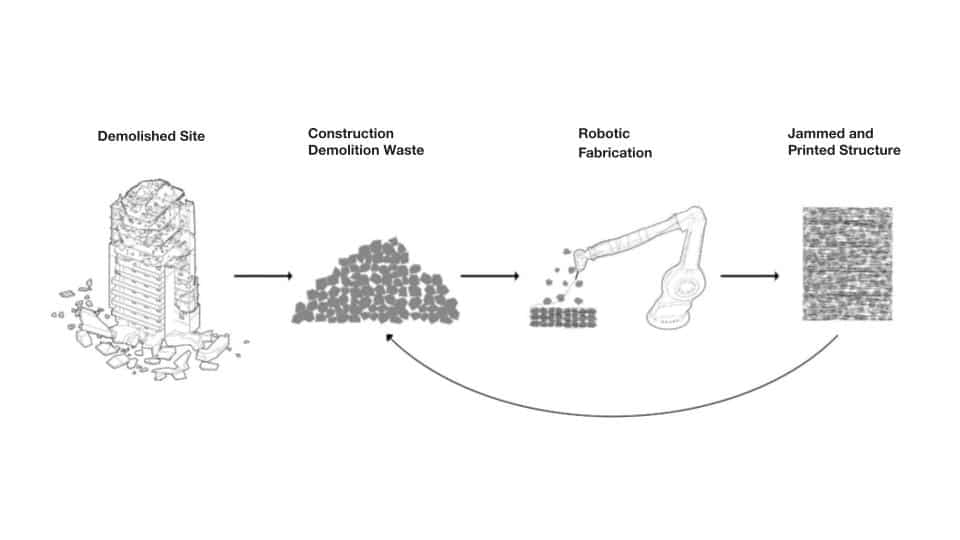
A closed-loop system where waste becomes structure and structure becomes raw material again.
Part 5
Final Fabrication.
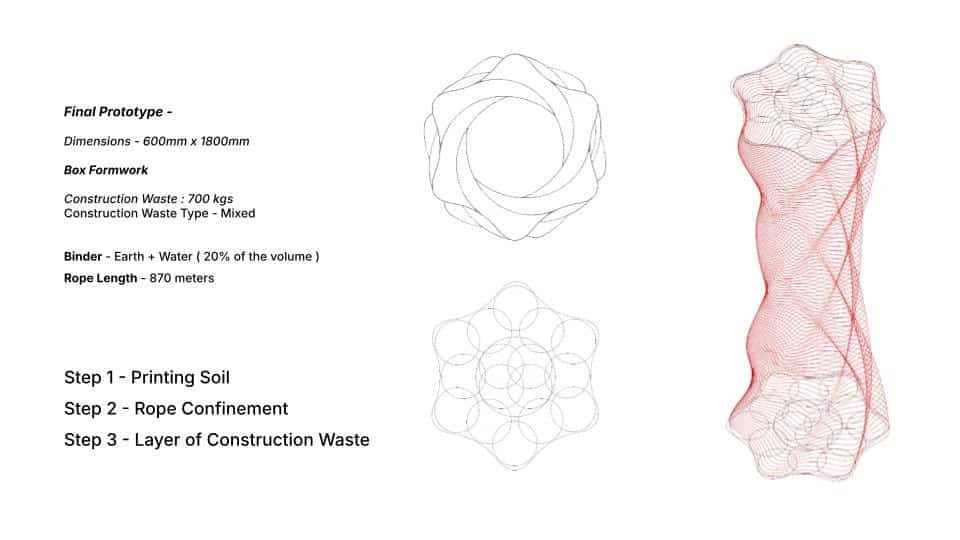
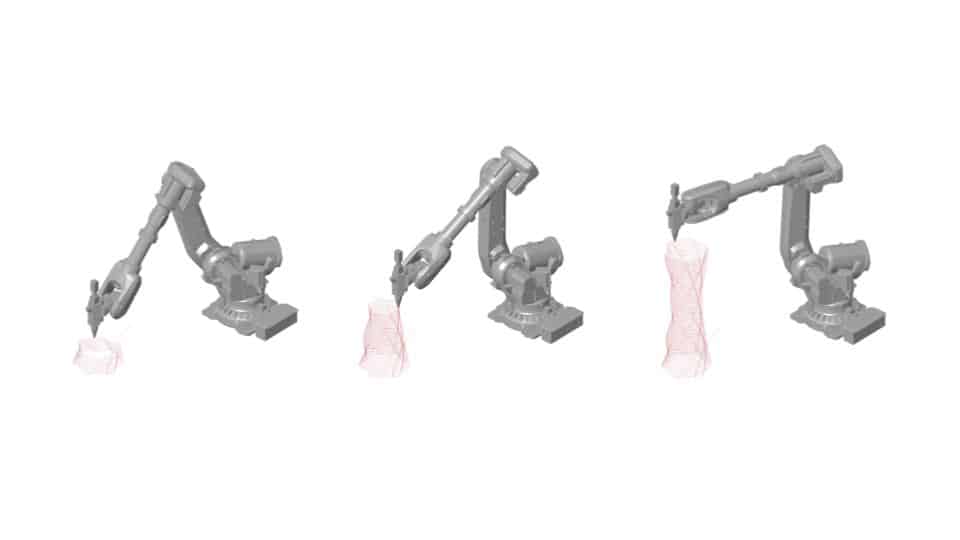
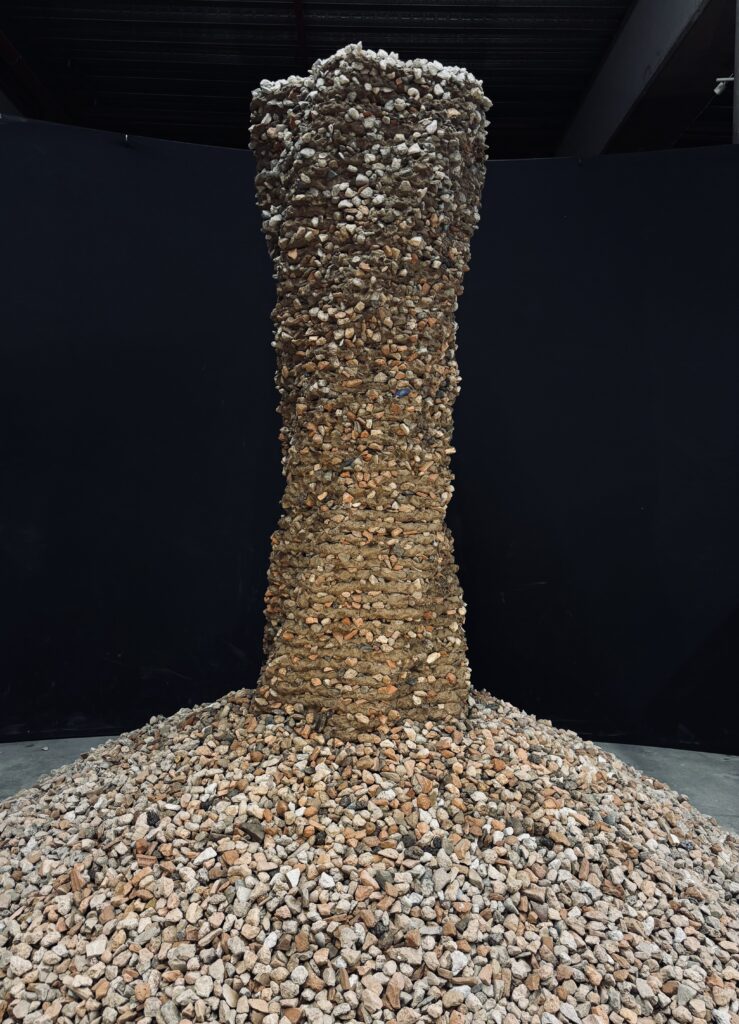
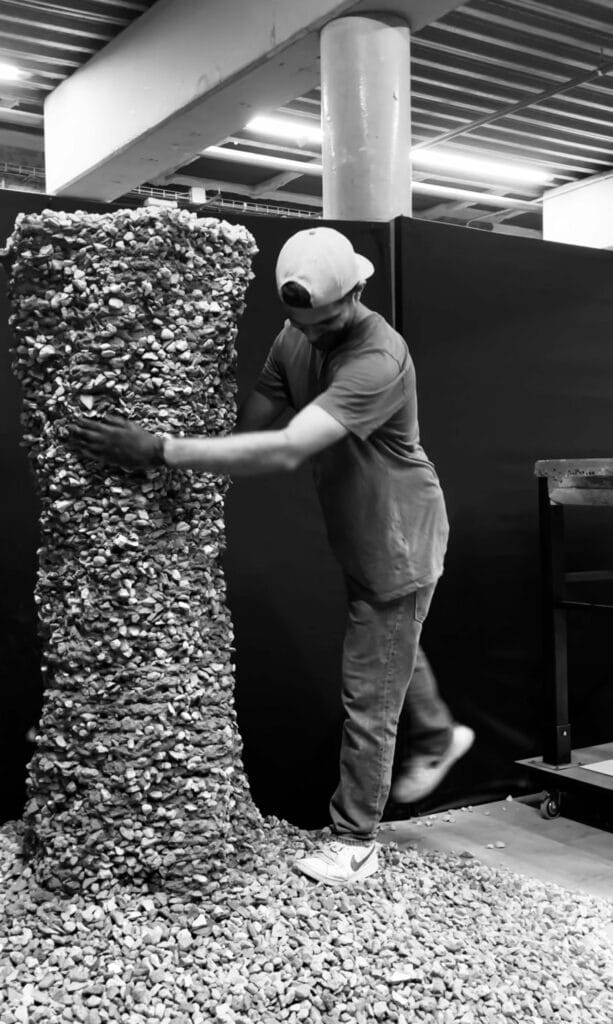
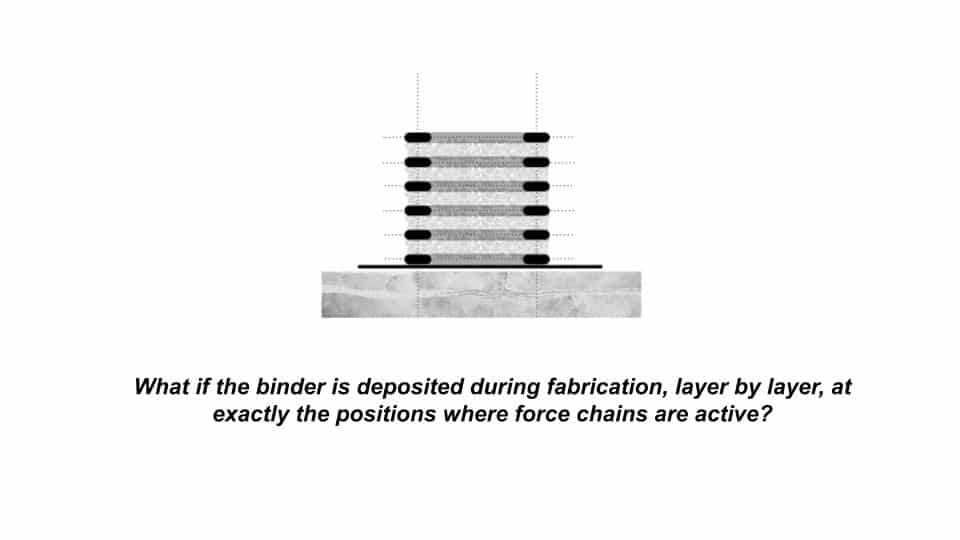
This research extends the Jammed Architectural Structures research paradigm from controlled aggregates to heterogeneous urban waste, and from uniform reinforcement to differentiated hierarchical binding. The research does not propose a finished framework, it proposes a direction of inquiry grounded in the specific failures of prior work.
The post-cementing failure in Rock Print is not an end, it is the precise opening through which this research enters. By abandoning the post-infusion logic and adopting the layer-by-layer integrated binding approach, this thesis remains within the Jammed Architectural Structures concept while opening a new experimental territory.
