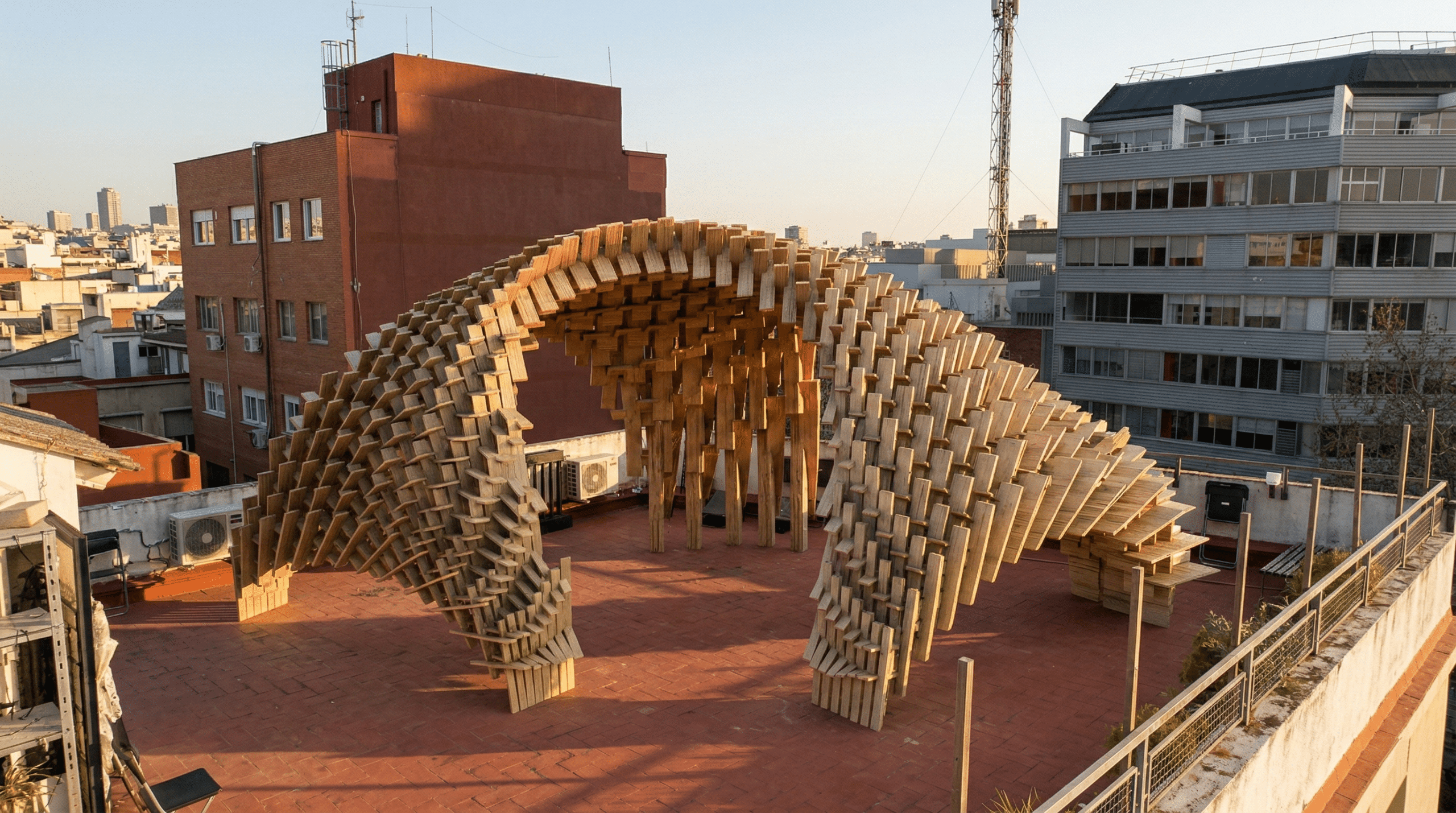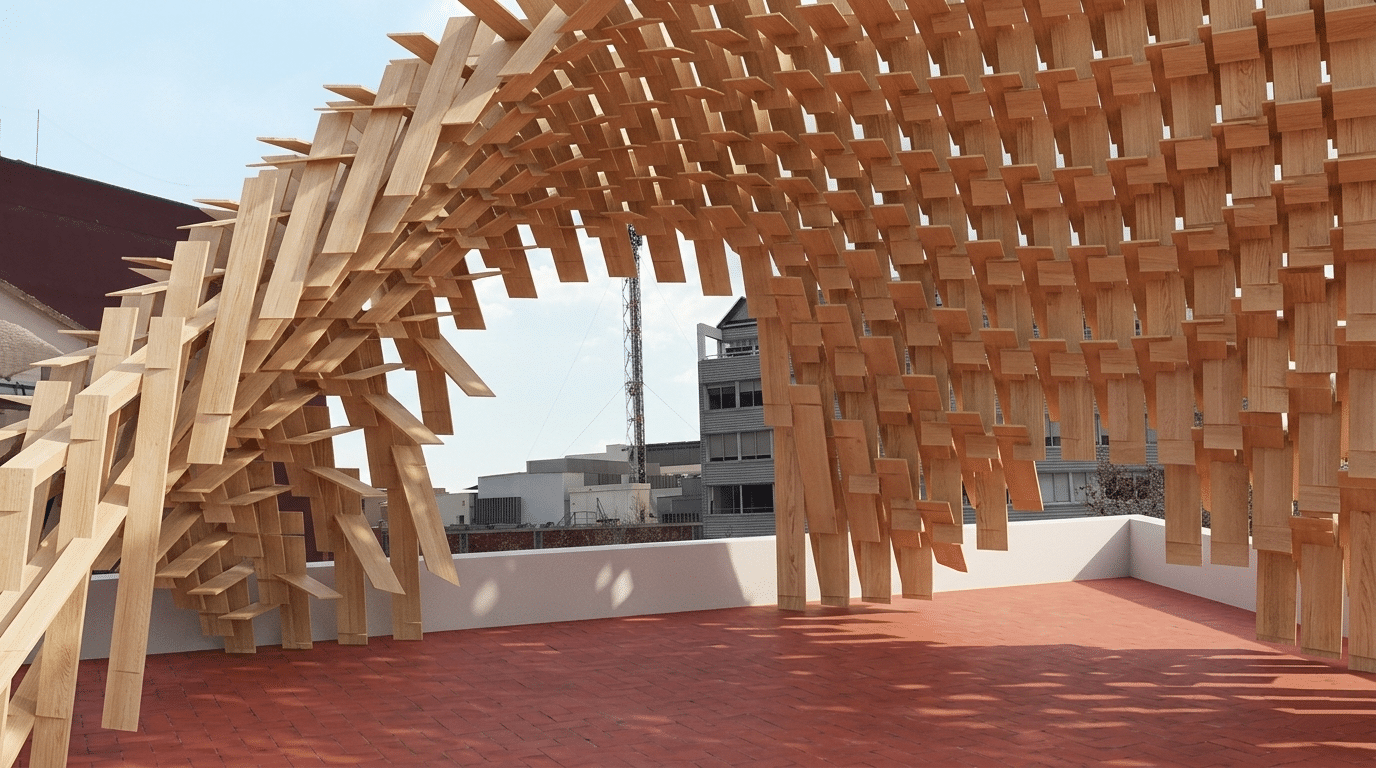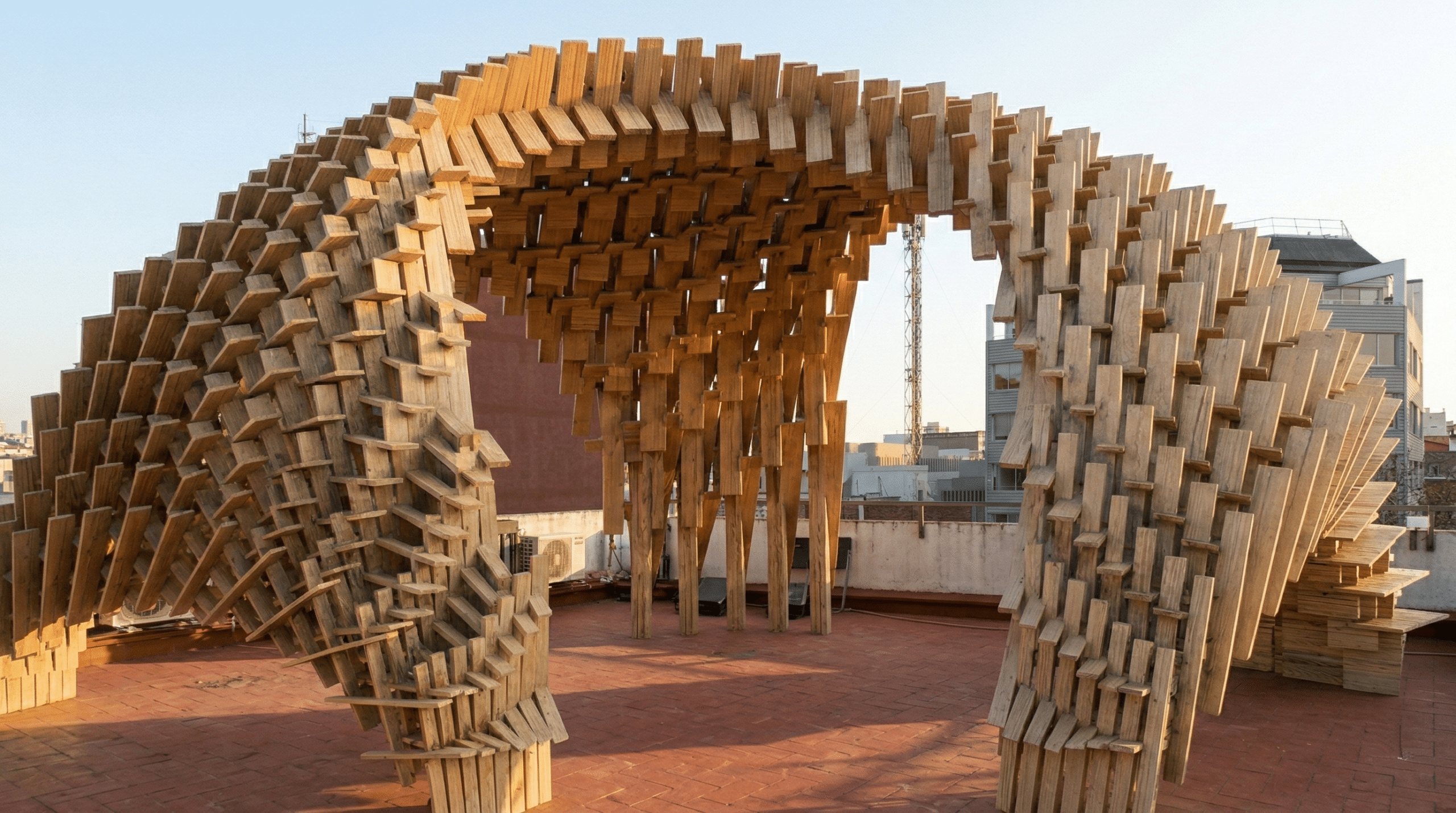
This project introduces a high-performance terrace pavilion that merges environmental data with advanced robotic fabrication. The design process began with a comprehensive solar and circulation analysis, identifying thermal hotspots and vantage points to determine the optimal balance between shaded gathering areas and open viewing corners. The resulting structure features a complex, interlocking timber geometry that transitions from a protective canopy into a spiky, cross-hatched lattice. The intricate joinery and non-standard curvatures inherent in this form make its realization only possible through advanced robot milling, achieving a level of precision and material efficiency unattainable by traditional means.
Site Analysis
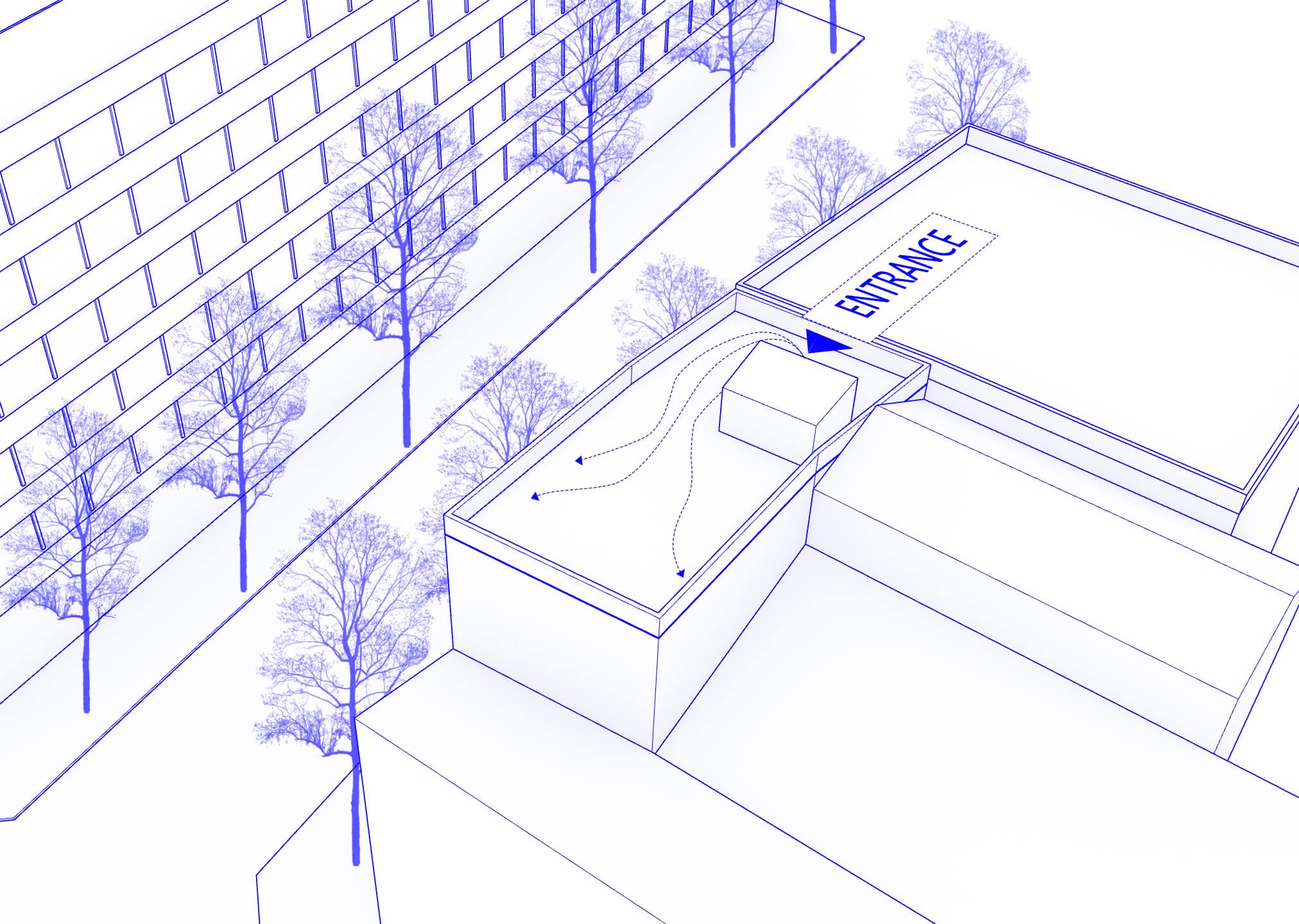
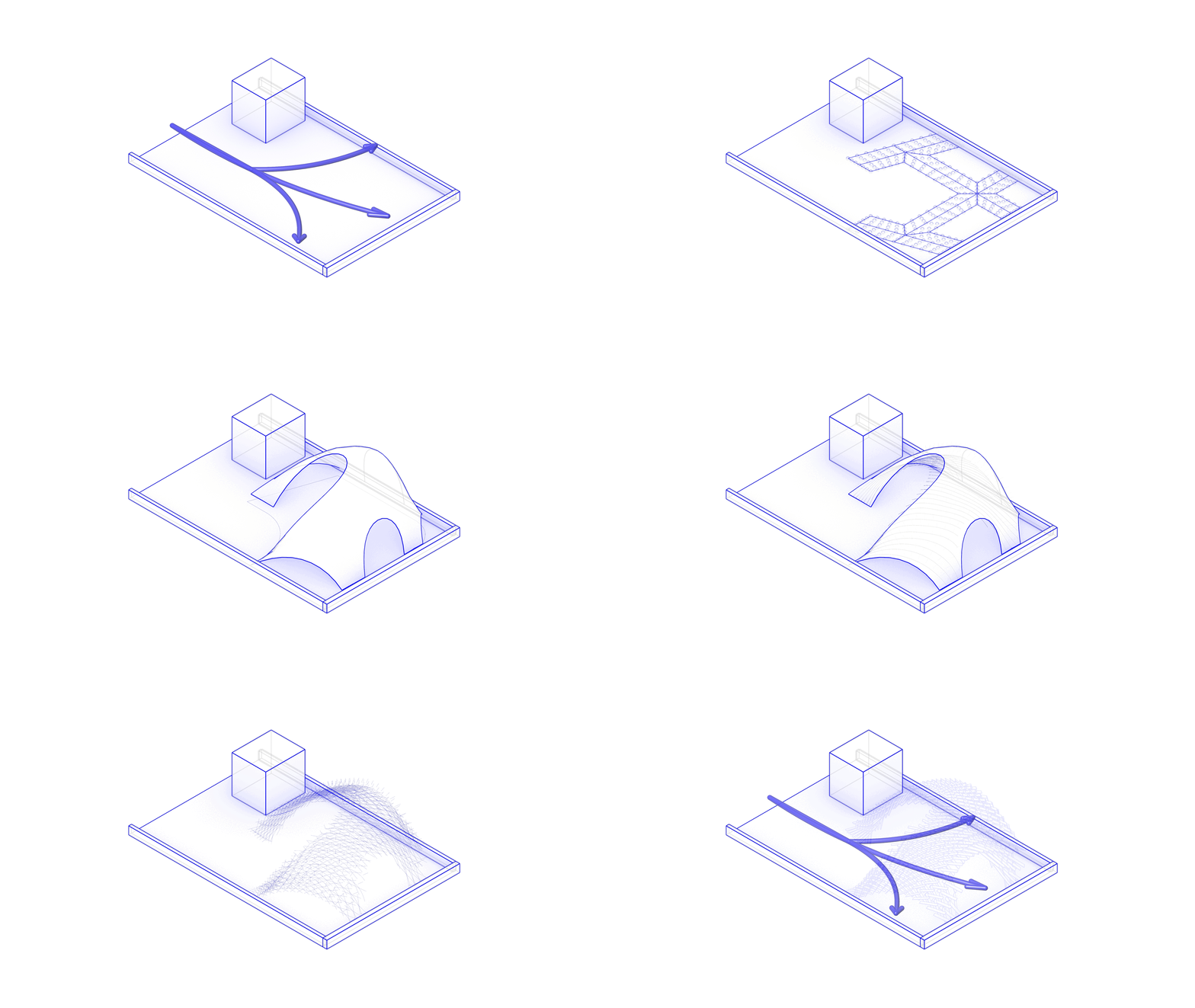
Human Flow
The door leading to the building’s terrace is positioned at the rear of the design area. From this point, human circulation is directed towards the southwest, culminating in the terrace’s expansive open space.
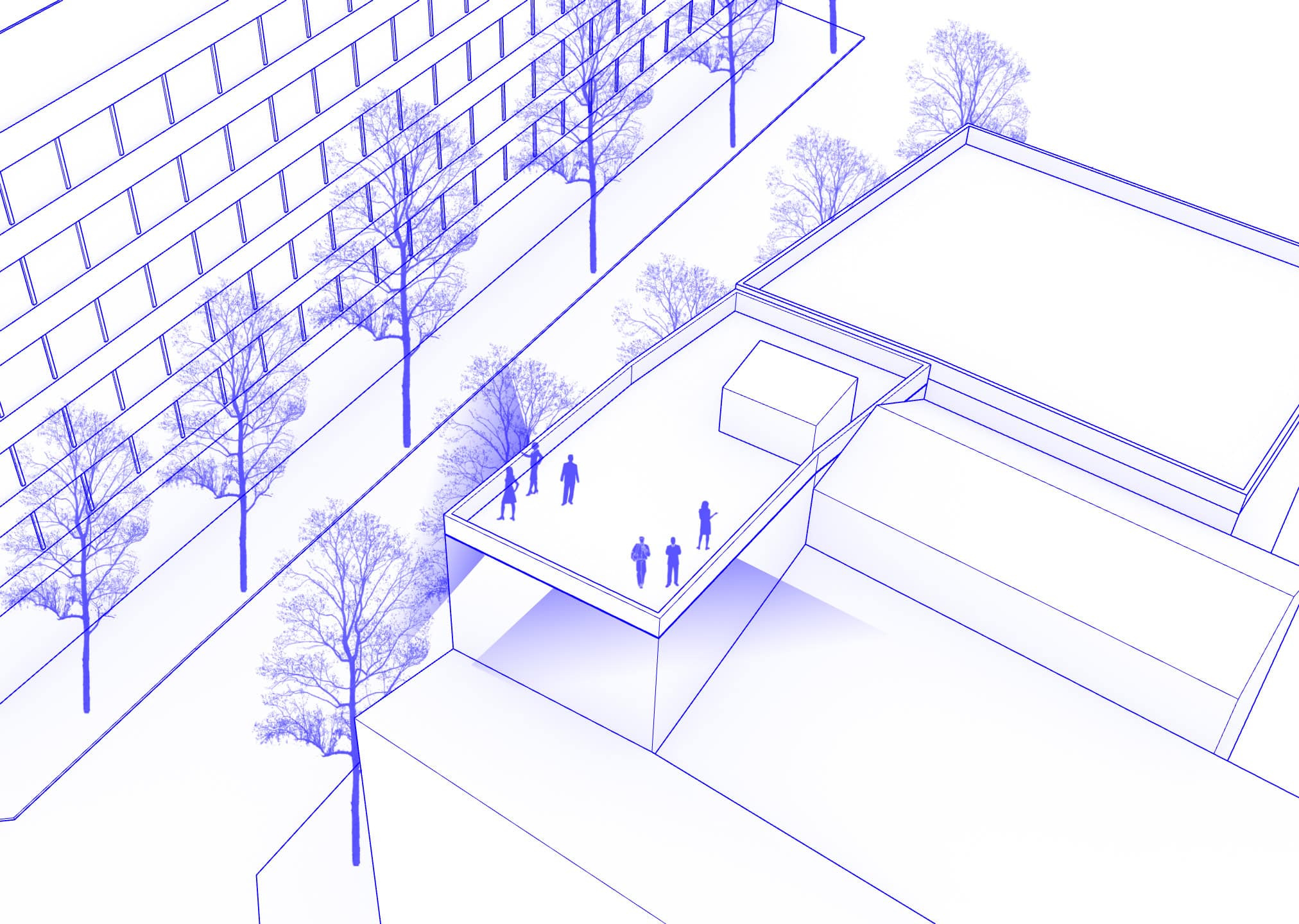
View Points
Within this expansive area, there are two prominent corners that offer unobstructed views.
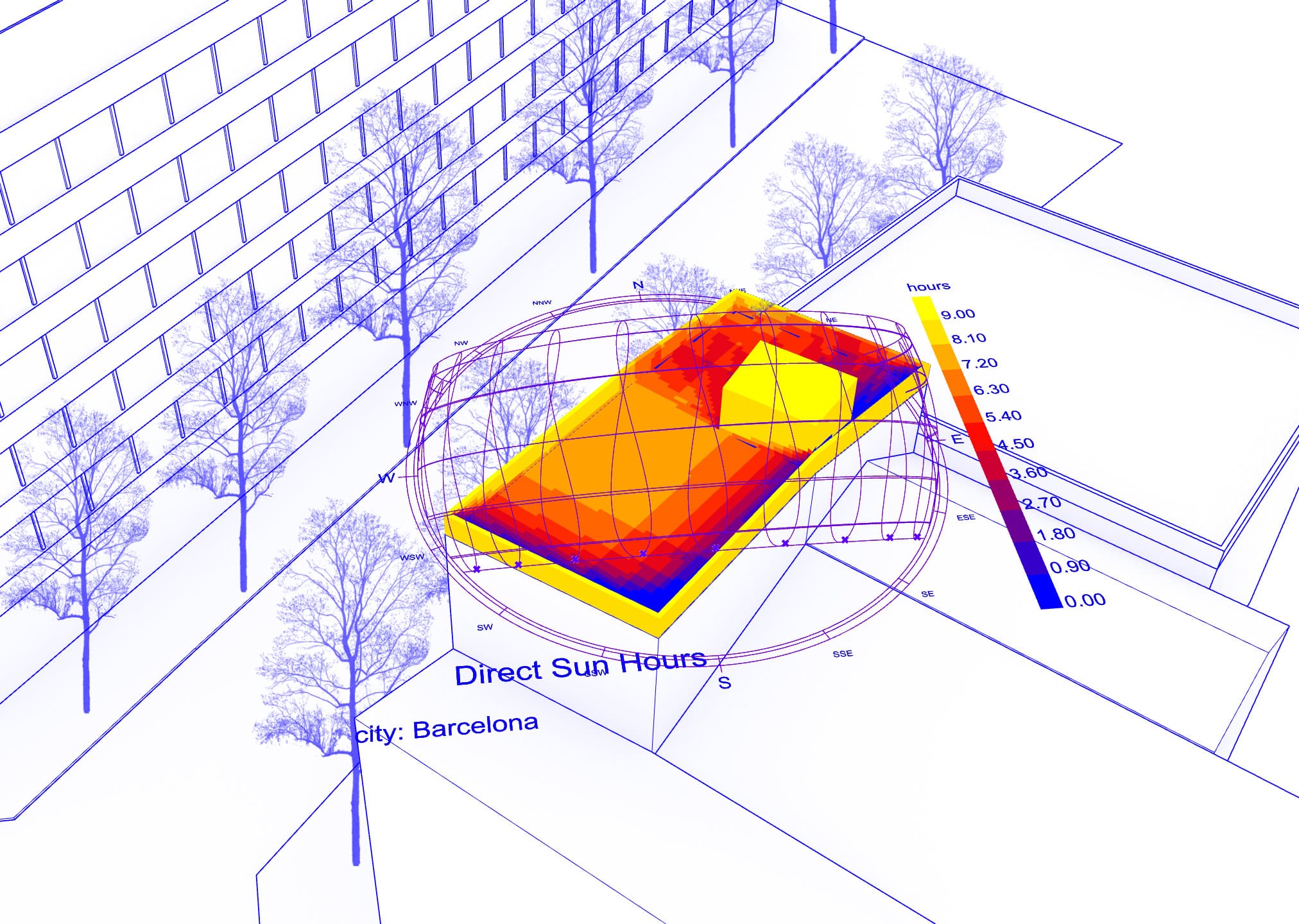
Solar Analysis
Based on the solar analysis, solar orientation and the hottest zones are identified.
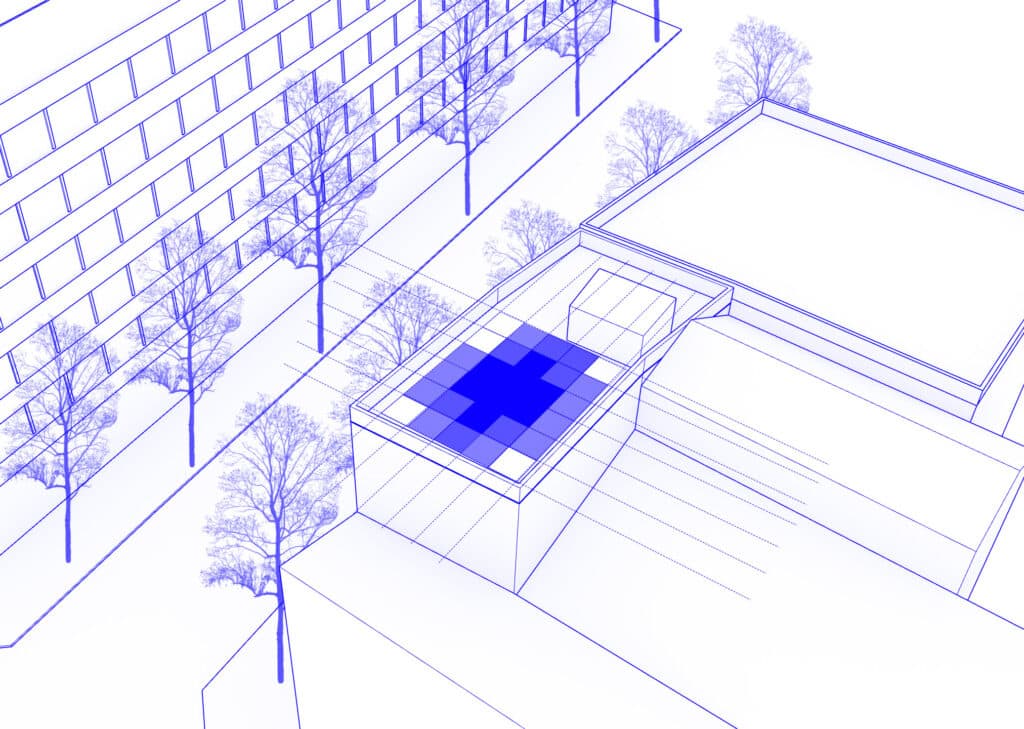
Zoning
The combination of circulation flow, view points, and solar heat analysis determines which areas need to be shaded and which should be kept clear.
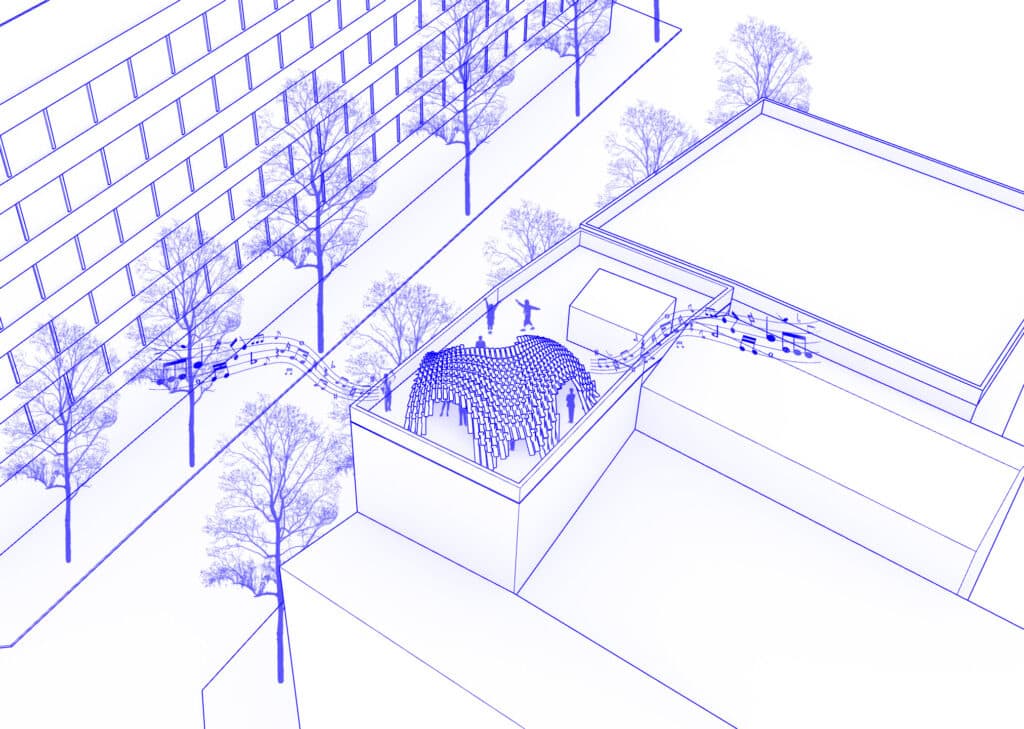
Design
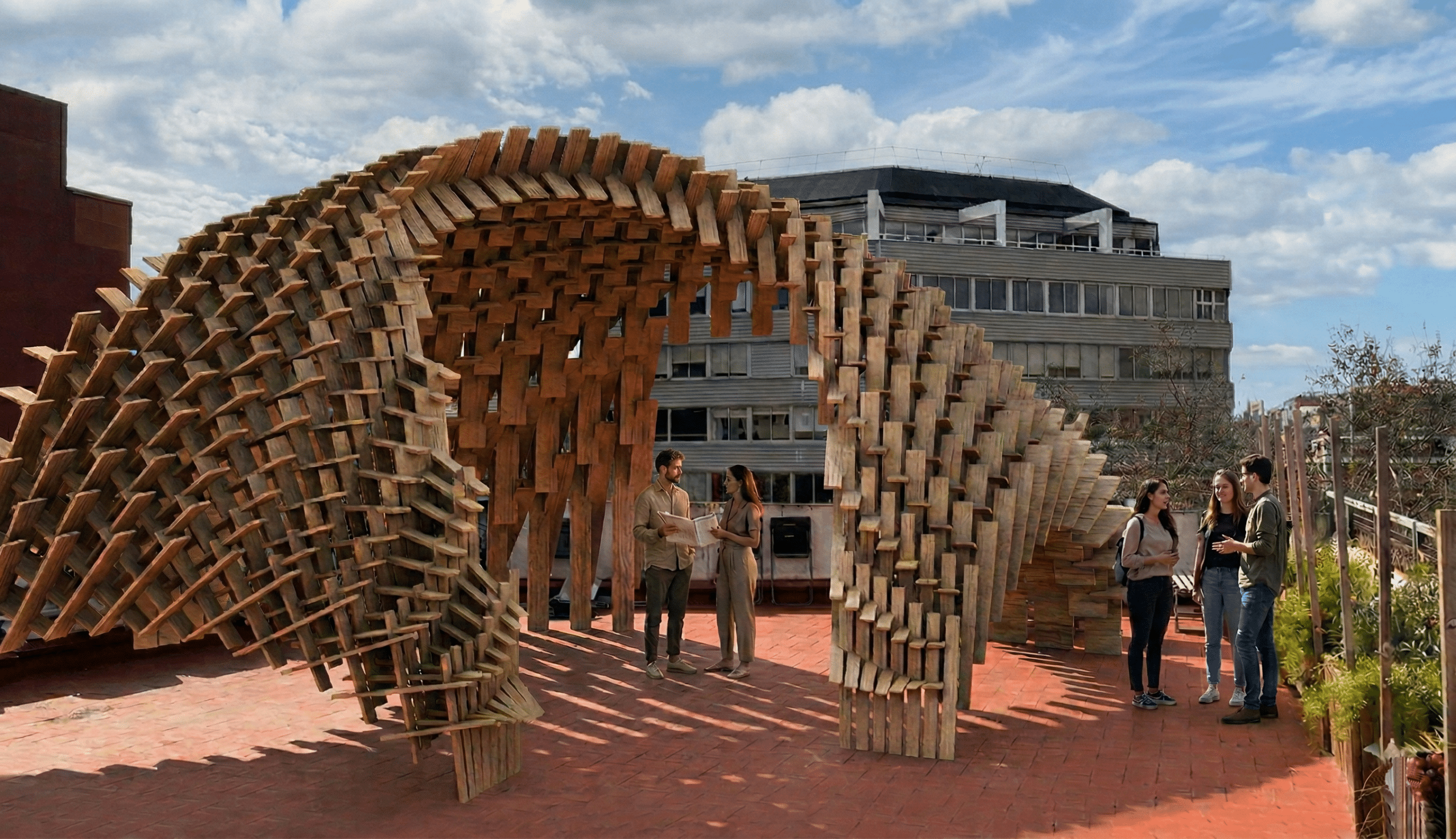
The design aims to create an inviting space where users can gather under the shade and enjoy the pleasant weather.
Inspiration References
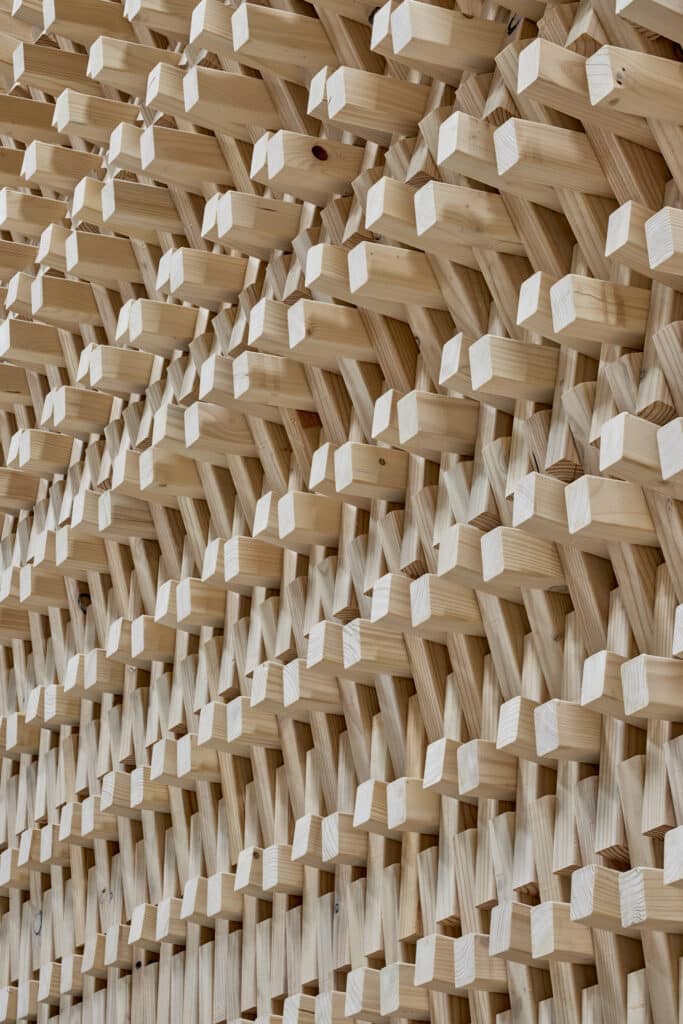
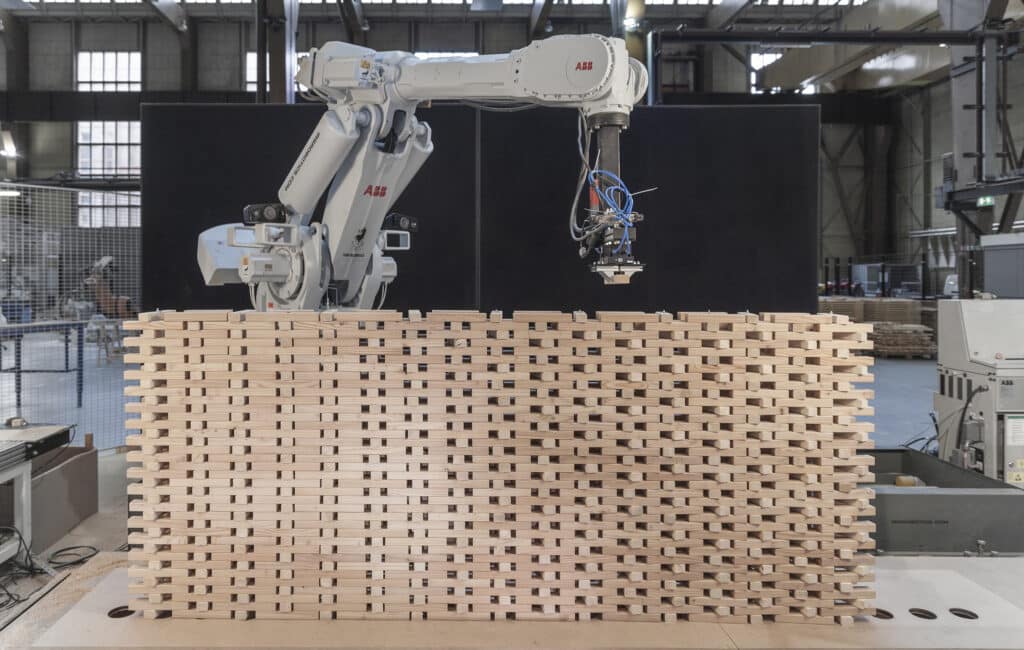
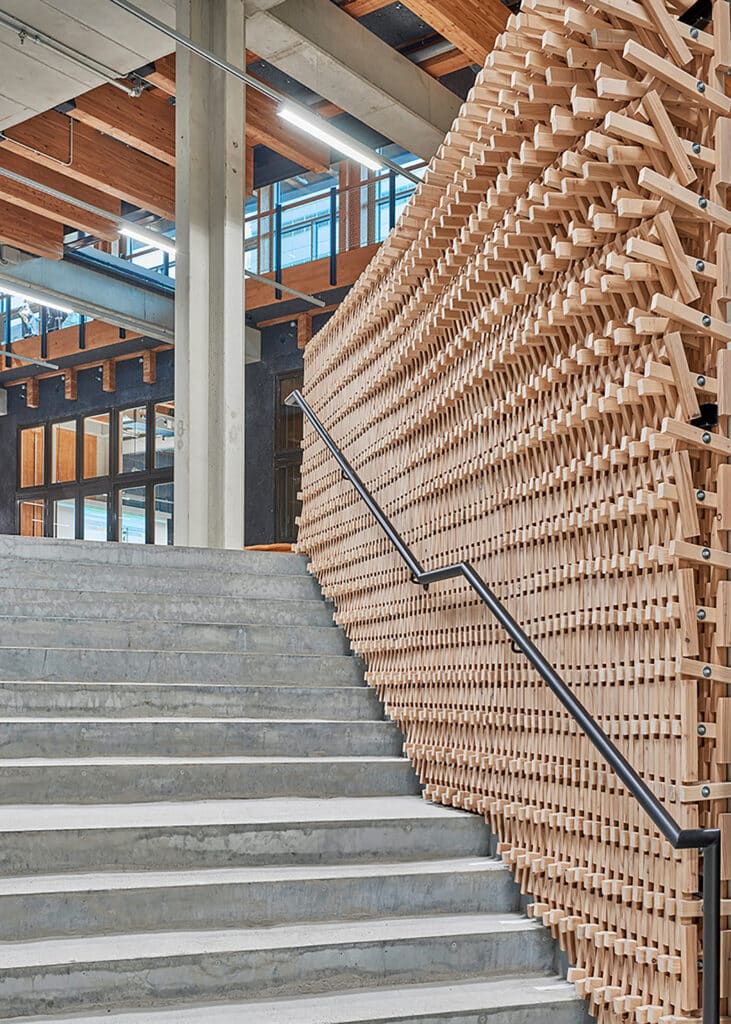
Circular Experience” by Studio RAP represents the future of digital fabrication, pushing the boundaries of parametric design through its complex, interlocking timber geometry. The intricate joints and non-standard curvatures inherent in this structure make it impossible to build using traditional construction methods; therefore, the realization of such a design is only possible through advanced robot milling. This robotic precision allows for micron-level accuracy that minimizes material waste while achieving an aesthetic and structural integrity that remains unattainable by conventional means.
Design Process – Geometrical Shape
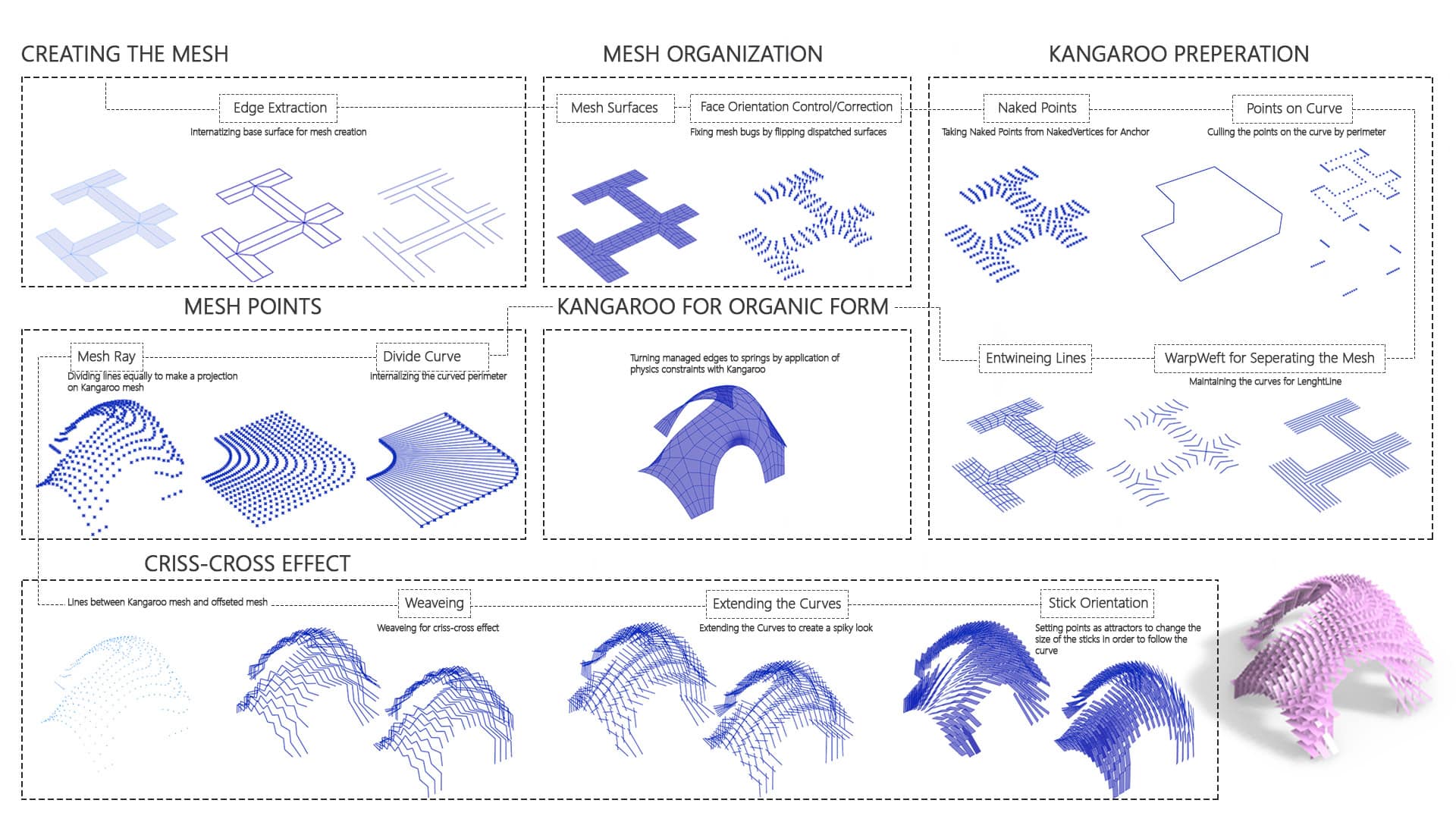
Pseudo Code
Boolean Operations
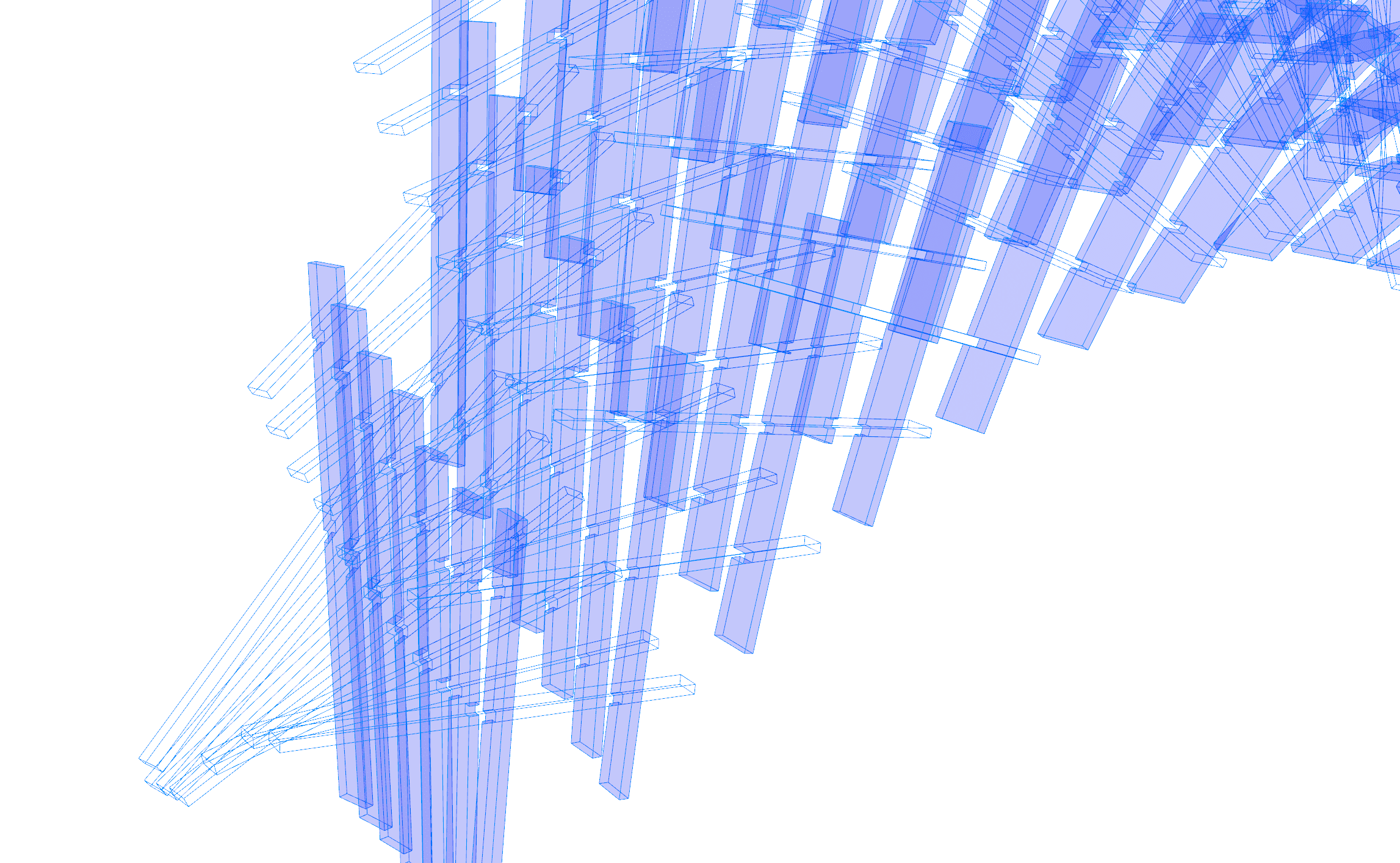
After having the surfaces, it was necessary to divide the list between cutting geometries and those that are cut, in order to obtain the joints to cut with the robot.
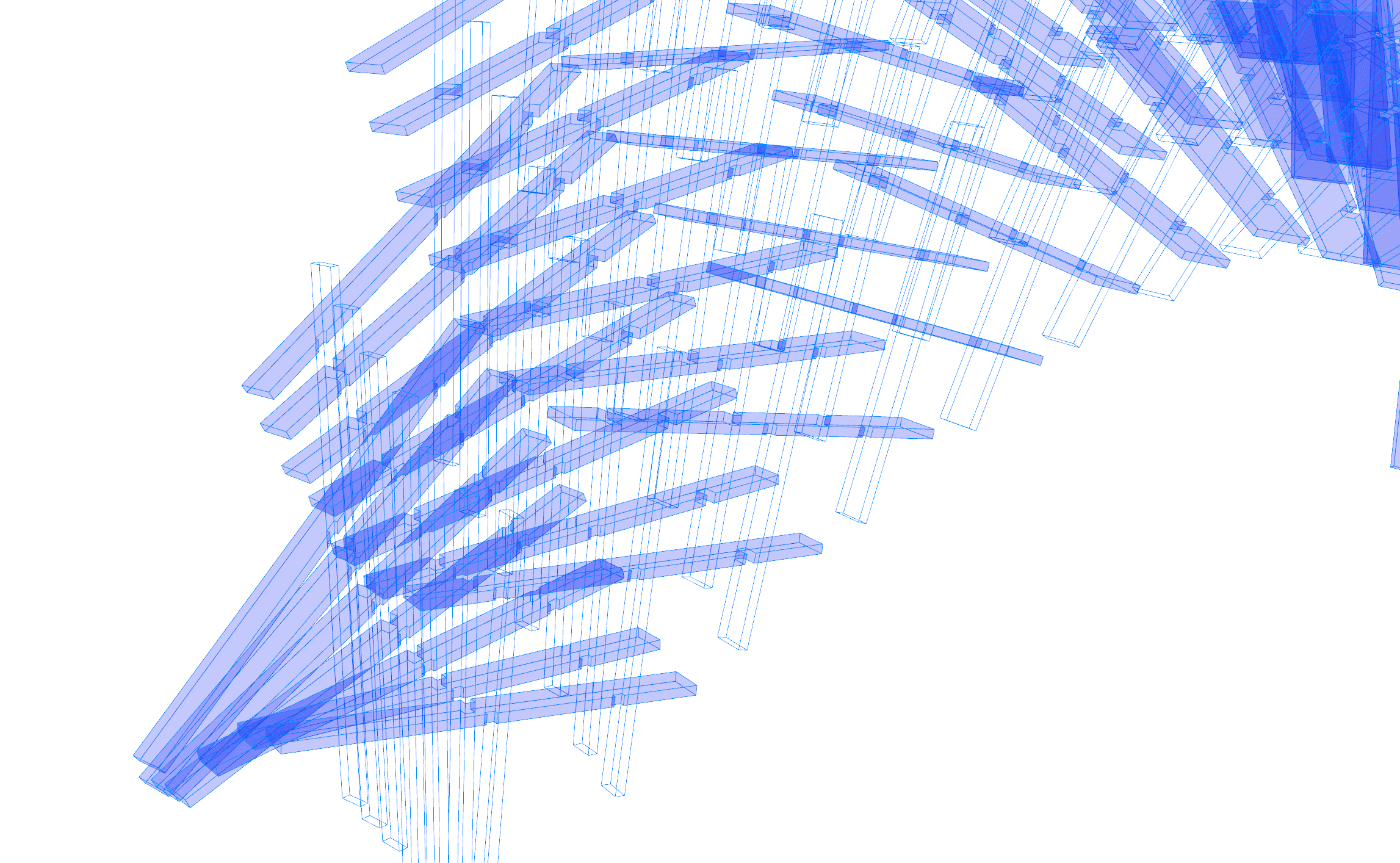
and repeat the process in the opposite direction to obtain the unions of the opposite elements, before regrouping everything to generate the cutting templates
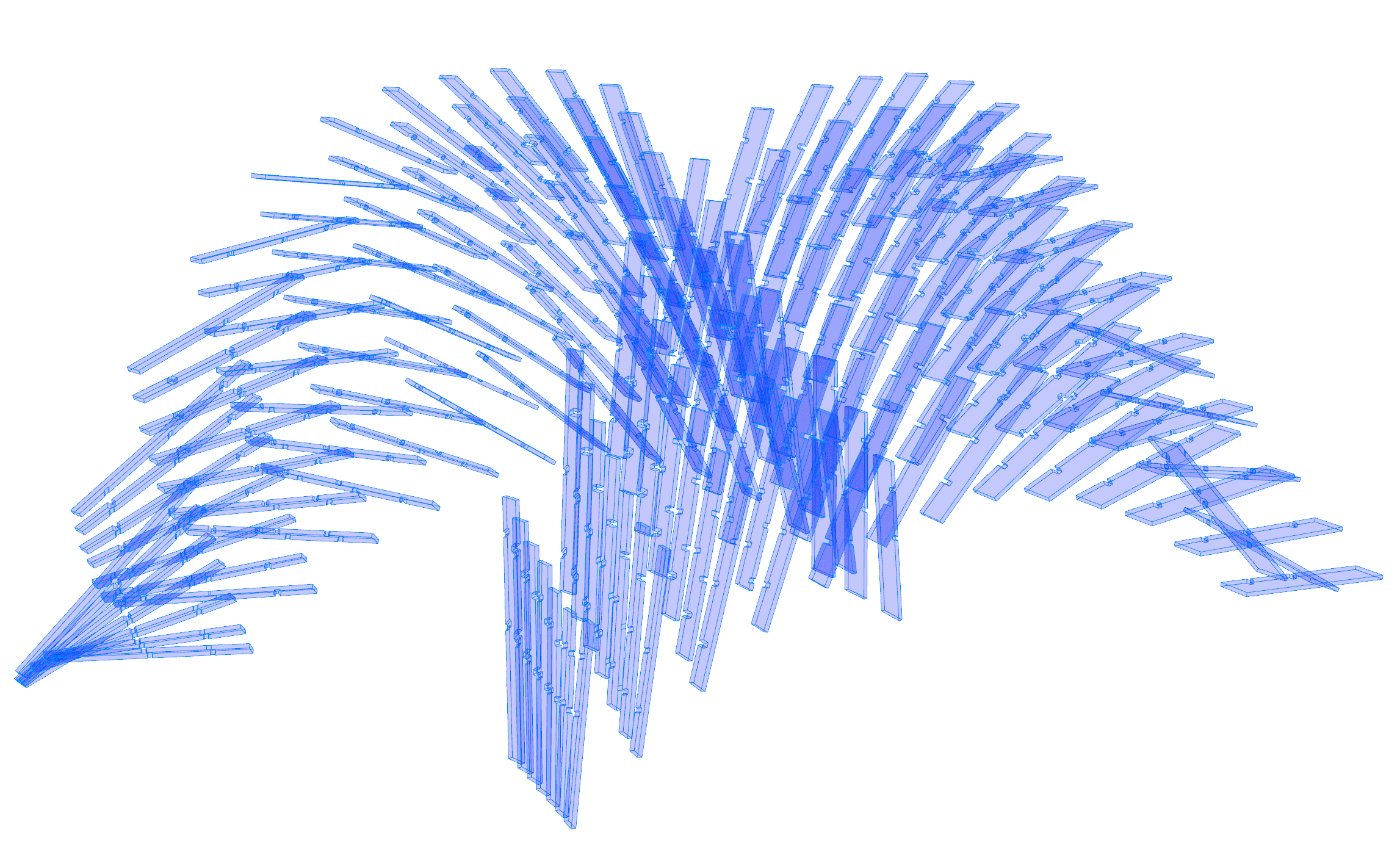
The result is a new list of elements with the appropriate cut for each joint, in both directions.
Fabrication Process
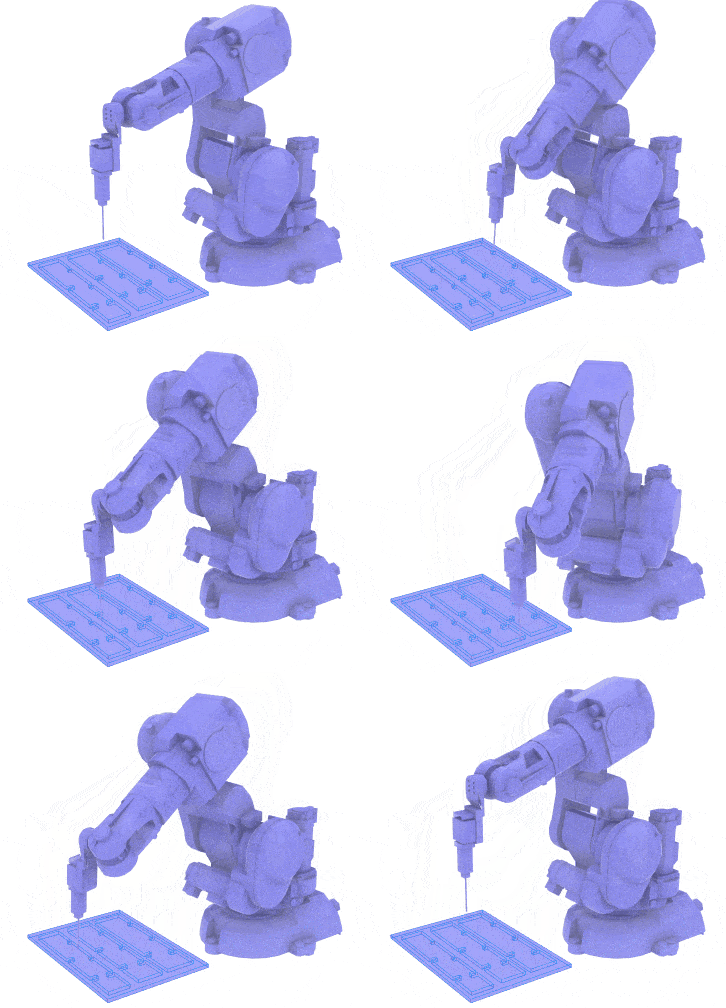
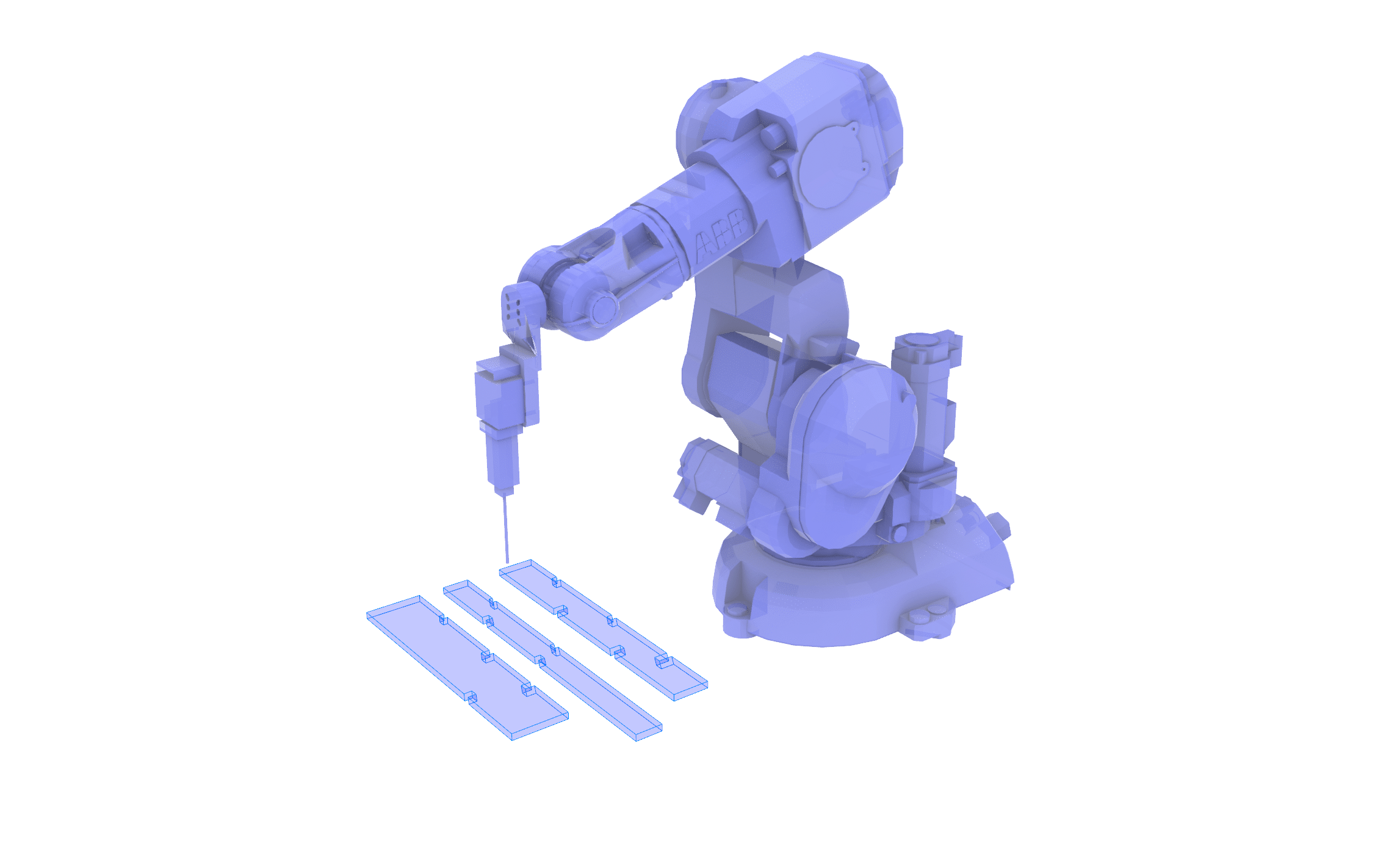
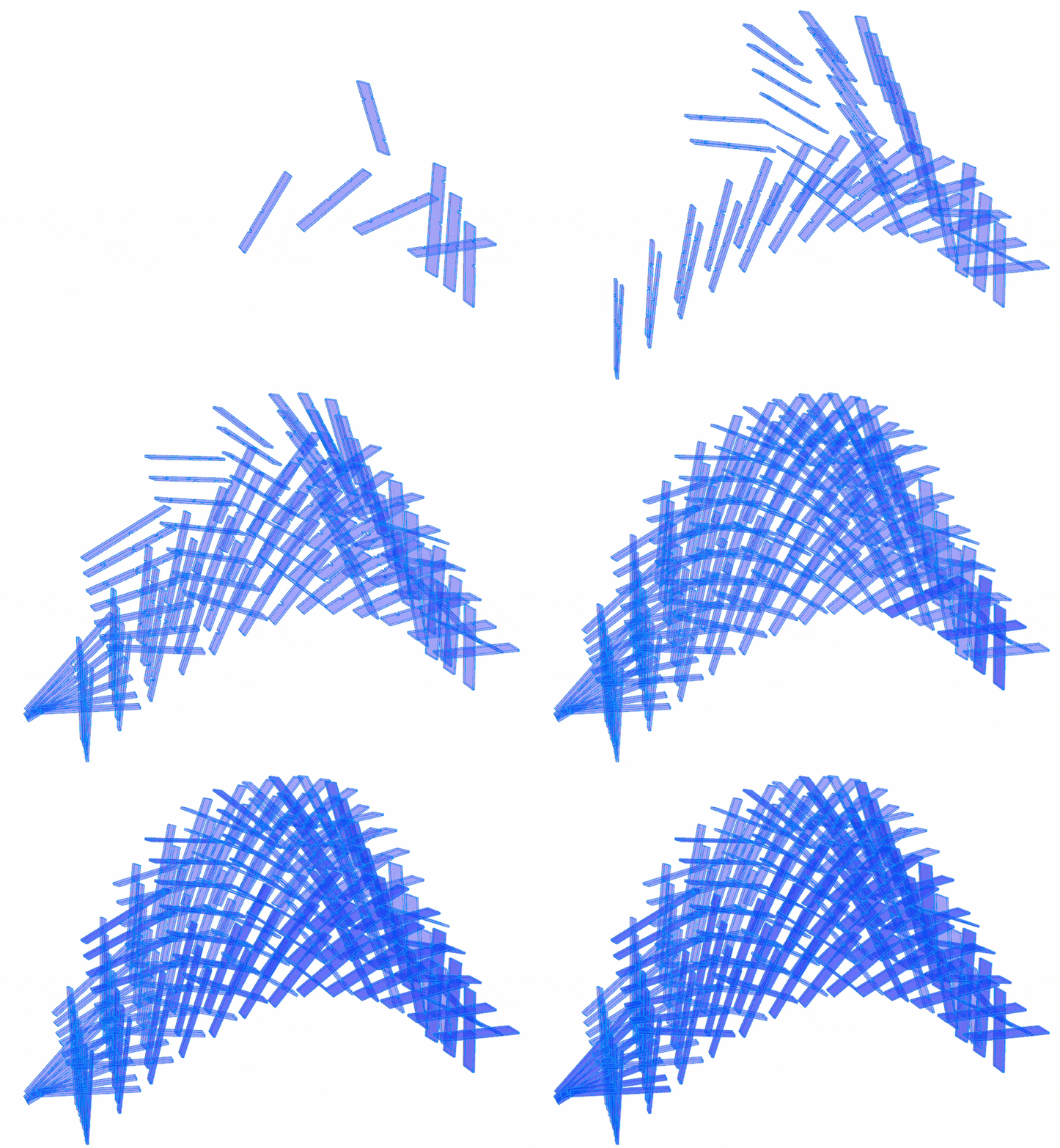
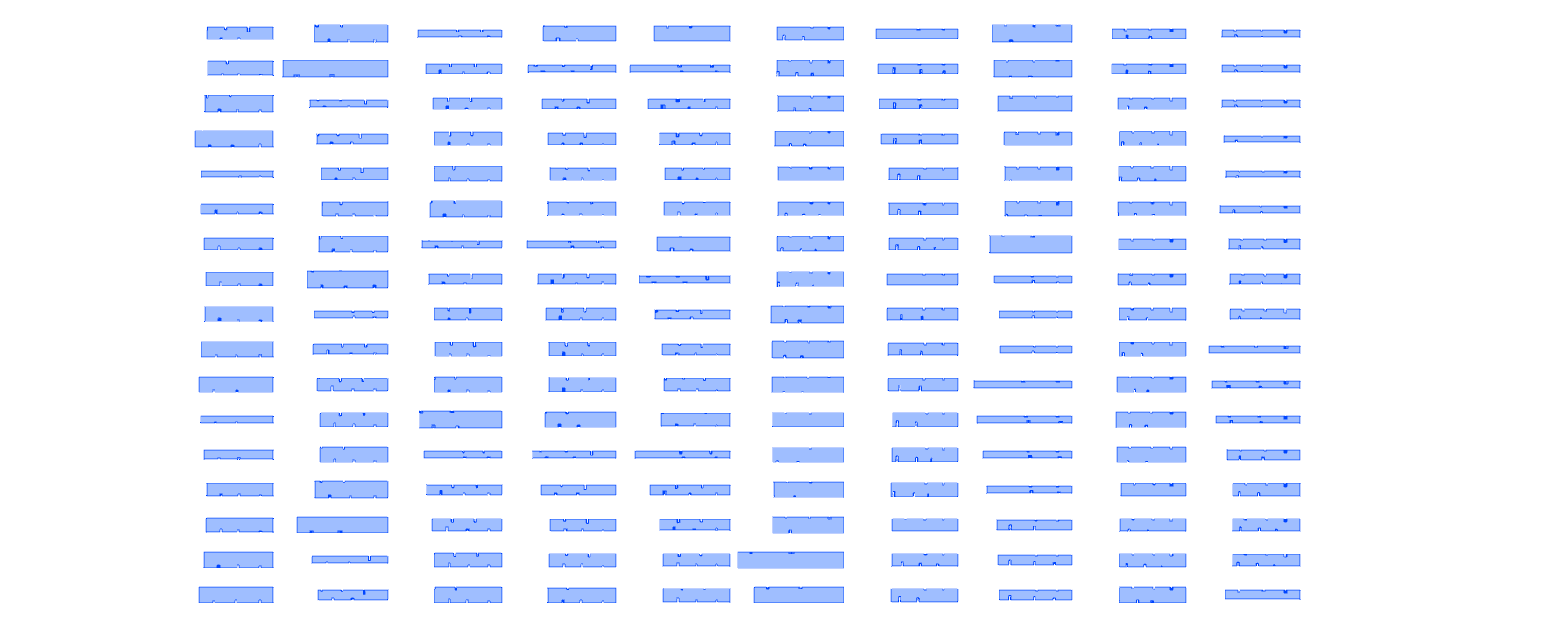
Catalog of Pieces
660 pieces of wood ready for cutting
Final Design