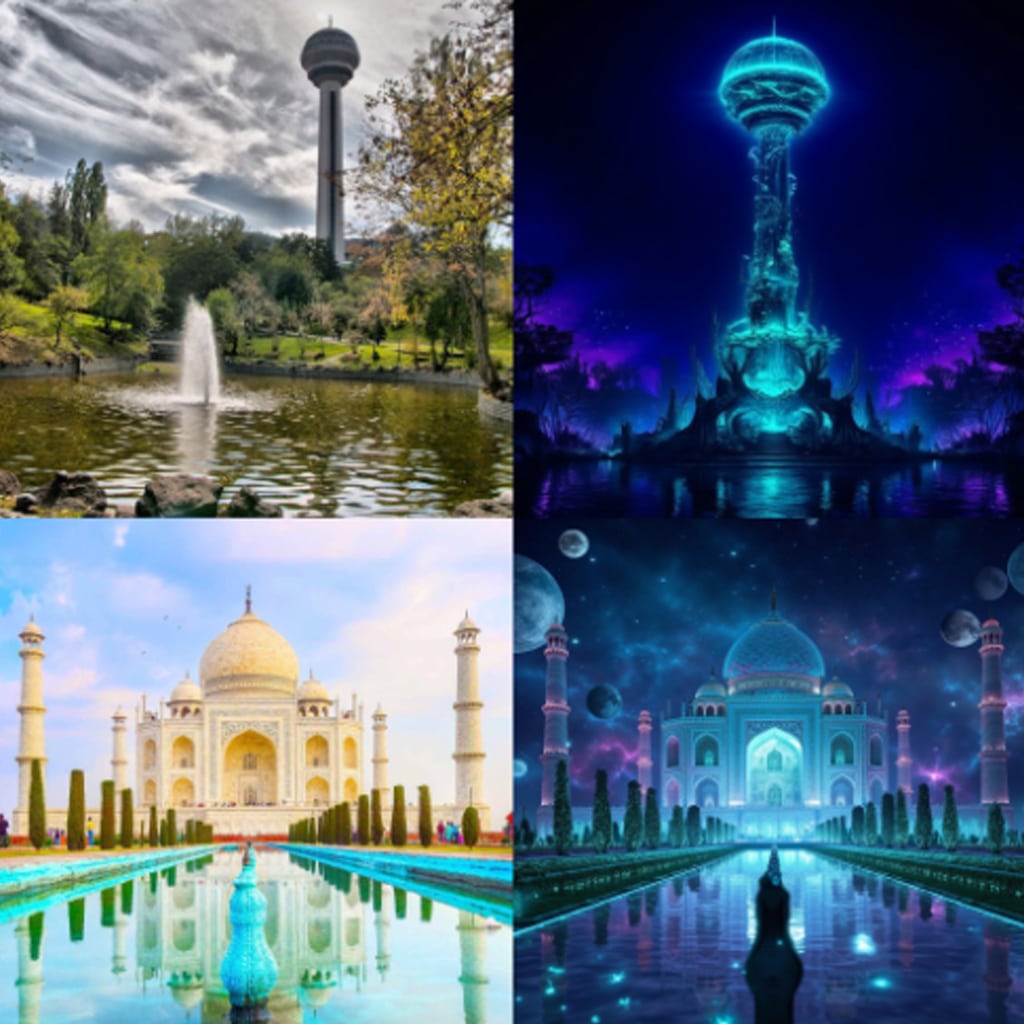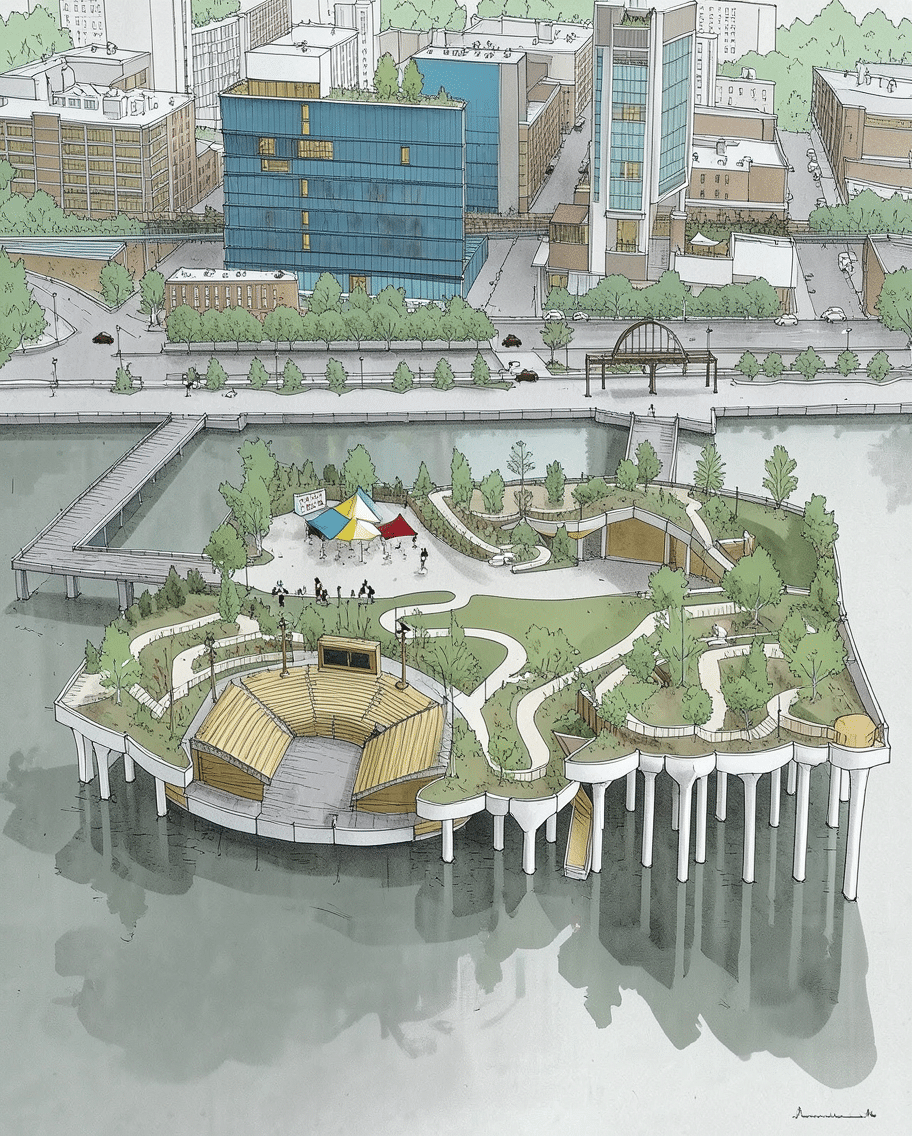
The seminar explores the practical use of generative models within the Architecture, Engineering, and Construction (AEC). The integration of these tools into design practice represents a significant shift in how architects, engineers, and designers develop ideas, visualise proposals, and explore complex spatial problems.


Syllabus

Generative AI

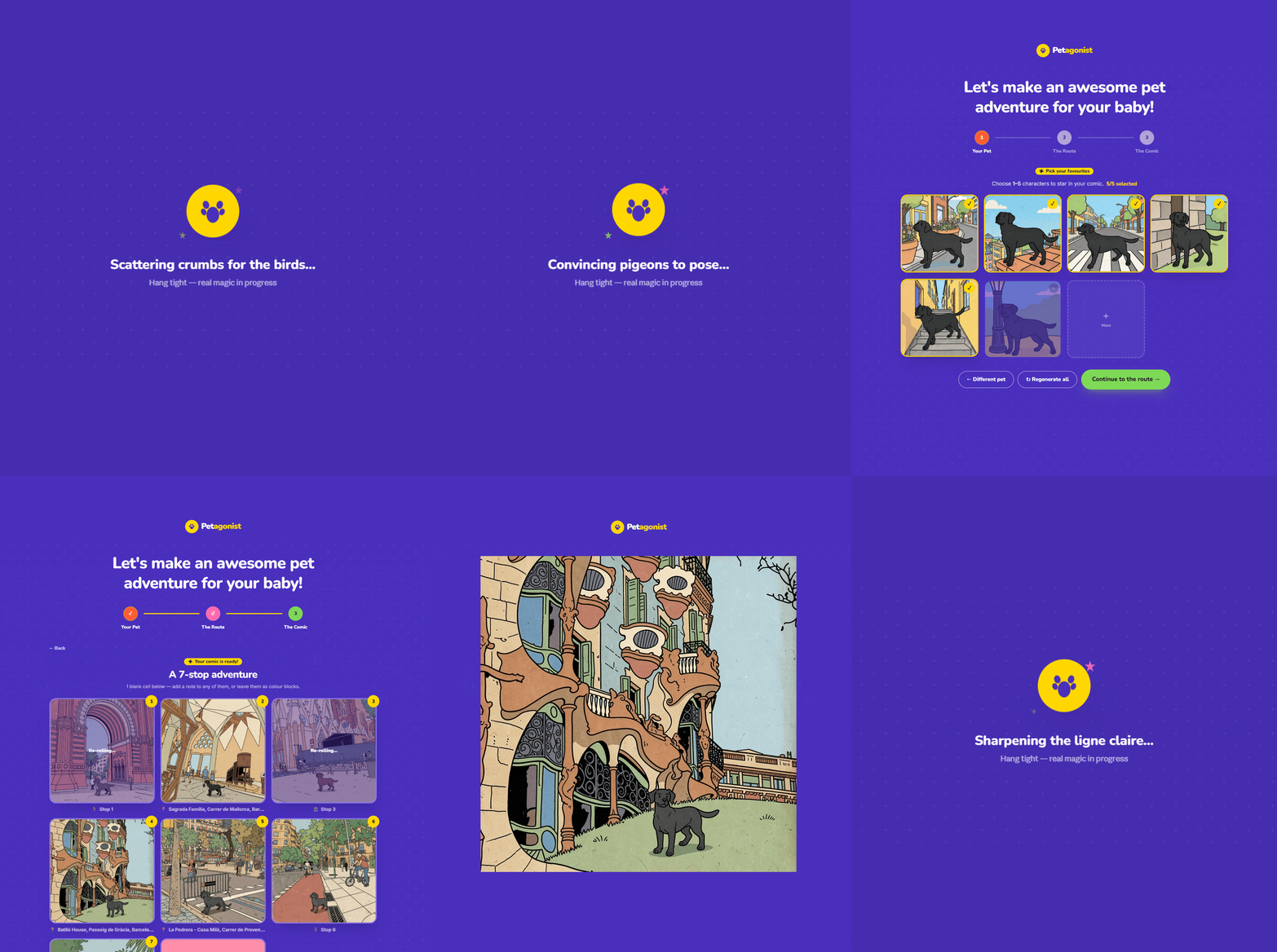
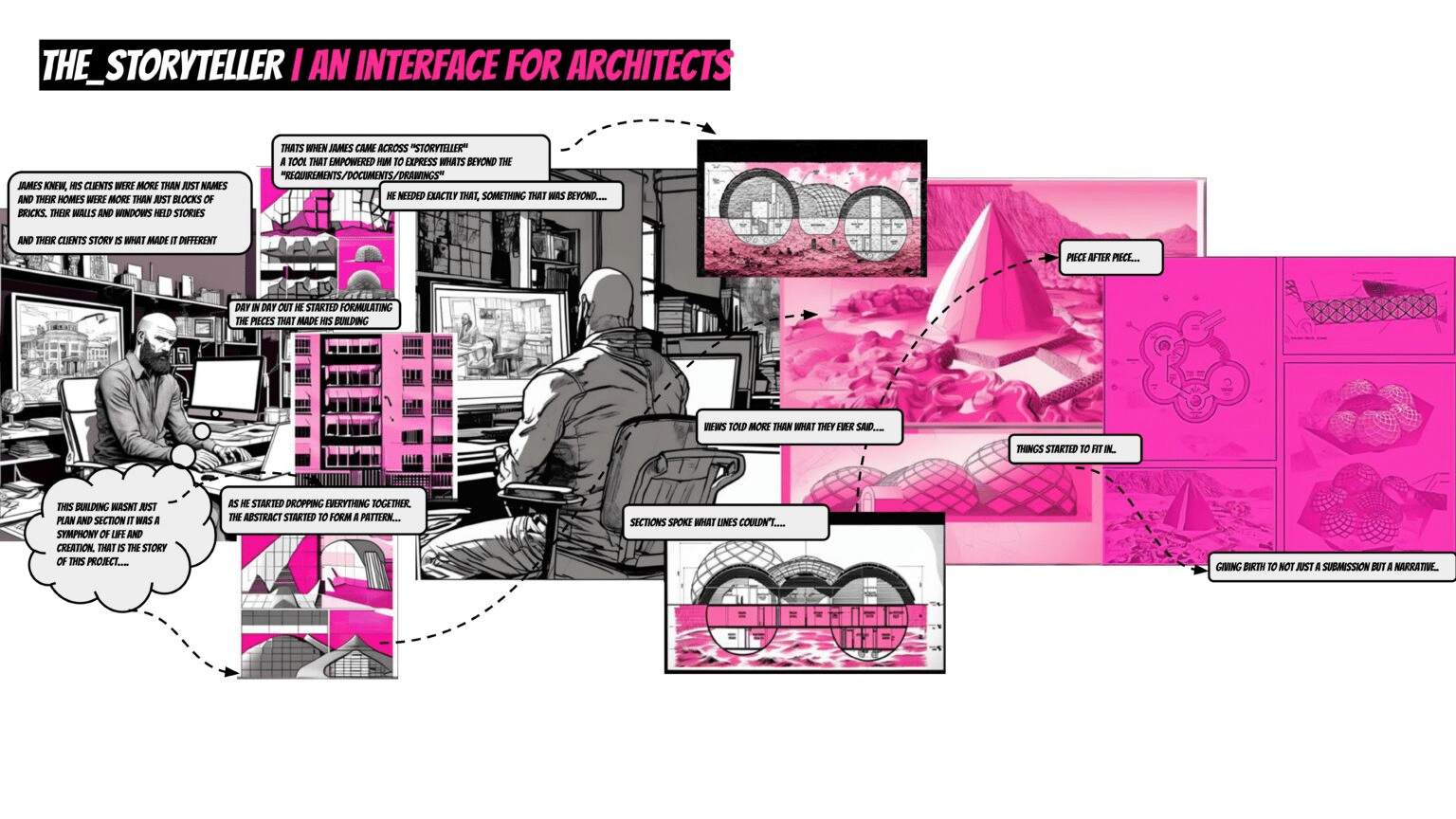
Source: The Storyteller used inputs a character, a building, and text, combined with LoRAs trained on specific visual styles, to automatically generate a comic strip. MaCAD Generative AI 2024/25, by Students: Christina Christoforou and Renuka Deshpande.

The Digital Tools for Generative AI seminar explores the practical use of generative models within the Architecture, Engineering, and Construction (AEC). The integration of these tools into design practice represents a significant shift in how architects, engineers, and designers develop ideas, visualize proposals, and explore complex spatial problems. Generative AI enables practitioners to rapidly investigate new design possibilities, augment creative workflows, and automate portions of visualization and prototyping that traditionally required extensive manual effort.

Students will engage with current generation techniques across both 2D and emerging 3D. The seminar introduces platforms such as ComfyUI, Google Colab, and Hugging Face Diffusers, allowing participants to run, modify, and experiment with diffusion-based models in various environments. Through these tools, students will learn to generate outputs from inputs through various pipelines that extend from image generation to 3D assets.

The course covers generating images with pre-trained models, fine-tuning models using Low-Rank Adaptation (LoRA) with custom datasets, and adjusting inference parameters to understand how prompt design, sampling methods, and guidance settings influence visual outputs. Students will also explore node-based generative pipelines in ComfyUI, gaining a deeper understanding of how diffusion models and custom workflows can be constructed for specific design tasks. By the end of the seminar, students will synthesise their experiments into interactive interfaces using Gradio, enabling others to explore prompts, parameters, and generated outputs. HuggingFace Pages offers an optional pathway for sharing these interfaces with a broader audience.

The course emphasises both conceptual understanding and practical deployment, equipping participants with the literacy needed to integrate generative AI tools into contemporary computational design workflows.

This course was initially developed and taught by Nono Martínez Alonso, whose work we gratefully acknowledge and hope to build upon.


Learning Objectives

At course completion the student will:

  • Learn the history and evolution of ML models from image to emerging 3D generation.
  • Understand key concepts of embeddings, latent space, network architecture, denoising, sampling, conditional generation, guidance, training, and fine-tuning.
  • Generate images from text prompts, image inputs, and multimodal conditioning.
  • Edit, extend, and remix images while maintaining stylistic and spatial coherence.
  • Fine-tune models using custom datasets and Low-Rank Adaptation (LoRA) techniques.
  • Control image generation using additional inputs such as sketches, edge maps, segmentation masks, and depth maps.
  • Utilize node-based workflows in ComfyUI and experiment with models using Google Colab and Hugging Face Diffusers.
  • Explore early 3D generative workflows and spatial outputs using diffusion models.
  • Utilize batch prompting and parameter variation strategies to systematically iterate.
  • Create interactive interfaces using Gradio to present workflows.

Faculty


Faculty Assistants


Projects from this course

Cartoonify: Buildings as Political Objects

A fine-tuned AI pipeline that transforms any photograph of a building into a Gado-style satirical editorial cartoon — because every significant structure carries two stories, and architecture photography usually only tells one of them. Why Cartoonify — Buildings Are Political Objects. Photographs Rarely Say So. Architectural photography tends toward the celebratory. The clean angle. The … Read more

Crafty Studio

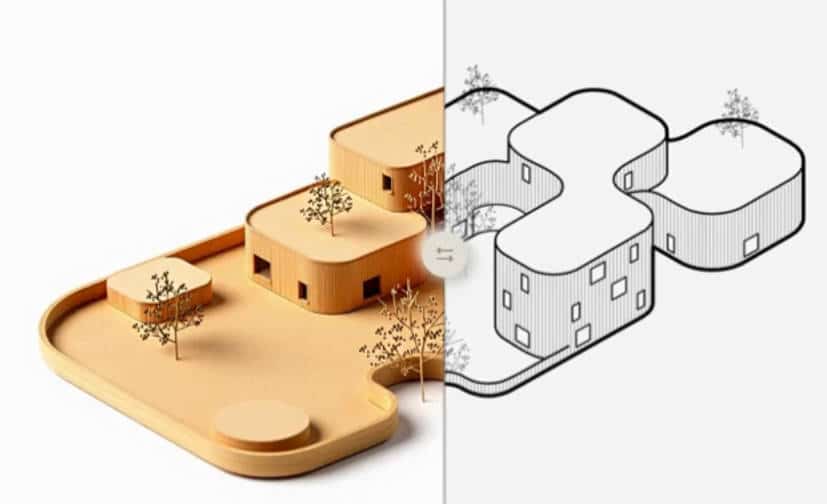
Every great building begins as a small model and a messy desk Abstract As architects we spend hours making physical study models, cutting foam, assembling balsa, running the 3D printer. These models are essential, but the process is slow. Crafty Studio asks a simple question: “What if you could see your design as a physical … Read more

The Likable Public

Intro This digital essay explores the growing trend of designing interior spaces for image consumption rather than functional use. This project investigates the consequences for public spaces when they are reshaped by the “economy of likes”. Drawing on Guy Debord’s Society of the Spectacle, the researchers argue that social relations are increasingly mediated through images, … Read more

MUTAVERSE: One Architecture. Infinite Futures.

MUTAVERSE is an AI-powered reality mutation engine. The project began with a simple speculative question: What if one architectural image could evolve into multiple alternative realities while still preserving its original identity? From Image Styling to Reality Mutation Rather than using generative AI only as a visual styling tool, MUTAVERSE explores how architecture can transform … Read more

IsleVibe

Mediterranean islands are crushed by tourism in July and August, and almost empty the rest of the year. So we asked what if generative AI could show people the ten months that already exist beyond those two? The goal was to make the off-season feel desirable, not as data, but as images you’d actually want … Read more

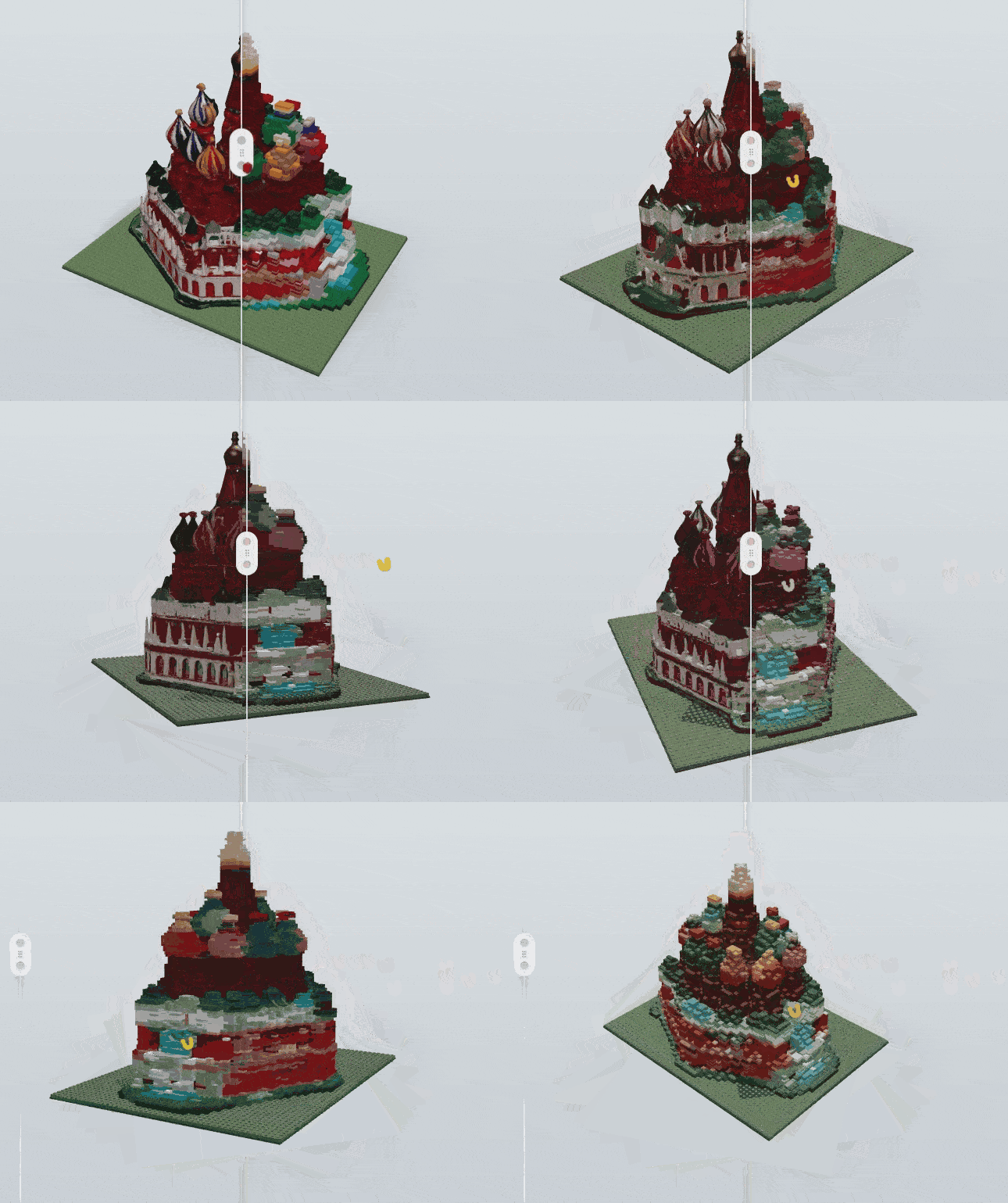
lEgoarCh: Behind the Sets

How a sentence becomes a buildable LEGO set, and the engineering that makes it stand up. We named the project lEgoarCh. The capital E and C are us, Emilie and Charles, smuggled into the wordmark like a hidden stud. The demo is the fun part: you type a building, and a minute later a real LEGO set is sitting on a shelf. … Read more

Breaking the Photorealism Trap: Introducing ArchSketch Studio

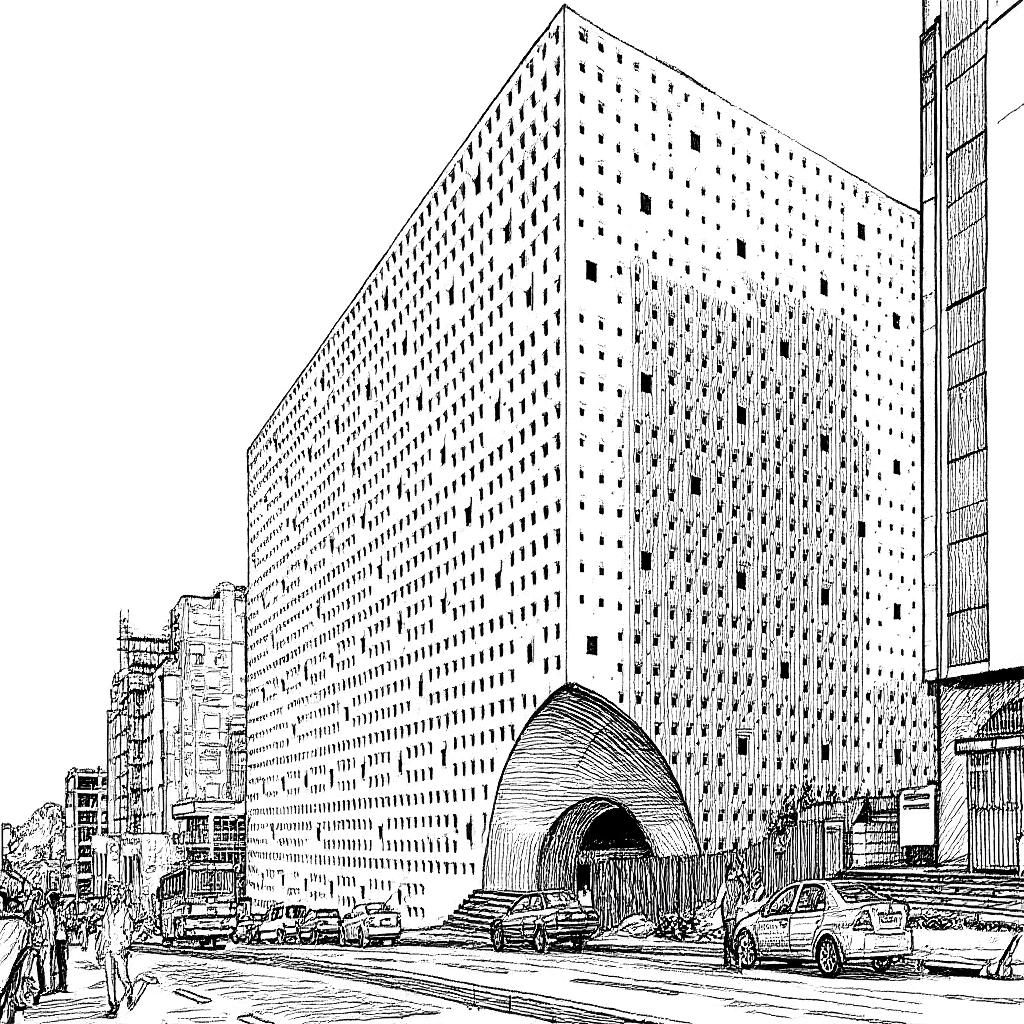
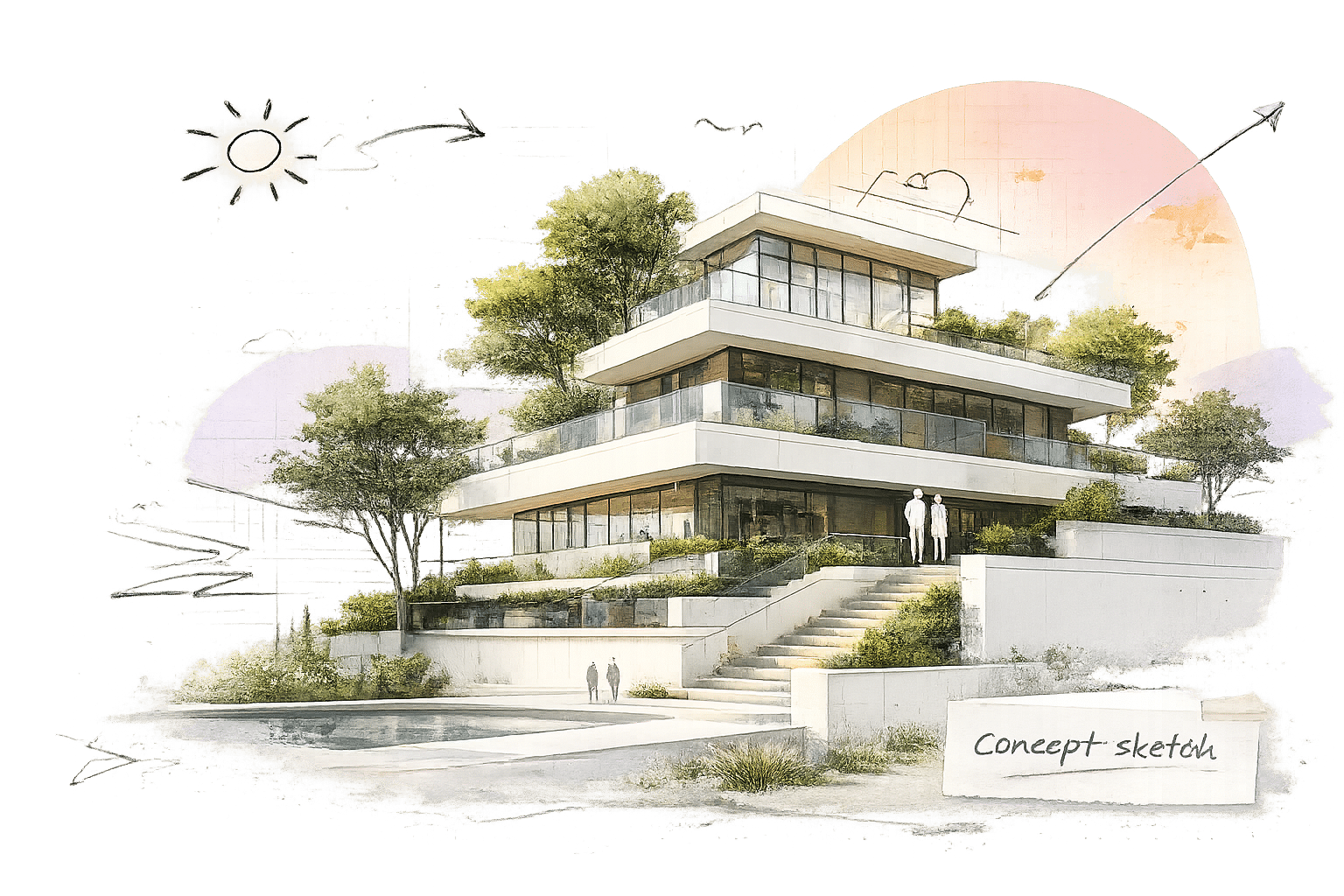
Architectural visualization has a default setting, and it’s usually photorealism. Walk into any design critique or client presentation, and you are almost guaranteed to see glossy, hyper-realistic renders. While beautiful, a single design often needs to be communicated in multiple visual languages depending on the audience and the phase of the project. Sometimes you need … Read more

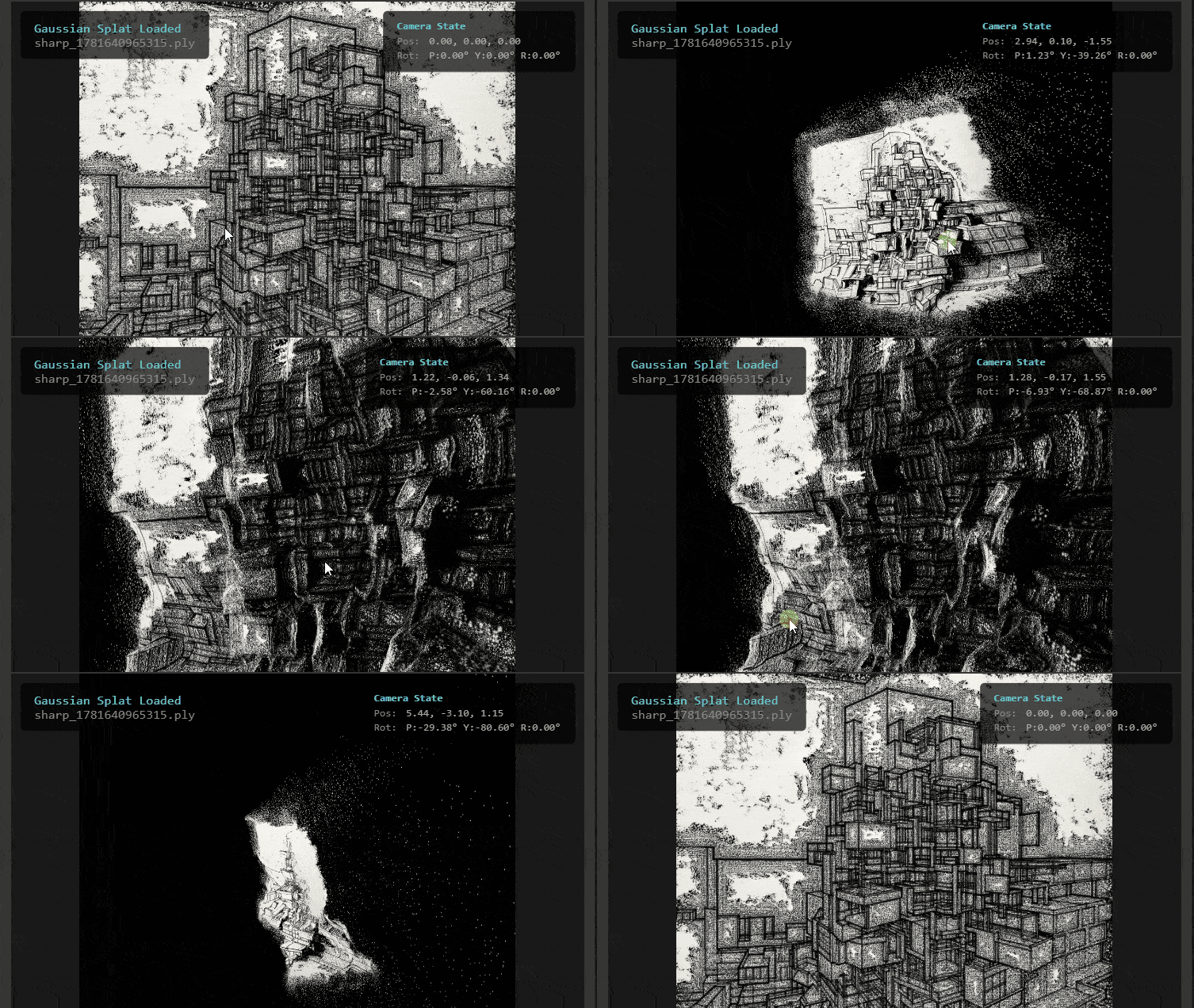
Ching Splat: An AI Interface for Architectural Image Translation

Interface Description Ching Splat is an experimental generative AI workflow. The project explores how architectural images can be translated between real photographs, line drawings, watercolor-style illustrations, and presentation renders through a controlled interface. The main design intention is not only to generate attractive images, but to build a practical visual workflow for architecture: keeping the … Read more

FLAT DREAM

Interface description
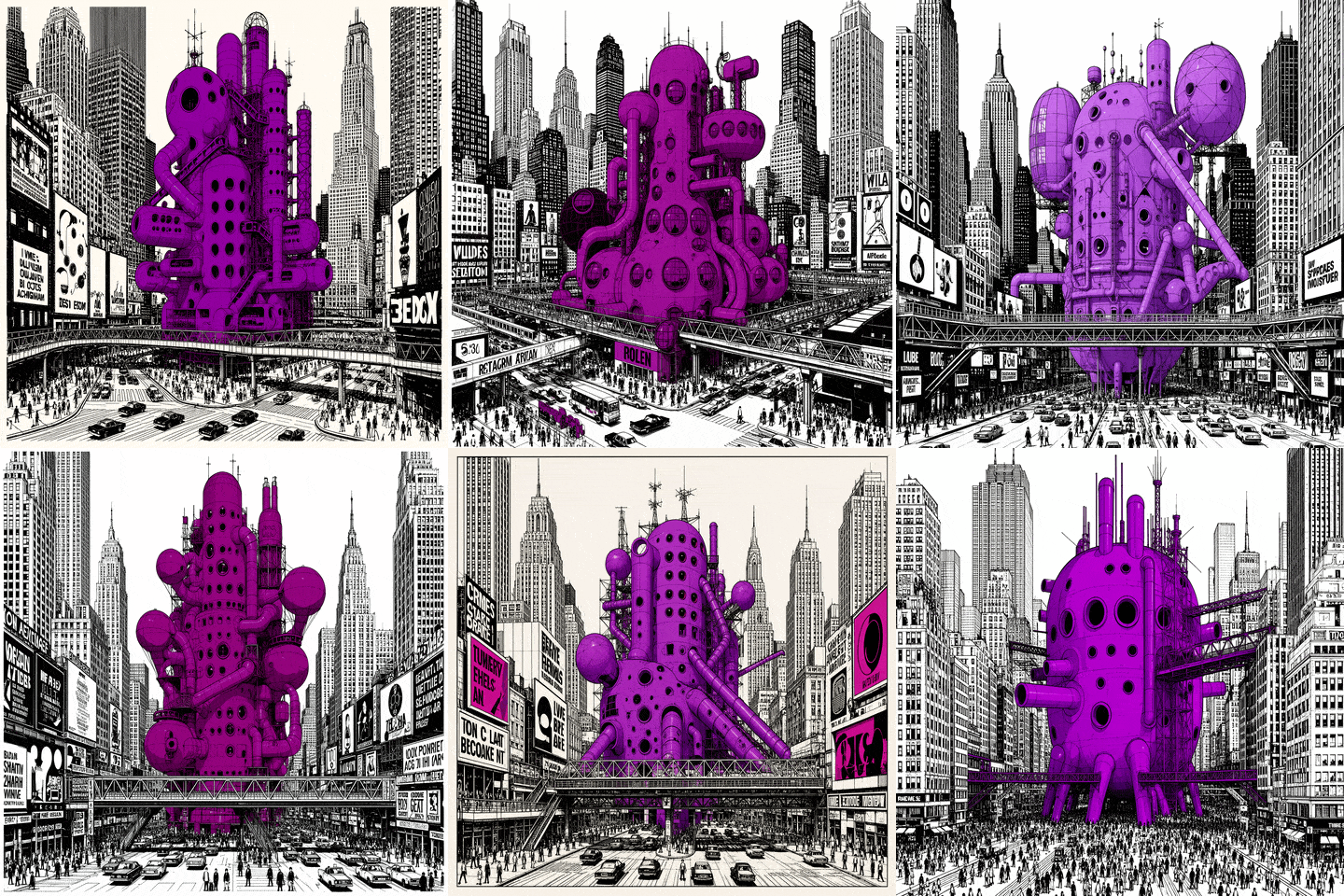
FlatDream is a interface inspired by the book Learning from Las Vegas built on 2 custom-trained LoRA models, fine-tuned on the visual language of the Archigram movement. It connects directly to ComfyUI and LM Studio to generate architectural imagery from text, image references, and multi-input compositions, with outputs that feed into a magazine builder, … Read more