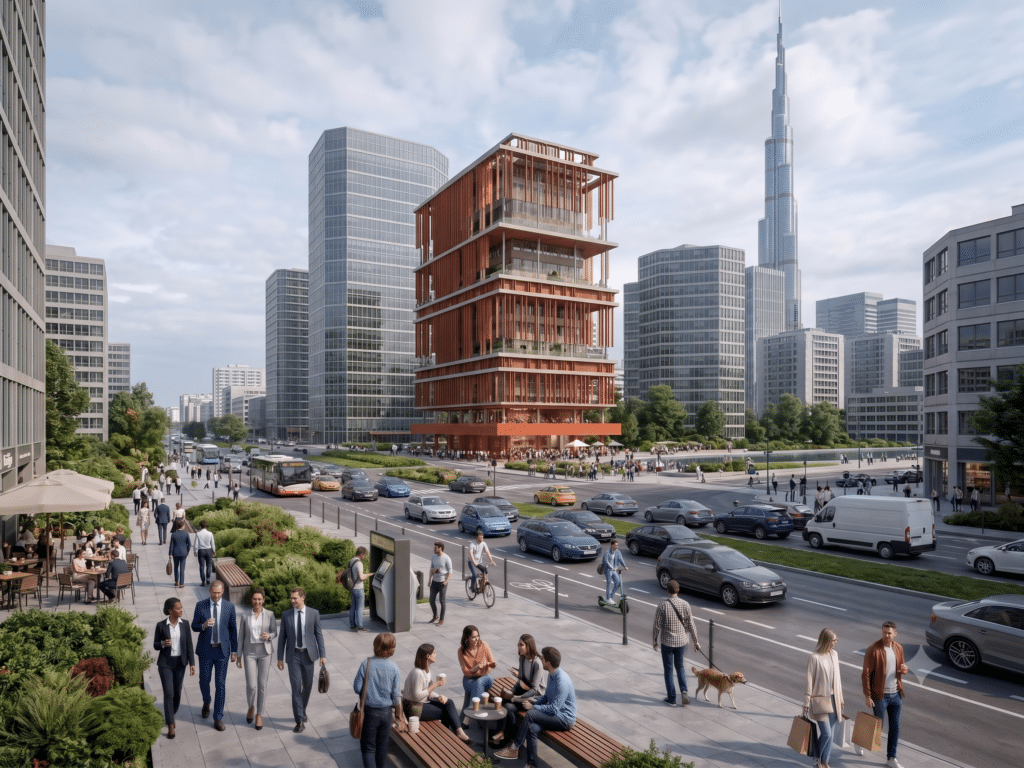
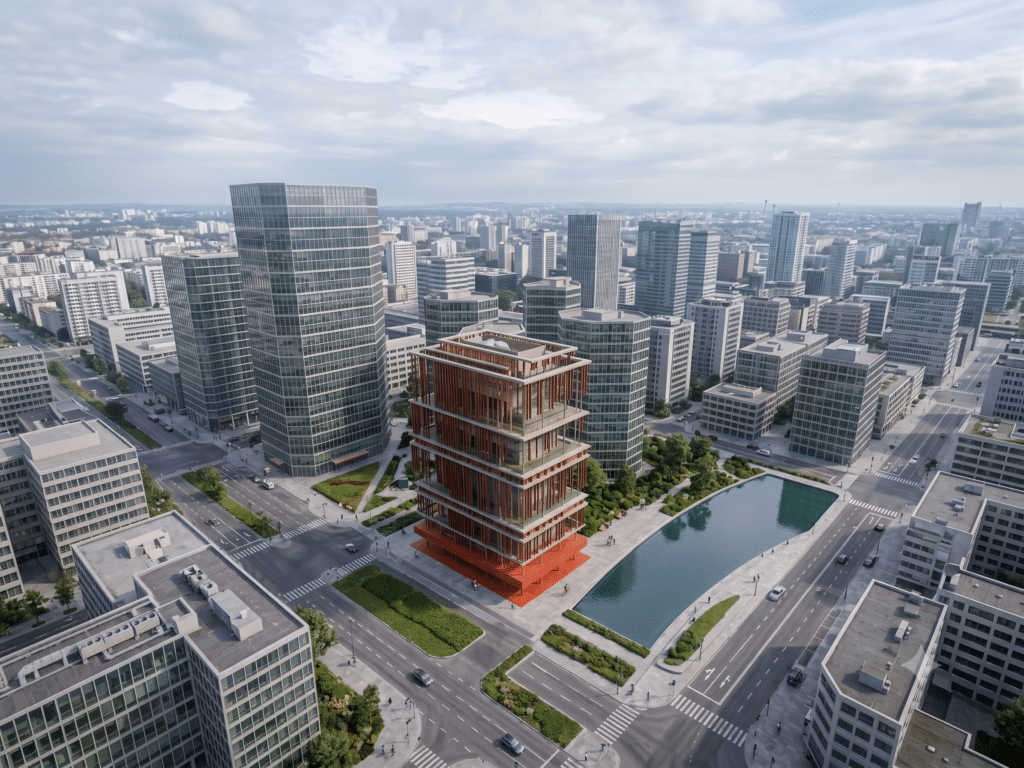
This research explores the use of Wallacei X to optimize a parametric facade for a site in Dubai, UAE. The study evaluates facade performance based on four objectives: maximizing sun hours, minimizing solar radiation, minimizing material consumption, and maximizing views. Through evolutionary optimization, hundreds of design variations were generated and assessed, revealing the trade-offs between environmental performance, resource efficiency, and visual quality. The resulting Pareto-optimal solutions provide a data-driven framework for comparing alternatives and selecting the facade configuration that best balances project priorities and site conditions.
Evolution of Building envelopes
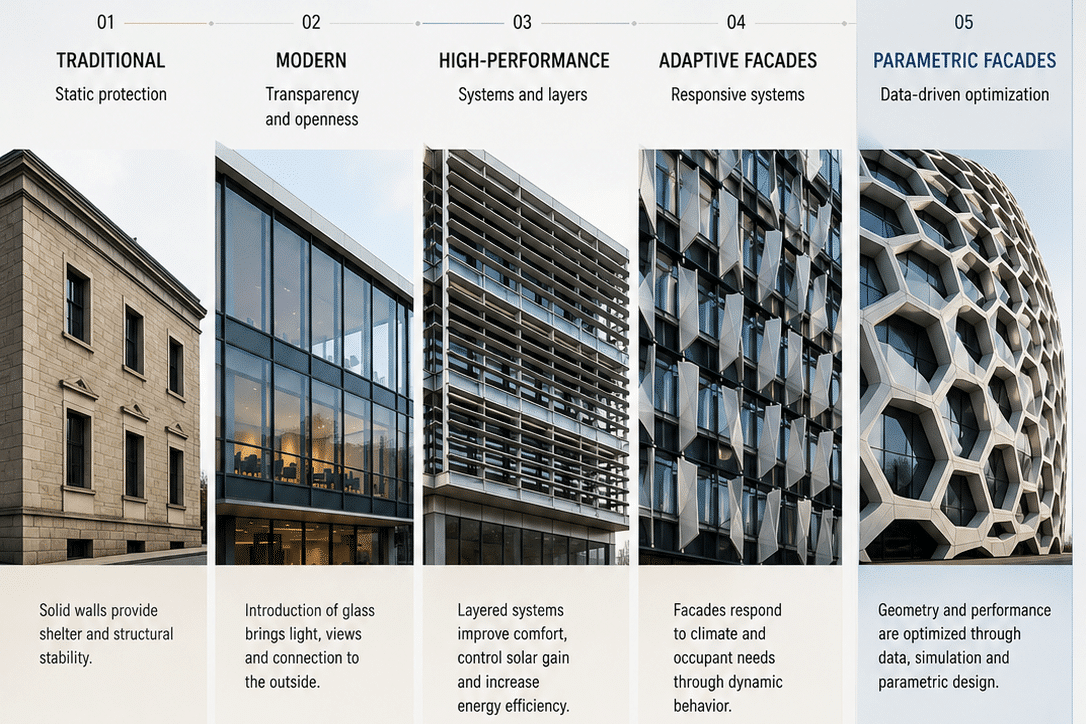
Building envelopes have evolved from simple protective walls to high performance systems that actively respond to environmental conditions. Advances in materials, engineering, and digital design introduced dynamic shading devices, double-skin facades, and performance-driven design approaches. With the emergence of computational tools and parametric modeling, facades became adaptable systems whose geometry and behavior can be optimized.
Parametric facades:
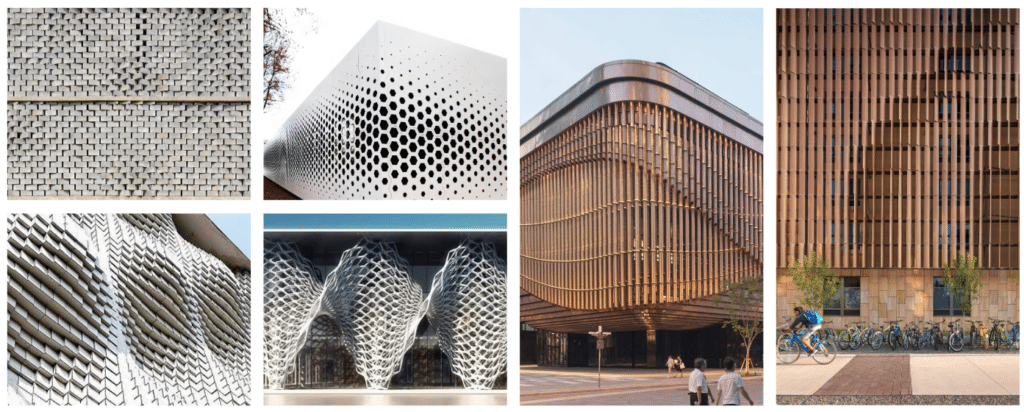
Parametric facades are building envelopes whose geometry and performance are controlled through adjustable parameters. By generating and evaluating multiple design alternatives, they enable data-driven design decisions.
But among countless possible solutions, how do we identify the facade that performs best for a specific building and site?
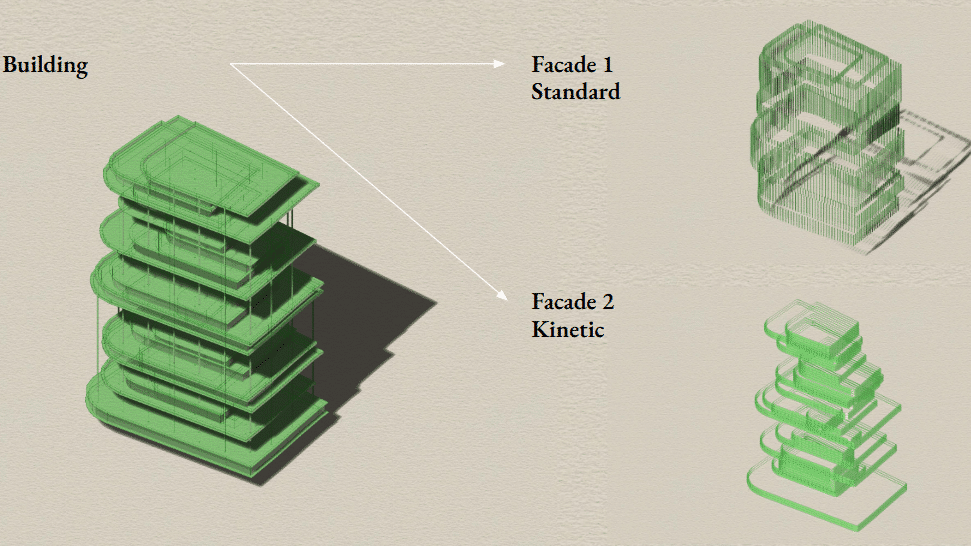
Types of facades studied
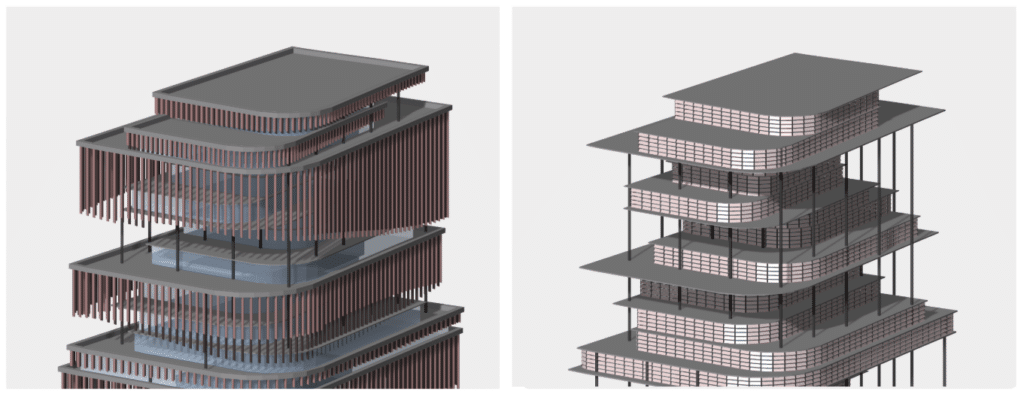
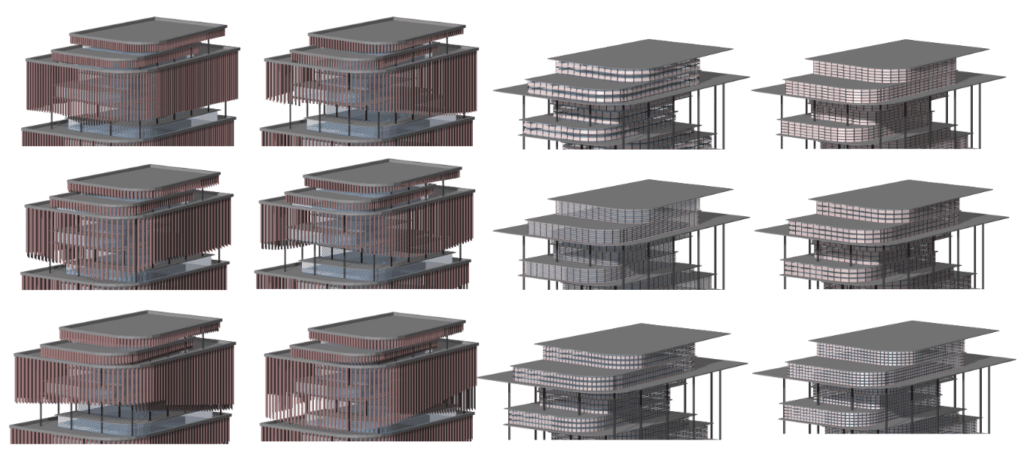
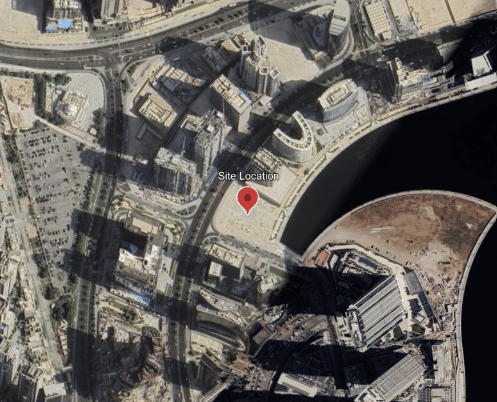
Site Selection: Dubai, UAE
Location: 25°11’15.8″N, 55°16’06.6″E
Dubai was selected due to its hot desert climate and extremely high solar exposure, making it an ideal environment for facade optimization. The intense sunlight and cooling demands throughout the year provide a clear framework for evaluating how different parametric facade systems perform in terms of shading, daylight control, and energy efficiency. This challenging climatic context allows the effectiveness of various facade strategies to be accurately compared and optimized through computational analysis.
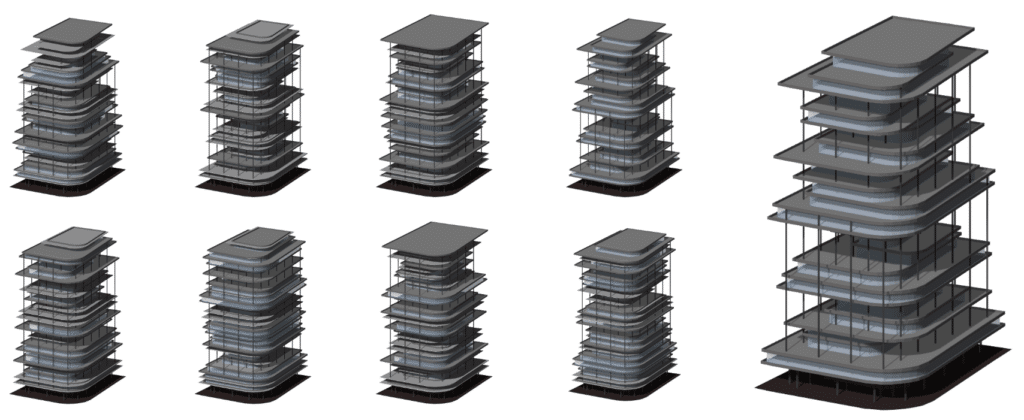
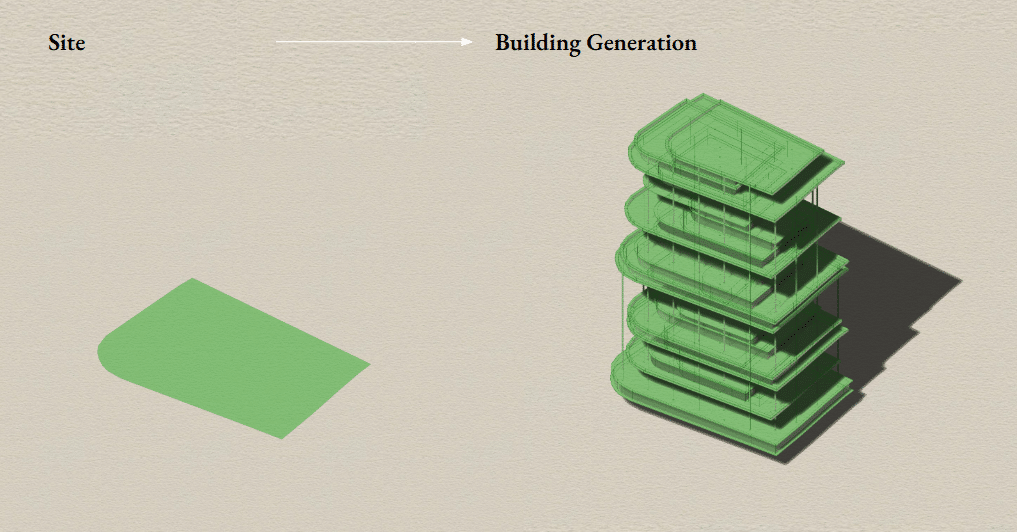
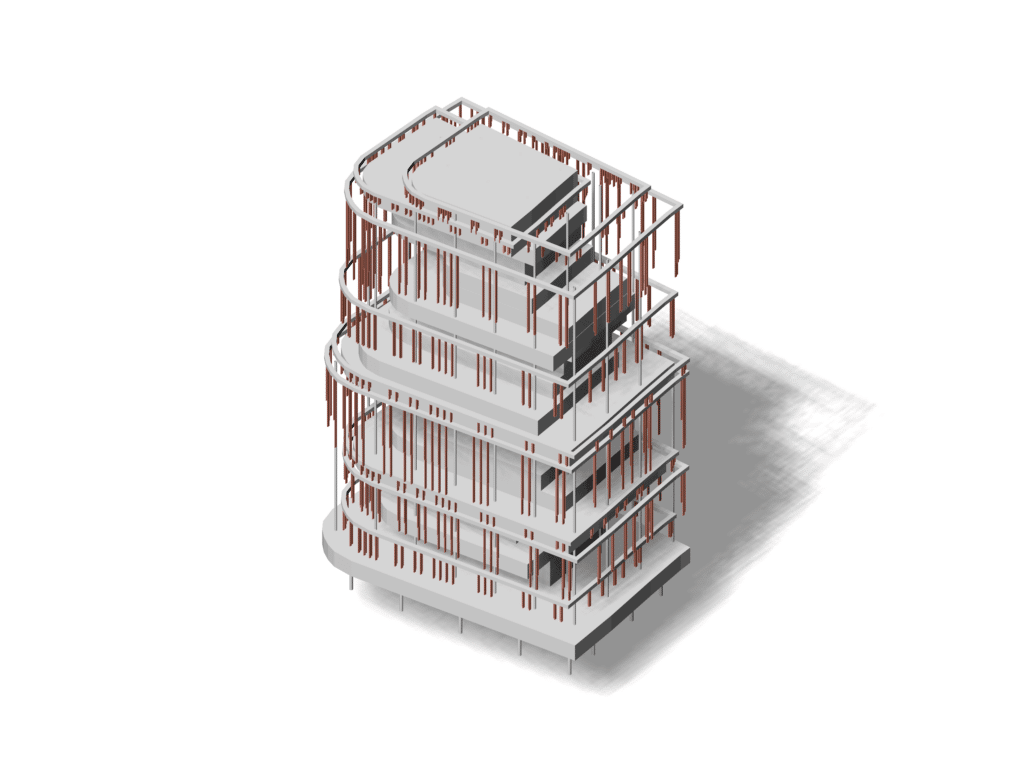
Building Design
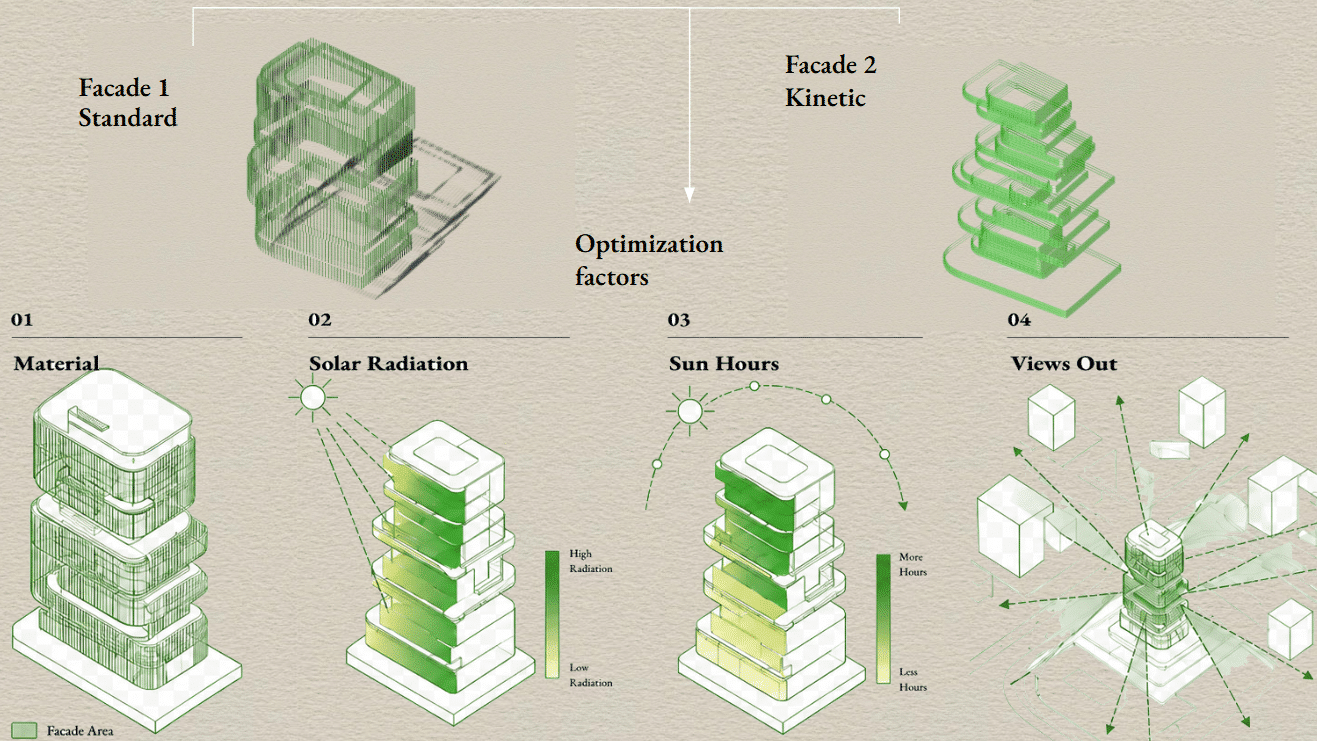
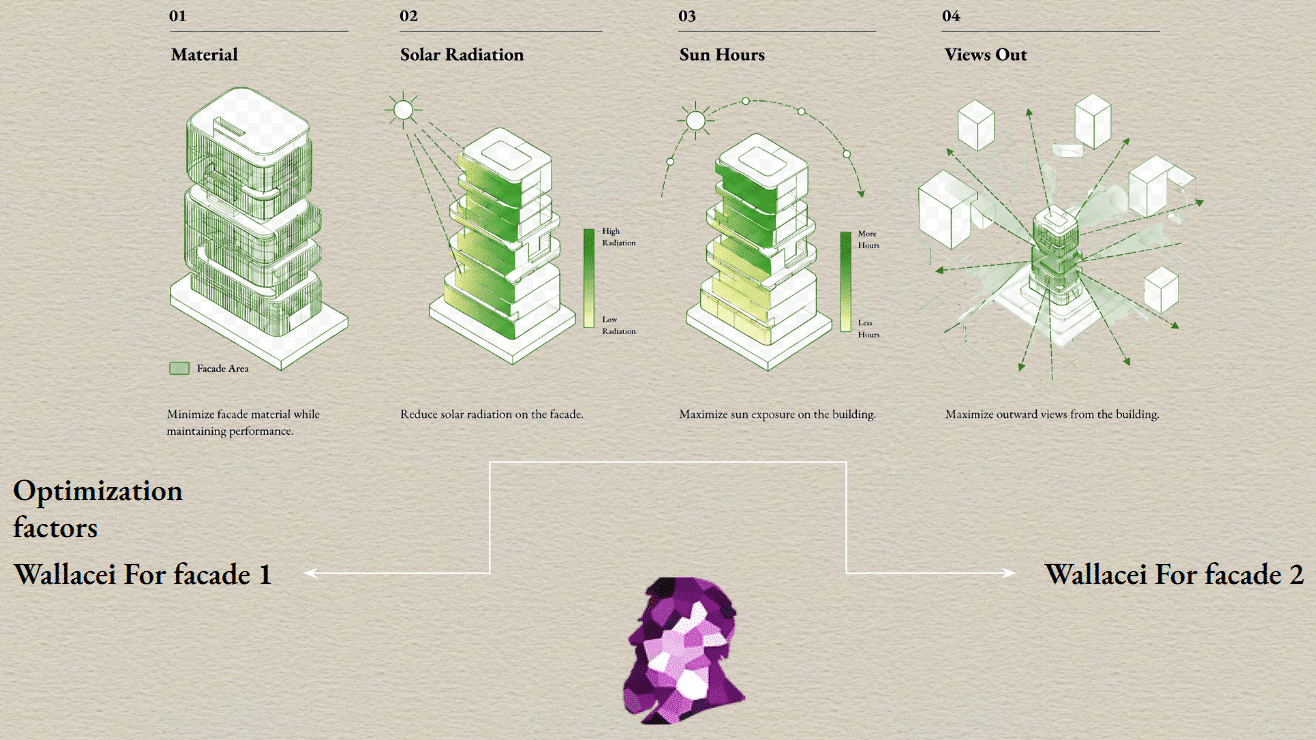
Factors
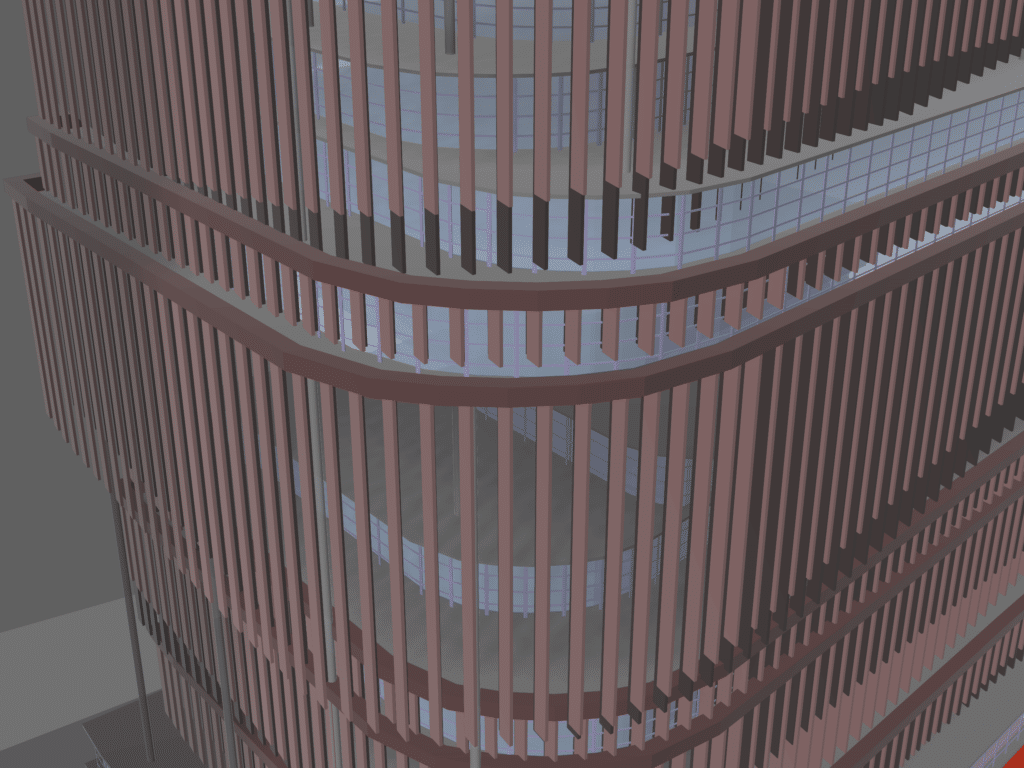
- Area of Material, Quantity
Objective – To use the least amount of material in order to build the facade and get optimum results at the same time
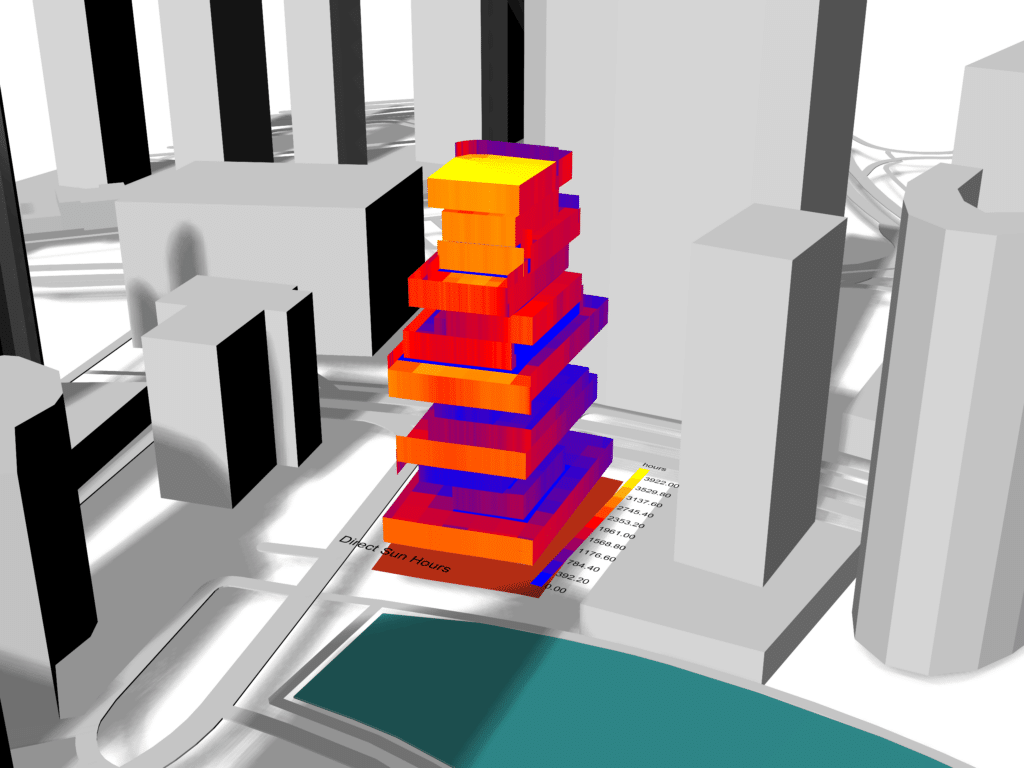
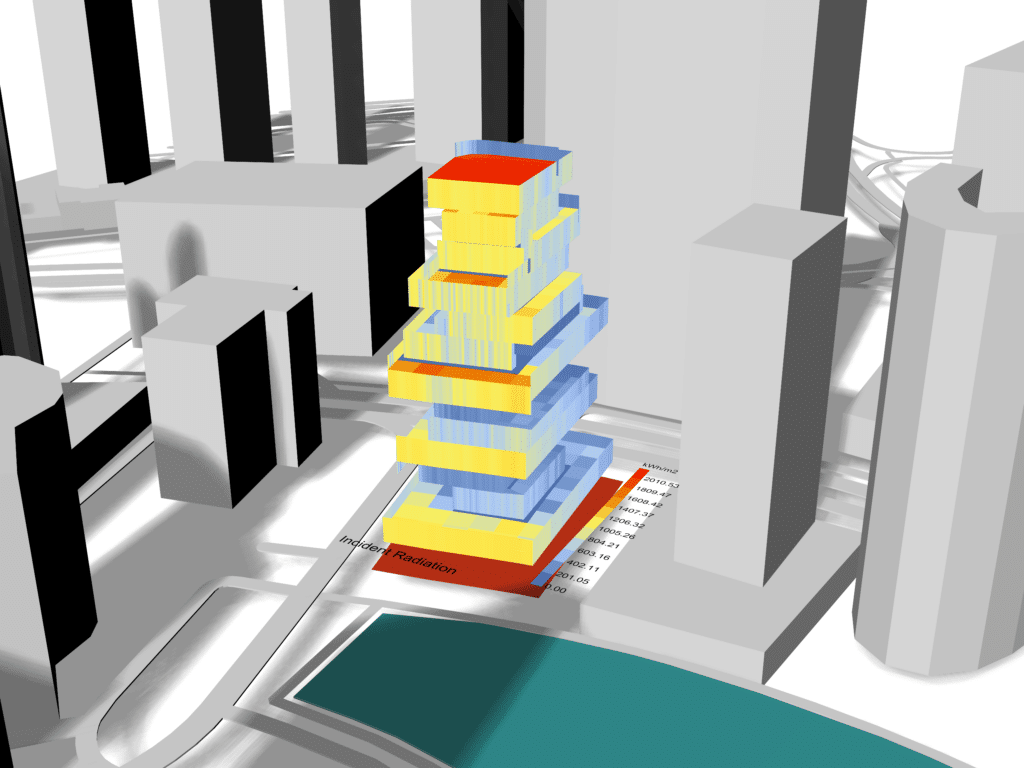
2. Solar Radiation
Objective – To design the facade which will decrease the solar radiation on the glazing wall and the floor of the building
3. Sun Hours
Objective – To design the facade which will maximise the sun hours on the building while giving optimum results
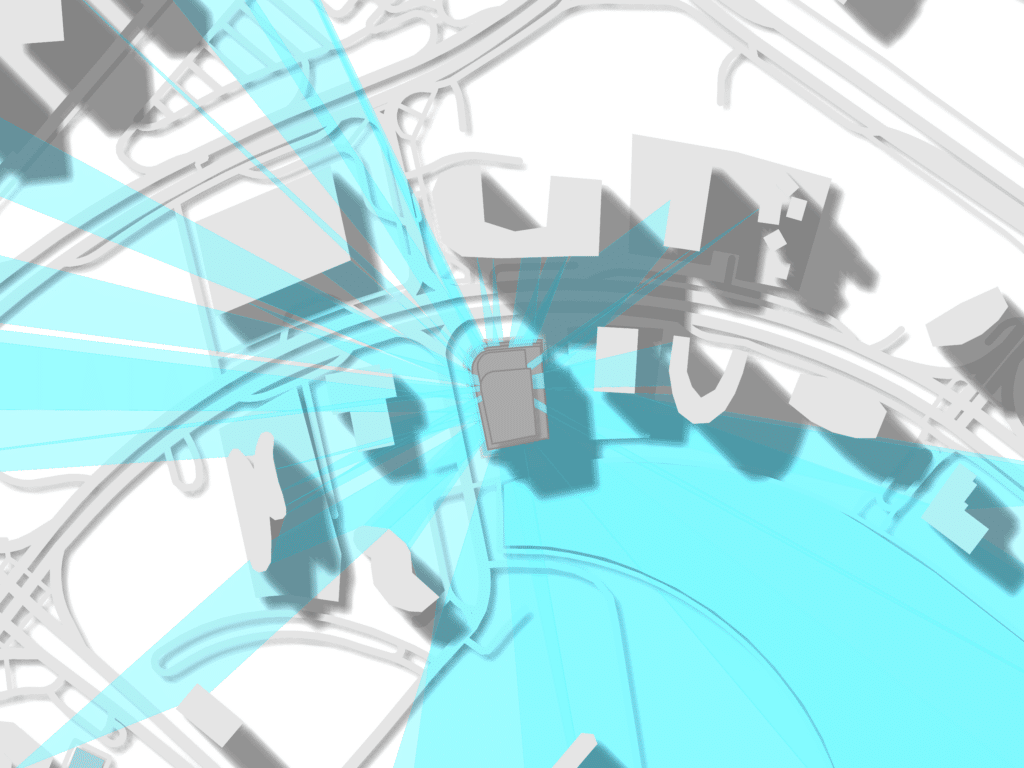
4. Views Out
Objective – To get the most out of the facade by maximising the views from the building
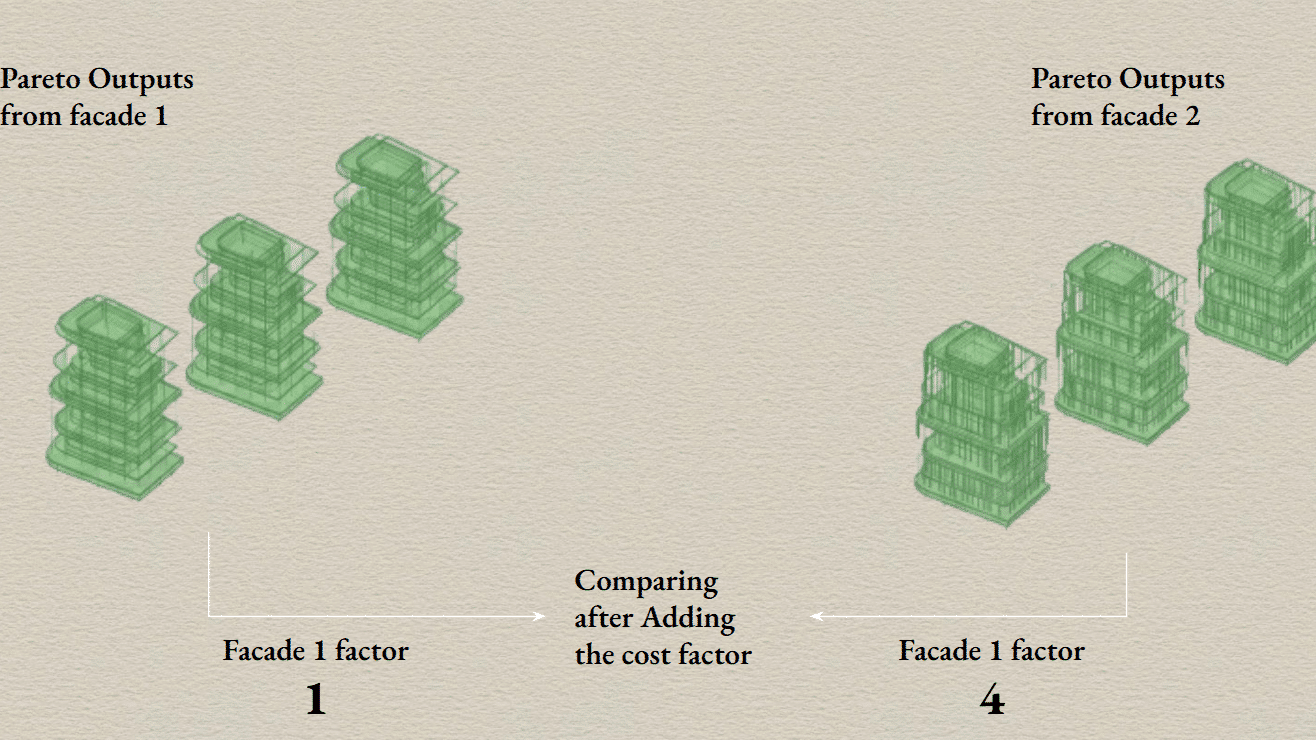
5. Cost Effectiveness
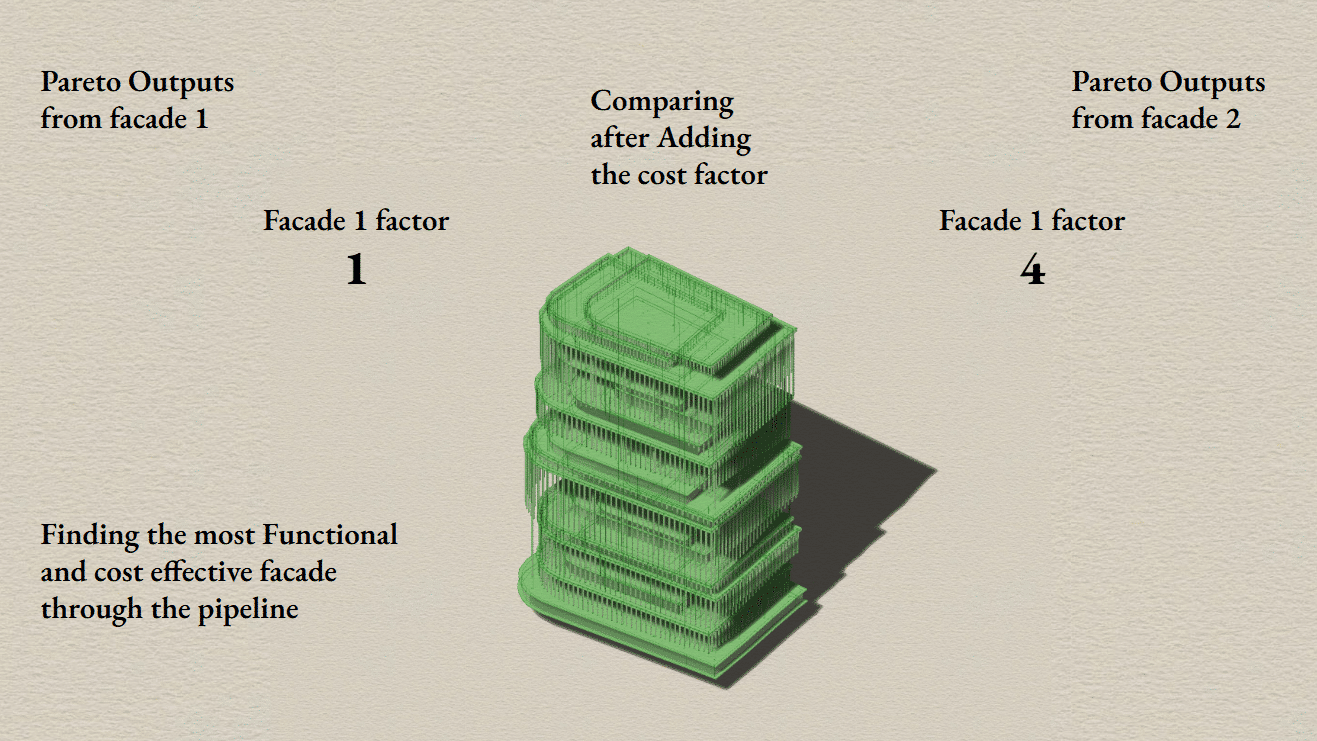
The factor of cost between a fixed and kinetic facade is 1:4 respectively, Objective – to find the facade after optimization and compare which is the most performance effective and cost effective out of all
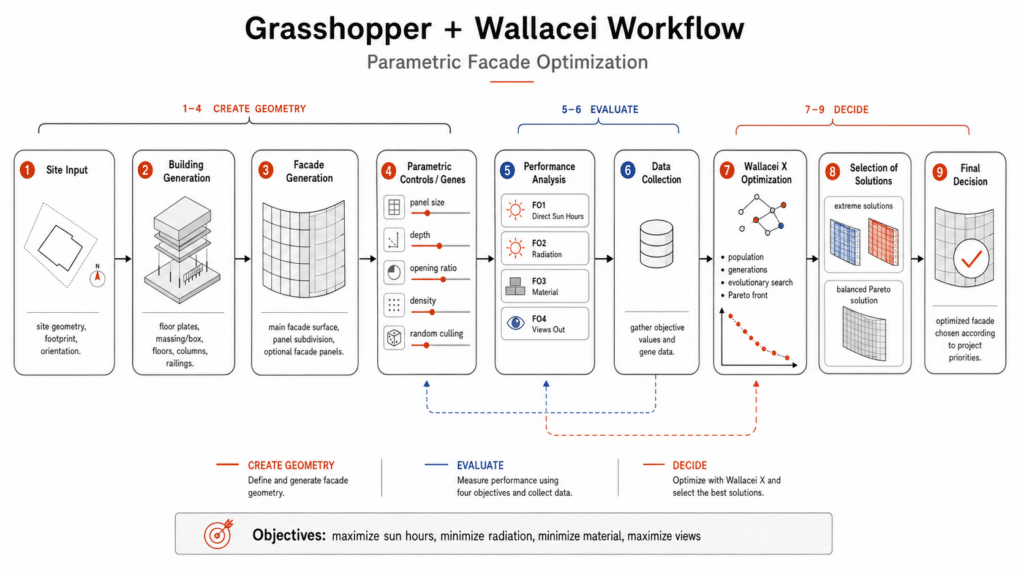
Pseudo Code
Results
Façade 1
Wallacei Optimization Results
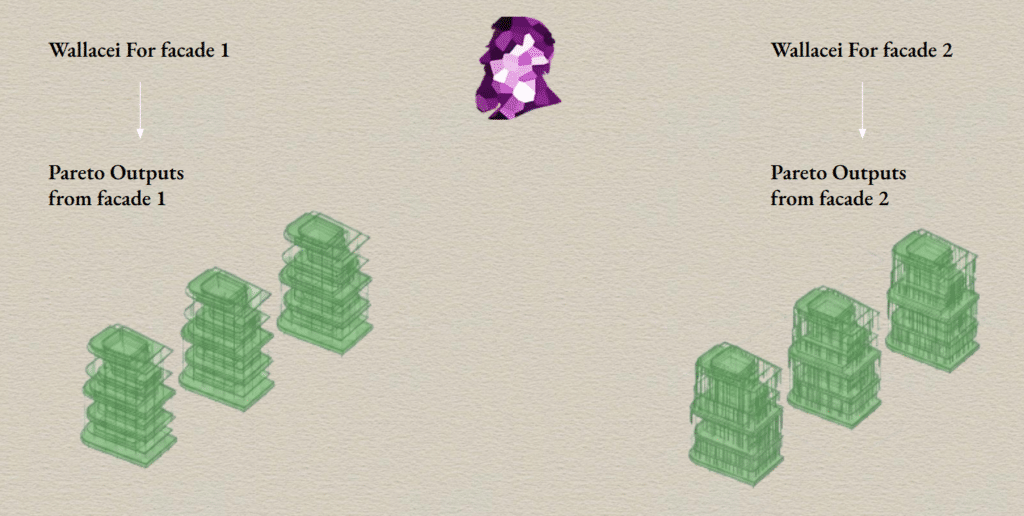
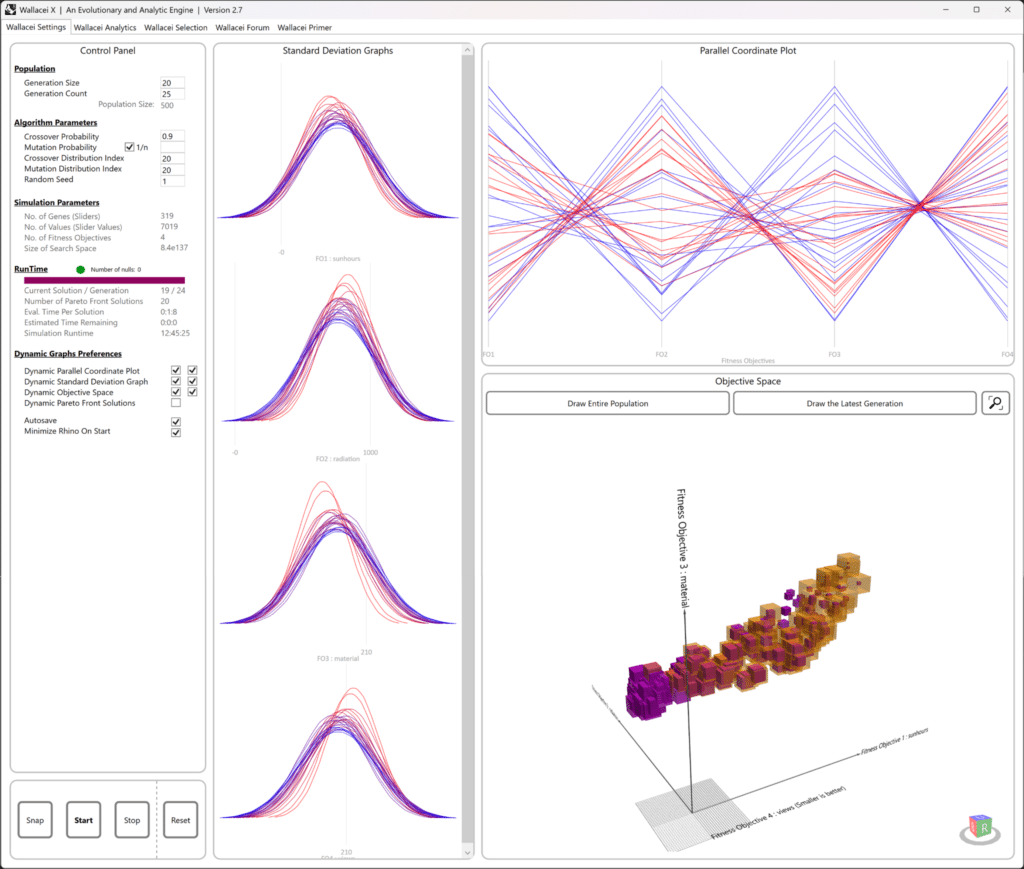
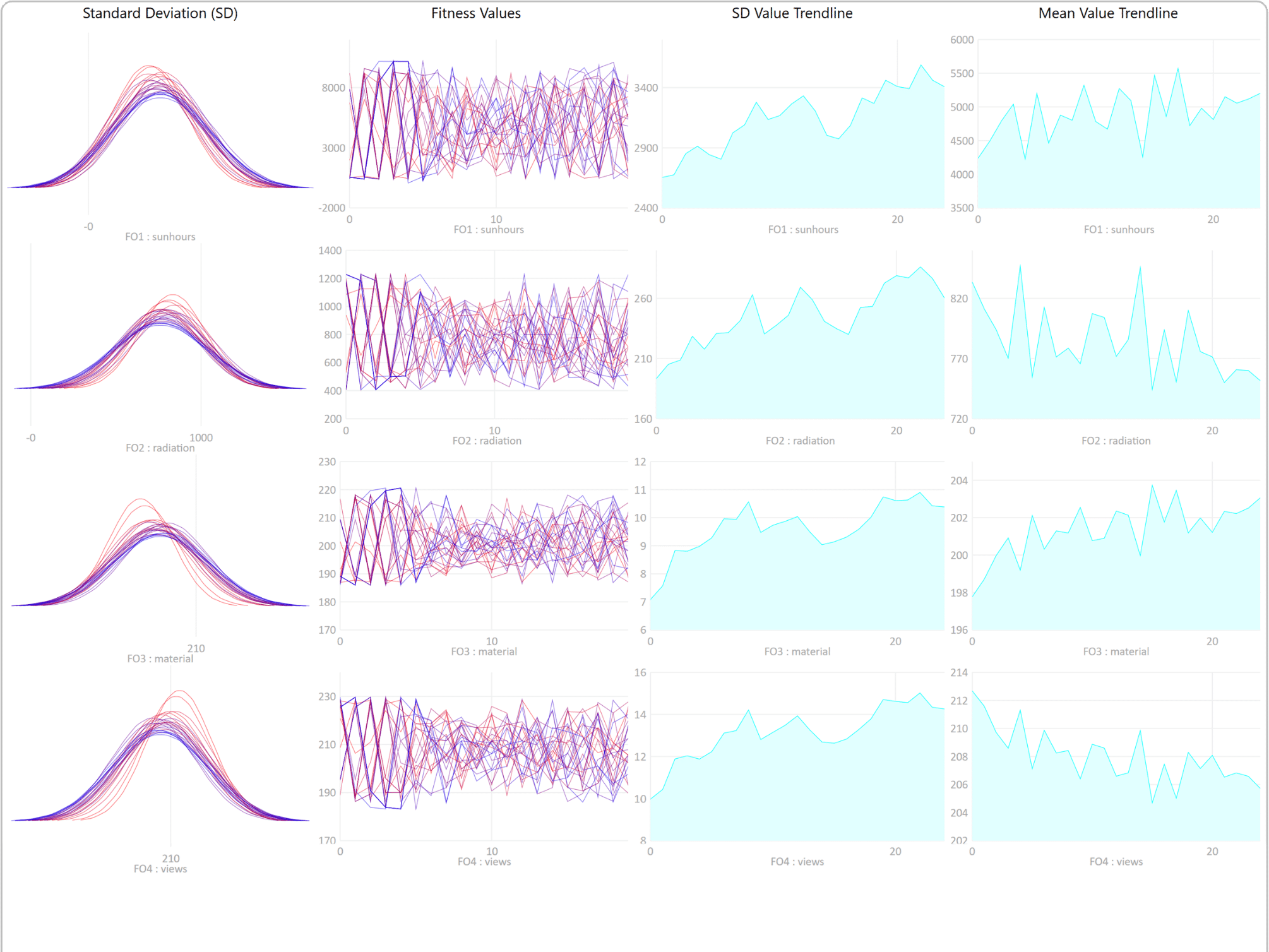
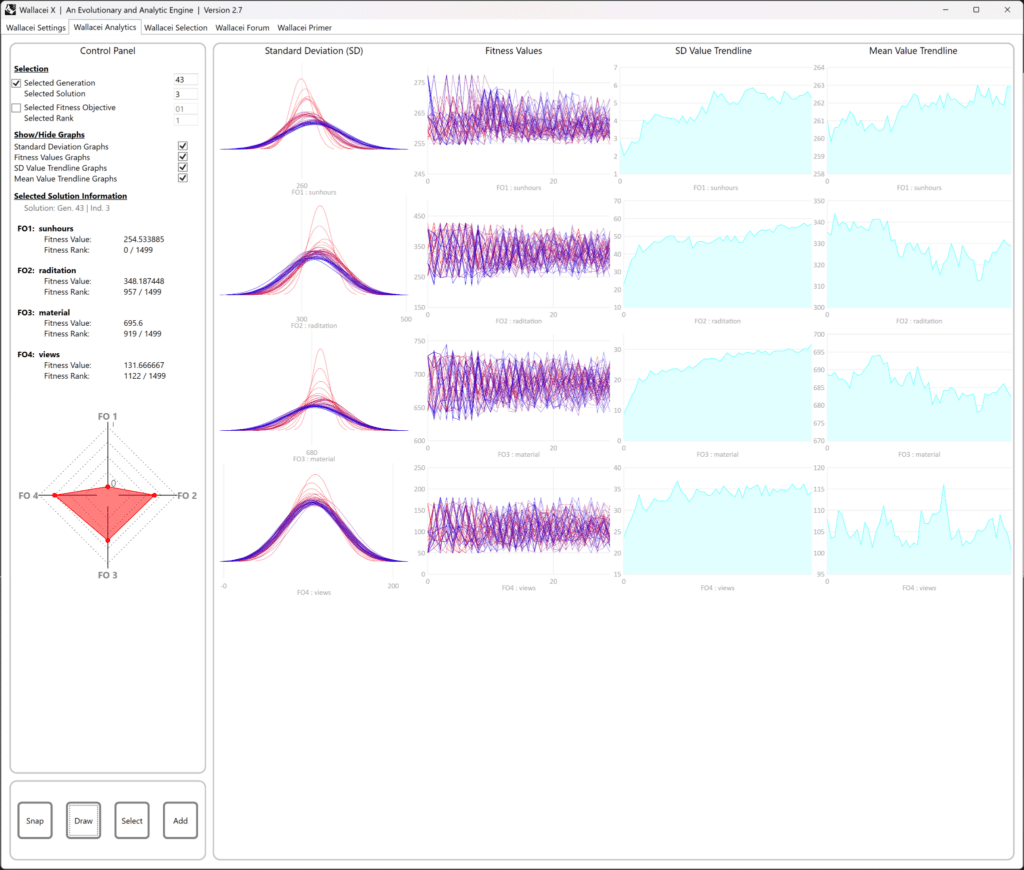
The optimization shows a progressive improvement in performance across generations while maintaining solution diversity. The fitness distributions become more concentrated over time, indicating convergence toward better-performing facade configurations. The Pareto front highlights the trade-offs between sun exposure, radiation, material usage, and views, providing a set of balanced solutions rather than a single optimal design.
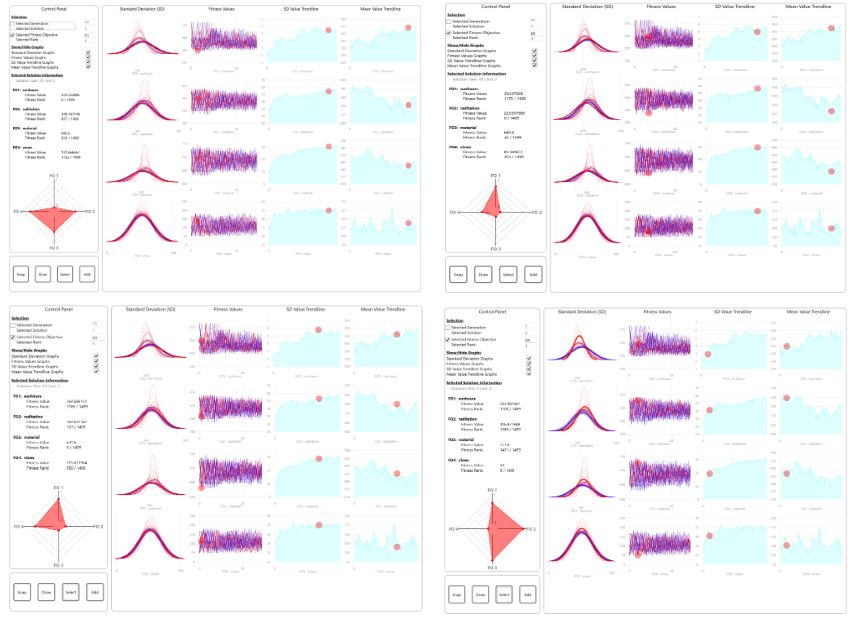
Understanding the extremities:
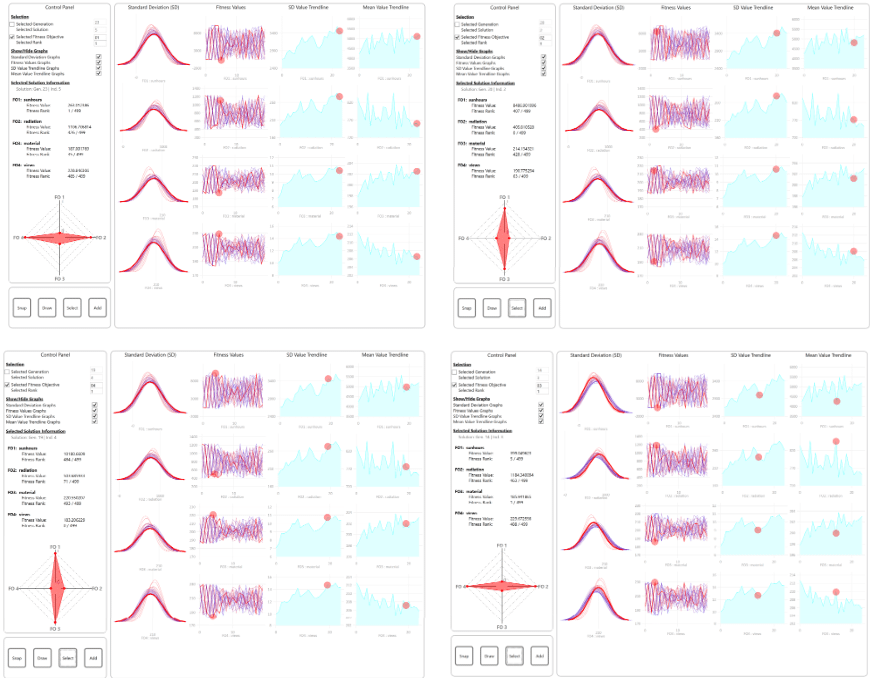
- FO1 – Sun Hours (Rank 1): This solution achieves the lowest sun exposure, providing maximum shading and solar protection. However, it performs poorly in radiation reduction and views, highlighting the trade-off between shading and visual openness.
- FO2 – Radiation (Rank 1): This solution minimizes solar radiation most effectively, reducing heat gain and improving thermal performance. This comes at the expense of higher sun exposure and increased material usage.
- FO3 – Material (Rank 1): This solution uses the least amount of material, making it the most resource-efficient option. However, its performance in radiation control and views is among the weakest of all solutions.
- FO4 – Views (Rank 1): This solution maximizes outward visibility and openness. While offering the best visual connection to the surroundings, it sacrifices shading performance, resulting in higher sun exposure and radiation levels.
Overall, the four extremities clearly demonstrate the trade-offs between environmental performance, material efficiency, and visual quality, reinforcing the need for a balanced Pareto-optimal solution.
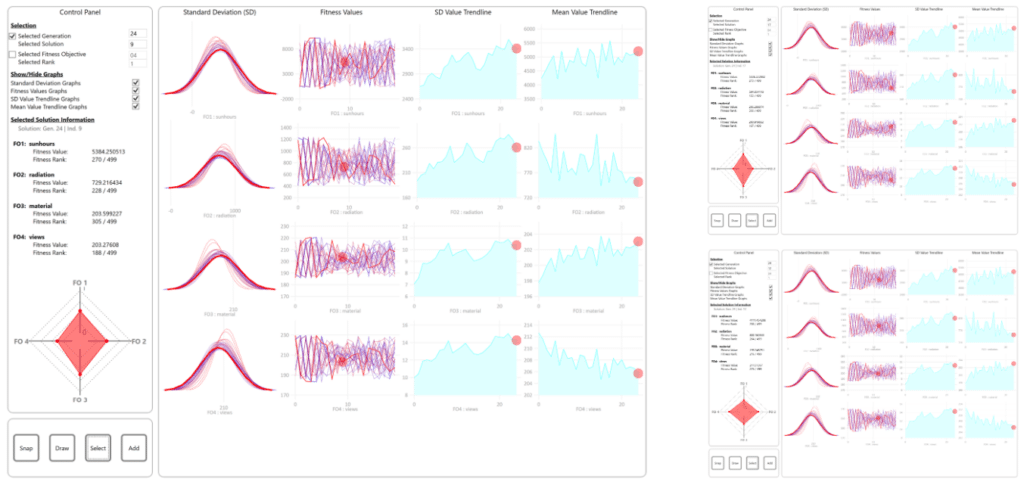
Top 3 Optimizations
Façade 2
Understanding the extremities:
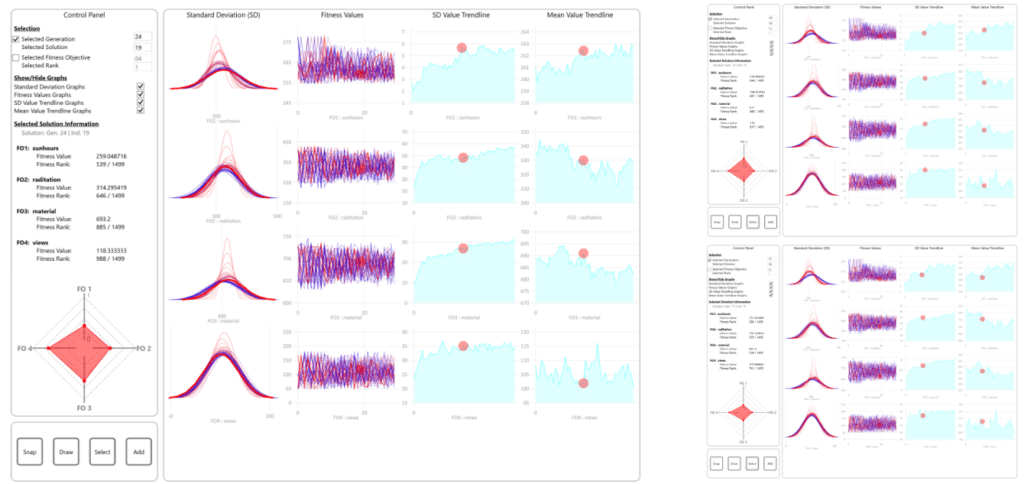
- FO1 – Sun Hours (Rank 1): This solution minimizes sun exposure, achieving the best shading performance. However, radiation, material efficiency, and views rank significantly lower, indicating a highly specialized solution.
- FO2 – Radiation (Rank 1): This option achieves the lowest solar radiation levels while maintaining relatively good material efficiency. The trade-off is reduced daylight access and weaker view performance.
- FO3 – Material (Rank 1): This solution is the most material-efficient, requiring the least facade material. While resource-efficient, it offers limited improvement in solar performance and visual connectivity.
- FO4 – Views (Rank 1): This solution maximizes outward visibility and openness. The improved views come at the expense of higher sun exposure, greater radiation, and increased material usage.
These extremities illustrate the conflicting nature of the objectives, confirming that a balanced Pareto solution is required to achieve the best overall facade performance.
Top 3 Optimizations
Catalogue of façade
Final Efficient facade
Render