Within the current global context of rapid change, integrated with the potentials of digital technologies, IAAC’s Master in Advanced Architecture (MAA) is committed to the generation of new ideas and applications for Urban Design, Self Sufficiency, Digital Manufacturing Techniques and Advanced Interaction.
In this context IAAC works with a multidisciplinary approach, facing the challenges posed by our environment and the future development of cities, architecture and buildings, through a virtuous combination of technology, biology, computational design, digital and robotic fabrication, pushing innovation beyond the boundaries of a more traditional architectural approach.
Course: MAA01 25/26 Back to the Future Seminar
An Investigation into New Structural Typologies for Timber Reuse
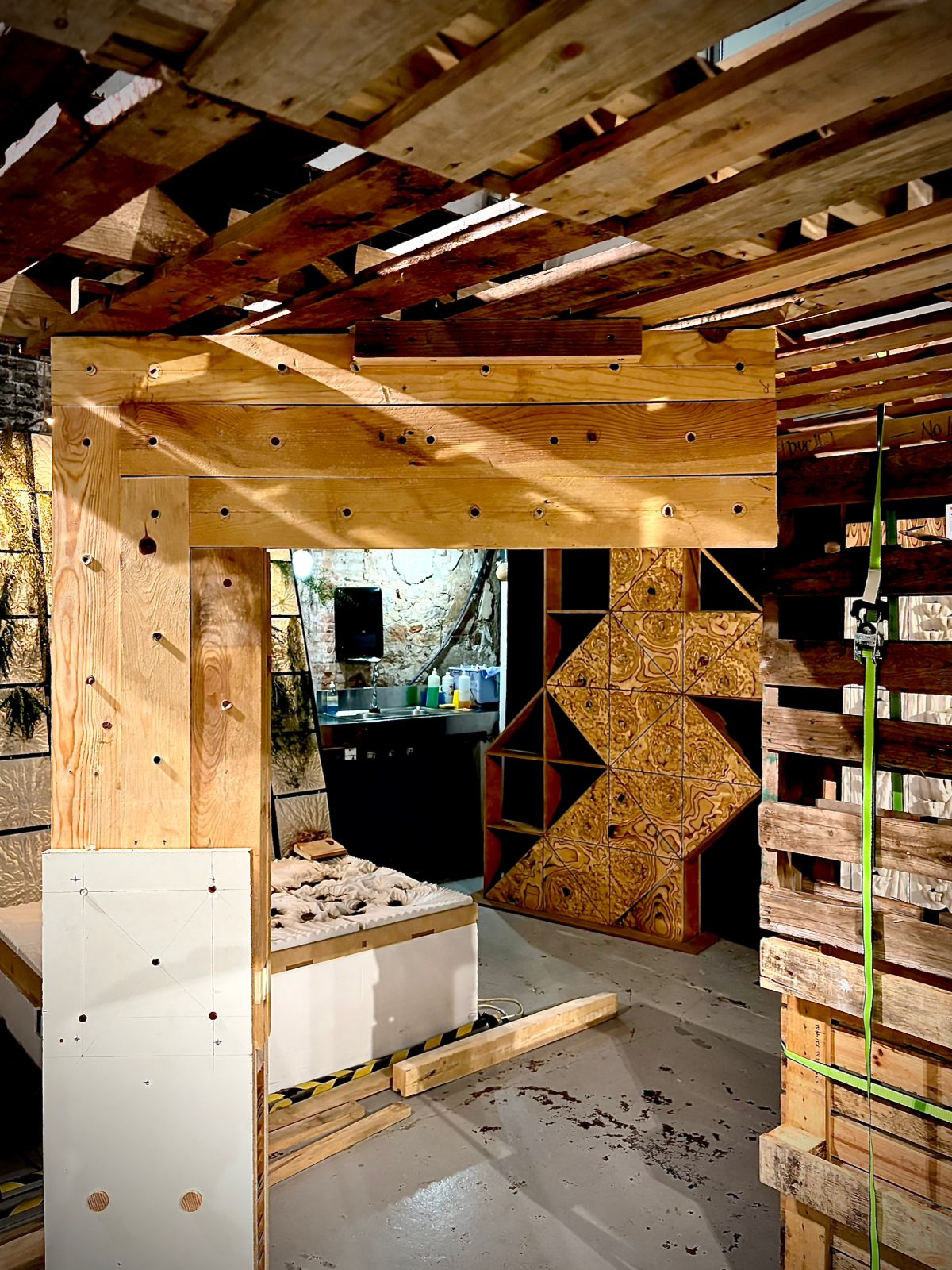
Back to the Future explores how stock-based design and material reuse challenge conventional structural typologies, shifting architectural thinking beyond idealized or “perfect” systems. The seminar emphasizes intuitive understanding of structural behavior prior to digital analysis, combining iterative computational modeling with physical load testing to evaluate force flow, material anisotropy, and reuse-driven typologies. Working with reused timber stocks and building on low-carbon construction practices developed by GS8, students design and test structural systems that integrate waste materials into robust, adaptable architectural solutions.
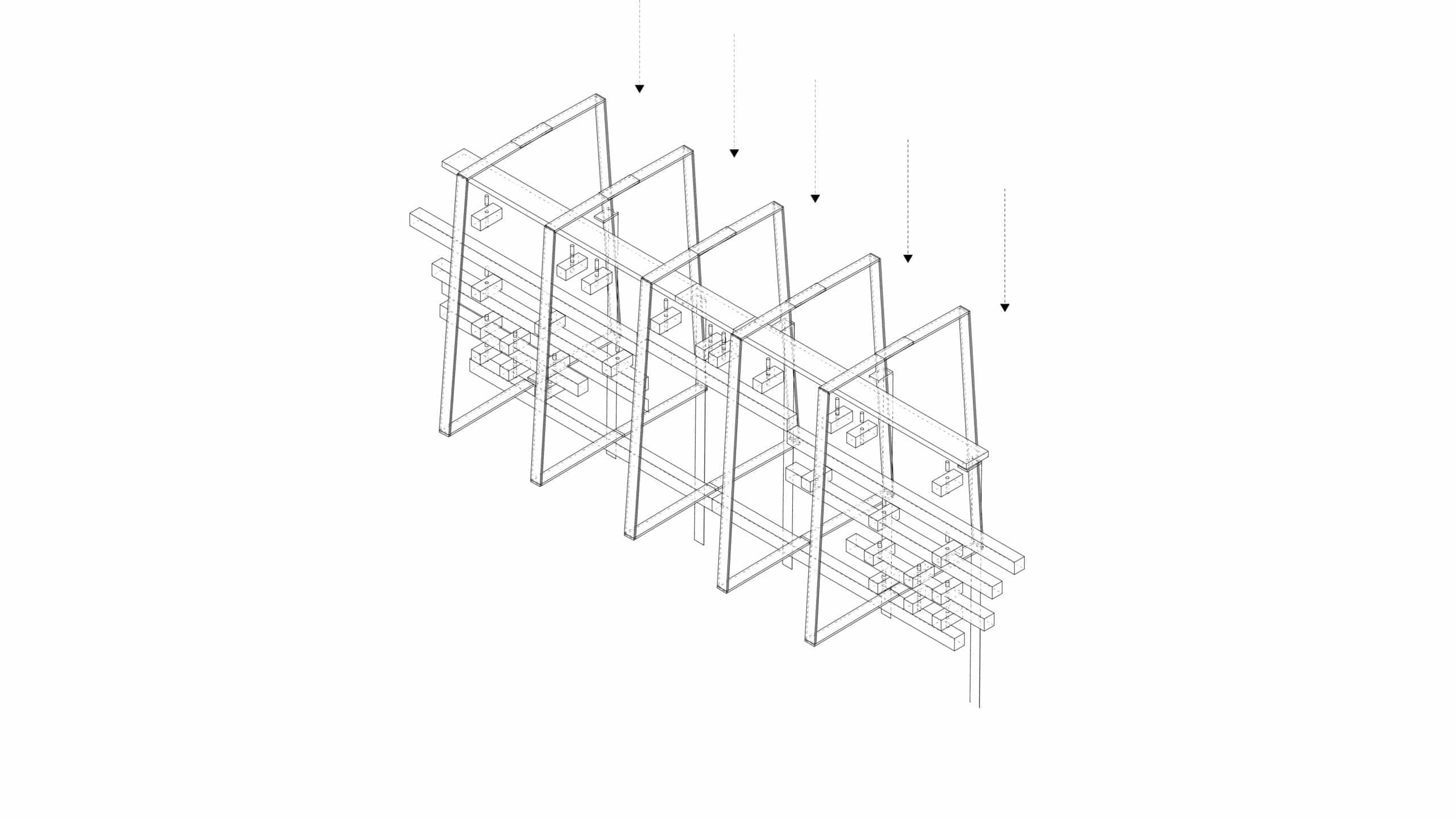
view Syllabus & FacultyTHE RECIPROCAL VIERENDEEL
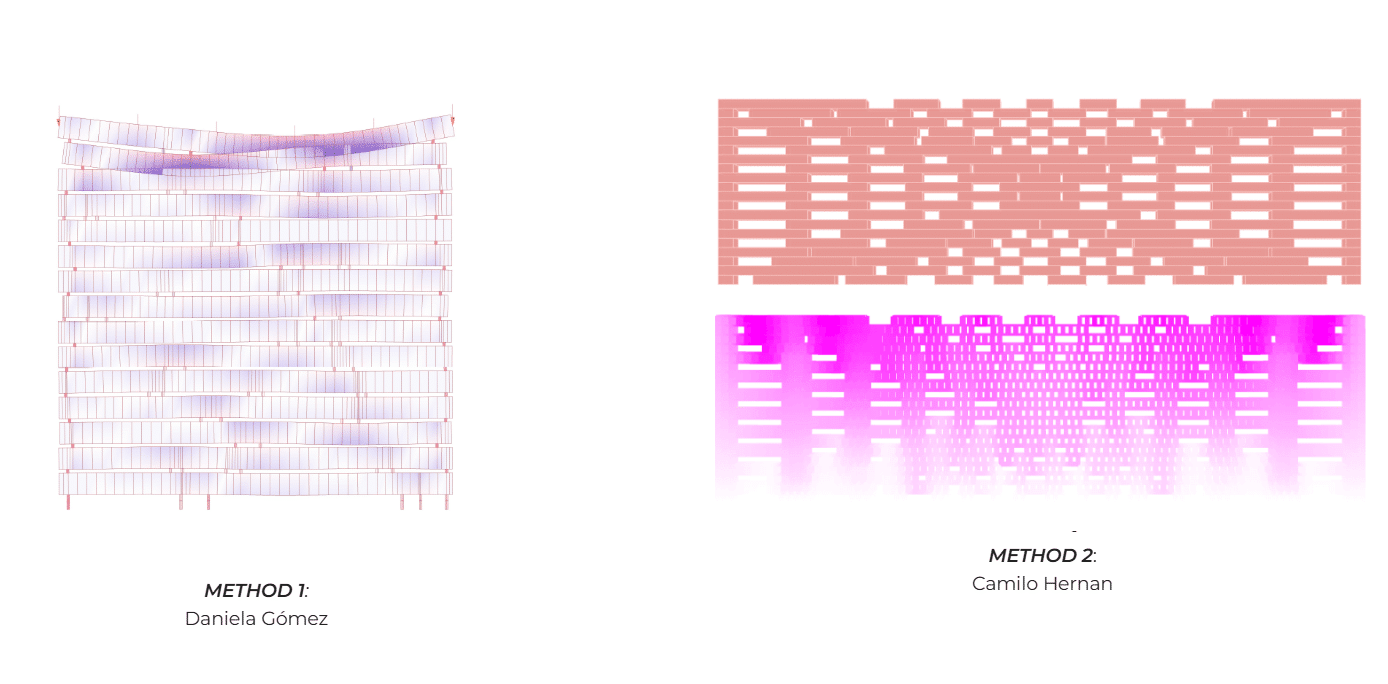
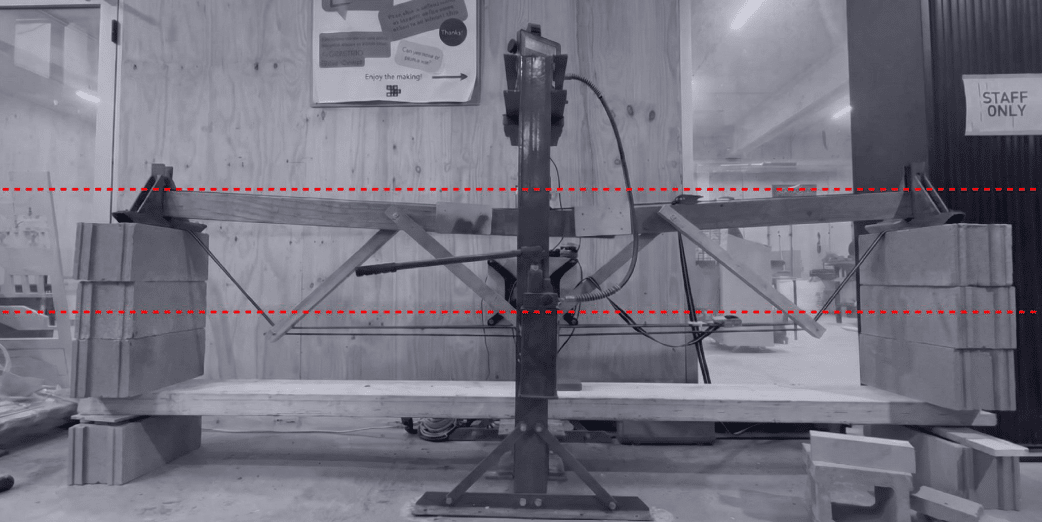
DIMENSIONS MATERIAL USED PROCESS OF MAKING BEAM TEST SETUP BEAM DEFORMATION The images document progressive deflection under incremental loading (0 kg to 76 kg) where it can be observed that the block is taking the load on which the beam is placed and it is under high compression whereas beam is held by strap to … Read more
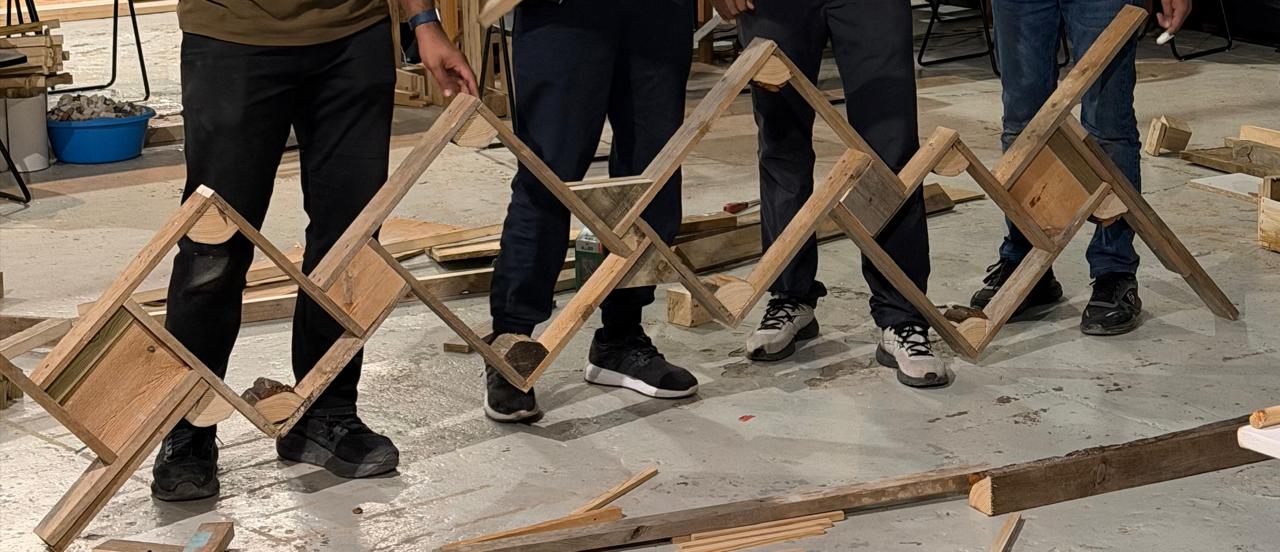
The Harmonica
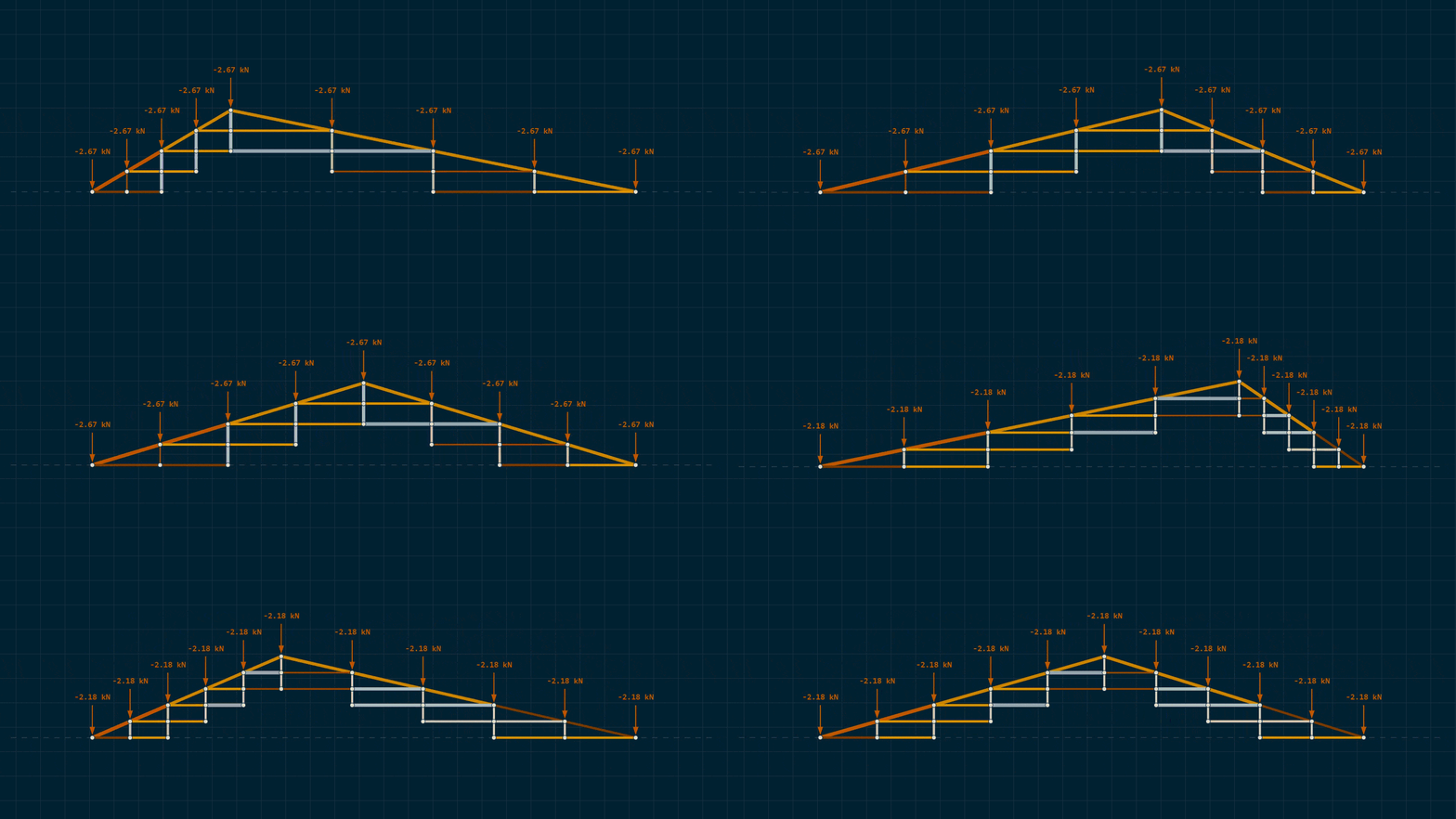
The project documents the iterative design and manual fabrication of a 3-meter span beam constructed exclusively from limited recycled wooden members. Iterations The beam was developed through a series of structural iterations evaluated using utilization ratio, deflection, bending moment, axial force, and shear force. With a fixed inventory of recycled wooden elements, optimization focused on … Read more