Within the current global context of rapid change, integrated with the potentials of digital technologies, IAAC’s Master in Advanced Architecture (MAA) is committed to the generation of new ideas and applications for Urban Design, Self Sufficiency, Digital Manufacturing Techniques and Advanced Interaction.

In this context IAAC works with a multidisciplinary approach, facing the challenges posed by our environment and the future development of cities, architecture and buildings, through a virtuous combination of technology, biology, computational design, digital and robotic fabrication, pushing innovation beyond the boundaries of a more traditional architectural approach.

Filters
Course

Good Day Sunshine!

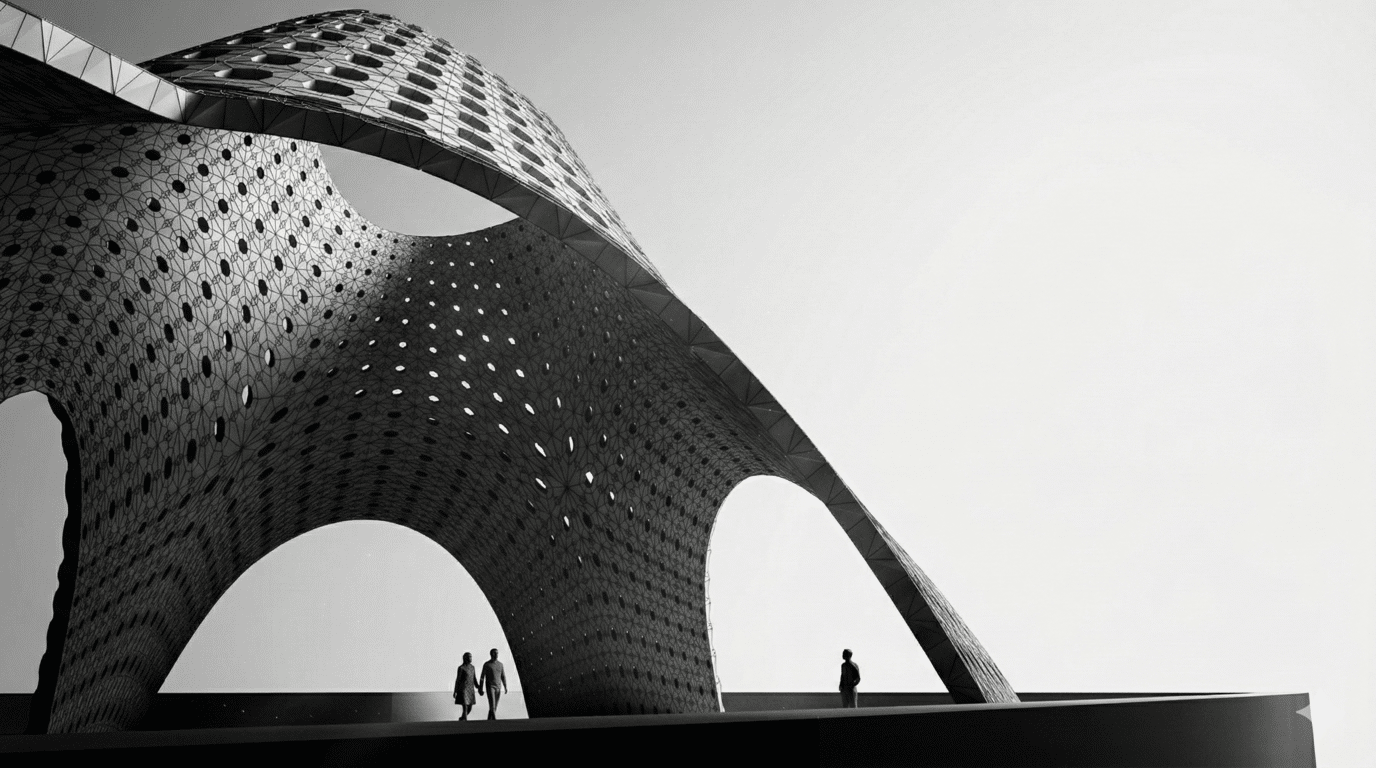
Good Day Sunshine is a lightweight canopy that shapes space through light and structure. A flowing membrane stretches between fixed frames, forming a series of vaulted bays that create shade while allowing controlled openings for sunlight to pass through. The surface is organized by a triangulated structural network that gives strength to the thin skin … Read more
Beaver Burrow Pavillion

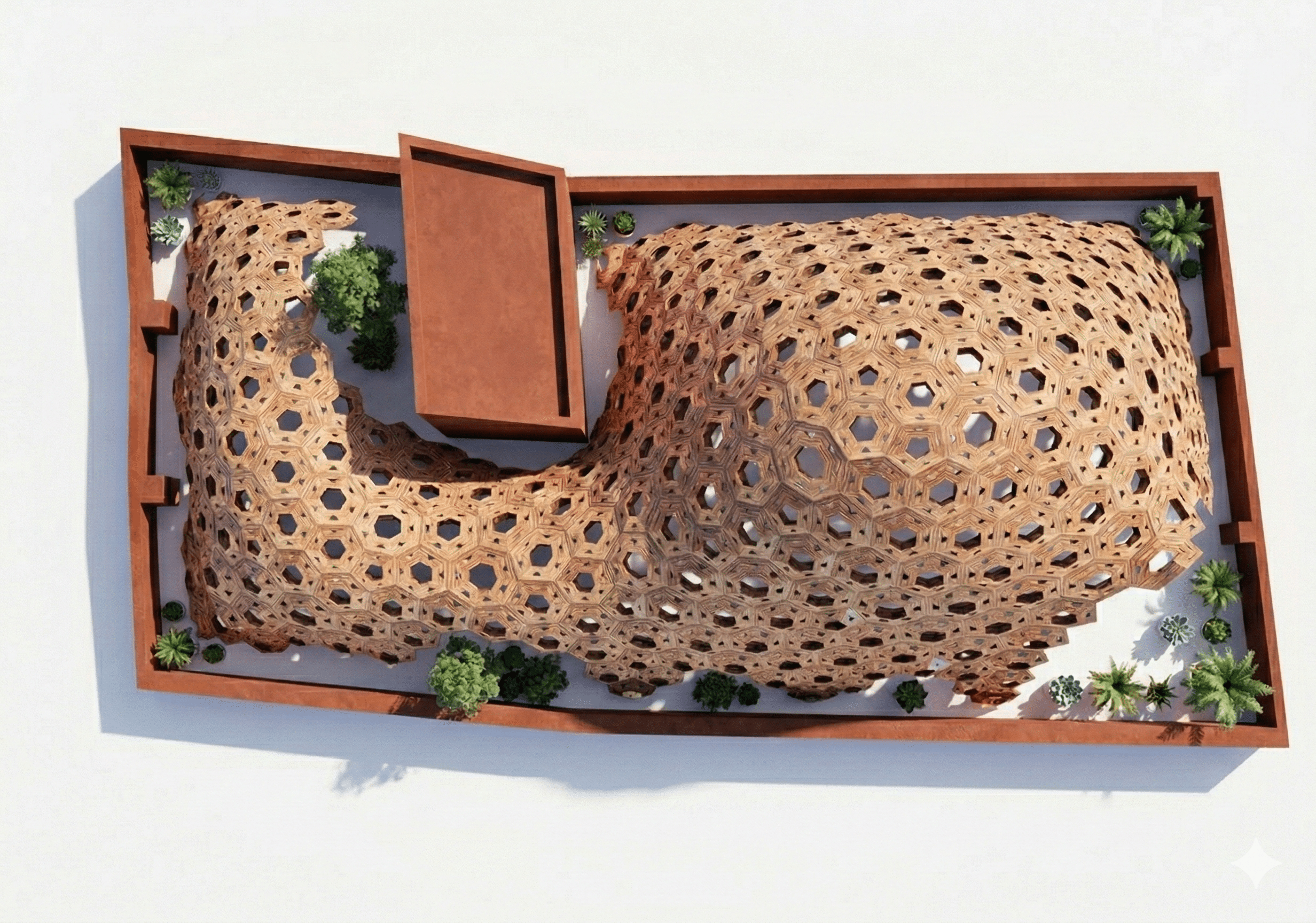
This project introduces a high-performance terrace pavilion that merges environmental data with advanced robotic fabrication. The design process began with a comprehensive solar and circulation analysis, identifying thermal hotspots and vantage points to determine the optimal balance between shaded gathering areas and open viewing corners. The resulting structure features a complex, interlocking timber geometry that … Read more

The Cellular Dune

Project Brief Forces of Nature explores how architectural form can emerge from the interaction of natural forces rather than being predefined. Using computational simulations, the project allows tension, gravity, and equilibrium to shape spatial structures. The installation translates invisible physical behaviors into visible design, creating a form that is discovered through force-driven processes and realized … Read more

Reciprocal Canopy

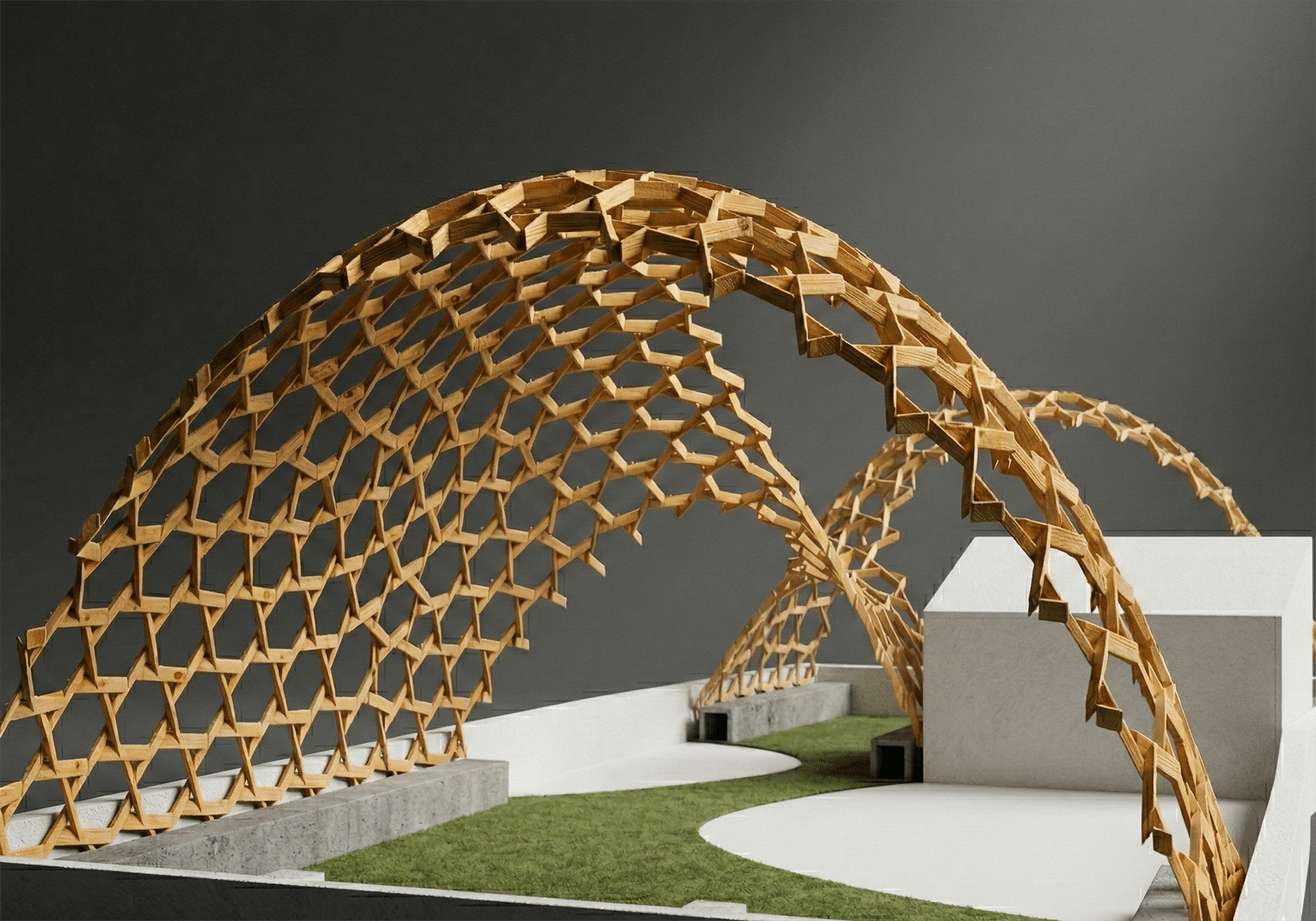
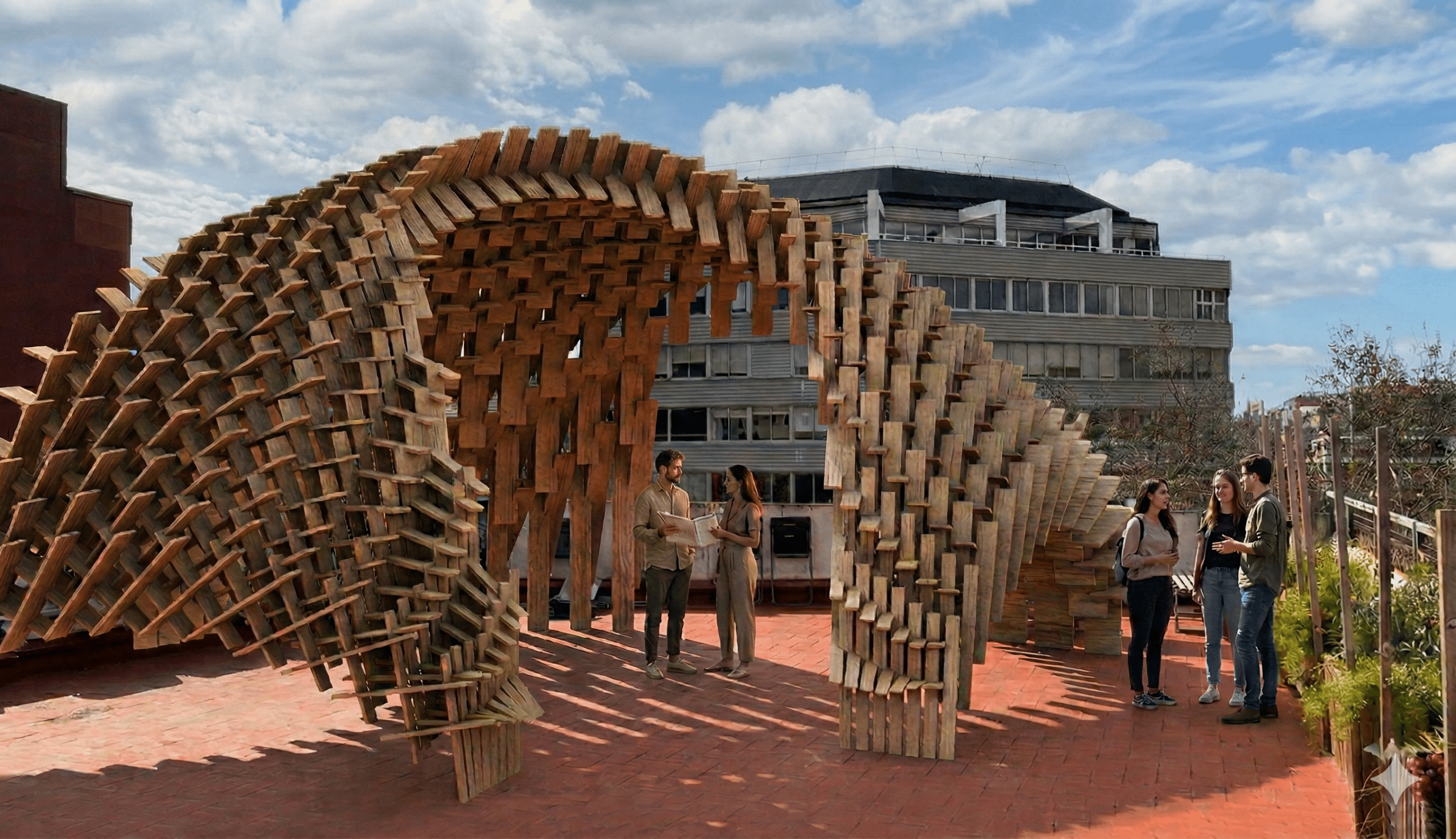
Designed for the IAAC rooftop, this pavilion merges computational design with advanced robotic fabrication. The geometry originates in Grasshopper, where a basic mesh is transformed into an optimized vault using Kangaroo’s physics-based dynamic relaxation. A reciprocal frame pattern is then applied, translating the continuous shell into short, mutually supporting timber pieces. Because every interlocking element … Read more

REPOSE

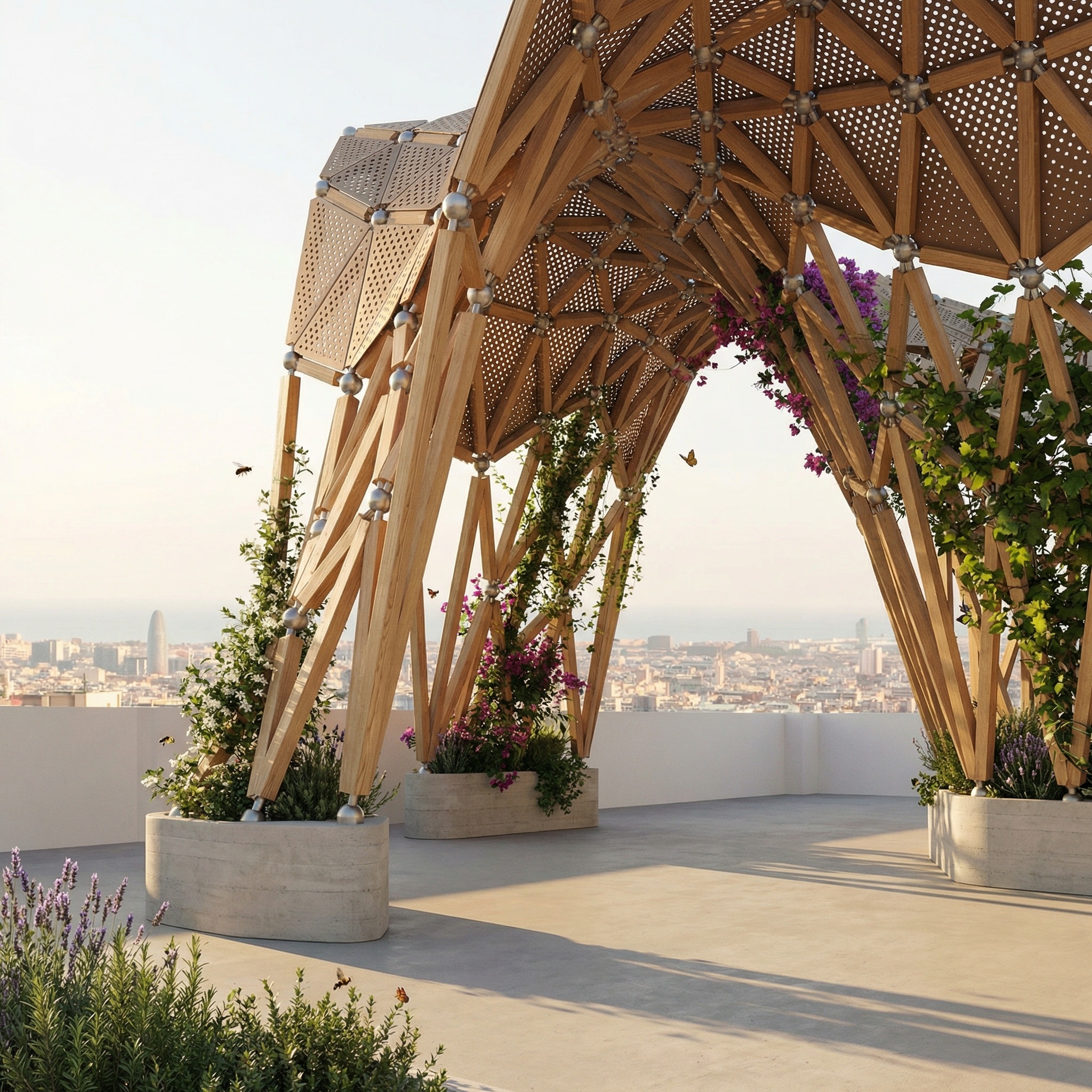
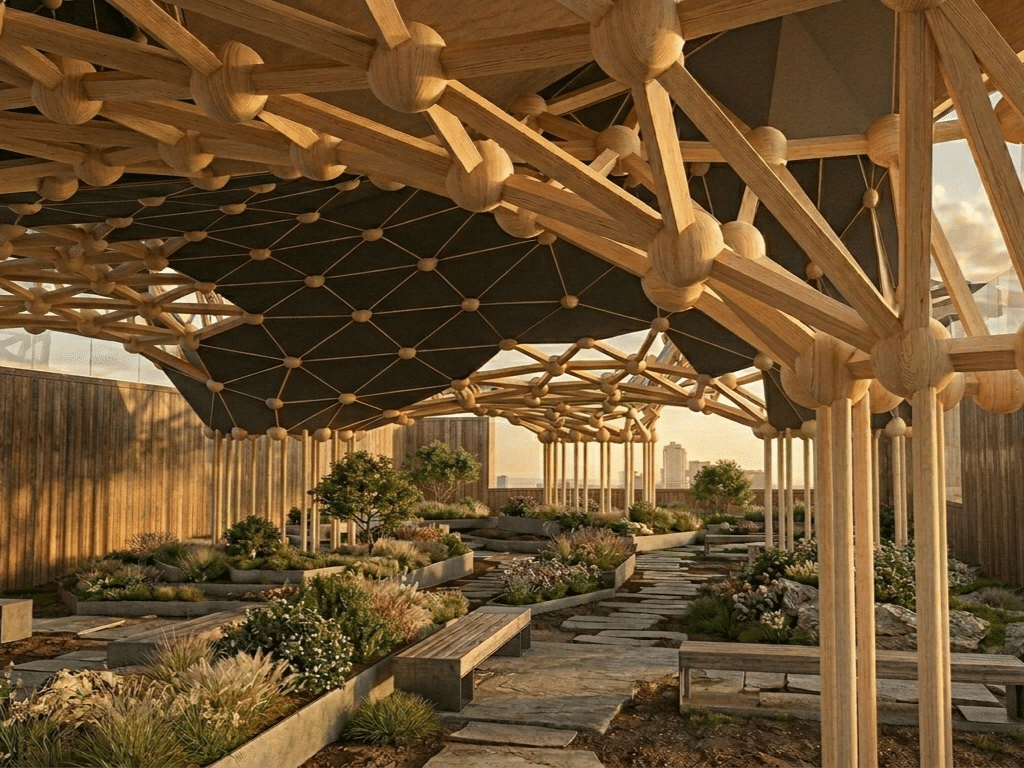
Computational Design II (Level 2) – Final Assignment This project proposes a computational timber pavilion for the IAAC rooftop in Barcelona, conceived as a Bio-Maker space that integrates digital fabrication, structural logic, and urban biodiversity. The structure is generated through a parametric space-frame system composed of American oak members connected through stainless steel bolt ball … Read more

Relaxed tectonics

This research explores the intersection of physics-based form-finding and multi-objective evolutionary optimization to design a high-performance architectural pavilion. Utilizing Kangaroo2 for structural mesh relaxation and Wallacei for the genetic optimization of seating. The result is a topologically optimized structure where complex geometry is not merely aesthetic, but a direct manifestation of environmental data and structural … Read more