Within the current global context of rapid change, integrated with the potentials of digital technologies, IAAC’s Master in Advanced Architecture (MAA) is committed to the generation of new ideas and applications for Urban Design, Self Sufficiency, Digital Manufacturing Techniques and Advanced Interaction.
In this context IAAC works with a multidisciplinary approach, facing the challenges posed by our environment and the future development of cities, architecture and buildings, through a virtuous combination of technology, biology, computational design, digital and robotic fabrication, pushing innovation beyond the boundaries of a more traditional architectural approach.
Possibilities of Reciprocal Timber Structures in the Formation of Space
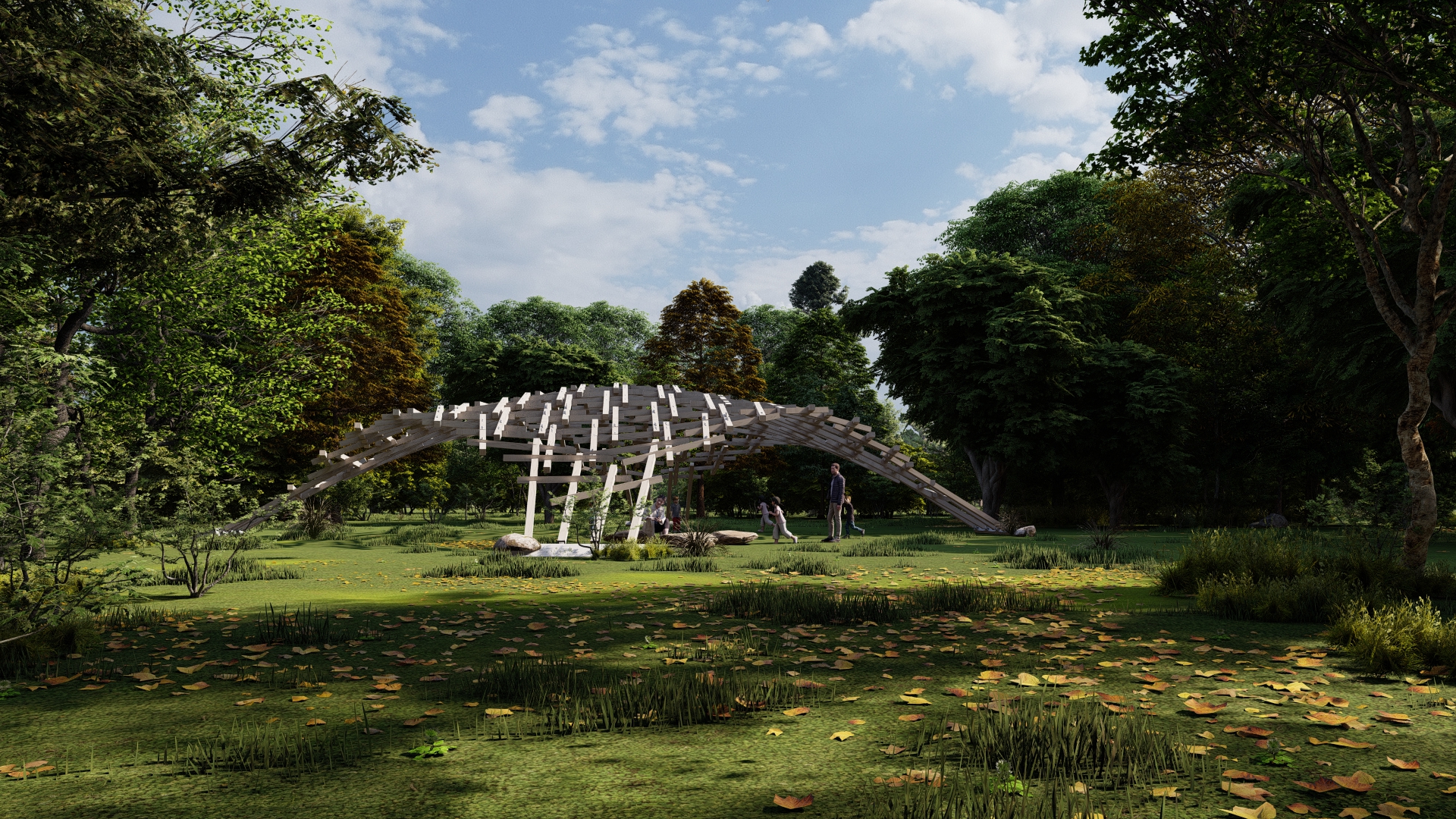
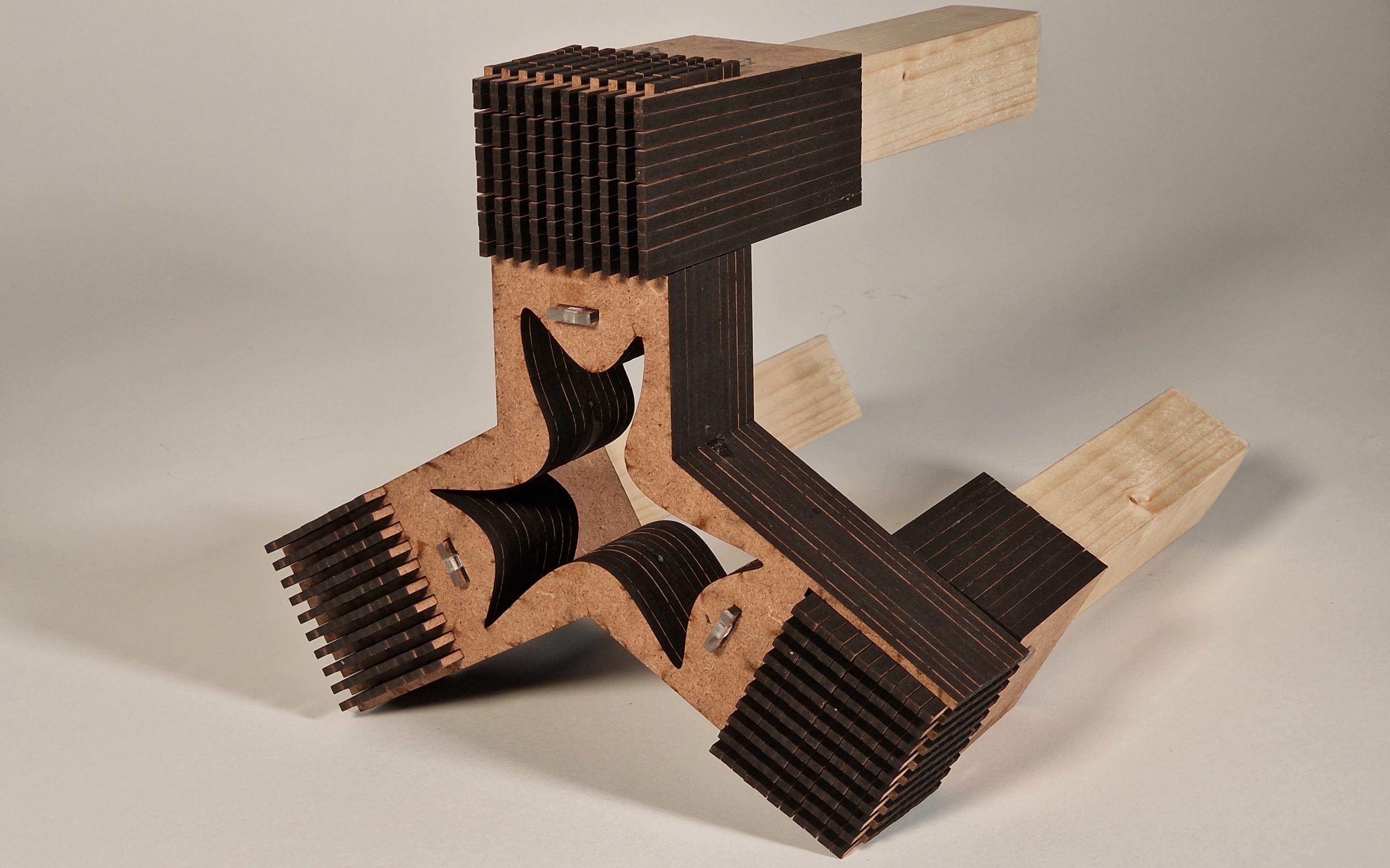
Possibilities of Reciprocal Timber Structures in the Formation of Space is a project that aimed to explore the potential of using reciprocal timber structures to create innovative and functional spaces. The projects main goal is to leverage both traditional artisanal technologies and modern digital tools to create structures that combine beauty, functionality and sustainability. The … Read more
Reviving the Derelict
Concept The project aims to translate movement/motion of people from the streets into kinetic/ light and sound installation on the building’s facade using metal pipes/ wind chimes. The main input into the project would be from ultrasonic sensors placed on the exterior wall in between the building’s boundary and the public. The input from these … Read more
Timber Zipper
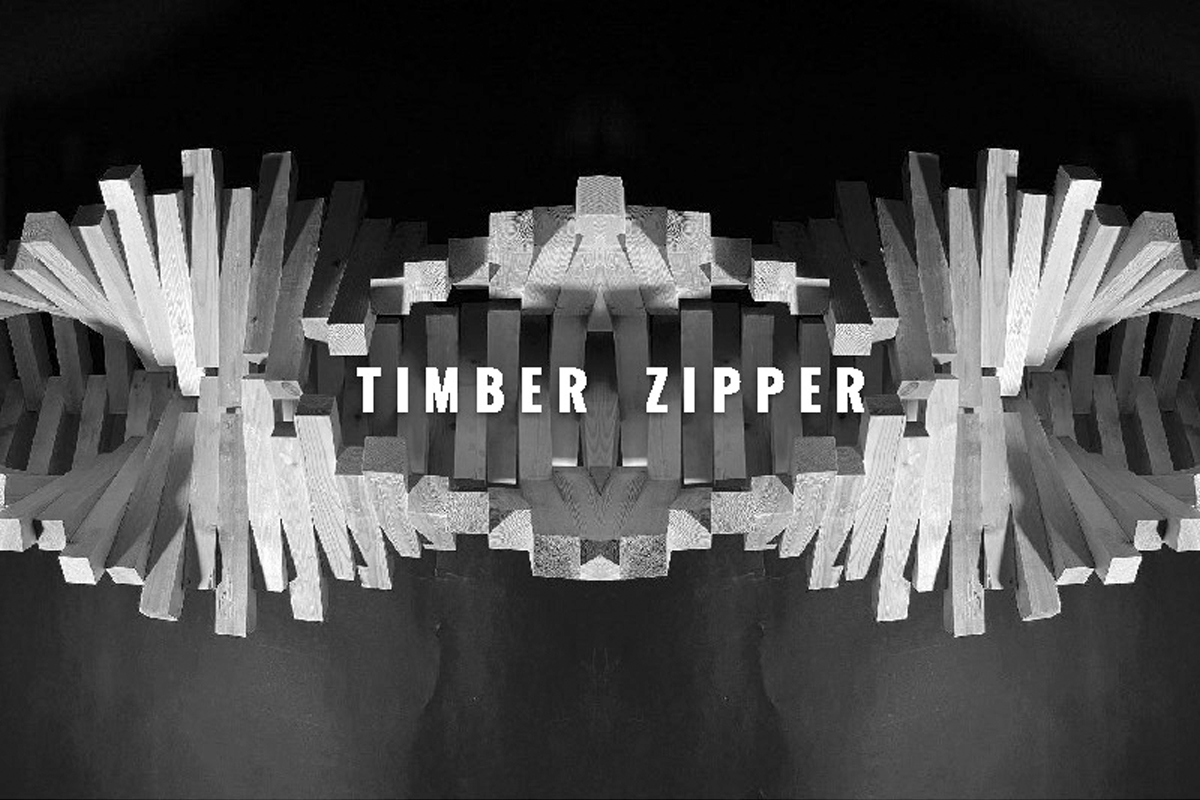
The goal of this project is to comprehend the pick-and-place robotic fabrication process using timber members and how to optimize the process using design choices. By experimenting with various twist, rotate, shift, mirror, and scale actions, column typologies that eventually took the form of a zipper-like column were created. The exercise helps us to understand … Read more
Motion Rhythm
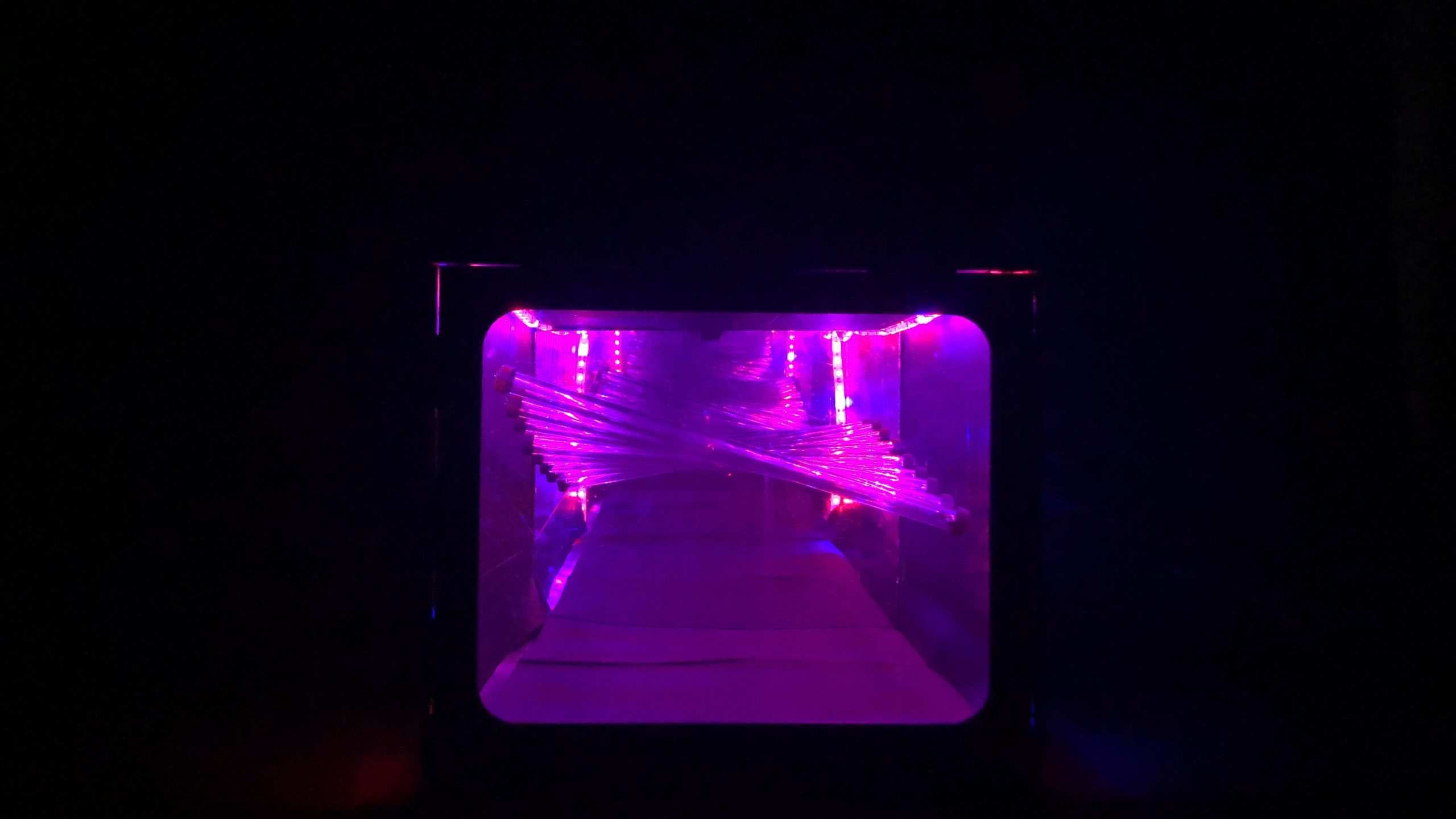
Concept Motion Rhythm is an immersive installation that creates kinetic and sound patterns through the movement of people. It intends to capture the motion of walking and represent it at eye level, creating a connection between the body and its surrounding environment. It consists of a kinetic ceiling made of transparent bars with metal balls … Read more
TOWER TWIST
Concept Catalogue Main Catalogue Weekly Catalogue Catalogue of the digital exploration Parameters Digital input and ABB Fabrication Physical Limitation of fabrication Design Analysis Rules of the Proposed Geometry Layers: 30N. of Sticks: 120Pivot angle Increment: y = sin (x)Total Rotation: 160* Rotation’s Logic Column Making: The 3 modules Comparison Physics Simulation | Robot Simulation | … Read more
UNFURL
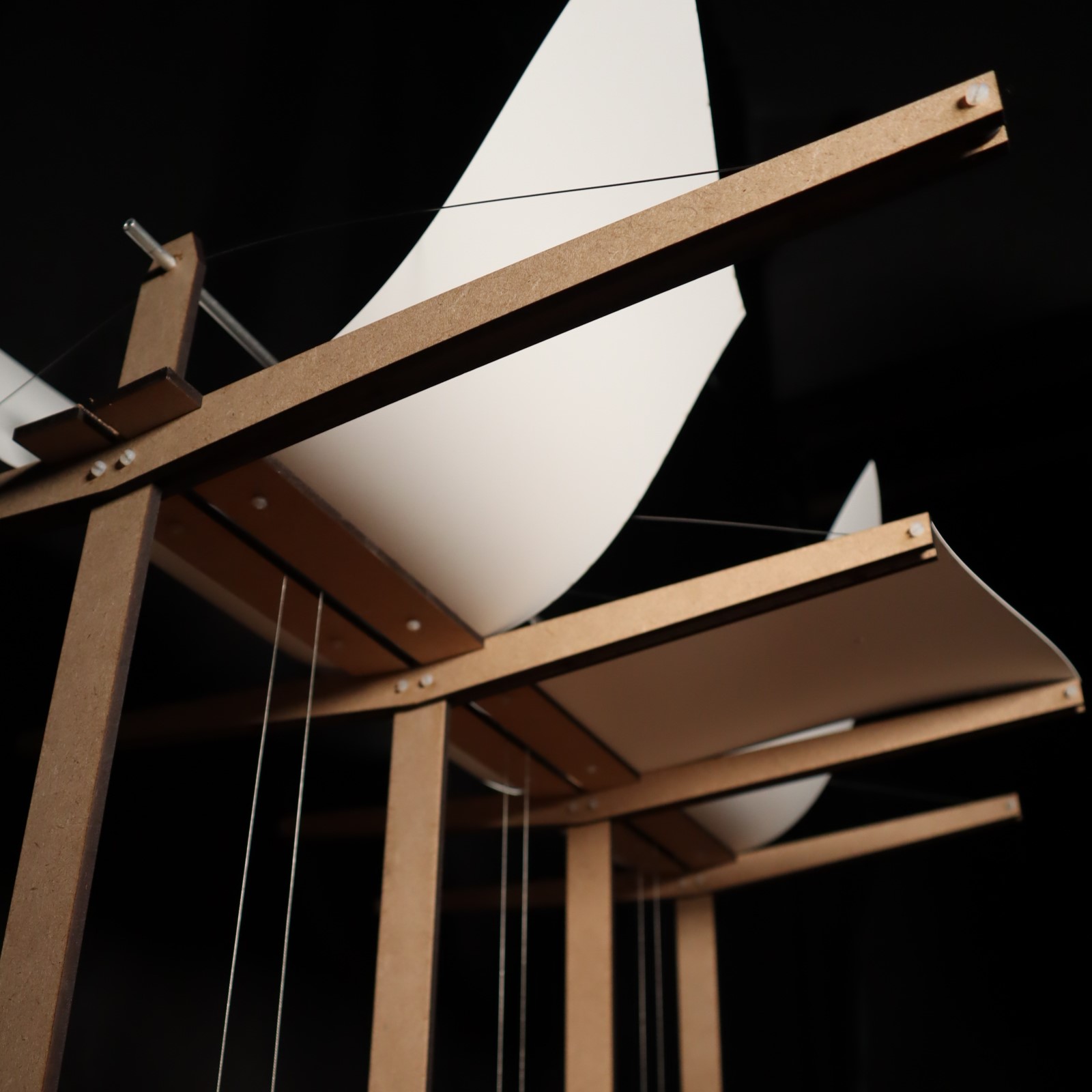
Adaptive shading system Concept The project aims to create a shading installation that reacts to the pressure under it. The movement in the shade occurs when a person or a vehicle is under a module of the shade, triggering the opening of only that module. Location For the site for the installation we chose the … Read more
IN_(TERLOCK) CHAOS
Abstract This project will focus on using the pick & place operations to develop column geometries stacked out of timber elements. Below we present the development of a parametric system capable of integrating fabrication constraints and architectural goals. The aim was to create a natural geometry with a simple linear element, a catalog of multiple … Read more
URBAN HIATUS
MANIFESTO Inclusive, Productive, Sustainable Urban Hiatus is a project that centers around human scale and brings back the lost identity for the people of Poblenou. It aims towards a structure that is inclusive, productive and sustainable.The latest urban plans in Barcelona solved a lot of issues, but sometimes forgot about smaller day to day spaces … Read more
KINETIC FACADE SYSTEM
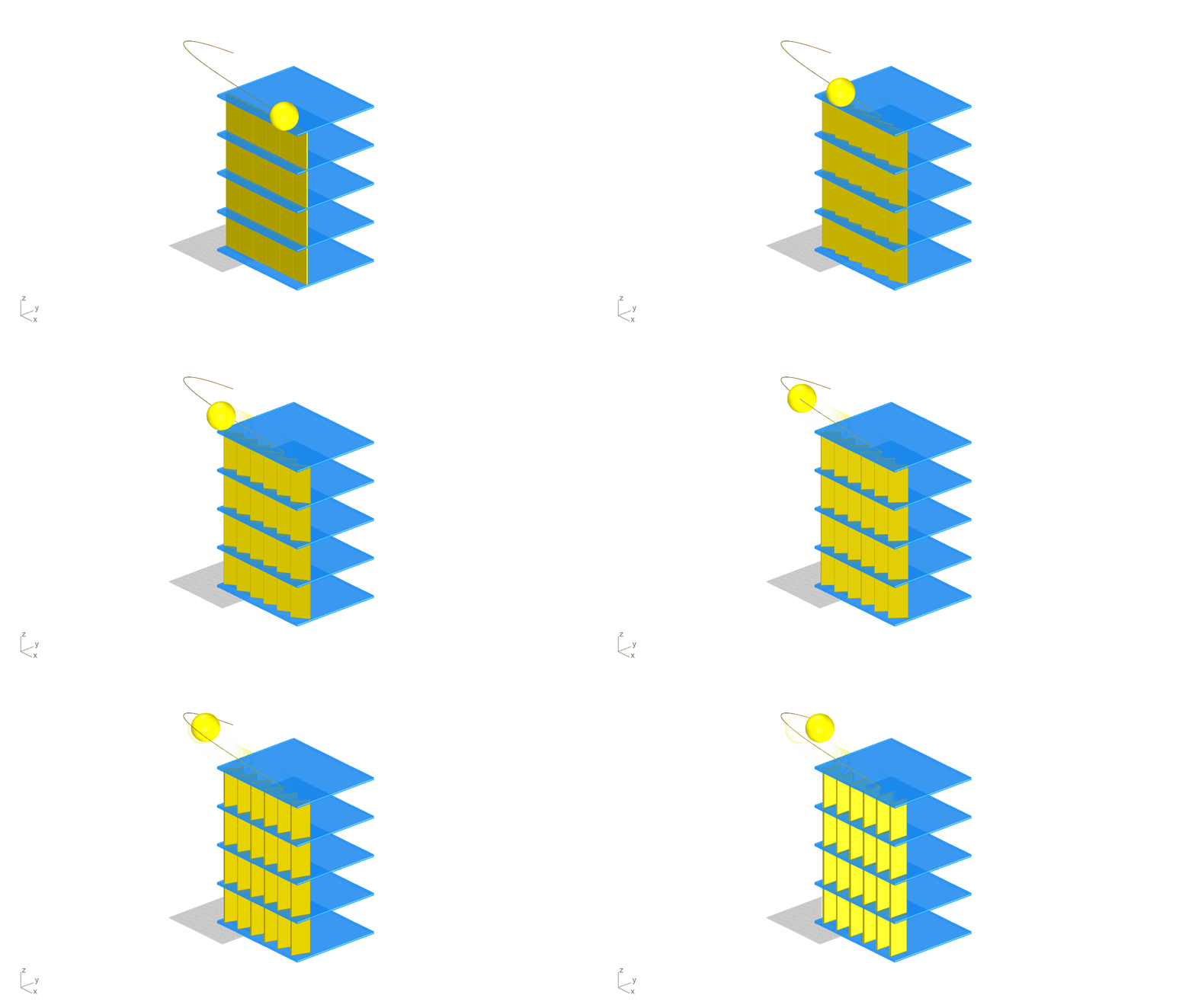
CONCEPT The concept of the project was to create a system that detects solar radiation throughout the day and adjusts the facade angle accordingly to keep the internal area of the building cool and shaded using a Photoresistor. Also, at the same time to prevent the rainwater from coming inside the building using a water … Read more
Digital Fabrication – Testing & Prototyping
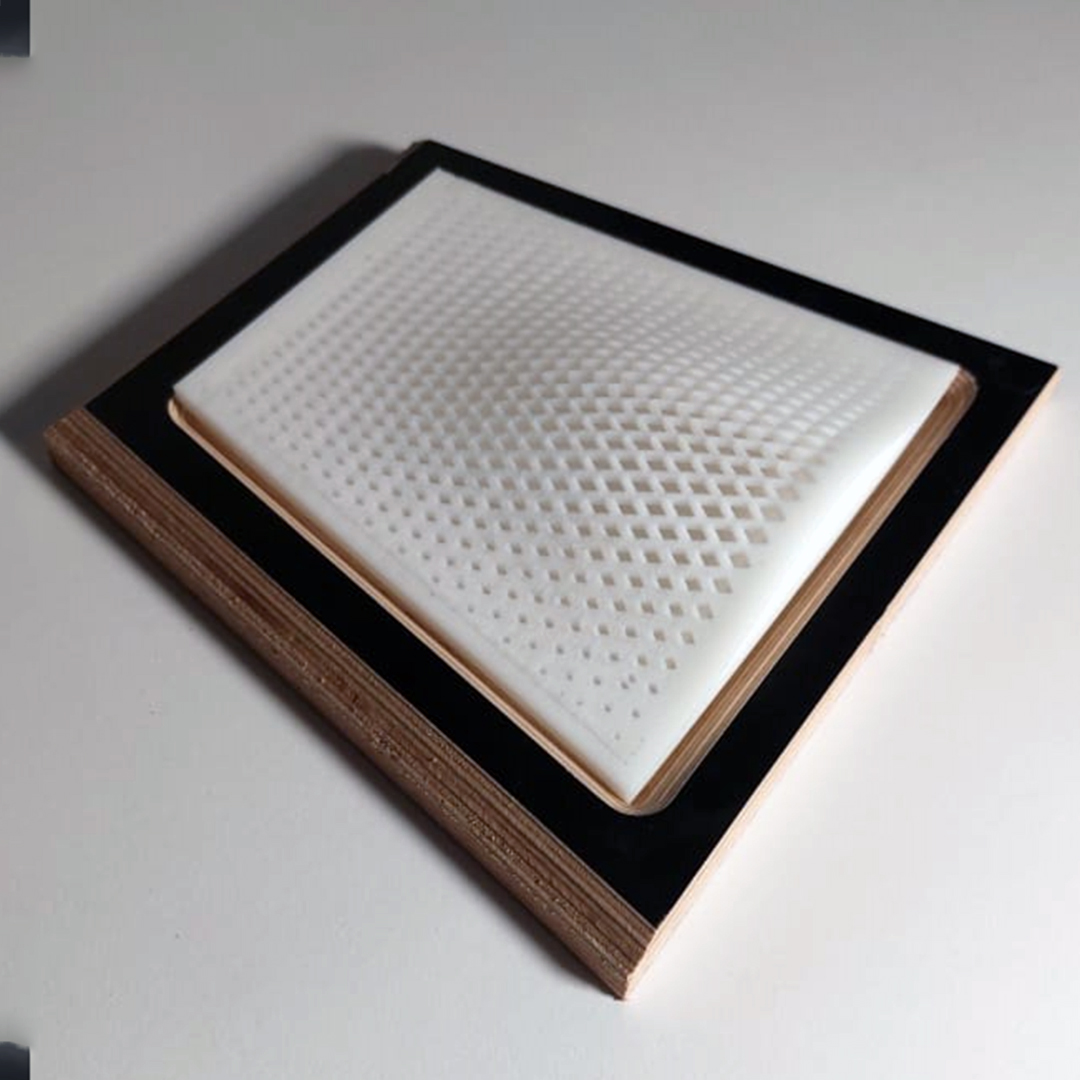
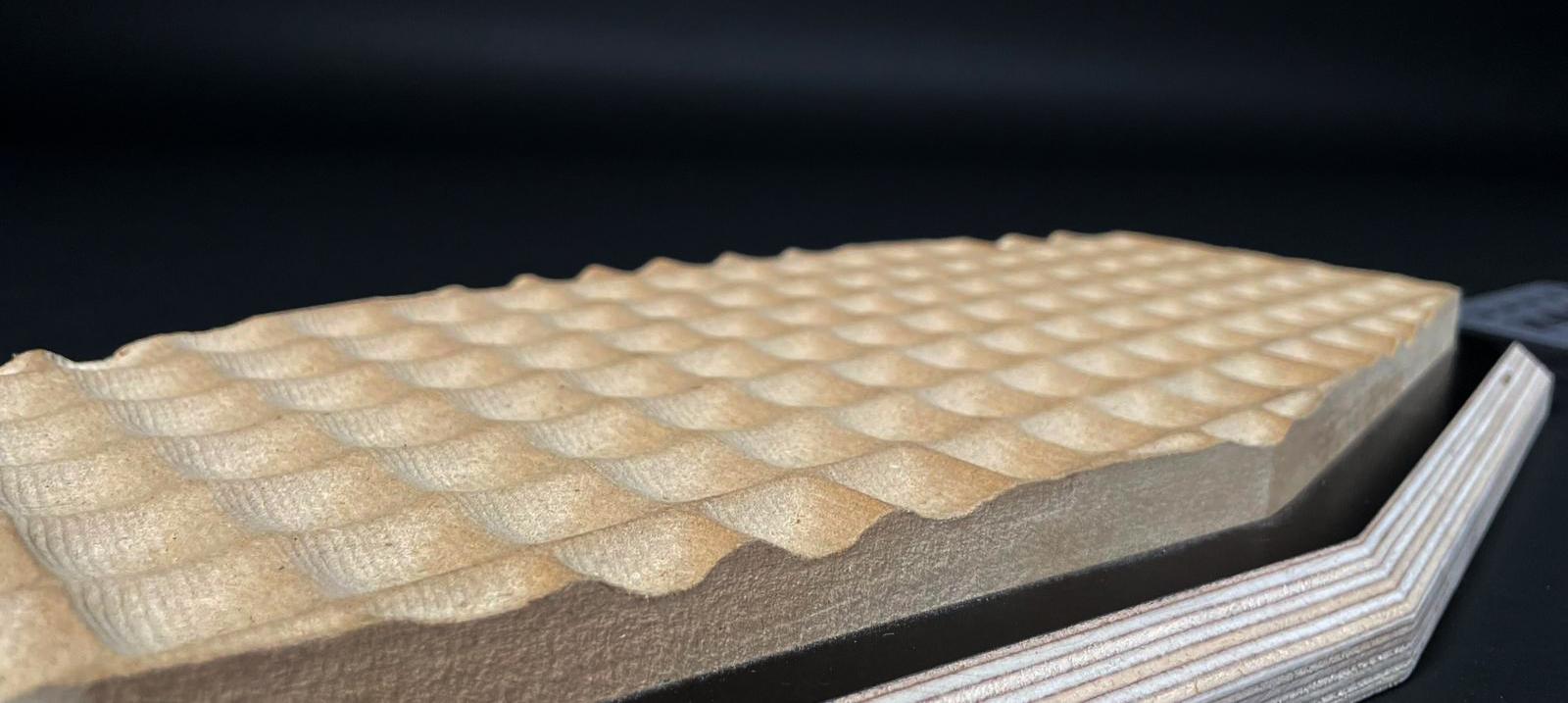
During the 3-week course of the Digital Fabrication course, we tested and investigated the opportunities and limitations that the latest fabrication methodologies provide in terms of design and fabrication. In this regard, we tested different materials and machines using CNC Milling, Laser Cutting and 3D Printing strategies. CNC Milling For the CNC Milling testing and … Read more
Introduction to Digital Fabrication
The introductory Digital Fabrication course proposed a three-week program of how to use three manufacturing methods- 3D printing, laser cutting, and CNC milling in order to understand the correlation between computer data and machine based fabrications. The intensive course dealt with research and study of each of the 3 techniques and led to detailed explorations … Read more
Slicing, Smoothing and Precision
Over the past three weeks, we took the Digital Fabrication introductory course through which we developed a foundational understanding of production techniques such as 3D printing, CNC milling, and laser cutting. In each section, we explored the capabilities and limitations of the manufacturing processes through test prototypes before finalizing the geometries. 3D PRINT_Angle Slicing In … Read more
Digital ways of Fabrication
Abstract The introductory course on Digital Fabrication proposes exploring new production techniques through the relationship between computer data and machine-oriented fabrication. The final purpose was to acclimatize with the three most common digital fabrication processes: CNC milling, Laser Cutting, and 3D Printing.Our personal exploration of these techniques is here disclosed with these three models, which … Read more
Fabricating with Parameters
During the Introduction to Digital Fabrication course, we aimed to understand the methods of programming 3D Printing, CNC Milling and Laser Cutting machines. To learn the fundamentals of digital fabrication process, we had a certain amount of time for each method. Within the scope of the task, we wanted to get a grip on the … Read more
From Pattern to Modular Solutions
In order to familiarize and introduce us to different types of machinery tools and techniques, our studio was divided to three weeks of learning and exploring different machines related to different forms of digital fabrication. Each week we learned how to design and execute our model on different software related to the fabrication typology. This … Read more