The MAA is a visionary master program with an innovative and open structure, mixing diverse disciplines, shaping professionals capable of producing theoretical & practical solutions towards responsive cities, architecture & technology.


Filters
Course

RECLAIMED PORTAL FRAMES
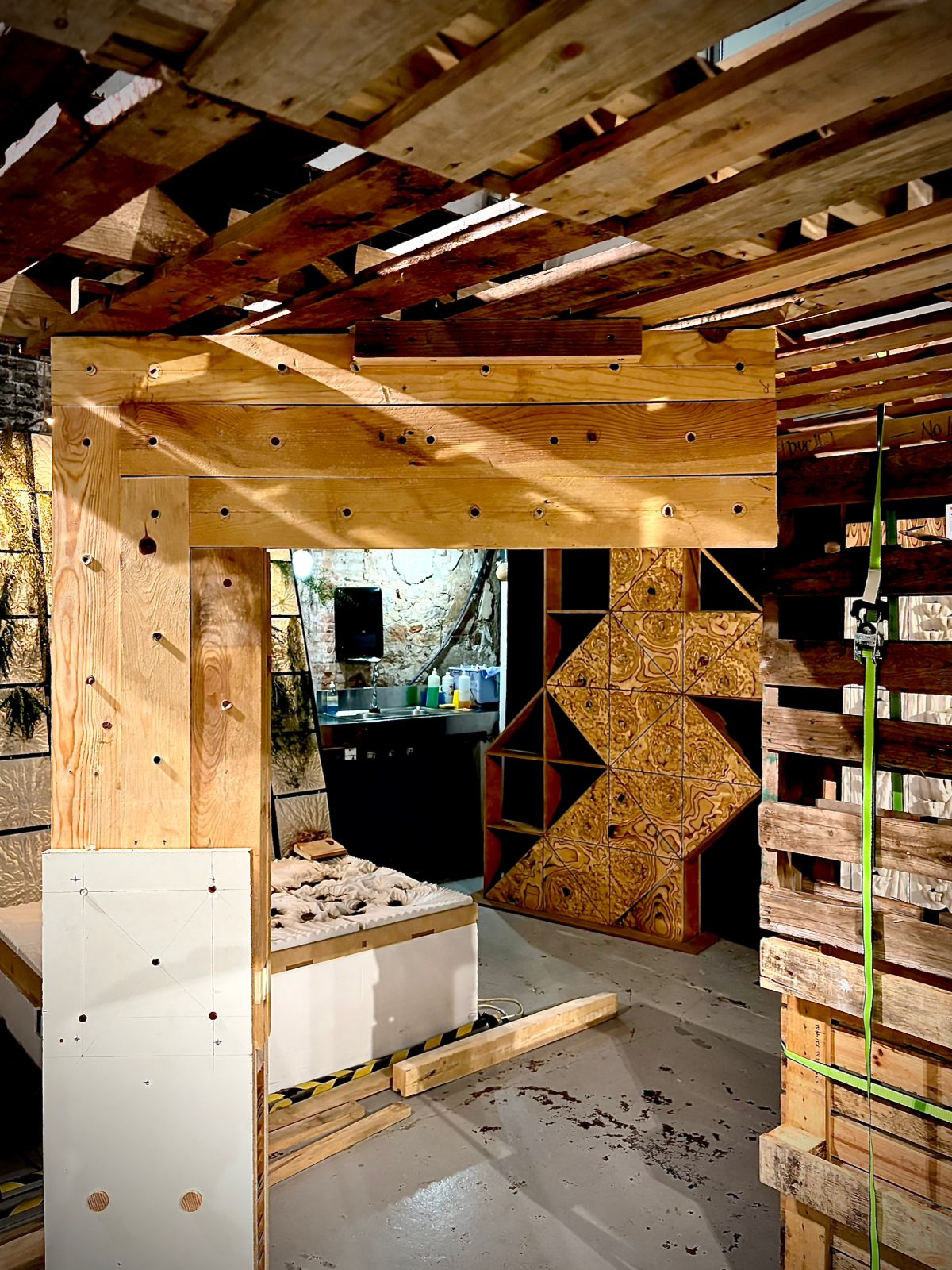
Structural Analysis: Where You Splice Is Everything This section covers the structural analysis work underpinning our reclaimed portal frame project – from knee joint behavior to the critical question of splice placement. The Portal Frame and Form Variations Different forms of portal frames react differently under mass and load- First we compared the mass of … Read more
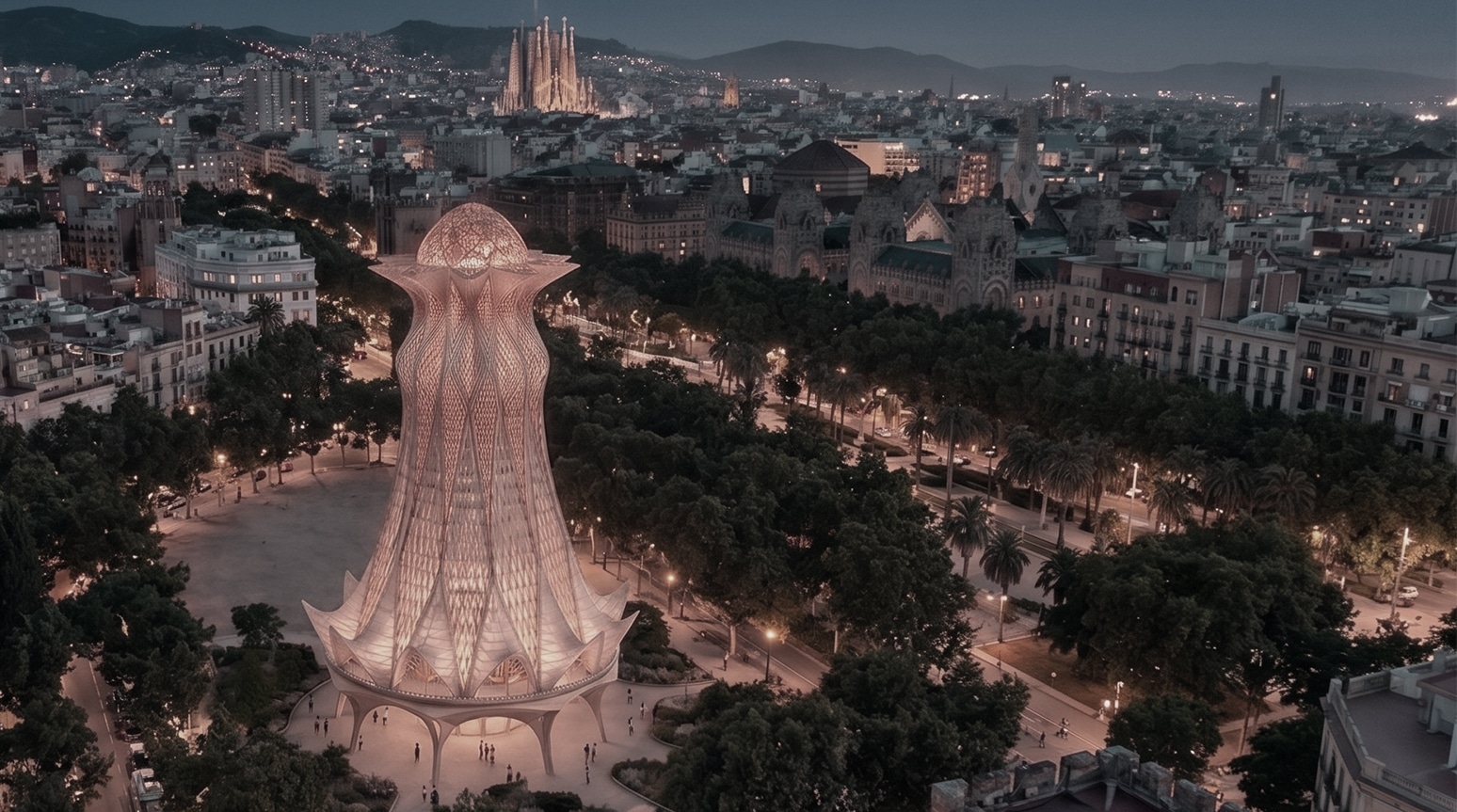

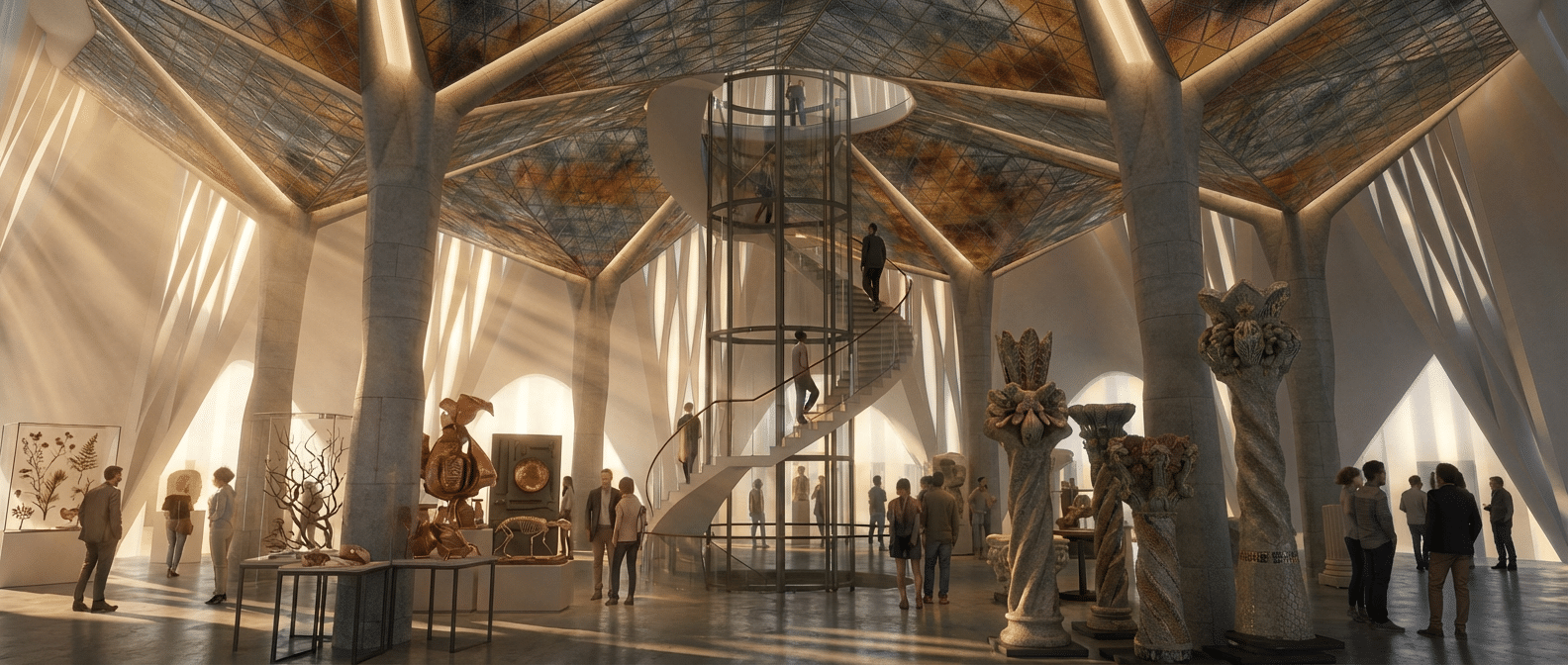
After Gaudi – Facade ll

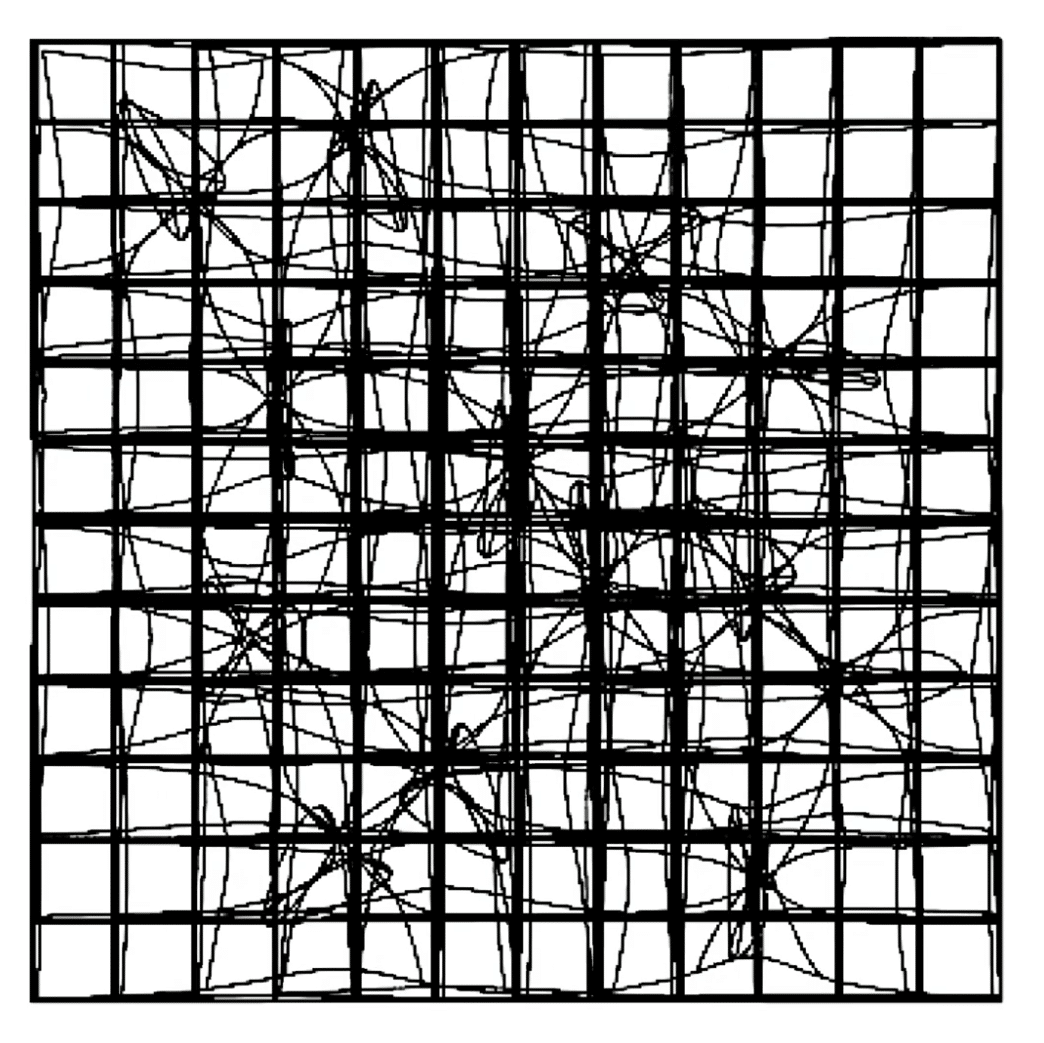
Site and Key Viewpoint Site and Key Viewpoint Core Project Keywords References FORM FINDING Final Form – Sketch Form Logic Variations and Catalog – Side Profile Form Finding Catalog Base Variation Catalog Convex concave Variation Catalogue Final Form – Levels OPENING & PLANTERS Opening’s Logic – Diamond Shape Opening’s Logics Catalog of Opening Opening Logic … Read more

Opening in Stacking

Introduction This project investigates how the introduction of openings in existing structures affects structural performance and reuse potential. By analyzing the impact of opening size and position on force distribution (such as shear force and bending moment), the study evaluates changes in stability and structural behavior. Based on these findings, the project establishes a relationship … Read more

Kontravoid 0.1

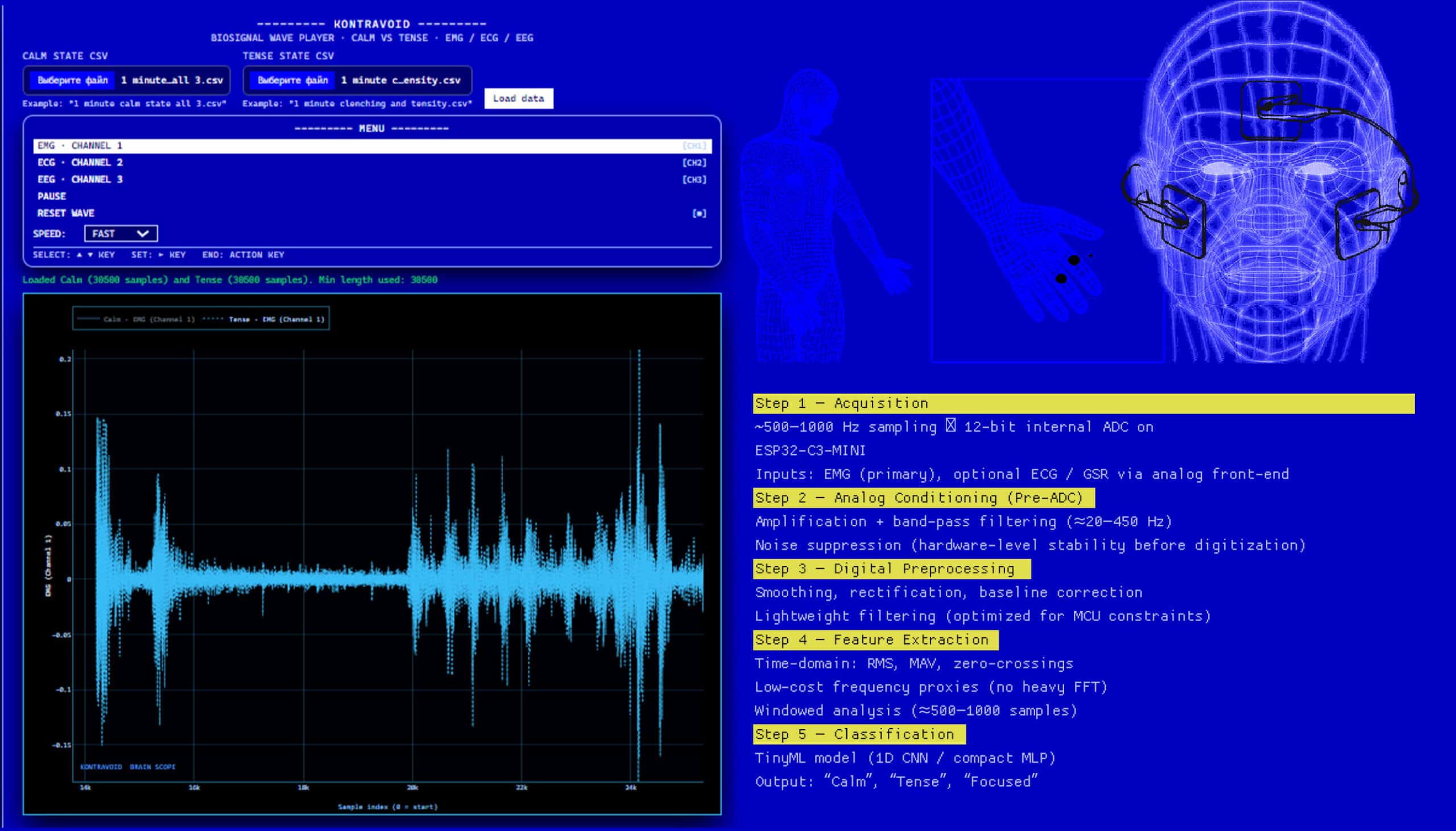
Kontravoid is a virtual reality authentication environment developed as part of a thesis on data-driven architectural interfaces. The project uses real-time EEG, ECG, and EMG data to verify identity through continuous physiological patterns rather than static inputs. Within an immersive VR space, biometric signals dynamically influence spatial elements such as light, geometry, and sound, creating … Read more

Sentient Constructs:

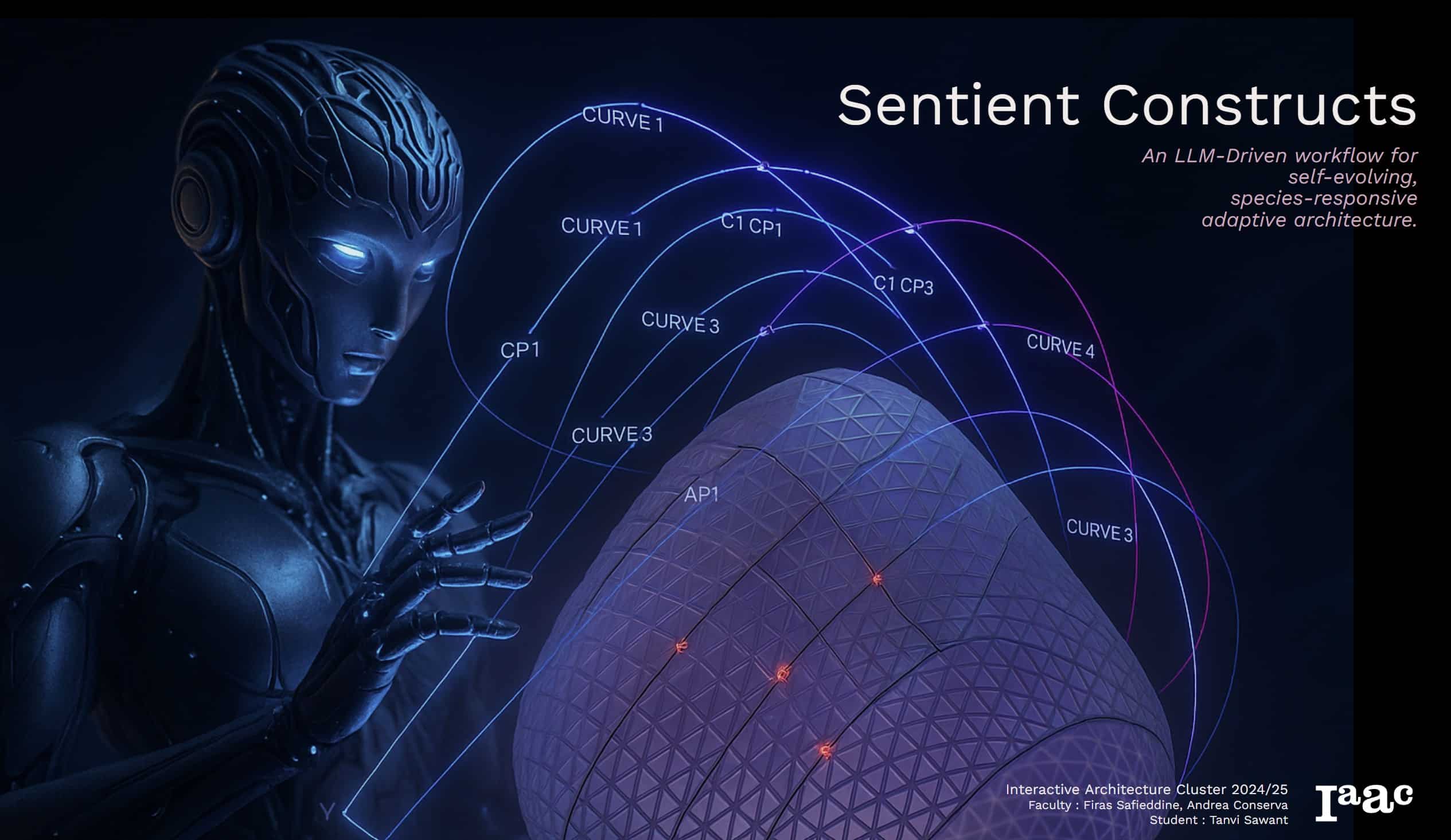
An LLM-Driven and GAN-Inspired Workflow for Self-Evolving, Species-Responsive Adaptive Architecture Abstract Contemporary architecture remains predominantly anthropocentric, prioritizing human needs while neglecting the urgent ecological imperative to design for multispecies coexistence. In response to biodiversity loss and environmental degradation, this research advances a new framework for cybernetic architecture – an adaptive, intelligent, and ecologically attuned design … Read more

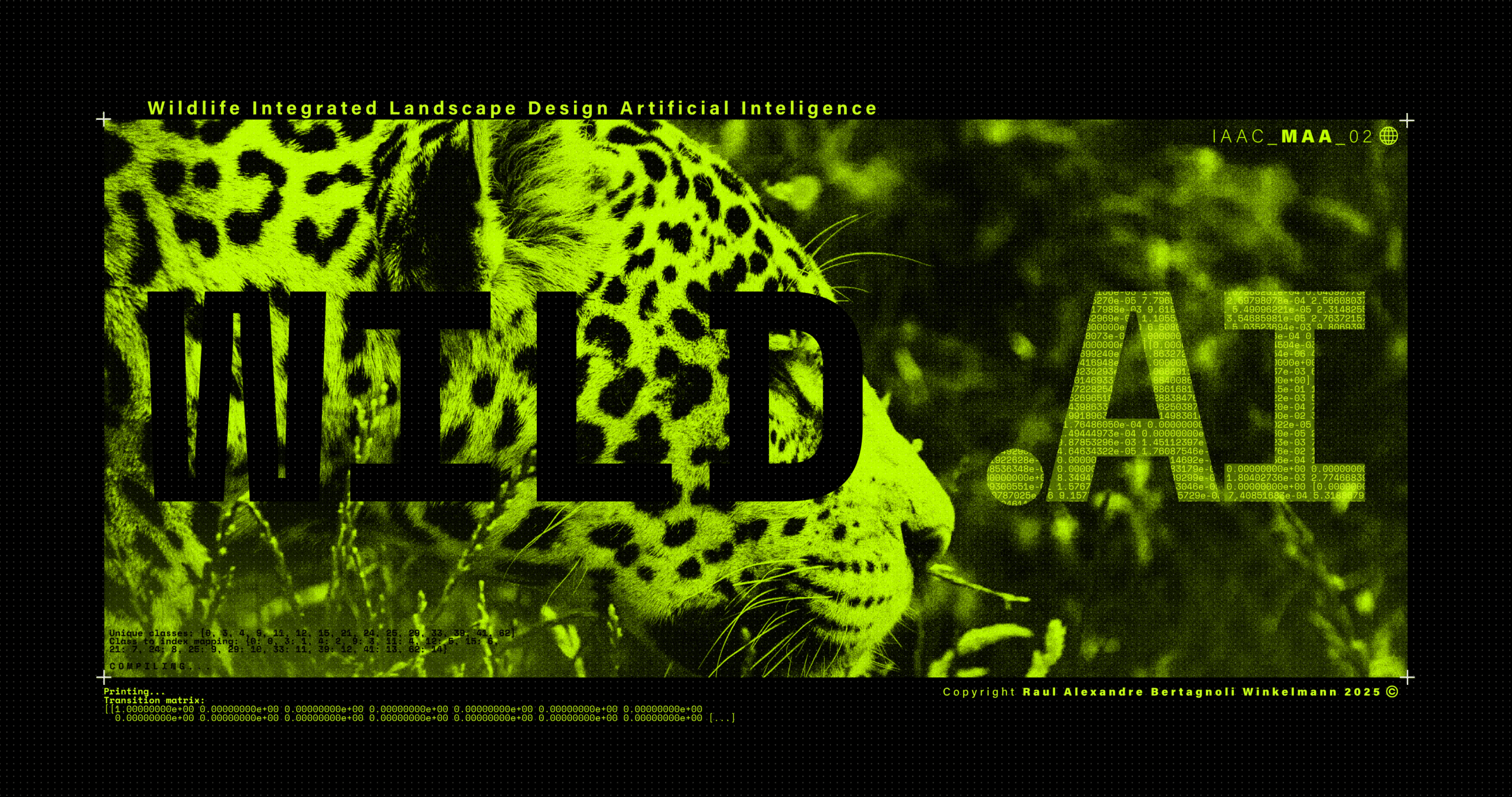
Wildlife Integrating Landscape Design Artificial Intelligence – WILD.AI — Term_III

CONTEXT DYNAMICS METHODOLOGY ANALYSIS By subtracting different scenarios from one another: The differences start to become clear as to what areas are consisently lost vs what areas are inconsistently lost. The latter being the one where planners and ecologists should focus their efforts the most if aiming to potentialize action. The figure becomes even clearer … Read more

INTERACTIVE LIGHTSCAPES

Creating Charismatic and Safer Public Spaces through Light RESEARCH QUESTION: How can experiential lighting features — ones that create interactive, changing, and flexible environments– be used in public spaces in order to create senses of community, safety, and improved mental and emotional health? HYPOTHESIS: If we integrate interactive lighting solutions as permanent fixtures in public … Read more

InFormed

Manual floorplan generation for high-rise residential buildings is labor-intensive and often overlooks key environmental parameters, limiting the ability to quickly assess performance-based design alternatives. Demo :

Reinformed Spaces

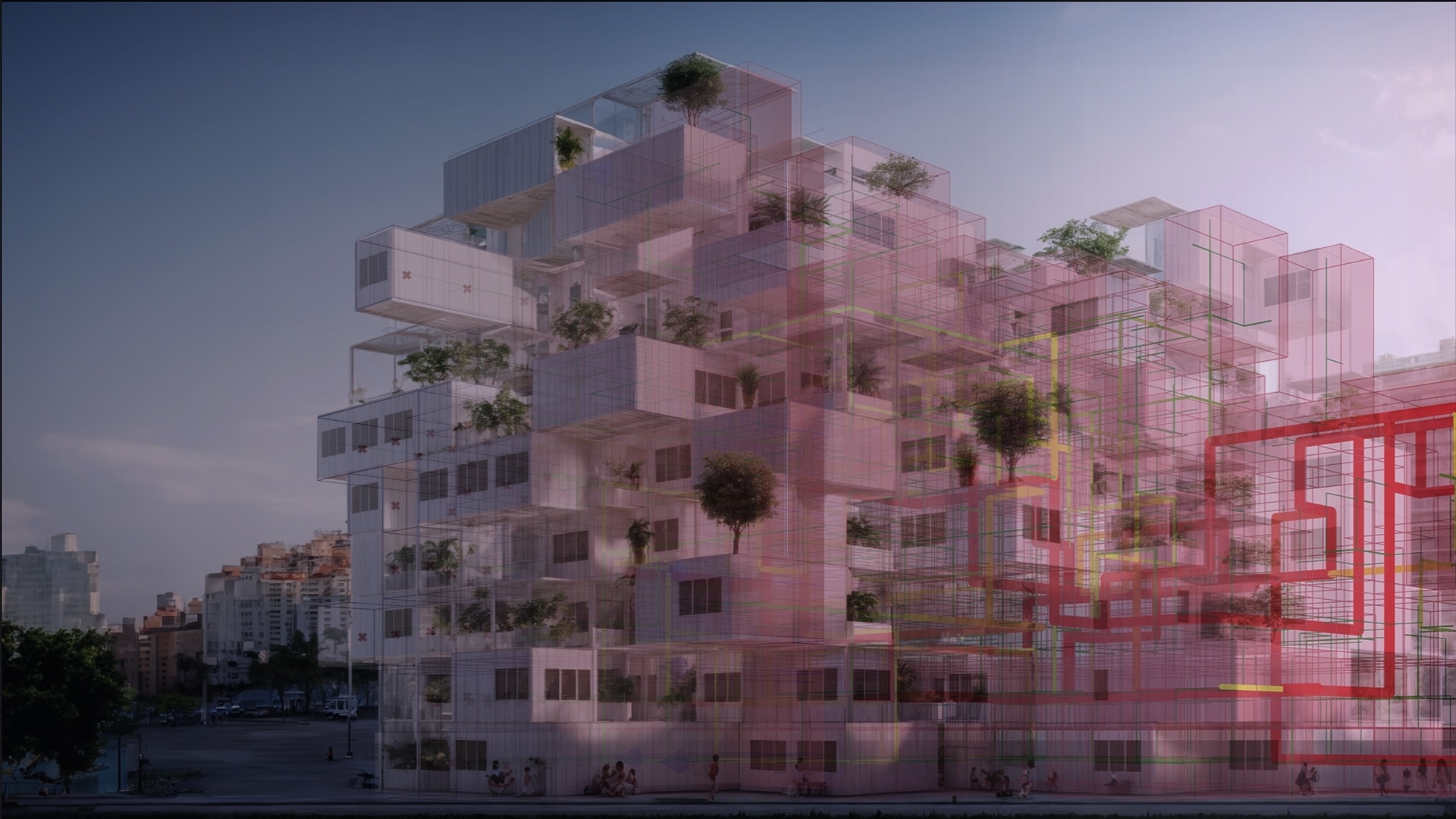
Abstract In response to the urgent need for rapid, climate-adaptive housing driven by the climate crisis and global migration, this research explores the architectural potential of combinatorial spatial assemblages. These systems, built through the aggregation of discrete components, offer emergent spatial qualities but are often driven by random or heuristic rules, making them difficult to … Read more

Rootscapes

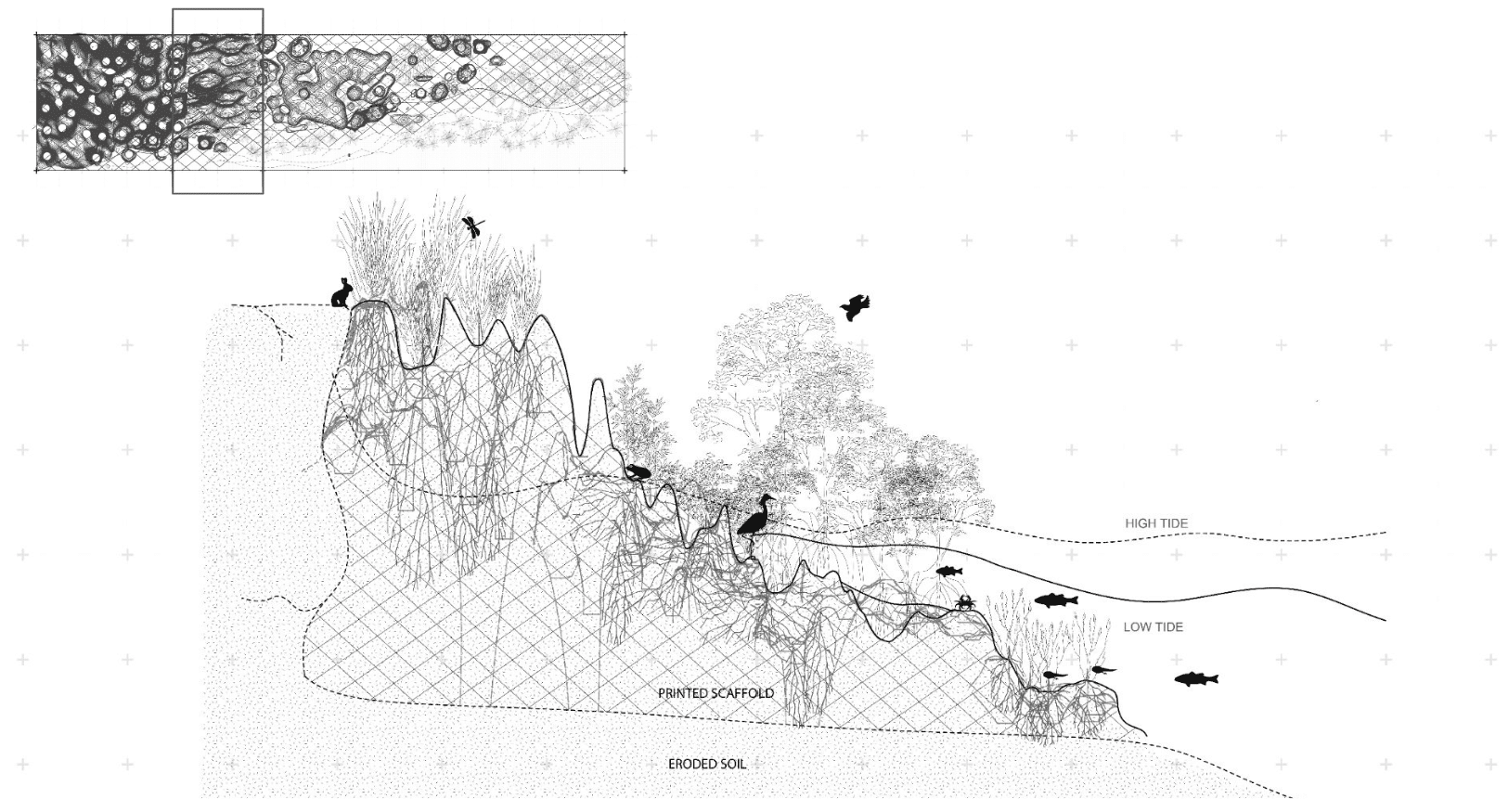
An exploration of root structures and material study 70% of the world’s population lives along coastlines and rivers, out of which, thousands of people get affected yearly due to erosion. However, our marine ecosystems such as mangroves and soils have the capability of storing large amounts of CO2 and provide a barrier amongst erosion.  CAUSES … Read more

EMI: Engine for Morphological Integration

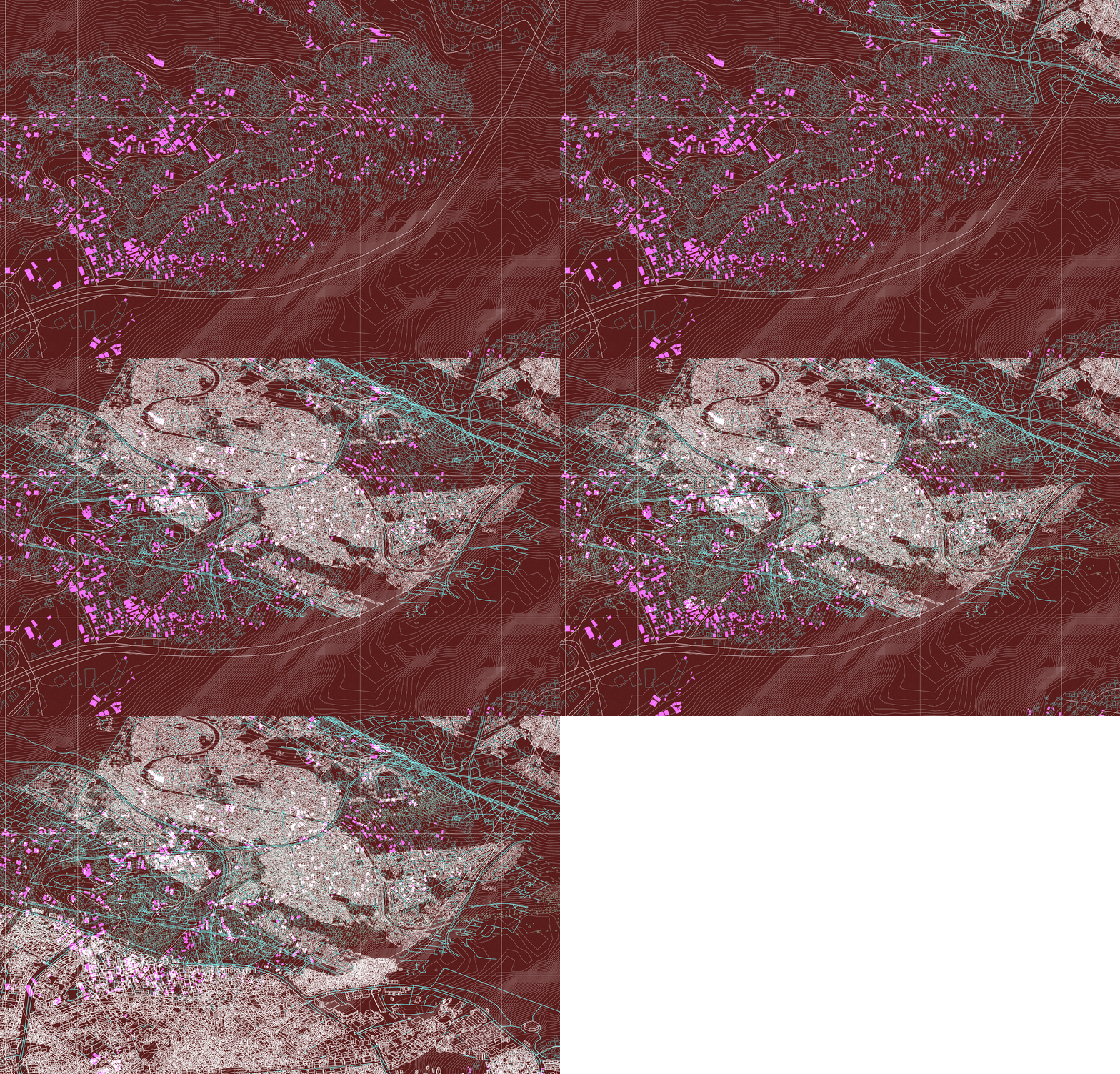
An algorithmic roadmap that converts self-organized settlement morphology into clean-energy action: the Energy-Morphology Index mines open roof- and density data, ranks each building’s readiness, and matches “Ready / Promising / Not-Ready” clusters to modular solar toolkits—turning self-organized settlements into engines of energy justice

Transient Plastics 3.0

The plastic crisis has reached staggering proportions. If all the plastic waste on Earth were laid out, it would be enough to cover the entire surface of Argentina ankle-deep. Every year, we produce 300 million tons of plastic globally. Yet only 10% remains in use, while more than 80% is discarded. Of this discarded plastic, … Read more

SKYLOFT

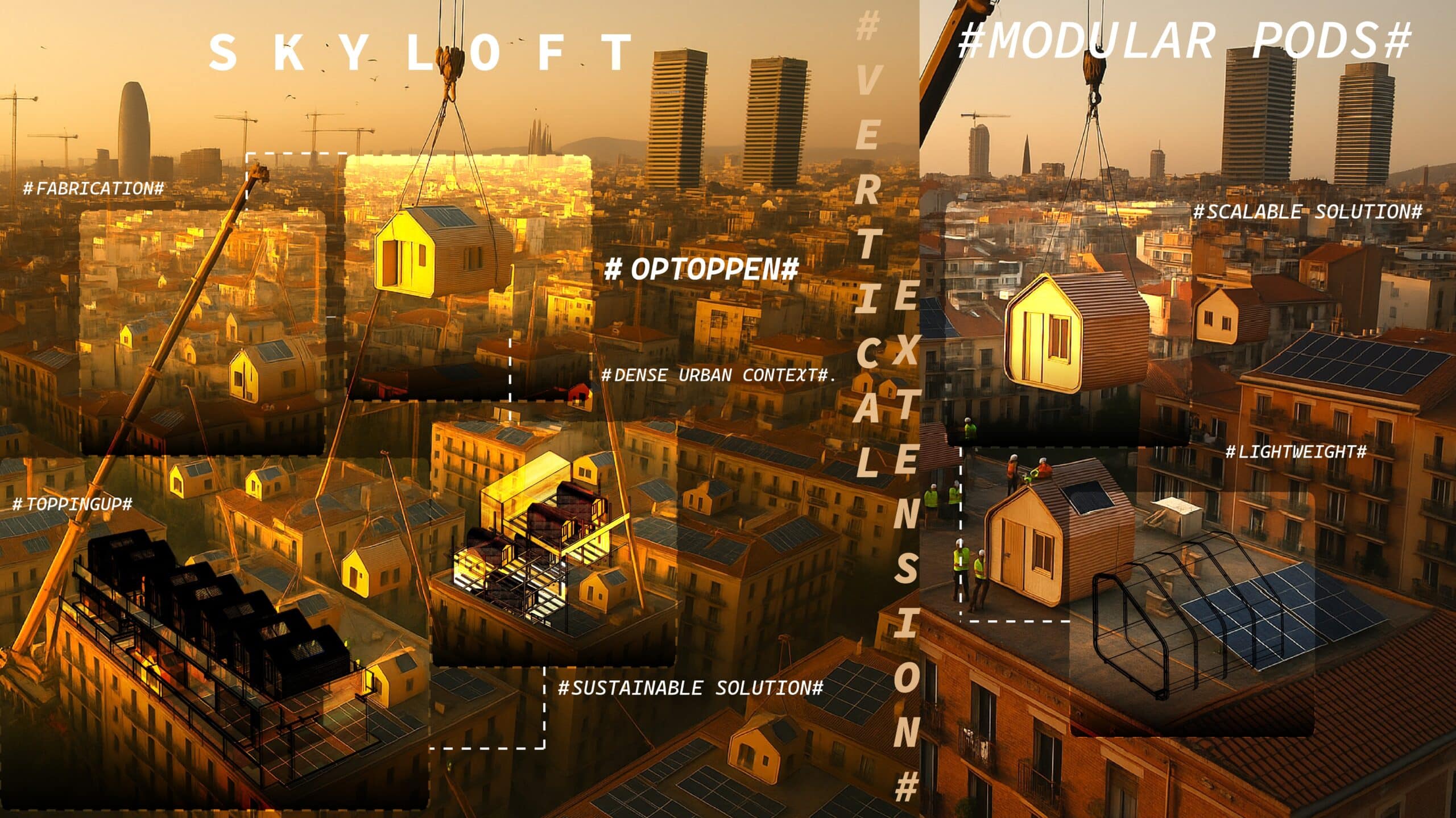
MODULAR PODS VERTICAL EXTENSIONS To address urgent urban housing needs, this thesis explores modular rooftop pods using Digital Twins, CNC fabrication, kerfing, and timber joinery—enabling precise, low-waste, minimum tool required for assembling and sustainable expansion of aging urban buildings through scalable and prefabricated Modular systems Why Vertical extension required ? What’s the purpose of the … Read more