Automated workflow to extract KPIs from versioned models in Speckle

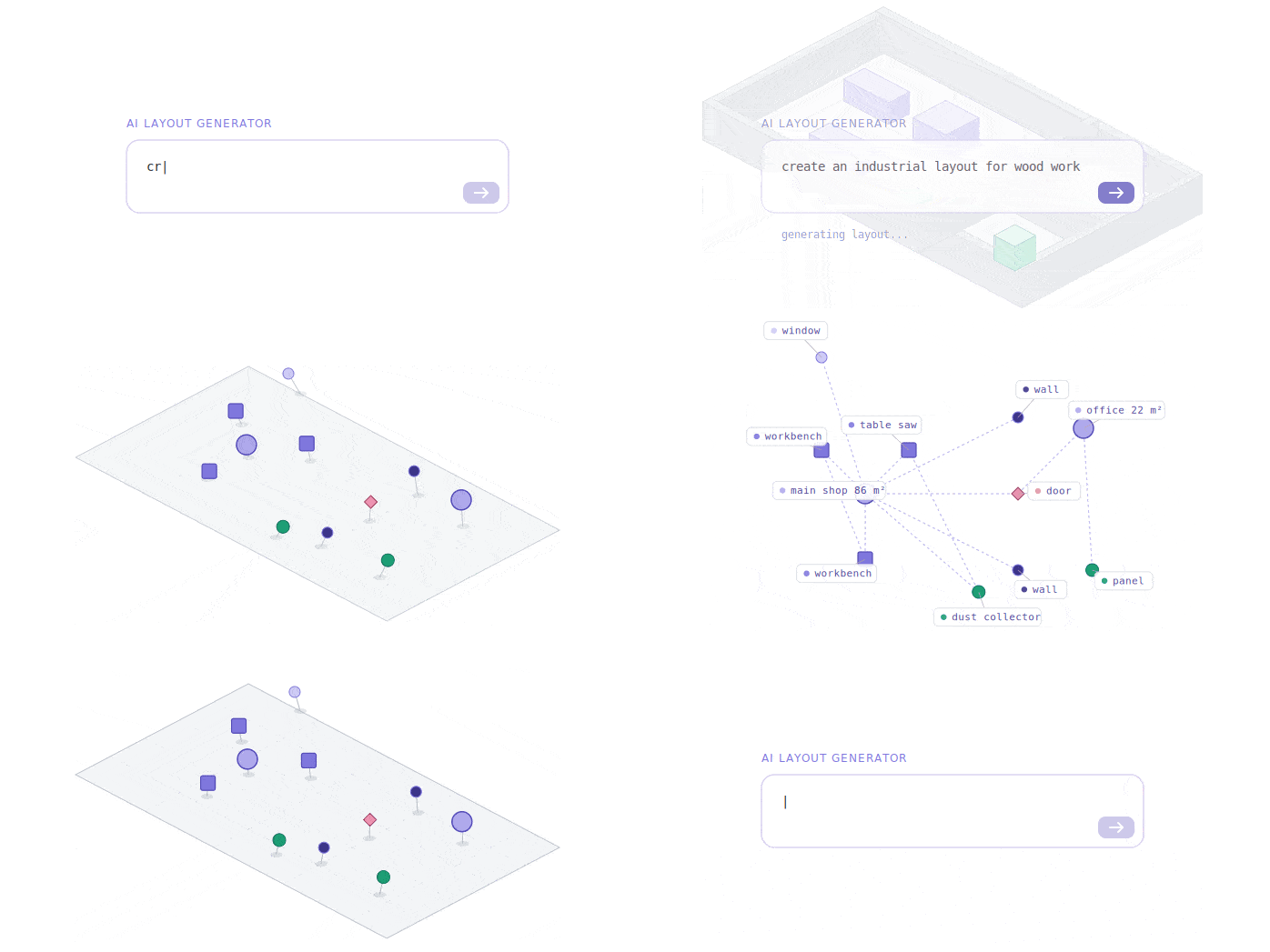
Automated Workflow for KPI Extraction from Versioned Models in Speckle Why KPI Tracking Breaks Down During Iterative Design In the current studio workflow, KPI extraction and performance evaluation depend on repeated manual operations across design iterations. This slows down feedback, introduces version mismatch risks, and disconnects analytical outputs from the model itself. This tool was … Read more

Beyond Construction: BIM as a World-Building Tool for Real-Time Game Engines

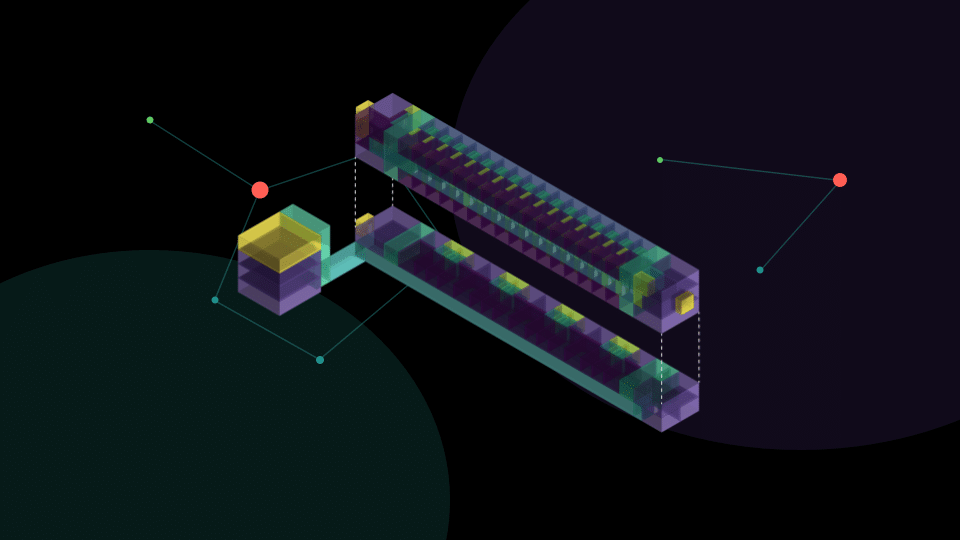
Abstract This research investigates how Building Information Modeling (BIM) can be leveraged to generate structured and meaningful architectural environments for architectural visualization, video games, and animated films. It explores workflows between BIM tools and real-time game engines, focusing on the transfer and preservation of spatial logic and metadata. The study aims to demonstrate how BIM-based … Read more

Parametric Engineering: Collaborate with Structural Data on the Cloud

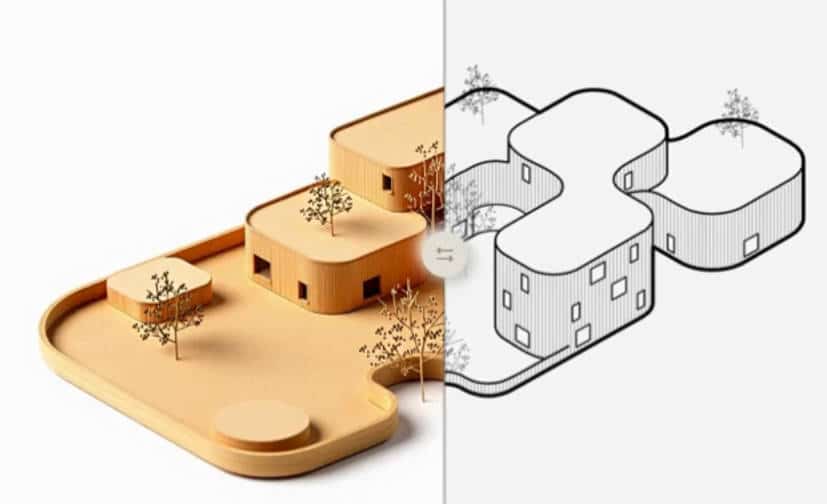
Topic brief In the AEC industry, building analysis workflows often operate in isolated software environments, causing structural data to lose meaning once it leaves its original authoring tool. This study argues that the value of structural analysis depends not only on computational accuracy, but on the ability of its outputs to remain consistent as they … Read more

Software -II- Brick-Scan

This article presents a project exploring how collected data can be processed and translated into automated classification and robotic decision-making logic. The core concept revolves around studying the physical condition and spatial arrangement of reclaimed construction material, extracting geometry-based and surface-level information to generate a data-driven sorting and retrieval workflow. By combining artificial intelligence with … Read more

Applied Computer Vision & Robotics with AI for Architecture andInteractive Systems

Hardware 2 cover image

RE:PAIR –Perception-Driven Closed-Loop Robotic Repair Faculty: Hamid Peiro and Aleksandra Kraeva (Sasha) Mission Statement: RE:PAIR is a perception-driven, decision-visible closed-loop robotic system that detects cracks, repairs them using robotic 3D printing, and autonomously verifies the result. 1) Crack detection 2) Segmentation and Masking 3) Centreline and points First we outlayed the workflow of the project. … Read more

AEGIS – Autonomous Emergency Geostructural Inspection System

Solutions for Rapid Data Acquisition in Disaster Scenarios This project explores a robotic perception pipeline designed to support post-disaster assessment and early response scenarios. The core objective is to detect and map cracks in damaged buildings using vision-based data, assisting rescue teams by providing spatial information about potentially unsafe areas. Rather than aiming for full … Read more

Human Trace: Autonomous Single-Stroke Robotic Sketching

This project explores a robotic system that translates digital vision into physical matter through the constraint of continuity. Rather than behaving like a conventional plotter that freely lifts and re-positions its pen, the system confronts a more complex challenge: it must interpret image topology and compute a path that allows the entire drawing to be … Read more

From One Model to One Million Homes: Automating Social Housing with BIM

Rule-Based BIM Systems for Multi-Storey Residential Blocks in Vietnam   Using rule-based BIM master models to automate repetitive social housing design in Vietnam, while addressing real-world challenges of coordination, adoption, and collaboration across large-scale public projects. //CONTEXT Vietnam currently has an ambitious national target to build one million social housing units by 2030. However, progress … Read more

Optimizing For The Mind: Integrating Generative AI and Game Engines into BIM

How architectural neuroimmunology is redefining the relationship between design and human health. The AEC industry optimizes for physical efficiency but neglects the neuro-physiological impact of built environments. This research investigates how Generative AI and Game Engine simulations, integrated into BIM workflows, can enable predictive cognitive performance analysis, transitioning the discipline from Building Information Modeling to … Read more

Automated Scan-to-BIM workflows through artificial intelligence: A Conversation with Václav Nežerka

From Point Clouds to Digital Twins: Inside the Cloud2BIM Workflow The Architecture, Engineering, and Construction (AEC) industry is currently undergoing a major technological shift. We are witnessing a definitive transition from manual, labor-intensive site measurements to AI-driven scan-to-BIM workflows. The goal is clear: to unlock the digital potential of existing buildings by creating high-fidelity records … Read more

The Wind Canopy

Our concept is about designing a pavilion that works with the wind instead of against it. We wanted to create a space that feels light, open, and alive a structure that shows movement even when it stands still. We see wind not just as a natural force, but as something that shapes space. The pavilion … Read more

The Agariyas of Gujarat

Salt is an essential mineral for humans and animals alike. When consumed, it breaks down into sodium and chloride – elements vital to muscle and nerve function, fluid balance, and the regulation of blood pressure and pH levels. Because sodium is lost through sweat, both humans and animals must replenish it to maintain physiological stability; … Read more

The Wooded Circle

Started off in 1504 as a Renaissance-era fortification system, designed to resist cannon warfare. Over the years, it has undergone many reconstructions, with the latest turning it into a managed heritage park in the early 2000s (Planted rows of trees) . Ecology has played an important role in each of its eras, as we’ll see … Read more

The Epistemic Sensing Functor: Physics-Gated Material Intelligence in Your Pocket

Santhosh Shyamsundar · IAAC / MAEBB02reMIXED REALITY Seminar · Advanced Manufacturing 2025/26 Beyond the 28-Day Blind Spot In contemporary construction, concrete quality is traditionally verified by “crushing cylinders” 28 days after pouring. This lag creates a critical information asymmetry: by the time a defect is confirmed, the material is already structural. MaOS Unity XR addresses … Read more

IFCore Compliance Checker

During the AI in Architecture and Urbanism Seminar, our team built an automated compliance checking system that validates architectural projects directly from IFC models. Building regulation checks are traditionally manual, slow, and error-prone. Architects review 2D drawings, interpret regulations individually, and often wait weeks for compliance feedback. We asked a simple question: what if compliance … Read more