Mathilde Marengo from External References: Designing Experience through Technology

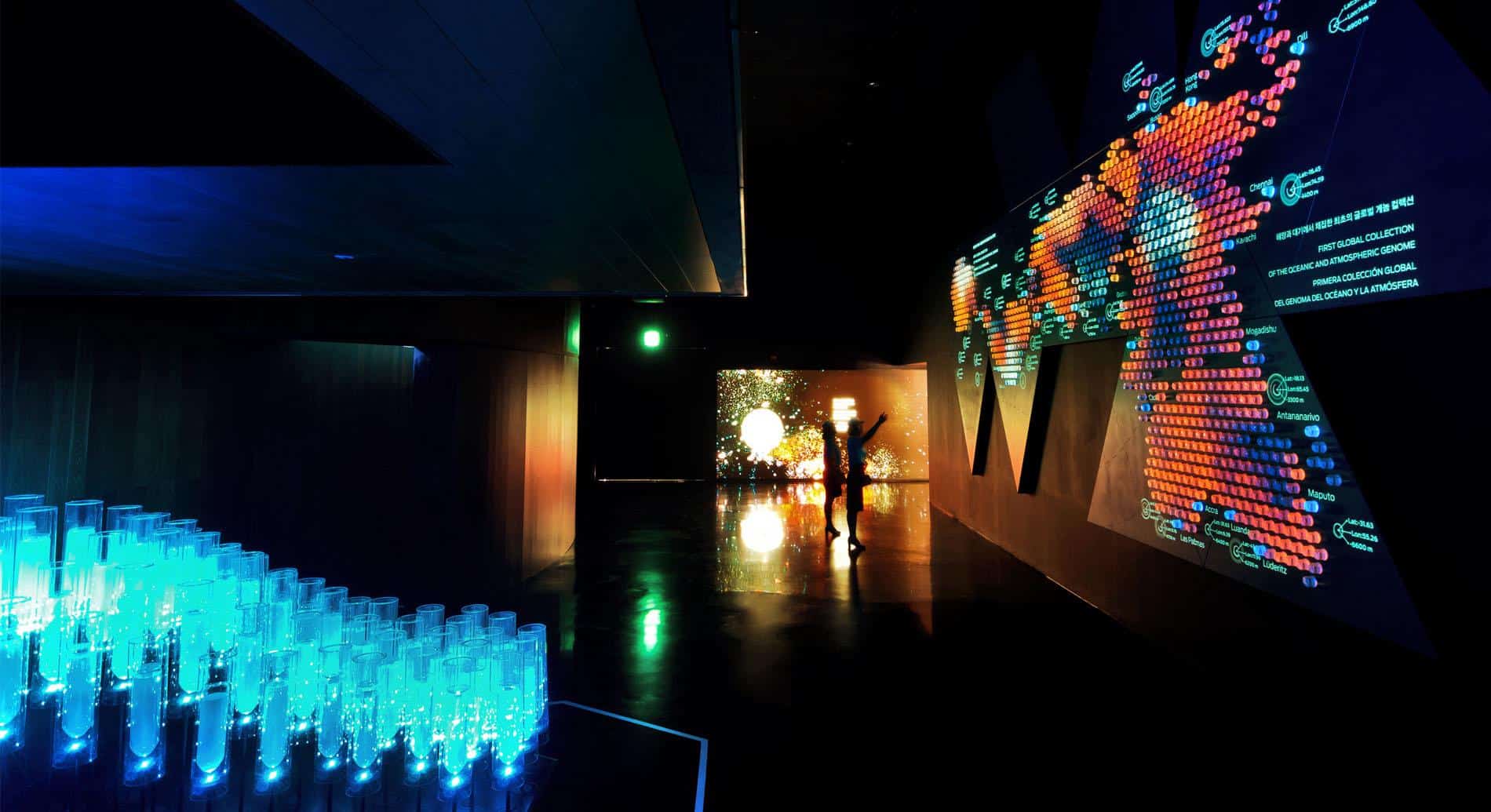
The lecture by Mathilde Marengo, Head of Studio Operations at External References, offered an in-depth overview of how contemporary architectural practice operates at the intersection of computation, fabrication, storytelling, and experiential design. Rather than presenting technology as an isolated tool, Mathilde framed it as an integral part of design thinking. Digital tools, parametric workflows, and … Read more

Workshop 1.2 Data to Motion – DRYING RIVERS

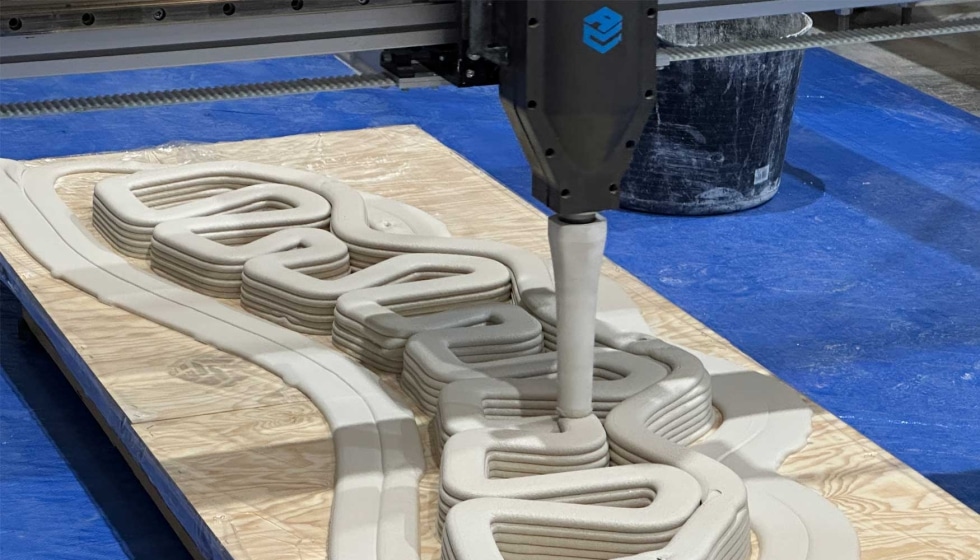
This article presents my Workshop 1.2 individual assignment, which focuses on analyzing data and translating it into robotic movements to control an ABB IRB 6700-150/3.20 industrial robot equipped with a plastic pellet extruder for additive manufacturing. The core concept of the project involved studying the drying and shrinkage of the Aral Sea over time, extracting … Read more

Façade/gen

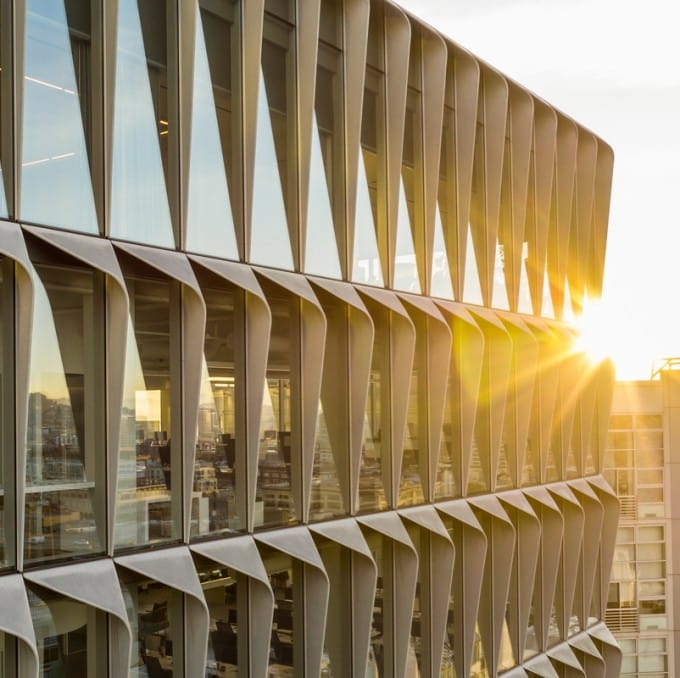
Design in Seconds: Rethinking Parametric Architecture with Façade/gen Introduction In the fast-paced world of modern architecture, the earliest stages of a project are the most critical. This is where a building’s identity is forged and its environmental footprint is largely determined. However, for years, high-level parametric design has been gated behind significant barriers: expensive software … Read more

Title: A First-Person Parametric Exhibition: Bringing Architectural Design into the Browser

Shuai Zhang Have you ever felt that parametric architectural design is trapped behind a high barrier to entry? Traditionally, designers and clients must install heavy, complex software just to view or tweak a 3D model. For my final project in the Cloud-based Data Management module, I wanted to break down this barrier. The result is … Read more

A Parametric Detour: Designing Modular Cat Towers

Concept After long periods working within architectural systems—parametric models, BIM workflows, data coordination—there is value in stepping sideways. Not away from design, but into a different scale and context. This project explores exactly that: applying computational design logic to something deliberately lighter—a customizable modular cat tower. From Grasshopper to Web Interface The application is a … Read more

WeaveLamp Configurator: From Craft Logic to a Web-Based Parametric Tool

WeaveLamp Configurator WeaveLamp Configurator is a web-based application that brings a Grasshopper workflow into an accessible browser-based experience. The project explores how a craft-inspired lamp system can be translated into a clear digital tool for customization, spatial visualization, and fabrication-oriented output. Concept Origin The project started from a manual exploration of ring proportions, textile density, … Read more

Living Cubos

Living Cubos is a web-based voxelized geometry analysis tool developed in Grasshopper using the VoxelTool plugin. The goal of this project is to explore how voxel geometry can connect design decisions with material performance and environmental impact. The system allows users to interact with a parametric model directly through a browser interface. By publishing the … Read more

Nyara House – Prototype 2026

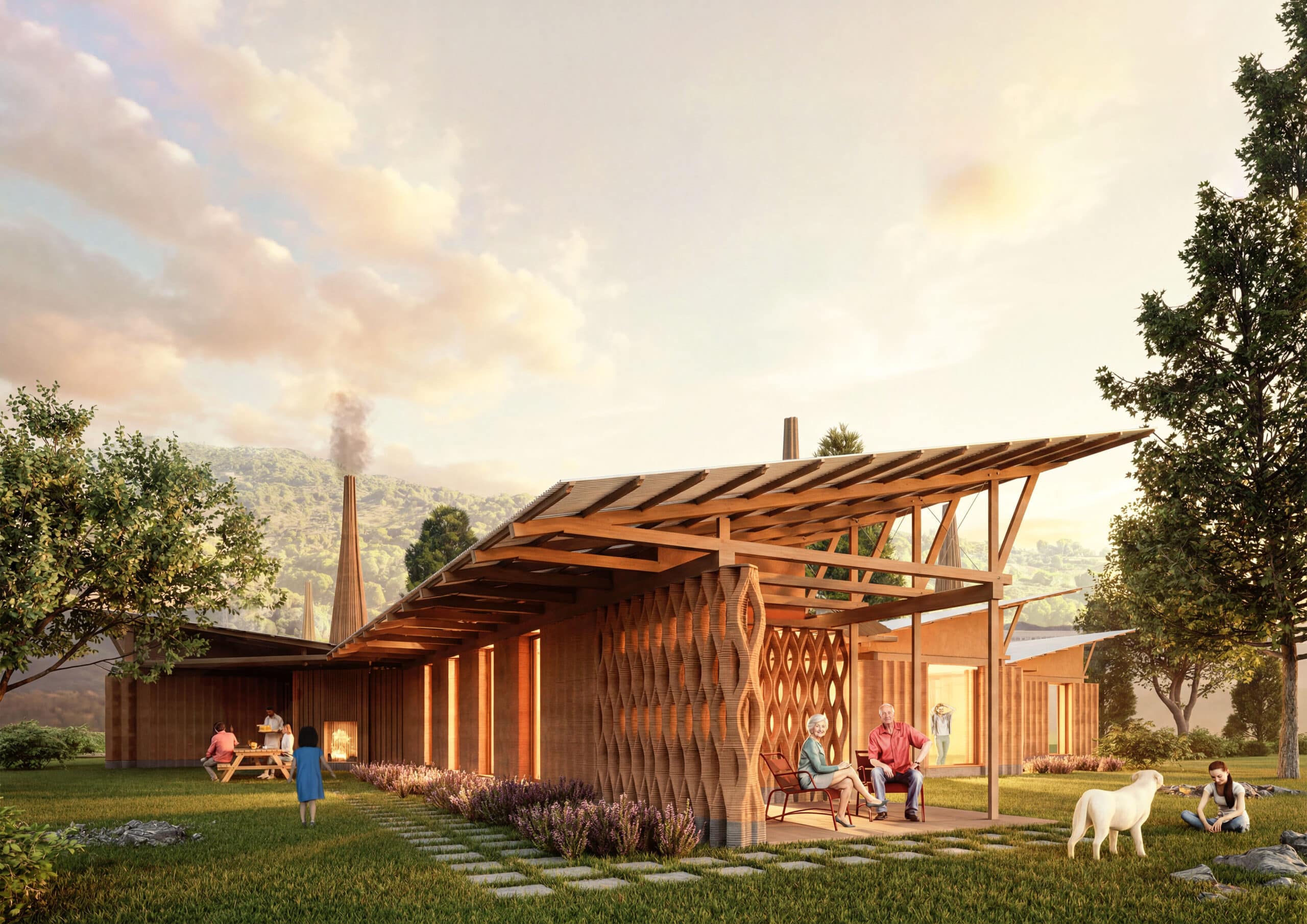
Case study of a 3D printed project Site Organization The site plan was developed to support a continuous and efficient design-to-production workflow, integrating material preparation, digital control, and on-site fabrication into a single coordinated system. The spatial organization follows a clear operational sequence, from raw material handling to final deposition, reducing unnecessary movement, interruptions, and … Read more

BIM in Rhino to faborication world

Expert introduction Milos DimčićCEO &founder of Programming Architecture Milos Dimčić, PhD is an architect, computational designer and software developer specializing in the automation of design and construction workflows in the AEC industry. He has PhD in architecture & structural design from the University of Stuttgart and is guest assistant professor at TU Graz Faculty of … Read more

From The Very Many to the Very Least (Podcast)

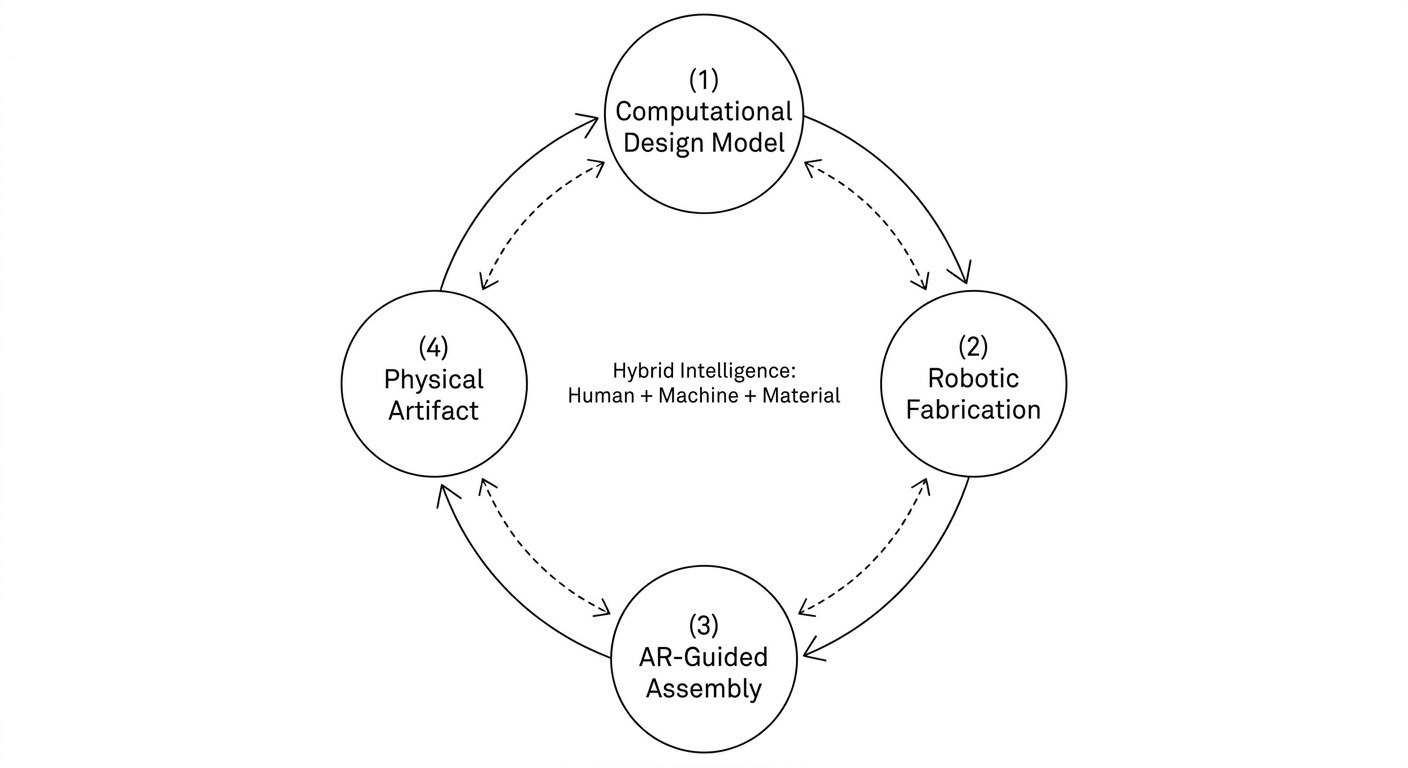
Abstract In Contemporary Architecture, we are witnessing a shift from standardized building systems towards highly differentiated, data driven and geometrically complex structures. These projects challenge conventional workflows, requiring new methods to manage variation, fabrication logic, and translation of digital models into physical assemblies. Our research investigates how computational design, parametric modelling, and digital fabrication workflows … Read more

Brick Flow

Robotic Disassembly & Reassembly with Spatial AI Abstract The project explores a circular construction workflow that integrates robotic systems with Spatial AI to automate the disassembly and reassembly of brick structures. Utilizing a Gemini Vision-Language Model (VLM) pipeline, the system performs autonomous material evaluation, identifying surface damages such as chipping, spalling, and staining, as well … Read more

Fa(ça)de

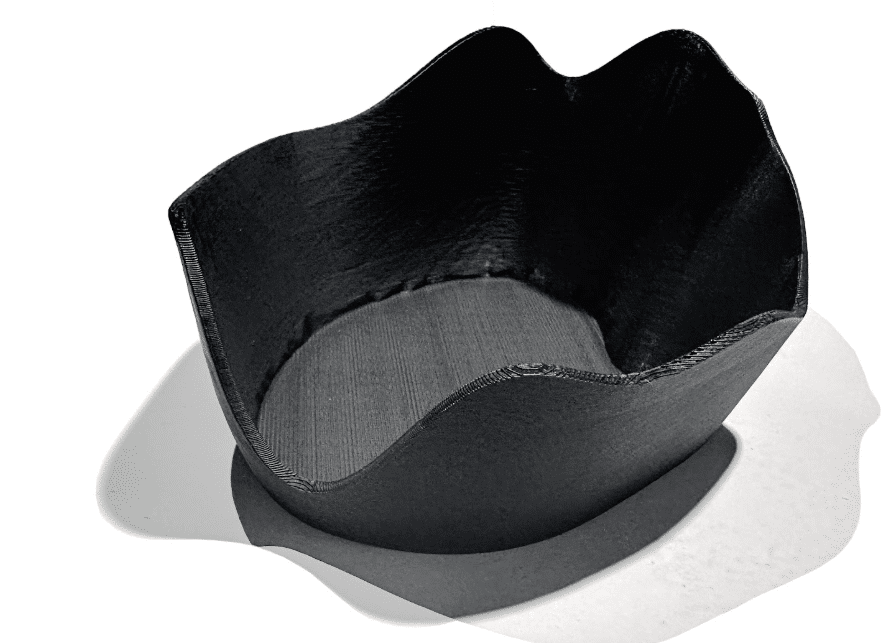
Fa(ça)de explores robotic clay fabrication as a method for producing expressive, materially efficient façade modules. Starting from a 2D patterned surface, the project develops a parametric workflow that transforms mesh-based geometries into 3D printed clay elements with controlled relief, wave amplitude, and module rotation. Through iterative prototyping, the design responds to fabrication limits such as … Read more

The Cellular Dune

Project Brief Forces of Nature explores how architectural form can emerge from the interaction of natural forces rather than being predefined. Using computational simulations, the project allows tension, gravity, and equilibrium to shape spatial structures. The installation translates invisible physical behaviors into visible design, creating a form that is discovered through force-driven processes and realized … Read more

Reciprocal Canopy

Designed for the IAAC rooftop, this pavilion merges computational design with advanced robotic fabrication. The geometry originates in Grasshopper, where a basic mesh is transformed into an optimized vault using Kangaroo’s physics-based dynamic relaxation. A reciprocal frame pattern is then applied, translating the continuous shell into short, mutually supporting timber pieces. Because every interlocking element … Read more

Relaxed tectonics

This research explores the intersection of physics-based form-finding and multi-objective evolutionary optimization to design a high-performance architectural pavilion. Utilizing Kangaroo2 for structural mesh relaxation and Wallacei for the genetic optimization of seating. The result is a topologically optimized structure where complex geometry is not merely aesthetic, but a direct manifestation of environmental data and structural … Read more