
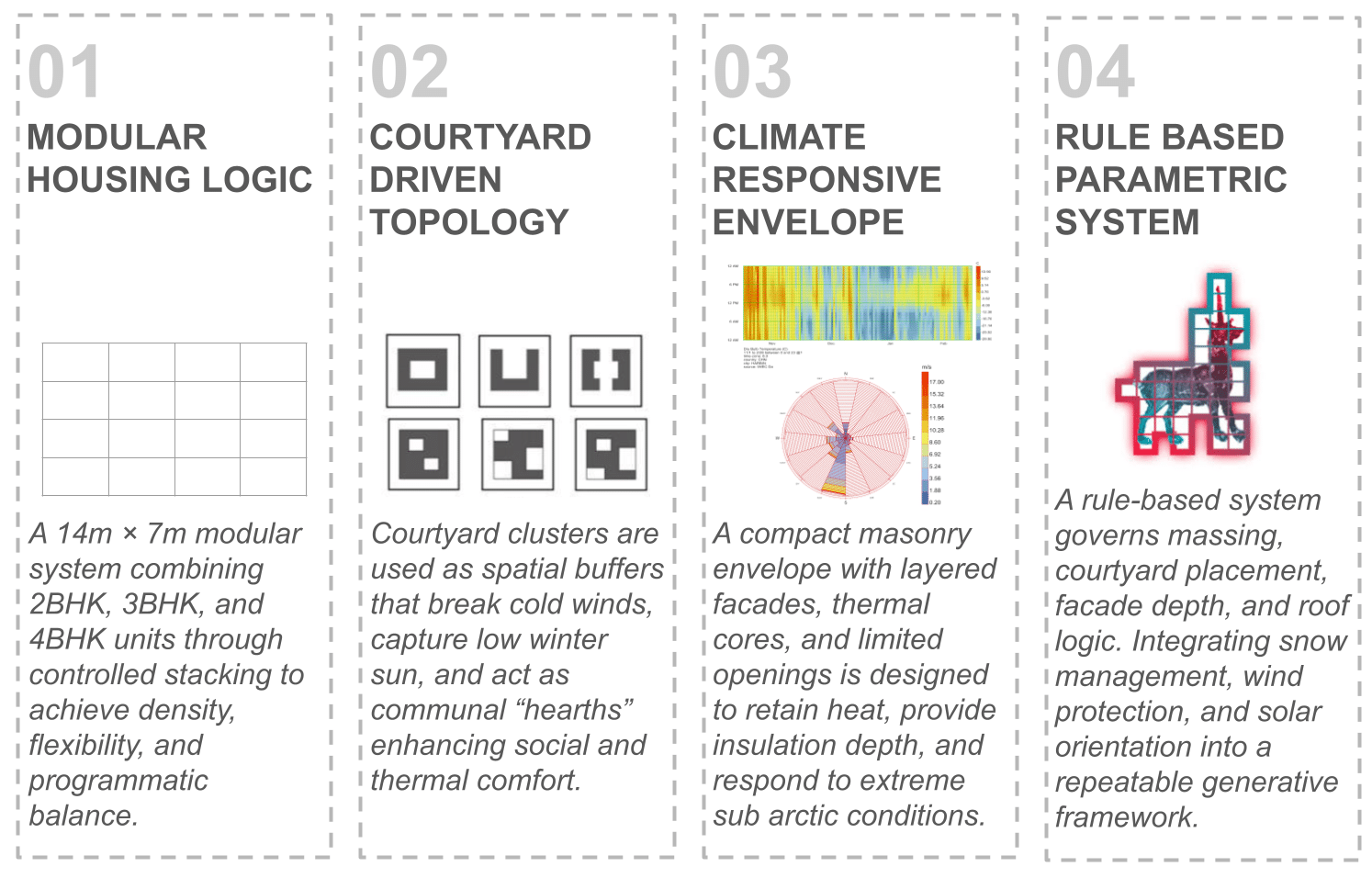
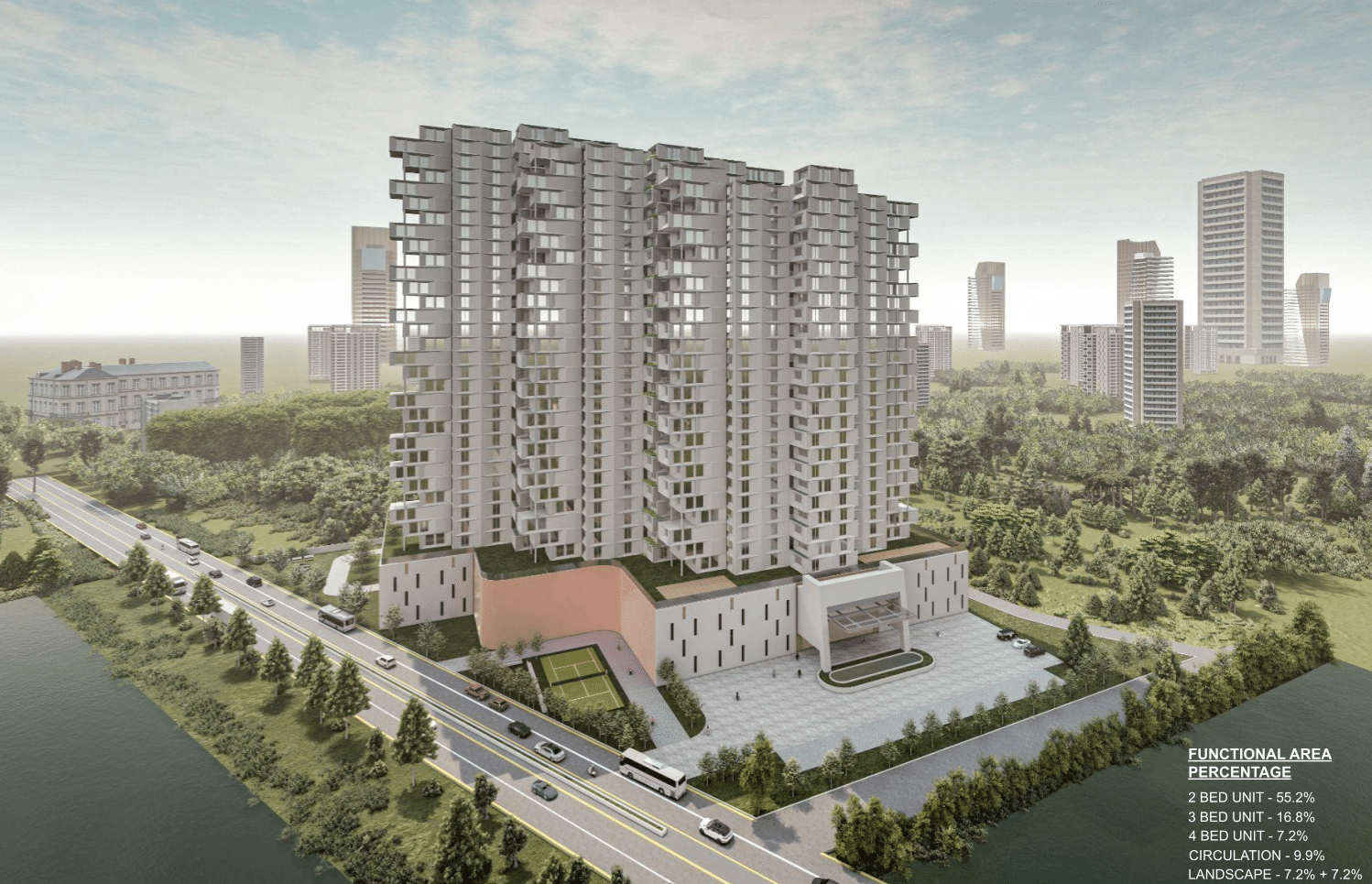
“The Harbin Code“, designed by Muhammed Senin and Sushmitha Ravi, explores housing as a system-driven response to extreme cold climates. The project treats environmental performance, social interaction, and spatial flexibility as equally important design parameters, and is structured as a ‘building recipe’ that allows repeatable yet adaptable outcomes across the site.
BUILDING RECIEP
DESIGN STRATEGY
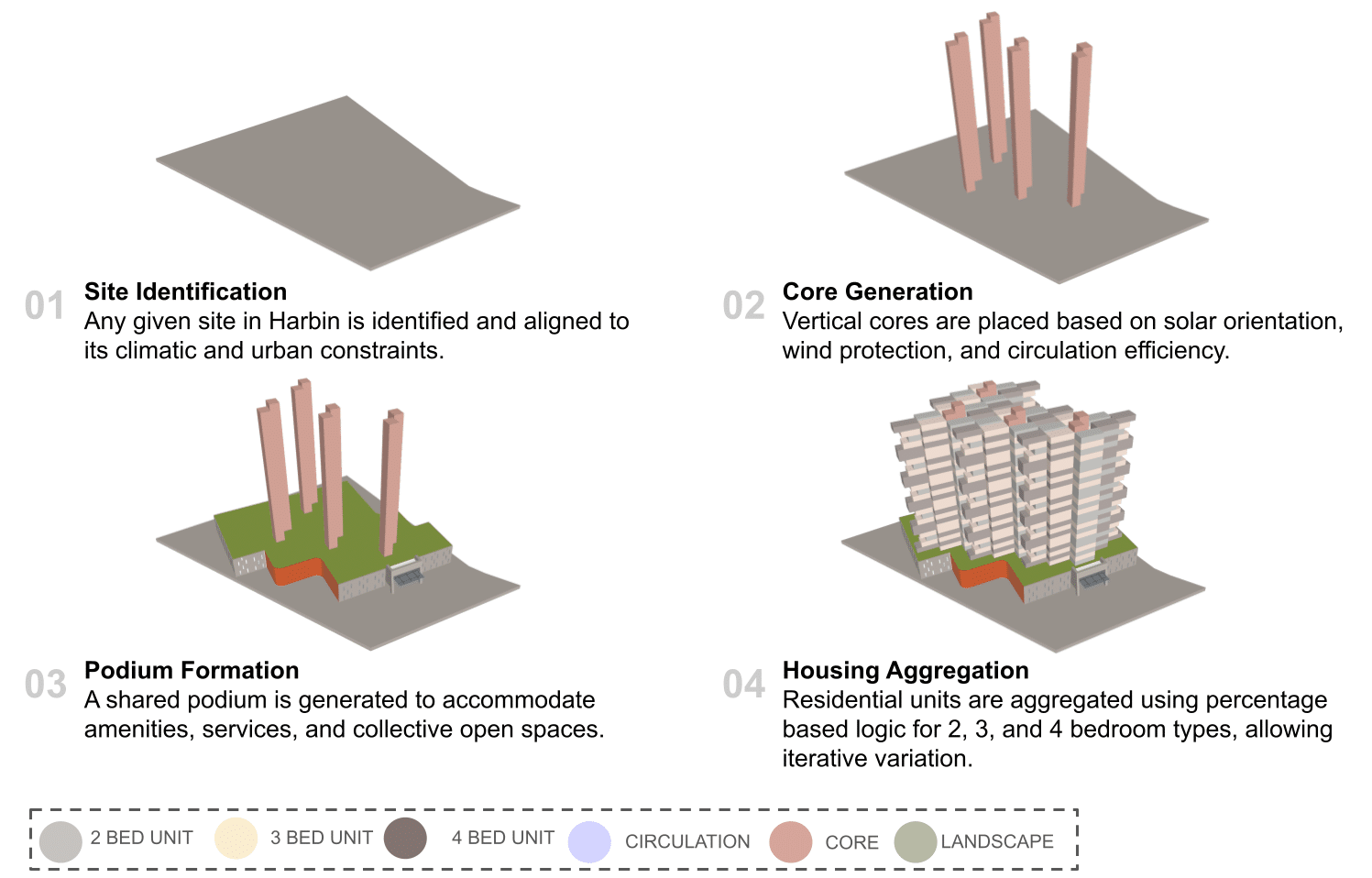
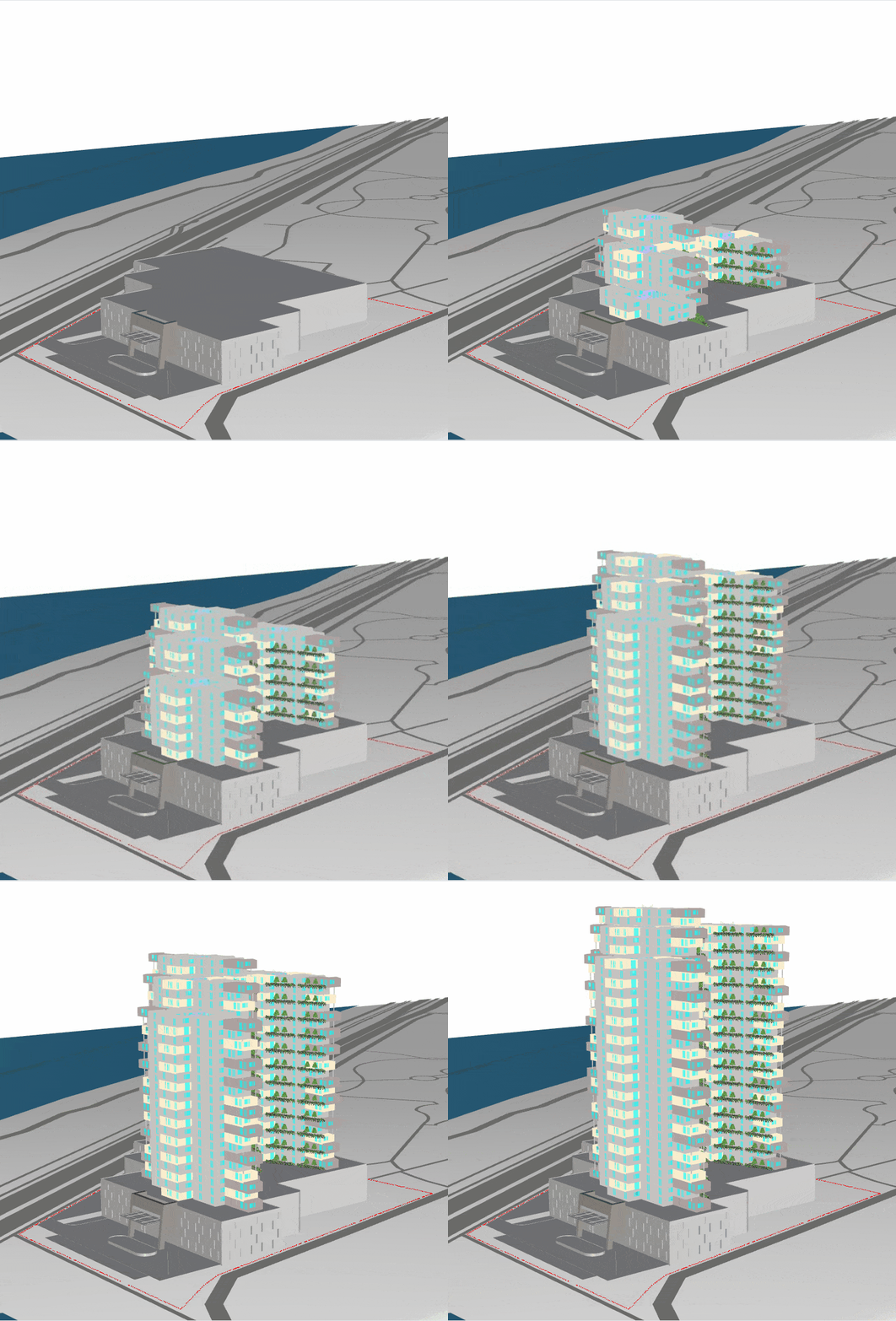
The step-by-step generative workflow, starting from site identification and core placement to podium formation and housing aggregation driven by climatic and spatial rules.
TOPOLOGICAL MAP
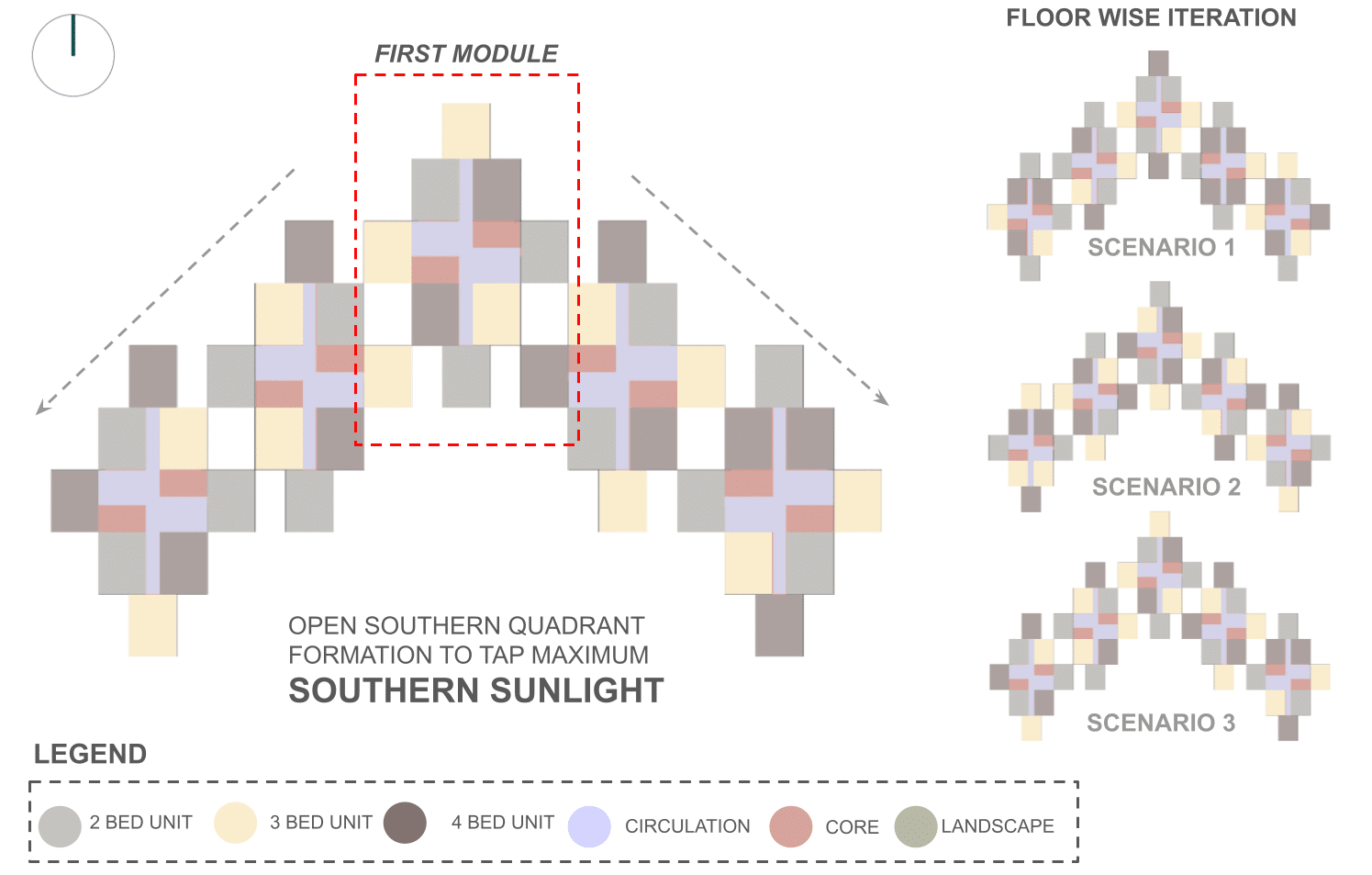
The housing module is iterated and aggregated across floors to optimize southern solar access, allowing varied spatial configurations within a unified system.
MODULE DEFINITION
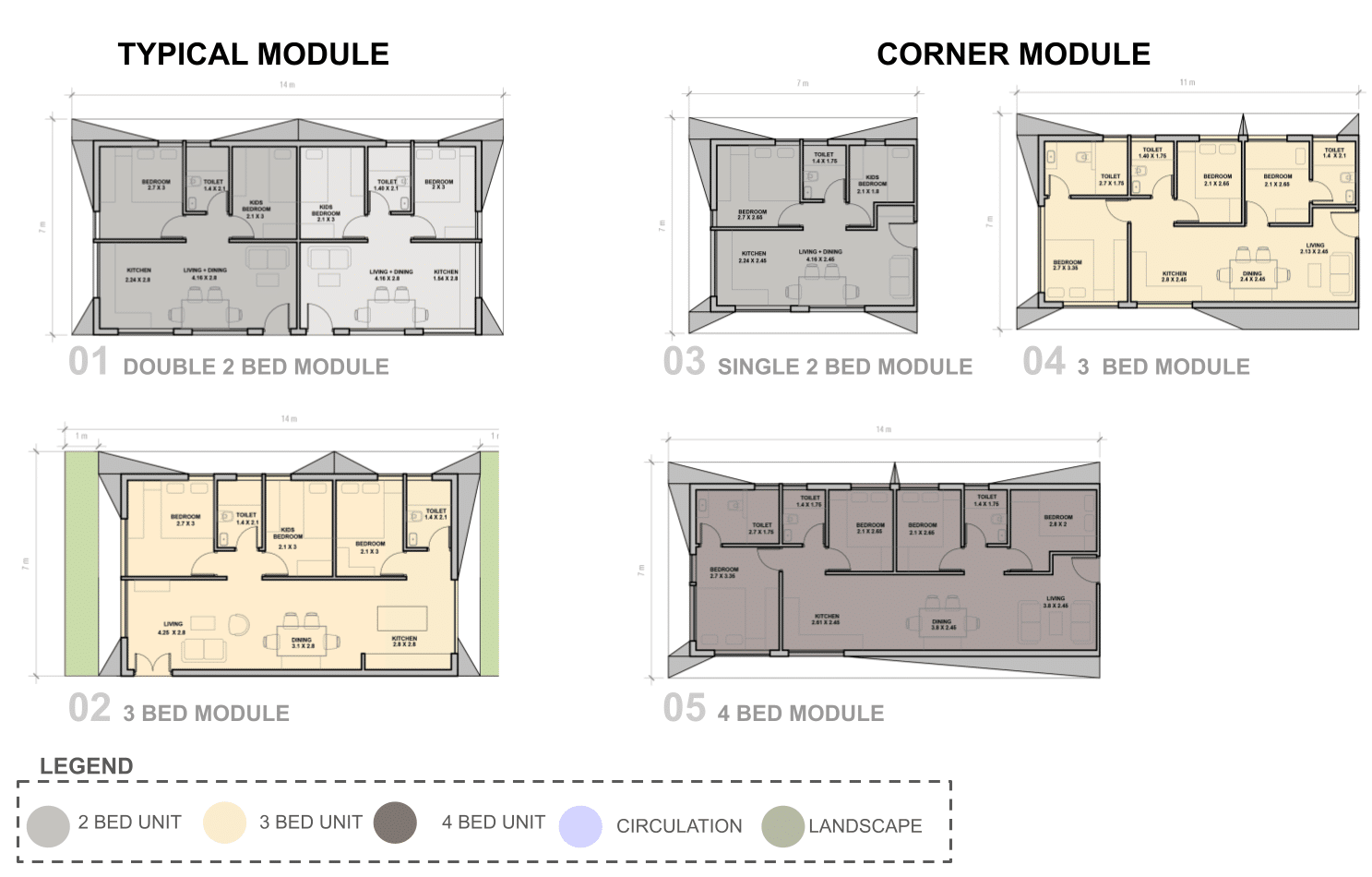
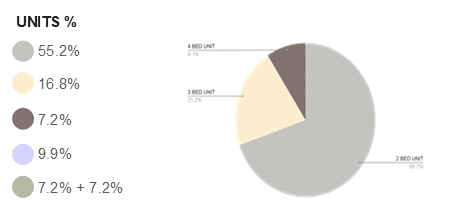
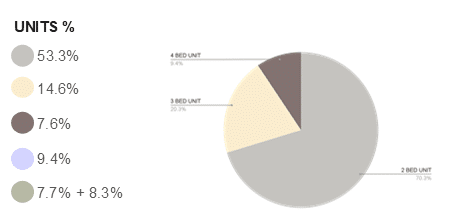
A standardized 14 m × 7 m housing module is adapted into multiple 2-, 3-, and 4-bedroom configurations through controlled internal reorganization, allowing flexibility while maintaining a consistent modular system.
CORE AREA STRATEGY FOR MODULES
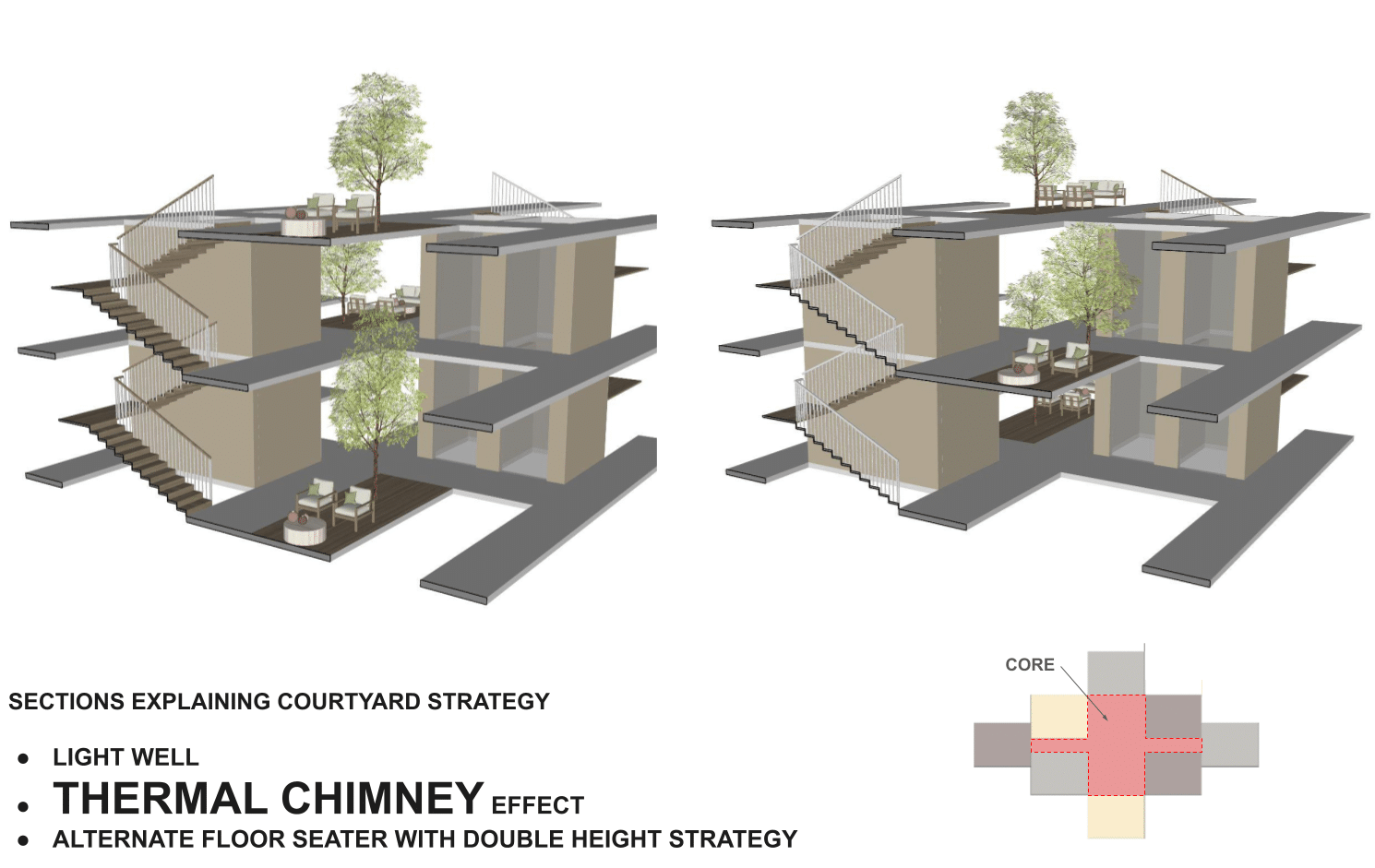
Courtyards are vertically articulated as light wells and thermal chimneys, with alternate double-height spaces used to enhance daylight penetration, natural stack ventilation, and shared social areas.
CHOOSEN SITE
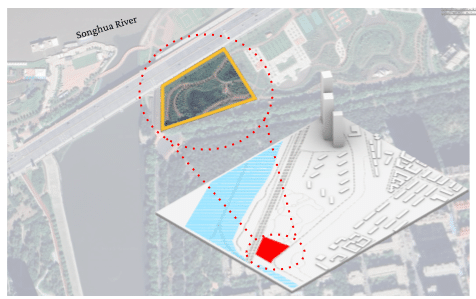
COORDINATES – 45.75187058324549, 126.57091576846318
TOTAL SITE AREA = 19,071.72 sq.m
TOPOGRAPHY = 124m – 128m
PARAMETRIC WORKFLOW
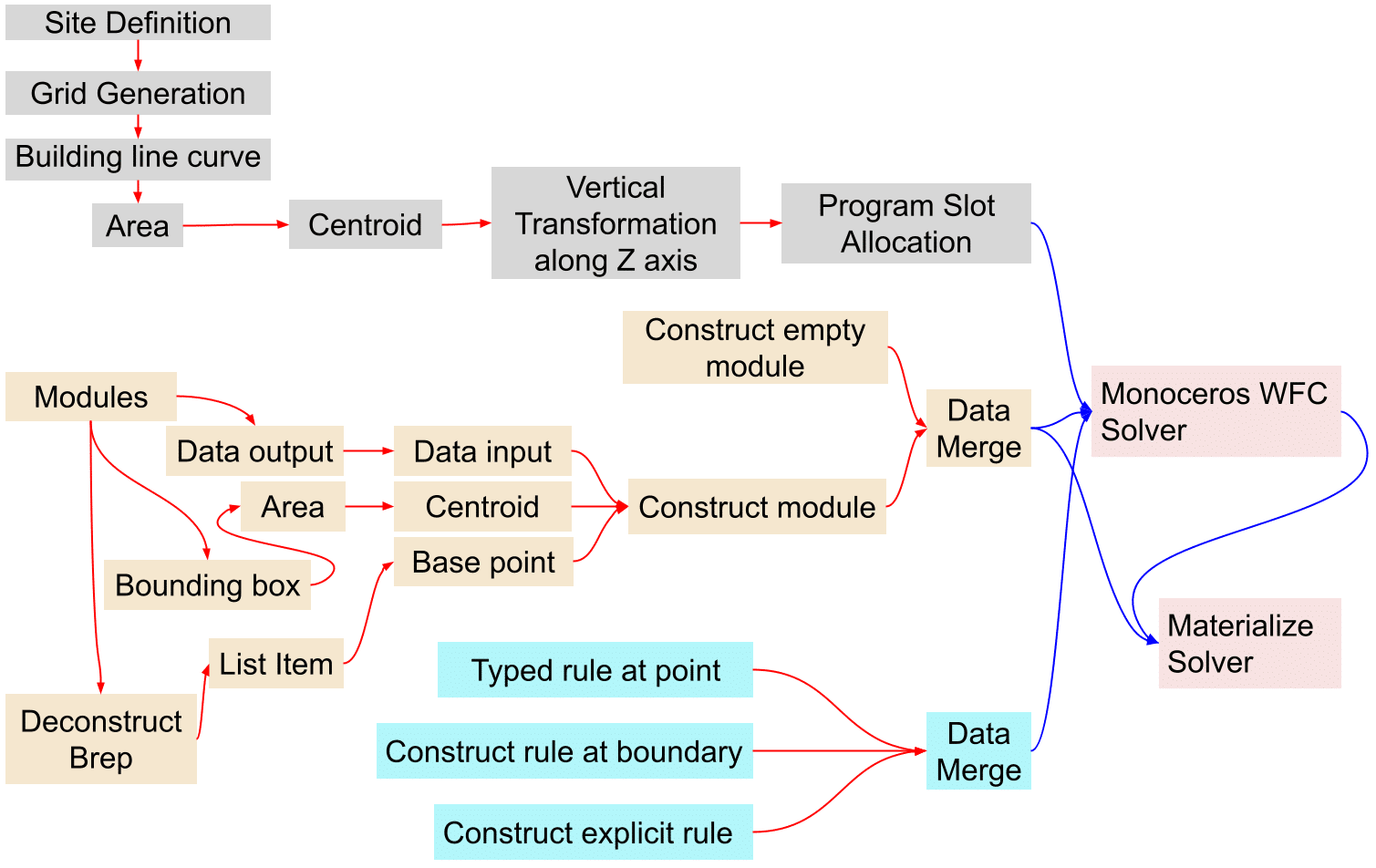
GRASSHOPPER PARAMETRIC WORKFLOW DIAGRAM
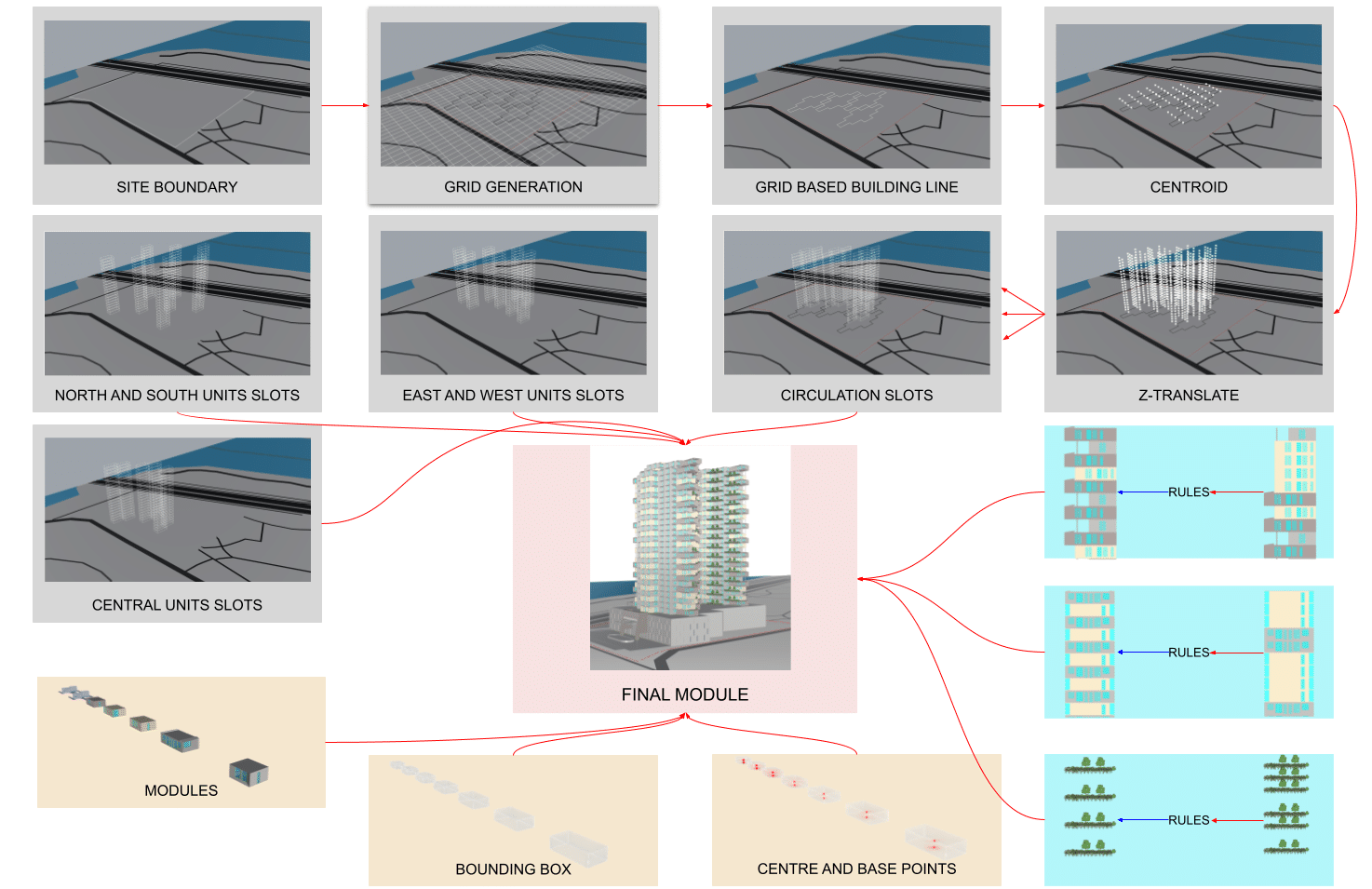
THE PROGRAM
STRUCTURE BRIEF
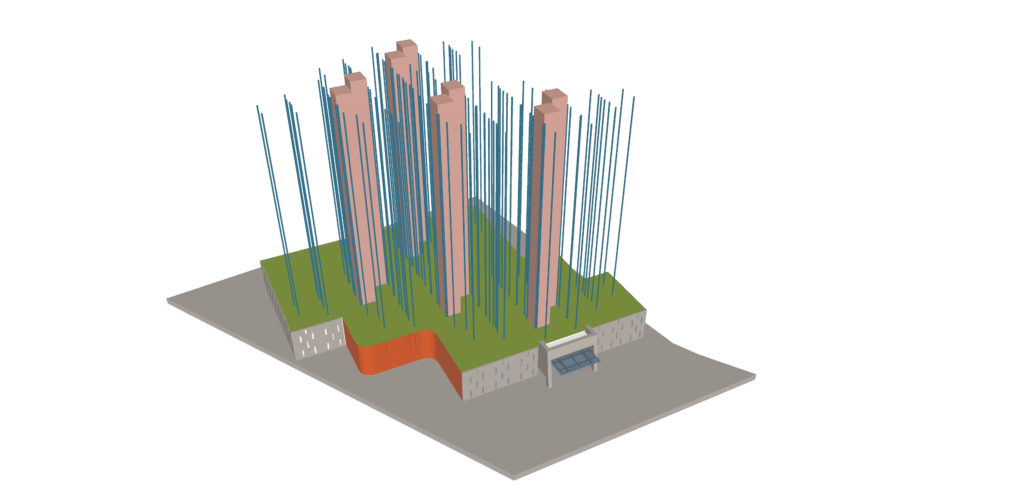
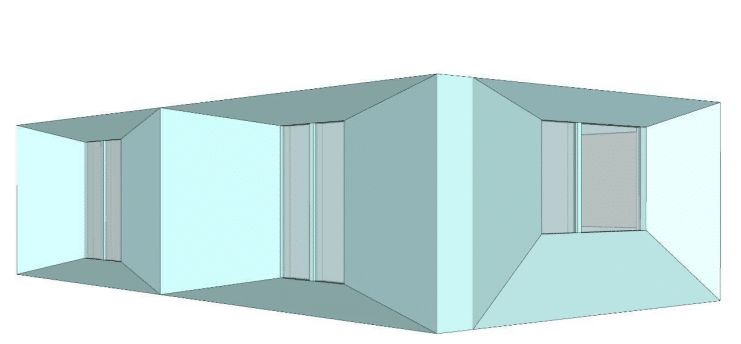
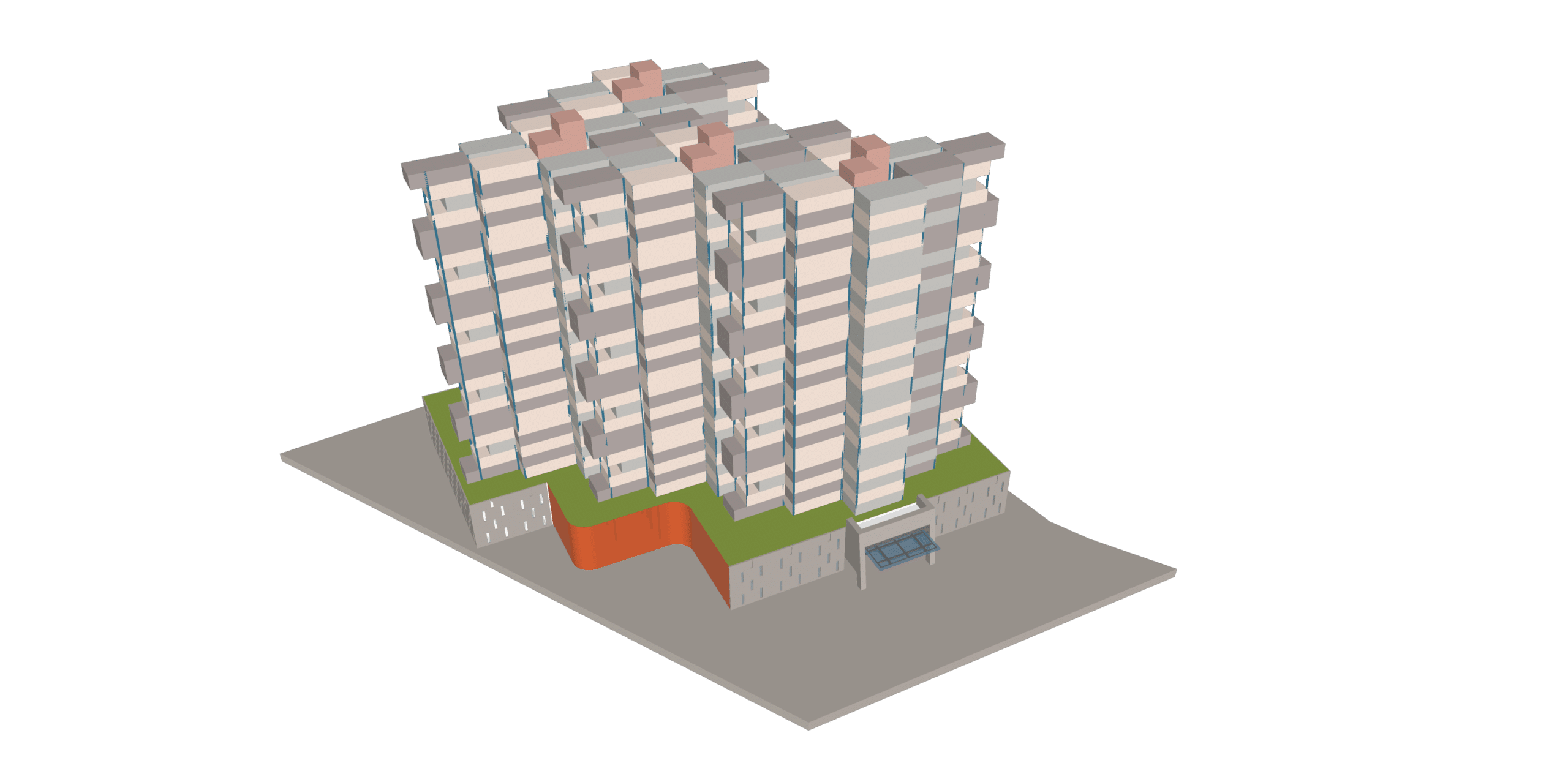
- Structural System: Reinforced concrete modular shell aligned with 7×14 m grid.
- Form: Converging walls – 90 cm at corners, 20 cm near glazing.
- Purpose: Thickened edges provide strength and thermal insulation for Harbin’s sub-zero climate.
- Integration: Modules align with core and grid for uniform load distribution and stability.
Performance: Dense outer shell resists wind and retains heat; modular core ensures structural coherence.
ENVIRONMENTAL STARTTEGIES BASED ON ANALYSIS
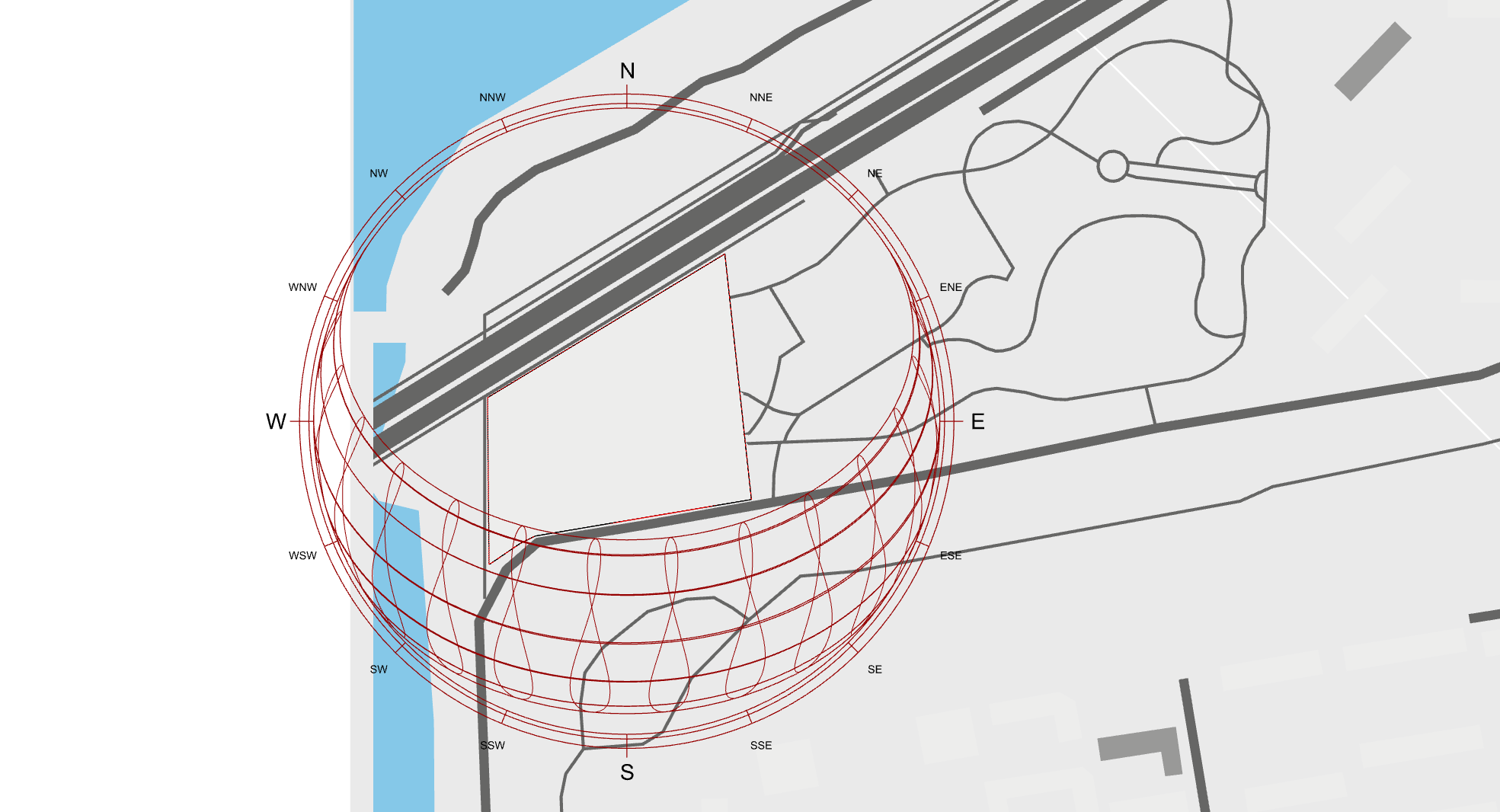
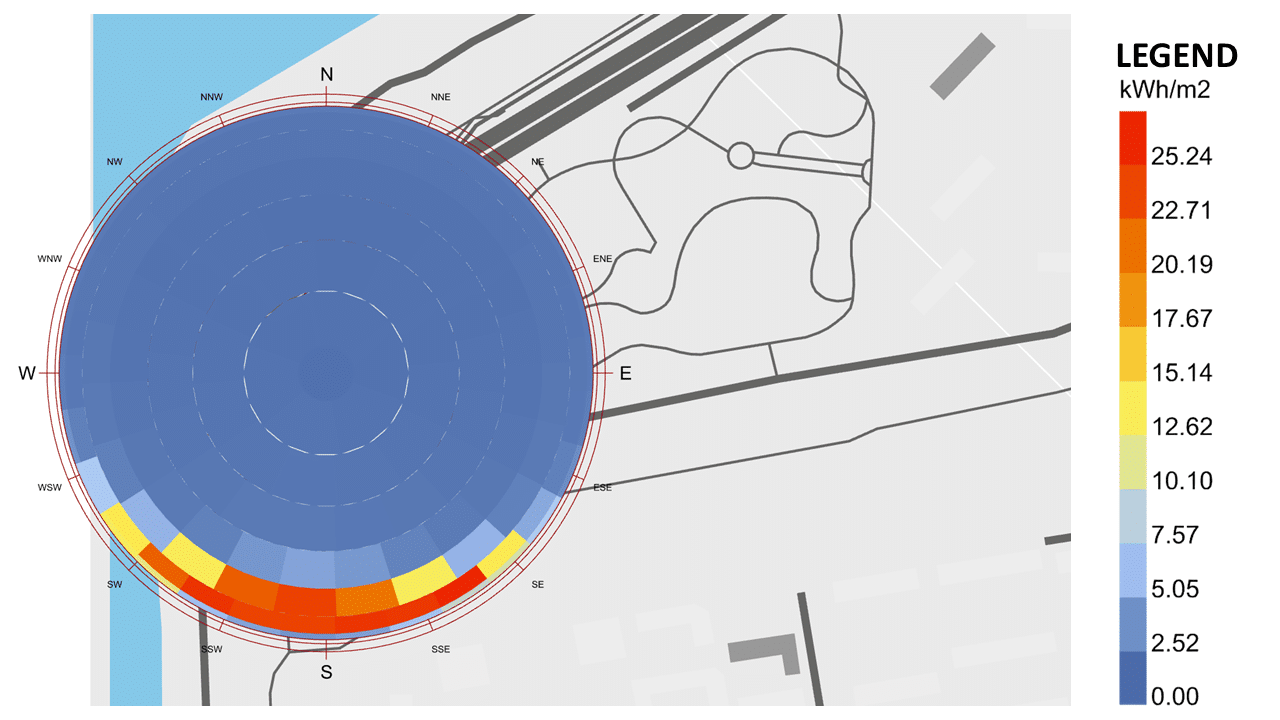
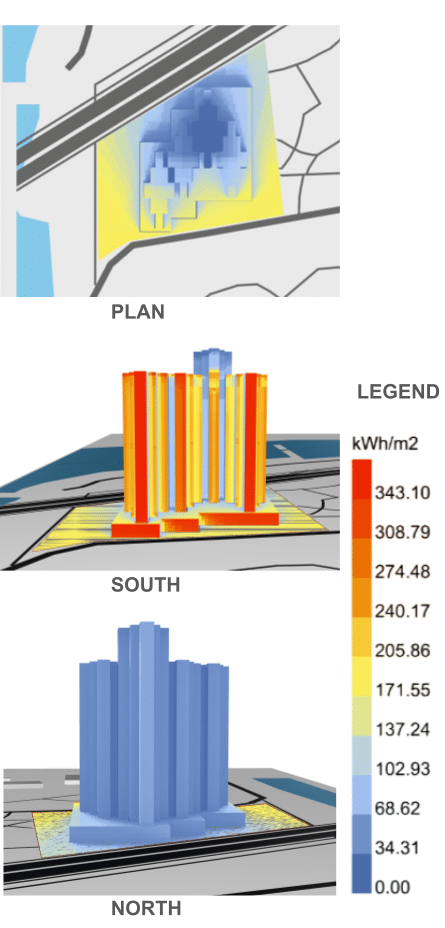
Limited winter solar access in Harbin is identified through sky matrix analysis, guiding optimized southern exposure and façade orientation to concentrate openings and active spaces while minimizing northern heat loss.
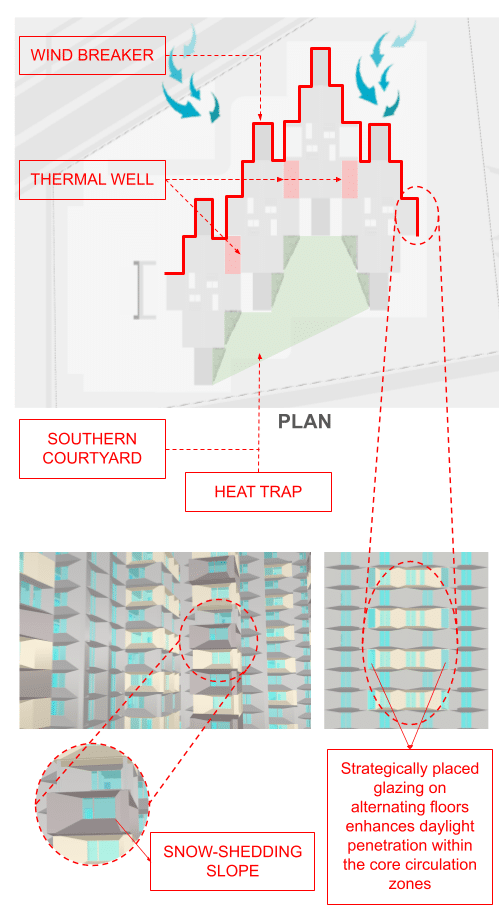
Stepped massing, thermal buffers, courtyards, and modular façade strategies are employed to reduce wind pressure, enhance cold-season solar penetration, and balance daylight access with insulation and heat retention.
SKY MATRIX
INCIDENT RADIATION
STRATEGIES
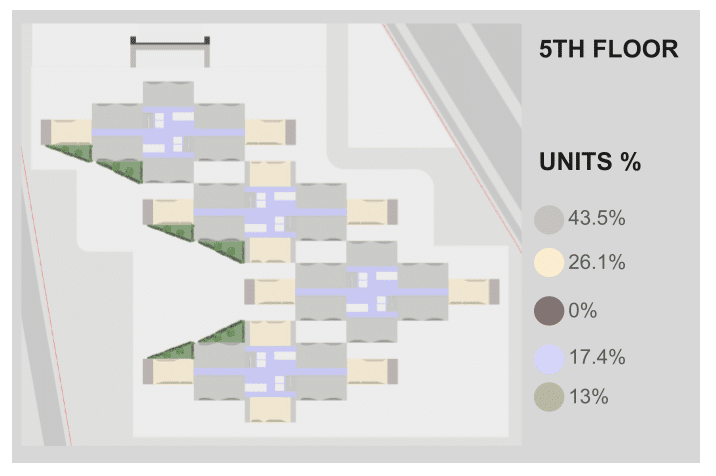
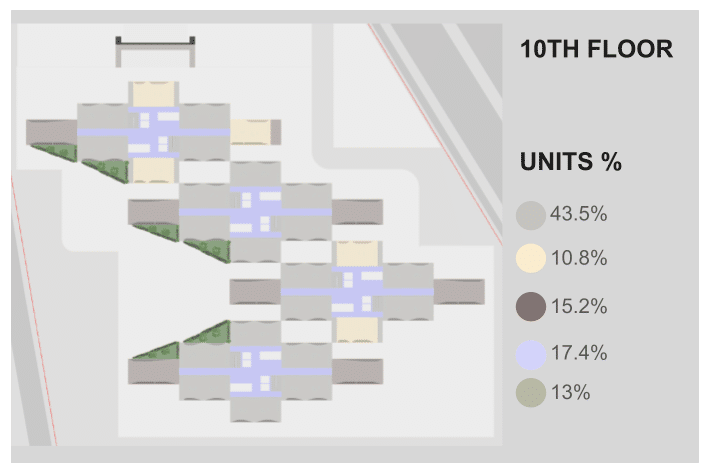
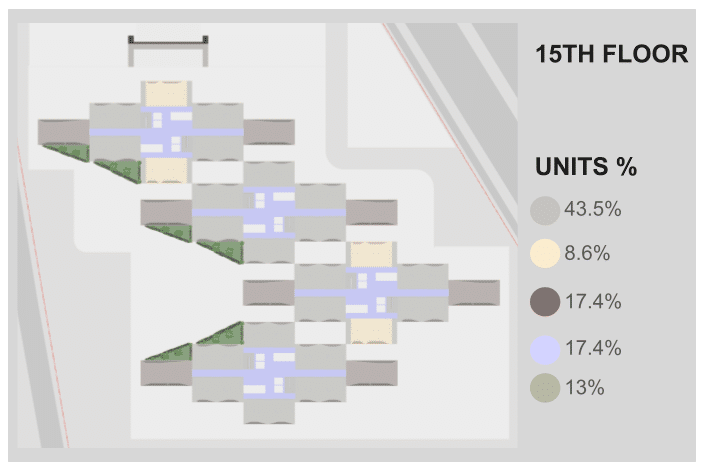
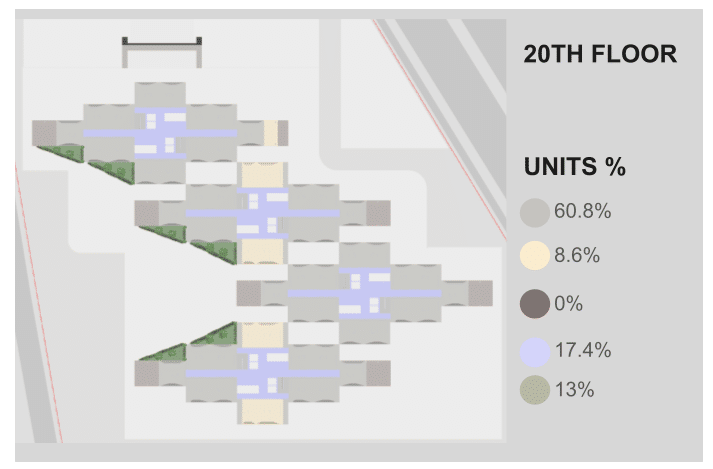
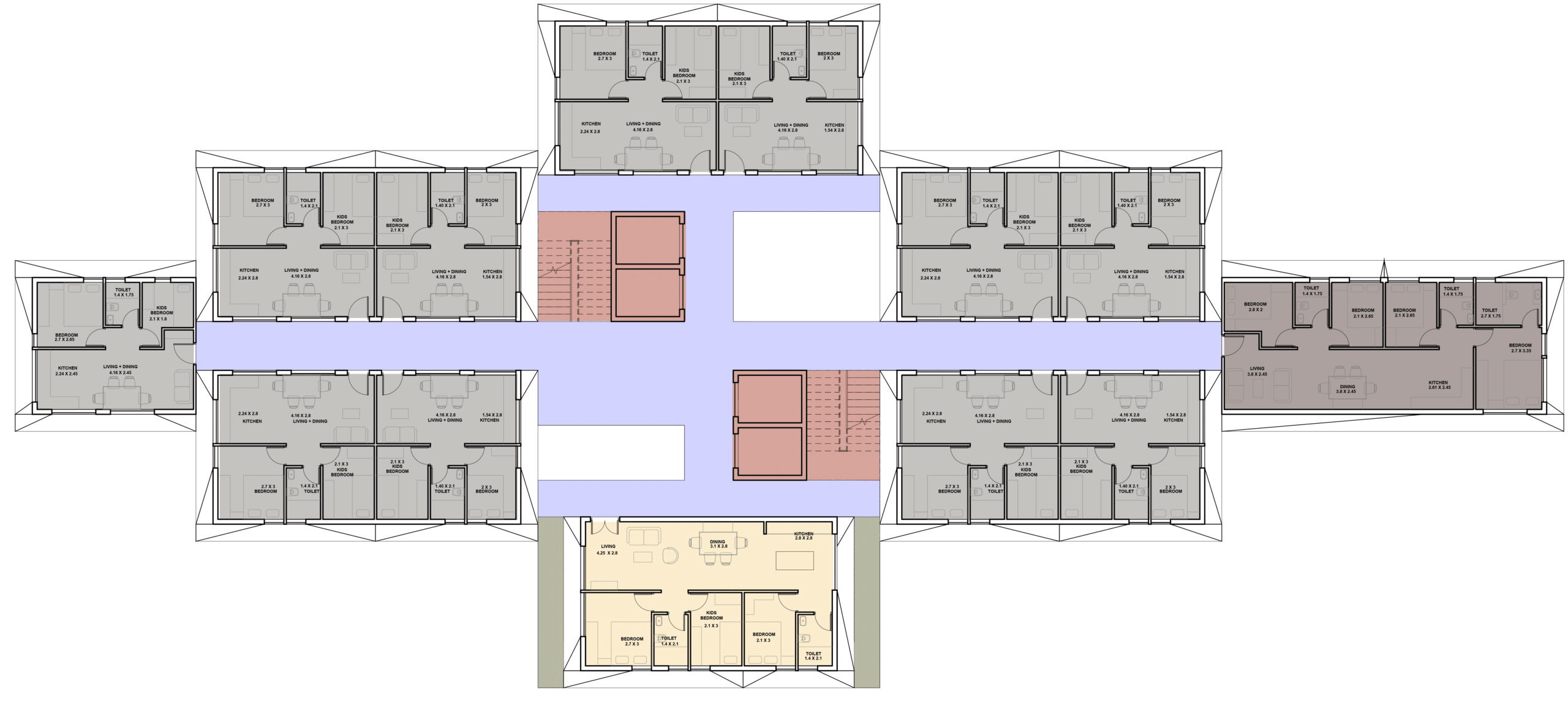
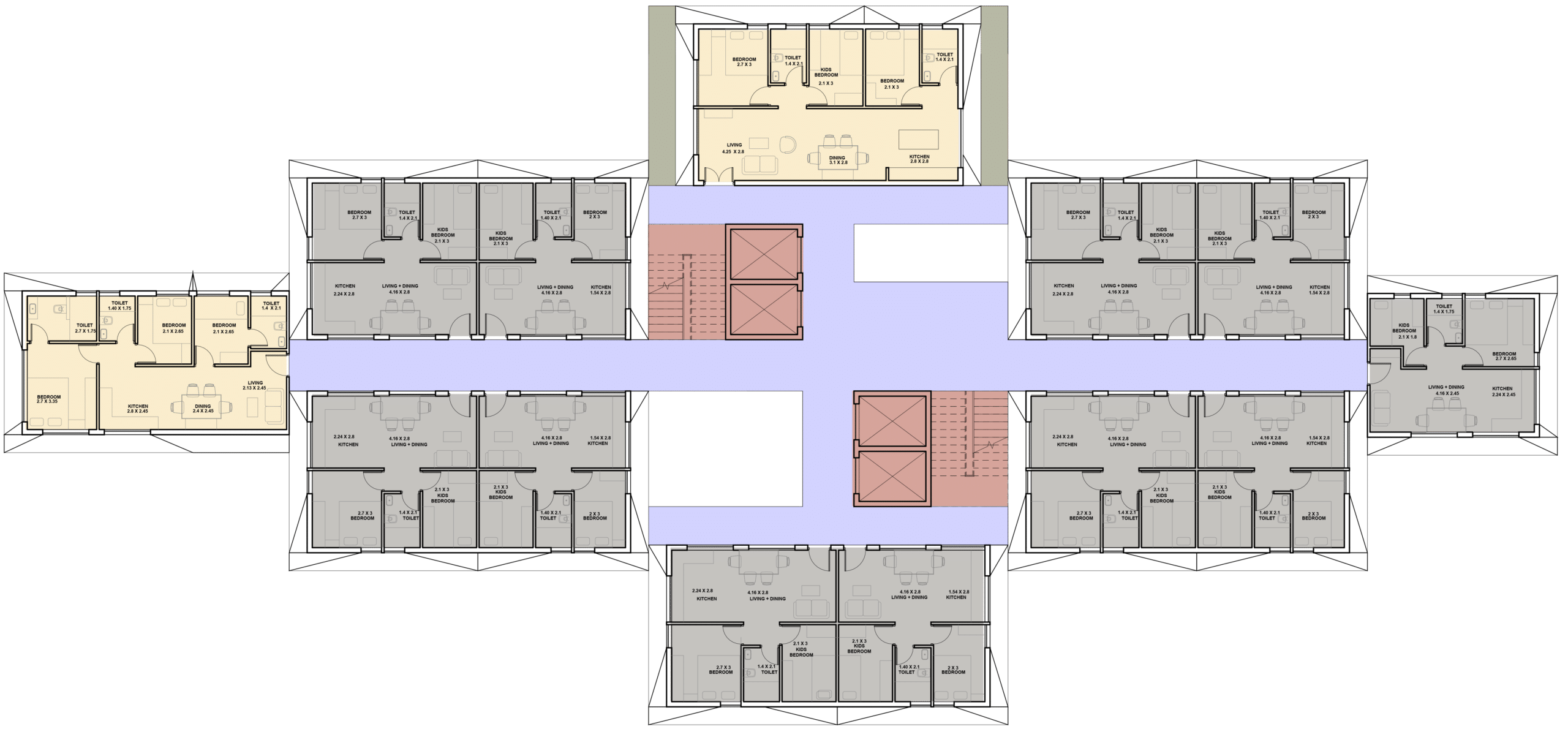
TYPICAL FLOOR PLAN AT DIFFERENT LEVELS
Illustrates how the unit mix is vertically adapted by comparing typical floor plans across different building levels, while the circulation spine and core are maintained consistently. Variations in unit distribution are introduced across lower, mid, and upper floors to respond to structural load, daylight, views, density, and residential quality requirements.
DETAILED PLAN
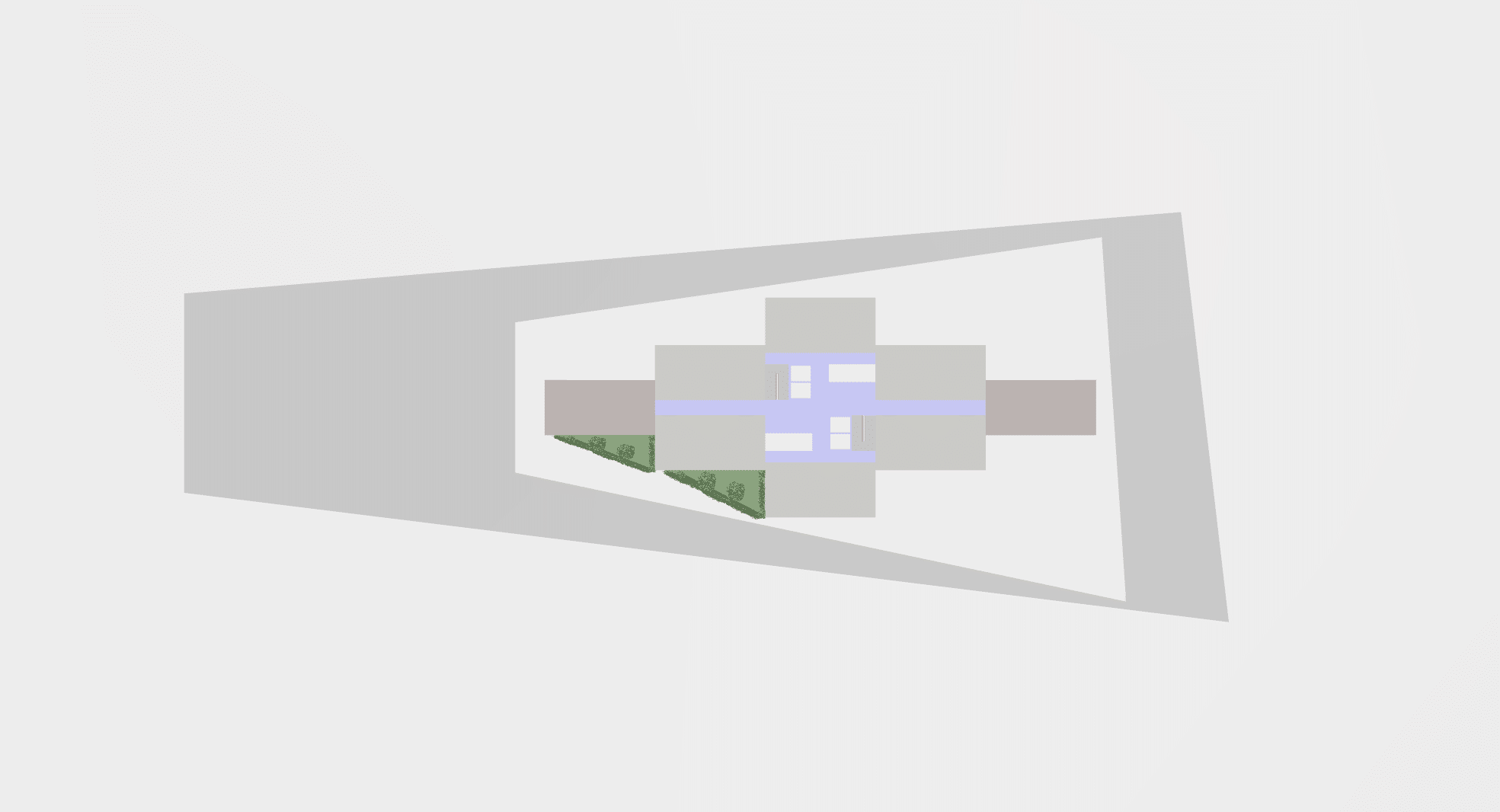
The typical floor plan is organized around a central core to ensure efficient vertical circulation and structural stability, with residential units of varying sizes arranged symmetrically around it. Landscaped pockets and clearly defined corridors are incorporated to enhance ventilation, improve wayfinding, and support overall livability.

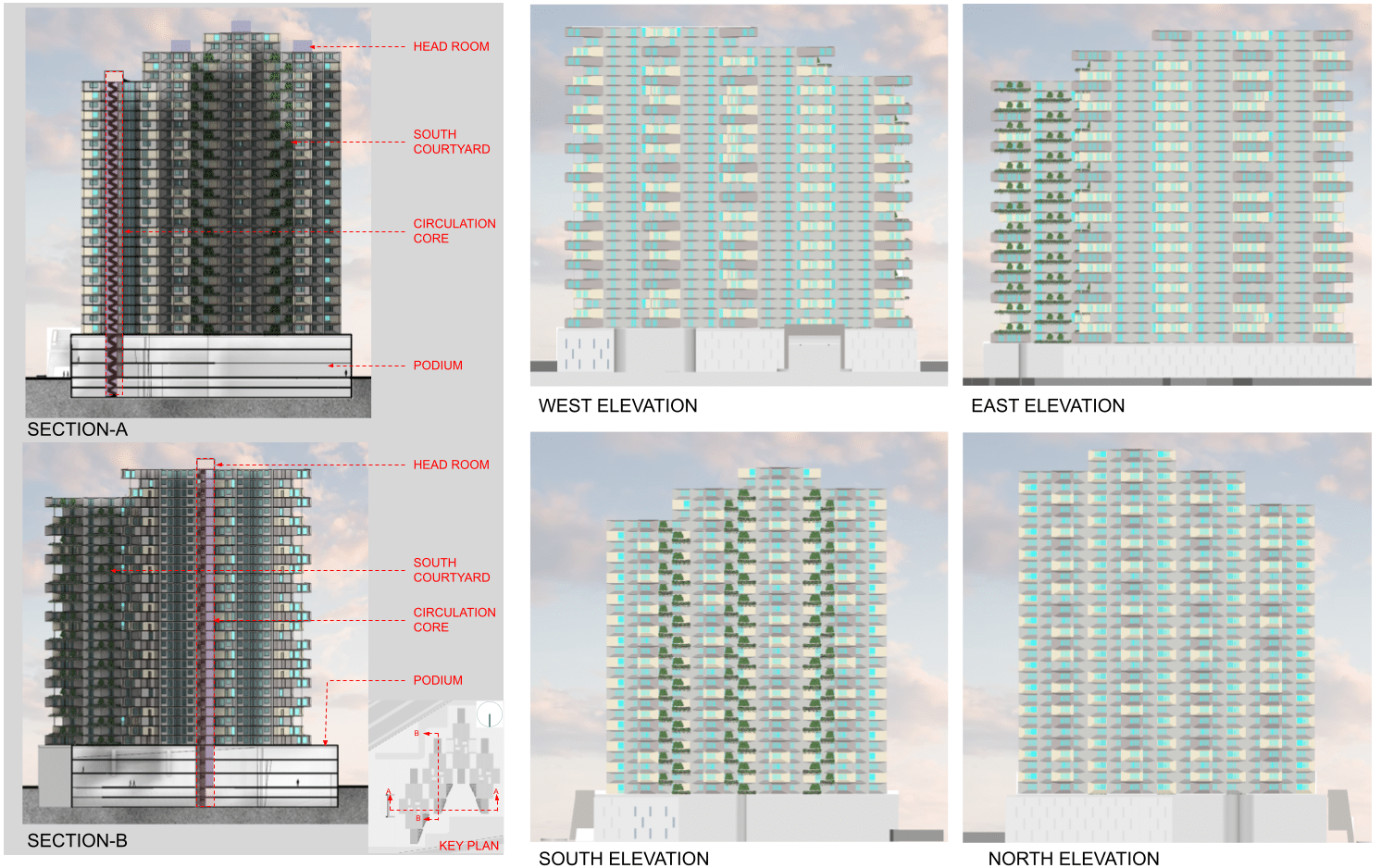
SECTIONS AND ELEVATIONS
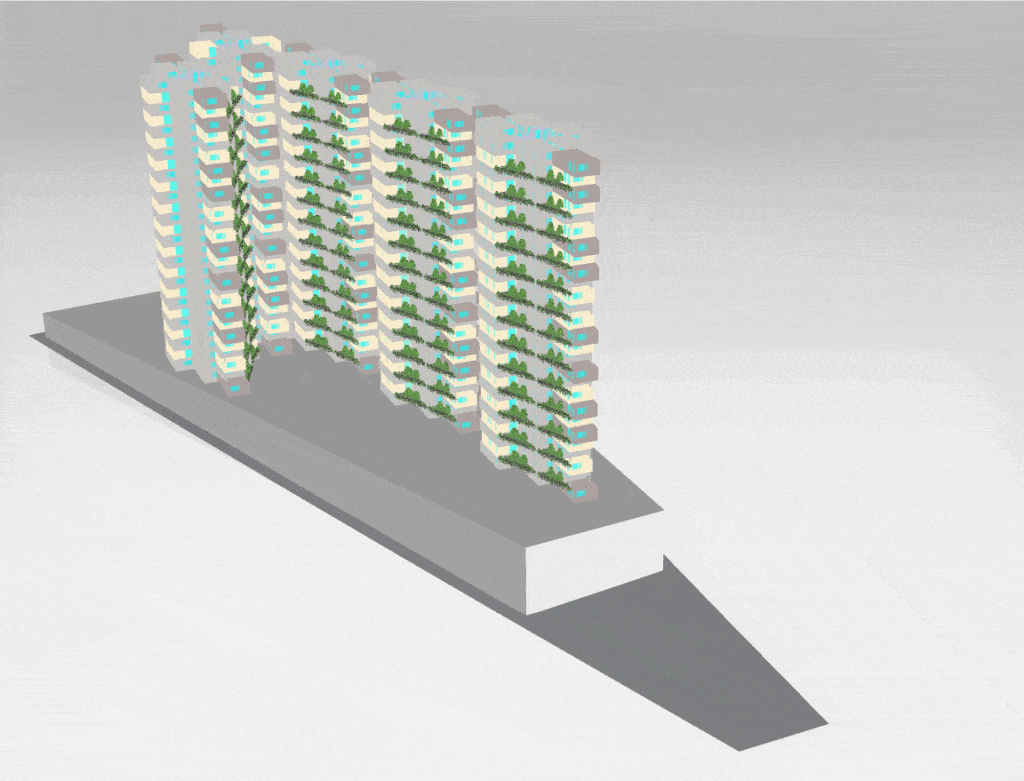
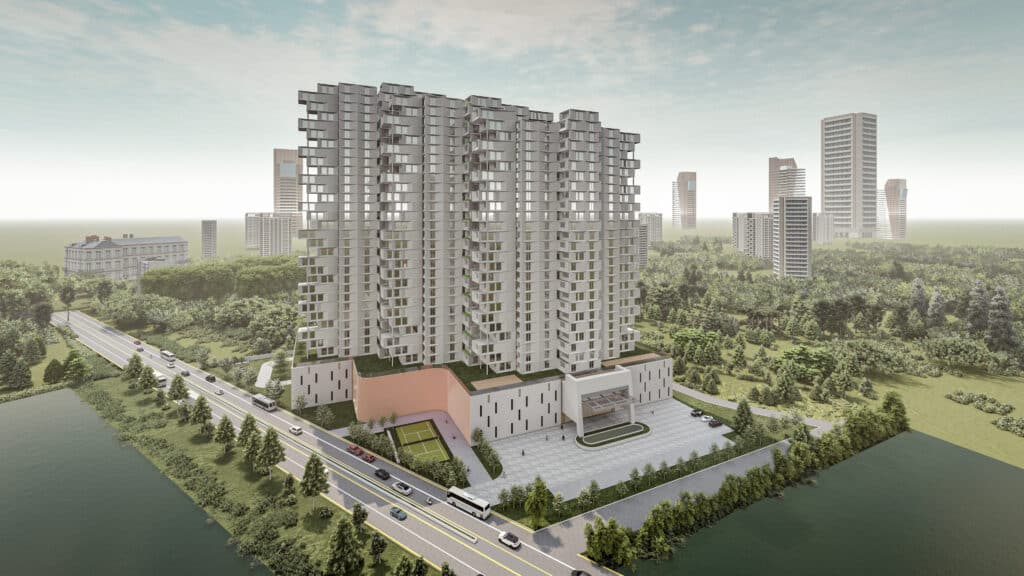
The sections and elevations, highlighting the overall massing and vertical organization of the project. The relationship between the podium, circulation core, and residential floors is clearly articulated, ensuring headroom efficiency and structural clarity, while elevations express a consistent façade rhythm through openings that enhance light, ventilation, and visual depth.
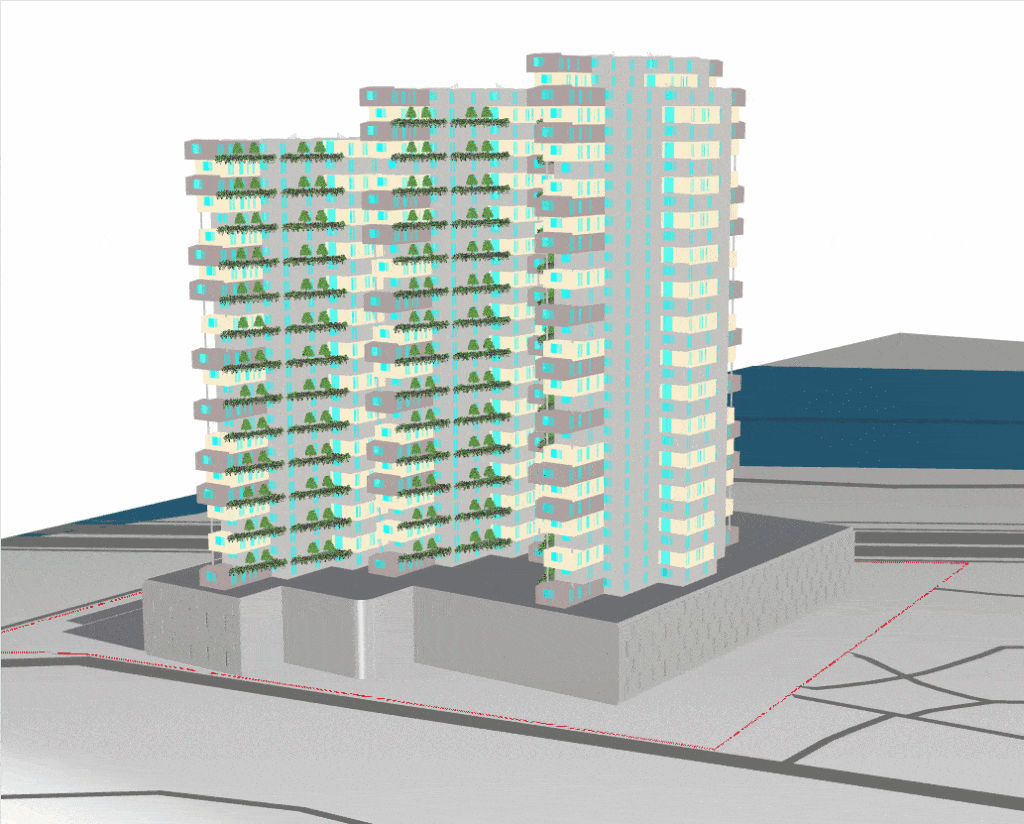
DESIGN VARIATIONS
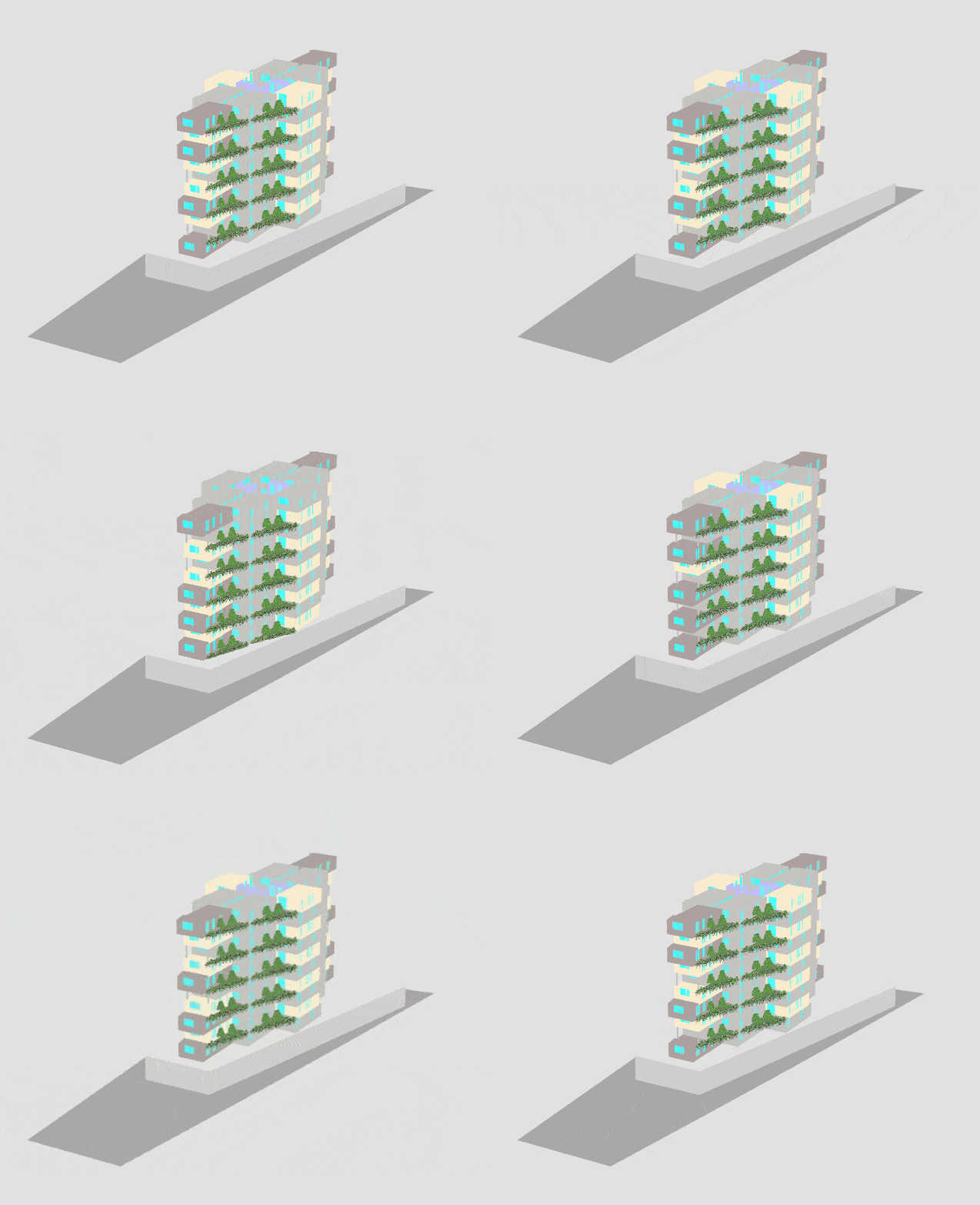
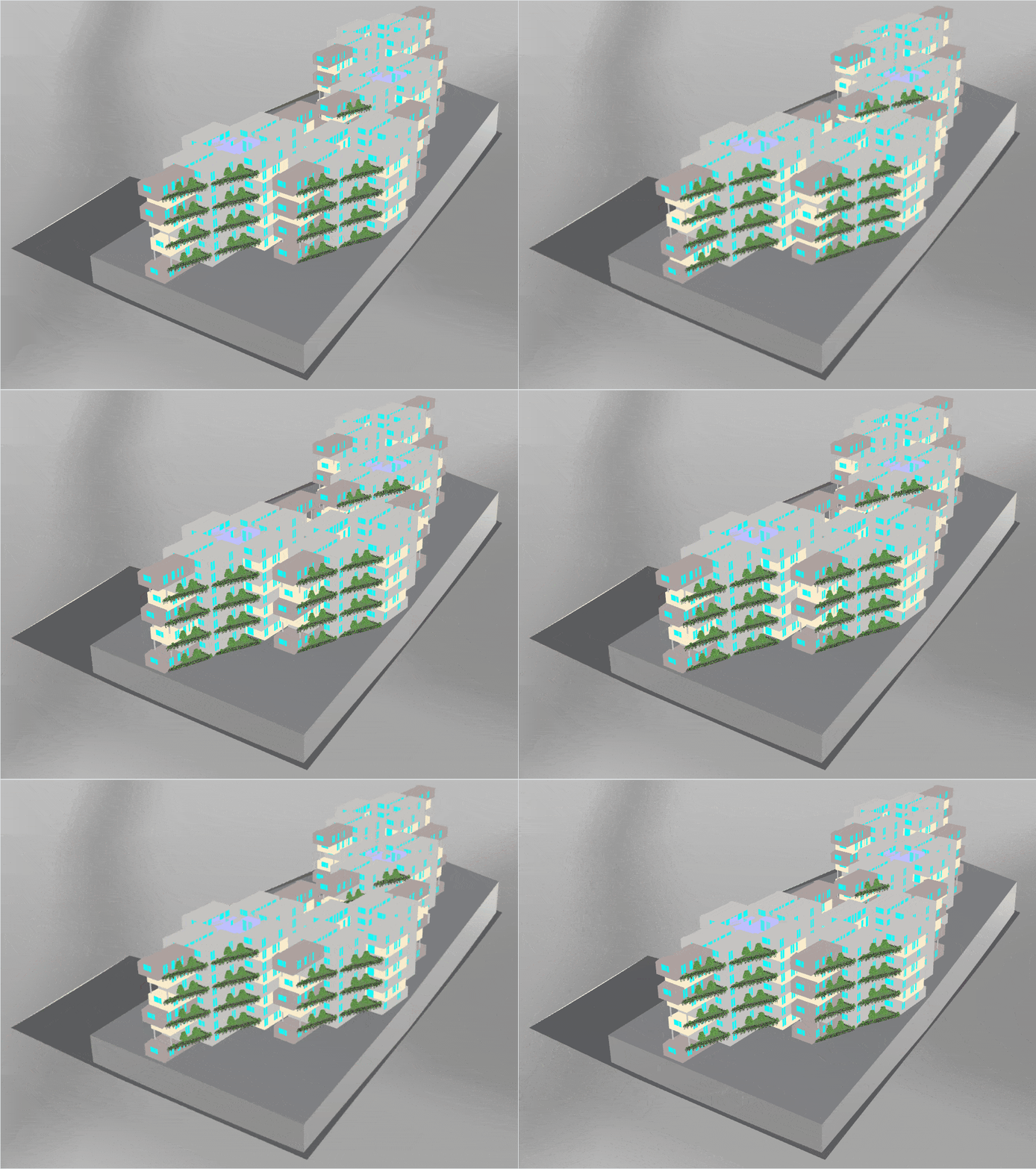
- Demonstrates how varying input parameters (height and façade modules) generate multiple building configurations on the same site.
- Highlights the flexibility of the design system to adapt density and form while maintaining a consistent urban footprint and structural logic.
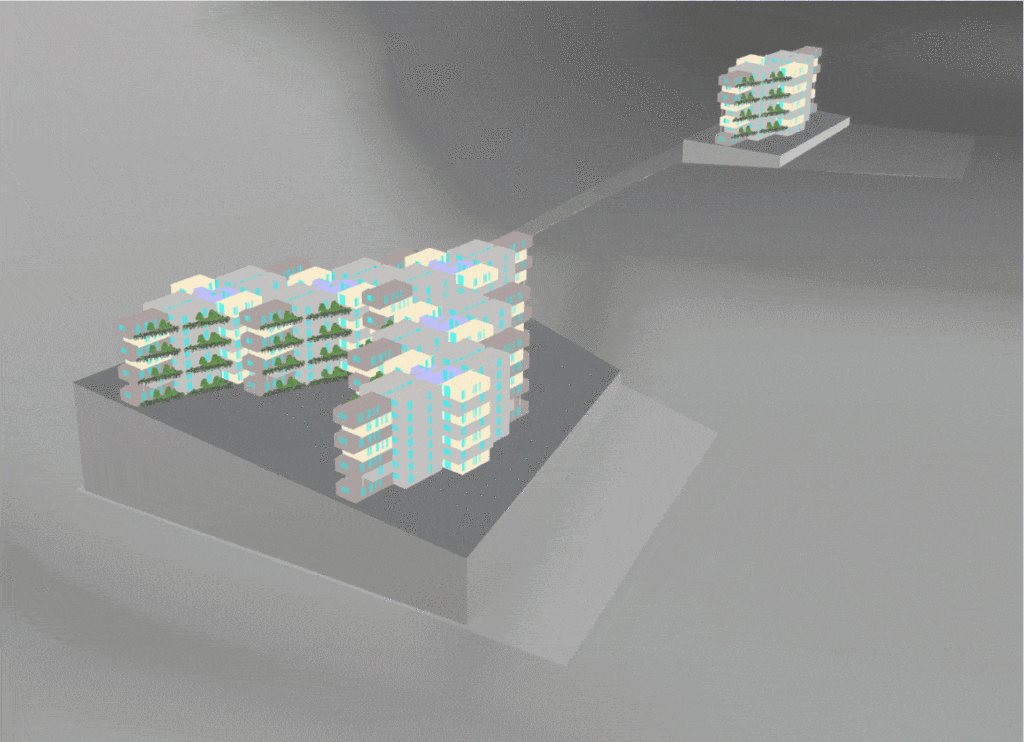
DESIGN VARIATIONS MULTIPLE SITE
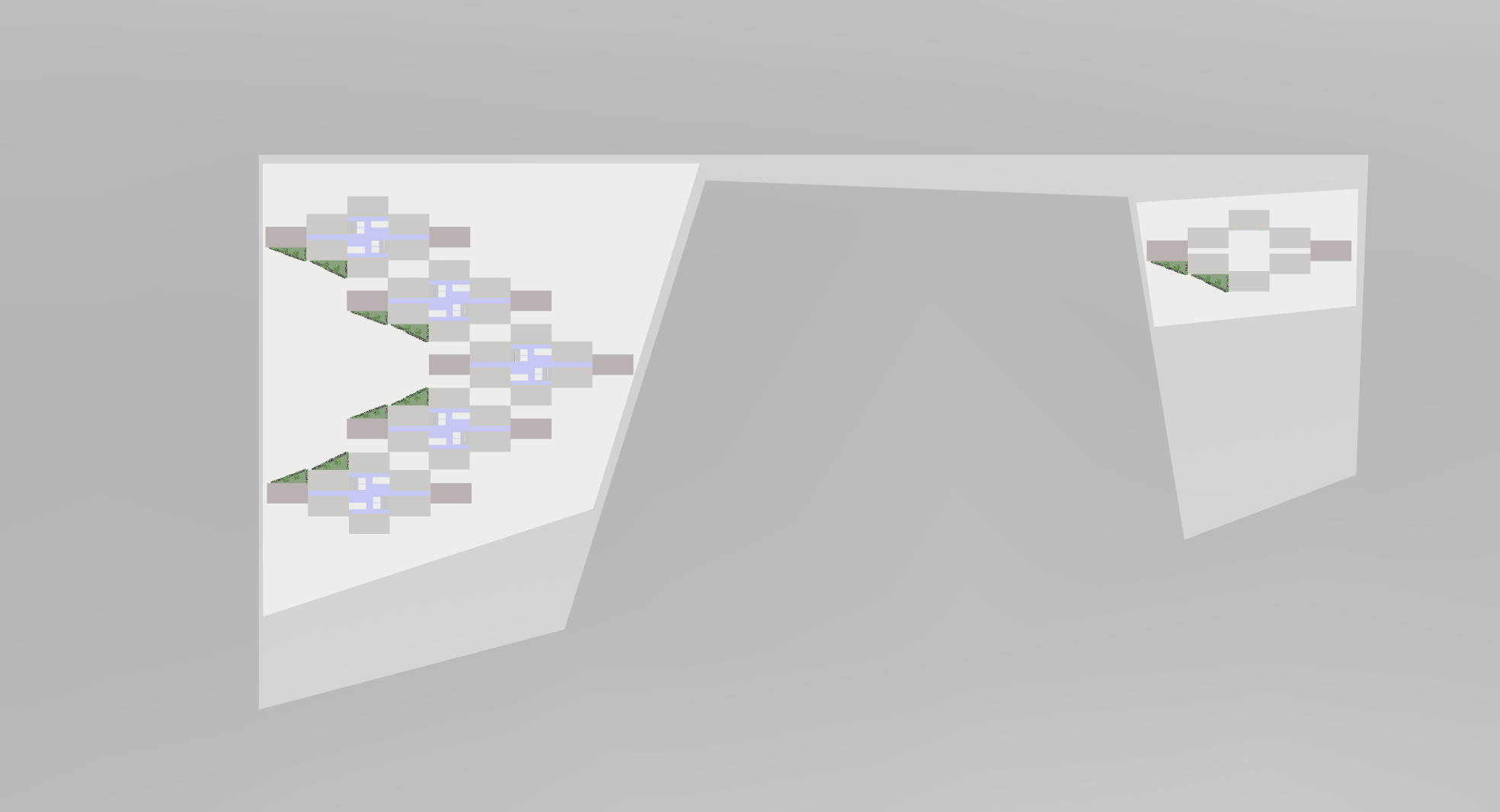
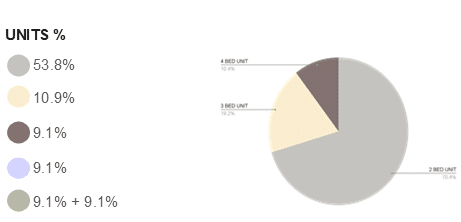
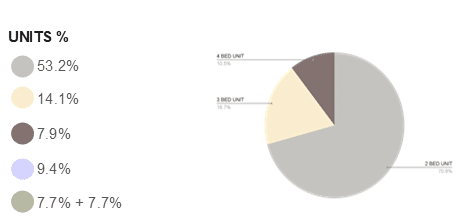
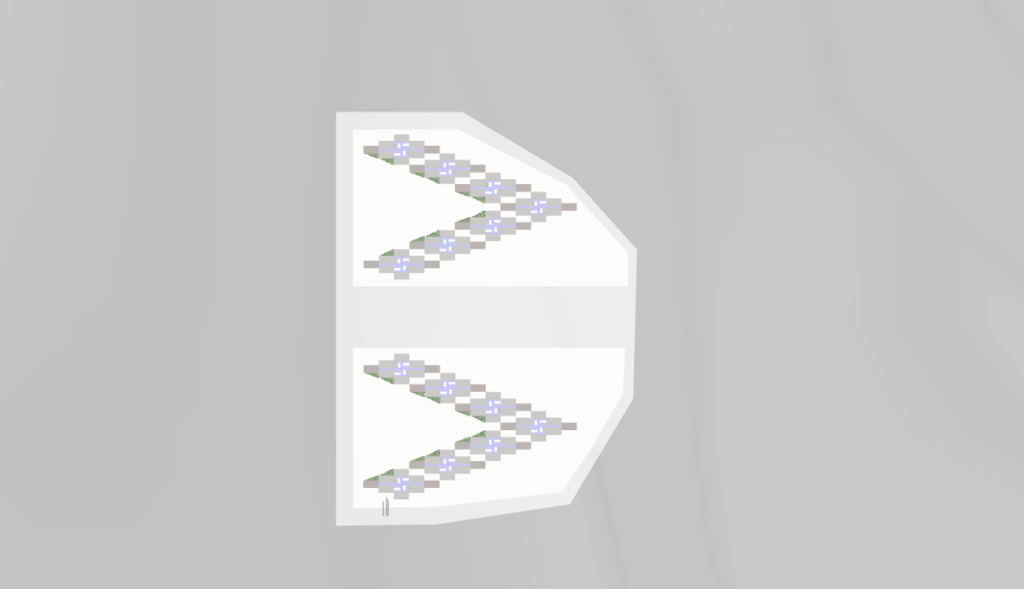
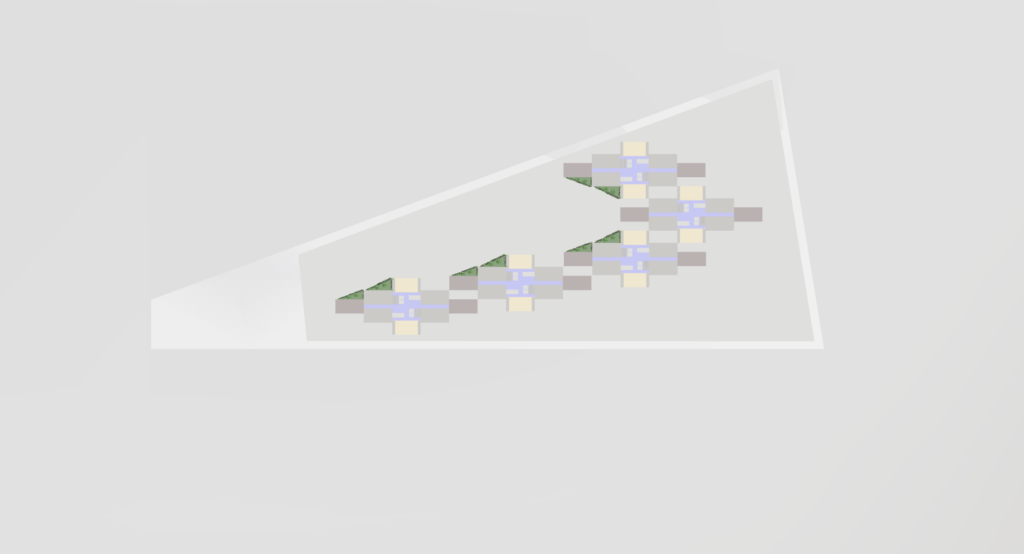
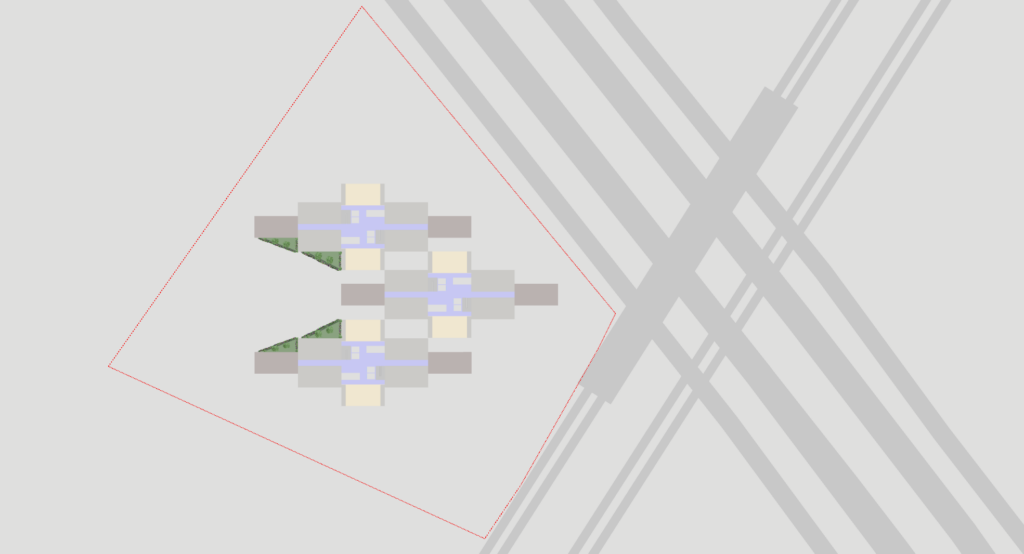
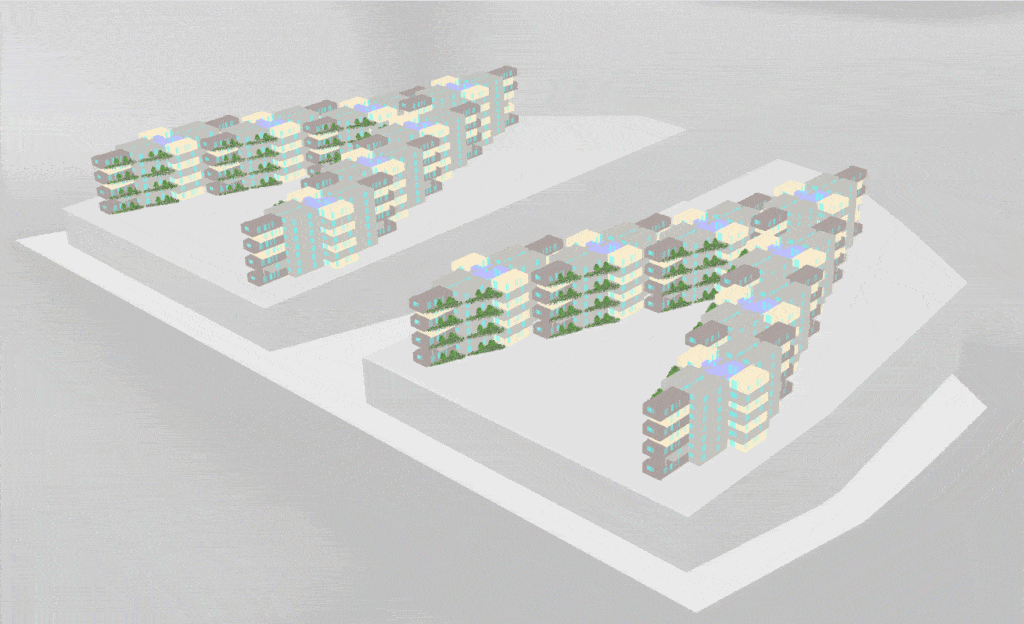
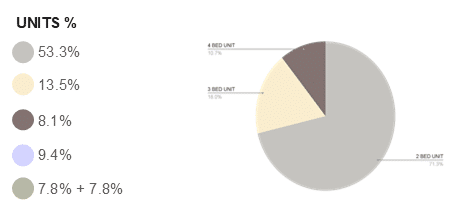
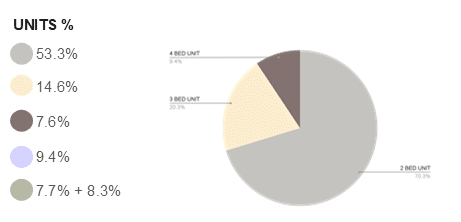
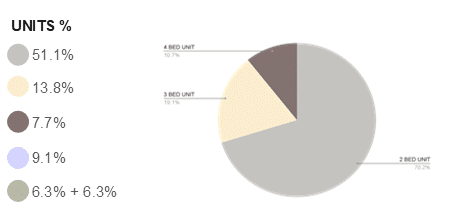
This demonstrates how the design system adapts across multiple site conditions and geometries. Each site generates a distinct building configuration while maintaining a consistent logic of core, circulation, and unit organization. Variations in unit mix respond to site size, orientation, and access constraints. Despite differing footprints and massing, the projects retain a unified architectural language and performance criteria. This confirms the robustness of the system in delivering scalable housing solutions across diverse urban contexts.
SITE 1
SITE 2
SITE 3

SITE 4
SITE 5
SITE 6
VISUALIZATIONS
CONCLUSION
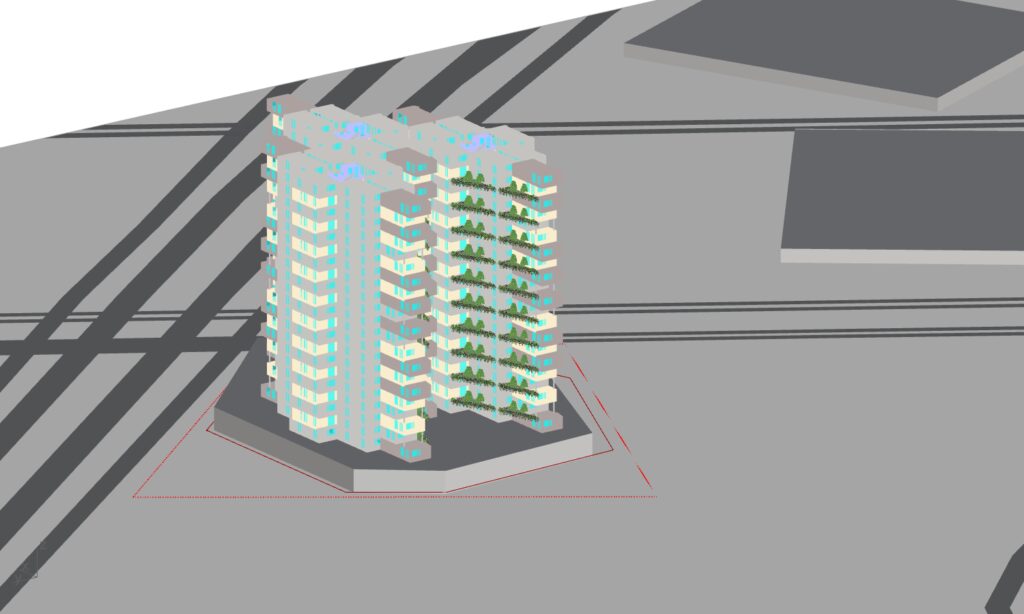
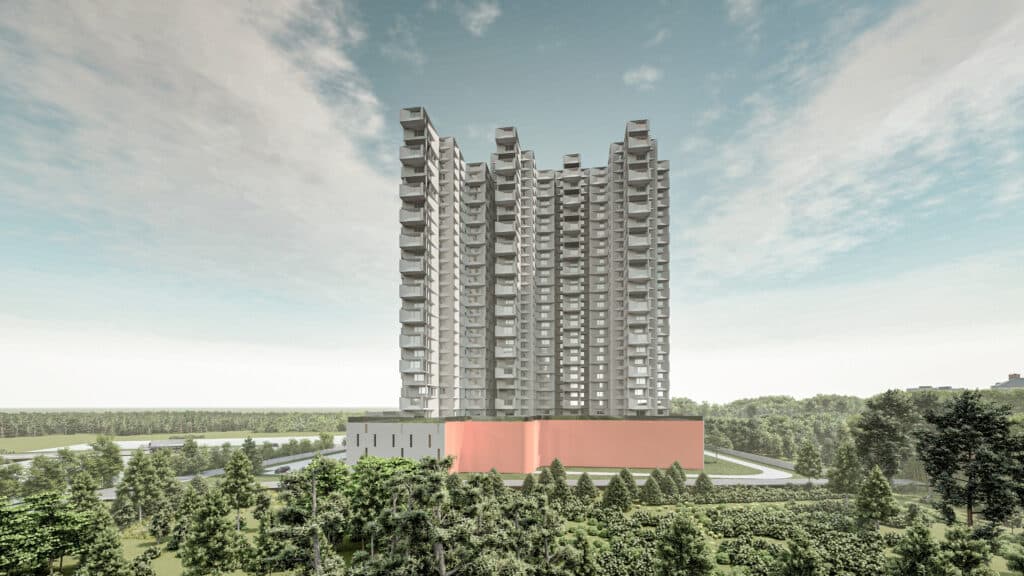
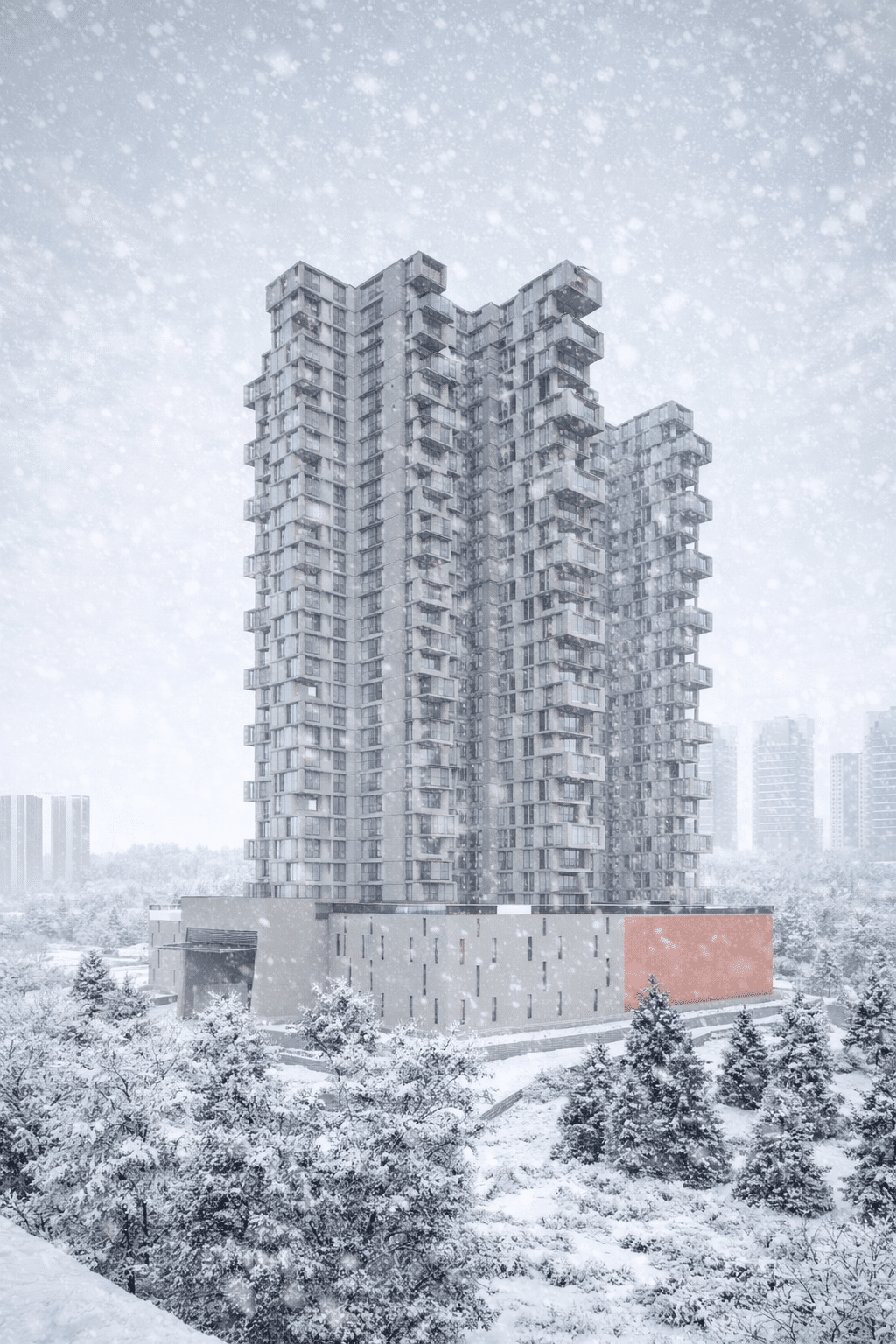
In conclusion, the building is shaped in response to climate and site conditions through compact, staggered massing that minimizes heat loss, form-driven wind mitigation that disrupts wind corridors, and integrated thermal buffer zones that regulate wind pressure and enhance thermal comfort.
