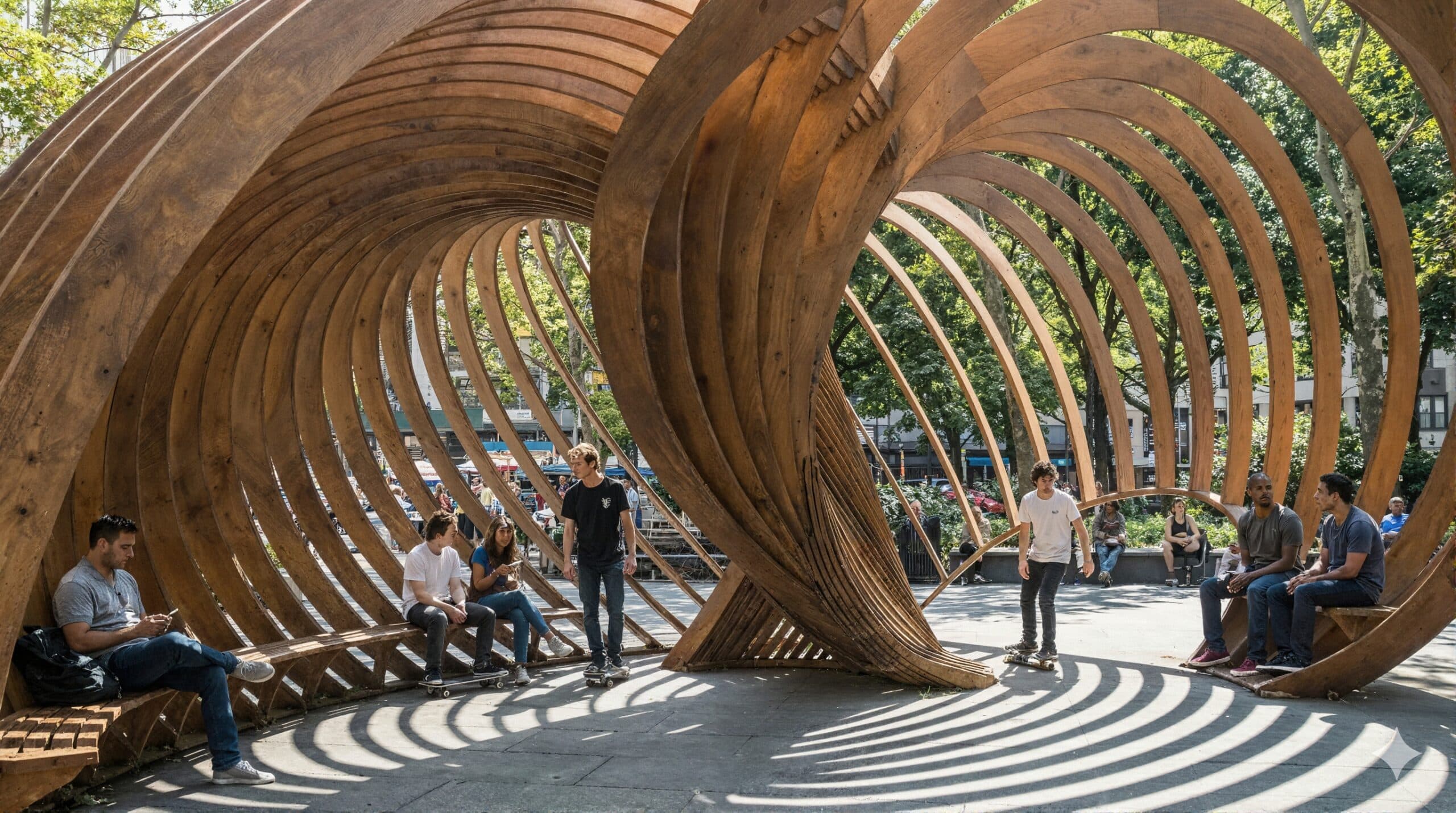
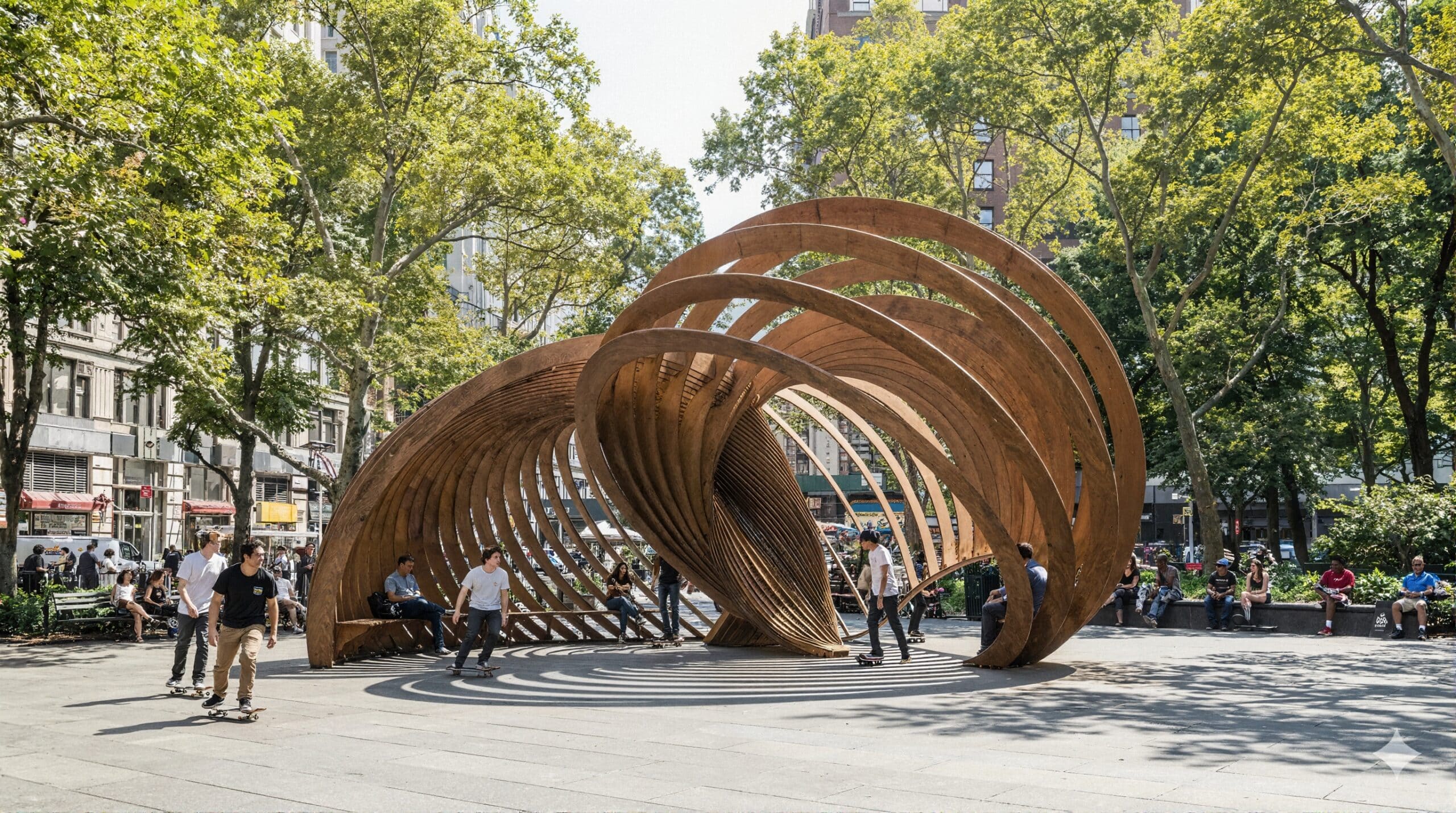
The Kinetic Node proposes a dynamic pavilion located in the central pedestrian zone of Plaça de la Universitat, Barcelona. Developed within a computational design seminar, the intervention explores the intersection of generative algorithms and active public space. The design utilizes parametric tools to generate a fluid structure where architectural form seamlessly transitions into skateable terrain, embodying principles of “skate urbanism”. By merging flowing timber ramps with structural canopies, the pavilion transforms a static urban island into a kinetic node, inviting active engagement and redefining the relationship between digital methodology and physical urban culture.

Revitalizing Plaça de la Universitat
The Kinetic Node transforms a static pedestrian zone in Barcelona into a dynamic, active landscape. Designed via computational algorithms, the pavilion merges architectural shelter with skate urbanism, creating a fluid space for both rest and play.


Parametric Logic & Form
Using generative design tools, the structure evolved from analyzing pedestrian flows and skater trajectories. The resulting timber lattice acts as a “kinetic node,” offering shade for the public and complex, non-standard terrain for skaters.
Scroll down to view the design process, pseudo-code, and final renders.


– FINAL RENDERINGS –