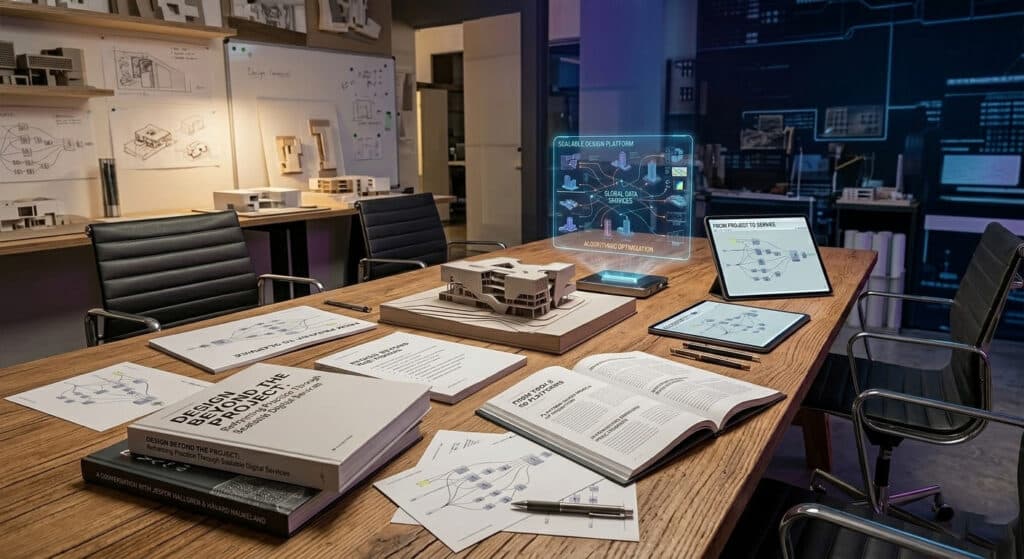
A conversation with Jesper Wallgren
Introduction
In recent years, computational design and BIM workflows have become common tools in architectural practice. However, most of these tools remain confined to individual projects, often developed as internal scripts or one-off automation solutions to solve immediate design problems. While effective in improving efficiency within a project, these tools rarely evolve into scalable digital services that can operate across multiple projects or organizations.
This raises an important question for contemporary architectural practice: what enables a computational workflow to evolve from a project-specific tool into a reusable digital platform?
This research explores the emerging shift from traditional project-based practice toward platform-based models of architectural production.
From Tools to Platforms
In many architectural offices, computational scripts are created to automate repetitive tasks such as geometry generation, floor plan optimization, or environmental analysis. These tools often remain embedded within specific projects and are rarely standardized for broader use.
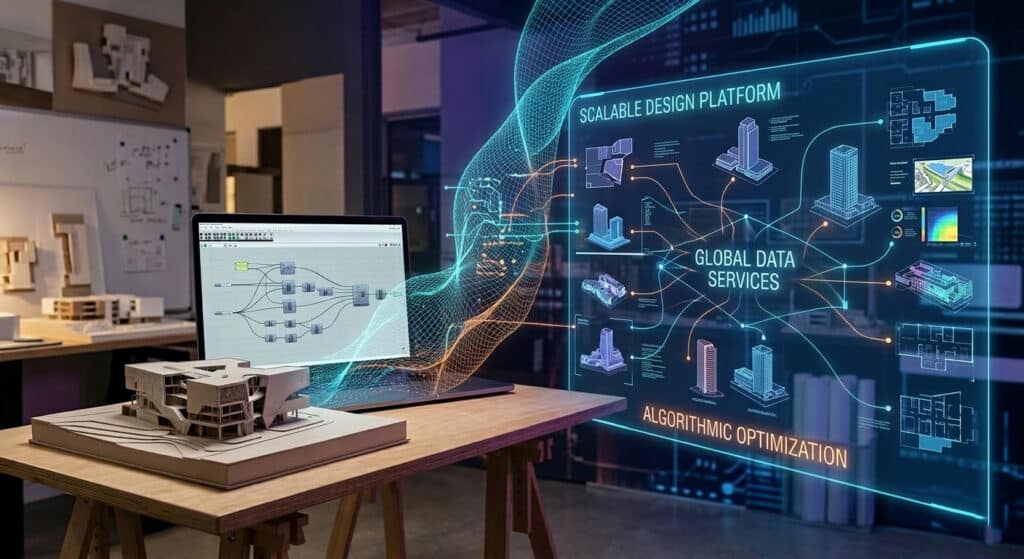
However, a growing number of practitioners are developing design technologies that extend beyond internal workflows. Instead of being used once and discarded, these systems are transformed into scalable digital services that can support multiple projects, teams, and users.
This shift reflects a broader transformation in architectural practice. Design teams are no longer only producing buildings; they are also creating digital infrastructures, platforms, and services that shape how design processes operate.
By examining this transition, our research investigates the workflows, organizational models, and business strategies that allow computational tools to move beyond isolated project support.
Interviewing Emerging Practitioners
To understand this transformation, the study is grounded in interviews with practitioners who have been actively involved in developing scalable design technologies.
One of the interviewees is Jesper Wallgren, co-founder and Chief Product Officer of Finch. Finch develops algorithm-driven tools that assist architects in generating and optimizing floor plans, helping automate repetitive aspects of architectural design.
The research also engages with Håvard Haukeland, co-founder of Spacemaker AI, a platform that uses generative algorithms and data-driven analysis to help architects and developers evaluate site potential. Spacemaker was later acquired by Autodesk, illustrating how design technologies can evolve into scalable digital platforms within the AEC industry.
Both practitioners represent a new generation of designers who operate at the intersection of architecture, software development, and digital entrepreneurship.
Reframing Architectural Practice
The emergence of tools such as Finch and Spacemaker suggests a broader shift in how value is created within architecture. Instead of relying solely on project-based services, design practices are increasingly developing scalable digital systems that can support a wider ecosystem of users.
This transformation challenges traditional definitions of architectural practice. Architects are no longer only designing buildings; they are also developing computational systems that structure how design decisions are generated, evaluated, and optimized.
Understanding this shift is critical for future practitioners. As digital tools continue to evolve, the ability to design workflows, platforms, and services may become as important as designing physical spaces.
Conclusion
This research investigates how architectural practice is expanding beyond traditional project delivery models. By studying the experiences of practitioners developing computational platforms, the project aims to clarify the conditions that allow digital design tools to scale into sustainable services.
Ultimately, the study highlights the emergence of a new model of design practice, where architecture operates not only through projects, but also through the digital systems that shape them.