
Computational Workflows at the Sagrada Família
The Sagrada Família in Barcelona is one of the most complex and long-running architectural projects in the world. Begun in 1882 and still under construction today, the basilica sits at the intersection of historical heritage, evolving design intent, and contemporary digital technology.
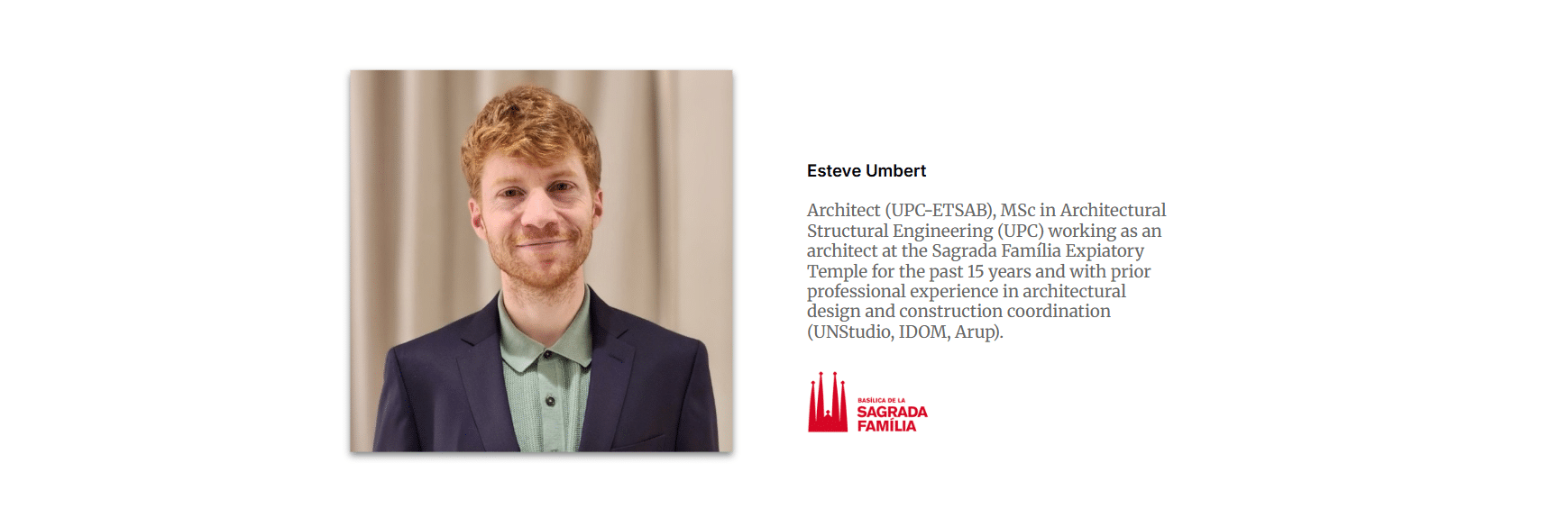
To understand how digital tools support such an extraordinary project, I spoke with Esteve Umbert, an architect who has worked at the Sagrada Família for approximately fifteen years. Umbert holds a master’s degree in Architectural Structural Engineering and has previously worked at firms including UNStudio, IDOM, and Arup. Over more than a decade on the project, he has witnessed firsthand how digital workflows have gradually transformed the design and construction processes behind the basilica.
This conversation explores how parametric modeling, digital reconstruction, BIM workflows, and fabrication technologies operate together within a complex heritage context.
Podcast Research Aim
This research investigates how interoperable digital tools are applied in highly complex architectural projects, particularly those that extend beyond the capabilities of any single software platform.
The construction of the Sagrada Família offers a compelling case study: rather than relying on one system, the project combines multiple tools—parametric modeling environments, BIM platforms, structural analysis software, and scanning technologies—into a coordinated workflow that spans design, documentation, and construction.
From Gaudí’s Fragments to Digital Models
According to Umbert, many design decisions begin with the challenge of reconstructing Antoni Gaudí’s original intentions. Much of Gaudí’s documentation was lost during the Spanish Civil War, leaving behind fragments of plaster models, historical photographs, and written accounts from collaborators. Today, these fragments are digitally reconstructed using 3D scanning and photogrammetry.
As Umbert explains, the team works with more than 8,000 pieces of original plaster models, which are scanned and analyzed to understand the geometry Gaudí envisioned. Photographs taken during Gaudí’s lifetime are also used to help reconstruct missing parts of the models. This data becomes the starting point for further digital exploration.

Parametric Design and Iterative Testing
Once the historical information has been analyzed, the design process moves into parametric modeling environments, primarily Rhino and Grasshopper.
Umbert describes this phase as highly iterative. Designers explore geometric variations digitally, but the process does not remain purely virtual. Following a tradition established during Gaudí’s time, the team regularly produces physical models through 3D printing.
These models allow architects to evaluate the design spatially and identify issues that might not be evident in digital form. The results are then fed back into the parametric model, creating a cycle of digital and physical iteration until a final solution is achieved.
Managing Geometry and Information
When the project moves into detailed design, Rhino becomes the central modeling environment. Because the basilica is primarily constructed in stone, every individual stone block must be modeled precisely. Umbert explains that the team now uses Rhino with embedded attributes, effectively creating a custom BIM-like workflow within the modeling environment. Each stone element carries information related to fabrication and placement.
Meanwhile, Revit is used for documentation and coordination, producing drawings and schedules that allow different teams to work from consistent project information. Structural engineers and MEP teams operate within their own specialized software environments but ultimately integrate their models back into the shared workflow.
In Umbert’s words, Rhino acts as the “source of truth” for fabrication geometry, ensuring that the digital model corresponds directly to what will ultimately be produced and constructed.
Digitizing the Existing Basilica
While new parts of the building are modeled digitally from the start, older sections of the basilica present a different challenge.
Umbert explains that large portions of the building were constructed long before digital documentation existed. As a result, many elements must first be digitally captured from the physical structure itself.
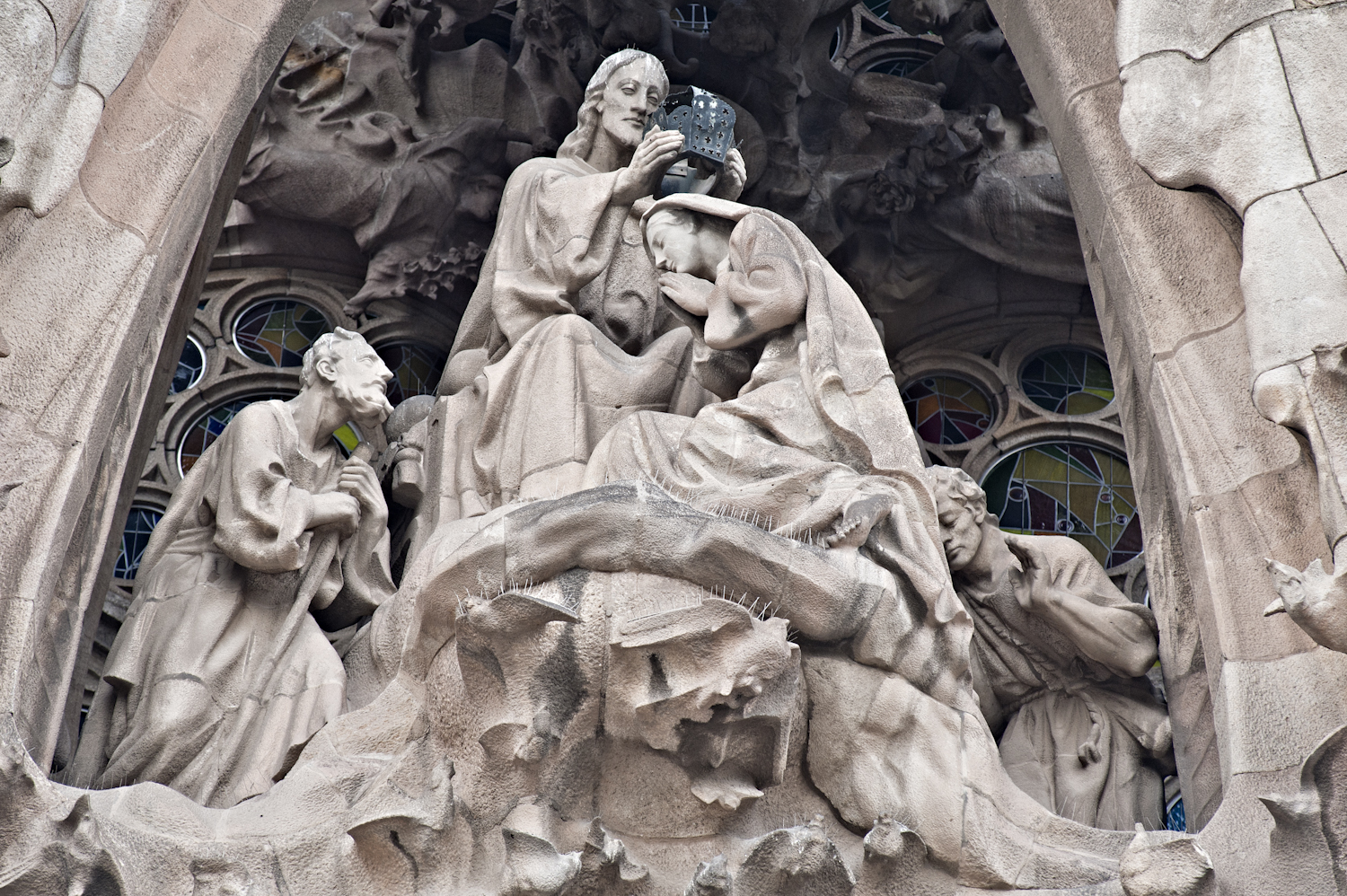
For example, the Nativity Façade, completed in 1932, has been scanned to generate a detailed digital model. Earlier scanning efforts relied on large photographic setups, but the team is now experimenting with drone-based photogrammetry, allowing faster and more comprehensive data collection.
Currently these models serve mainly as geometric representations, but Umbert notes that the restoration team hopes to eventually connect them to databases containing information about cracks, material degradation, and structural pathologies—essentially creating a heritage BIM model of the building.
The Role of BIM in the Workflow
One of the most significant changes introduced by digital workflows, according to Umbert, is the improved control over project information.
In earlier phases of the project, quantities such as stone, steel, or concrete could only be estimated late in the design process. With digital models that embed project data, teams can now extract accurate quantities much earlier.
BIM tools have also improved the relationship between 3D models and 2D documentation. Previously, drawings had to be manually coordinated with separate Rhino models, making updates time-consuming and prone to inconsistencies.
With Revit-based documentation, changes made in the model automatically update the associated drawings, significantly improving workflow reliability.
Technology Behind the Monument
Despite the basilica’s traditional appearance, Umbert emphasizes that technology has become fundamental to its construction.
Digital tools are used not only in design but also in fabrication and construction. One striking example is the future Glory Façade, which will require more than 100,000 unique stone pieces. Each piece is digitally modeled and fabricated using robotic machining systems before being assembled on site.
For Umbert, this combination of advanced digital technologies with traditional craftsmanship is one of the defining characteristics of the project.
Learning Through Physical Mock-Ups
Even with highly detailed digital models, the construction process still relies heavily on full-scale mock-ups. Before large construction phases begin, the team builds one-to-one prototypes of key building sections. These mock-ups allow them to test geometry, fabrication methods, assembly sequences, and material tolerances.
Umbert explains that this process helps identify potential issues early and ensures that the final construction proceeds smoothly. In recent work on the central towers, hundreds of panels were installed with virtually no issues—a result he attributes to the lessons learned during these prototype stages.
A Timely Moment in the Basilica’s History
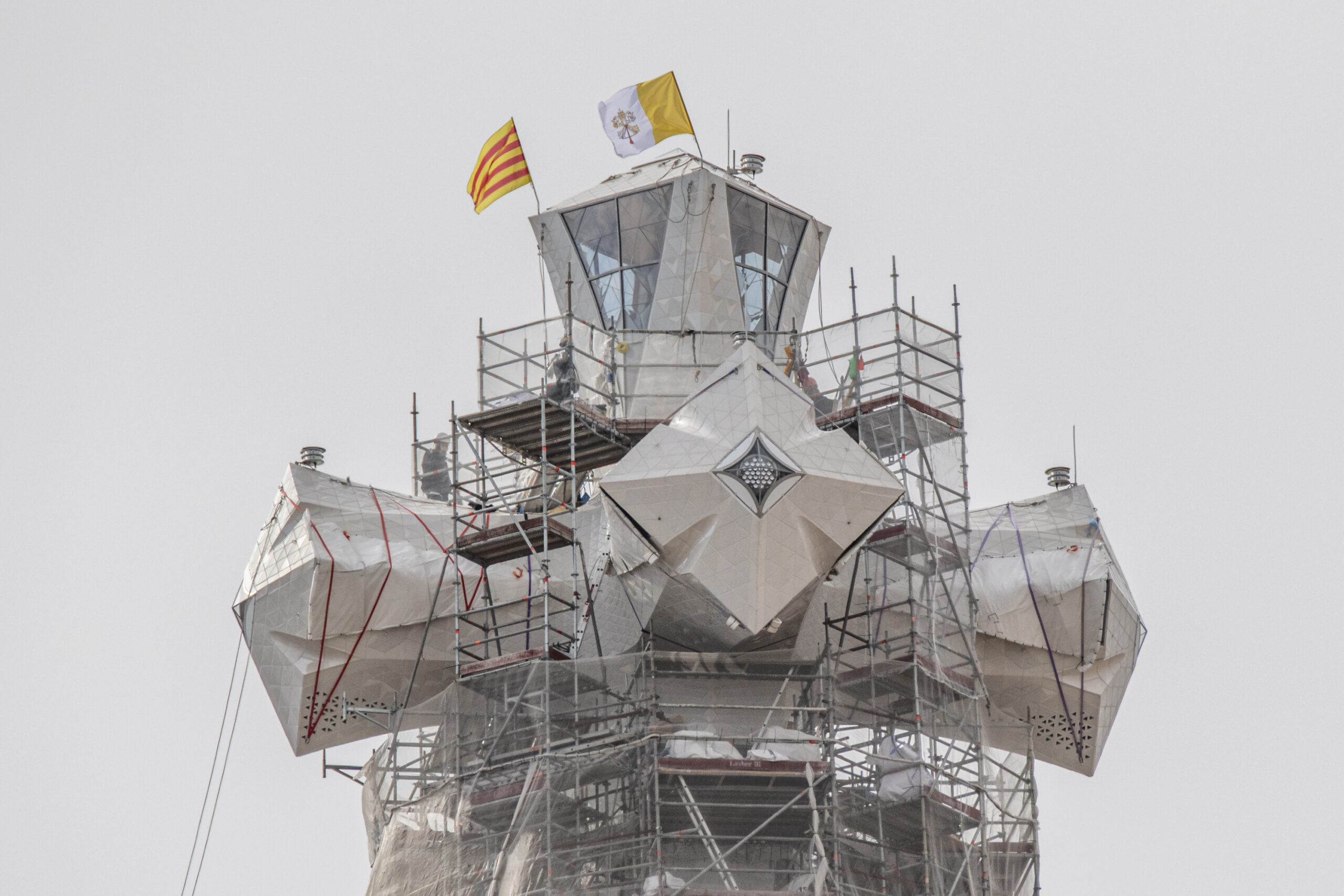
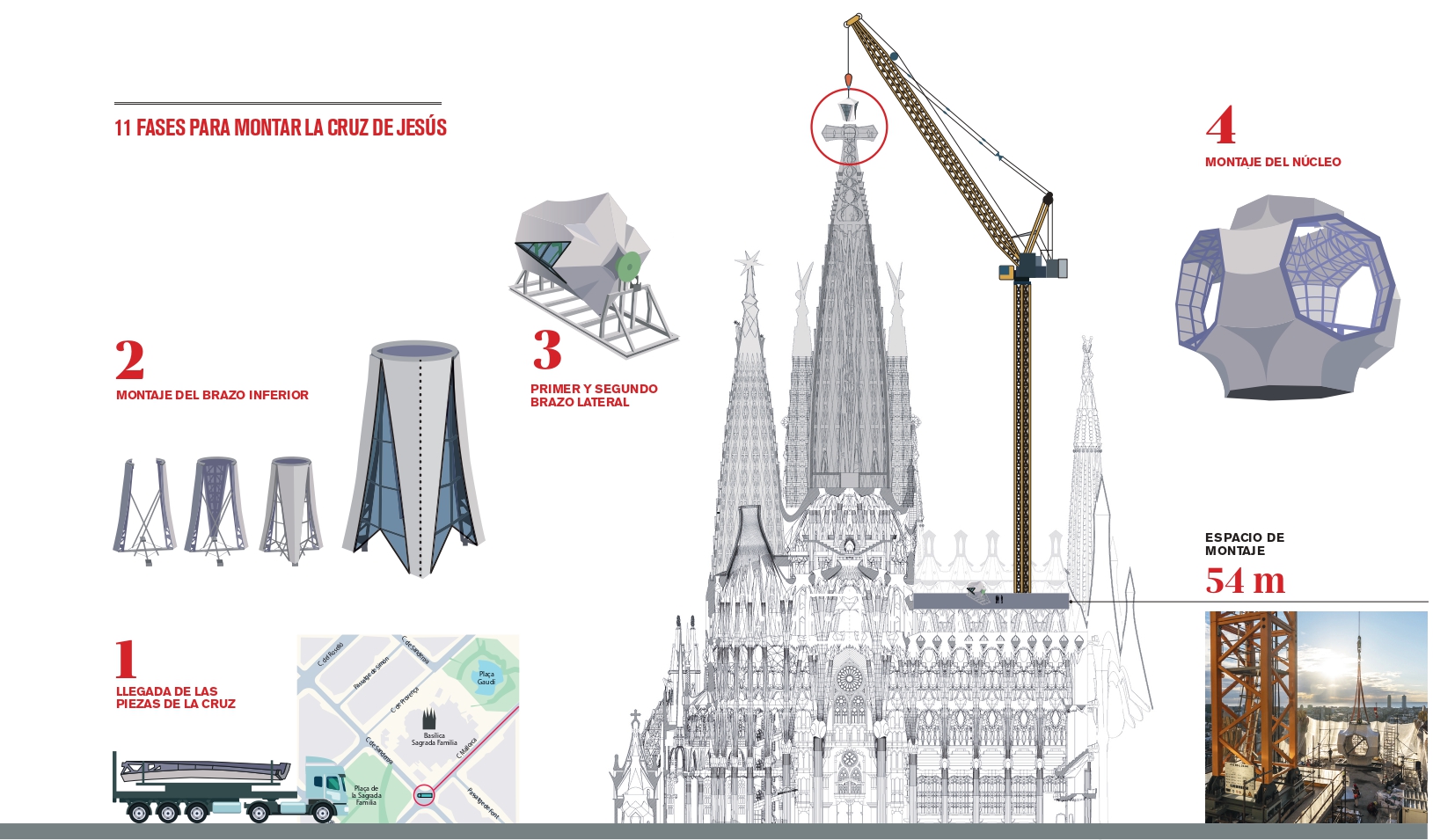
Coincidentally, the recording of this conversation took place just days after a significant milestone in the history of the Sagrada Família: the installation of the Star of Jesus Christ atop the central tower. With its placement, the construction of the tower—one of the most symbolically important elements of the basilica—was completed.
For the teams working on the project, this moment represents far more than a construction achievement. It marks the culmination of decades of design development, structural coordination, digital modeling, fabrication, and on-site assembly. As Umbert noted during the conversation, reaching such milestones highlights how the construction of the basilica has always relied on a combination of technological innovation and traditional craftsmanship.
For those involved in the project, witnessing the completion of the central tower is an emotional reminder that each generation contributes a small yet meaningful chapter to a much longer architectural story. After more than a century of work, the building continues to evolve—carrying forward Gaudí’s vision through both heritage and technology.
Conclusion
The construction of the Sagrada Família demonstrates how digital tools can support architectural projects that combine historical heritage, extreme geometric complexity, and long construction timelines.
Through the insights shared by Esteve Umbert, it becomes clear that the basilica’s ongoing development relies on a carefully coordinated ecosystem of technologies. Parametric design, BIM workflows, 3D scanning, robotic fabrication, and full-scale testing all contribute to translating Gaudí’s vision into built reality. Behind the iconic stone façade lies a sophisticated digital infrastructure—one that continues to evolve alongside the construction of the basilica itself.
Finally, I would like to once again thank Esteve Umbert for his time and for generously sharing his experience and insights into the digital processes supporting this remarkable project.
