Inspirations
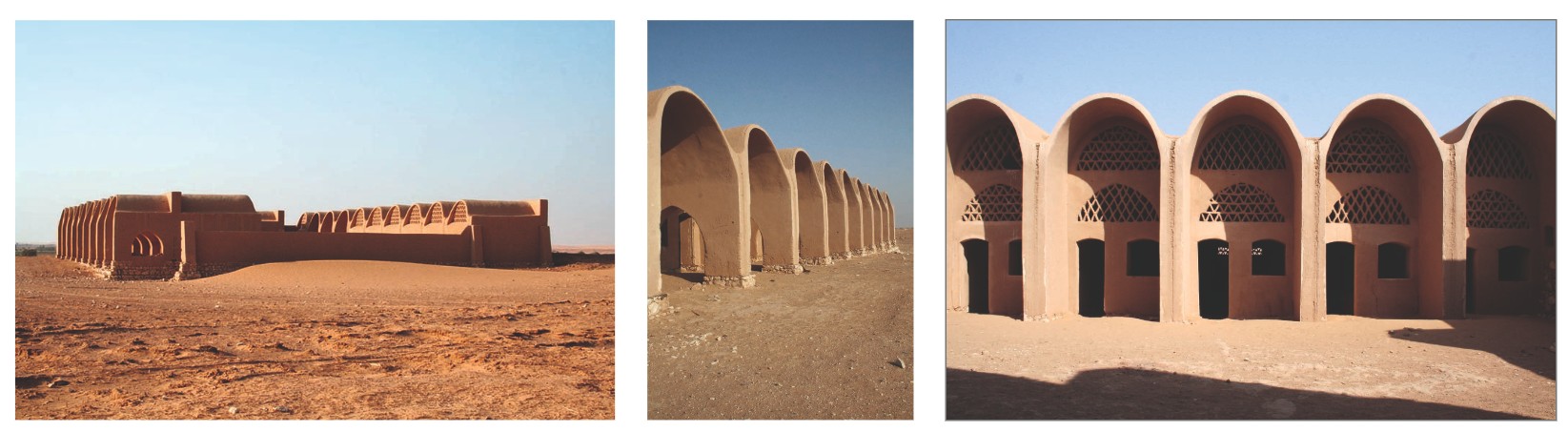
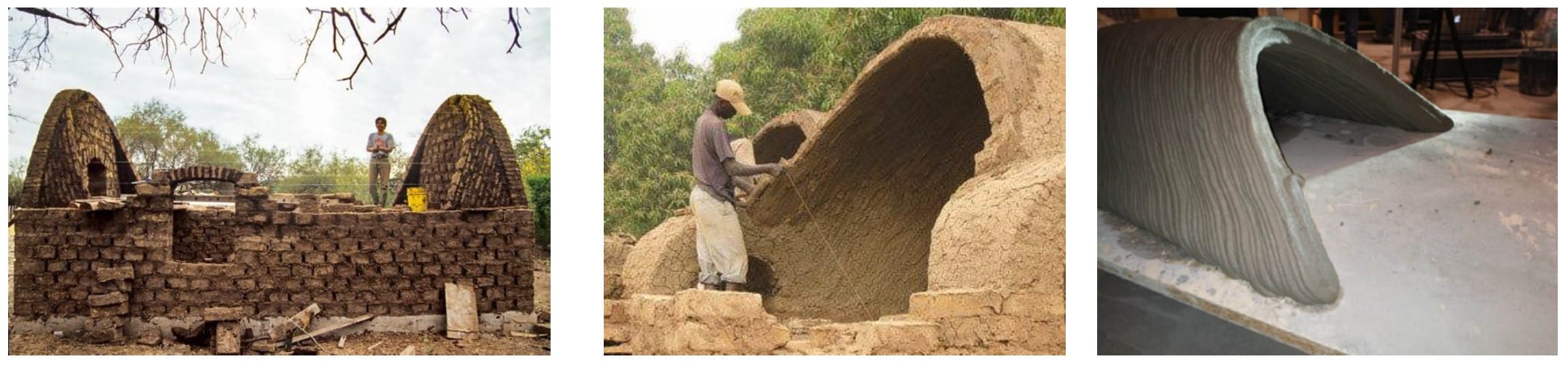
The Earthen Curtains project is rooted in a deep reflection on vernacular architecture and passive sustainability. The primary formal and conceptual inspiration is derived from the work of Hassan Fathy and the tradition of the Nubian Vaults. This architectural heritage, celebrated for the use of local materials (raw earth) and intrinsic climatic strategies, is reinterpreted here through the paradigm of computational design. The goal is to actualize millennia-old principles of sustainability, transferring them into a parametric geometric and constructive system, optimized for contemporary environmental challenges.
Formal Generation and Adaptive Solar Response
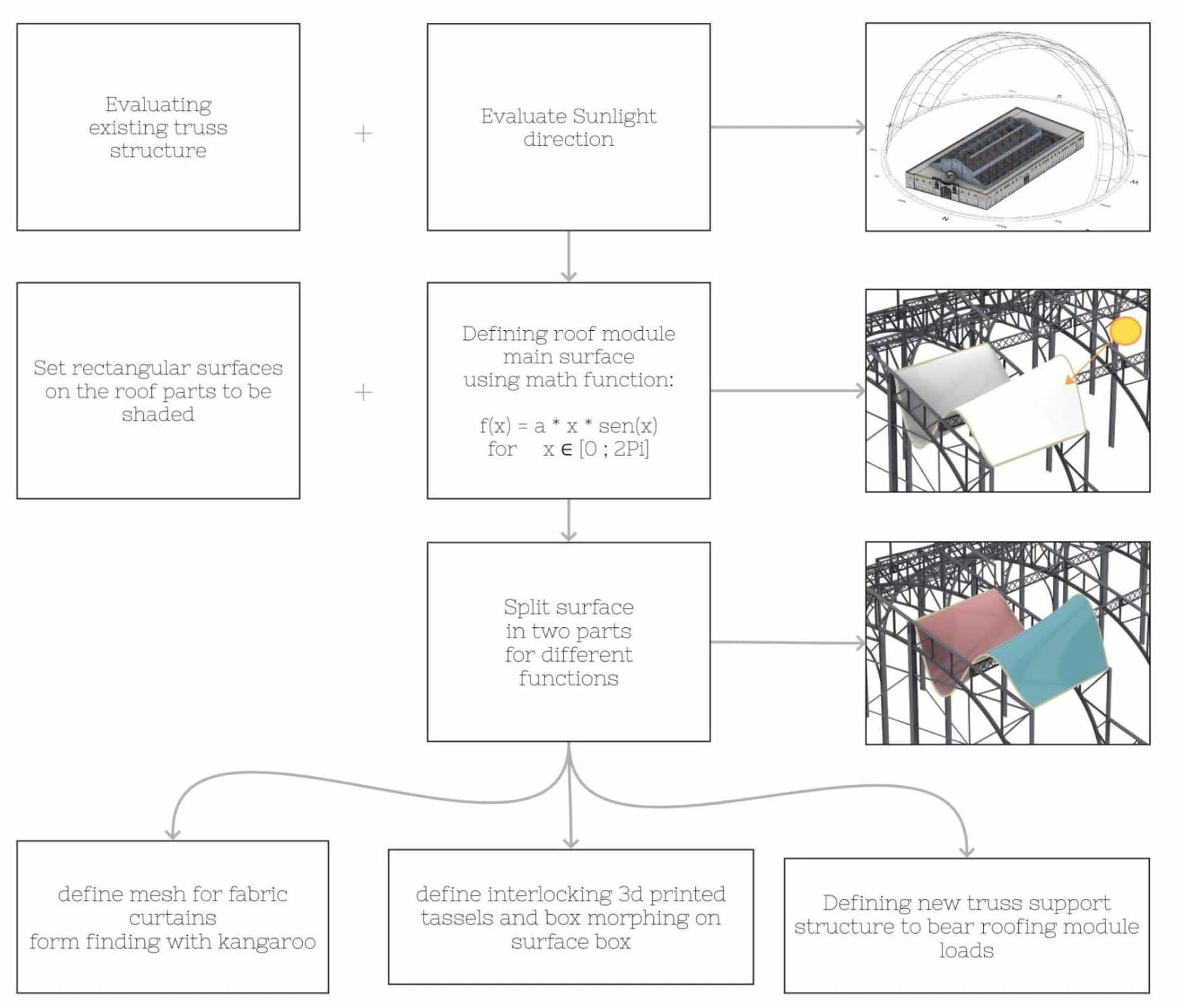
The design process is structured upon a rigorous parametric foundation, moving beyond mere aesthetics to achieve an optimized climatic response. The morphology of the roof, which evokes traditional Nubian vaults, is not randomly generated, but is defined through a specific mathematical function:
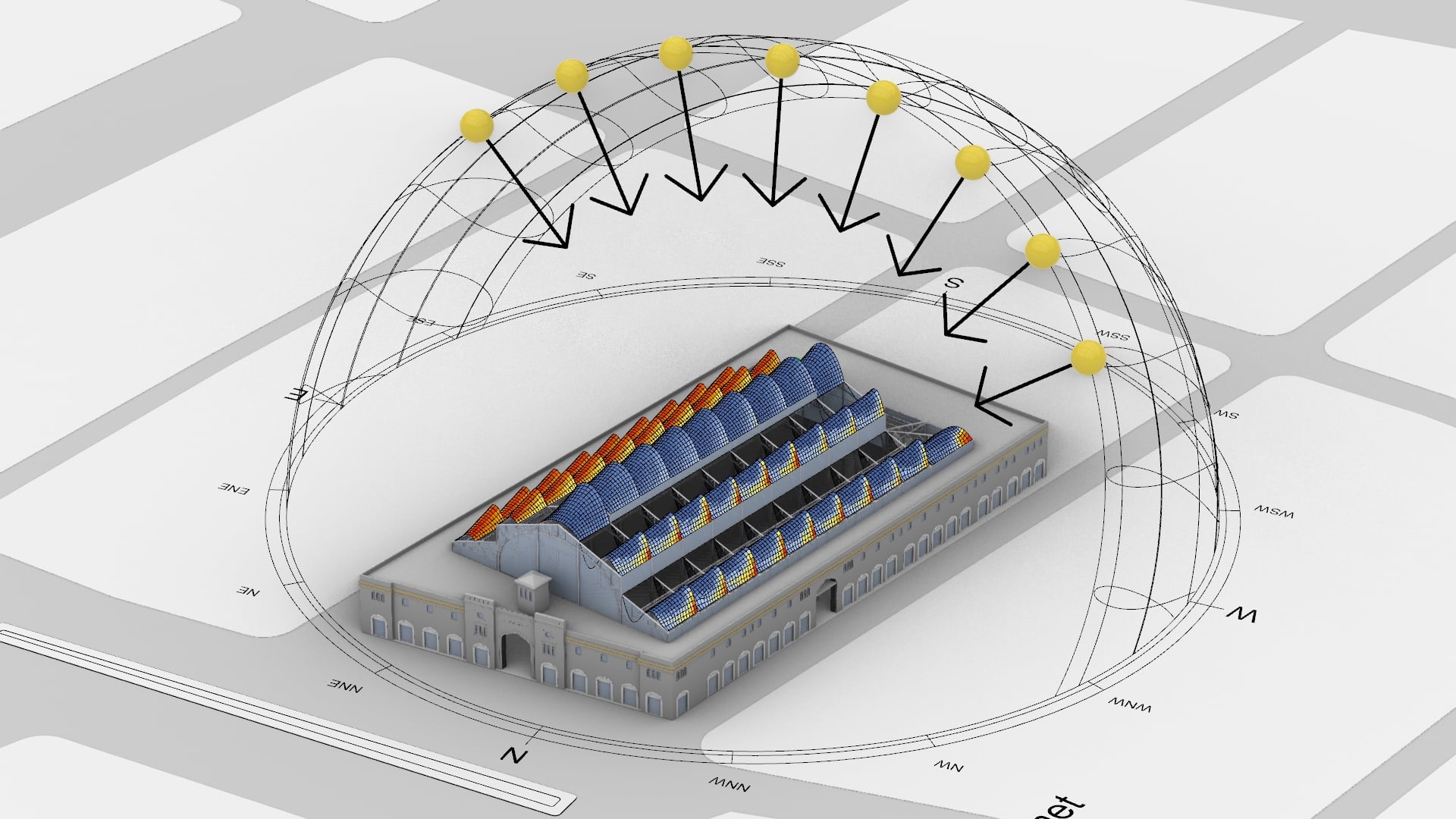
This formula was selected for its potential for dynamic solar modulation. The resulting orientation and curvature of the surfaces are calibrated to filter direct solar radiation during the central and hottest hours of the summer, when the sun’s zenith elevation is high, thereby preventing internal overheating. Simultaneously, the geometry ensures that lower-incidence solar rays, typical of milder seasons (autumn/winter), can penetrate and warm the space, contributing to passive energy efficiency and thermal comfort. The form is, therefore, a direct consequence of the required environmental performance.
Digital Tectonics: The Variable Permeability Interlocking Vault
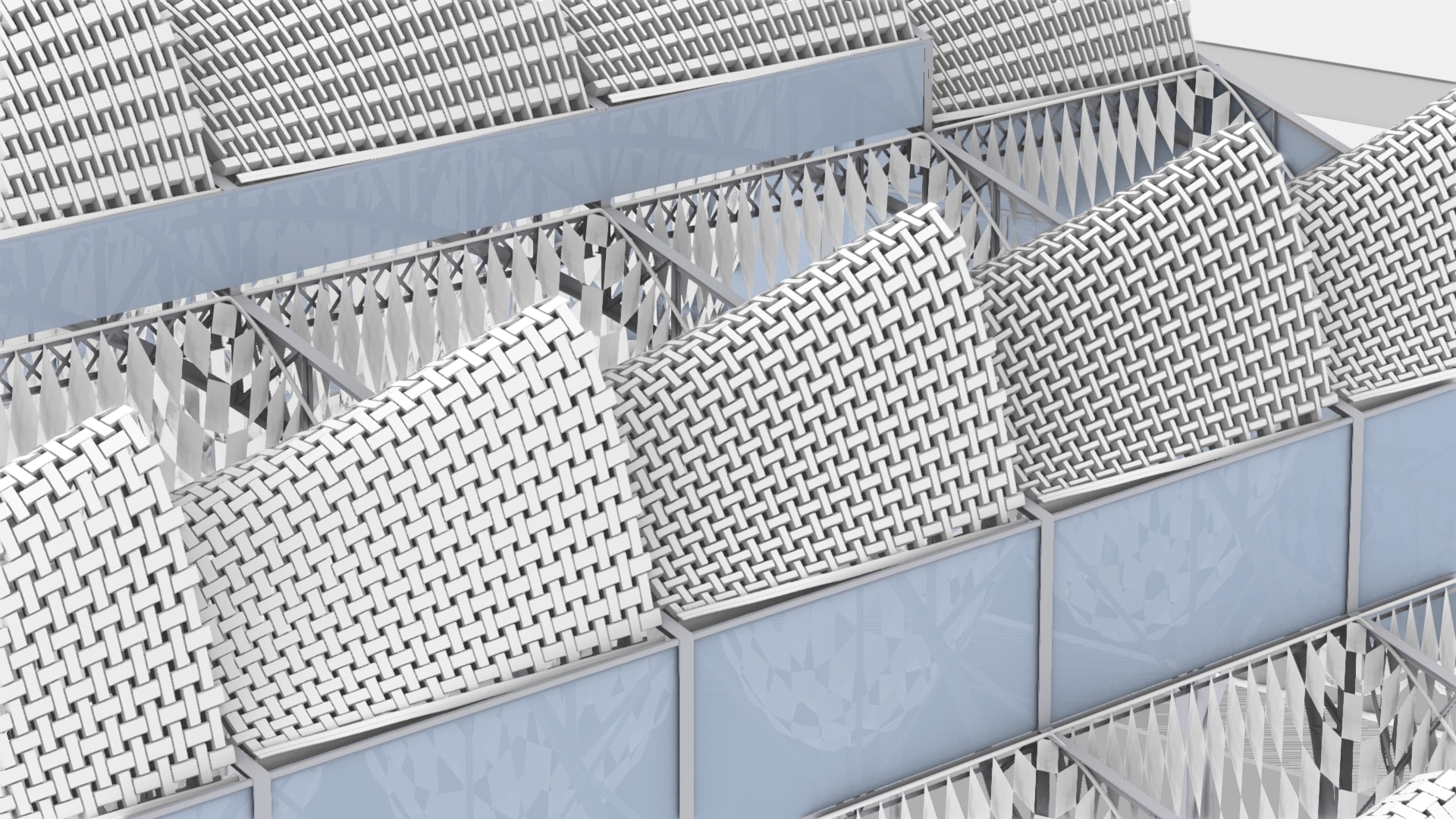
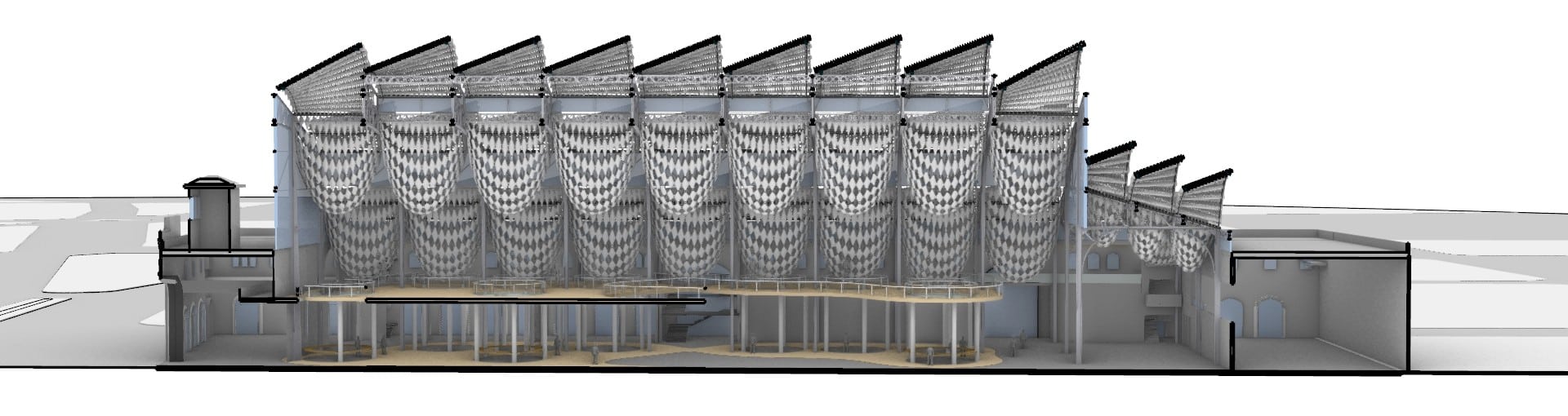
The transition to fabrication is realized through a surface discretization strategy: the interlocking vault system made using earth 3D printing. The fundamental constitutive element, or “tassel,” is geometrically defined as a truncated tetrahedron scaled in the direction of its length.
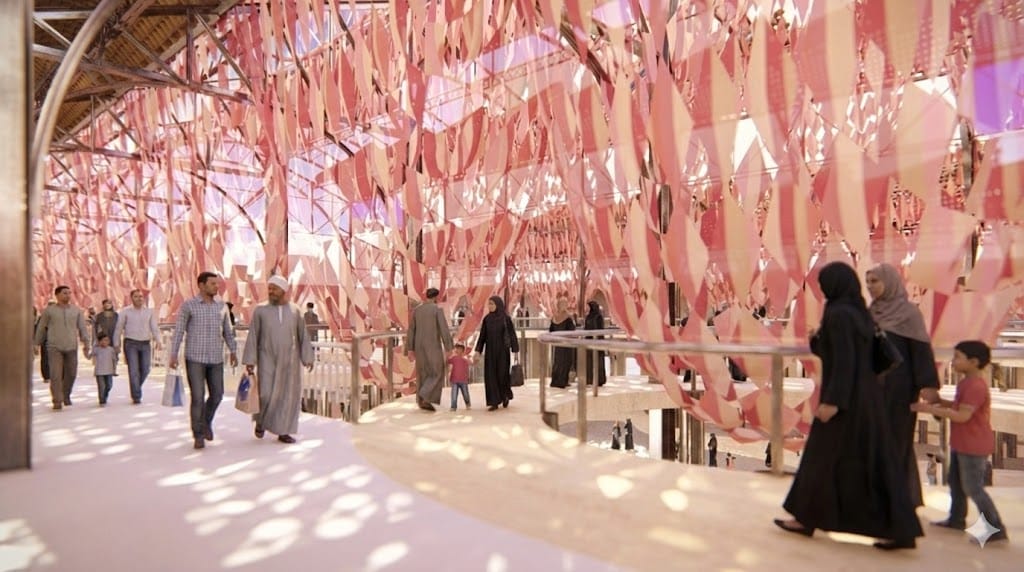
The dimensional variation of this element is the key to the system’s adaptability: the scale applied to the tassel is not static but is determined by the analysis of the average incident radiation on each specific vault section. A lower scale value (dimensional reduction) causes a tightening of the vault mesh – simulating a denser fabric and increasing automatic shading in high-insolation areas. Conversely, a higher scale value (dilatation) causes a widening of the mesh, increasing light permeability in less exposed areas. This system grants the vault a variable and performative permeability, regulated point-by-point by climatic data.
Structural Integration and Filtering Curtains
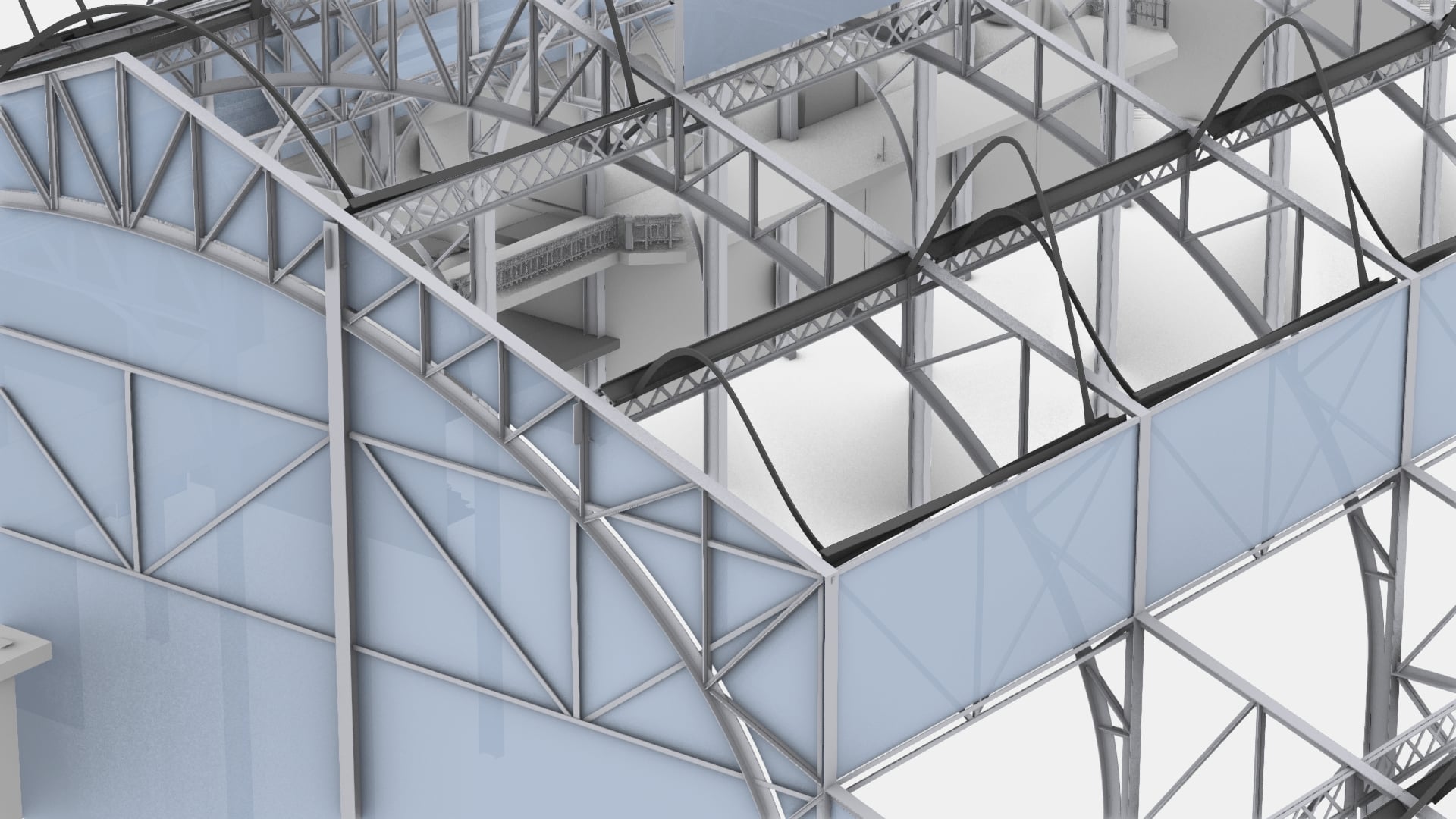
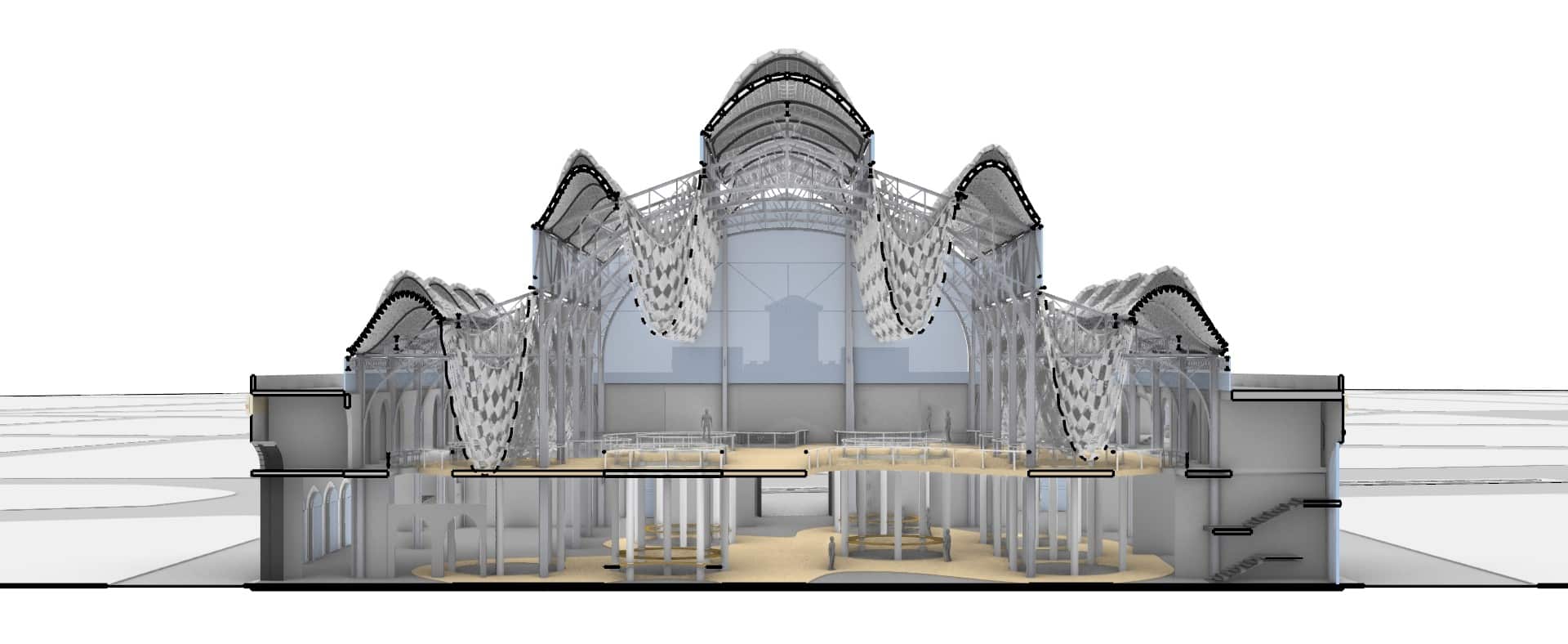
To support the loads of these interlocking vault modules, a new steel structure has been defined. This secondary structure is composed of “I-shaped” cross-section beams and hollow rectangular cross-section profiles, optimized for stiffness and to ensure the necessary support for the vault complex.
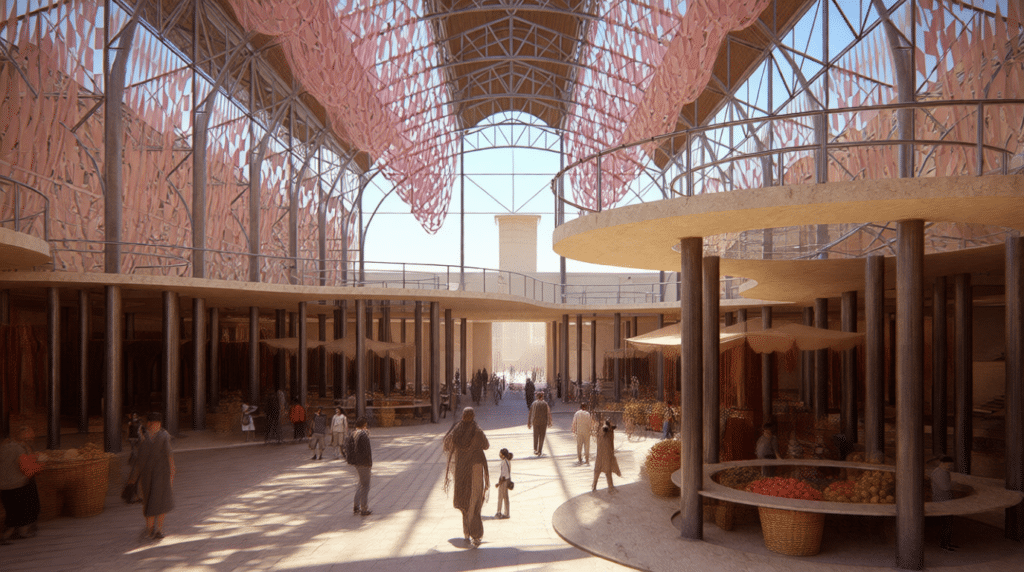
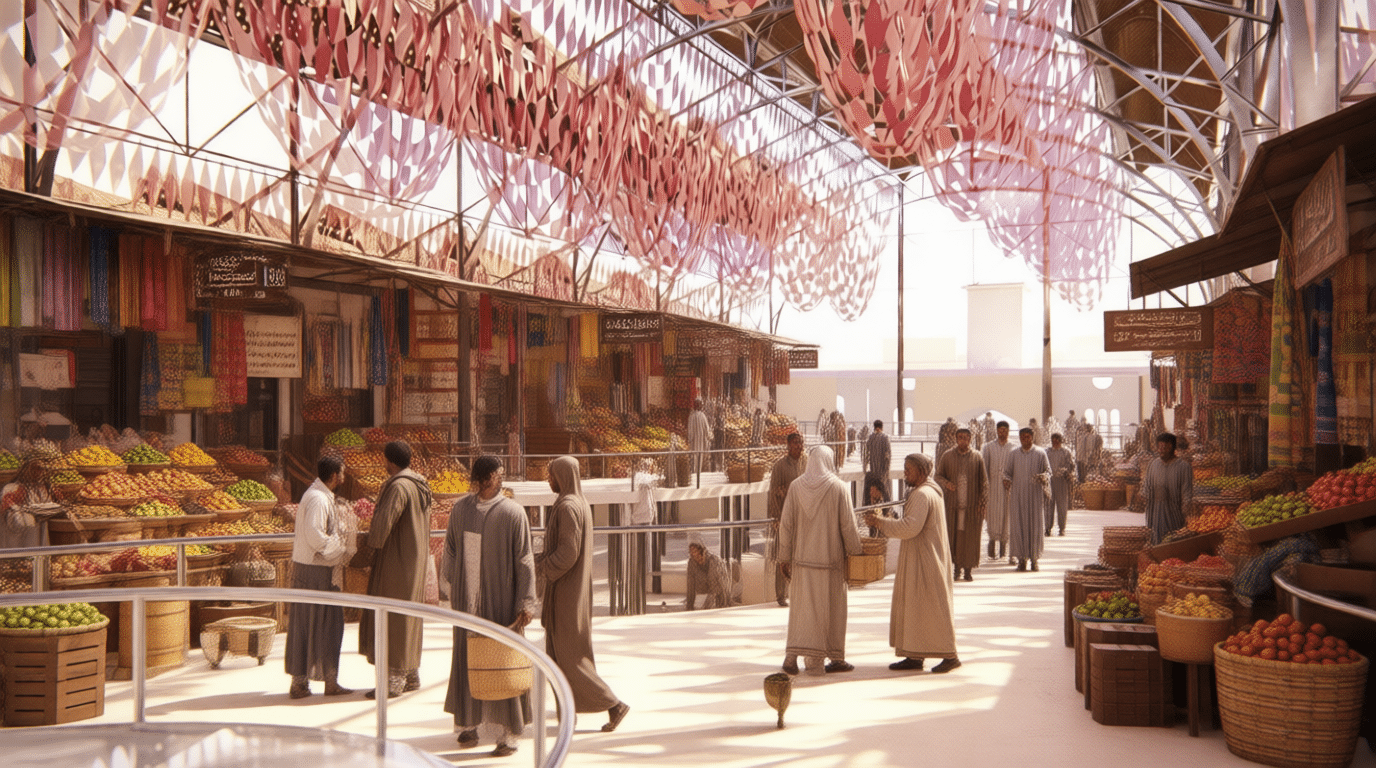
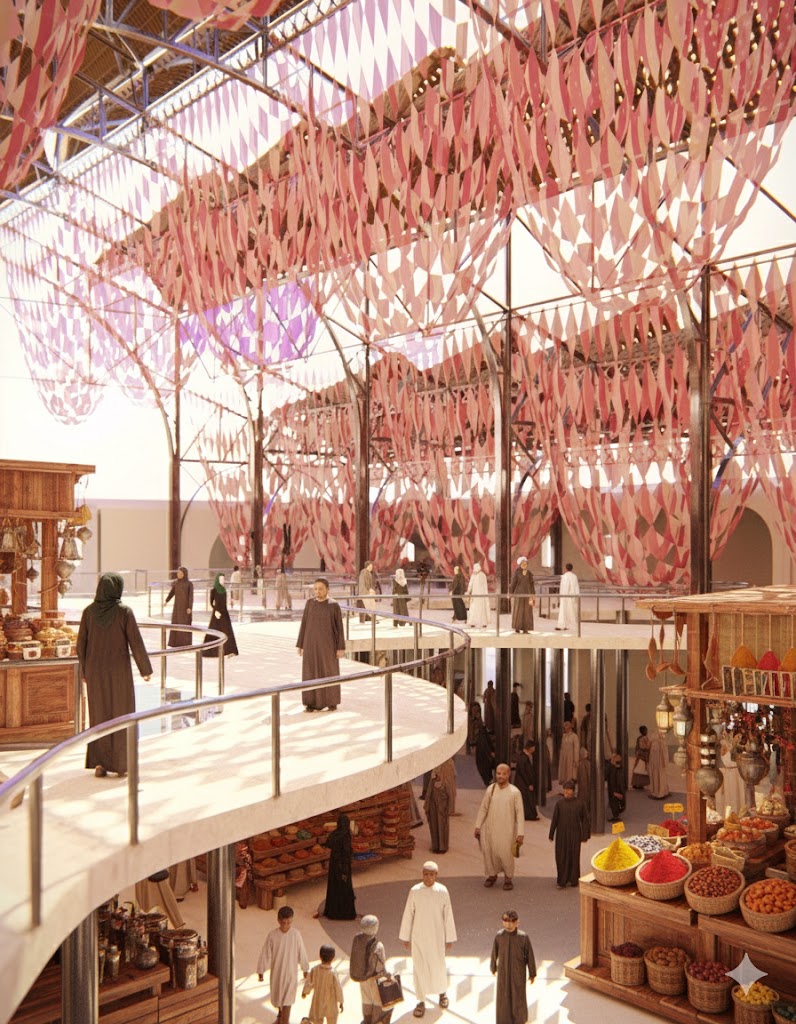
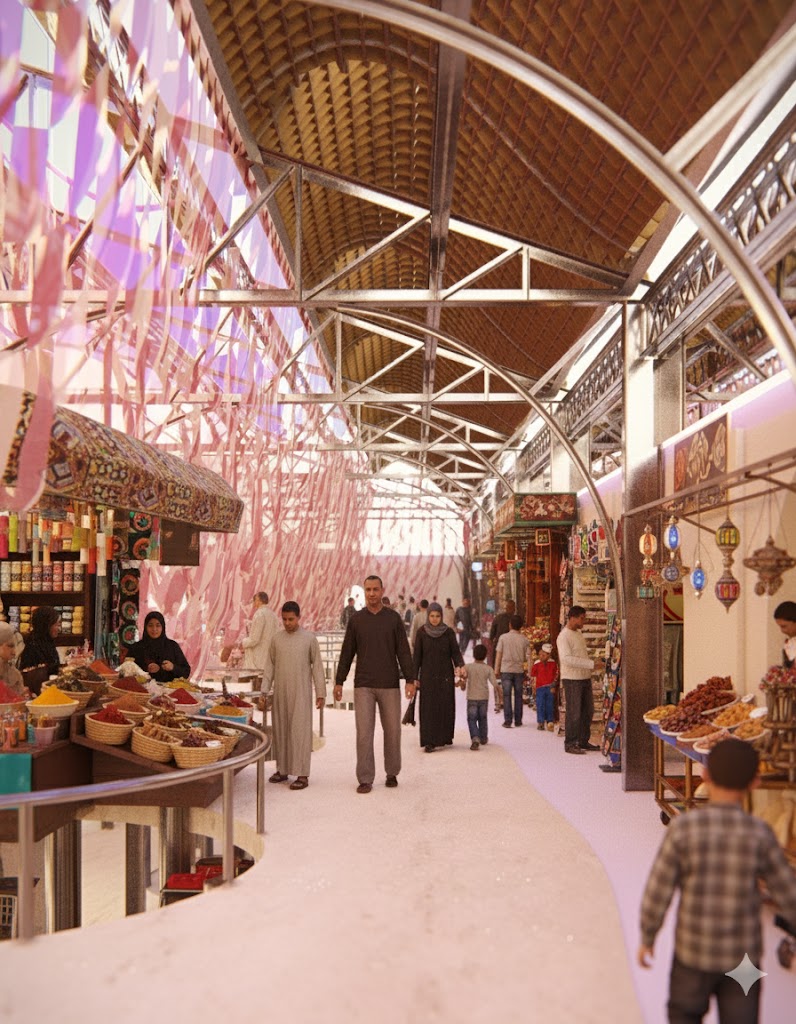
Integrated underneath this adaptive grid are the fabric curtains, selected for their specific light diffusion properties. Their primary function is to filter and soften the light that penetrates, transforming direct radiation into diffuse and comfortable illumination. Crucially, their employment introduces a dynamic chromatic variation within the space. The color of the curtains, interacting with the filtered light and the shadow projected by the tassels, shifts and animates the interior environment, enriching the sensory experience for visitors and market vendors.
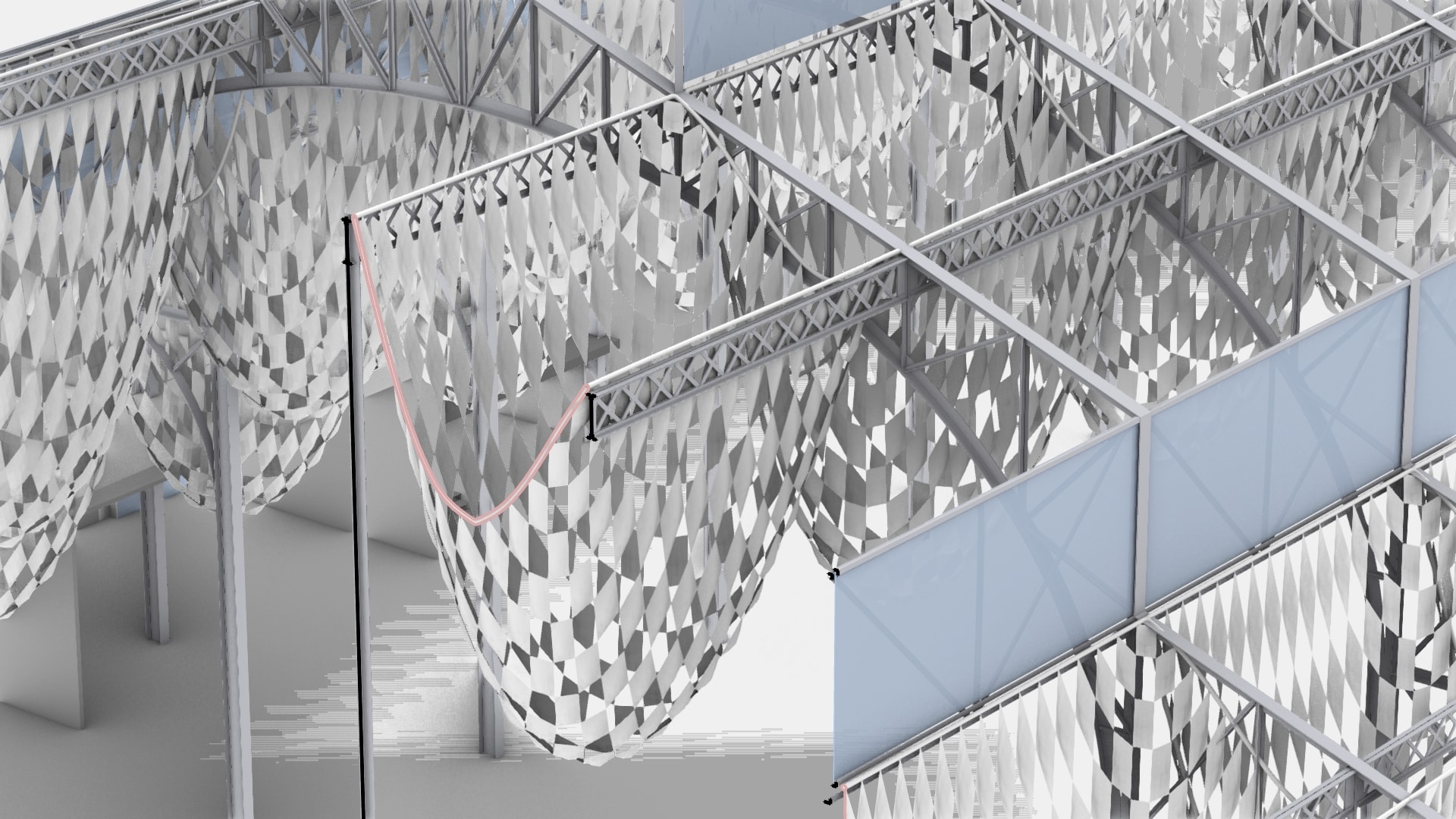
Internal Circulation: Ground Plane Generation and Market Layout
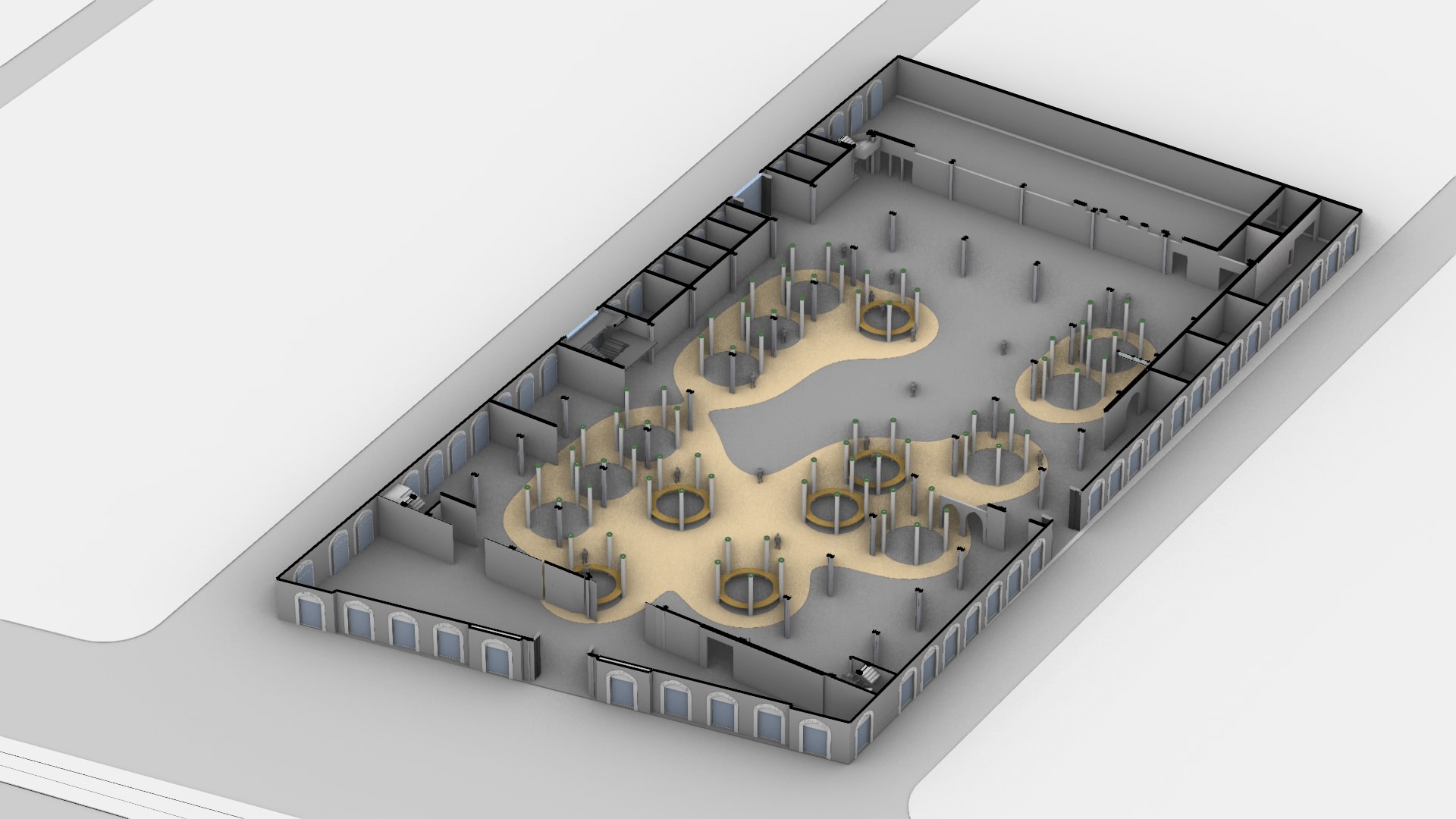
The internal circulation and market layout are directly derived from the roof’s geometry, ensuring a symbiotic relationship between climate control and spatial organization. The disposition of the market stalls is generated through a specific projection workflow:
The spatial organization is determined by projecting the lowest points of the fabric curtains onto the ground plane. These projected points serve as geometric anchors that dictate the distribution pattern.
A subsequent generative process utilizes circles and metaballs to define the necessary boundaries and flow. These computational elements are employed to delineate the precise spaces for the market stalls and the required public access and circulation areas. This approach ensures that the final configuration of the market is not arbitrary but organically linked to the dynamic shading conditions above, creating a highly specific and performative ground plan.
Earthen Curtains: Sensory and Urban Revitalization
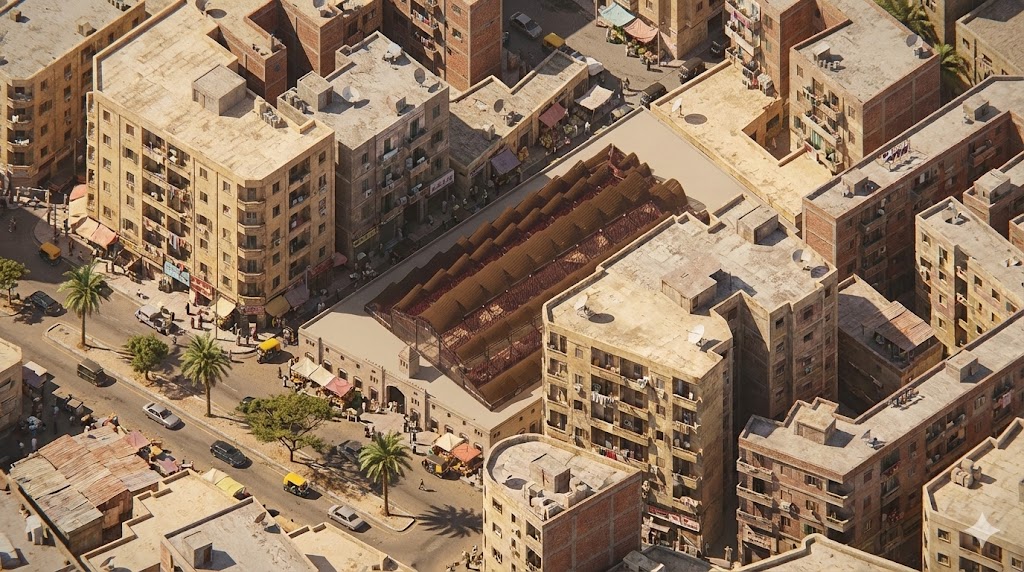
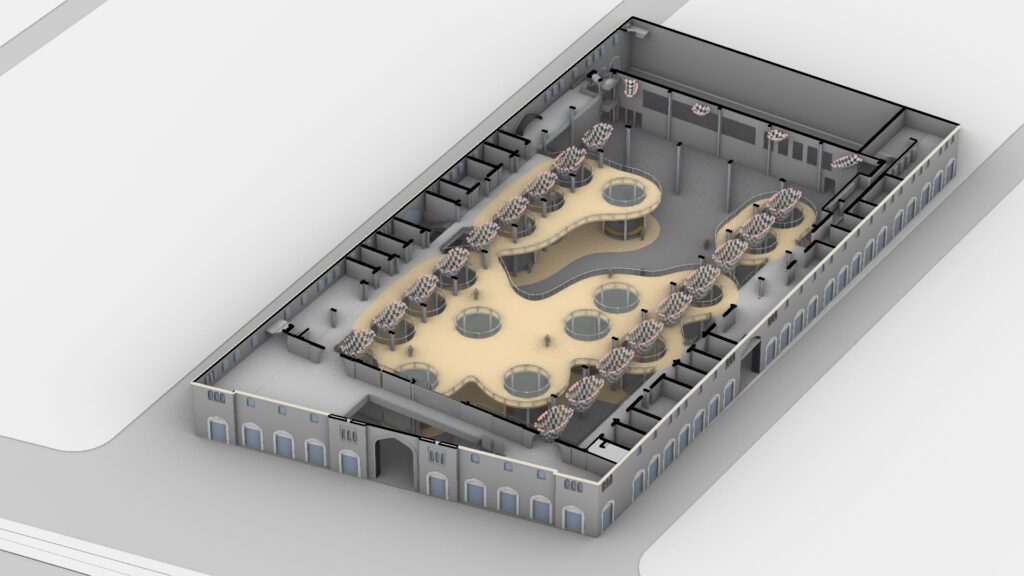
Earthen Curtains is a manifesto of computational architecture applied to urban regeneration. The project aims to revitalize the great covered market of Bab al-Luq through the calibrated and performative use of forms, colors, and light. The inspiration from traditional construction techniques, such as the Nubian vaults, is reinterpreted digitally to create an urban oasis. The combination of an adaptive tectonic system and chromatic light modulation transforms the market into a space that is not only functional but deeply sensory, honoring the historical memory of the place while projecting it into a dimension of sustainability and innovation.