
IAAC’s Master in AI for Architecture & the Built Environment is a unique program oriented towards leading the change in decarbonising human activities and crafting a more sustainable, resilient future urbanisation for our planet. Through an innovative curriculum deeply rooted in AI applications, the program pioneers novel AI-driven solutions that not only respond to the pressing challenges of our time but also set a new standard for environmentally and socially conscious co-design and planning. The Master in AI for Architecture & the Built Environment is training the professionals that city administrations, governments, industries, and communities need, to transform the built environment in the era of digital technologies.

Barcelona Civic Vision

Bridging the Gap Between Civic Ambitions and Urban Reality Abstract: Urban planning has a persistent problem: cities are shaped for their residents, yet the processes that govern change remain inaccessible to ordinary people. Planning data is fragmented, technical vocabularies are exclusionary, and the gap between citizen desire and institutional decision-making stays wide. Residents feel alienated … Read more
Curbside Intensification

Ertuğrul Akdemir MAAI · Master in AI for Architecture and Business Innovation 25/26 Advisor: Shajay Bhooshan An AI tool that reads how streets behave through the day and tests where the curb could change use, then shows how that change spreads across the city before anything is built. Streets are designed once and rarely questioned. The … Read more
Invest Through Behavior

Invest Through Behaviour reframes how capital decisions are made in social housing impact investment. Today, investment decisions rely on high-level financial and ESG indicators that assume impact rather than demonstrate it, and that obscure the real trade-offs between competing priorities. This project proposes a decision-support approach that treats neighbourhoods across London as a landscape of … Read more
Go Passive
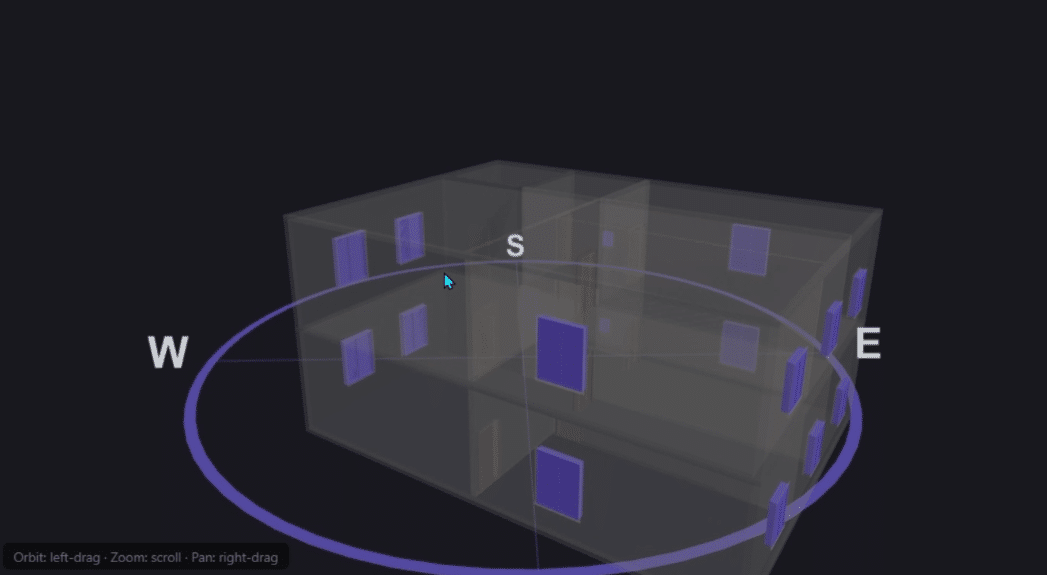
A web application that analyses an IFC building model and recommends passive cooling strategies for Mediterranean climates. Upload a building, place it on the map, set its orientation, and get a ranked set of design interventions backed by a knowledge graph and Claude AI. The tool helps architects explore the passive strategies of their building … Read more
Architecture Intelligence for AI Infrastructure

Toward an AI-Native Framework for Constraint-Orchestrated Data Center Architecture Developed through the working prototype OREXON SYSTEMS. · Nouhaila ELMALOULI · Master in AI for Architecture & Business Innovation (MAAI02), IAAC · 2025/2026 · Advisor: Dr. Wassim Jabi Data centers are the physical substrate of artificial intelligence. Every model we train and every query we run … Read more
Guided Comparative Assembly

A tangible table that shows a building’s cost, carbon and time while you design it Hardware III · Human in the Loop · Interactive Systems · 2025–2026 Every building starts with a handful of decisions made in the dark — material, method, footprint, height. They are committed first, before anyone consults the data, and they … Read more
Urban Safety Perception Among Women and Gender- Diverse People

AI Reveals Hidden Patterns in Crowdsourced Fears The Problem According to the International Survey on Sexual Harassment in Public Spaces (L’Oréal Paris & Ipsos, 2023), 92% of young women in Spain have experienced street harassment. The same research states that this number is 80% globally. And yet, as Gardner puts it in Passing By: Gender … Read more
A Systematic Review of Toronto Architectural Heritage Register
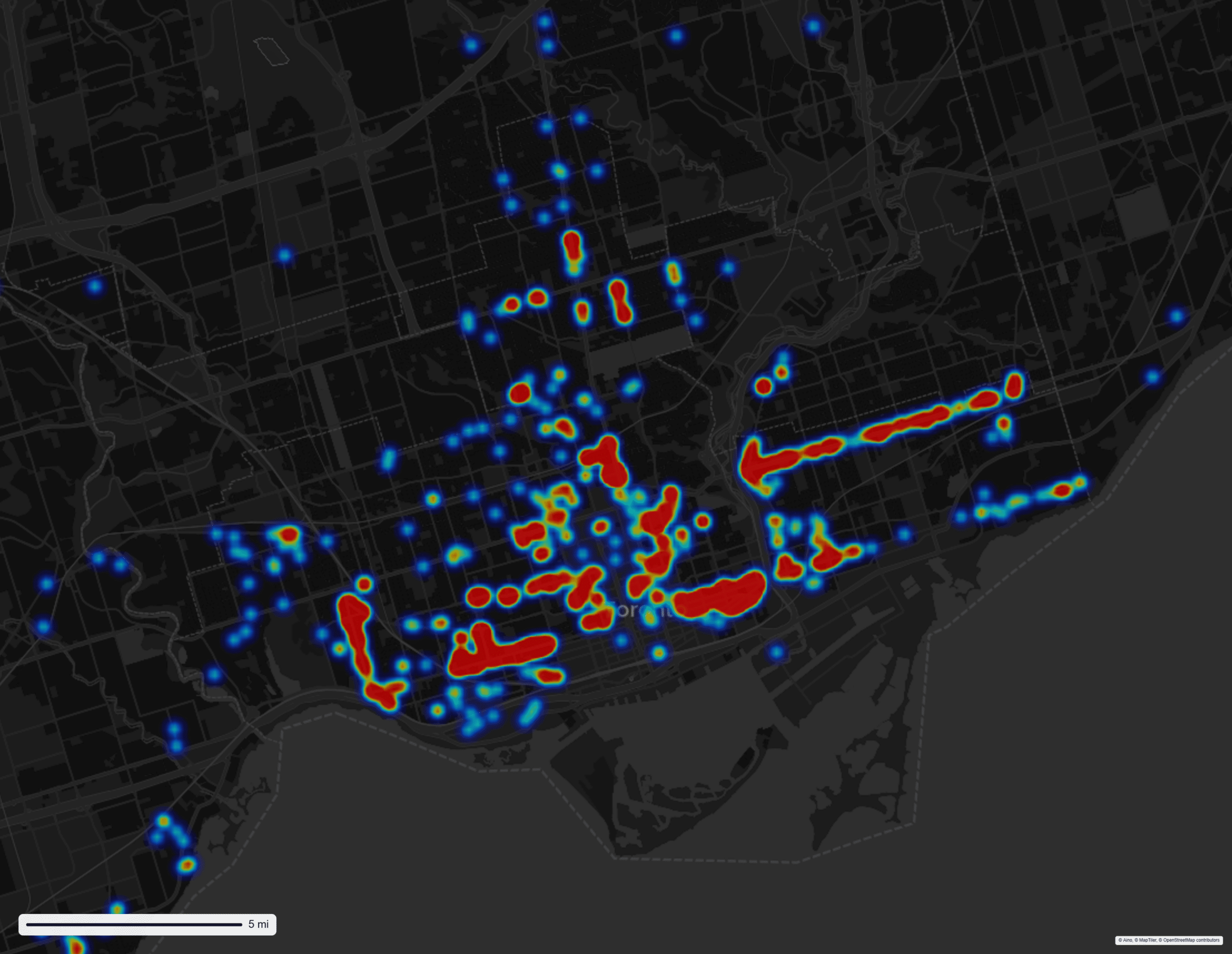
Applying CLIP vector embeddings to defensibly evaluate the architectural value of heritage-listed buildings Project Summary Project Presentation
SURROUND

Turning pollution data into planning decisions. TEAM: Martina Simoni , Rim Choufani, Rashi Desadla, Bhavana Priya B INTRODUCTION Kraków’s air quality problem isn’t abstract. It’s measurable, and it’s bad. Over six sessions, our team (Rim, Martina, Rashi, and Bhavana) used the CRISP-DM framework to ask a focused question: can urban form (building density, road networks, … Read more
From Image to Typology

A Computational Framework for Inferring Architectural Spatial Organization from Visual Input. Abstract: This thesis investigates whether Artificial Intelligence can infer a building’s internal spatial organization from its exterior image, using architectural typology as the mediating framework. Typology is treated here not as a stylistic category but as a relational, topological structure: a set of rules … Read more
Motion Pixels

Mapping out Spatial Intelligence Program: Master in AI for Architecture and the Built Environment (MaAI)Supervisor: Wassim Jabi Motion Pixels is a research project that explores how pedestrian movement can be transformed into spatial intelligence. By combining computer vision, trajectory analysis, behavioral mapping, and machine learning, the project converts video recordings of public spaces into spatial … Read more
Assess Through Perspective

A street-level method for predicting and explaining urban heat from surface composition and configuration
Holy Woah

The global agricultural system is facing a severe crisis. Currently, agriculture is responsible for consuming a staggering 79% of global freshwater. Despite this massive consumption, the process is highly inefficient, with 60% of irrigation water being lost. Furthermore, modern farming relies heavily on chemicals, seeing a 70% increase in pesticides, while an estimated 40% of … Read more
Reclaiming the streets
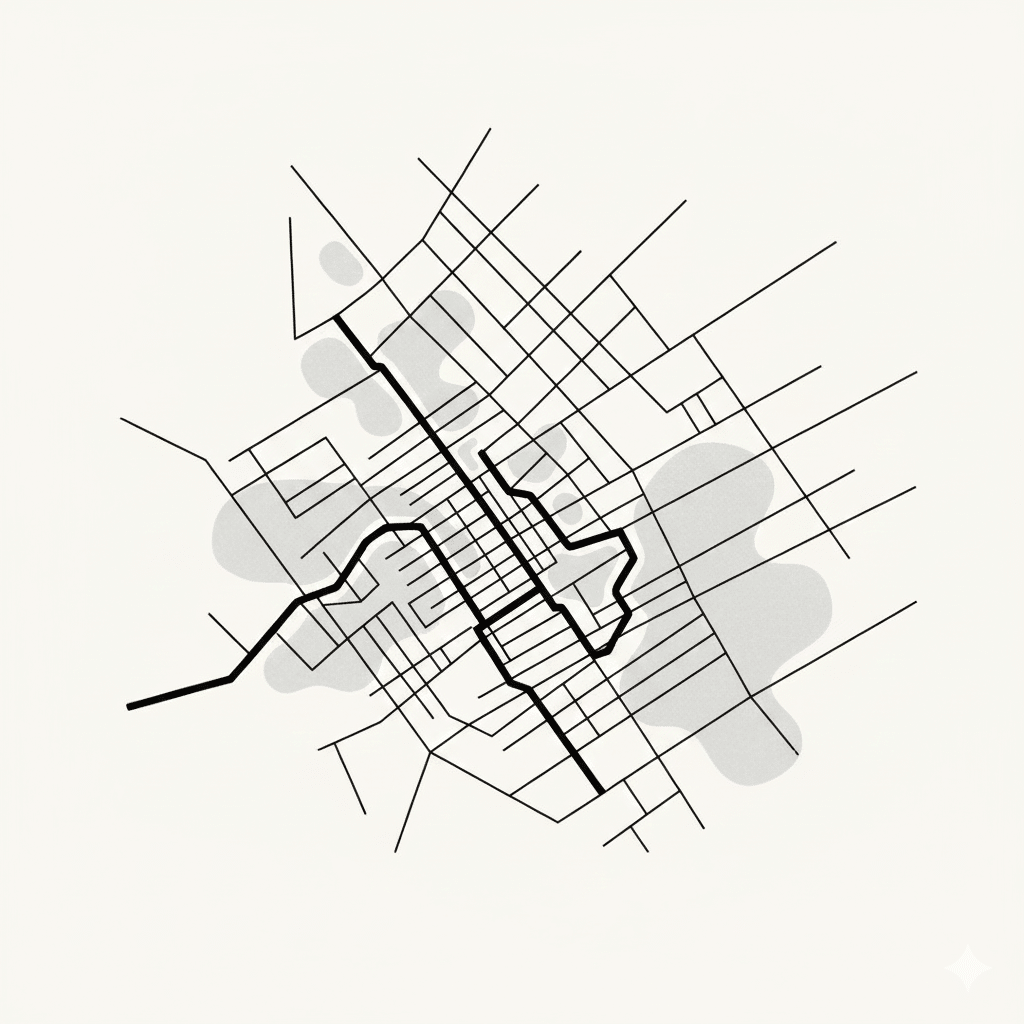
In contemporary urban planning, we often focus on the best parts of a city. However, true transformation begins by identifying the most vulnerable areas. We have recently developed a parametric model in Grasshopper to analyse the Gràcia District in Barcelona, utilizing a worst-case scenario routing logic to pinpoint exactly where new Green Axes should be … Read more
AWW System – Augmented WoodWorking System
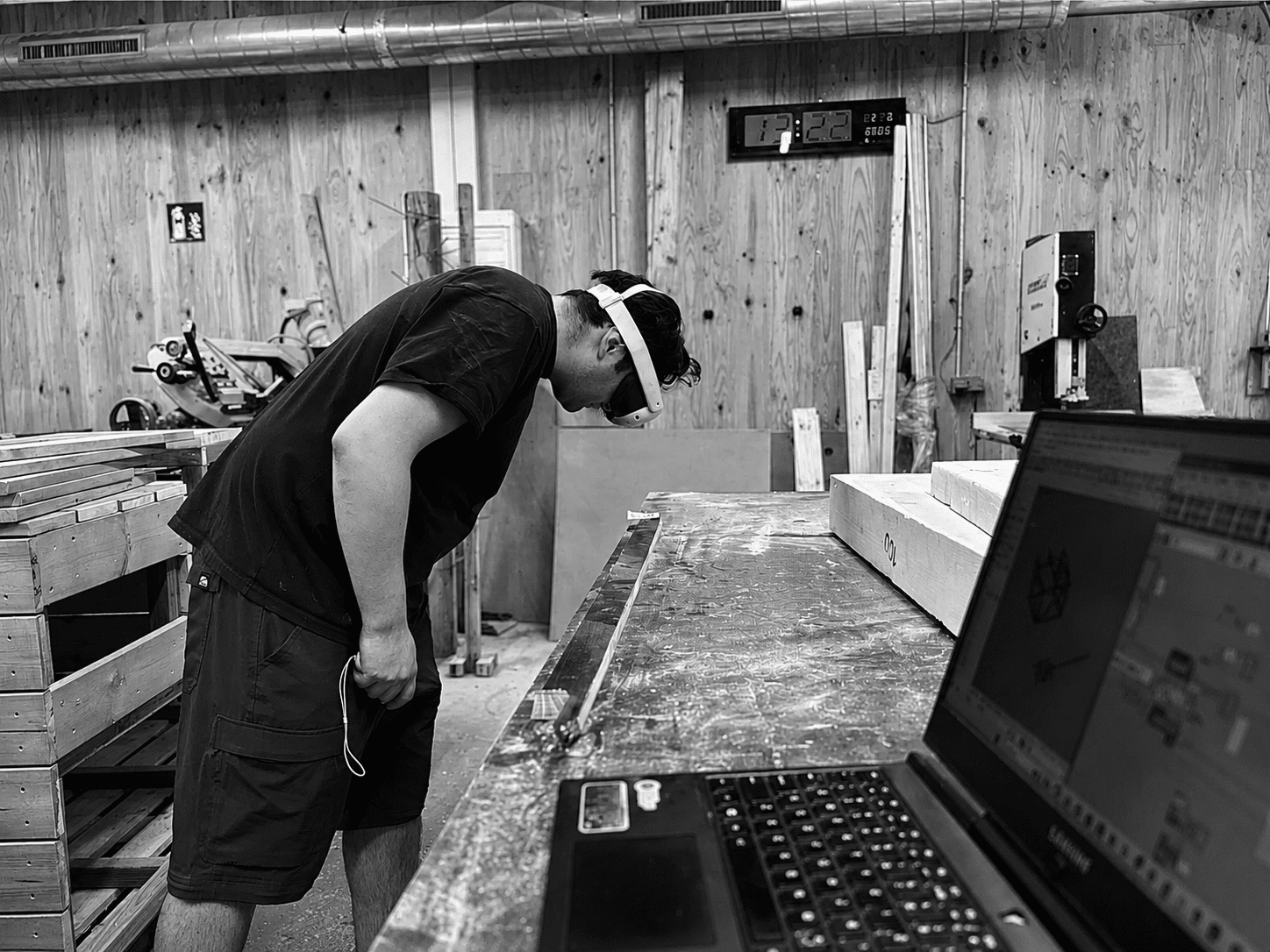
A headset-based AR platform that guides a human assembler through complex joinery step by step, projecting ghost geometry directly onto the physical parts in 3D space. The system closes the feedback loop in real time, reading part placement through the device’s own cameras and advancing the assembly sequence automatically when each joint is correctly seated. … Read more
