The Master in Robotics and Advanced Construction (MRAC) seeks to train a new generation of interdisciplinary professionals who are capable of facing our growing need for a more sustainable and optimised construction ecosystem. The Master is focused on the emerging design and market opportunities arising from novel robotic and advanced manufacturing systems.

Through a mixture of seminars, workshops, and studio projects, the master programme challenges the traditional processes in the Construction Sector. It investigates how advances in robotics and digital fabrication tools change the way we build and develop processes and design tools for such new production methods.


Filters
Course

Crafting Spaces: The Role of Art in the Contemporary Industry of Architecture

This manifesto has been inspired by artist Maja Smrekar’s master class at IAAC, wherein she illuminated the myriad possibilities and variables that art can encompass when integrated with the digital tools available to today. The designer’s key intensions on “How Contemporary Art could incorporate the latest technology” as world is evolving with this bespoke technology. … Read more

A call for multifaceted solutions for the AEC industry

A new paradigm and consciousness of time and technology is being built on this instance and affects the future of how we construct. Standardized models of construction are strongly related to carbon emissions. Current Models of construction are not able to  mass-produce or adopt solutions for the shortage of housing around the world. Standardization of … Read more

Follow Me

Aim To explore innovative parametric tiling designs through the utilization of robotic tiling setups. The project aim is to utilize the functions of  COMPAS framework and its extensions for robotic planning. Also, to incorporate computer vision and scanning information into the tiling process to enhance precision and efficiency. Design Logic Inspired by the idea of … Read more

Robotic Gaudi

AIM DESIGN The three distinct design methodologies we explored employed grayscale image mapping, where the gray areas functioned as attractors and filters for colored circles. Our second experiment focused on employing curves as generators for the spatial arrangement and packing of a variety of larger circles. The third methodology extended our exploration to the incorporation … Read more

Kangaroo follows the COMPAS

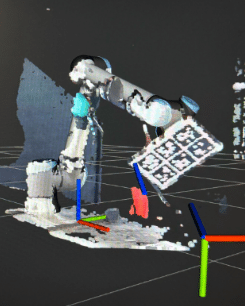
This project documents a 1-week workshop that introduced students to the COMPAS framework. Our goal was to design a tile mosaic that would be part of a collaborative pick-and-place workflow with the UR5, incorporating COMPAS Fab, Kangaroo (Grasshopper), and ROS. What is COMPAS? Utilizing the COMPAS framework developed by Gramazio Kohler Research and the larger … Read more

DigiPix

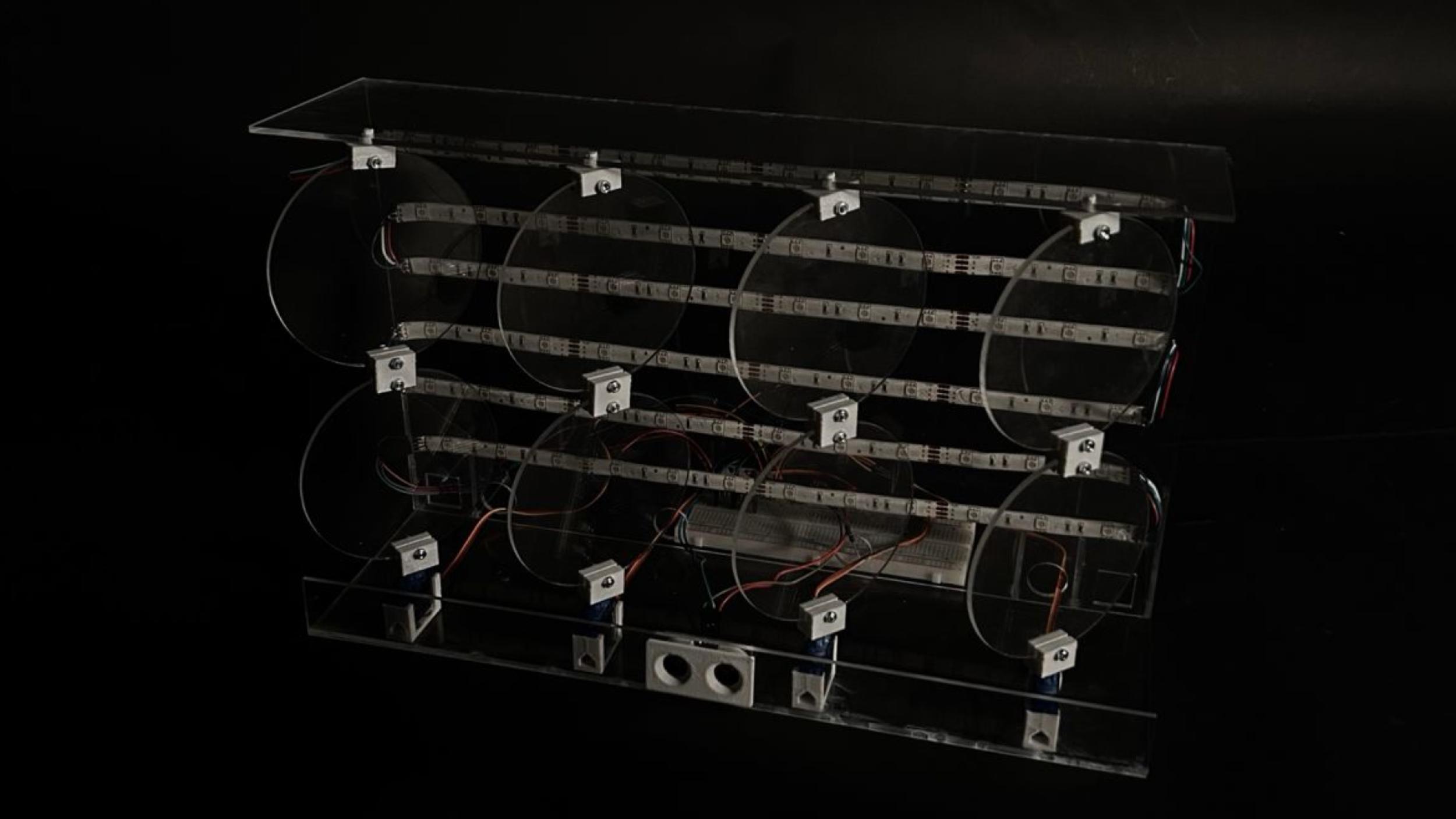
INTELLIGENT SENSING AND VISION This project aims to develop an interactive LED matrix capable of dynamically responding to real-time behaviors in its surrounding environment while ensuring versatility in its applications. By integrating sensors to detect various environmental stimuli and employing advanced data processing techniques, the LED matrix will generate dynamic visual patterns that reflect the … Read more

Data_visualization

CONTEXT Consequences of carbon emission Building operations are responsible for approximately 27% annually, while the embodied carbon of just four building and infrastructure materials – cement, iron, steel, and aluminum – are responsible for an additional 15% annually EuropeanClimateLaw The European Climate Law writes into law the goal set out in the European Green Deal for Europe’s economy and society to become climate-neutral by 2050. The law also sets the intermediate target of reducing net greenhouse gas emissions by at least 55% by 2030, compared to 1990 levels. Climate neutrality by 2050 means achieving net zero greenhouse gas emissions for EU countries as a whole, mainly by cutting emissions, investing in green technologies and protecting … Read more

Reclaim Rover

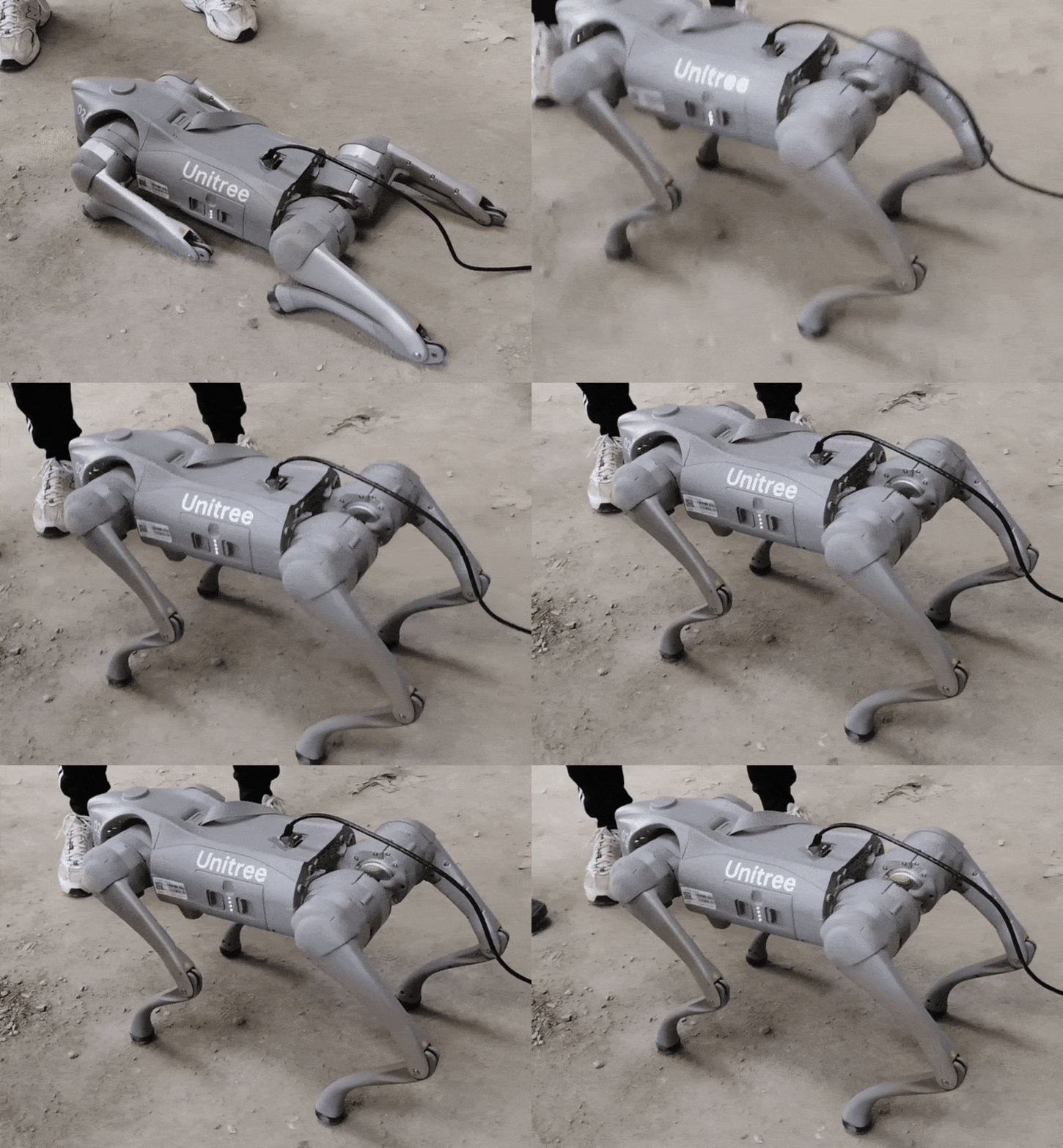
The integration of a rover or swarm of rovers into construction demolition sites represents a paradigm shift in waste management practices. Equipped with advanced sensors and AI algorithms, this rover possesses the capability to accurately identify and segregate valuable materials such as steel and metal amidst debris and rubble. These rovers operate seamlessly alongside human … Read more

#Socialtrend

The building and construction industry is currently not meeting the targets for achieving decarbonization by 2050. Heightened environmental expectations from regulators, investors, and occupants have led to an uneven business landscape.Regulatory frameworks aimed at reducing carbon emissions, such as building codes and energy efficiency standards, are becoming more stringent, further complicating the landscape for businesses. … Read more

Serial Link

This project explores how serial data written by environmental sensors can control and influence the appearance of digital media. The outcome of Serial Link was a wearable device that incorporates a ESP32, Gyroscope, ultrasonic sensor, and a power bank that can control digital media in touch designer through network access. What is serial data?Utilizing the … Read more

A Proposal for Sustainable Foundation Systems

This hypothetical study aims to reduce CO2 emissions in the construction sector by incorporating cutting-edge technologies during the foundational stage. Our focus is on ensuring 100% renewable energy usage and optimizing energy consumption. Our focus Addressing all foundation types and their associated components and processes would be too broad for us to effectively handle. To … Read more