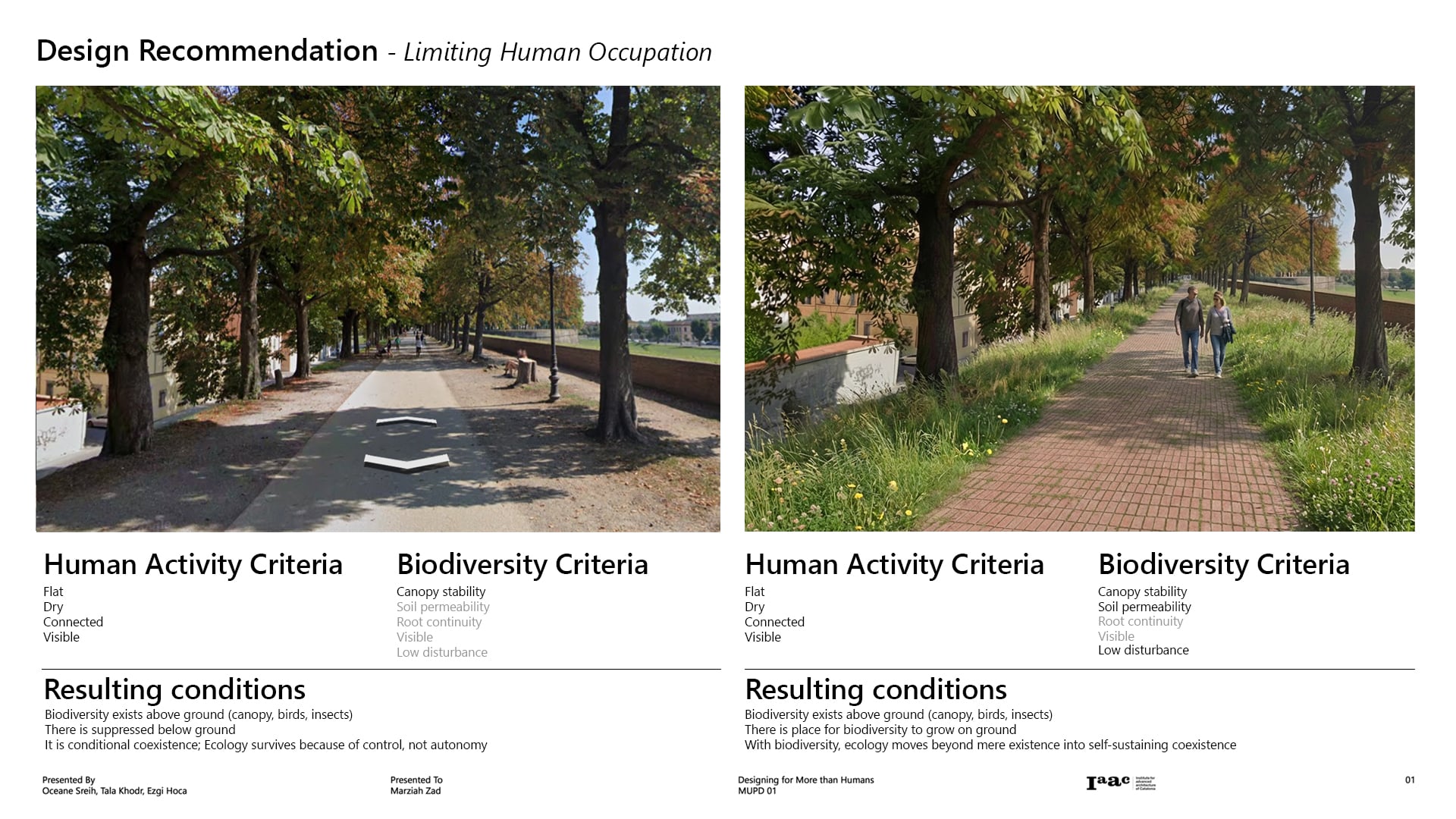
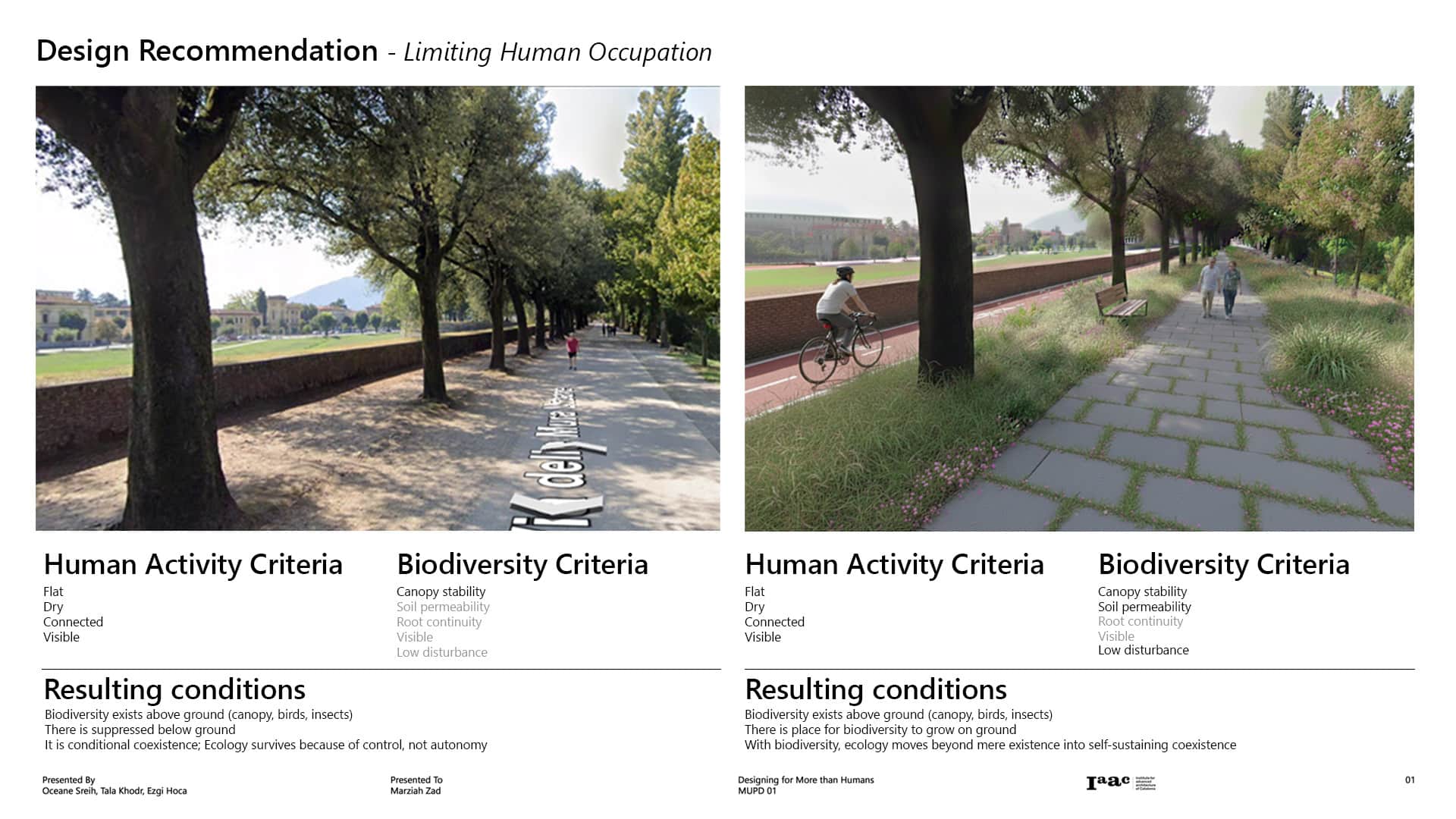
Started off in 1504 as a Renaissance-era fortification system, designed to resist cannon warfare. Over the years, it has undergone many reconstructions, with the latest turning it into a managed heritage park in the early 2000s (Planted rows of trees) . Ecology has played an important role in each of its eras, as we’ll see next.
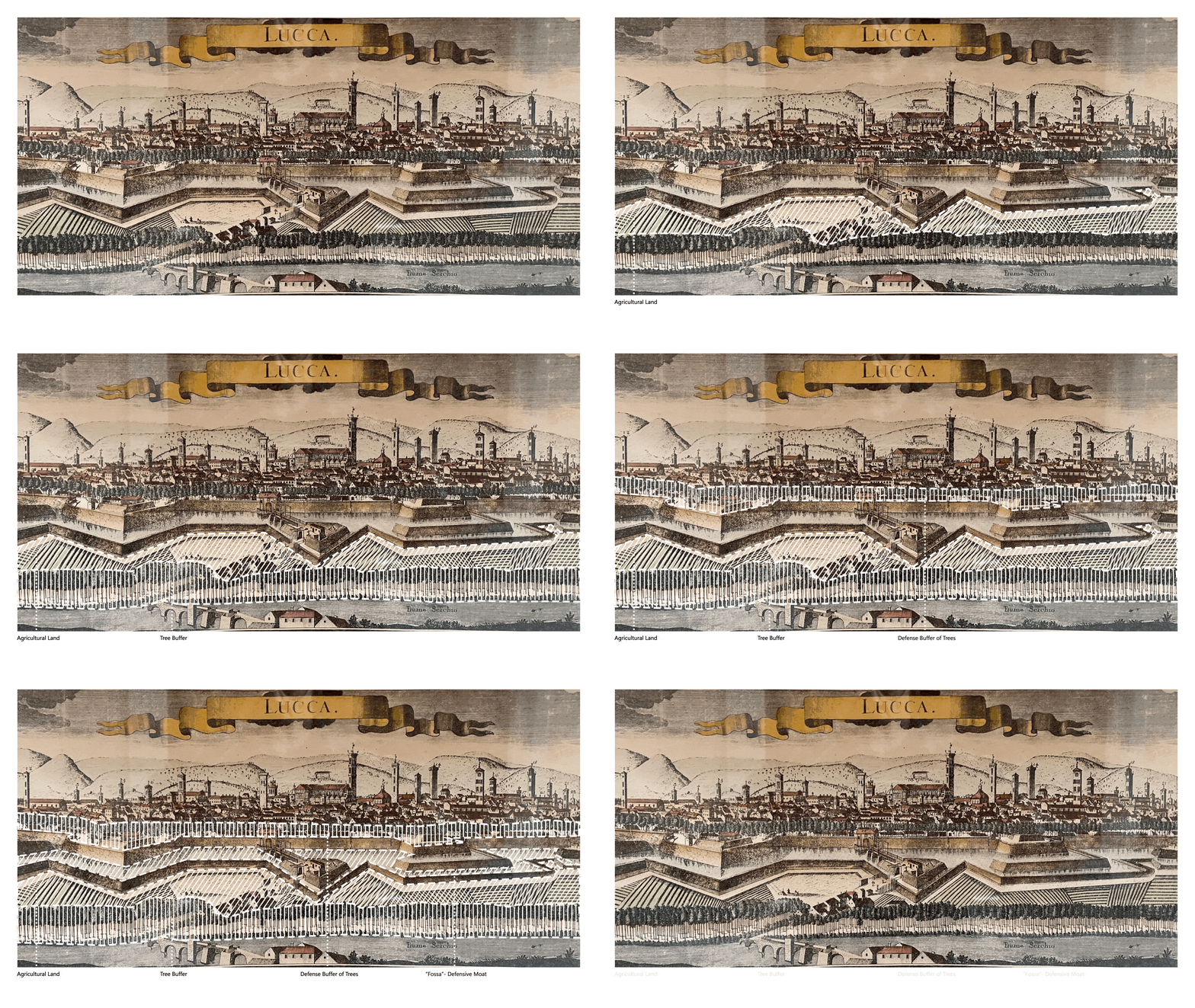
In this 17th-century view of Lucca, the landscape can be read in four clear horizontal layers moving toward the city walls: first, the agricultural land, consisting of cultivated fields outside the fortifications that supported the city economically while remaining open and unobstructed; second, a more organized tree buffer, where rows of trees begin to appear as a managed edge between productive land and the river; third, a defense tree buffer, carefully arranged to stabilize the earthworks and control visibility without compromising surveillance, functioning as a controlled green belt rather than a public park; and finally, the defensive moat, the excavated and engineered trench directly in front of the bastioned walls, forming the primary protective barrier before the massive ramparts rise behind it.
Components Of The Ecosystem
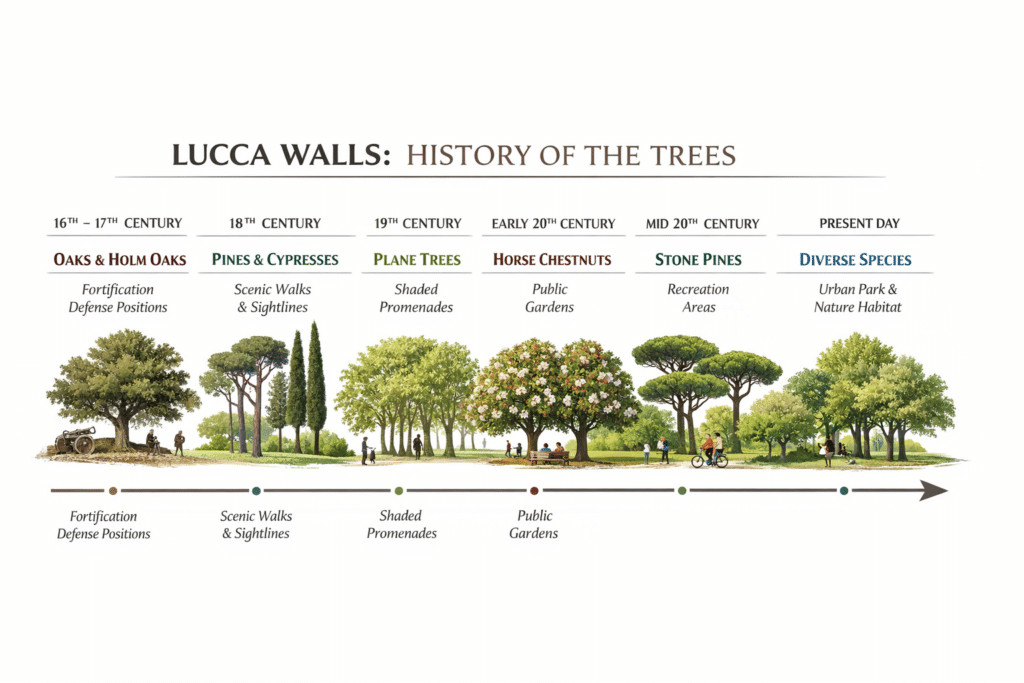
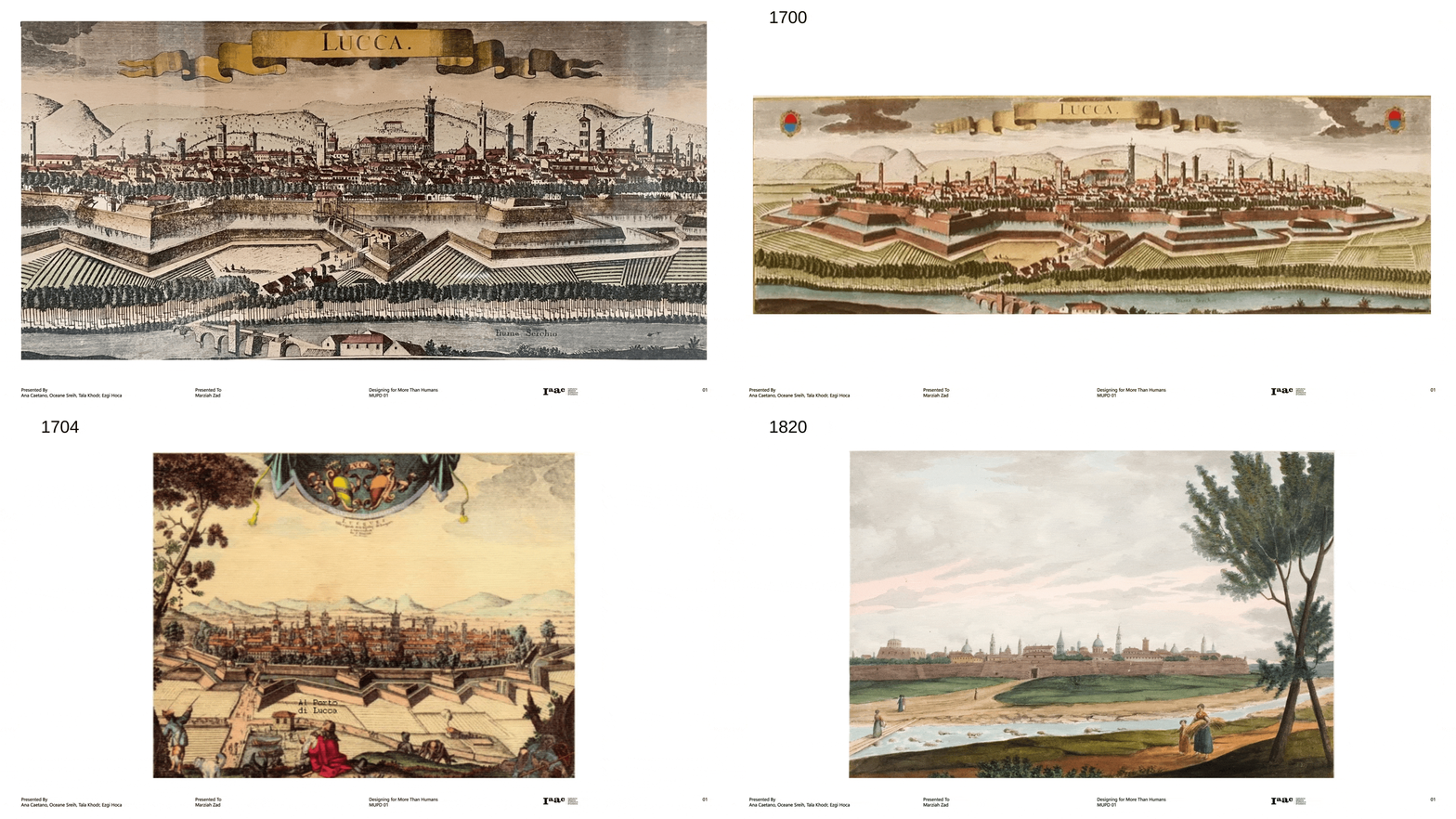
The timeline traces how the area around Lucca’s Renaissance walls gradually transformed from a strictly controlled military landscape into a public green space shaped by trees. In the 16th and early 17th centuries, vegetation was limited and carefully managed to preserve defensive sightlines, with only sparse or low plantings. As military threats declined between the 17th and 18th centuries, trees such as plane trees and elms began to appear, introducing shade and a more humane scale to the space. During the 19th century, when the walls were converted into a public promenade, systematic plantings of horse chestnuts, lindens, and Mediterranean pines structured the walkways and defined the character of the park. Over the 20th century, these trees matured into monumental elements of the city’s identity, becoming living witnesses to its history. Today, the park is maintained as both cultural heritage and ecological infrastructure, where historic trees are preserved and new plantings continue the historical landscape tradition.
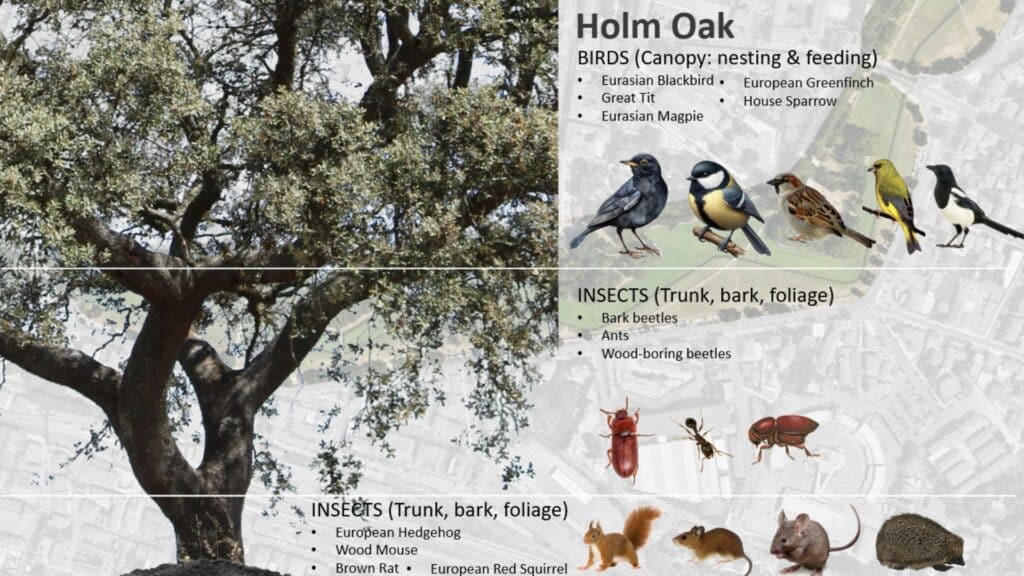
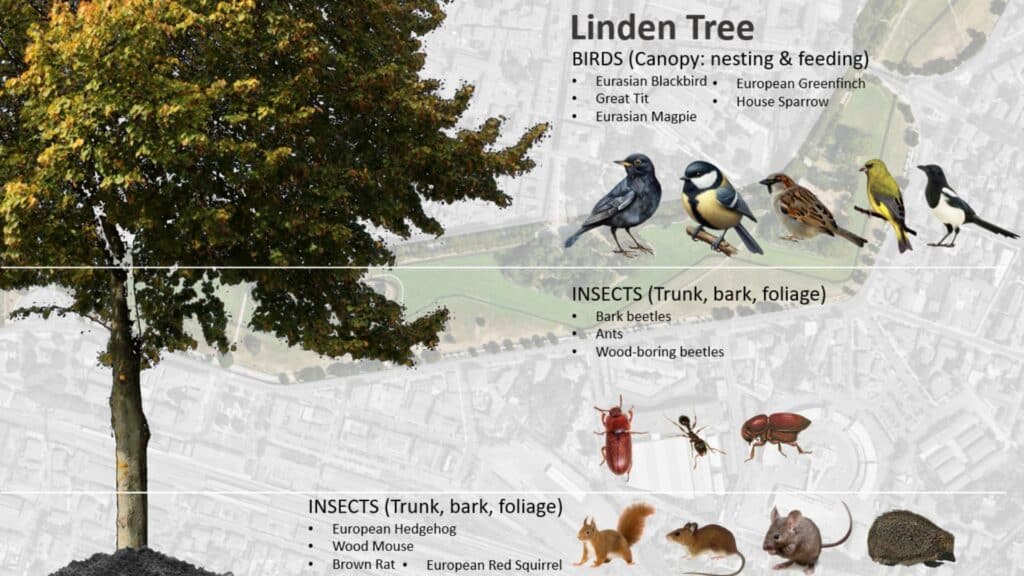
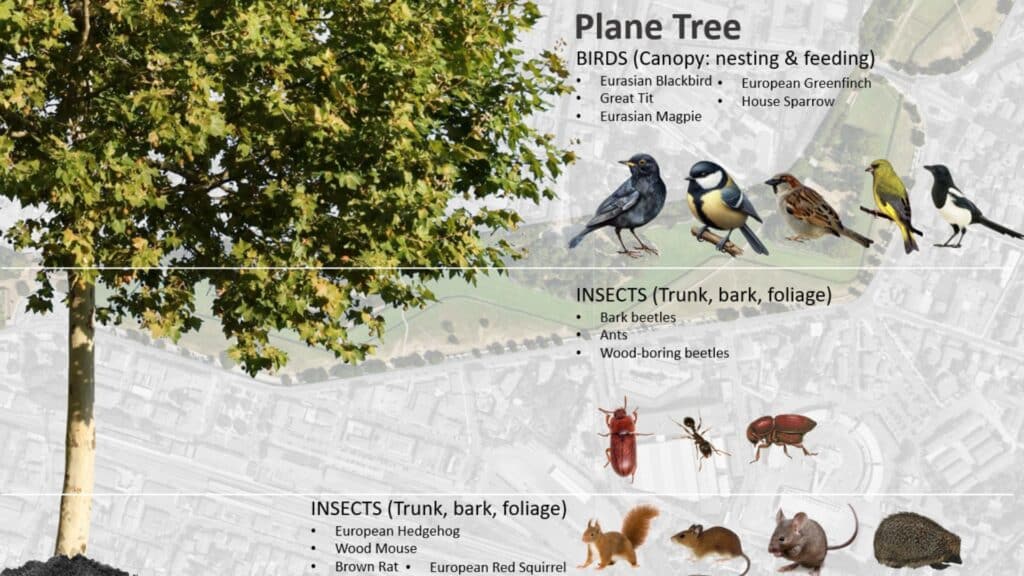
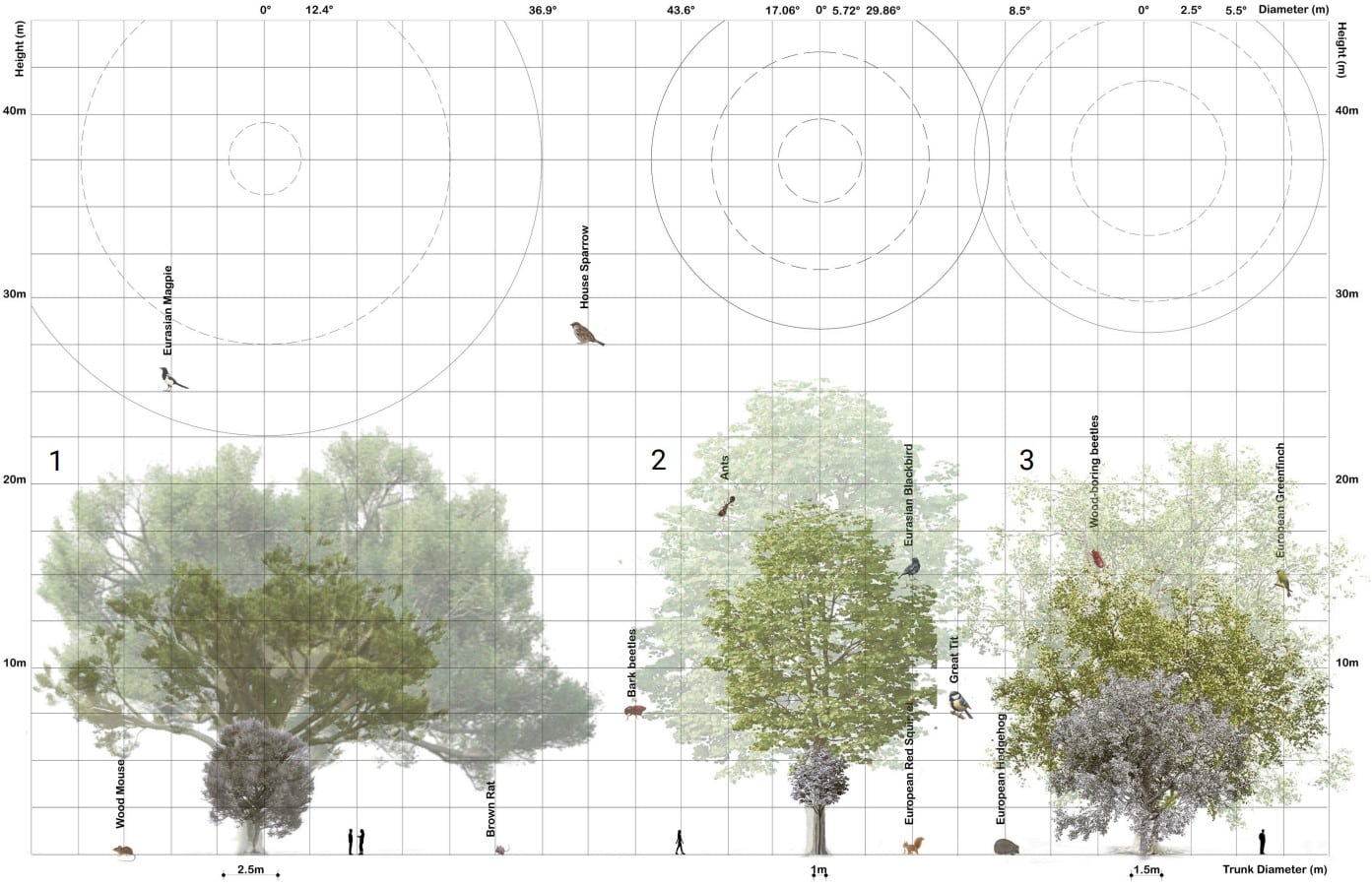
Three tree species in the project area (Holm Oak, Tilia Tree, and Platanus) develop differently from their early growth stages to full maturity. Their height increases over time, while canopy size and trunk diameter change at each stage.
The Plane Tree grows quickly but has a shorter lifespan, whereas the Holm Oak and Linden grow more slowly and can live for several hundred years.
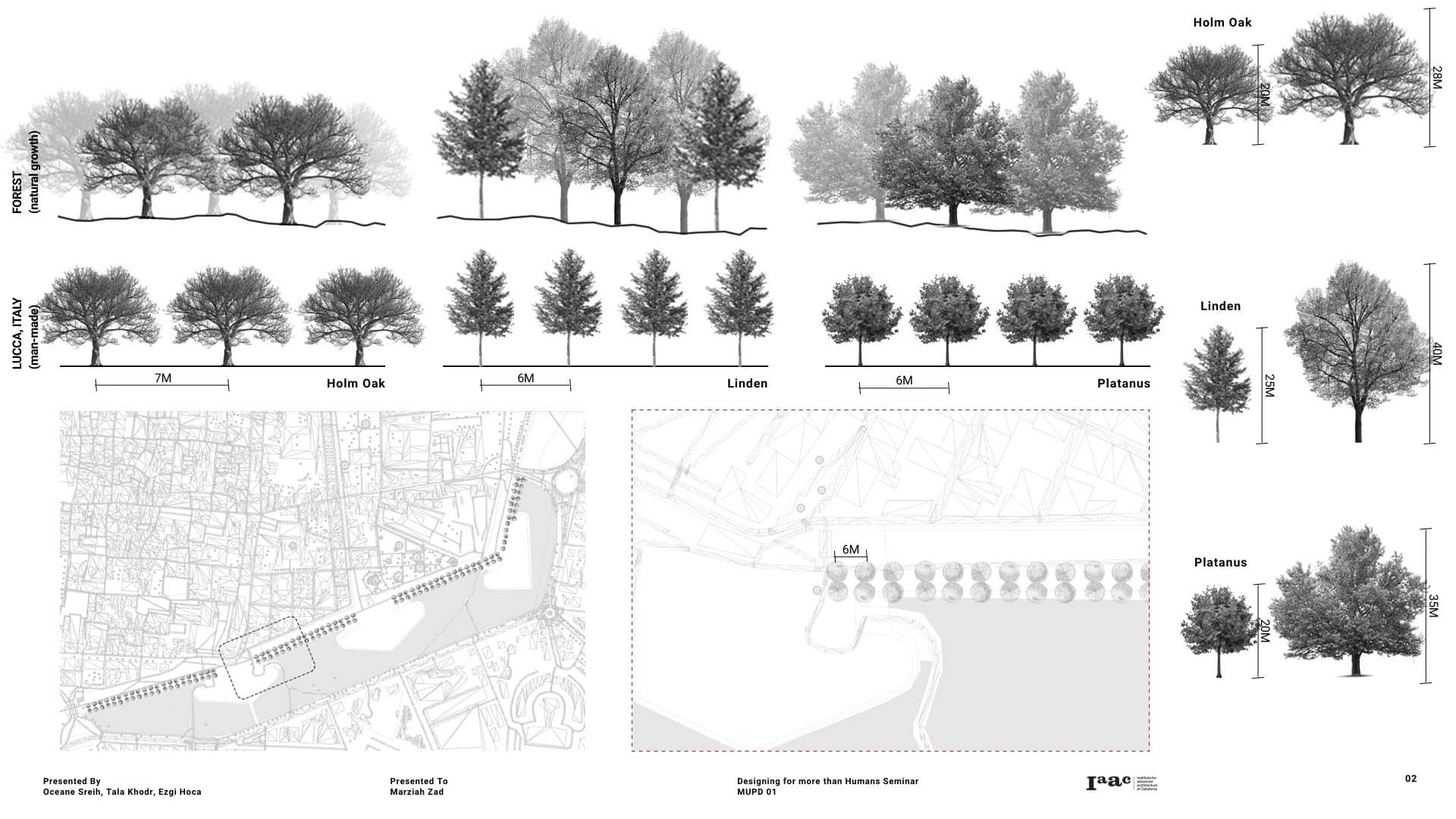
Tree species such as (Holm Oak, Tilia Tree, and Platanus) grow differently in natural forests compared to the managed environment along the historic walls of Lucca.
In forests, these trees grow freely with irregular spacing, varying heights, and naturally expanding canopies as they compete for light and space. Along the walls, the same species are planted in a controlled pattern, typically 6 to 7 meters apart, with both height and canopy carefully managed.
While trees can reach greater height and size in forest conditions, their growth in Lucca is limited to protect the earthen and brick walls. Pruning and maintenance reduce root pressure and wind impact, preventing structural damage and ensuring the long-term stability of the historic walls.
Human Occupation
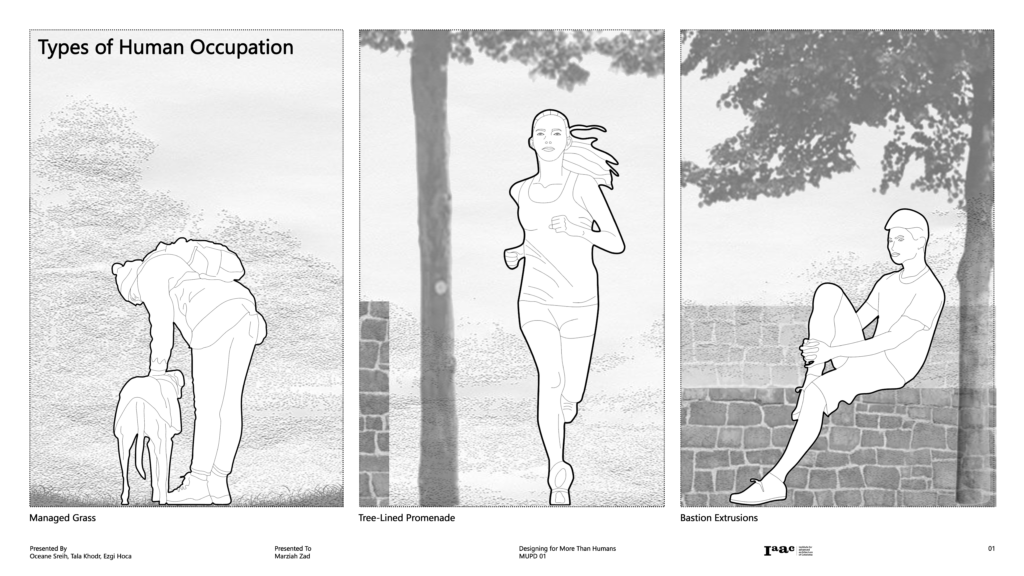
Time As A Regulator of Spatial Occupation
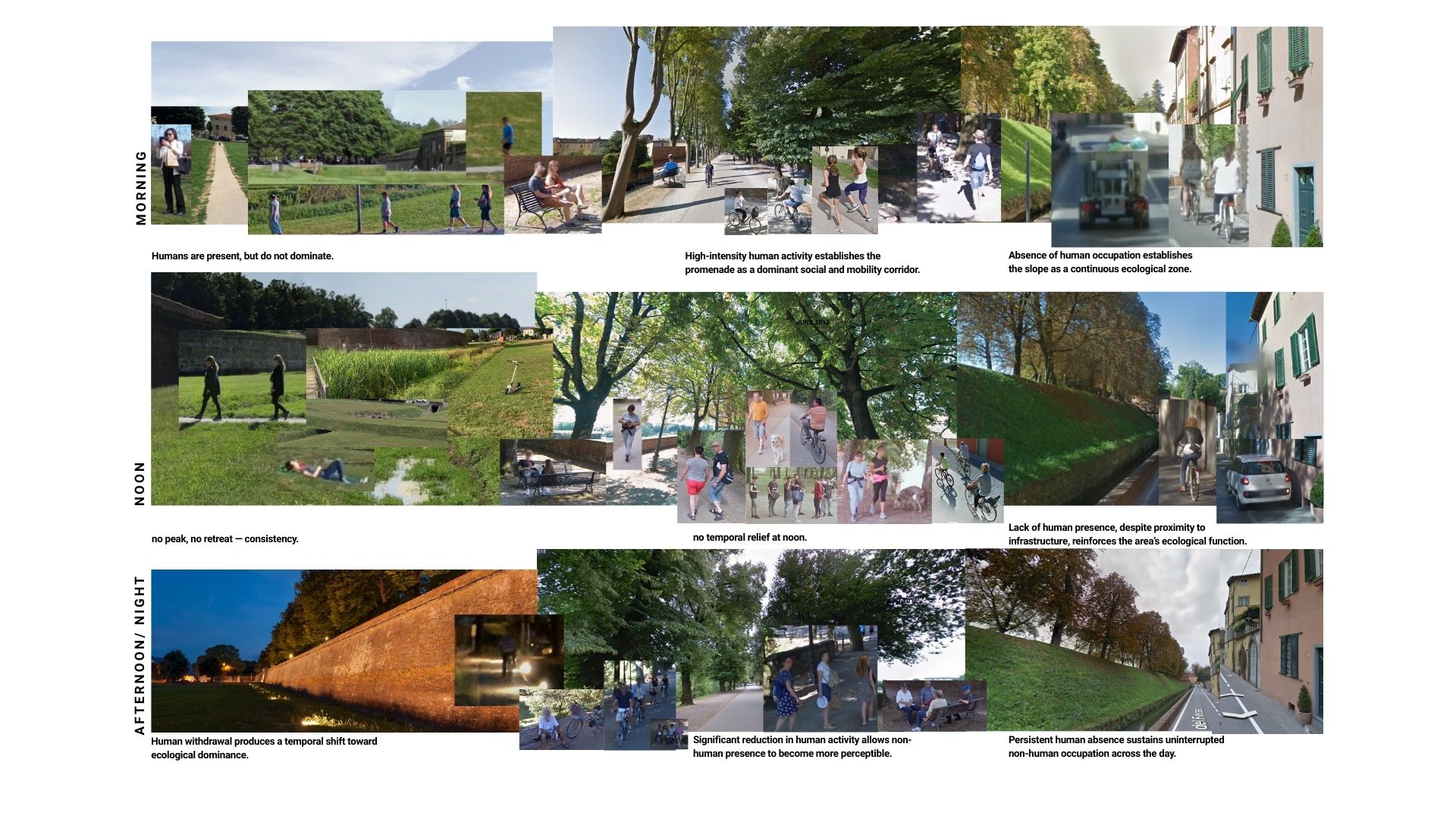
Human density changes throughout the day across different areas of Lucca, including the flat grassy area outside the project, the promenade, and the slope. Patterns of occupation vary in each space as the day progresses, reflecting how people use these areas differently over time.
Topography, Landscape & Human–Ecological Interaction
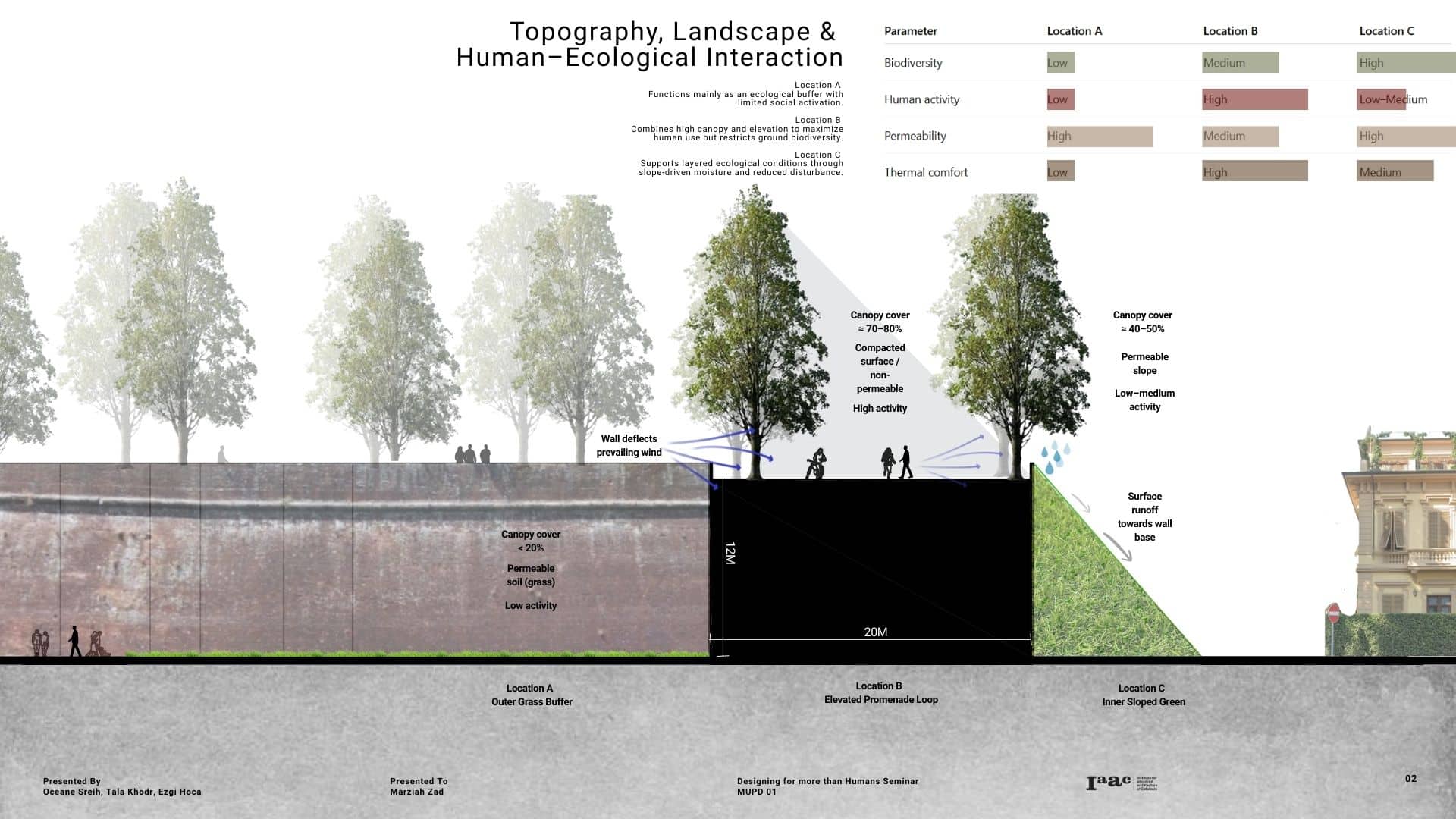
The city’s shape and historic walls around the Wooded Circle in Lucca influence both human movement and ecological growth.
The outer grassy area is flat and exposed, with few trees and strong winds, which limits human activity and biodiversity, making it function mainly as a transitional buffer.
The elevated promenade on top of the wall is lined with trees that provide shade and block wind, creating a more comfortable environment that attracts people.
The inner sloped green area has partial tree cover and better water drainage, offering stable conditions for plants while naturally limiting heavy human use.
Elevation, tree canopy, soil type, and microclimate together determine how people and nature occupy and move through these spaces.
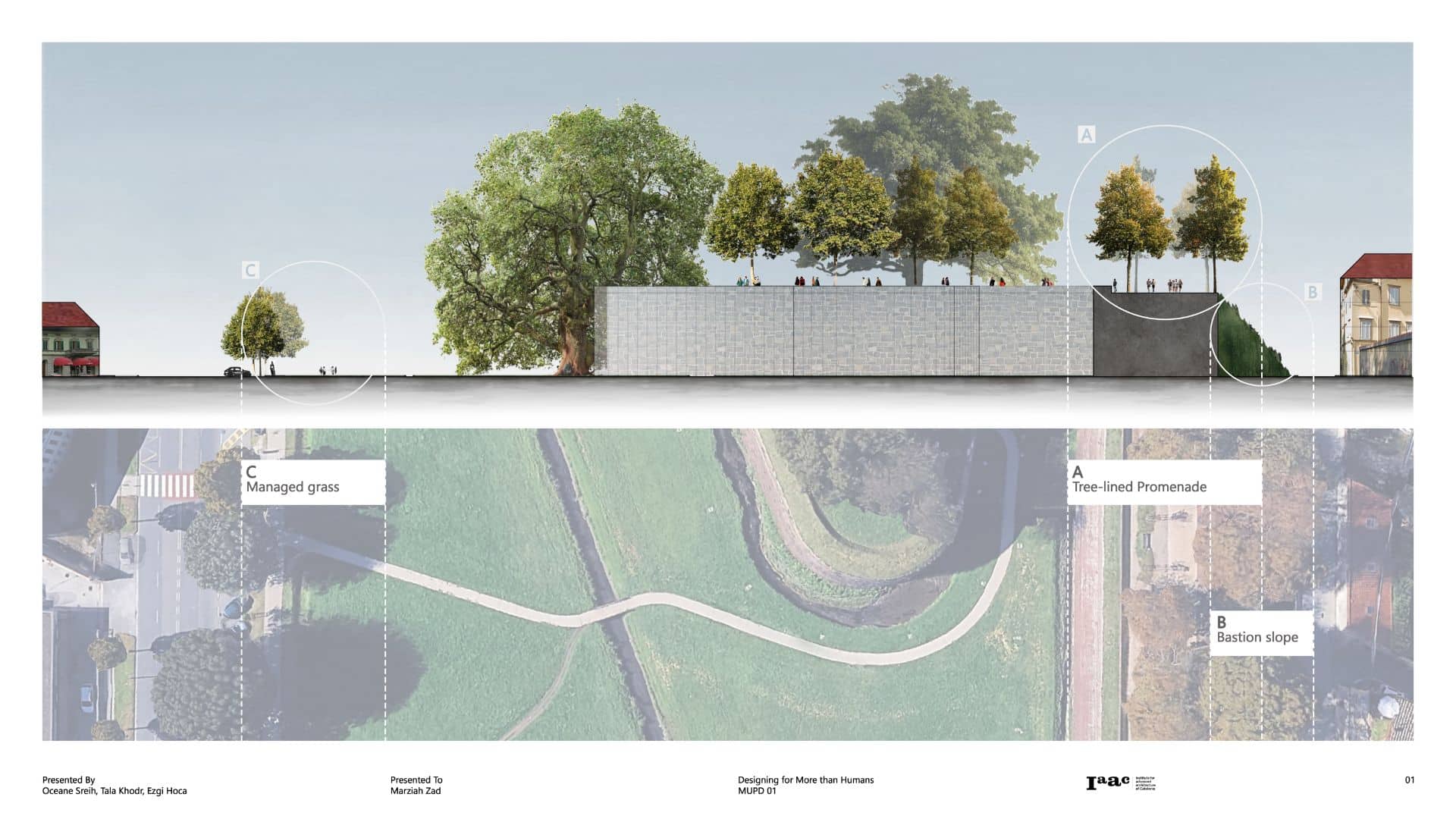
add the sections and details here.
CRITERIAS – THE RULES