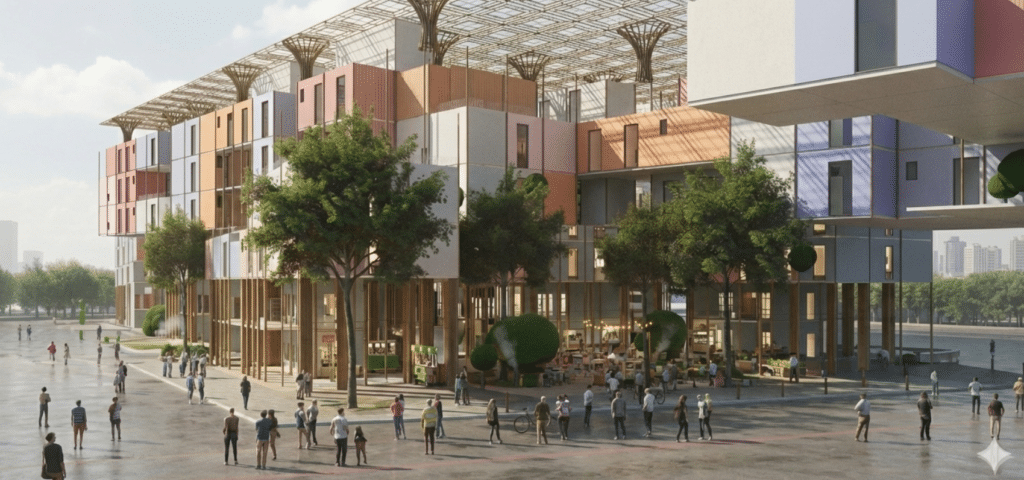
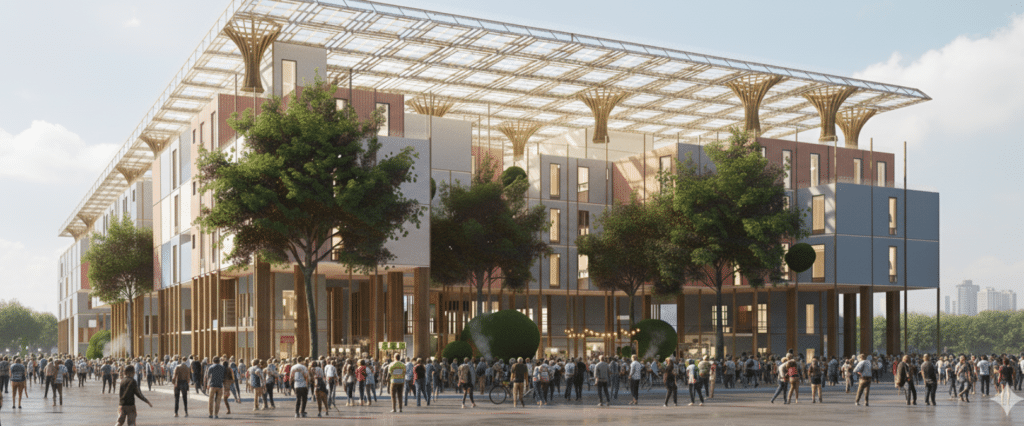
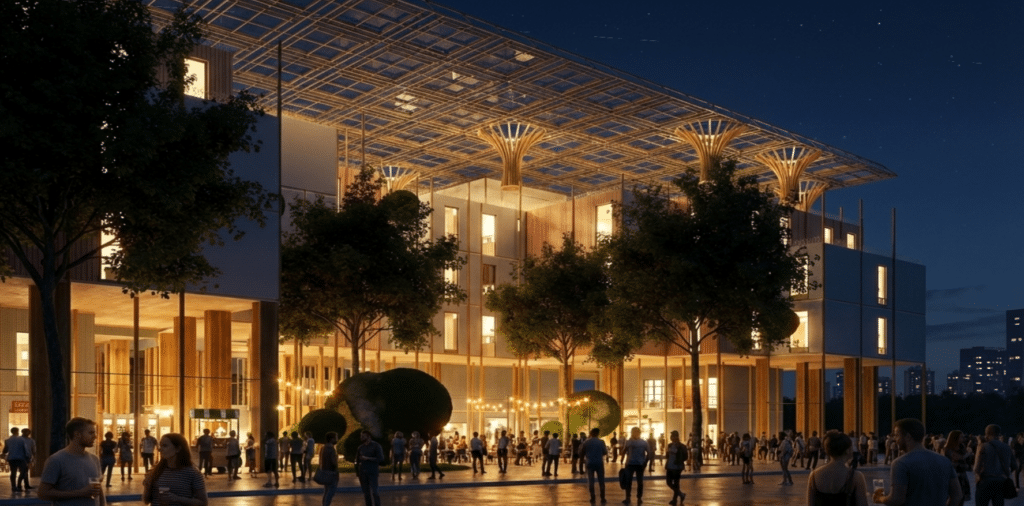
Monsoon Nest is a modular housing proposal for Bangkok that responds to monsoon rainfall, flooding, and high-density urban conditions. The project explores adaptable modules, elevated structures, and passive climate strategies to create resilient, community-oriented living environments in a tropical context.
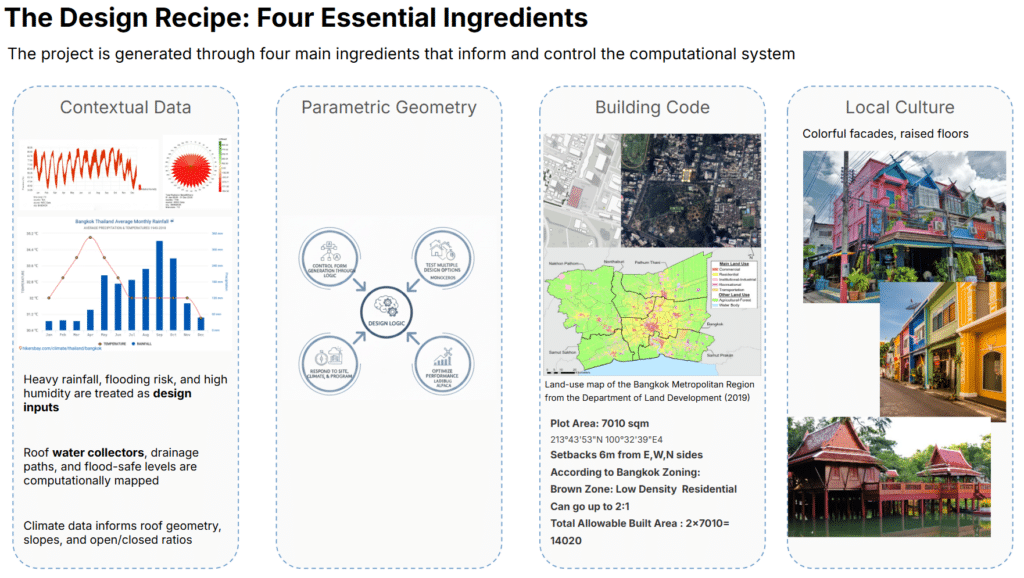
The design of Monsoon Nest is informed by four primary parameters: contextual environmental data, parametric geometry, building regulations, and local cultural practices. Environmental factors such as heavy rainfall, flood risk, and high humidity are integrated as design inputs. Parametric methods are employed for geometric generation, optimization, and iterative refinement. Building codes define the building envelope, while local culture is reflected through the use of raised floor typologies and articulated, colorful façades.
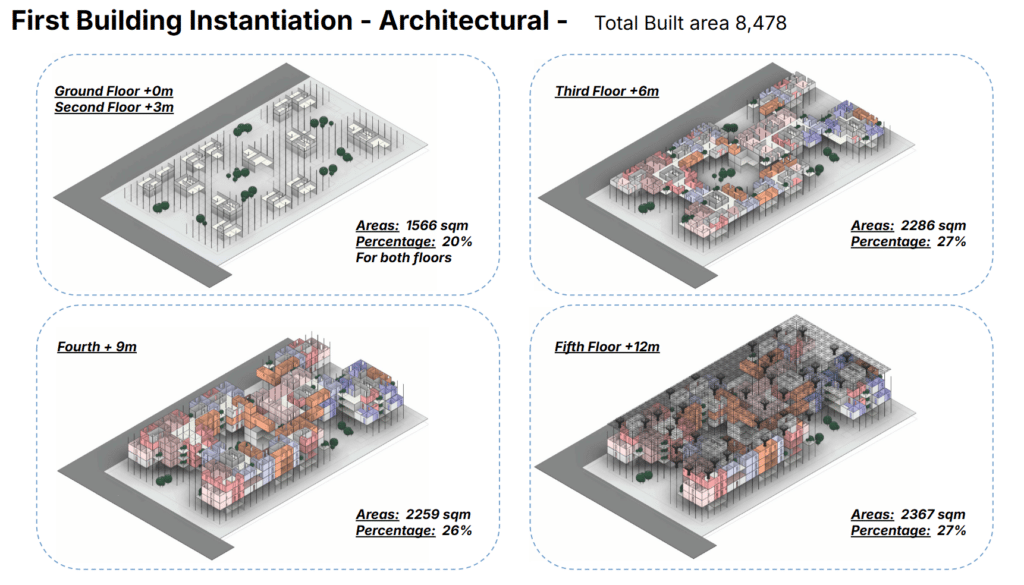
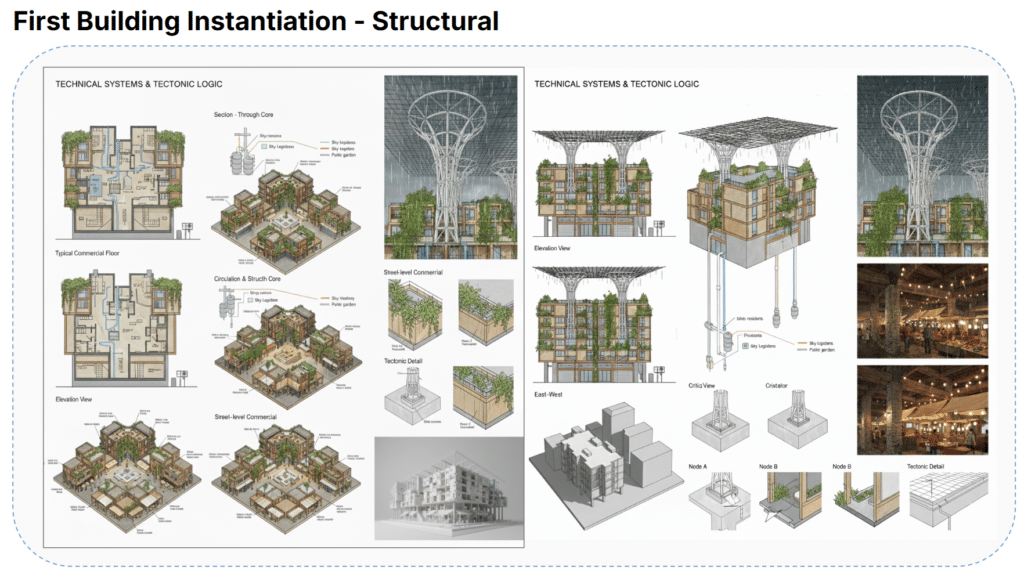
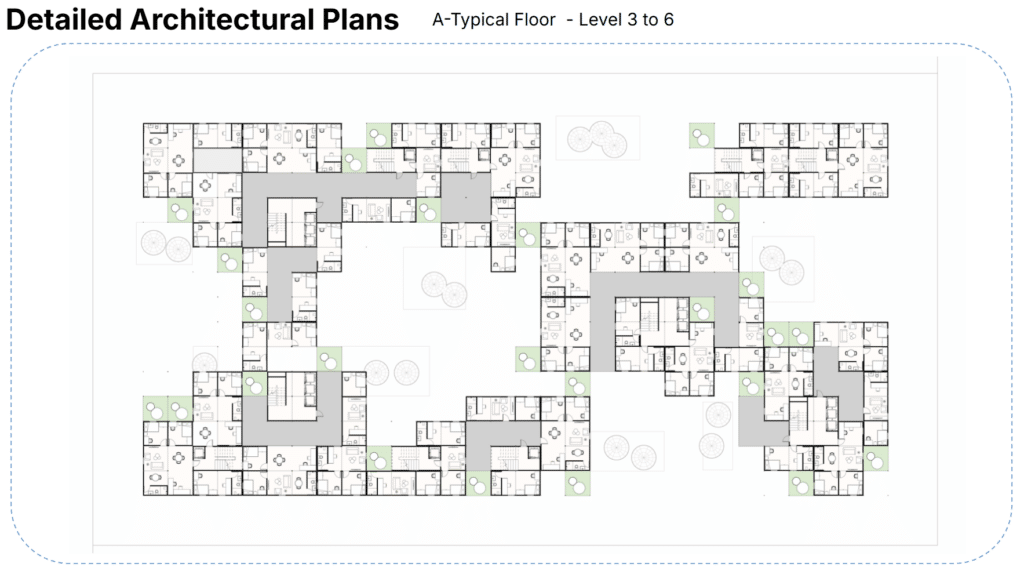
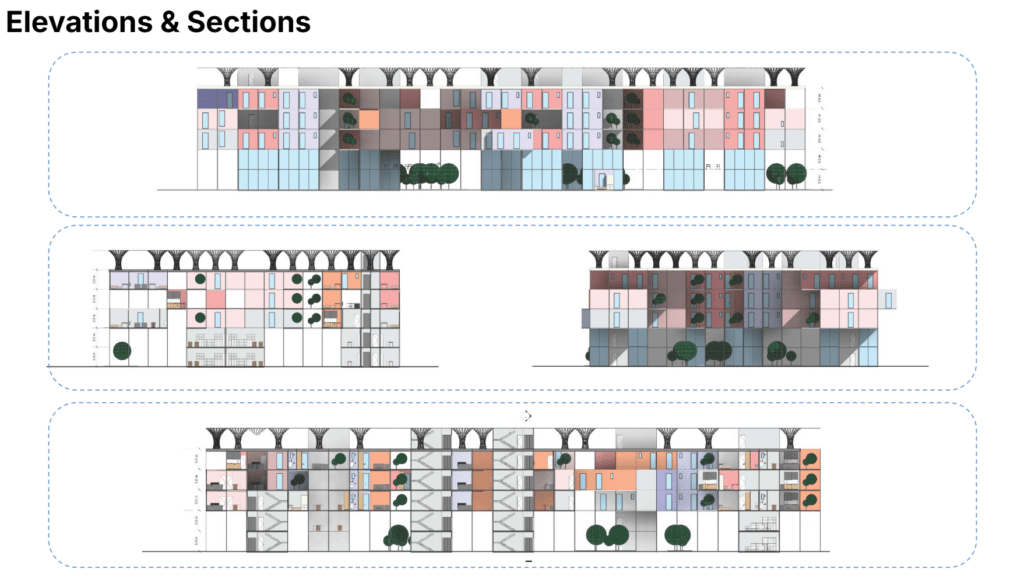
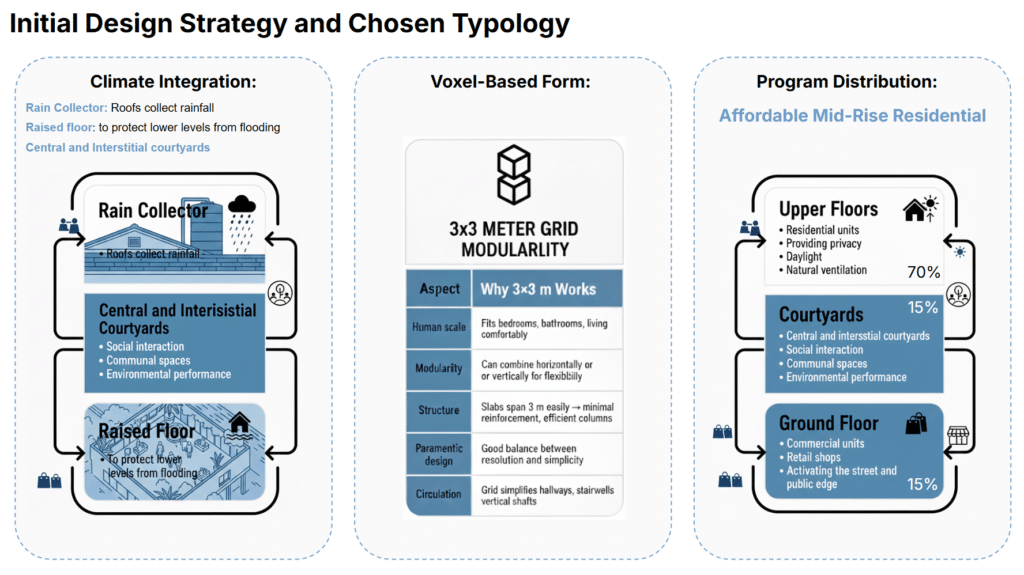
The initial design strategy was structured into three components. Climate integration informed key architectural elements, including raised floors, central courtyards, rainwater collection systems, and roof-level strategies. The building form was developed using a voxel-based system organized on a 3 × 3 × 3 meter grid. Programmatically, the project proposes an affordable mid-rise residential typology.
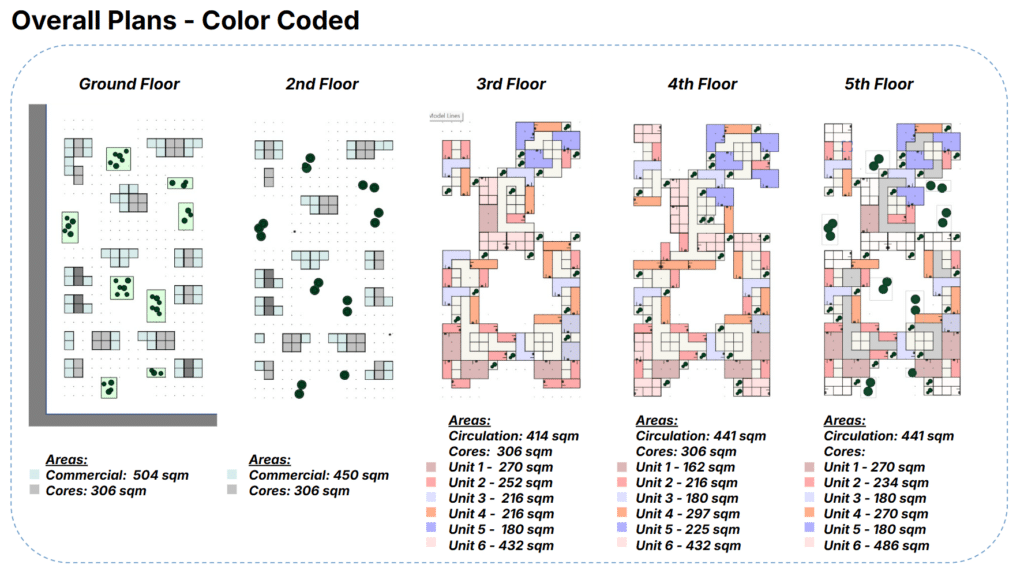
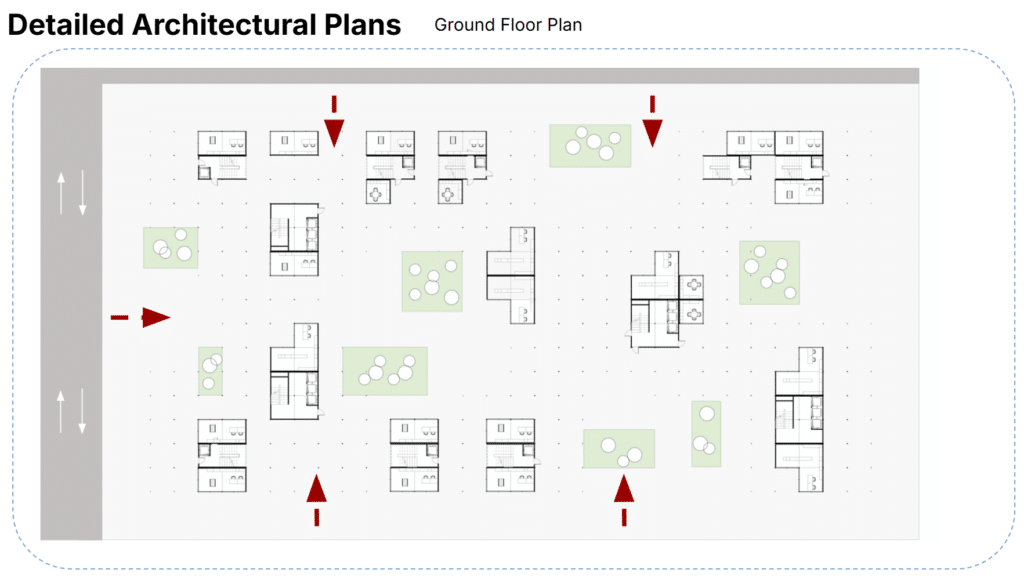
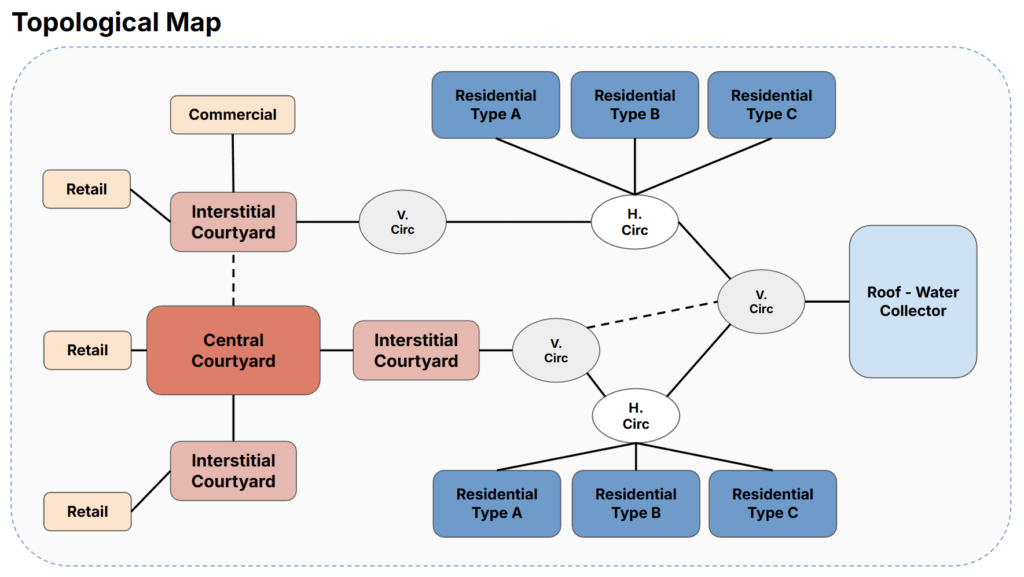
A topological diagram illustrates the functional sequence of the project, tracing movement from the central courtyard to commercial and retail spaces, through vertical circulation cores, into residential units, and finally to the roof as the terminal programmatic level.
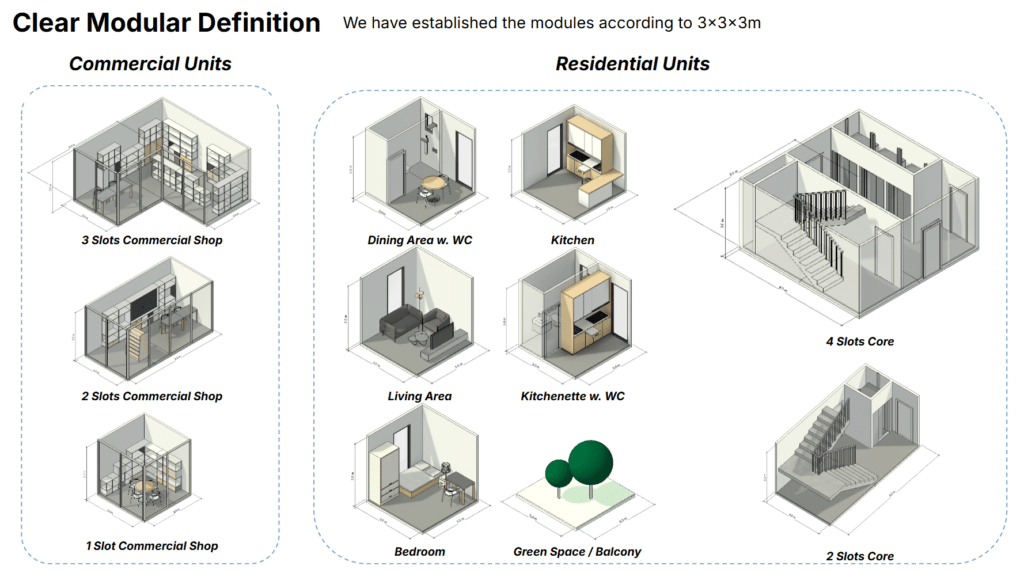
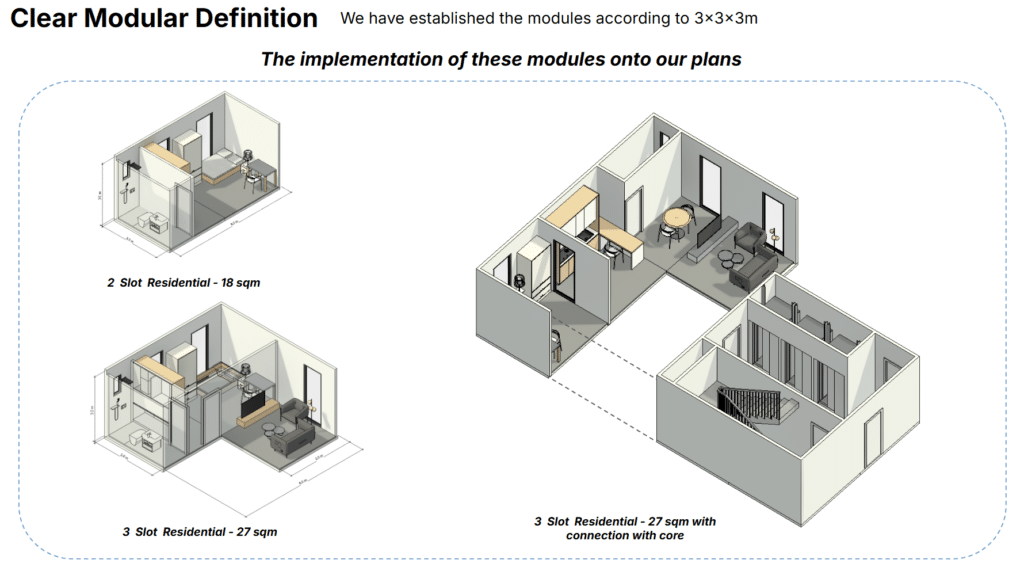
A clear modular definition is established based on the selected voxel system, allowing different functions and unit types to be developed through the aggregation and variation of standardized modules.
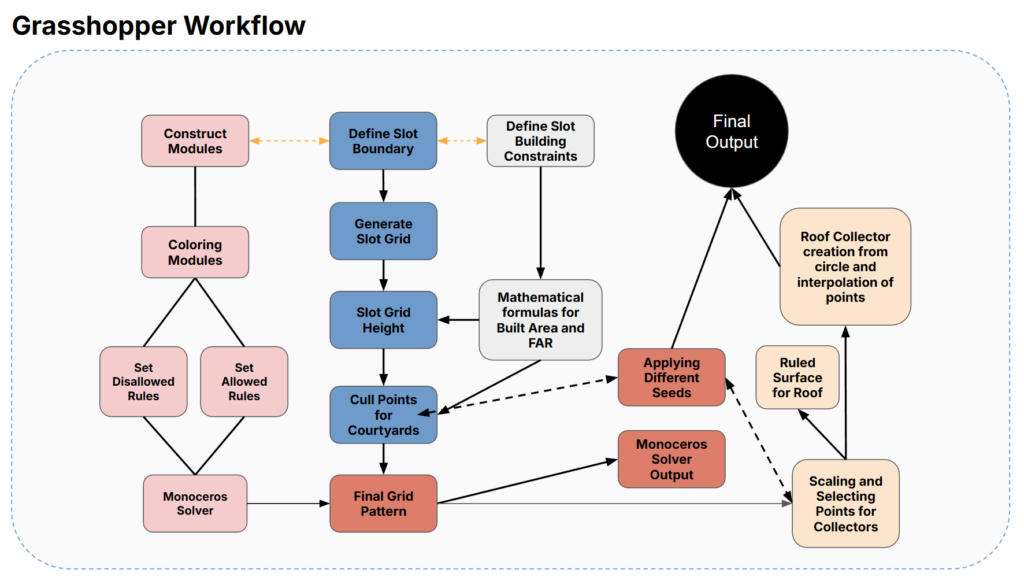
The workflow, illustrated in the accompanying GIF, begins with defining the site plot and establishing the grid and courtyard locations using pull-point operations. The massing is then calibrated according to allowable built-up area and height limits. Programmatic slots are subsequently generated, followed by roof formation through the strategic population of points based on precipitation calculations, resulting in the final iterative configuration.
Module Reprocessing with Roof Integration and Overall System Optimization