– Vision 2025/2026
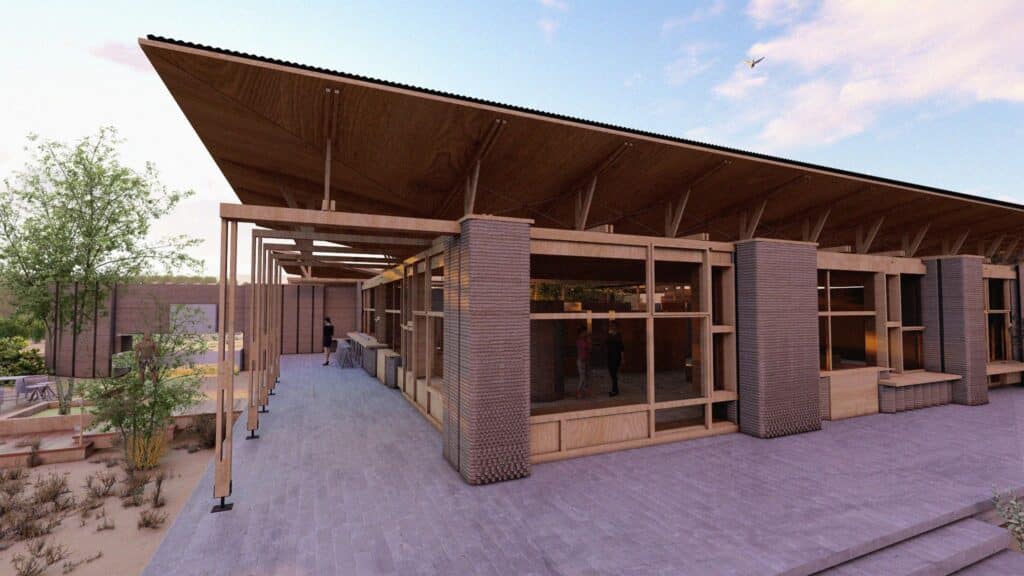
3D printing is increasingly entering the construction industry, with many examples of printed houses and buildings already realised. Its appeal lies in clear advantages: automation, speed, reduced material use, and minimal waste, all of which lower construction costs. Beyond efficiency, however, 3D printing offers architects significant design freedom, enabling an architecture that challenges over-standardisation and responds more precisely to users, climate, and context. The Vision course explores this potential by developing architectural proposals whose qualities would be unattainable without 3D printing.
The user
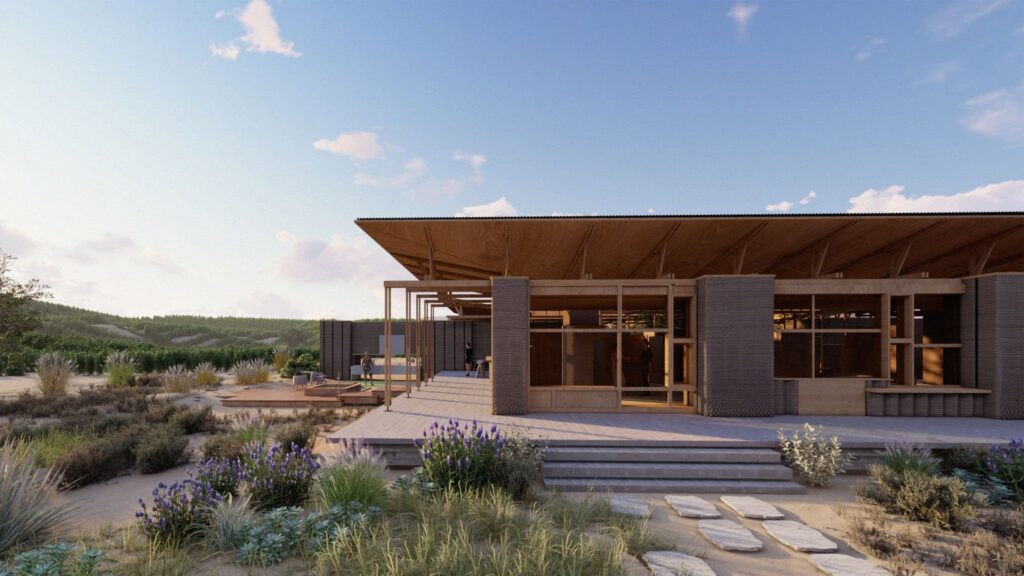
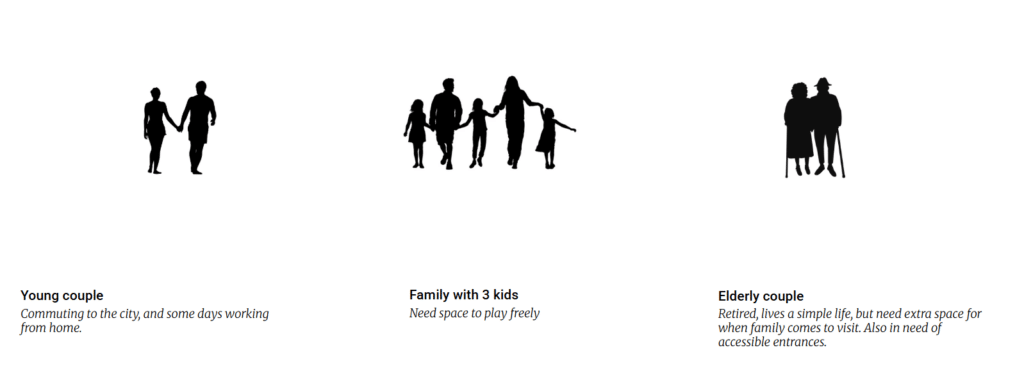
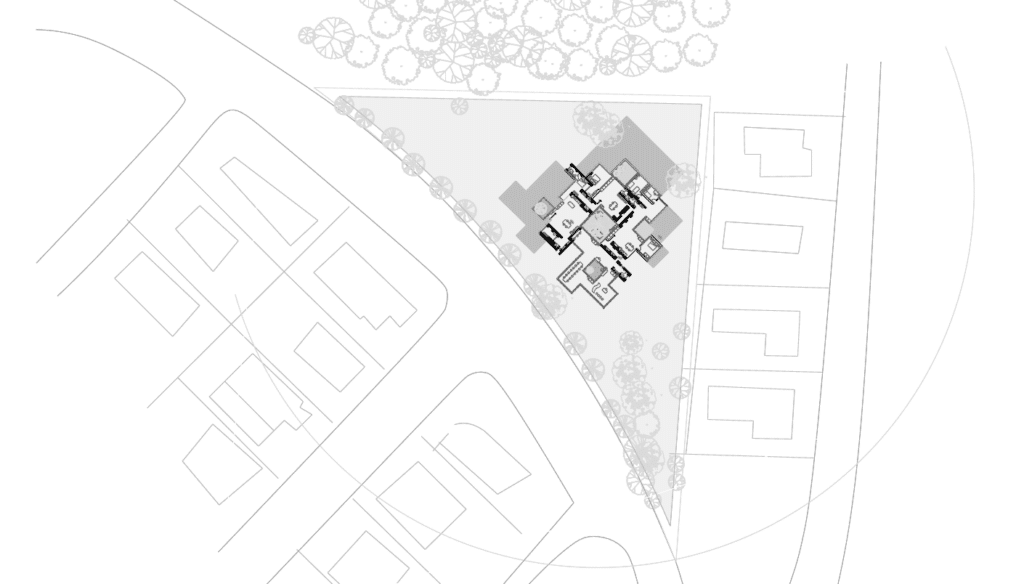
The project focuses on designing a primary residence for urban co-living in the suburban context of Barcelona, specifically in Molins de Rei, near the Collserola Natural Park. The residence is shared between three families—a young couple commuting to the city, an elderly couple that especially loves spending time in the garden and a family with three kids—combining living and working spaces and emphasising shared facilities catered to the different needs of the inhabitants.
Context
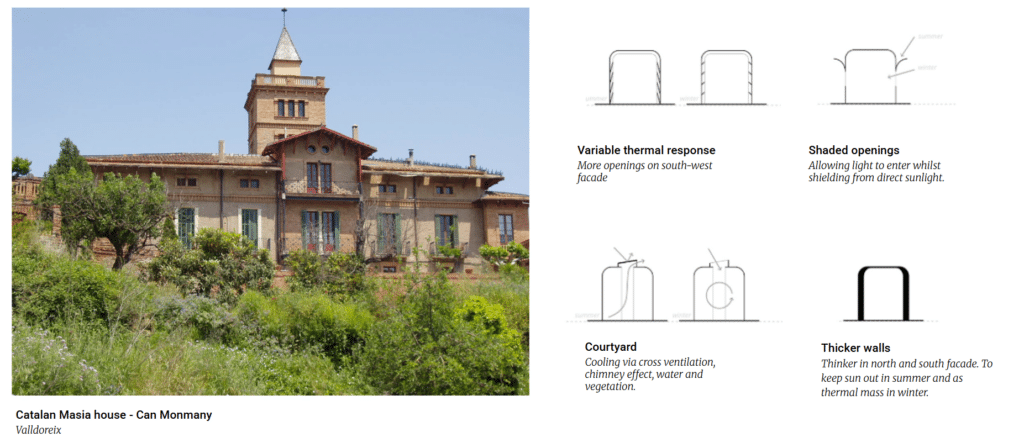
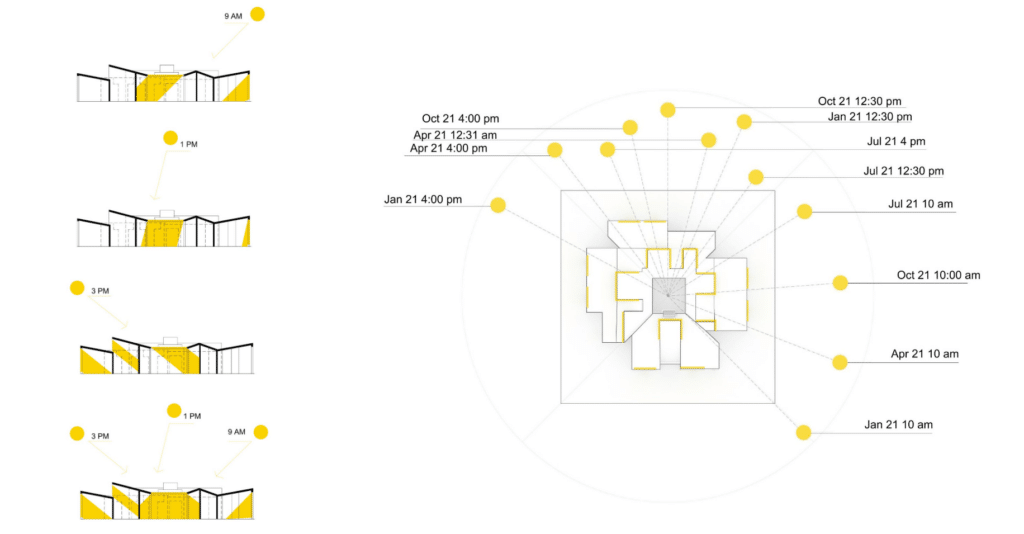
Set on a flat 4,400 m² plot within a Mediterranean climate, the design must engage outdoor spaces as integral living areas while responding to seasonal sun exposure through spatial organisation and architectural form. For climate strategies, we were inspired by the traditional Masia houses from the region.
Louis Kahn – Inspiration
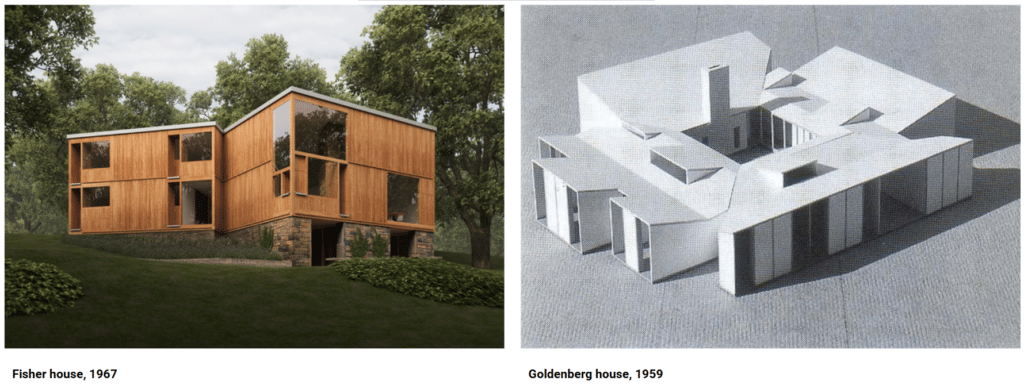
Our main source of inspiration for the more distinct elements of our design, the inhabitable walls and roof, was the architect Luis Kahn, in particular, the Fisher house and the Goldberg house.
Inhabitable Windows
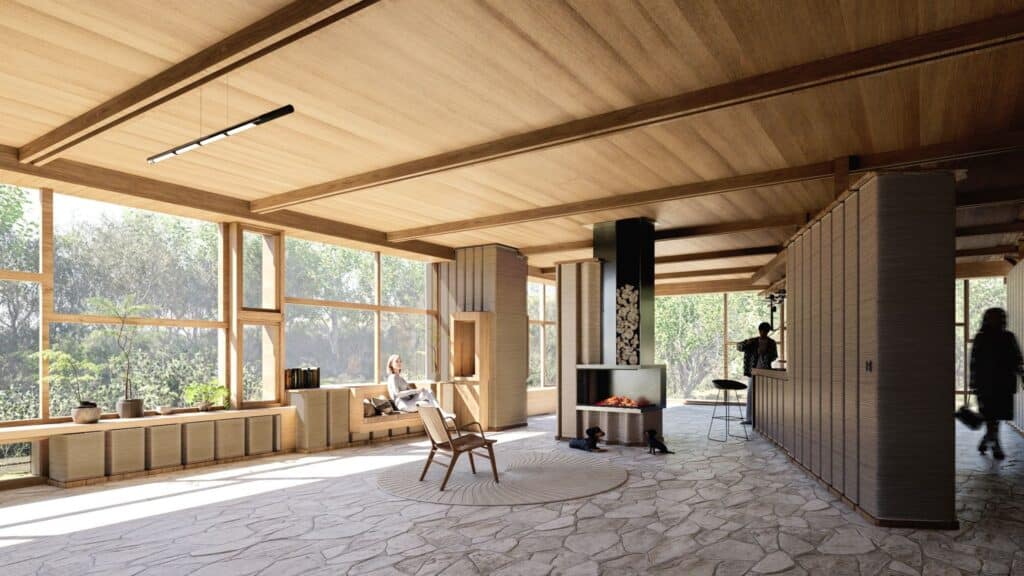
Kahn often used window recesses in his home to create living spaces, such as benches or storage spaces. These uses were considered highly innovative at the time. The best example of these modifications is found in the main living area, near the large fireplace. Kahn created details from the windowsill and created a seating area and a series of shelves for hidden storage.
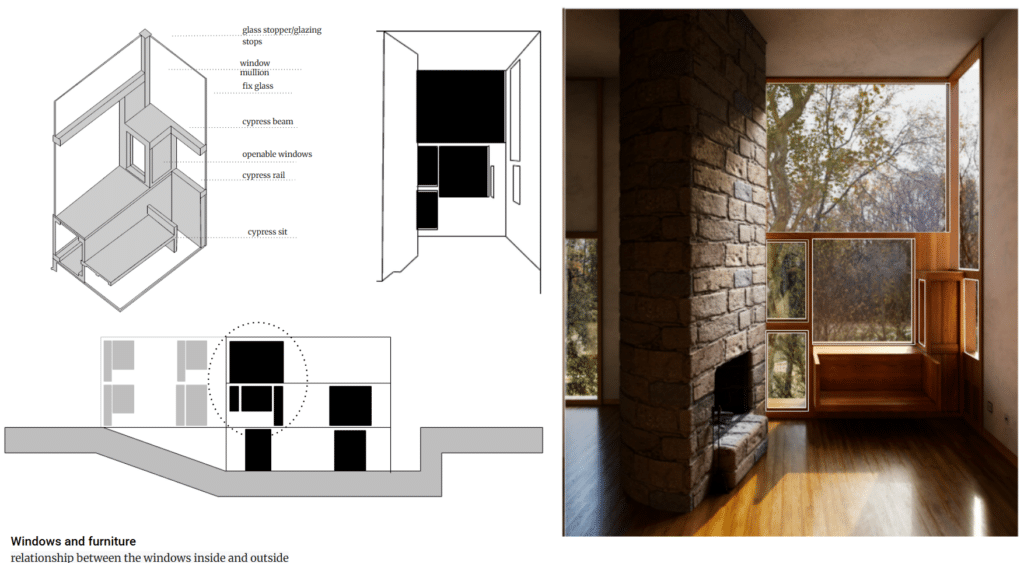
In addition to the innovative way of creating social interaction with the facade itself, this feature also has climatic advantages. The deep recessed walls ensure you avoid direct summer sun whilst still maximising natural light. (Shaded opening). Due to the deep recession, the windows can still be opened during storms, preventing rain from entering the home.
When it comes to creating similar inhabitable windows, 3DP walls have an advantage in that you can easily change the width and height of the walls, making this type of facade element perfect for this technology.
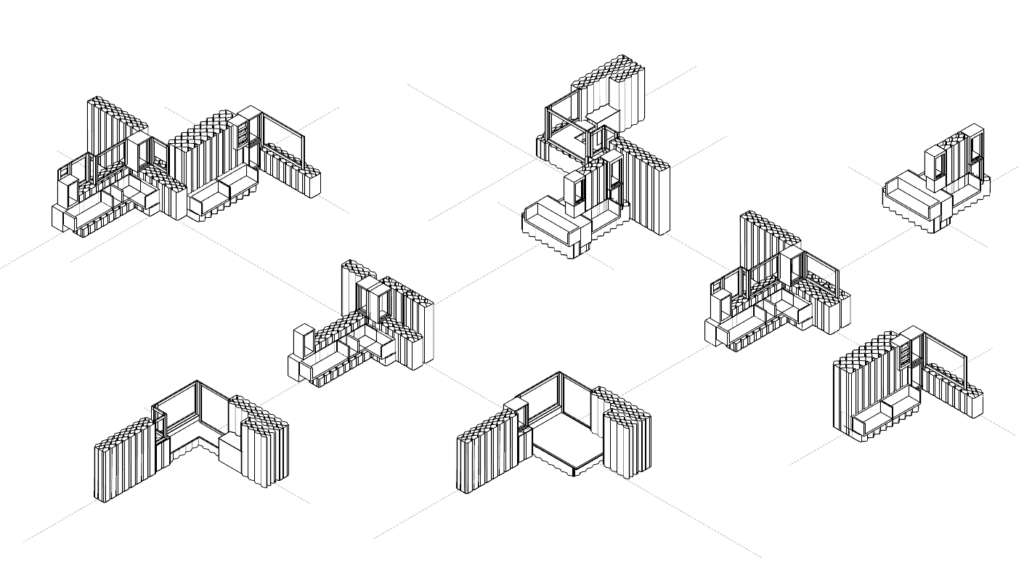
Catalogue of inhabitable walls
Layout
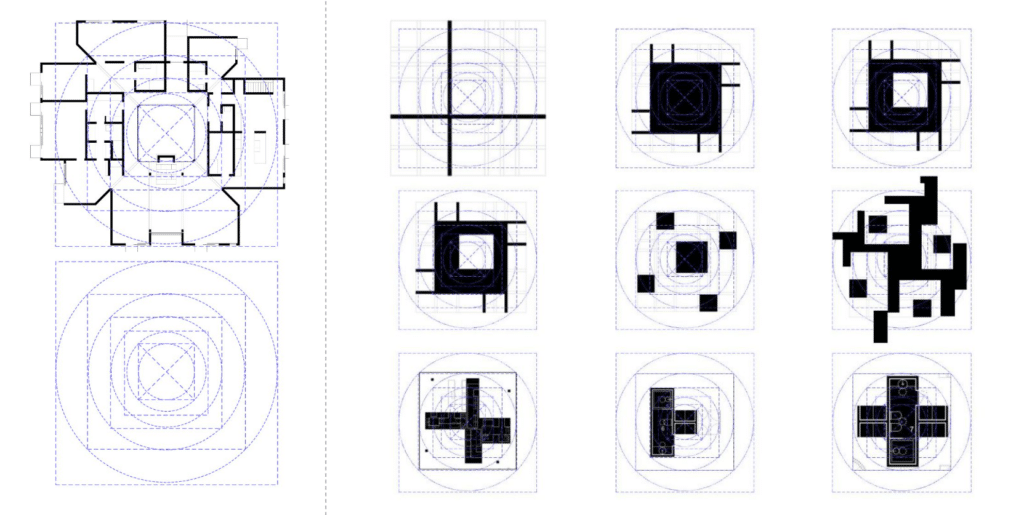
The roof and the layout are inspired by patterns found in several of Louis Kahn`s buildings. The pattern you see in many of Khan`s projects follows the golden ratio and has a space division suited for dividing served and service areas. Using this pattern as a grid, we started iterating on the layout and roof structure.
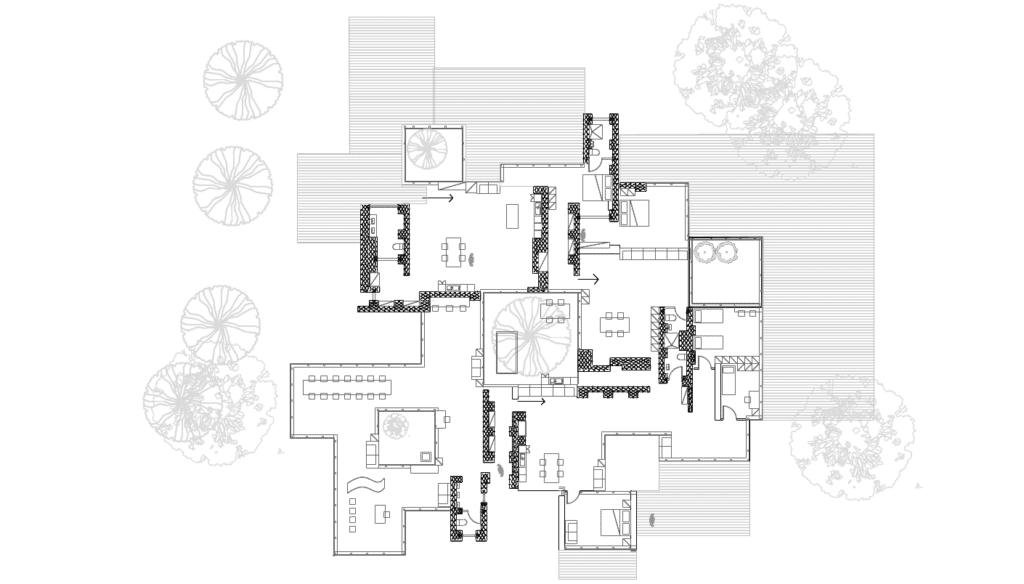
Floor Plan
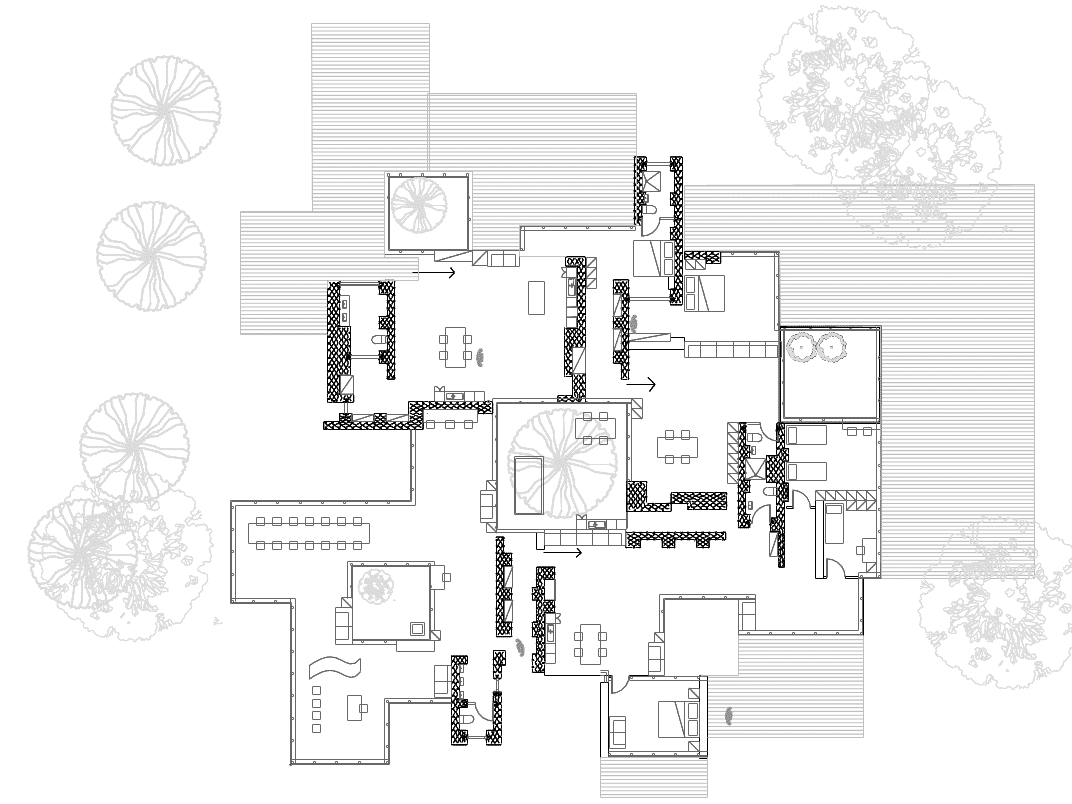
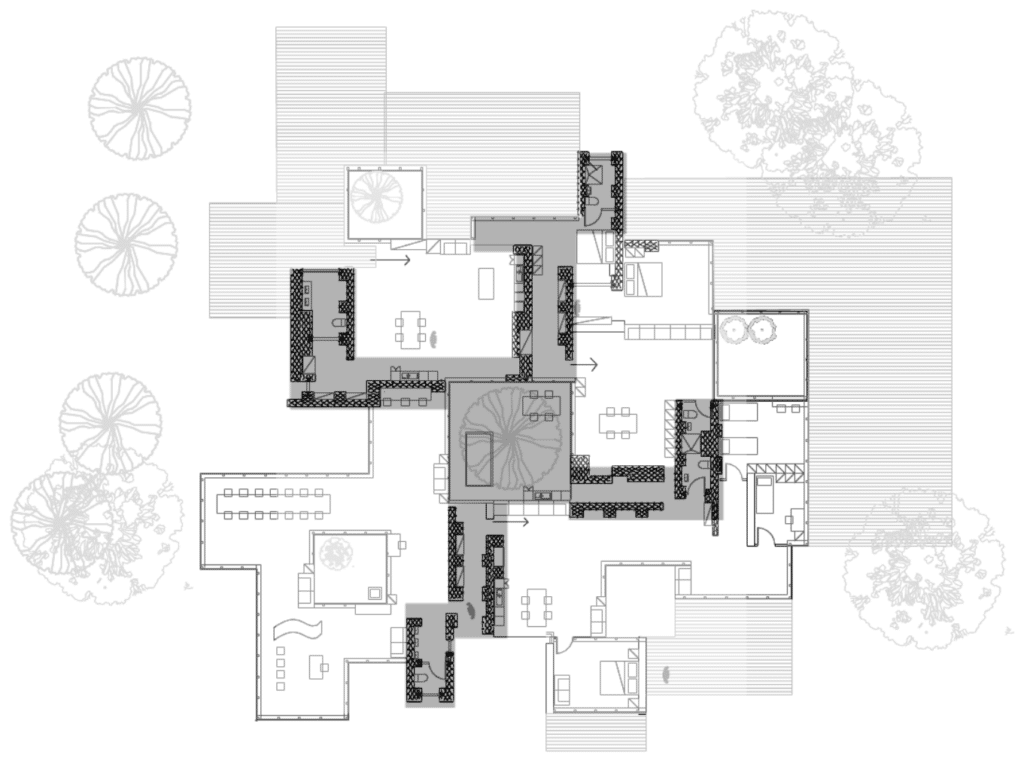
Distribution of Served and Servant areas
The servant areas are narrower and surrounded by thick 3D-printed walls, while the served areas are more airy and open towards the outdoors and the neighbours. In this way, the inhabitants are encouraged to interact with neighbours as the open areas blend into each other, whilst still keeping their privacy and personal space.
Roof
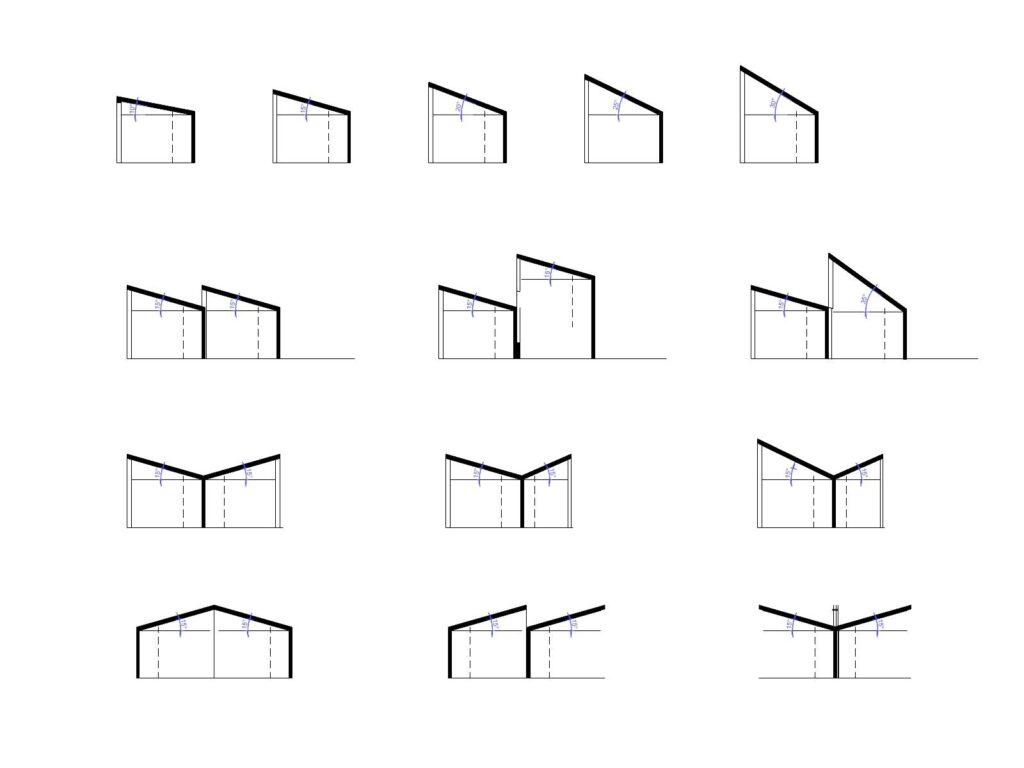
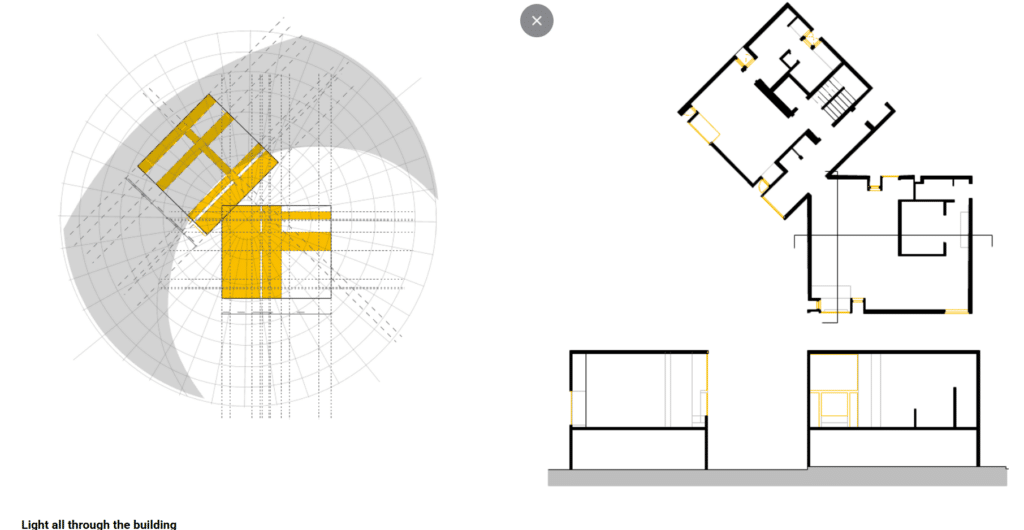
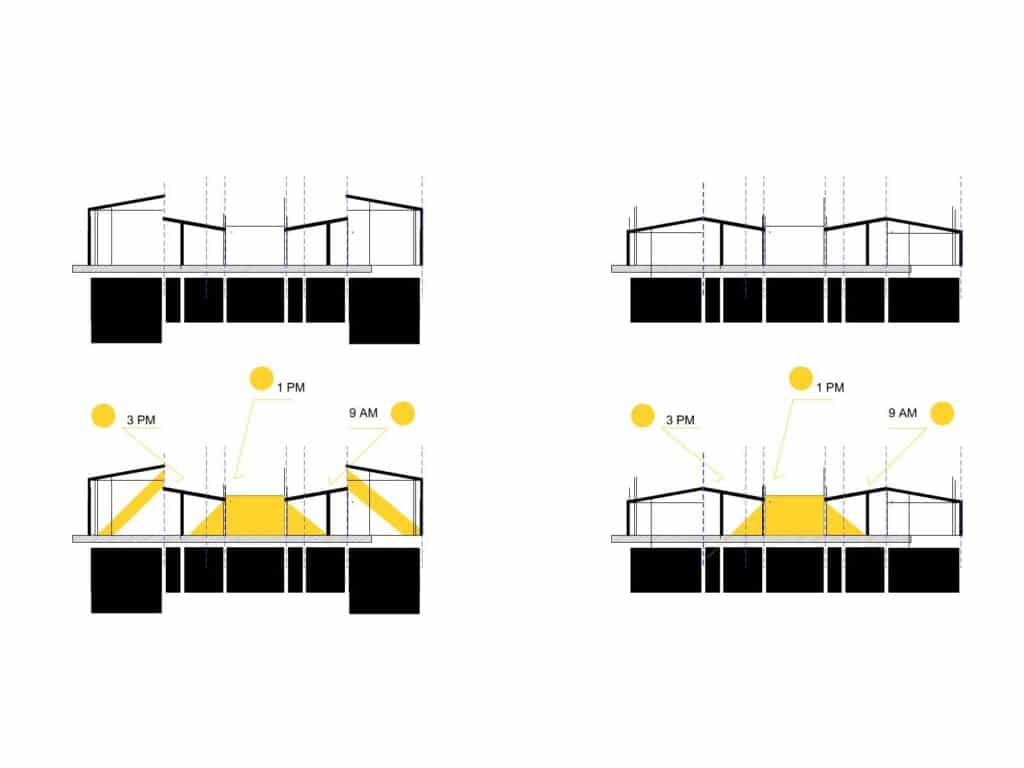
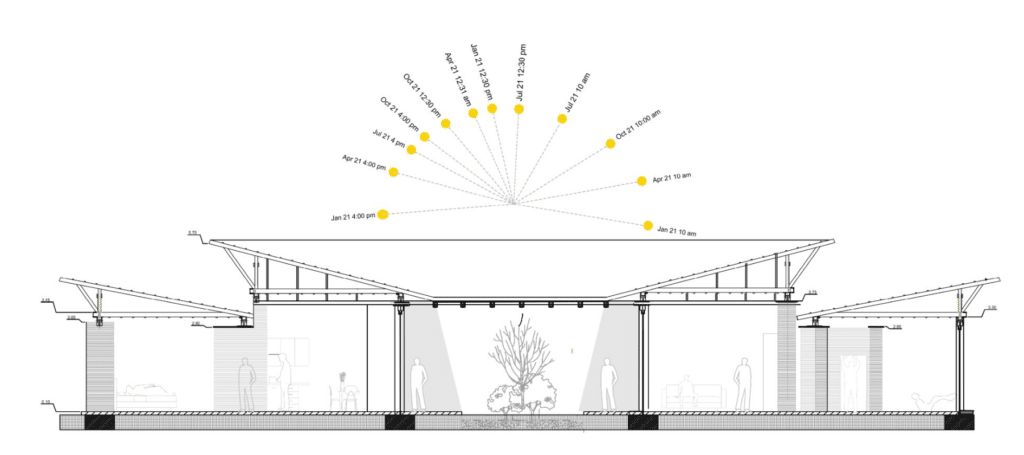
The roof is optimised to let in natural light whilst still keeping out the harsh summer sun. The roof extends far beyond the edge of the walls to protect the walls from rain and damage, as water is one of the main challenges with earthen buildings.
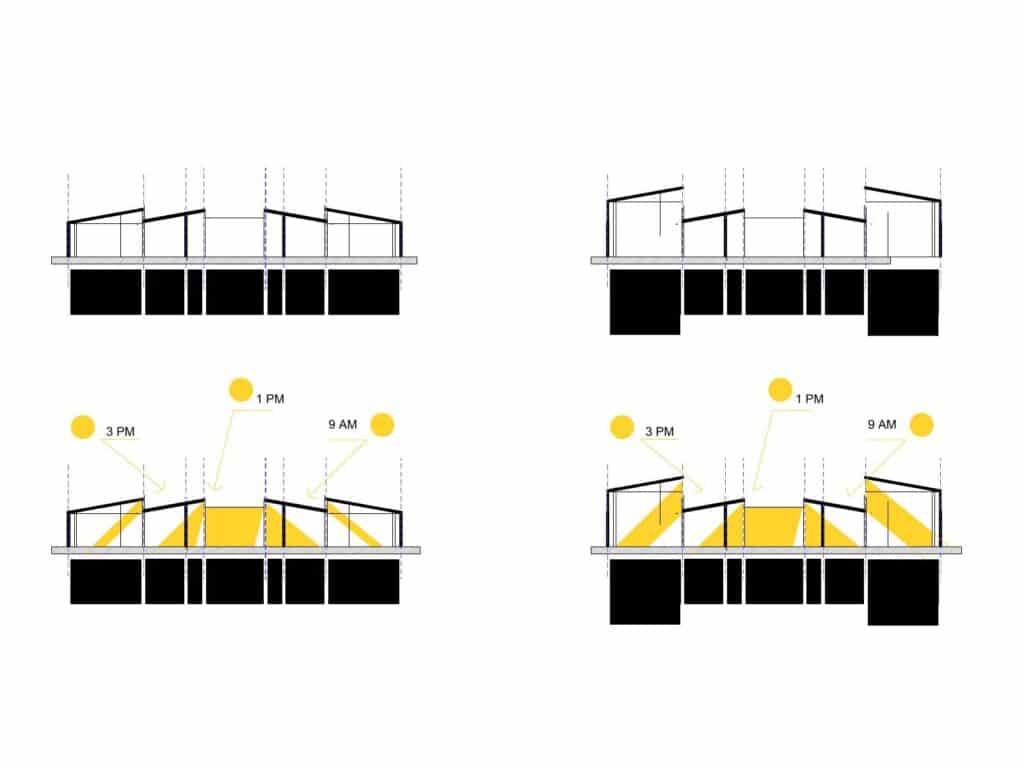
Section