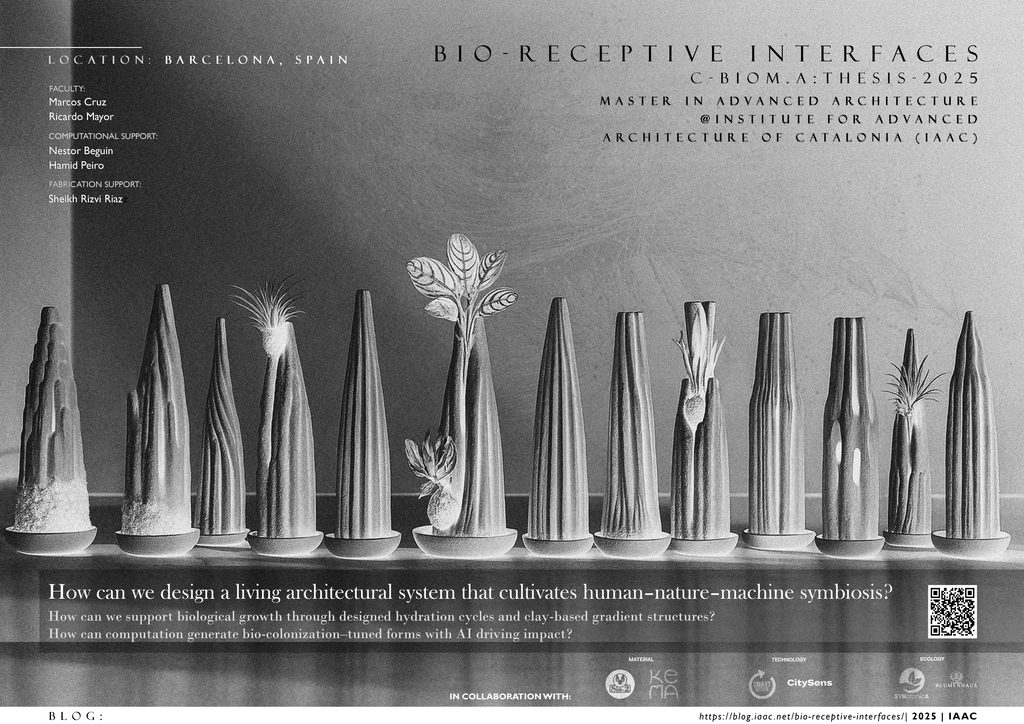
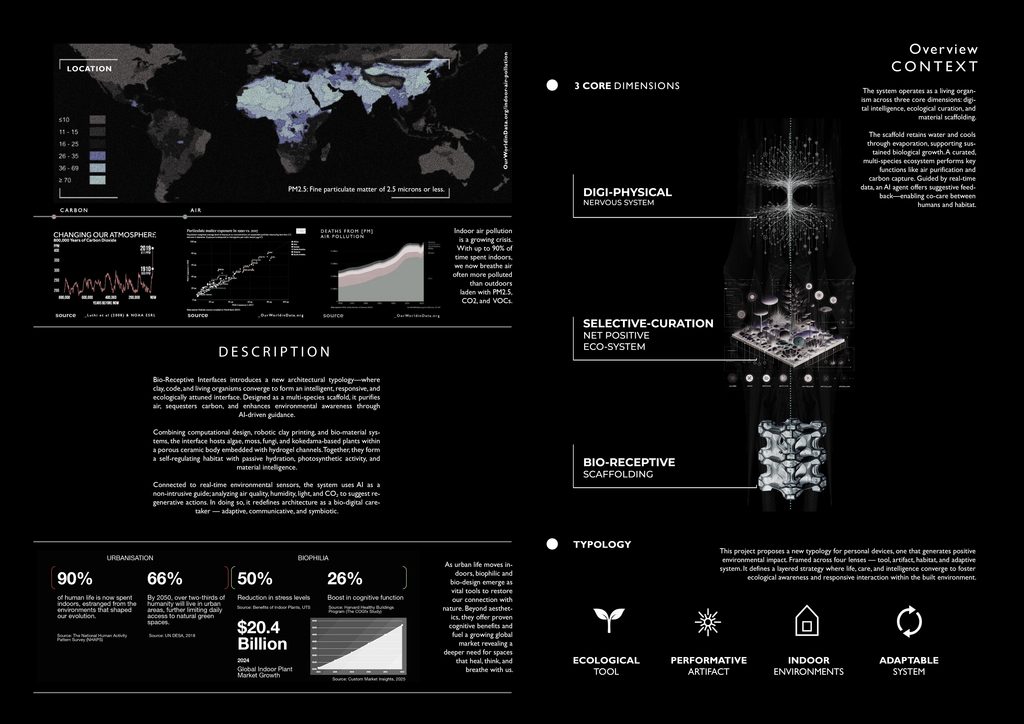
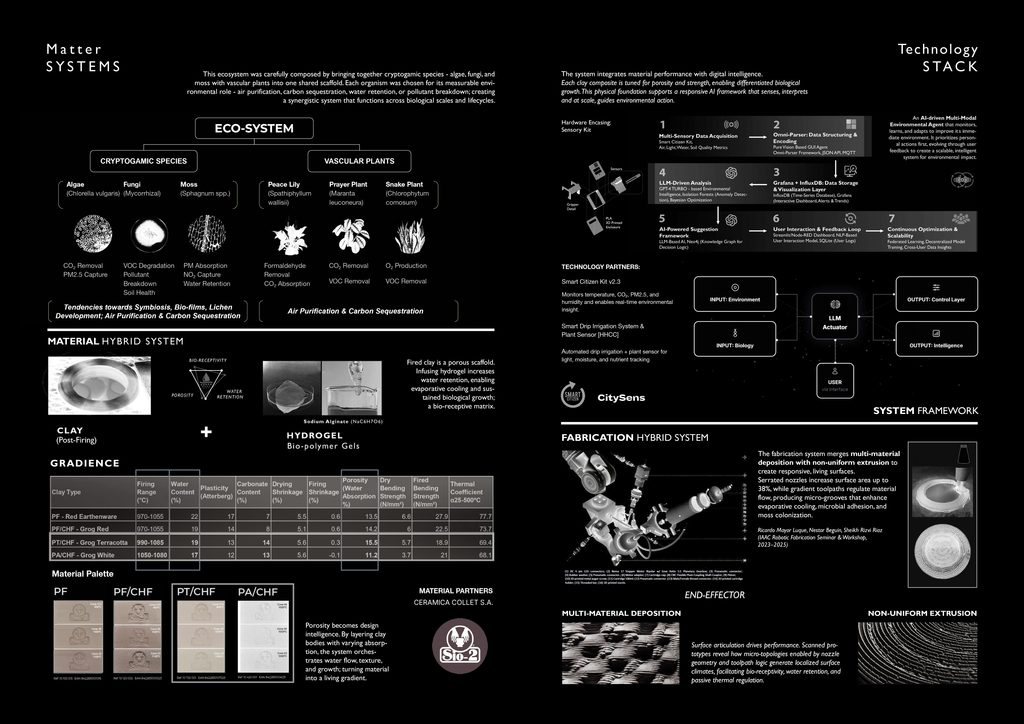
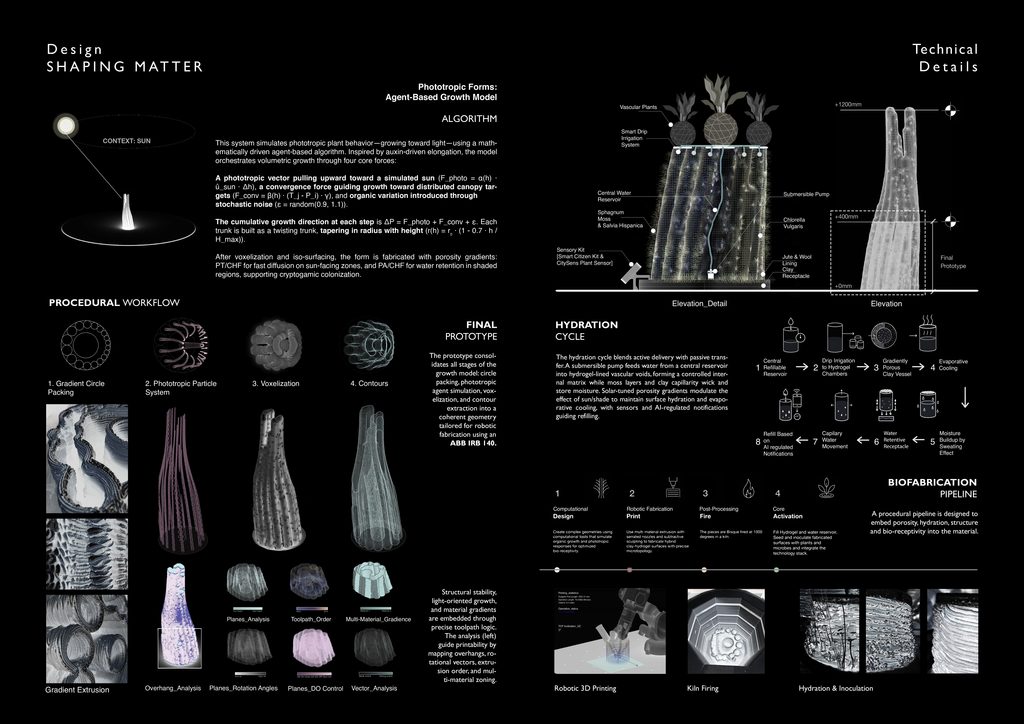
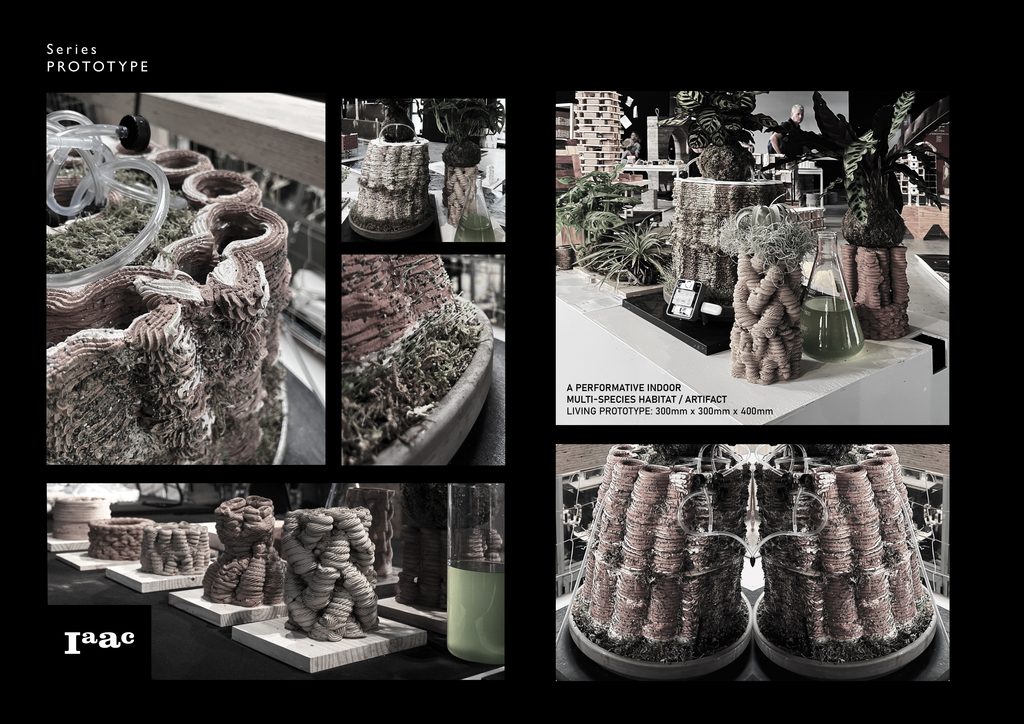
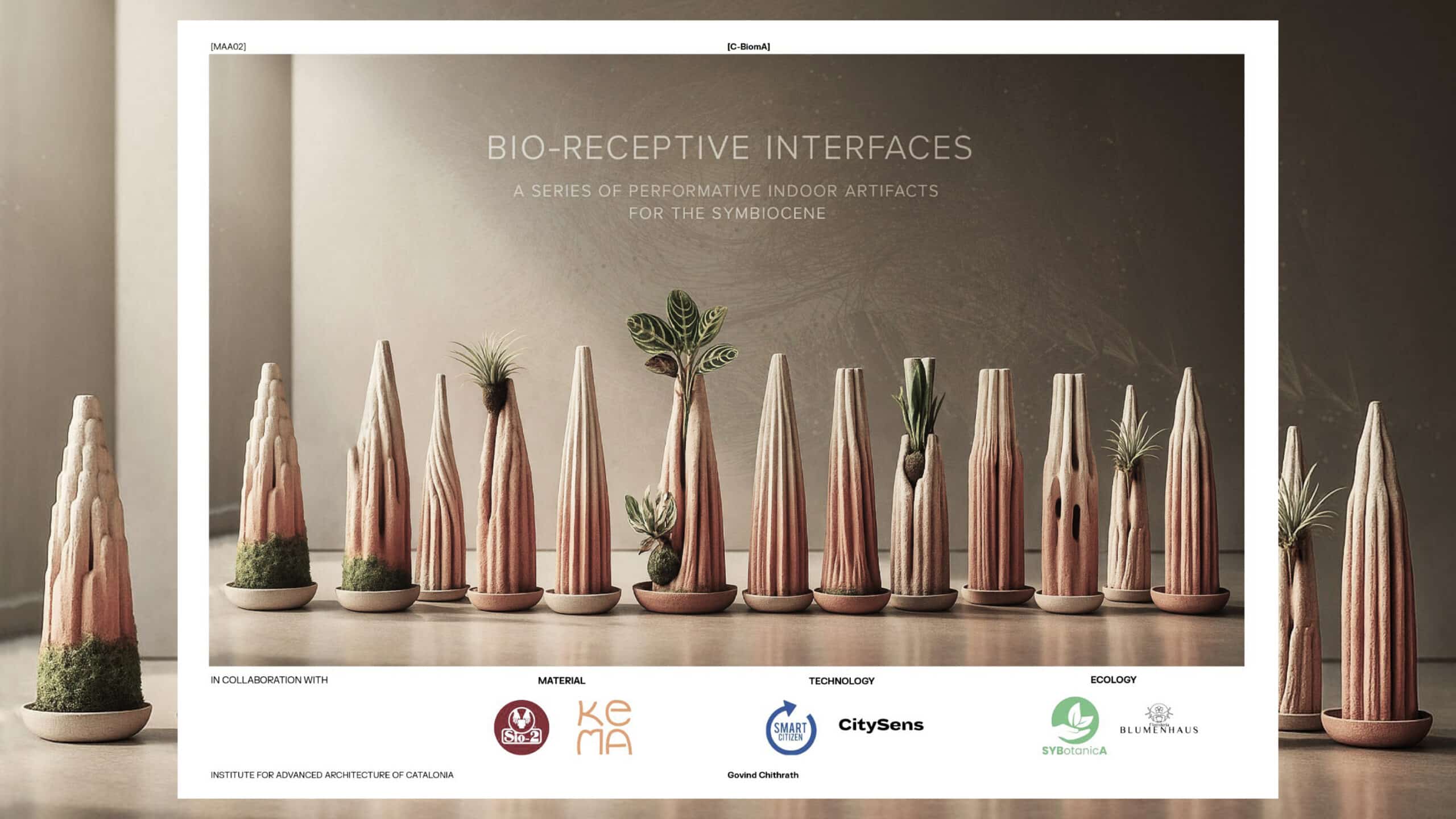
Bio-Receptive Interfaces is a bio-digital system that brings together hydrogel vascularity, multi-species biological communities, sensor networks and AI to form performative indoor ecosystems. The ceramic scaffold is produced through multi-material robotic 3D printing with non-uniform extrusion, tuning porosity and surface topology to invite colonization. Its morphology is grown rather than drawn: an agent-based phototropic model, inspired by plants reaching toward light, generates the form and the geometry for fabrication. Advancing bio-receptivity, the capacity of a material to be colonized by living organisms, through deliberate material engineering and computational design, the project positions architecture as an active ecological mediator: a habitat that hydrates, senses and responds, bringing ecological presence into sealed synthetic interiors.