
Exploring responsive topography through physical computing and adaptive water management.
Rethinking the Relationship Between Water and Terrain
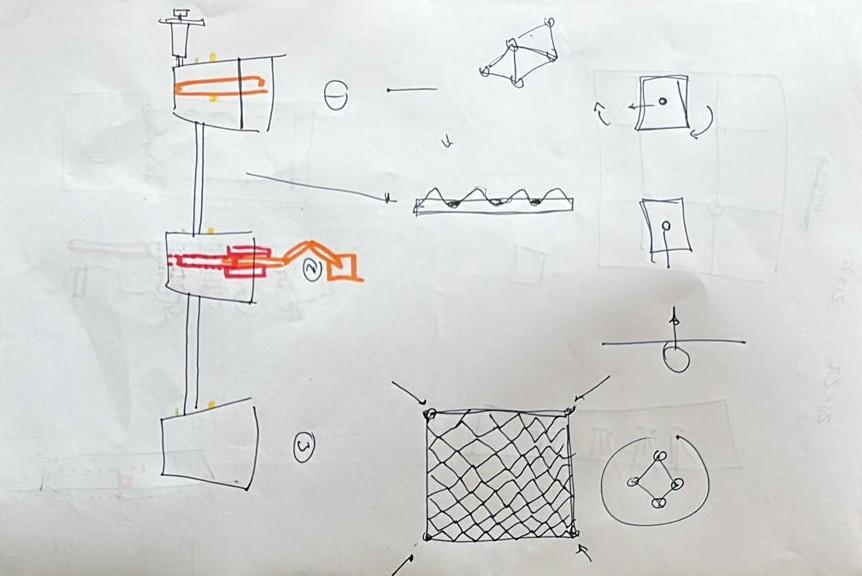
Water is one of the most fundamental resources on Earth, shaping landscapes, sustaining ecosystems, and supporting human life. However, challenges such as flooding, drought, and soil erosion highlight the increasing need for more adaptable approaches to water management. Traditional water-management infrastructure often relies on fixed structures designed to control water movement.
Fluid Landscapes: Hydro-Morphology explores an alternative: what if the terrain itself could respond to changing water conditions? The project investigates the potential of a dynamic surface capable of modifying its topography to influence water movement, accumulation, and distribution.
From Water Levels to Responsive Surfaces
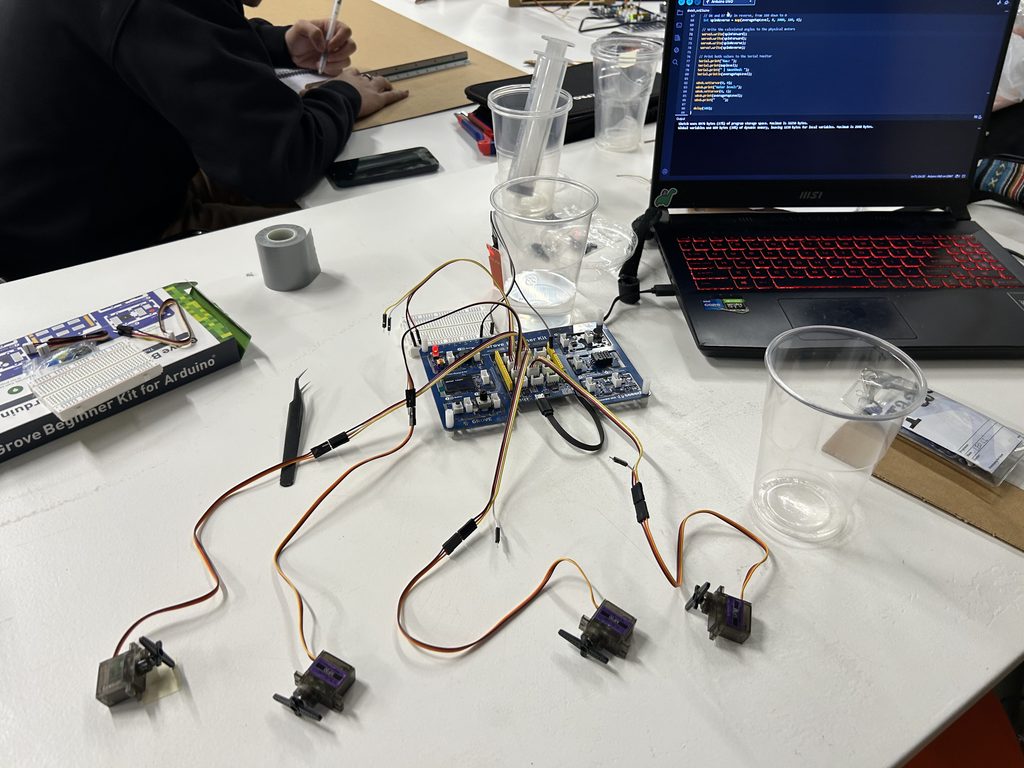
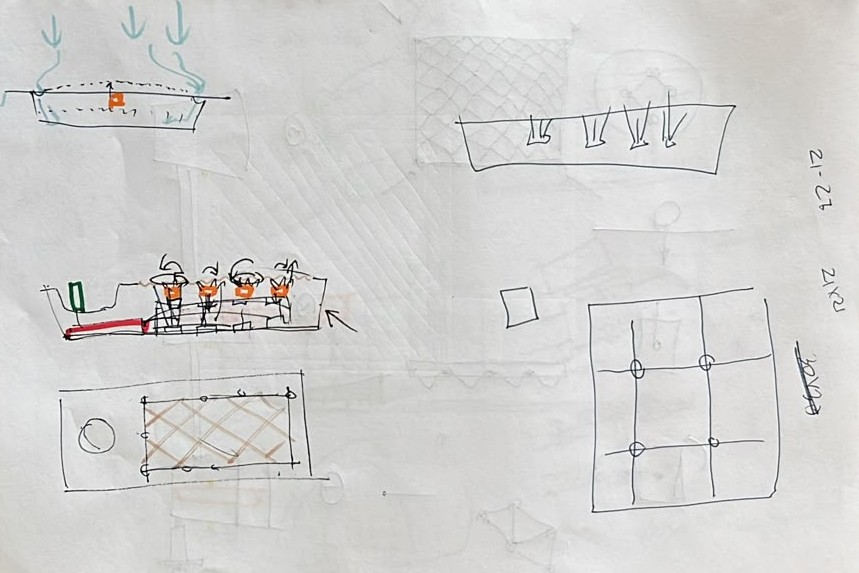
At the core of the project is a system that translates environmental information into physical movement. By integrating sensors, actuators, and a flexible surface, the prototype explores how topography can become responsive rather than static.
An analog water-level sensor provides input to an Arduino microcontroller, which processes the information and controls four servo motors. These motors generate localized movements beneath a flexible mesh, creating variations in elevation and surface geometry. As the surface changes shape, it can form slopes, channels, and depressions, exploring how different configurations could influence runoff and water retention.
From Digital Programming to Physical Prototyping
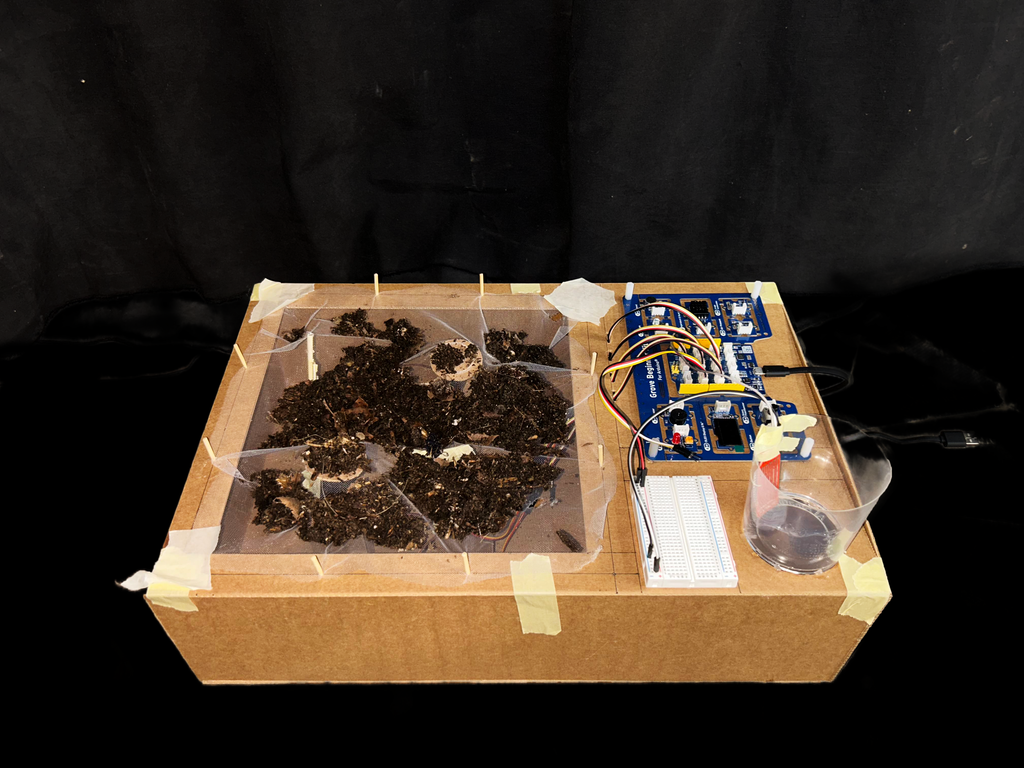
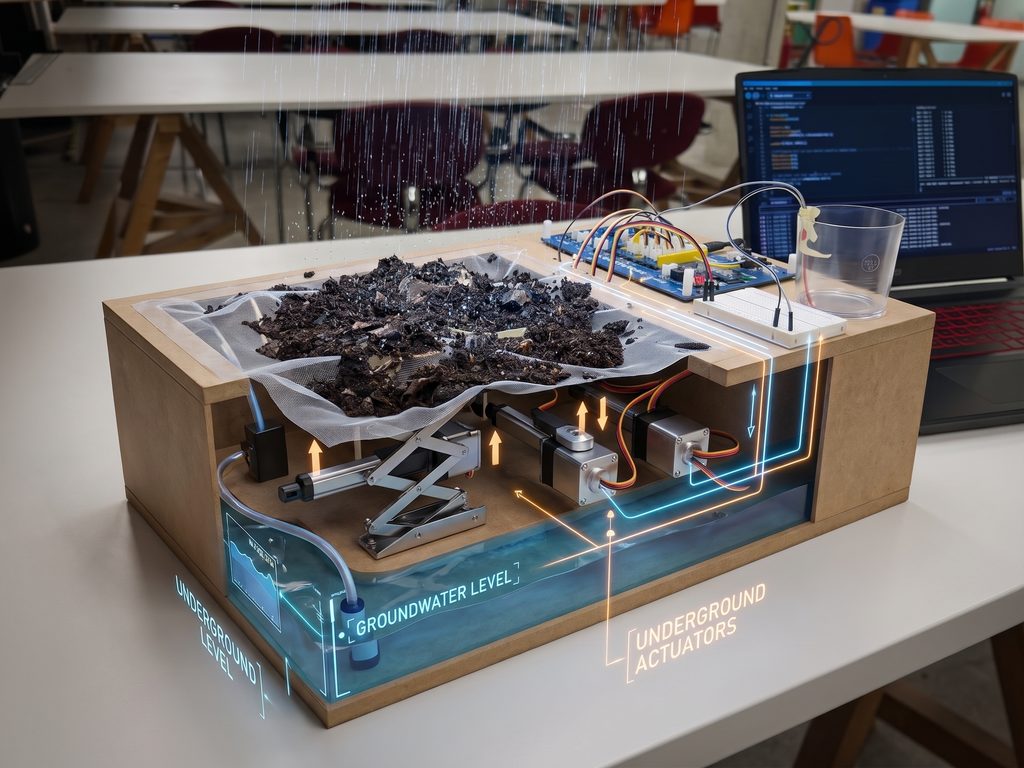
The design process began with sketches exploring different mechanisms for transforming a flexible surface through controlled movements. The electronic system was subsequently developed and tested using Arduino programming and circuit simulations in Wokwi. Individual components were connected, calibrated, and integrated into a physical model.
The final prototype combines a cardboard structure, four servo-driven supports, a flexible mesh, and a layer of soil to investigate the relationship between mechanical movement and terrain deformation. Through successive tests, the project explores how sensor-driven actuation can translate environmental inputs into changes in physical topography.
Towards Adaptive Landscapes
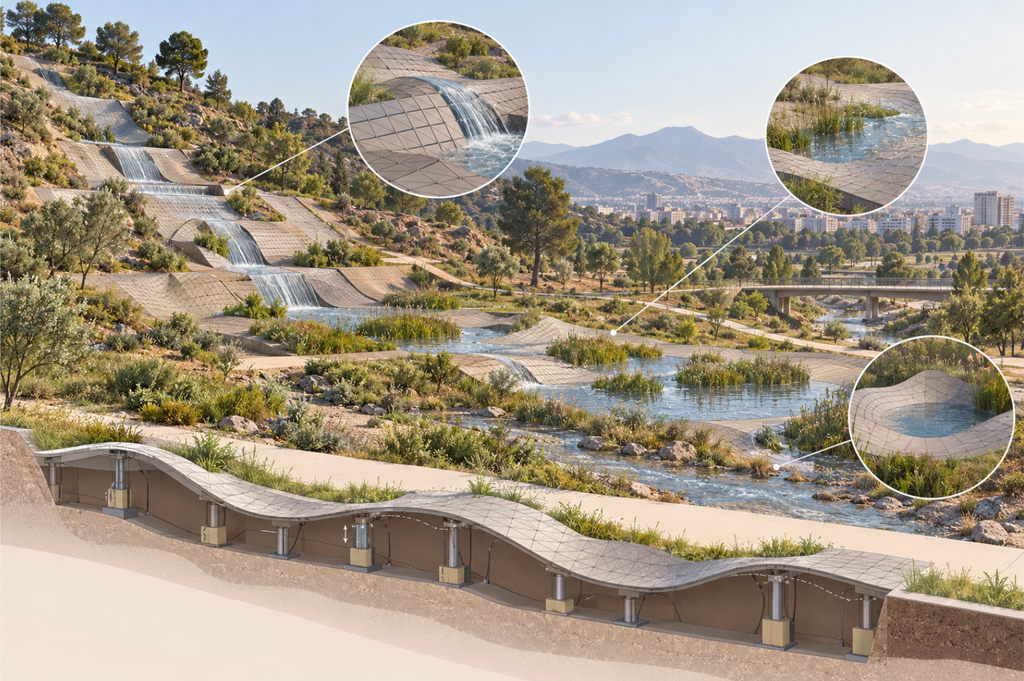
Beyond the prototype, Fluid Landscapes envisions the possibility of integrating responsive surfaces into larger architectural and environmental systems.
Potential applications include mountainsides, public parks, and urban environments, where adaptable terrain could help redirect runoff, create temporary water-retention areas, and respond to changing rainfall conditions.
Rather than treating landscapes as passive environments requiring external infrastructure, the project proposes a different relationship between technology, terrain, and water: a landscape capable of adapting its own form to changing environmental needs.
