
The idea
What if a workspace could respond to the people around it?
FOCUS is a responsive workspace designed to create a balance between openness, privacy, and concentration. The project explores how a physical environment can adapt to human presence through simple interactions between people and technology.
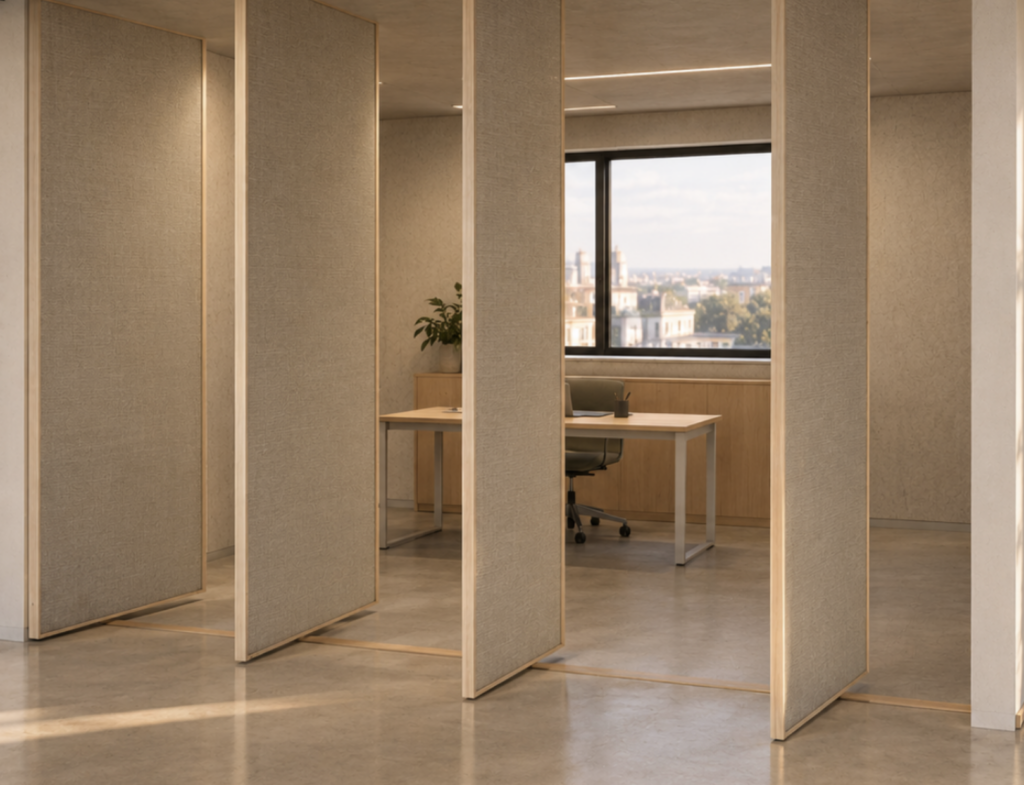
The panels move depending on the movement of a person nearby. Instead of being a static architectural element, the partition becomes an active part of the workspace.
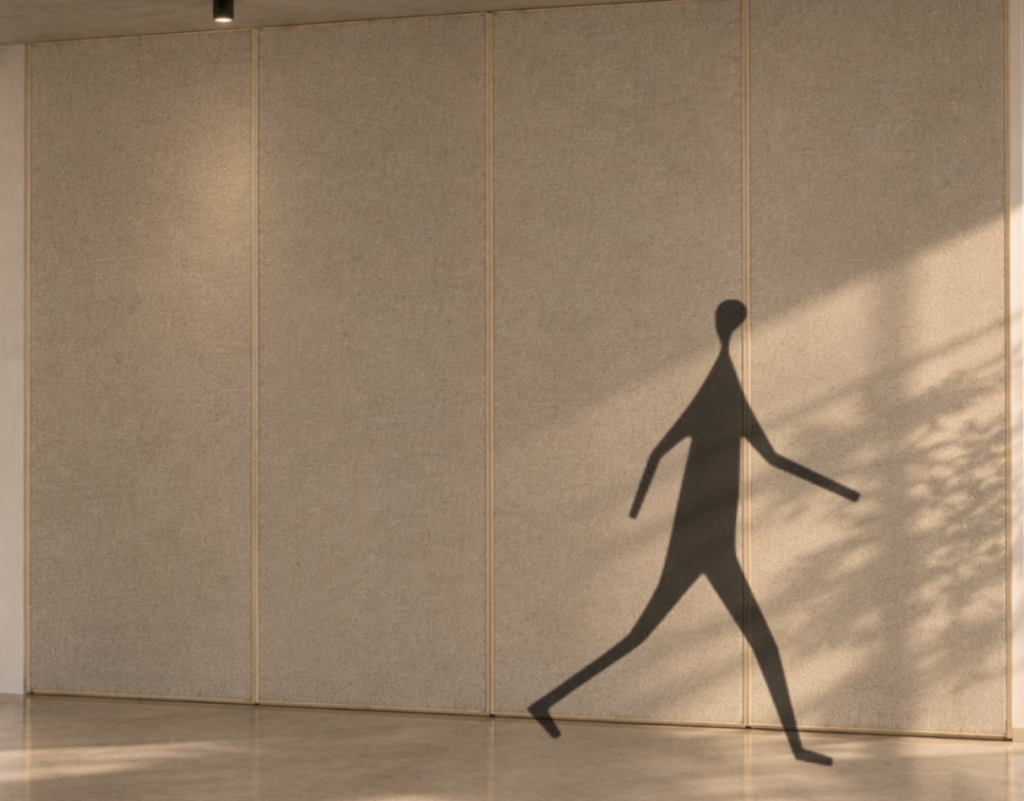
How it works
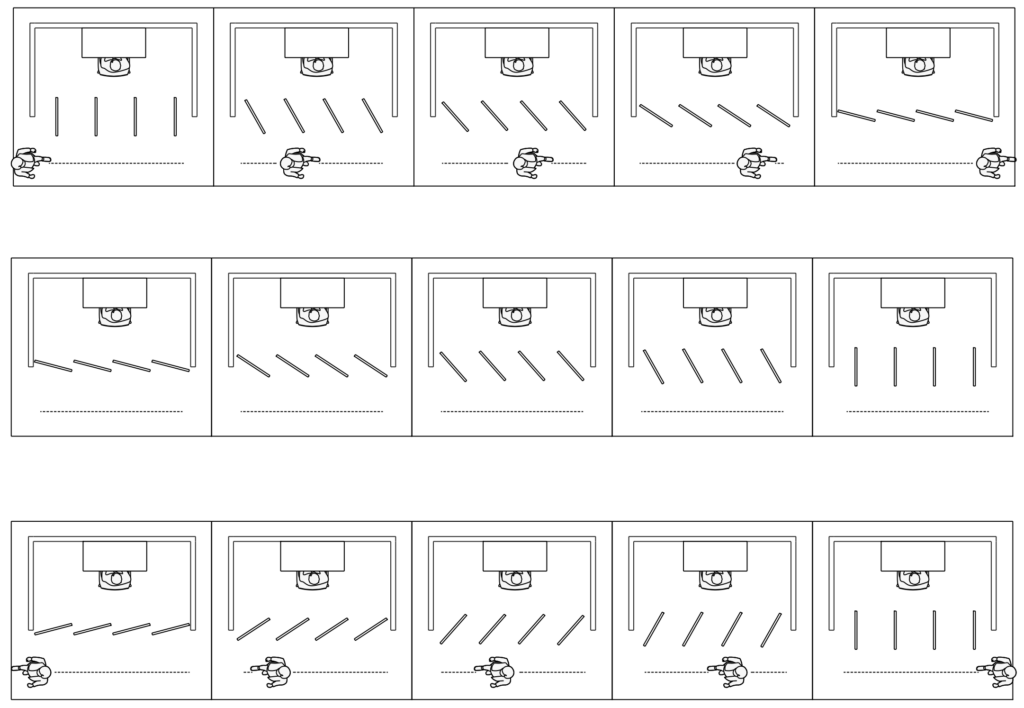
The system uses a distance sensor to detect a person’s proximity.
The interaction follows a simple sequence:
- When someone approaches: the partition gradually closes, creating a more private and enclosed workspace.
- When someone moves away: the partition opens again, returning the space to a more open configuration.
This creates an environment that responds to movement without requiring the user to touch or manually operate the partition.
Design
The physical structure is based on a series of vertical panels. Their movement transforms the workspace from an open configuration into a more enclosed one.
The design focuses on the relationship between movement, spatial boundaries, and personal space. The panels act as a flexible threshold between the individual and the surrounding environment.
Rather than permanently separating the workspace from its surroundings, FOCUS creates privacy when it is needed and restores openness when it is not.
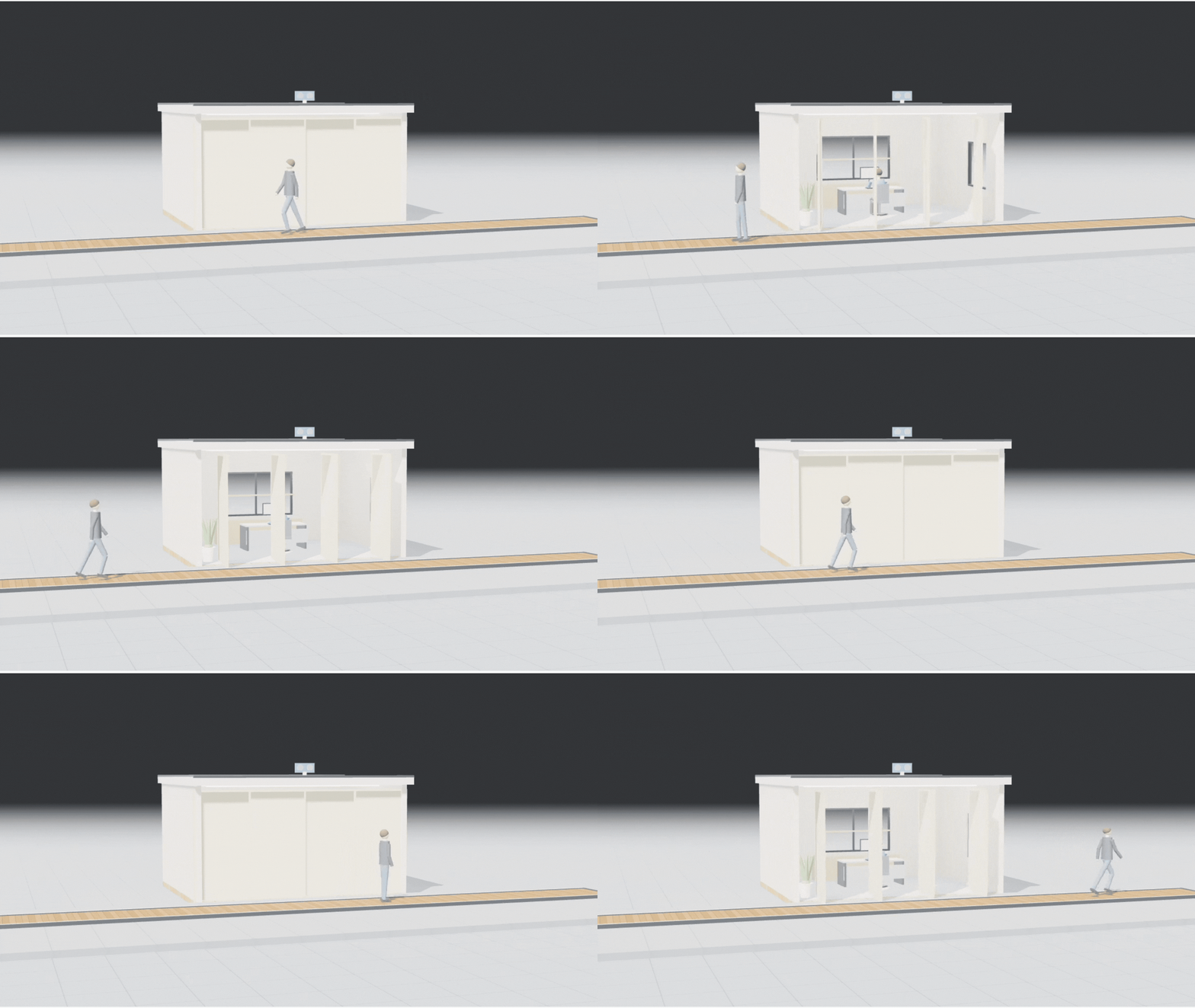
Play with the model on our interactive surface: https://claude.ai/public/artifacts/5a19766b-37cb-4a9e-bde9-1c56b06e3623
Computing process
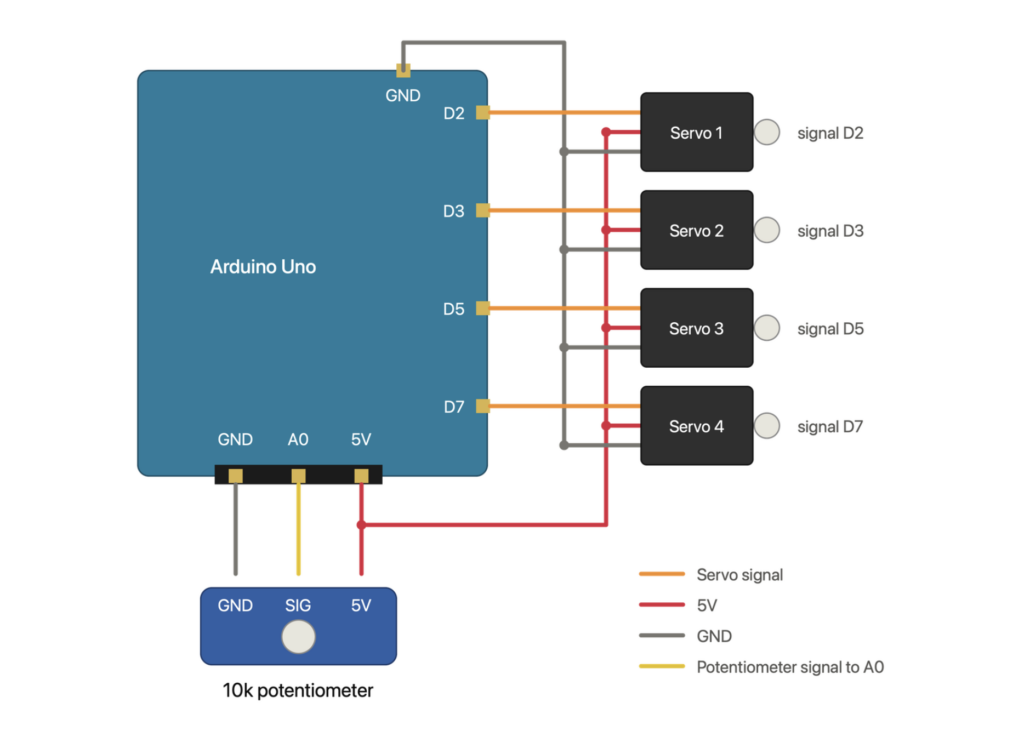
The project combines three main components:
- Ultrasonic sensor: measures the distance between the workspace and a nearby person.
- Arduino: reads the sensor data and determines when the partition should move.
- Servo motor: controls the opening and closing movement of the panels.
Developing the system involved testing the sensor, connecting the components, and programming the servo motor. One of the main challenges was getting reliable distance readings and coordinating the sensor input with the mechanical movement.
Testing each component separately helped us understand how the system worked before combining everything into one interaction.
#include <Servo.h>
const int trigPin = 5; // single-pin ultrasonic sensor (trig + echo on same pin)
const int servoPins[] = {2, 3, 6, 7};
const int servoCount = sizeof(servoPins) / sizeof(servoPins[0]);
Servo servos[sizeof(servoPins) / sizeof(servoPins[0])];
const int minAngle = 0;
const int maxAngle = 90;
const int stepDelay = 10;
const bool useSensor = false;
const float minDistance = 2.0;
const float maxDistance = 30.0;
const bool mirrorAlternate = false;
void setup() {
Serial.begin(115200);
for (int i = 0; i < servoCount; i++) {
servos[i].attach(servoPins[i]);
servos[i].write(minAngle);
}
delay(500);
}
// Returns distance in cm, or -1 if no echo was detected
float readDistance() {
pinMode(trigPin, OUTPUT);
digitalWrite(trigPin, LOW);
delayMicroseconds(20);
digitalWrite(trigPin, HIGH);
delayMicroseconds(10);
digitalWrite(trigPin, LOW);
pinMode(trigPin, INPUT);
long duration = pulseIn(trigPin, HIGH, 3000);
if (duration == 0) {
return -1;
}
return duration * 0.0343 / 2;
}
// Moves every servo to the same angle
void writeAll(int angle) {
for (int i = 0; i < servoCount; i++) {
int a = (mirrorAlternate && (i % 2 == 1)) ? maxAngle – angle + minAngle : angle;
servos[i].write(a);
}
}
void loop() {
if (useSensor) {
float distance = readDistance();
if (distance Servos: “);
Serial.print(angle);
Serial.println(” deg”);
}
delay(20);
} else {
// 0 -> 90 degrees
for (int angle = minAngle; angle 0 degrees
for (int angle = maxAngle; angle >= minAngle; angle–) {
writeAll(angle);
delay(stepDelay);
}
}
}
Vision
With FOCUS, we aim to explore how responsive architecture can support everyday activities. We imagine workspaces that are not fixed environments, but adaptable spaces that respond to people’s presence and behaviour.
The project proposes a simple idea: space should adapt to people, rather than people always having to adapt to space.
FOCUS is a first exploration of how physical computing can introduce responsiveness, flexibility, and a more personal experience into the design of work environments.
