
Topic brief
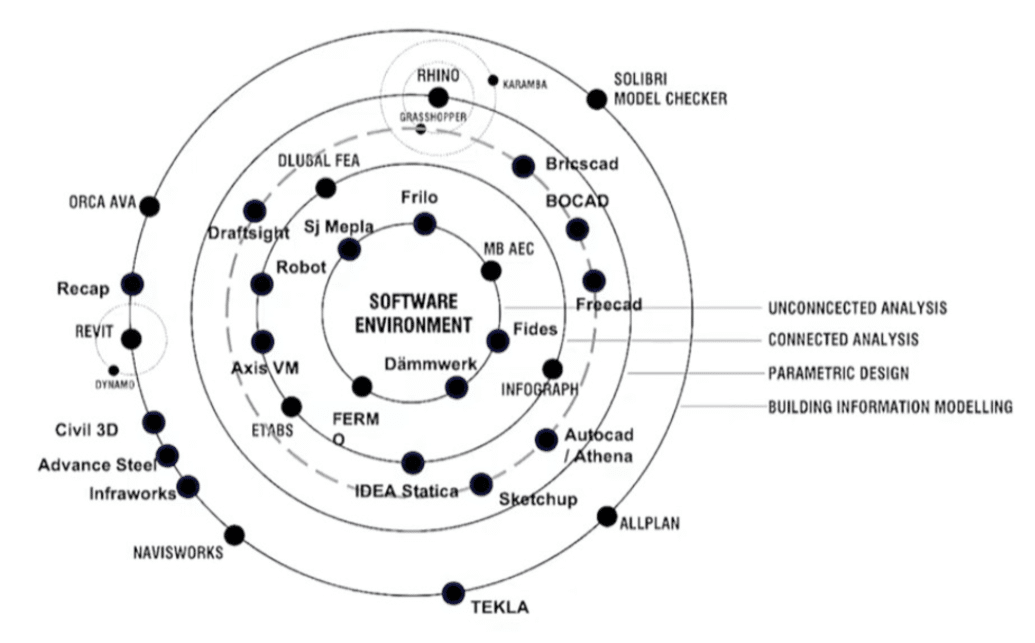
In the AEC industry, building analysis workflows often operate in isolated software environments, causing structural data to lose meaning once it leaves its original authoring tool.
This study argues that the value of structural analysis depends not only on computational accuracy, but on the ability of its outputs to remain consistent as they move across heterogeneous design and engineering platforms.
The research examines how structural data is transferred between platforms, identifying where meaning is preserved or degraded and revealing opportunities for more resilient, cross‑disciplinary design workflows.
Experts
Matthew Tam is a computational designer based in Vienna, having studied at the University of Applied Arts Vienna, SCI Arc and University of Melbourne. He is core to the “Karamba3D” – a parametric engineering tool – team, regularly holding workshops at conferences and institutions. Matthew leads the Design Technologies department at Bollinger und Grohmann, working at the interface of architectural, structural and computational design.
Clemens Preisinger, D.I. Dr. is a structural engineer and researcher, working at Bollinger und Grohmann since 2008. He heads the department ‘Digital Simulation’ (University of Applied Arts Vienna) which investigates possibilities to bring computational modelling techniques into early-stage architectural design. Since 2010 Clemens is developing the parametric, interactive Finite Element program ‘Karamba3D’ as a freelancer.
Karamba3D
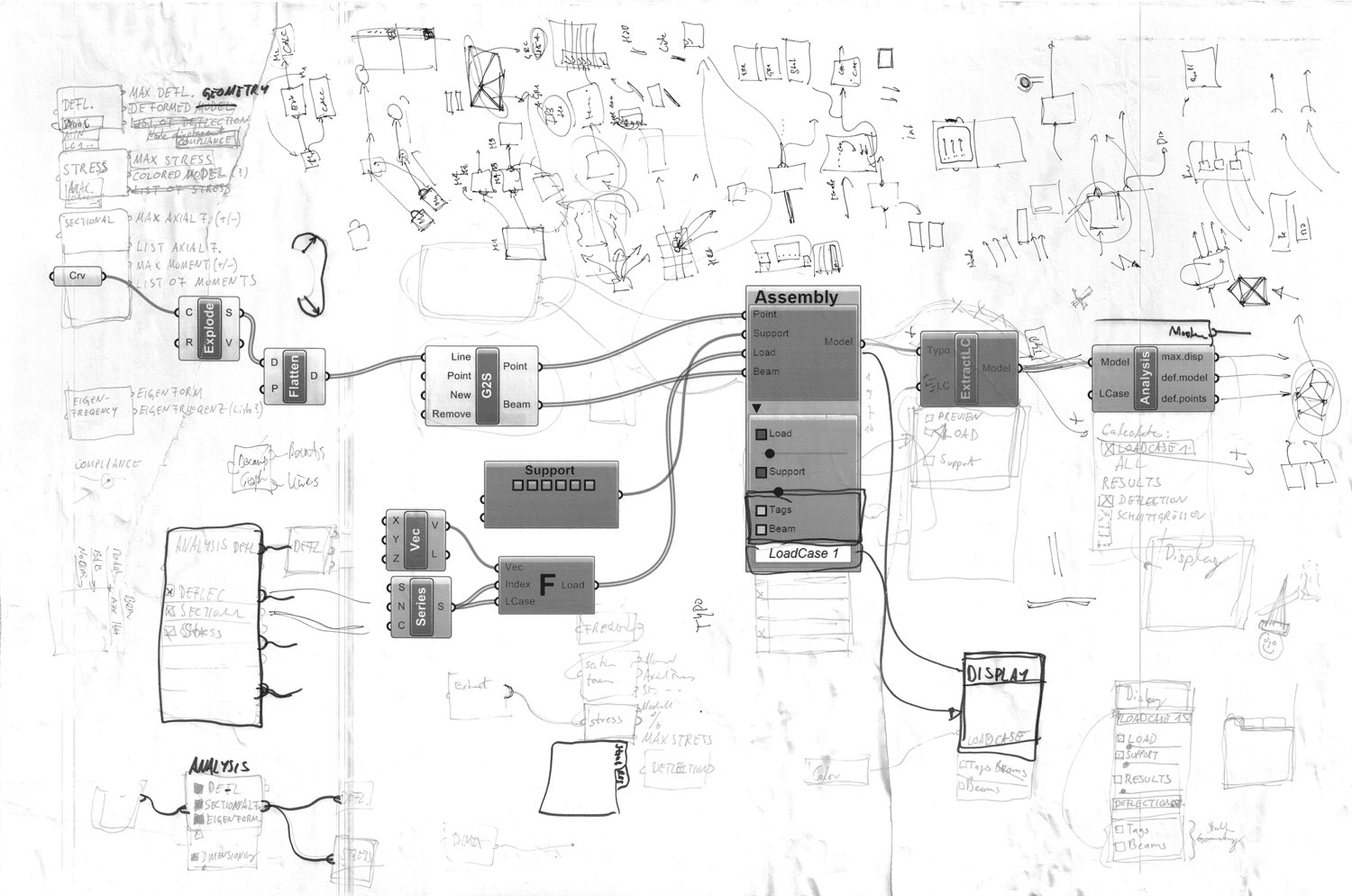
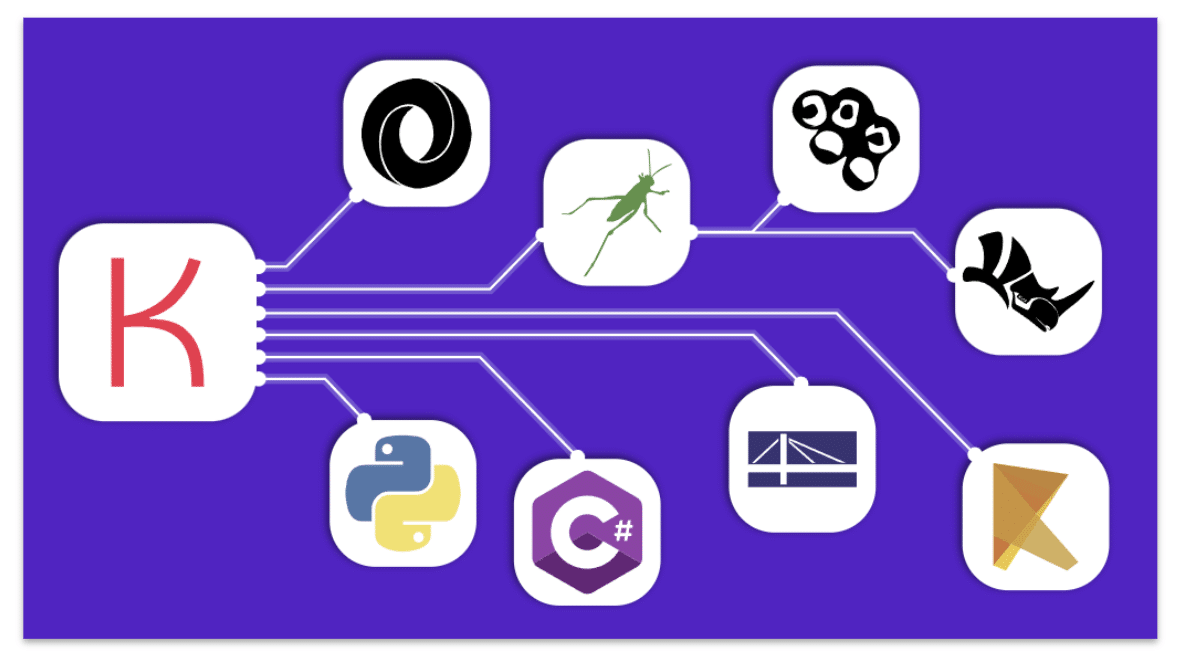
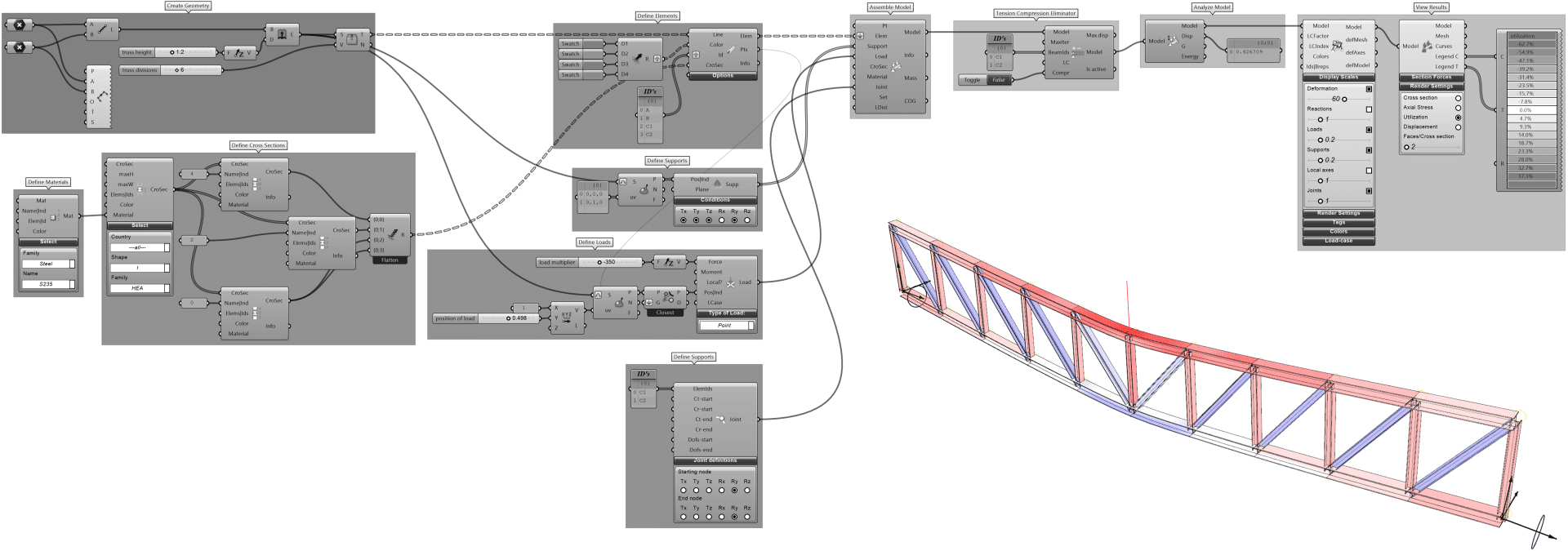
Karamba3D is a plug‑in embedded in the parametric environment of Grasshopper3D within Rhinoceros3D. This integration makes it possible to combine parameterised geometric models, Finite Element calculations, and optimisation algorithms such as Galapagos, Octopus, and Wallacei.
Clemens Preisinger developed the initial computational core of Karamba3D during the research project Algorithmic Generation of Complex Spaceframes at the University of Applied Arts Vienna. Today, Karamba3D sits at the interface between structural engineering, architecture, and product design, developed in close cooperation with Bollinger + Grohmann.
As Karamba3D became embedded in increasingly complex design workflows, the team encountered a recurring challenge: structural data rarely stays inside a single tool. Geometry, metadata, and assumptions must travel between Rhino, Grasshopper, FE solvers, BIM platforms, and coordination environments. This movement exposes the fragility of interoperability and raises questions about how much meaning structural data can retain once it leaves its native context.
Insights
Matthew Tam
Origins of Karamba3D and the need for fast structural feedback
Karamba3D began as a research initiative focused on optimizing irregular truss geometries. Early experiments relied on scripting standard FE software through C#, but long computation times made iterative optimization nearly impossible. This led to the development of a tool capable of delivering rapid structural feedback directly within the design environment.
From expressive parametric design to performance‑driven workflows
Matthew described a shift in architectural culture. Early parametric design emphasized formal exploration and expressive geometries. Today, design intent is increasingly shaped by performance criteria, material behavior, and technological constraints. Structural tools like Karamba3D support this transition by embedding engineering logic earlier in the design process.
Interoperability challenges and the loss of design intent
He highlighted the friction between highly flexible CAD environments and the stricter requirements of FE solvers. Direct one‑to‑one translation of complex geometry often leads to performance issues or failed analyses. Over time, the team learned to strategically simplify geometry to preserve structural accuracy without reproducing unnecessary detail.
AI, documentation, and the future of structural workflows
AI is becoming a major topic in engineering practice, but its usefulness depends heavily on the quality of underlying documentation. Matthew sees potential in using AI to transfer expert knowledge to younger engineers, but only if foundational knowledge is well structured and accessible. Without proper documentation, AI cannot reliably support engineering decision‑making.
Clemens Preisinger
Early development and expansion of Karamba3D
Karamba3D was initially developed for Bollinger + Grohmann, specifically to support architectural competitions where fast, responsive structural feedback was essential. Over time, the tool evolved beyond early‑stage optimization and now supports more detailed and precise structural analysis. The decision to release it publicly rather than keep it in‑house was driven by business logic: after years of development, opening it to external users made the investment sustainable.
Interoperability as a continuous challenge
Although Karamba3D is deeply integrated into the Rhino/Grasshopper ecosystem, it supports export to other structural software. Clemens emphasized that interoperability remains a persistent pain point. A significant amount of development time is dedicated to testing and maintaining export workflows, as each structural platform interprets geometry and metadata differently. Past collaborations — including tests with Buro Happold and earlier work with Speckle — illustrate both the potential and the instability of interoperability initiatives as external tools evolve.
AI in scripting, documentation, and workflow support
Clemens sees immediate value in AI for generating simple C# scripts, since Karamba3D’s APIs are open‑source and accessible. The team is also exploring how LLMs could support documentation workflows. However, he is skeptical about AI performing structural analysis itself. Trust is central to engineering, and black‑box reasoning is incompatible with safety‑critical decisions. His hope is that AI will automate repetitive tasks and free engineers to focus on creative and conceptual work.
Conclusions
Speaking with Matthew and Clemens made us appreciate how much structural design depends on clarity, trust, and the invisible work of making tools talk to each other. We learned a lot from their perspectives, and I’m thankful for the time they shared. If anything, these conversations reinforced how much potential there is for better interoperability — and how AI might eventually help us get there.
Karamba3D website: Karamba3D
Podcast episode:
Appendix – Questions
Ice Breaker
- Thank you for joining us. Could you start by telling us a bit about yourself and your background?
- Before we dive into tools and systems, what first sparked your interest in computational design and led you from architecture into this field?
About Karamba3D
- How did Karamba3D begin, and what core problem was the team originally trying to solve in computational structural design?
- You mentioned that the role of optimization in structural design has evolved over the years. What shifts have you observed, and what is driving them?
- Karamba3D now exposes APIs in Python and C#. How does this openness support collaboration and help teams overcome workflow bottlenecks?
Workflows & Interoperability
- When structural analysis data moves from Karamba3D into other design or coordination platforms, how does that data typically flow through the project team? Where do bottlenecks tend to appear?
- One of our research questions concerns the loss of intent when structural data leaves its native environment. From your experience, where does this friction usually occur?
- Could you share an example where structural data behaved unpredictably during translation—whether geometry, metadata, load cases, or assumptions—and how your team diagnosed or resolved the issue?
- Are you exploring ways to structure or document design‑stage data so it can inform future projects or contribute to broader knowledge graphs?
The Future
- As AI and automation advance, how do you see computational workflows evolving over the next decade?
- And specifically, how might AI influence structural engineering practice or interoperability challenges?
Closing
- As we wrap up, what advice would you give to younger designers entering the world of computational design and structural engineering?
