Assembled Architecture
PROTO-ARCHITECTURE – GROUP B -Selection Method- EVALUATION AND ARCHITECTURAL ELEMENTS – PSEUDO CODE – –NEXT STEPS –
The MAA is a visionary master program with an innovative and open structure, mixing diverse disciplines, shaping professionals capable of producing theoretical & practical solutions towards responsive cities, architecture & technology.
PROTO-ARCHITECTURE – GROUP B -Selection Method- EVALUATION AND ARCHITECTURAL ELEMENTS – PSEUDO CODE – –NEXT STEPS –
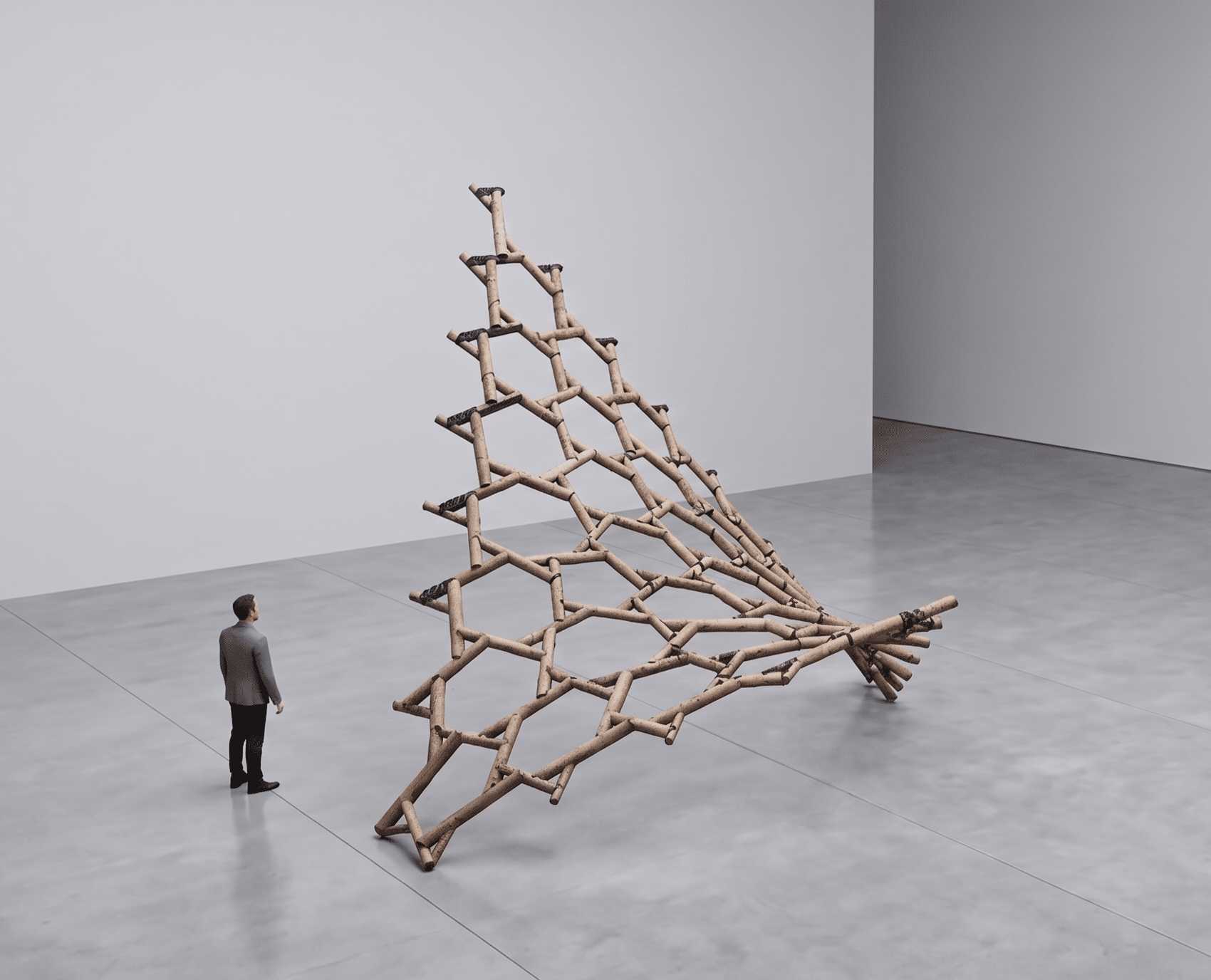
Component Design Component A -Pos_0-Rot_0 Amount of connectors: 3 Amount of combination: 9 Successful: 9 Unsuccessful: 0 Component A rotation of handles Variation of assemblage: rotation of handles by 90° step each time Component B -Pos_0-Rot_0 Amount of connectors: 3 Amount of combination: 9 Successful: 9 Unsuccessful: 0 Component B – rotation of handles Variation … Read more
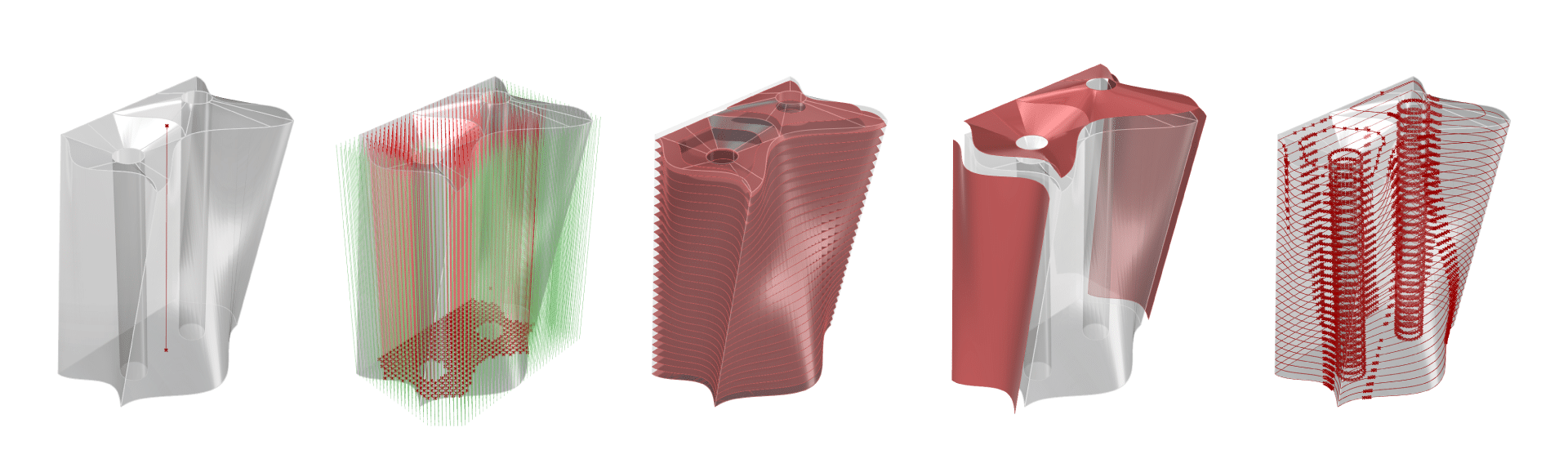
Our project for the Large-Scale 3D Printing with Biomaterials workshop focuses on the transition from conventional, high-emission construction to a circular, bio-based architectural model. Utilizing a 6-axis robotic arm, we have developed an acoustic envelope system composed of a cork-based bio-composite sourced from recycled stoppers. The research prioritizes a “File-to-Factory” workflow where computational geometry is … Read more
APPENDIX: BIBLIOGRAPHY Academic Papers Alnuzha, M. & Bloch, T. (2025). The Role of Machine Learning in Automated Code Checking: A Systematic Review. ITcon, Vol. 30. [Link] Peng, J. & Liu, X. (2023). Automated code compliance checking research based on BIM and knowledge graph. Scientific Reports, 13, 7065. [Link] Shi, J.W.L. et al. (2025). BuildThemis: Fine-tuning … Read more
The Kinetic Node proposes a dynamic pavilion located in the central pedestrian zone of Plaça de la Universitat, Barcelona. Developed within a computational design seminar, the intervention explores the intersection of generative algorithms and active public space. The design utilizes parametric tools to generate a fluid structure where architectural form seamlessly transitions into skateable terrain, … Read more
Site introduction The project is a pavilion conceived for the Plaça Reial (Royal Square) in Barcelona, Spain, which is a renowned, sophisticated square adorned with porticos, located just off Las Ramblas in the Gothic Quarter. This square is celebrated for its palm trees, fountain, lively nightlife featuring bars and restaurants, and serves as a central … Read more
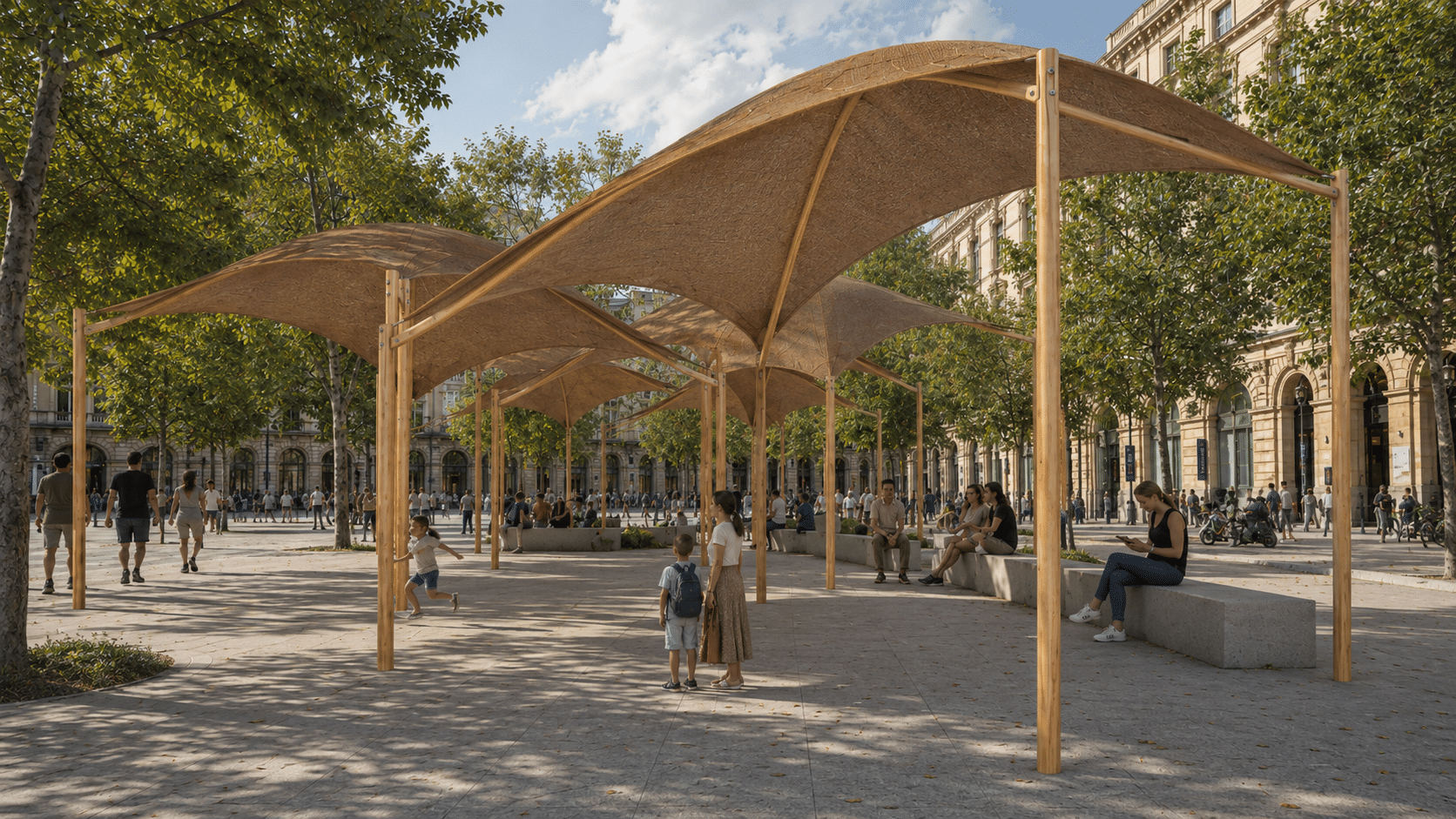
Canopy Dialogue introduces a temporary pavilion designed through computational form-finding, responding directly to the existing trees and social life of Plaça de la Virreina. | SITE LOCATION | The project is located in Plaça de la Virreina, Gràcia, Barcelona, a dense urban plaza defined by strong pedestrian flows, tree rows, and community activity. | SITE … Read more
Heritage is not memoryHeritage is Production + Community In the dense urban fabric of Sant Gervasi, Casa Tosquella sleeps a Modernista jewel originally conceived as a summer retreat, now stranded in a city grappling with permanent heat. This project explores the tension between heritage preservation and climatic urgency. The proposal views the building not as … Read more
“Metabolising waste into habitat in a resource-scarce future” “Mining the City” reconceives legacy industrial infrastructure as an active force for urban regeneration and material resilience. Rather than treating waste as a problem to be discarded, this project positions Barcelona’s material flows from household refuse to industrial by-products as the resource base for a new metabolic … Read more
Team member(s):MAHMOUD MOHAMED Modified by MAHMOUD MOHAMED on December 12, 2025 SITE AND EXISTING BUILDING Egypt, often reverently hailed as the “Mother of All Lands,” stands as one of the oldest and most influential civilizations in the vast chronicle of human history. Its legacy is not merely a collection of ruins or artifacts; it is a … Read more
This project presents the design of a parametric pavilion for Plaça de Sant Jaume in Barcelona, inspired by the human towers of the castellers. A pattern of ellipses and circles was used as an allusion to the supportive hands and shoulders that form the tower. The pavilion’s base geometry responds to the plaça’s shape, entrances, … Read more
Concept Inspiration Creating a dynamic facade using can ran atelier’s three dimensional ‘kinetic tile’ approach. Rotation to be determined by controllable attractor curve Colourful tile/mosaic facades are often found in Barcelona design contexts. Early Iterations Pseudo Code High Quality Video: https://drive.google.com/file/d/1BpDajnOIM52dp8Mcx5DFvEiamOlLwxH_/view?usp=sharing
Abstract – This project introduces a crown-shaped stepped pavilion on the periphery of Plaça de Catalunya, serving as both an event gateway and an everyday public platform. Inspired by the geometry of a crown, the looping form rises in stepped layers to create vantage points, circulation, and sculptural presence. Developed through a parametric Grasshopper workflow, … Read more
Referential work’s logics Our referential framework is the Kring Kumho Culture Complex in Seoul by Unsangdong Architects, a building defined by large circular recesses that function as urban windows. The design exploits these spaces to break the flat exterior, as ‘Kring’ means ‘Circle’ in Dutch. We developed a concentric propagation approach to translate this logic … Read more
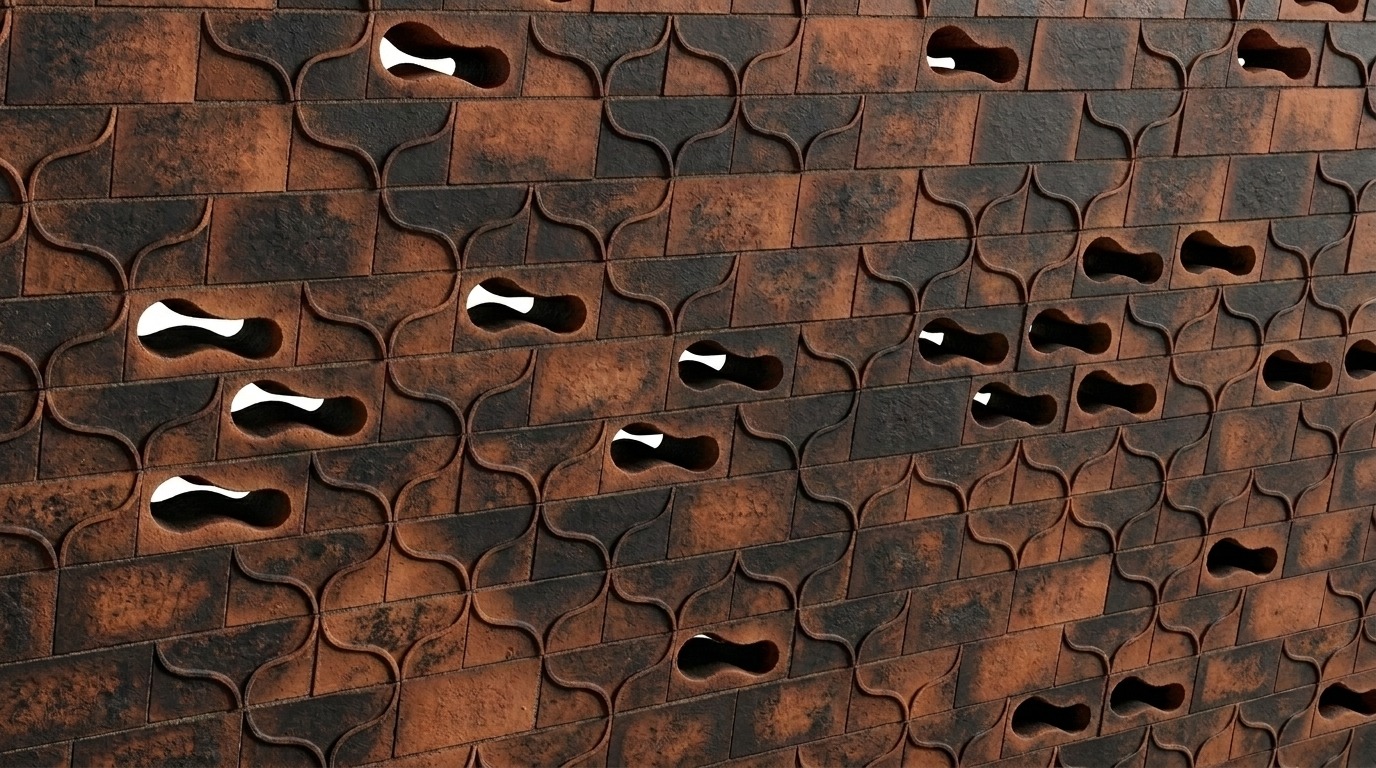
Computational Design Seminar This façade explores the concept of ‘Digital Masonry.’ It takes the most traditional element of Catalan architecture—the ceramic brick—and reinterprets it through a digital algorithm. The ‘IAAC’ logo is not a sign painted on top; it is encoded into the rotation and position of the bricks themselves. It represents the institute’s mission: … Read more
COMPUTATIONAL DESIGN I SEMINAR25/26 MAA01 (Level2) Abstract: Computational Weaving. This project, developed for the Computational Design I Seminar, explores the algorithmic generation of complex, recursive geometries through the logic of “Digital Craft”. Inspired by the material constraints of steam-bent timber, the design creates a “volumetric weave” rather than a simple surface. The computational workflow is … Read more