The MaCAD is a unique online programme training a new generation of architects, engineers and designers ready to develop skills into the latest softwares, computational tools, BIM technologies and AI towards innovation for the Architecture, Engineering and Construction (AEC) industry.

Filters
Course

Beyond Speed: Redefining the Purpose of AI in the AEC Industry

The conversation around Artificial Intelligence in Architecture, Engineering, and Construction (AEC) often begins and ends with the concept of “efficiency”. We discuss doing things faster, reducing man-hours, and automating mundane tasks. But as the industry faces unprecedented challenges, the true purpose of AI is shifting. It is no longer just about speed; it is about … Read more

What would have Bucky said?

Middle east, 1067 AC scene 1: Long before the word algorithm existed, a woman draws lines in the send. She is not an architect. The word does not exist yet either. She is simply someone who must decide where people sleep when the river floods. She draws, erases, redraws.She listens to the wind.While She remembers … Read more

AI In AEC

Image Credit: Future Architecture

In the very first lecture of the theory class, AI was a scary, unpredictable tool for me. However, after deep thinking and various perspectives, it feels more like a “work buddy”. In this blog, I’d like to elaborate more on this shift in idea I had. Nowadays, in nearly every sector, people are scared of … Read more

Learning from Practice: AI in AEC

Over time, and after being asked this question more than once, my answer about the purpose of AI in AEC has evolved. It hasn’t changed drastically, but it definitely became clearer and more grounded. Influence & Purpose What influenced me the most was listening to different speakers, especially the MaCAD alumni. One talk that really … Read more

Designing With Insight: How AI Can Help Us Build More Inclusive Cities

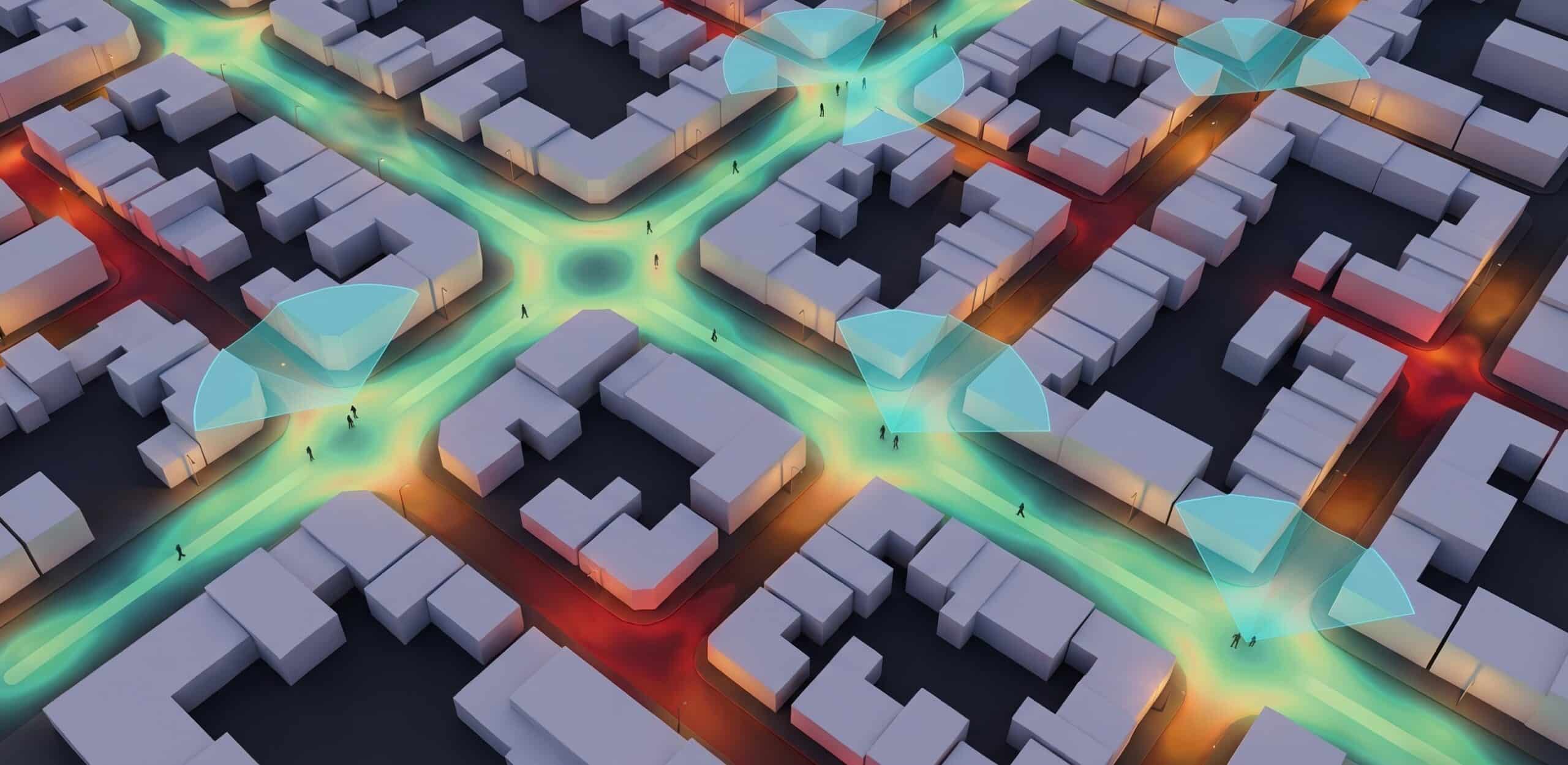
Introduction — Where My Interest Began My interest in AI and its application in the AEC industry started before this course. During the IAAC GSS, I worked on a study in Bogotá using GIS and image‑recognition tools to map sensory criticality in care-focused urban zones. What surprised me most was how accessible the process was. … Read more

Tectonic Hub: Climate-Adaptive Recipe for Cultural Hubs in Reykjavik

Ingredients Climate Reykjavík’s climate shapes the entire project. The site is exposed to strong, multi-directional winds reaching 27 m/s, with a prevailing direction around 135°. Daylight conditions are equally extreme, shifting from long summer days to very short winter ones. The system therefore needs to adapt, protect, and still create comfortable public spaces. Form Our formal … Read more

Geomorphing Terrascape: Dignifying Informal Praxis at Chihuahua, México

“Terrascape does not impose an external order; it encodes the survival logic of the Mexican informal ‘barrio’ to transform it into a dignified, resilient, and dynamic housing system.“ The Geometry of Necessity In the rugged topography of Chihuahua, Mexico, the “Barrio” is not just a residential zone; it is a morphological catalyst. It embodies a … Read more

Monsoon Nest: Living Between Flood and Sky

Monsoon Nest is a modular housing proposal for Bangkok that responds to monsoon rainfall, flooding, and high-density urban conditions. The project explores adaptable modules, elevated structures, and passive climate strategies to create resilient, community-oriented living environments in a tropical context. The design of Monsoon Nest is informed by four primary parameters: contextual environmental data, parametric … Read more

THE HARBIN CODE

“The Harbin Code“, designed by Muhammed Senin and Sushmitha Ravi, explores housing as a system-driven response to extreme cold climates. The project treats environmental performance, social interaction, and spatial flexibility as equally important design parameters, and is structured as a ‘building recipe’ that allows repeatable yet adaptable outcomes across the site. BUILDING RECIEP DESIGN STRATEGY … Read more

Aerialis

Aeralis is a climate-responsive Tech Hub composed of modular, porous blocks and patios, designed to enhance ventilation comfort. It is a project based on the winds of Cordoba, Argentina. The project aims to integrate the climatic challenges into architectural design. In doing so, designing a coherent structure with the climate and the site. For this, … Read more

The Huddle: Wind-adaptive Research Hub in Punta Arenas, Chile

We explored a wind-adaptive research & education hub with expedition basecamp using WASP in Punta Arenas, Chile, one of the southernmost cities in the world; defined by a cold, humid, and relentlessly windy subpolar climate. Plots Its position provides immediate access to navigation routes, making it an ideal departure point for expeditions toward nearby islands … Read more

Morphing Sands

Morphing Sands is a climate-responsive mixed-use architectural system developed for Jeddah, Saudi Arabia, addressing urban densification in a hot–humid coastal environment. Inspired by the historic fabric of Al-Balad, the project reinterprets Hijazi principles—such as courtyards, shaded streets, and layered façades—through a modular and computational design approach. The project organizes commercial functions horizontally at the lower … Read more