Intervening Carbon
Carbon Based Design | Designing Circularity in the Built Environment SITE EXISITING WAREHOUSE POINT CLOUD MODEL Material Flow Analysis PROPOSAL
Team member(s): Govind Chithrath, Santosh Shenbagamoorthy, Krystyn Kontos , Aleksandra Kraeva and Lauren DemingModified by Lauren Deming on November 24, 2024 Ultimately, the goal is to develop more efficient means for harvesting and utilizing low-carbon footprint alternatives for construction. Course Objective Project Abstract Autonomous Weaving with Raw Materials explores the intersection between weaving automation and the use of raw materials. After analyzing … Read more
What could it mean to be An Activist in a Post Anthropocene Planet? Abstract Set at Reggio School, Madrid, on Earth Day, this play critically evaluates the differing approaches to environmental activism in an Anthropocene planet. The narrative begins with a guest lecture by Margherita, a visiting environmental thinker, who introduces the concept of a-human … Read more
Research Questions: Can climate sensitive facade interventions reduce the intensity of the Urban Heat Island effect within urban blocks in arid climates?“ Research Goal: The goal is to propose simplified, climate-sensitive facade interventions in highly urbanized cities that reduce energy loads by mitigating Urban Heat Island (UHI) effects, while complying with climate-resilient regulations. These interventions … Read more
Bringing Producers, Consumers and Nature Together This project aims to connect local food producers, consumers, and nature in a symbolic way. The metaphor of a “table” represents unity and sustenance, gathering people across different genders, ages, and social classes. This installation, built from waste materials and invasive plants like Pontederia Crassipes, doubles as an ecosystem, … Read more
City-Oriented Modeling for Observational Radiative Thermal comfort CONCEPT The idea behind C.O.M.F.O.R.T is to provide an effective tool for architects and urban planners to design cooler and more sustainable cities, leveraging the power of machine learning and AI technologies. FACTORS OF IMPACT To create COMFORT we had to study the different factors of impact which … Read more
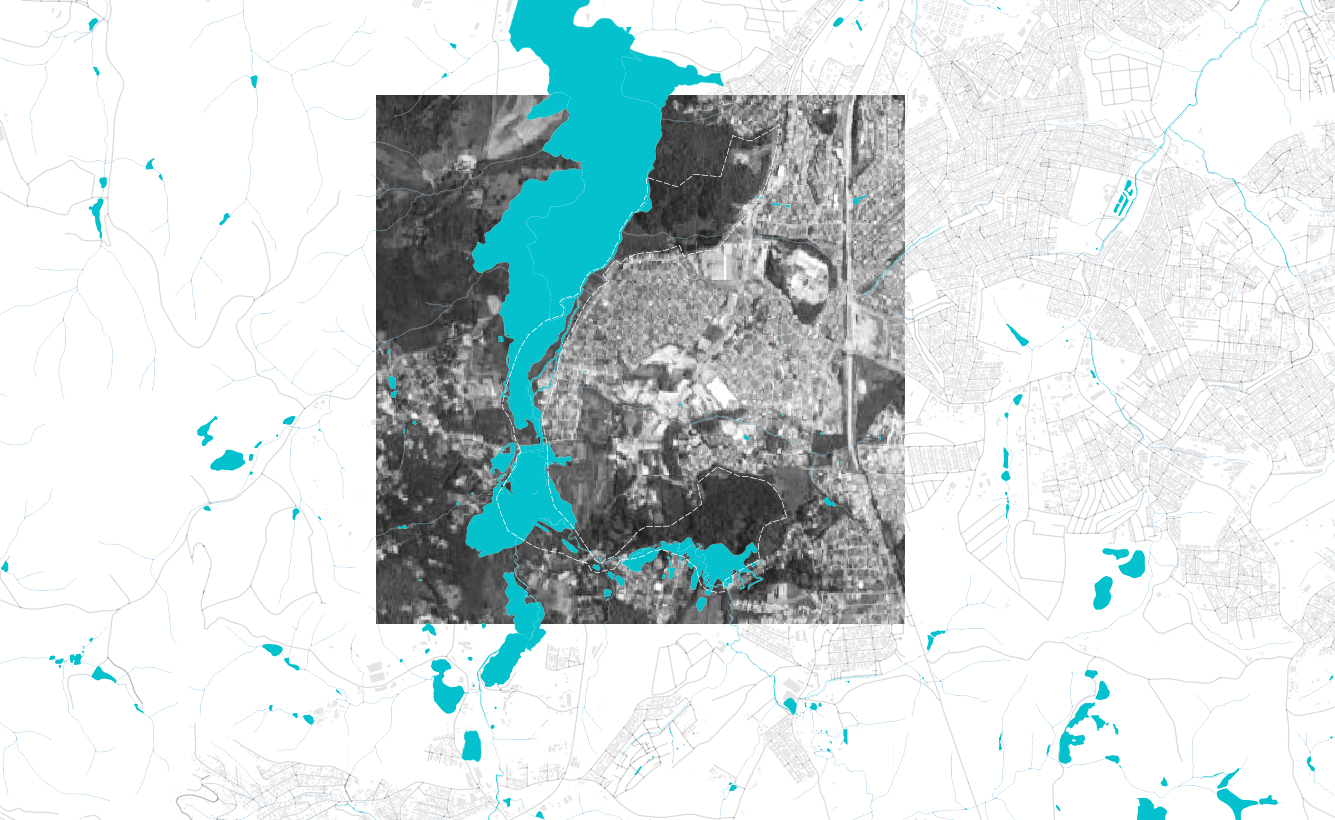
Infraestructuras resilientes para el saneamiento y recarga de acuíferos: El caso de Valle de las Palmas El voraz crecimiento de las ciudades ha generado una degradación del medio natural. En este proceso, la participación de actores locales, tales como grupos sociales, asociaciones civiles, institutos y órdenes de gobierno, crea plataformas para la toma de acciones … Read more
La formulación de la paz es imposible para el consenso de las masas actuales. Esta misma perspectiva es igualmente negativa en el país que inició el desarme de sus tropas después de la dolorosa II Guerra Mundial y una sangrienta Guerra Civil en 1948, esta es Costa Rica. Una utopía en las américas, una deformada … Read more
Las ciudades se encuentran experimentando un vertiginoso crecimiento demográfico y se espera que hacia 2050 el 90% de la población de LATAM viva en ciudades. En Argentina, ya lo hace el 92%, posicionando a la Ciudad de Buenos Aires como una de las ciudades más populosas del mundo. Esta densificación supone un impacto directo en … Read more
La motivación de esta tesis surgió al observar la desigualdad ambiental presente en la ciudad de São Paulo. Para la vasta y diversa población que alberga esta metrópolis, se destaca un contraste revelador: gran parte de la población, residente en las periferias, sufre la escasez de espacios públicos que integren la naturaleza, lo que se … Read more
Thermal Insight would be a standalone app that optimizes indoor environments by predicting thermal comfort. With simulations from trained models to help enhance occupant comfort and energy efficiency, evaluating metrics like PMV, PPD, and MRT. This tool would help improve well-being and productivity while achieving efficiency goals. Abstract Methodology Use Case Data Analysis Results and … Read more
Wind Wave is a secondary facade system engineered in response to the escalating environmental demands faced by our planet. Climate change is resulting in an increase in heat waves, with some reaching lethal intensities. As global temperatures rise, reliance on air conditioning systems has surged. However, these systems exacerbate external environmental heating by expelling hot … Read more
Skin Sense is a project that aims to help users optimize the thermal comfort of their interior spaces by applying skin shaders. Why implement this? What can skin sense help the user with? Once the designer designs the skin for the building facade it has to be analyzed for indoor comfort. To analyze indoor comfort … Read more
DF Predictor aims to revolutionize daylight prediction in architectural design by implementing the conditional generative adversarial network (cGAN) Pix2Pix to predict daylight factors, motivated by the need to improve efficiency and accuracy in daylight analysis. Daylight factor analysis, an integral part of the early design stages and mandated by building codes, is typically lengthy due … Read more
Why? Coastal erosion is a dynamic and complex process influenced by both natural factors and human activities. Natural causes such as wave action, tidal patterns, weather events, and rising sea levels due to global warming significantly contribute to the gradual wearing away of coastlines. Additionally, human interventions like coastal construction, sand mining, and deforestation exacerbate … Read more
This project aimed to develop a daylight predictor to facilitate and generate well-informed adaptive reuse projects, with a specific focus on providing sustainable design solutions for low-income housing. Los Angeles (LA) was selected as a case study due to its proactive open data initiatives and commitment to adaptive reuse. This proposal provides a snapshot of … Read more