An AR guidance system for pottery creation
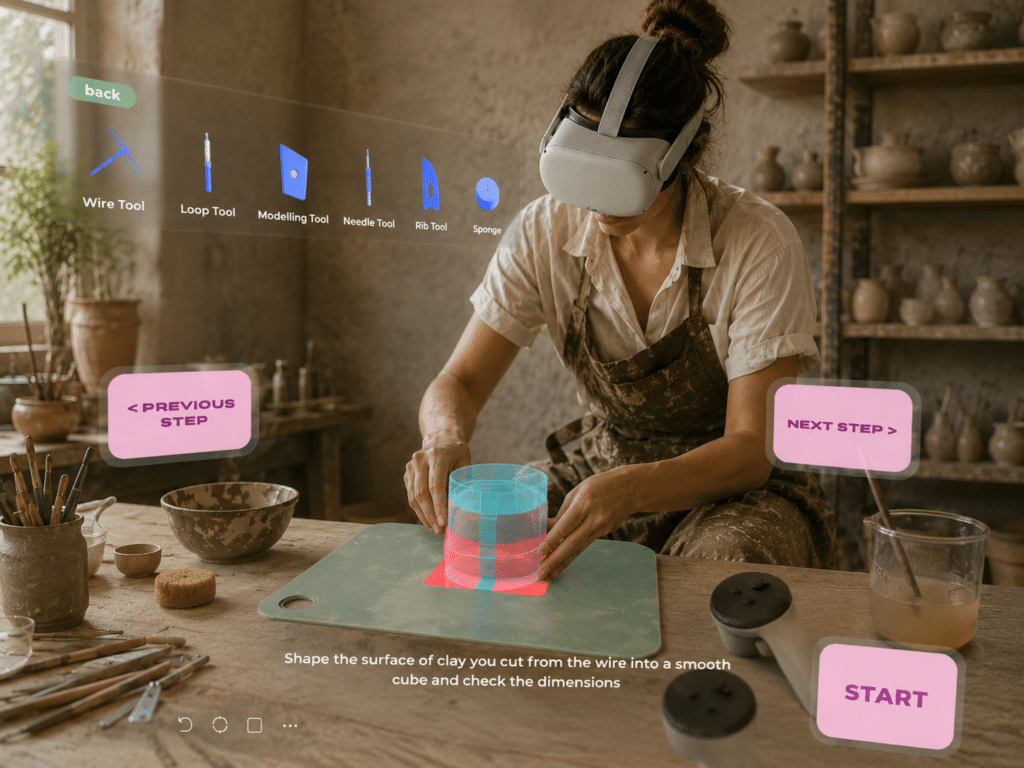
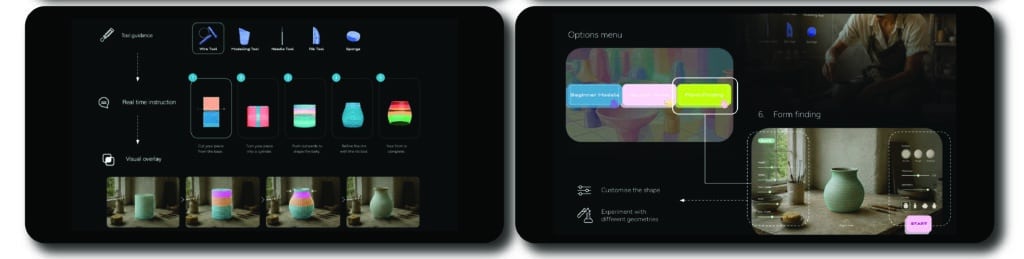
TRACE transforms pottery learning into an interactive guided experience. Instead of interrupting the making process with videos or tutorials, instructions are overlaid directly onto the clay in real time through AR guidance.
Rather than replacing the craftsperson, TRACE acts as an apprenticeship layer: making expert knowledge visible, immediate, and embedded directly within the physical process.
Overview
Pottery can be difficult for beginners, especially when trying to understand form and shaping in real time. TRACE employs augmented reality to guide users through the pottery process using live spatial overlays directly on the clay.
User Interface
Designed to teach. Play to learn
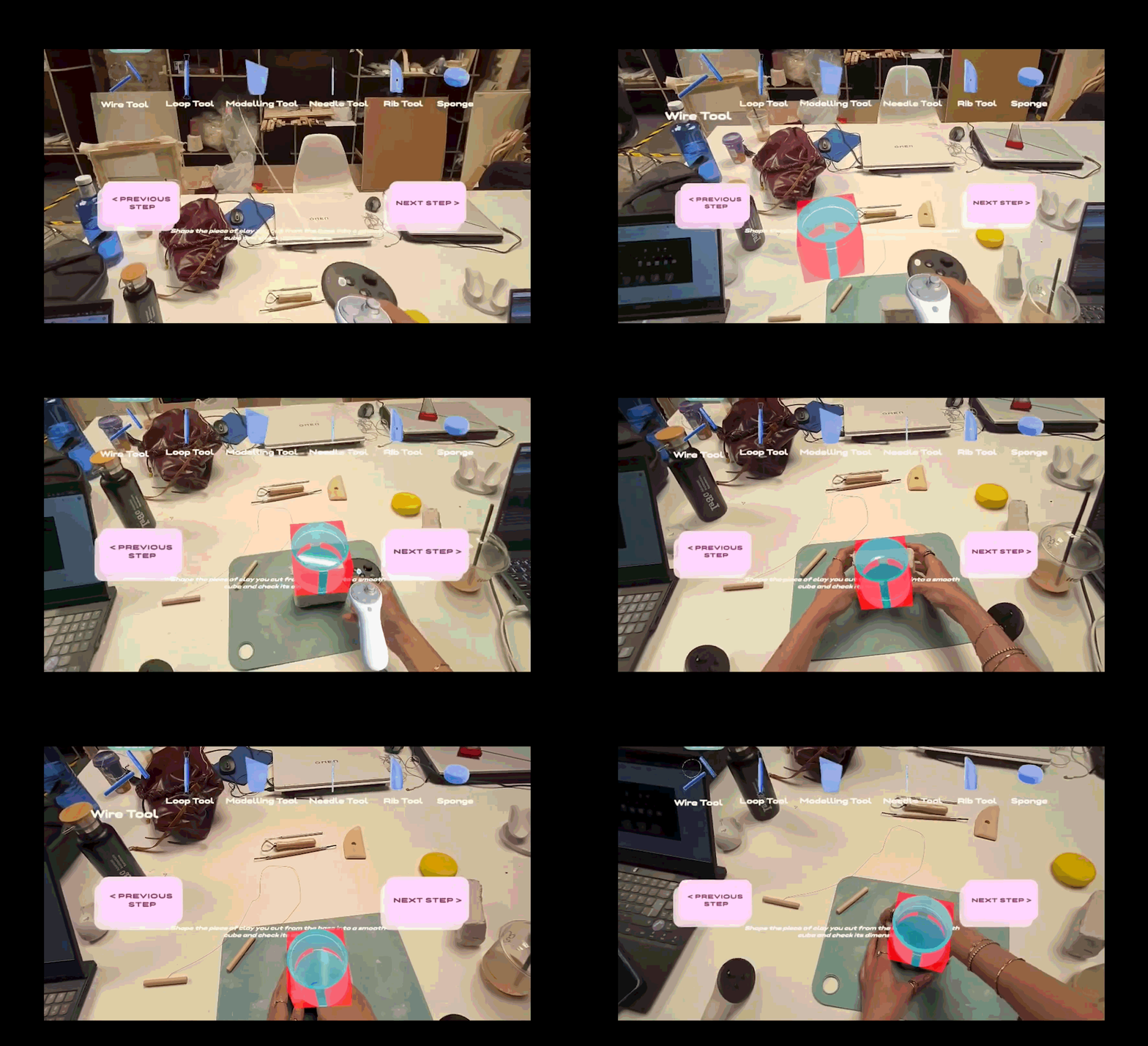
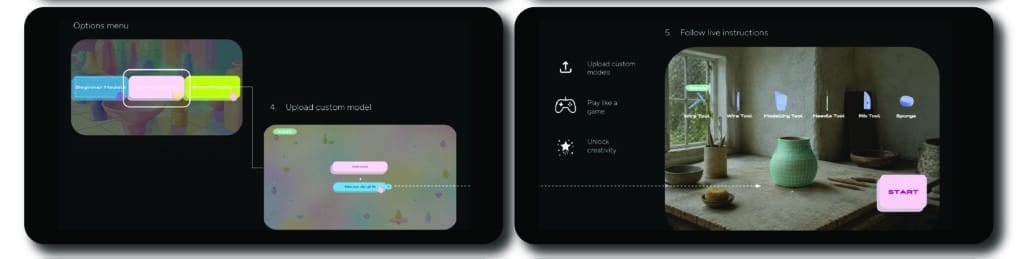
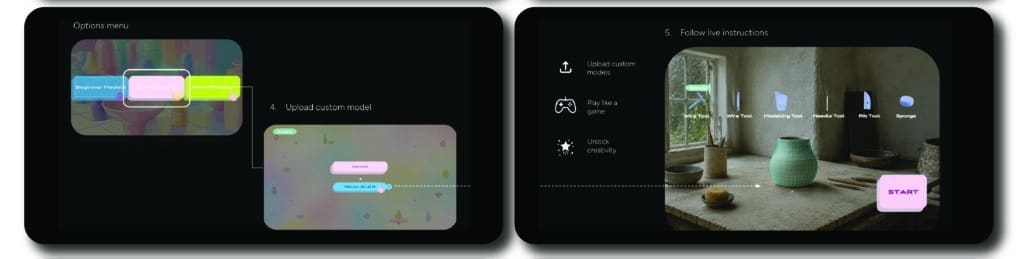
Users can begin with beginner sculpting exercises using step-by-step live instructions.
More advanced users can upload their own custom 3D models and receive assisted modelling guidance while recreating the form manually. Learning which tools to use, where to apply pressure, and how to shape the clay throughout the process.
The interface also includes a form-finding mode where users can experiment with customised geometries through sliders and adjustable parameters before translating the final result into physical clay.
By combining gaming-style interaction with live craft guidance, TRACE removes complexity without compromising creativity or the human touch of making.
Inspiration and Precedents
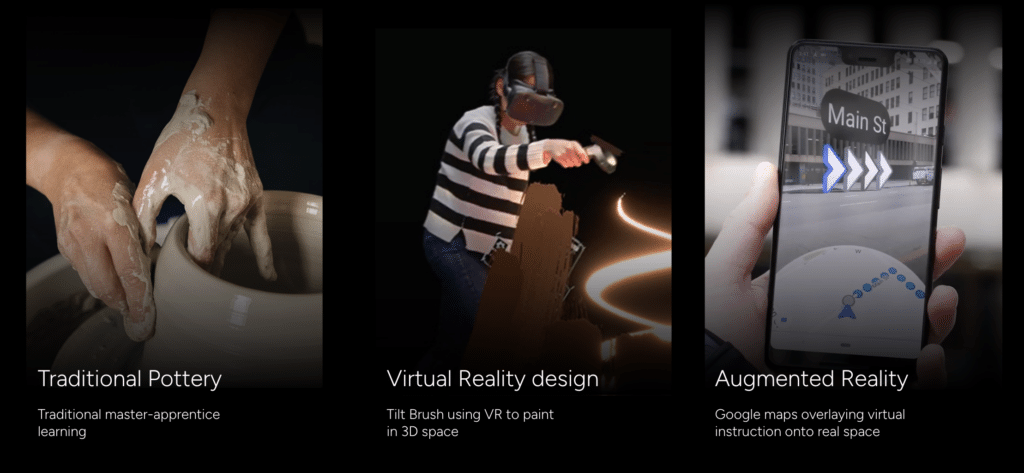
For precedents and inspiration, we explored three main areas: traditional pottery, virtual reality, and augmented reality. We studied how pottery is traditionally taught through observation and physical guidance between master and apprentice, then looked at VR creative tools that use immersive interaction and real-time feedback. Finally, we explored AR systems that overlay digital instructions onto the real world. TRACE combines these ideas into a live augmented pottery learning experience.
Future Vision
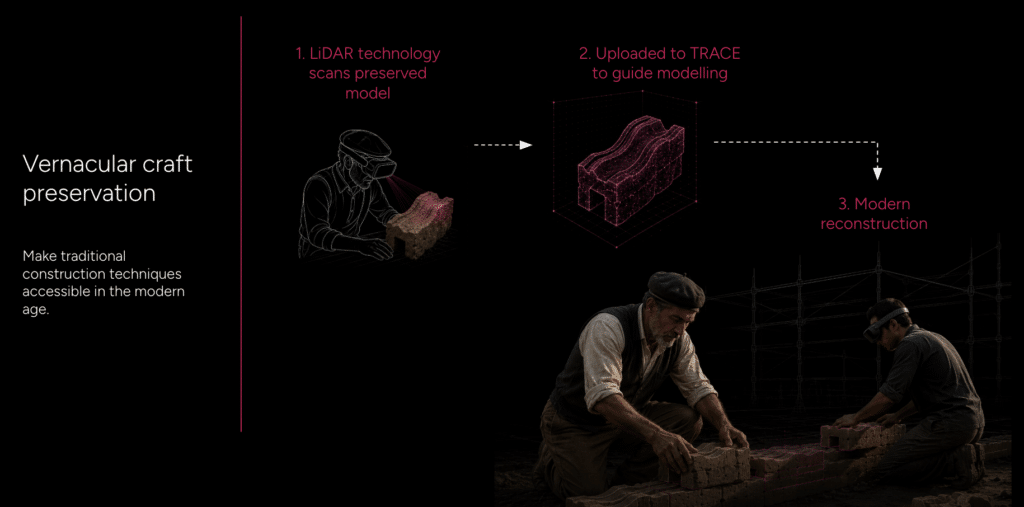
Beyond pottery, TRACE could be employed into modular and vernacular fabrication workflows. One future application is modular clay brick fabrication, where digitally designed vernacular-inspired bricks are manually shaped with AR assistance, then used as moulds to reproduce multiple identical units for construction. By combining digital modelling with real-time manual guidance, users could recreate traditional construction techniques while speeding up the fabrication process and maintaining the human touch of handmade craft.