
Pollinators, bees, butterflies, moths, bumblebees, quietly keep our ecosystems alive. They enable flowering plants to reproduce, sustain wild biodiversity, and support much of our food supply. Yet many of these species are in decline worldwide, threatened by habitat loss, chemical use, urban sprawl and climate change.
In cities like Barcelona, where green spaces, gardens, parks and urban meadows weave through concrete and buildings, gardens can become vital refuges for pollinators. That’s why we created Flap-alona, a mapping tool that shows, garden by garden, which butterfly species have been recorded. With it, planners, gardeners and citizens can help design pollinator-friendly green spaces, revitalize urban biodiversity, and reconnect nature with our daily lives.
Why pollinators matter
- Pollinators (bees, butterflies, moths, bumblebees, etc.) are essential: they enable reproduction of flowering plants by transferring pollen, which in turn produces fruits, seeds and maintains biodiversity.
- Globally, a large share of our food crops depend on animal pollination. For example, around 35% of the world’s food crops and many wild plants rely on insect or animal pollinators.
- Pollinators also contribute greatly to ecosystem health, plant diversity and resilience. Without them, many plants would fail to reproduce, affecting food webs, habitats, and ultimately human food security.
Pollinators are not just “nice to have” they are a foundation of biodiversity, food security and healthy ecosystems.
The problem: Pollinator decline
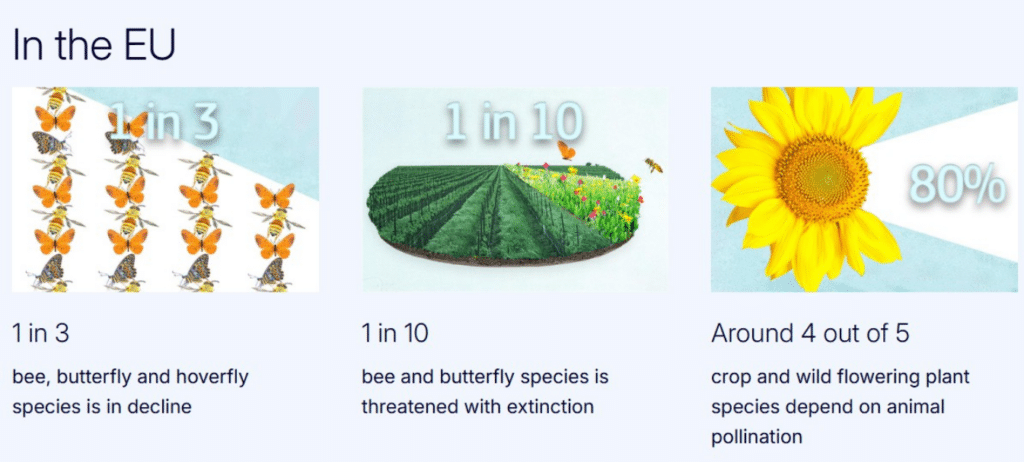
- Over the past decades, there has been a worrying decline in populations and diversity of pollinators worldwide, including bees and butterflies.
- For instance, studies found that after the 1990s the number of collected bee-species dropped by about 25% by 2015 compared to before the 1990s.
- Causes of decline are multiple: habitat loss or degradation (urbanization, intensive agriculture), pesticide use, climate change, fragmentation of natural areas, loss of wildflower diversity and nesting sites.
- This decline threatens not only individual pollinator species, but the entire network of plants and pollinators, endangering biodiversity, the resilience of urban and rural green spaces and long-term food production.
If the decline continues, we risk losing many wild pollinators , with cascading consequences for urban & natural ecosystems, plant reproduction, and food security.
Mapping butterfly-garden connections to support pollinator-friendly green planning
This is where Flap-alona comes in.
- We chose butterflies as a proxy, they are pollinators, often overlooked and can travel through urban gardens.
- With the data we collected, we map which butterfly species are found in which gardens in Barcelona, giving a spatial overview of pollinator presence and biodiversity at the garden-level.
- The goal: by understanding where pollinators already occur, city planners, ecologists or citizens can:
- design or restore green spaces to connect these “pollinator paths”;
- plant native/wildflower vegetation that supports pollinators;
- favour biodiversity, allowing vegetation to regenerate naturally;
- monitor changes over time, and raise awareness about pollinators in the city.
- The interface we built shows, which species have been observed and gives an overview of species richness per garden. It lets users explore and identify pollinator-rich green spaces.
Why this matters: urban ecology, biodiversity & sustainable planning
- Cities are expanding and natural habitats shrink: urban gardens and green areas become critical refuges for pollinators.
- By mapping pollinator presence across gardens, we provide a tool for pollinator-aware urban design, ensuring that urban planting and green corridors support existing pollinator populations.
- This approach helps align human-created green spaces with ecological networks, improving both human quality of life and biodiversity.
- If many citizens, communities or local authorities adopt this mindset, gardens across the city can become part of a continuous pollinator-friendly network, enhancing resilience against pollinator decline.
