A Parametric Detour: Designing Modular Cat Towers

Concept After long periods working within architectural systems—parametric models, BIM workflows, data coordination—there is value in stepping sideways. Not away from design, but into a different scale and context. This project explores exactly that: applying computational design logic to something deliberately lighter—a customizable modular cat tower. From Grasshopper to Web Interface The application is a … Read more

WeaveLamp Configurator: From Craft Logic to a Web-Based Parametric Tool

WeaveLamp Configurator WeaveLamp Configurator is a web-based application that brings a Grasshopper workflow into an accessible browser-based experience. The project explores how a craft-inspired lamp system can be translated into a clear digital tool for customization, spatial visualization, and fabrication-oriented output. Concept Origin The project started from a manual exploration of ring proportions, textile density, … Read more

Hyper Builder: Vertical Community Generator

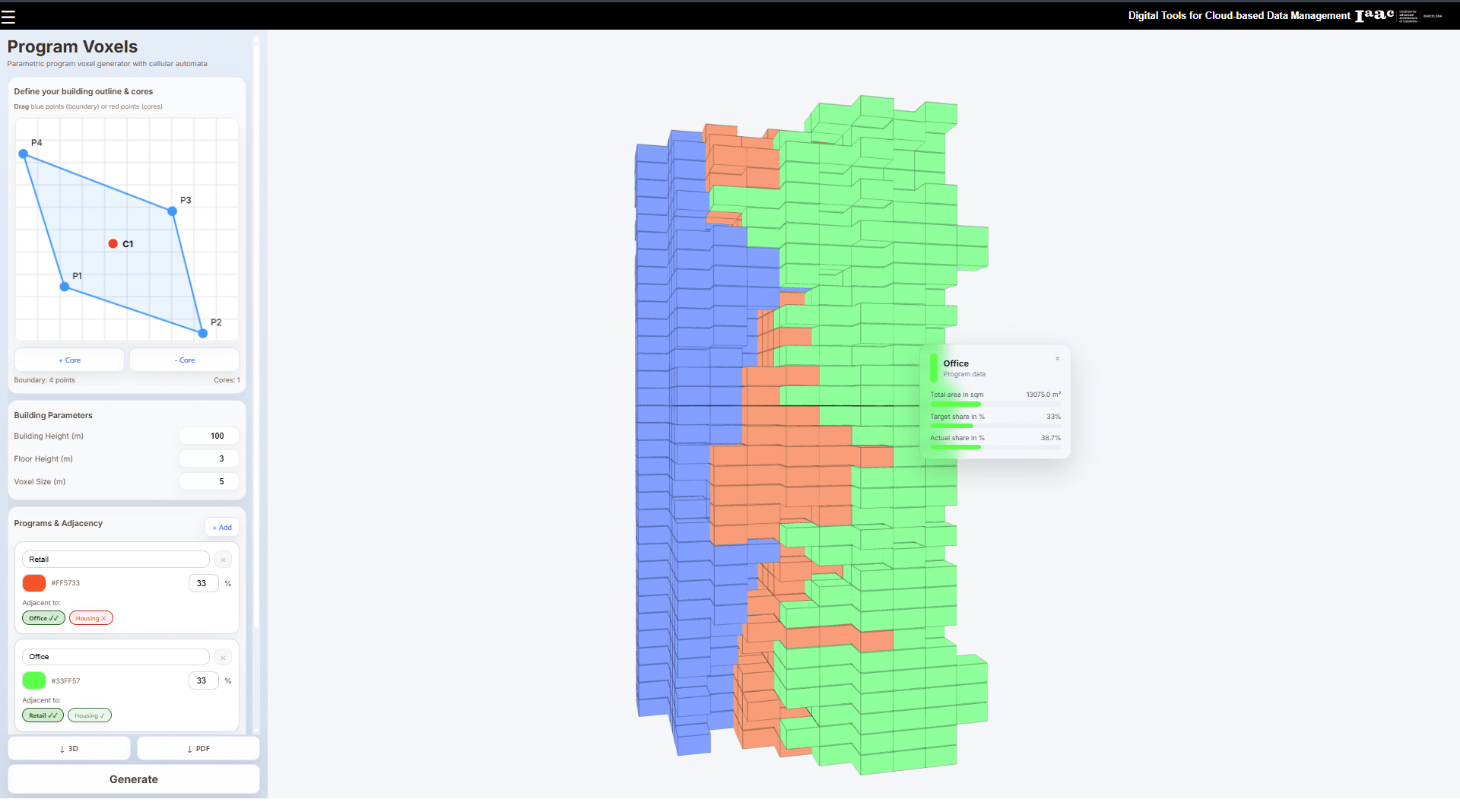
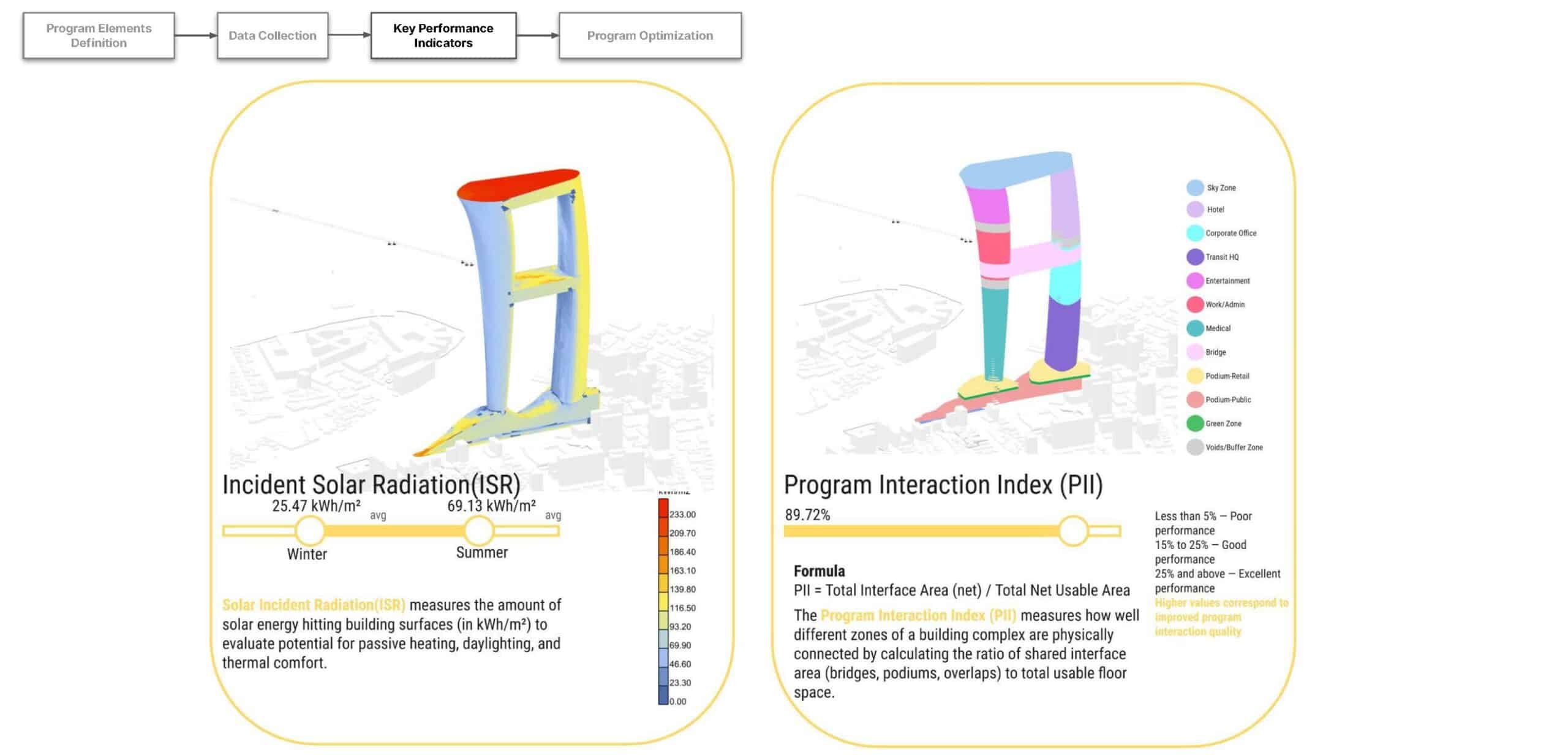
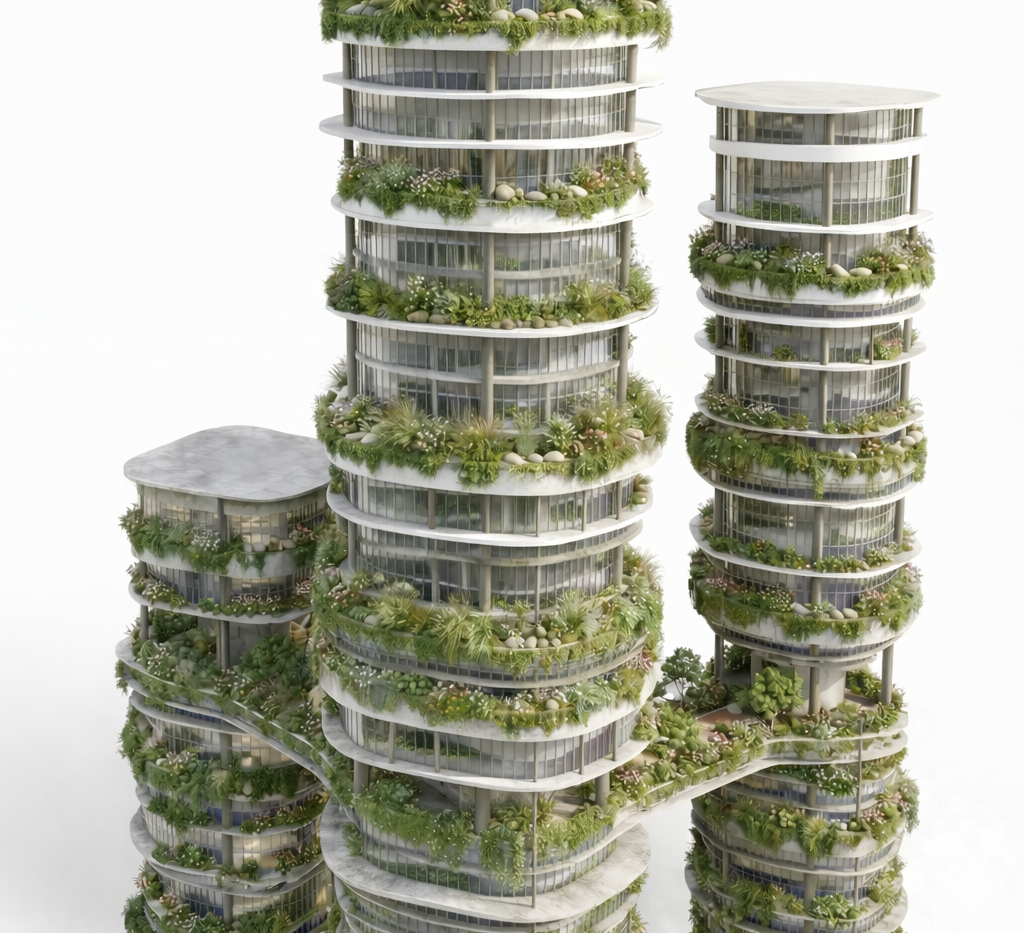
Hyperbuilder is a web-based parametric design app that transforms complex architectural modeling into a seamless, rapid-iteration process. Powered by a Grasshopper backend, it allows users to effortlessly generate, evaluate, and configure complex building massings and program distributions through a highly intuitive, simple interface. The Vision: Vertical Communities, Quantified The architectural industry is obsessed with “final” … Read more

Automating Interoperability with Rhino.Inside.Revit and ACC

Designing dynamic, adaptive skyscrapers is no longer just a conceptual exercise; it is a computational reality. The true challenge lies not just in creating fluid, parametric geometries, but in translating those complex forms into rigorous, actionable building information models. Developed during the Master in Advanced Computation for Architecture & Design (MaCAD) Integrative Modeling Seminar at … Read more

Program Through Geometry: An Integrative Modeling Approach with Rhino.Inside Revit

INTRODUCTION As the program team our role is to define the overall program strategy, which we call The Living Cells, with the goal to create a livable neighborhood that supports daily life beyond residential use. This means integrating a range of supporting functions — public and green spaces, schools, retail, and community amenities — so … Read more

Architecture as Living Matter: Turning Data into Geometry

Introduction Hyperbuilding 03 In our project, the building is conceived not as an isolated object, but as a vertical living tissue within the broader human organism of the “Vertical Machine”. Much like a network of functional cells, it sustains life, maintains environmental balance, and coordinates with the system’s “lungs” and “heart.” This biological metaphor guided … Read more

Automated Cloud-Based Metadata Extraction: HB01 – Program Team

An automated pipeline that transforms raw 3D model metadata into structured cloud spreadsheets. This makes complex geometric data easily accessible and adaptable for various end-uses, from simple data reading to feeding live web platforms. Problem Statement Streamlining Complex Metadata Communication Communication across large design teams presents a significant challenge due to the massive volume of … Read more

Turning Data Into Geometry: Rhino.Inside Revit workflows for modelling & documenting

In the MaCAD Studio Seminar, our group worked as the Data Team for Hyperbuilding 01, one of three interconnected megastructures designed for Santiago de Chile, which together work as a single, cohesive vertical machine. Hyperbuilding 01 operates as both lung and skin for the urban environment. In response to Santiago’s severe air pollution, the building … Read more

Automated workflow to extract KPIs from versioned models in Speckle

Automated Workflow for KPI Extraction from Versioned Models in Speckle Why KPI Tracking Breaks Down During Iterative Design In the current studio workflow, KPI extraction and performance evaluation depend on repeated manual operations across design iterations. This slows down feedback, introduces version mismatch risks, and disconnects analytical outputs from the model itself. This tool was … Read more

Nyara House – Prototype 2026

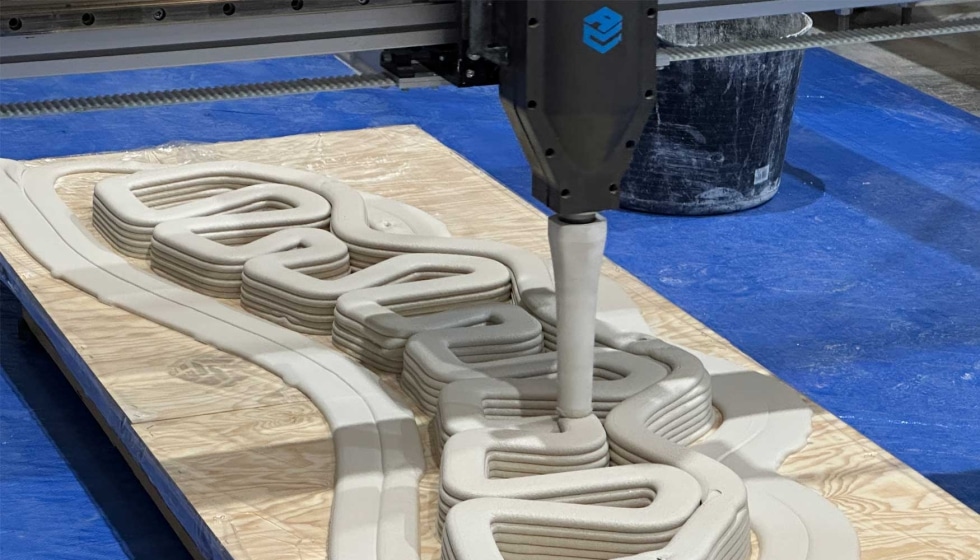
Case study of a 3D printed project Site Organization The site plan was developed to support a continuous and efficient design-to-production workflow, integrating material preparation, digital control, and on-site fabrication into a single coordinated system. The spatial organization follows a clear operational sequence, from raw material handling to final deposition, reducing unnecessary movement, interruptions, and … Read more

Beyond Construction: BIM as a World-Building Tool for Real-Time Game Engines

Abstract This research investigates how Building Information Modeling (BIM) can be leveraged to generate structured and meaningful architectural environments for architectural visualization, video games, and animated films. It explores workflows between BIM tools and real-time game engines, focusing on the transfer and preservation of spatial logic and metadata. The study aims to demonstrate how BIM-based … Read more

Woven Tiles

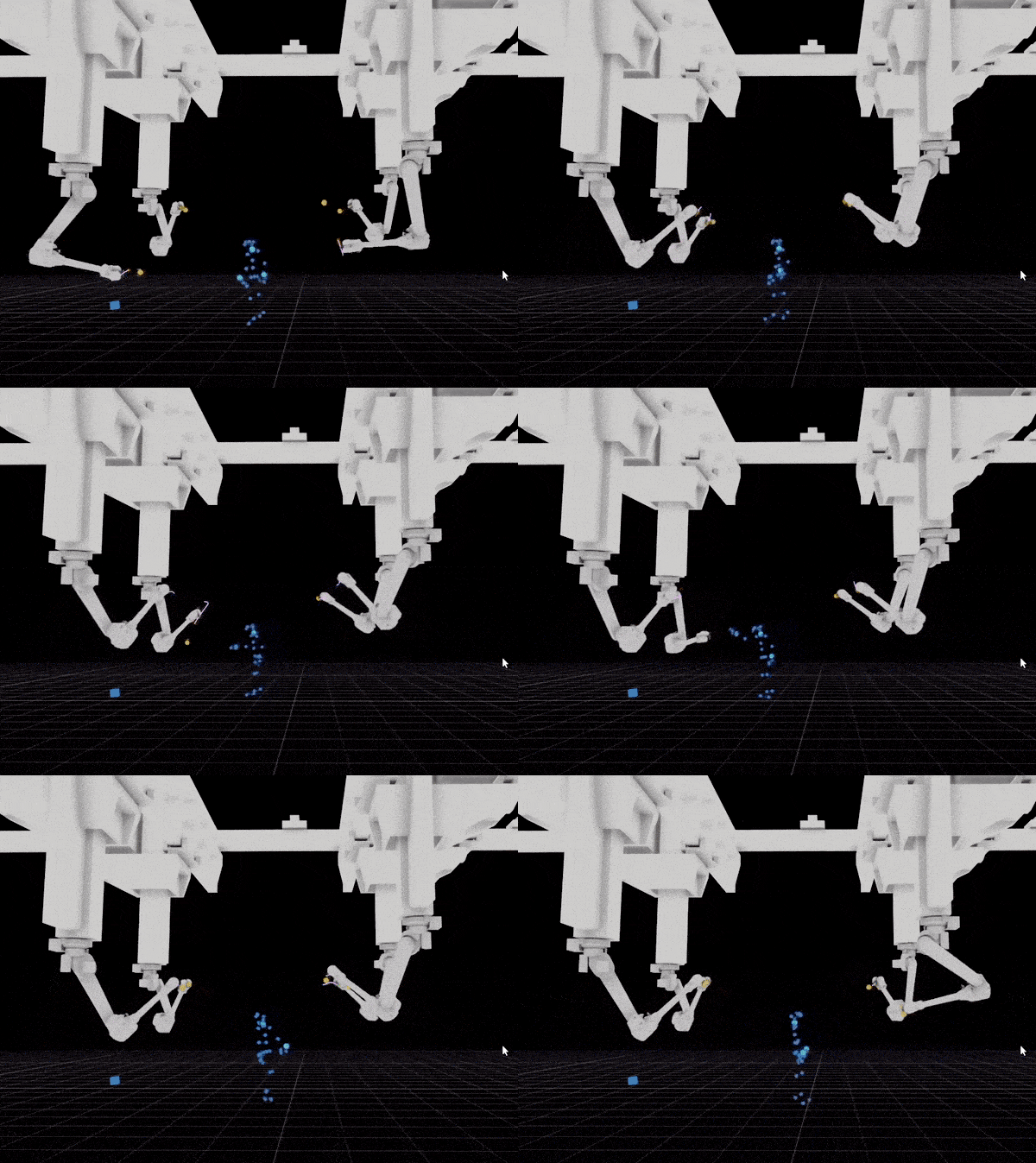
This workshop explored robotic trencadís through a pick and place system. Broken tiles were scanned and organized using a Grasshopper ruleset inspired by traditional weaving logics. Squares with 90 degree corners, straight edges, and alternating colors structured the design. A looping algorithm selected tiles from the dataset and placed them without repetition, allowing the robot … Read more

Collaborative Workflow: Structure/Facade-HB01

Introduction – Defining the Volume   Problem Statement & Context  Target User Proposed Solution An automated pipeline that instantly extracts, organizes, and delivers your 3D model data to your entire team the moment a new design version is published no manual steps, no shared files, no delays. Success Criteria Demo Success Criteria Limitation & Future Scope … Read more