
Abstract
This research investigates how Building Information Modeling (BIM) can be leveraged to generate structured and meaningful architectural environments for architectural visualization, video games, and animated films. It explores workflows between BIM tools and real-time game engines, focusing on the transfer and preservation of spatial logic and metadata. The study aims to demonstrate how BIM-based data can support narrative-driven world-building, extending architectural models beyond traditional construction documentation into interactive and cinematic environments.

The Podcast
To explore this topic I invited Kenneth Pimentel to join me in a podcast discussion to discuss the role of BIM and computational design skills in supporting architectural workflows for real-time engines, enabling architects to operate beyond construction-focused practices.
Ken Pimentel is a leader in the adoption of real-time technologies within architecture, engineering, and construction (AEC). He serves as the Director of AEC Industry at Epic Games, where he focuses on integrating real-time tools such as Unreal Engine into architectural workflows. With a background in digital media, visualization, and interactive technologies, Pimentel works on bridging Building Information Modeling (BIM) with real-time environments. His work promotes the use of game-engine technology for architectural visualization, digital twins, simulation, and immersive experiences.
He is known for advocating workflows that allow architectural data and metadata to move from BIM platforms into real-time engines, enabling architects and designers to create interactive, data-rich environments beyond traditional construction documentation.

BIM, Real-Time Visualization, and Architectural Workflows
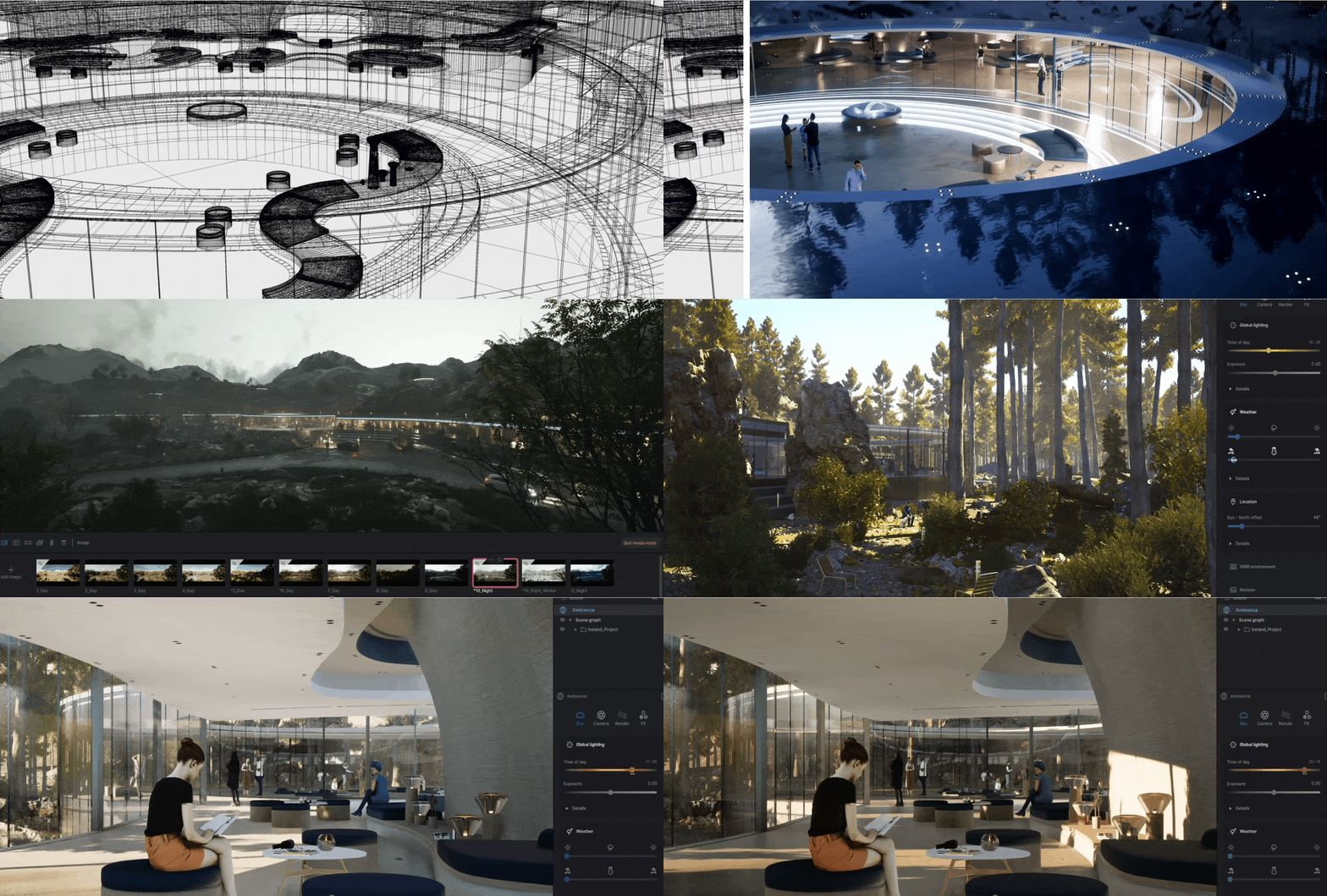
The discussion with Ken Pimentel explored how Building Information Modeling (BIM) can extend beyond construction documentation to support immersive and interactive architectural environments. With his background in real-time 3D graphics and experience at Epic Games, Pimentel explained how game engines such as Unreal Engine allow architects to visualize and experience their designs interactively. This approach enables designers and stakeholders to walk through projects, understand spatial qualities, and identify design issues earlier in the design process.
Challenges of BIM Data and Real-Time Integration
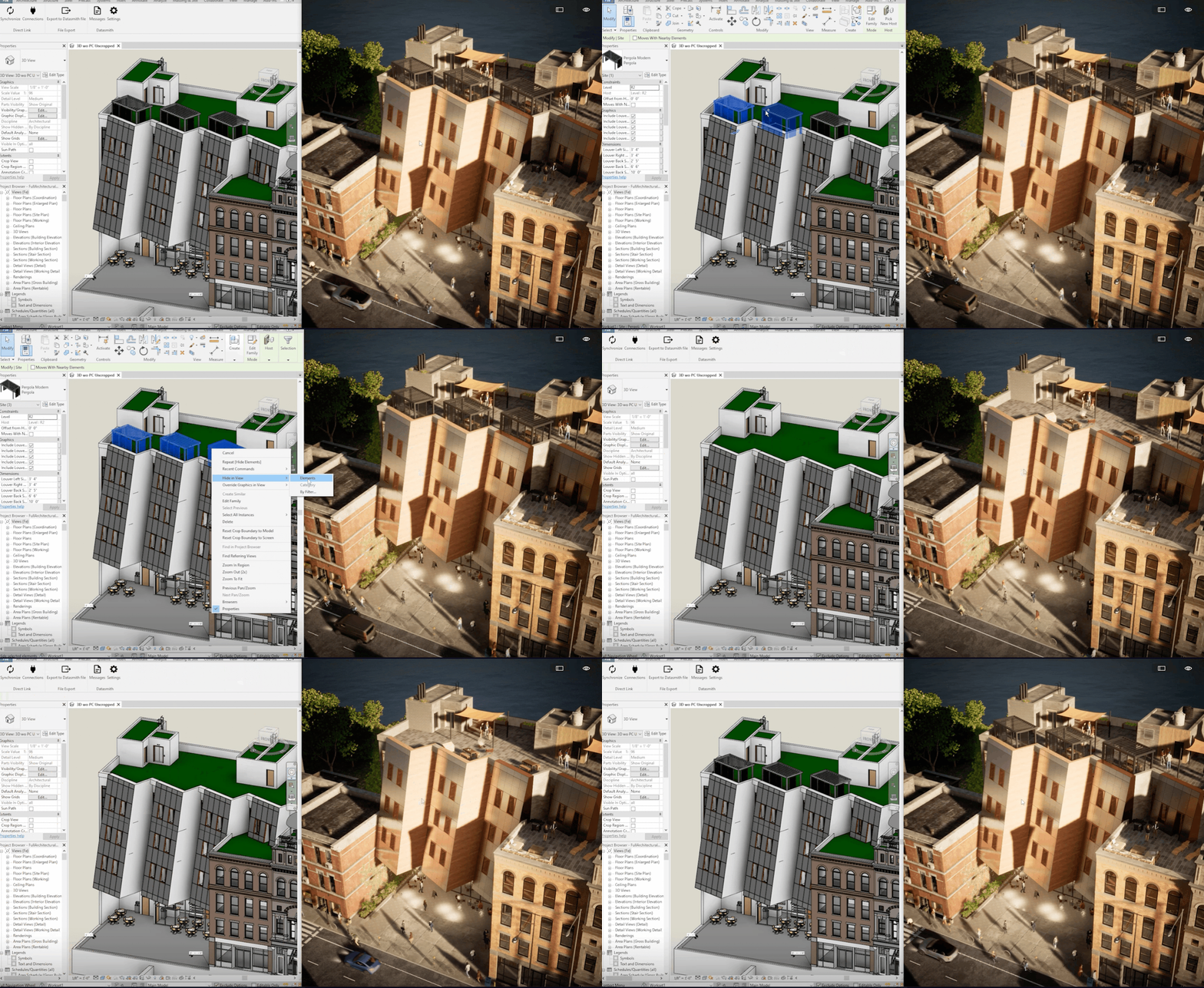
A key part of the discussion focused on the challenges of translating BIM data into real-time environments. In practice, BIM datasets often contain inconsistent or poorly structured metadata, making it difficult to maintain meaningful information when transferring models to visualization platforms. Additionally, when visual changes are made in rendering or post-production tools, they are not always reflected in the original BIM model, creating confusion about the project’s “source of truth.” Tools such as Datasmith attempt to address this by creating a non-destructive workflow that allows BIM models to update while preserving visualization work.
Future Opportunities: Digital Twins, AI, and Education
The conversation also addressed the future of architectural practice as digital technologies evolve. Ken emphasized that architects should develop skills in computational design, real-time visualization, and interactive systems to expand their roles beyond traditional construction workflows. Emerging technologies combining BIM data, immersive environments, and artificial intelligence could lead to advanced digital twins where buildings can be analyzed, simulated, and even queried interactively. These developments highlight the importance of adapting architectural education to prepare students for new digital design environments and workflows.
Conclusion
The discussion highlights how Building Information Modeling (BIM) has the potential to expand beyond its traditional role in construction documentation and become a key framework for immersive and interactive architectural environments. Insights shared by Ken Pimentel demonstrate how real-time technologies and tools such as Unreal Engine enable architects to experience, analyze, and communicate design ideas more effectively through interactive visualization.
At the same time, the conversation revealed important challenges related to data consistency, metadata management, and the translation of BIM models into real-time platforms. Addressing these issues through improved workflows and tools—such as Datasmith—is essential for maintaining meaningful architectural data across different environments.
Overall, the discussion suggests that the future of architecture will increasingly involve the integration of BIM, real-time visualization, and emerging technologies such as digital twins and artificial intelligence. Architects who develop computational and real-time workflow skills will be better positioned to contribute to new forms of spatial design, simulation, and digital world-building beyond traditional construction practices.
