
The Master in Robotics and Advanced Construction (MRAC) seeks to train a new generation of interdisciplinary professionals who are capable of facing our growing need for a more sustainable and optimised construction ecosystem. The Master is focused on the emerging design and market opportunities arising from novel robotic and advanced manufacturing systems.
Through a mixture of seminars, workshops, and studio projects, the master programme challenges the traditional processes in the Construction Sector. It investigates how advances in robotics and digital fabrication tools change the way we build and develop processes and design tools for such new production methods.
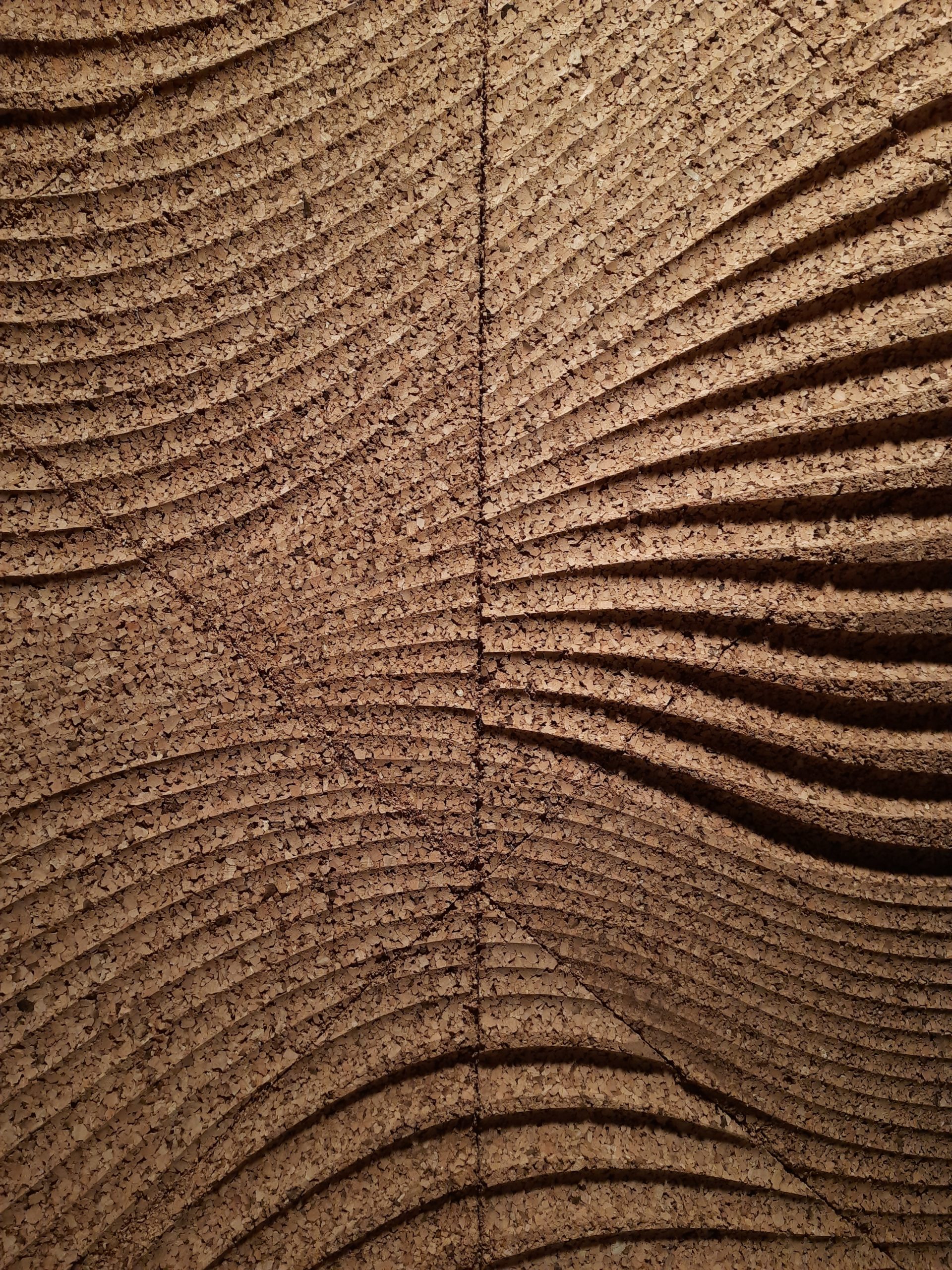
Print – Scan – Cut
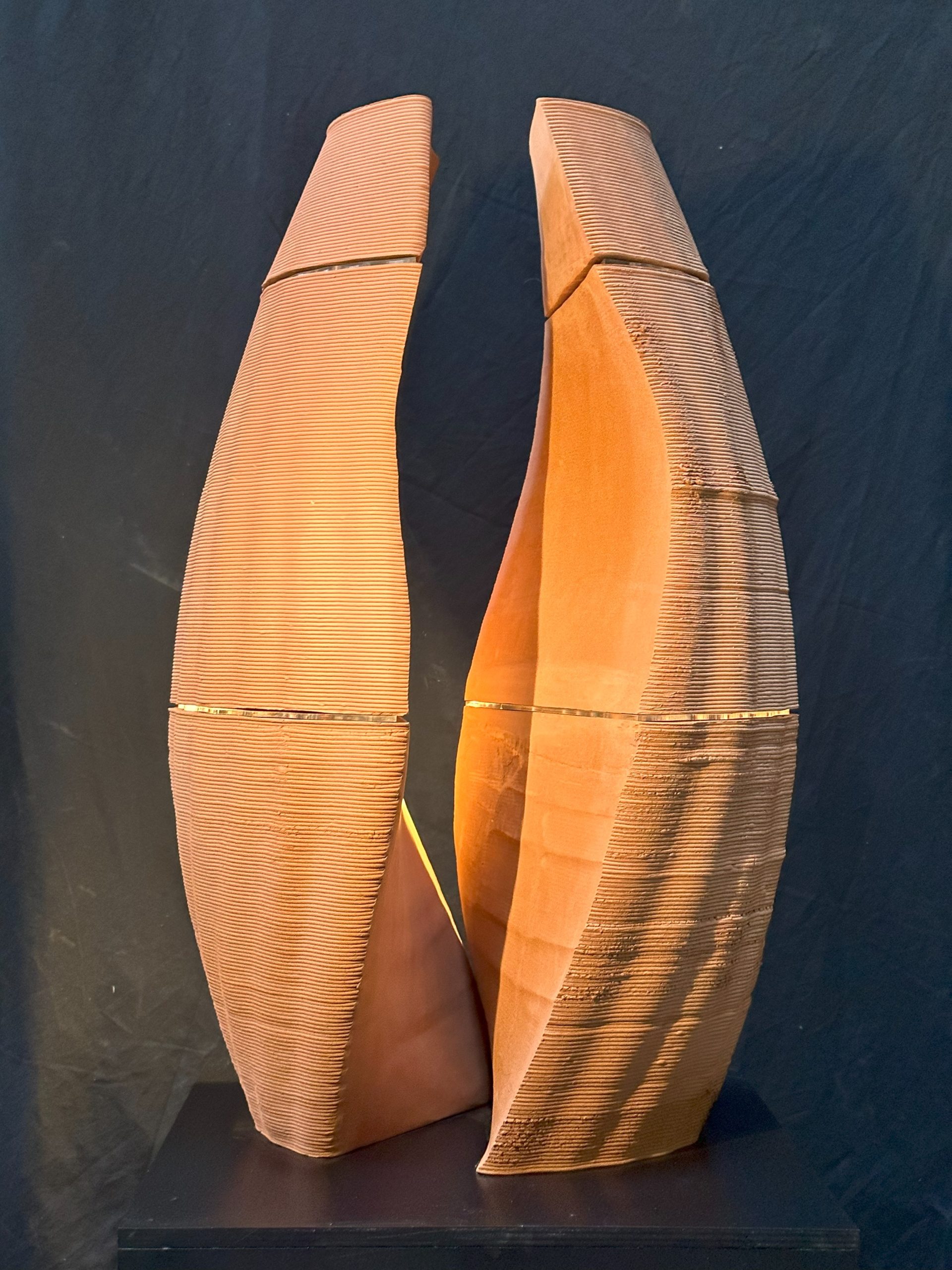
Preliminary steps towards a hybrid workflow for smooth 3D printed surfaces. Aim To develop a hybrid workflow to obtain smooth surfaces on 3D printed clay for improved alignment and surface finish. State of the Art Additive manufacturing enables the precise and cost-effective creation of complex designs while minimizing waste. One of the shortcomings common to … Read more
re(al)form
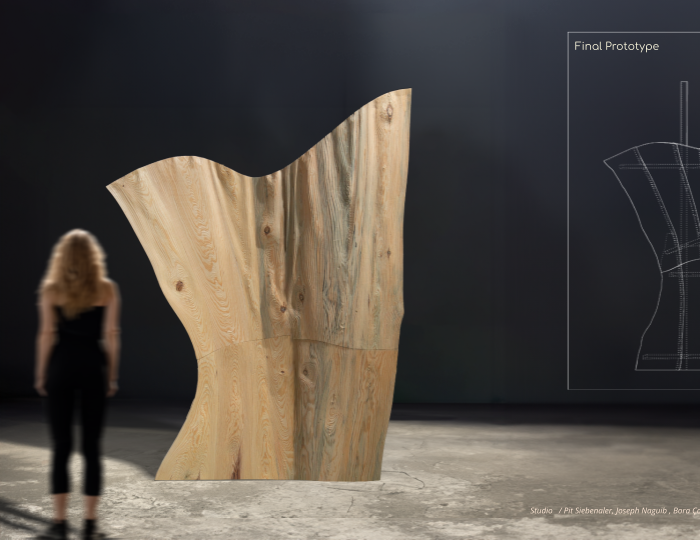
The construction industry has shown an increasing interest in adapting to more environmentally friendly materials, with wood gaining popularity as a natural and sustainable option for buildings. However, the wood industry contributes a significant percentage of energy consumption during the entire wood lifecycle, encompassing tree cutting, transportation to sawmills, and delivery to construction sites. Additionally, … Read more
Machine Learning for the Prediction of Clay Deformation

Optimizing 3D Printing with AI prediction Introduction In this seminar we applied the concepts of machine learning to estimate the deformation during drying of simplified 3D printed clay objects. To do this, we trained an artificial neural network (ANN) to predict the movement of discrete points within the printed object. This project is very relevant … Read more
Thermal Sensing for Advanced Cork Manufacturing
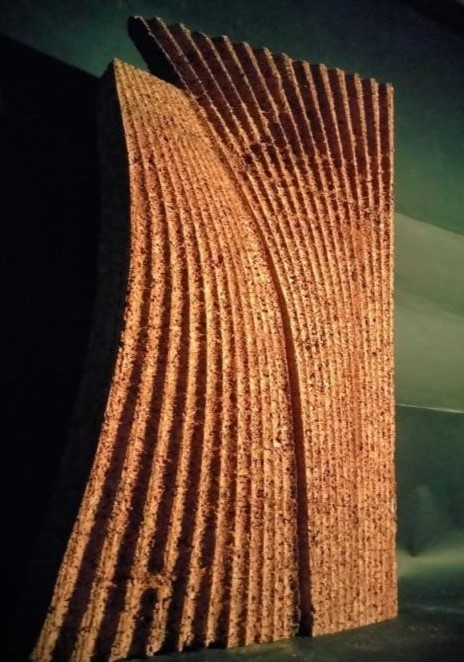
This research study delves into the realm of advanced robotics and semi-automated manufacturing processes that take into account the material properties of cork. Specifically, it explores the design and fabrication of a surface system that is optimized for both aesthetic appeal and functional performance. Building on the knowledge gained in a previous term on robotic … Read more
Insightful Sensing
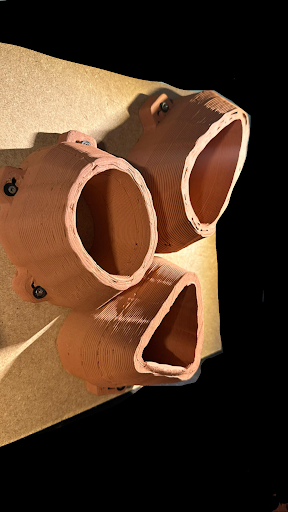
AIM \\ To create custom designed, 3D printed interior surface cladding, constructed of individual components with high quality surface finish and tolerance. CONTEXT \\ Last term we designed a dual end effector that would have an extruder and a wire cutter within the same tool, allowing us to post process the 3D printed pieces to … Read more
Adaptive AM in Robotics
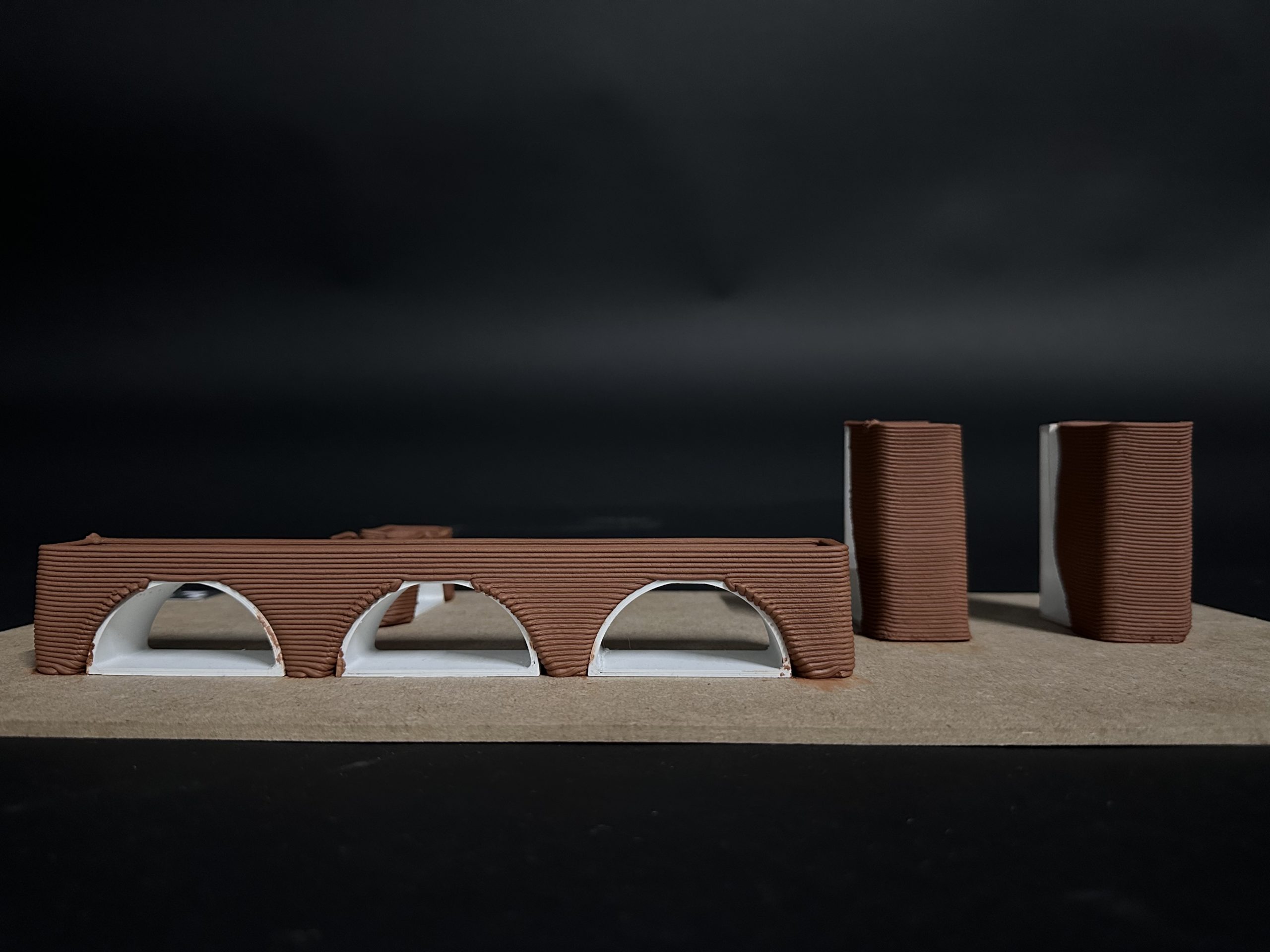
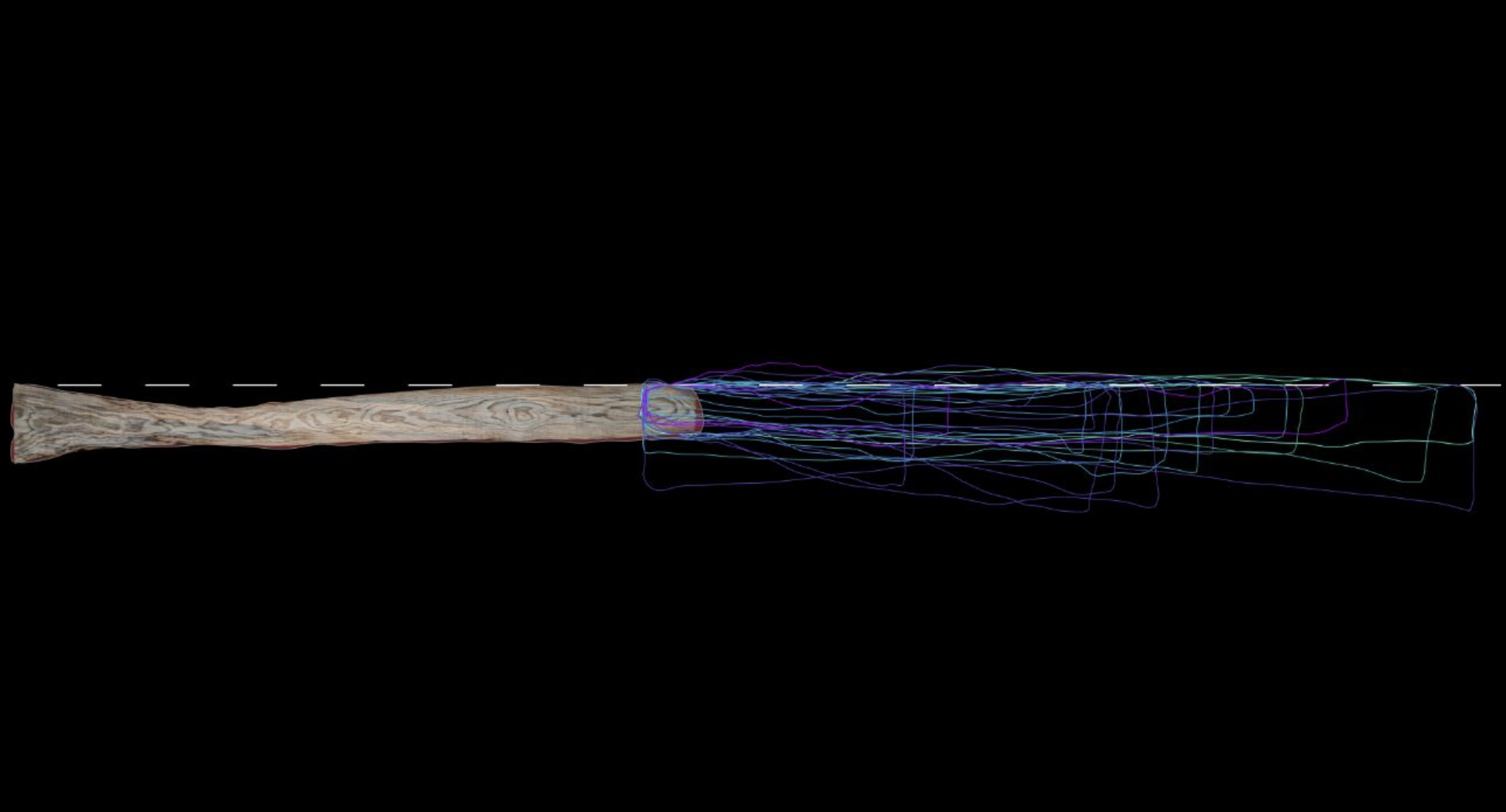
Context Additive manufacturing is growing exponentially in many industries at many levels, pushing towards new upgrades as a competitive alternative by reducing its logistic and production costs and increasing its flexibility and adaptability to the market’s demand. However, there is still an important challenge that it is facing: a gap on matching references between physical … Read more
Limitless Project

The construction industry creates a waste that is expected to reach 2.2 billion tons globally by 2025 (Transparency market research). Because of this the market started trying different new techniques to construct with less waste, that is how with the 4.0 industrial revolution came the Additive manufacturing process, that fabricates physical 3D objects layer by … Read more
ARtisan
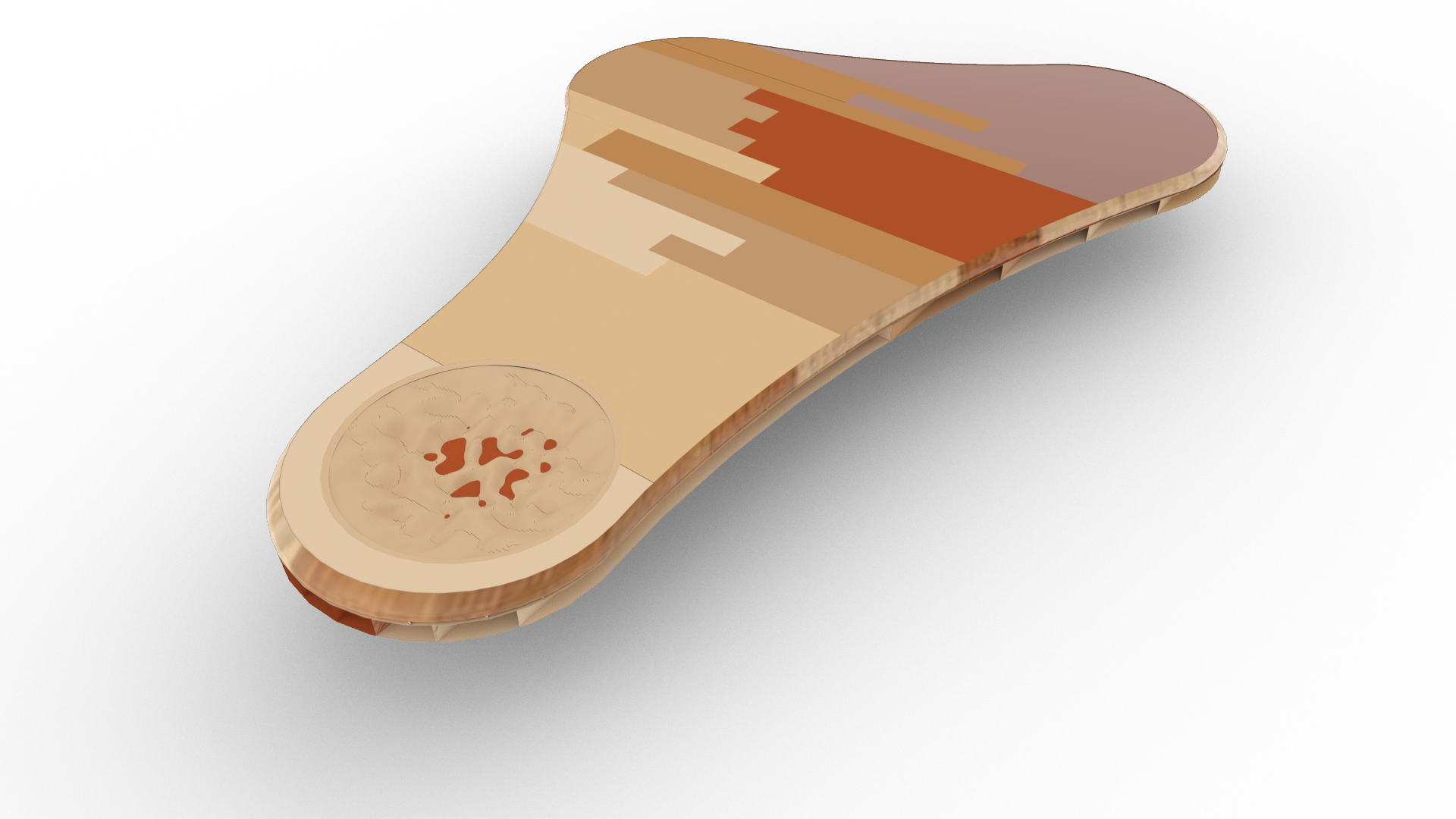
The efficient utilization of forestry products plays a vital role in sustaining industries such as construction and furniture manufacturing. To meet the demands of mass production, raw materials undergo a process of standardization, enabling streamlined operations and increased output. However, this standardization process results in the generation of valuable by-products such as planar offcuts. These … Read more
WAÇADE
This project focuses on creating a workflow and a tool to automate the design process with irregular wood offcuts.
Matching Offcuts

This project focuses on resolving the algorithmic issues that needs to be tackled in order to automate the design process with irregular wood offcuts.
Robots and Grains
The state of the art shows our pursue to develop organic geometries using Hyperboloid as design geometry The design takes advantage of the offcuts grain to create a rigid waffle-like structure. Horizontal and vertical members and then connected through notches and screws to stiffen the system. The outer horizontal members of this grid present bark … Read more
Oddly Satisfying… Print and Cut
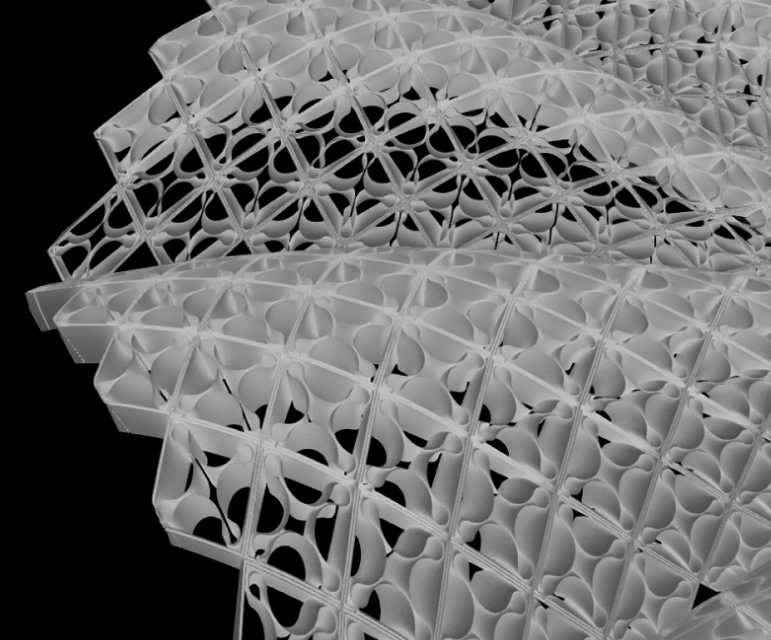
Aim Develop prefabricated and post-processed 3D printed clay modules for self-supporting surfaces Context What could we learn from a study of Gaudi’s ceiling in Casa Batllo? This was the jumping off point of this studio. Responding to a requirement to choose an element of an Art Nouveau/Modernisme building – an opening, arch, or surface – … Read more
Robotic Manufacturing of Cork Surfaces
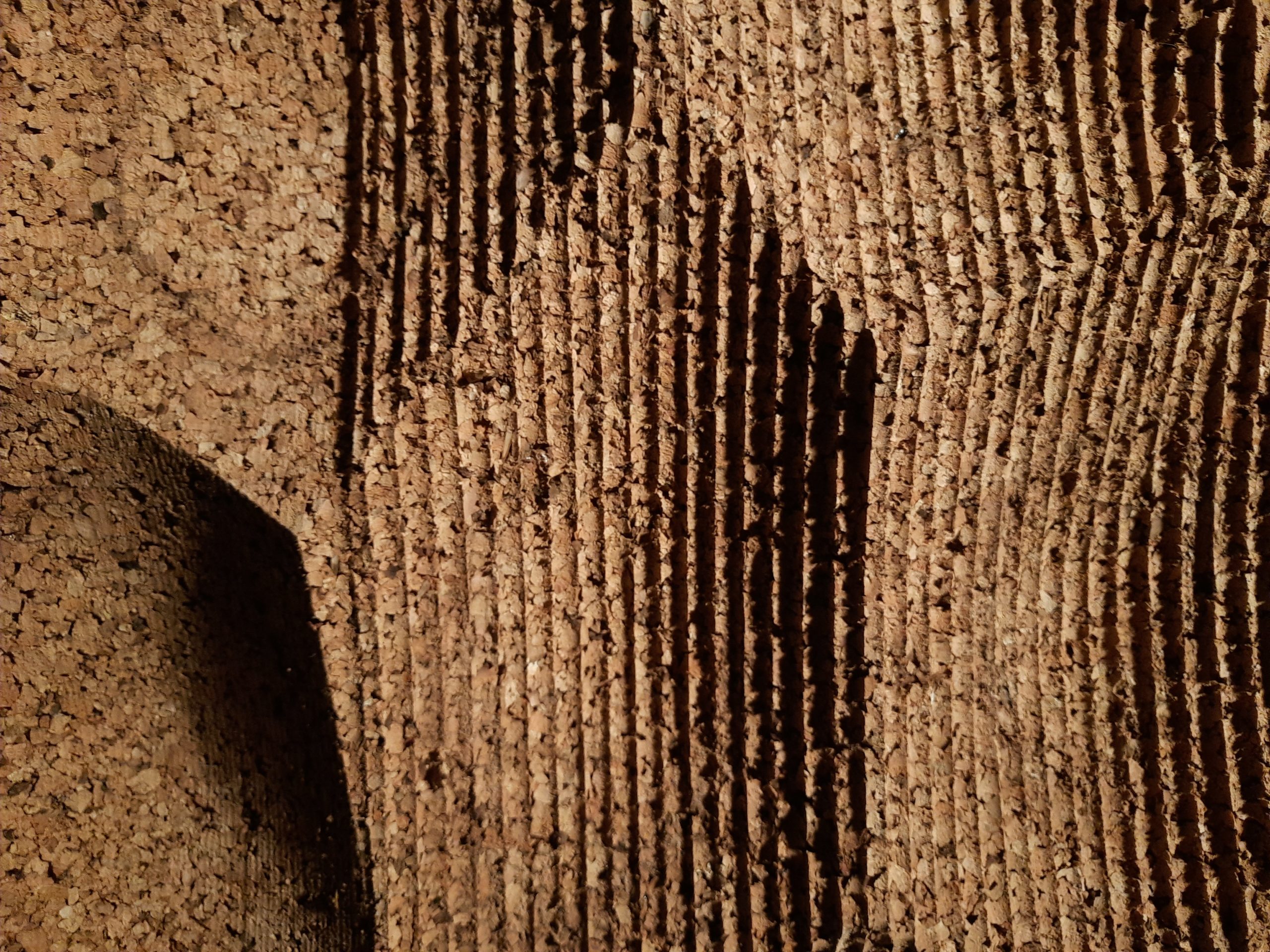
The objective of this studio was to implement an automated robotic process for the efficient fabrication of modular cork blocks, essential components of a doubly curved acoustic surface. The key objectives encompassed the following: By addressing these objectives, the studio aimed to advance the field of robotic fabrication while emphasizing the acoustic potential of cork … Read more
Ruled Stereotomic Manufacturing
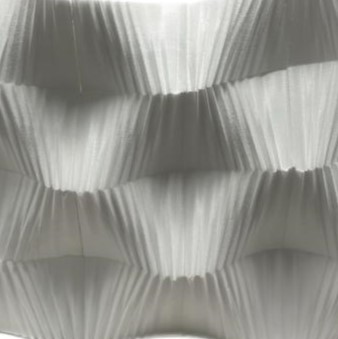
Ruled surfaces are a way to address both simplicity in terms of design rules and at the same time complexity in terms of the outcome. In this workshop we aimed at defining design rules which are performance driven, to obtain modular geometries. Through parametrization and manipulation of computational workflows we generated paths and mapped them … Read more
