Dataset Our database contains more than 181,000 rows, each with comprehensive information. The primary database includes 17 variables, though not all are necessary for our analysis. The most crucial data points are location (latitude and longitude), type of food establishment, type of inspection, inspection results, and risk level. As the person who uploaded the database … Read more
FacAid + Chatbot
In a world where urban areas are predominantly developed and the heat island effect is intensifying, the construction industry significantly contributes to environmental challenges. Instead of focusing on tools that promote new construction, our goal is to provide a tool that analyzes existing buildings and suggests improvements. This approach aims to enhance sustainability and mitigate … Read more
Materializer
Introduction Our project, Materializer, leverages the power of multiple self-trained machine learning models to predict material quantities based on an image uploaded by the user and the building coordinates. This innovative approach utilizes image segmentation to isolate buildings, image classification to read material pixels, and a height prediction model for buildings lacking height information in … Read more
Project Sentinel: Predicative analysis of street lighting and safety
Greater Manchester, one of the largest and most vibrant urban centers in the UK, is characterized by its substantial student population and a dynamic economic landscape. With approximately 120,670 university students during the 2021/22 academic year and a significant number of these individuals studying at the University of Manchester and Manchester Metropolitan University, the region … Read more
Fields at Play
Fields at Play identifies the value of gender inequality in Olympic infrastructure and proposes to leverage the derived $12.6B Olympic gender gap in sports facilities to fund the revitalization and ongoing program of reliable, safe, and comfortable spaces for women at risk of gender-based violence. Understanding the purpose and outcomes of Olympic infrastructure strategies in … Read more
THF // MICRO-CITY
The proposed vision for Tempelhof is articulated as a ‘city within a city’ arranged along the two airstrips of the former airport, extending perpendicularly to emphasise a dual directionality. Buildings are conceived as flexible micro-communities built on organic/biodegradable materials, with the possibility of growing or ‘de-growing’ through time.The design strategy aims to trigger a need … Read more
GENDERED GEOGRAPHY: A SILOM SAFETY INITIATIVE
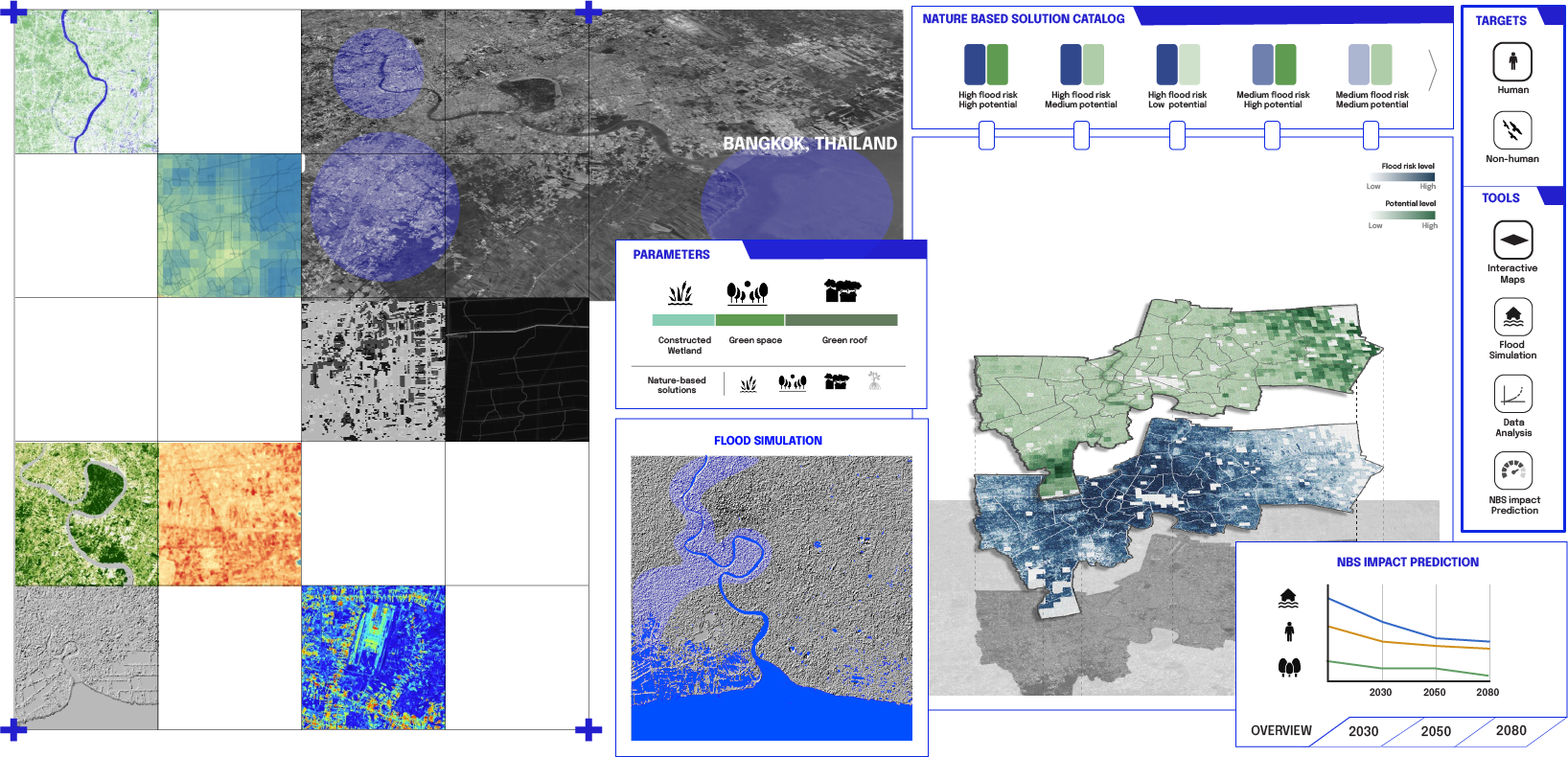
“WHAT IS THE FIRST THING THAT YOU THINK OF WHEN YOU HEAR THE WORDS: GENDER & BANGKOK? “ 1. BANGKOK’S SPECTRUM OF GENDER (INTRODUCTION) Historically, Thai society has grappled with rigid gender roles, which often saw Thai women facing significant challenges and being relegated to positions within the entertainment and sex industries. However, as Thai society … Read more
Kyoto Blossoms & Tourism Machine Learning
Project Focus For our Graph Machine Learning project, wanted to look at the city of Kyoto and Tourism Behavior around Cherry blossom patterns. Specifically, we set out to find out how cherry blossom patterns might affect the behavior and walking paths of tourists within the city. Data Sets We started by collecting our data sets … Read more
Invisible Barriers, Visible Caregivers
Introduction Medellin, known as the ‘City of Eternal Spring,’ is a Colombian city located between mountains around the Aburra River Valley. According to the National Census, it is inhabited predominantly by women, as 53.3% of the population is composed of women, and a large portion of them perform in areas such as education, healthcare and … Read more
Guidebook on Urban Degrowth
The Case of Tourism in Barcelona The “Guidebook on Urban Degrowth” explores applying degrowth principles in urban planning to promote social well-being and ecological equity in cities. This thesis develops guidelines to shift from high-consumption economic models to those that emphasize environmental balance and social equity. Focusing on Barcelona, it addresses the challenges of over-tourism, … Read more
Predict Yelp Ratings based on Urban Data using GML
Hypothesis The goal of this research was to investigate if open spatial data could predict Yelp ratings utilizing graph machine learning (GML) methods. We hypothesize that urban phenomena, events, and objects will indicate customer reviews and popularity, and therefore, could be used predict ratings. In particular, we perform edge classification using the DGL library. For … Read more
Temperature prediction in Argentina
Insights into the effects of weather data in Argentina, with implications for sustainable land management, deforestation and conservation policies, agriculture, industry and economies. Climate change, in particular the decrease in precipitation, is predicted to have significant effects on the living conditions in Argentina, affecting agricultural production, sea level rise, hydroelectric energy. The dataset composition consists … Read more
ReWeave_3.0
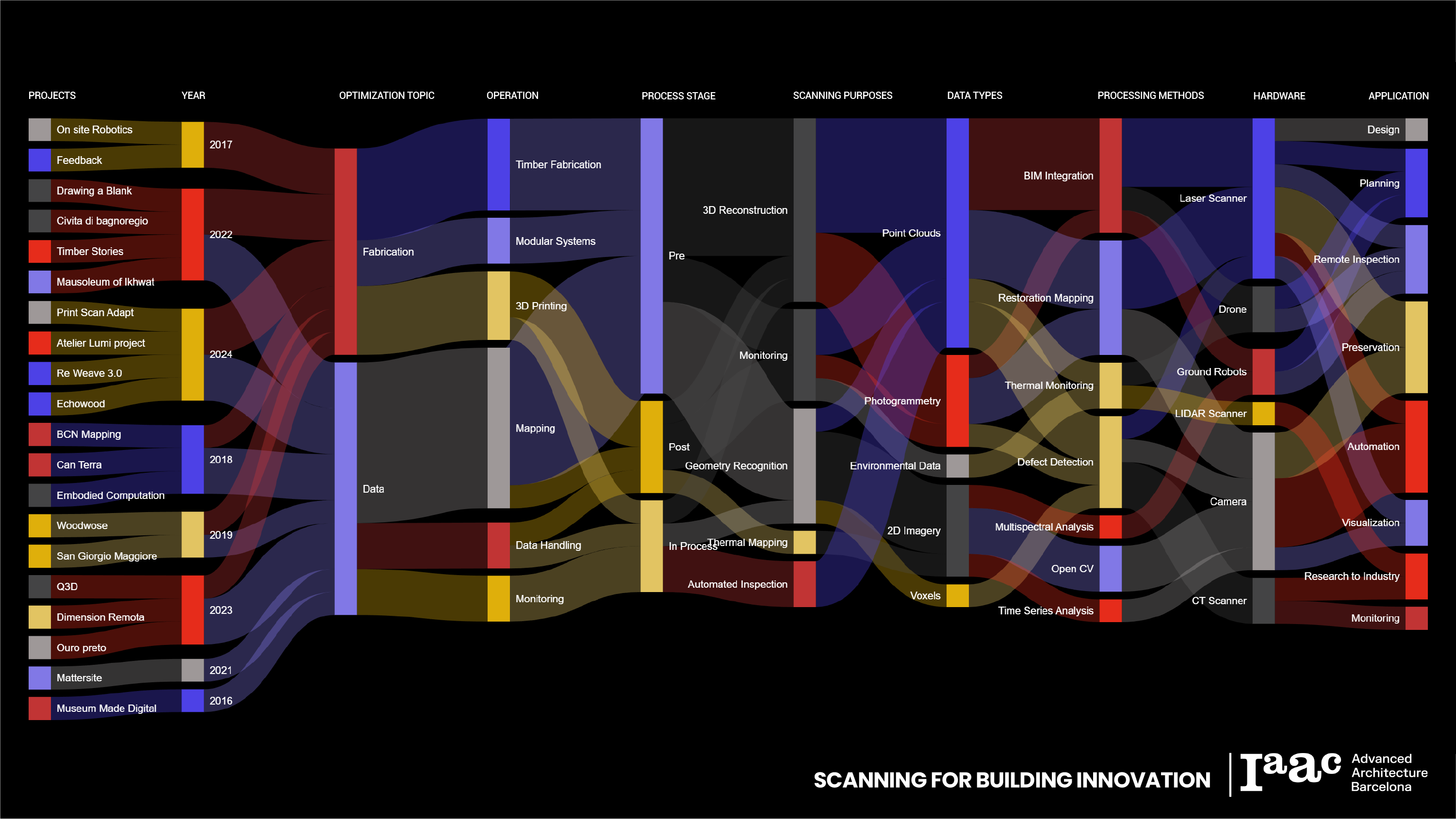
Abstract: The ReWeave project develops a robotic system to repurpose construction and demolition (C&D) waste into functional, attractive walls, enhancing human-robot collaboration. We created a database by scanning broken tiles to extract shape, size, and color information, then developed custom nesting algorithms to optimize tile arrangement. The workflow includes scanning tiles, exporting outlines via ROS, … Read more
100-Year Flood Risk Road Intersection Classification
Beginnings Our project’s concept is to develop a classification model that identifies street intersections (graph nodes) in Stockholm, Sweden, susceptible to flooding during a 100-year flood event. Based on our initial research, we found that graph machine learning operates at three levels: the graph, its edges, and its nodes. With access to a 100-year flood … Read more