The MaCAD is a unique online programme training a new generation of architects, engineers and designers ready to develop skills into the latest softwares, computational tools, BIM technologies and AI towards innovation for the Architecture, Engineering and Construction (AEC) industry.

Filters
Course

Web-Based Bitmap Terrain Generator

In the Cloud-Based Data Management seminar, our final project explored how parametric design tools can move beyond the desktop and become accessible through the web. The course focused on transforming Grasshopper definitions into web-based applications using Rhino.Compute, Vue, and web visualization workflows, with the goal of making computational design more accessible to end users. This … Read more

HB02: Urban Congestion as Catalyst

Program Team Hyperbuilding 02 proposes a program-integrated transit hub that reorganizes fragmented mobility networks, shortens commute times, and anchors a high-density mixed-use urban core to improve accessibility and urban performance. The design concept for Hyperbuilding 02 begins with a problem: fragmented mobility networks that create inefficiency, congestion, and poor urban accessibility in high-density environments. Rather … Read more

Less Wheels, More Walks

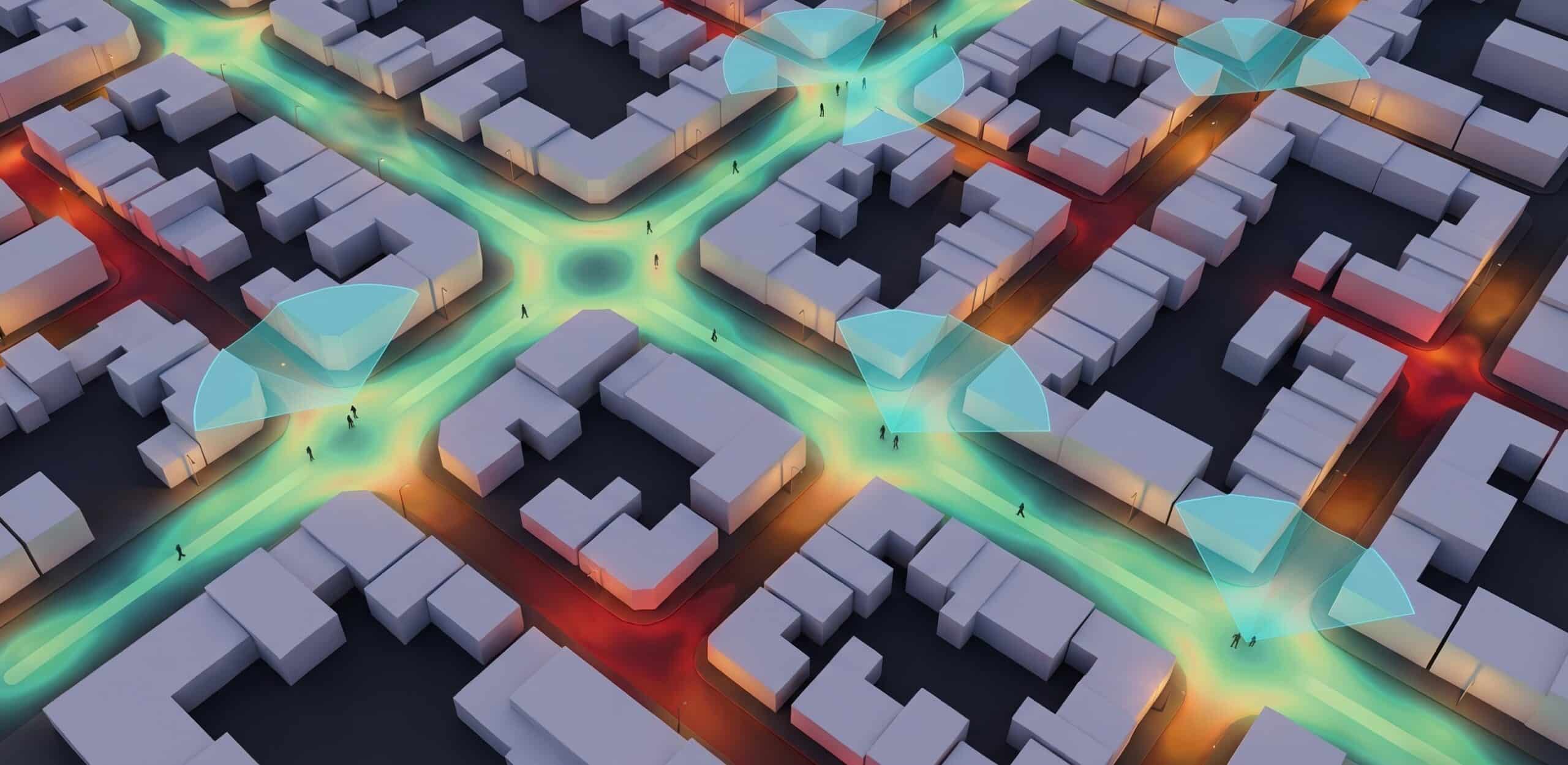
Team member(s): Hani KarimeModified by Hani Karime on April 12, 2026 Concept Less Wheels, More Walks is a parametric web-based urban simulation tool that explores how shading strategies can shift street space from cars to pedestrians. The idea started from living in Qatar, where the lack of shaded sidewalks discourages walking. Even short distances are often traveled by car. … Read more

Digital Tissue: A Living Map of the Hyperbuilding Cells

Preliminary Study: Demography as Design Driver In Hyperbuilding 3, our focus was to understand how demographic data can actively inform architectural decisions. We started by analysing the Chilean census portal, which provides detailed information for the entire metropolitan region and specifically for the Providencia district. From this dataset, we looked at age distribution, household composition, … Read more

Beyond the Dashboard: Building Information Modelling as Socio-Technical Governance in Smart Cities

Introduction The smart city stands at a conceptual crossroads. On one side, we encounter an optimistic narrative: Building Information Modelling (BIM), digital twins, and integrated urban dashboards promise unprecedented visibility into city systems, enabling data-driven governance, resource optimization, and responsive urban management. On the other side, a more sobering reality: these sophisticated technical infrastructures often … Read more

BIM and The Rise of Automated Design Fabrication

BIM and the rise of automated design fabrication

(BIM) is driving a major shift toward automated design and fabrication by providing precise, data-rich digital models that machines can directly interpret. Automated systems use BIM data to generate toolpaths, robotic motions, and fabrication instructions with minimal human input. This integration accelerates prefabrication, improves accuracy, reduces waste, and supports modular construction. As automation grows, BIM … Read more

A Browser-Based Custom G-code Slicer

Built on Vue.js + Grasshopper + Rhino Compute This documentation presents the design, development, and technical implementation of a browser-based G-code slicer built as part of the Digital Tools for Cloud-based Data Management course at the IAAC Problem Statement Commercial 3D printing slicers, such as PrusaSlicer, Bambu Studio, and Ultimaker Cura, are designed as general-purpose … Read more

HB03: Data-Driven Towers for Human-Nature Coexistence

Explore HB03, a hyperbuilding developed through parametric design, structural engineering, and adaptive façade optimization. Discover a data-driven approach to sustainable vertical urbanism, daylight performance, and human-centric high-rise design. Introduction: Engineering the Skeleton of Vertical Urbanism In the Vertical Machine studio, architecture is treated as a dynamic urban organism rather than a static object. Within this … Read more

VenueAnalyst: Building a Cloud-Based SaaS for Stadium Sightline Diagnostics

From Jakarta to Data: Automating the Perfect View with VenueAnalyst What started as a design studio project for a floating, flood-resistant stadium in Jakarta quickly evolved into a computational challenge: How do we prove a stadium actually works for the fans? While many architects focus on generating new forms from scratch, the reality of the … Read more

The Heart of the Vertical Machine – A Data-Driven Urban Organism

HB02: The Heart of the Vertical Machine 1. Project Overview 1.1 HB02 within the Vertical Machine In the pursuit of reimagining high-density urban living, our collaborative team developed Hyperbuilding 02 (HB02), also known as “The Heart”. As part of a larger 3-million-square-meter urban organism, HB02 serves as the vital circulatory engine, pumping life, data, and … Read more

The Geometry of Intelligence: How Hyper-building One Turns Geometry into Meta-data

Hyperbuilding One is a data-driven ecosystem that achieves seamless connectivity between Static and Kinetic spaces through an optimized large-scale integrated environment. Architecture is No Longer Static: How Hyper Building One Turns Geometry into Code The traditional architectural blueprint is a corpse. It is a static snapshot of an idea that begins to age the moment … Read more

Hyperbuilding 03 – Program team

As the program team, we were responsible for defining how space is distributed and used across the building, translating regulations and density targets into a balanced mix of residential, public, and supporting functions. Within the hyperbuilding concept, we design the ‘functional cells’—the spaces where life happens—ensuring they are efficient, adaptable, and well-connected.. A Data-Driven, Human-Centric … Read more

Urban Quant Tool

Urban Quant is a data‑driven urban design tool delivering area and massing analyses for buildings and open spaces. It calculates Built‑Up Area (BUA), Gross Floor Area (GFA), service/core areas and building levels, integrating solar exposure and sun‑hour simulations. The platform converts regulatory, programmatic, contextual inputs into comparable scenarios, visualizations, and reports for architects. Area distribution … Read more